How does your garden grow?

28 10 2013

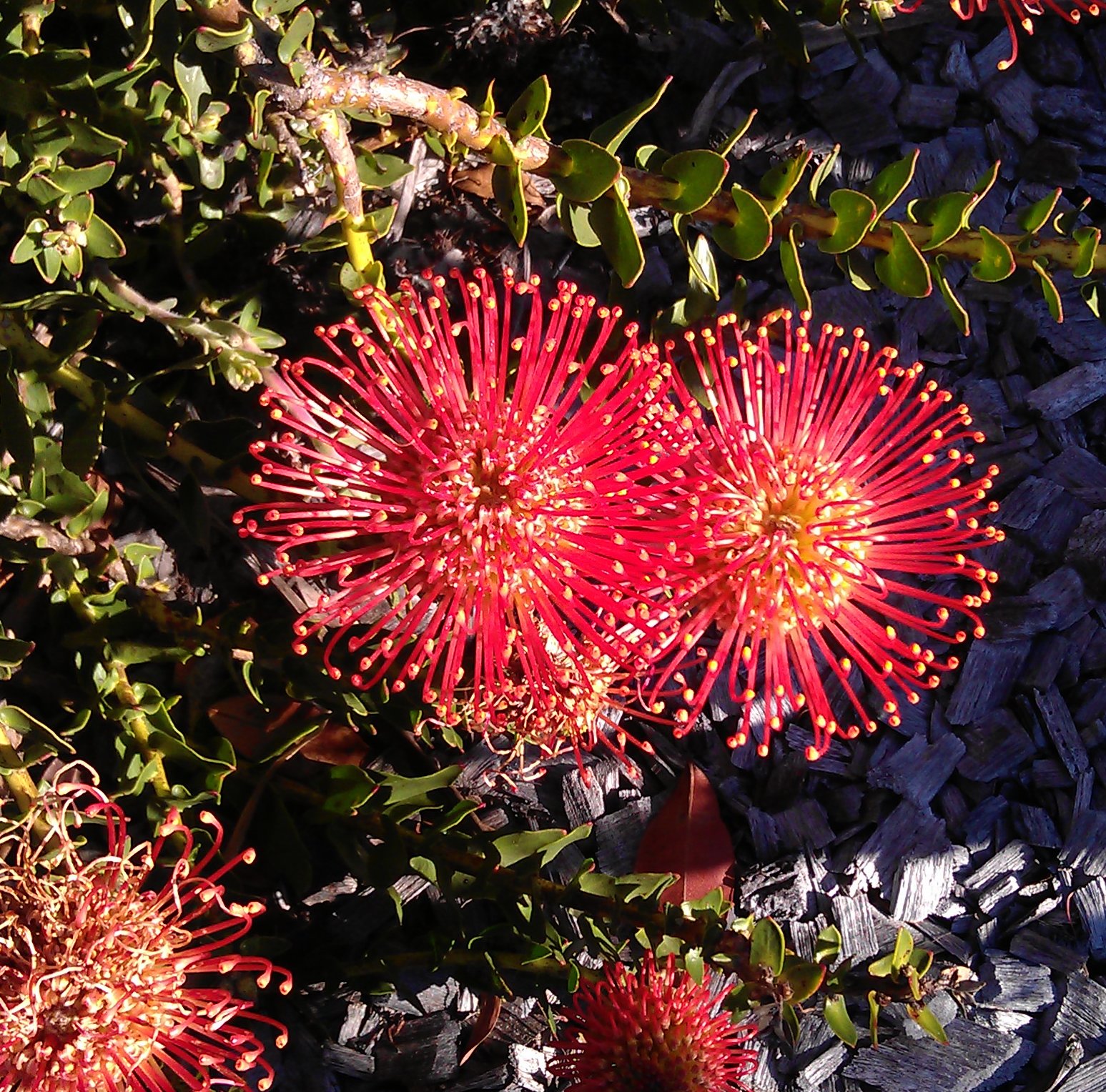
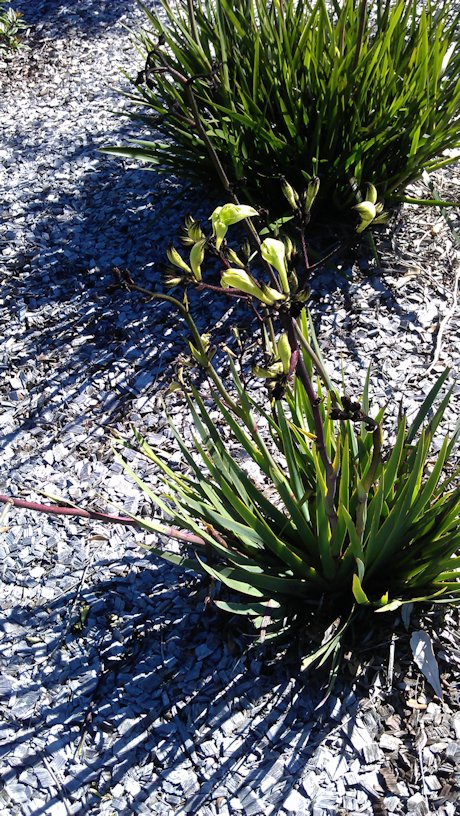
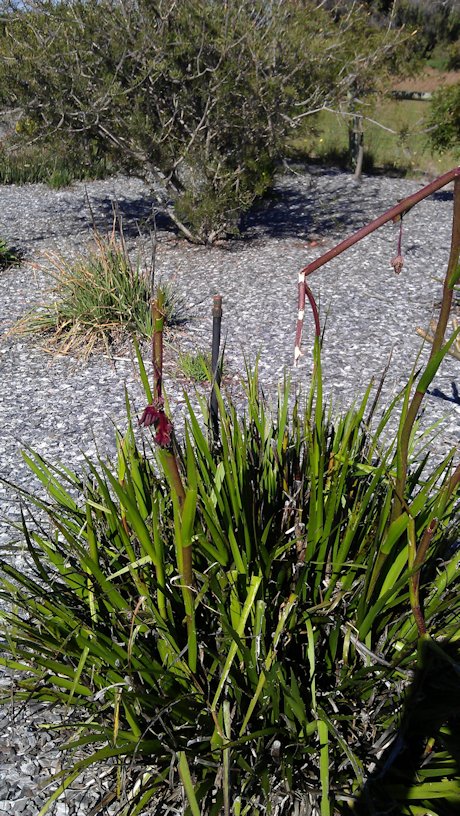
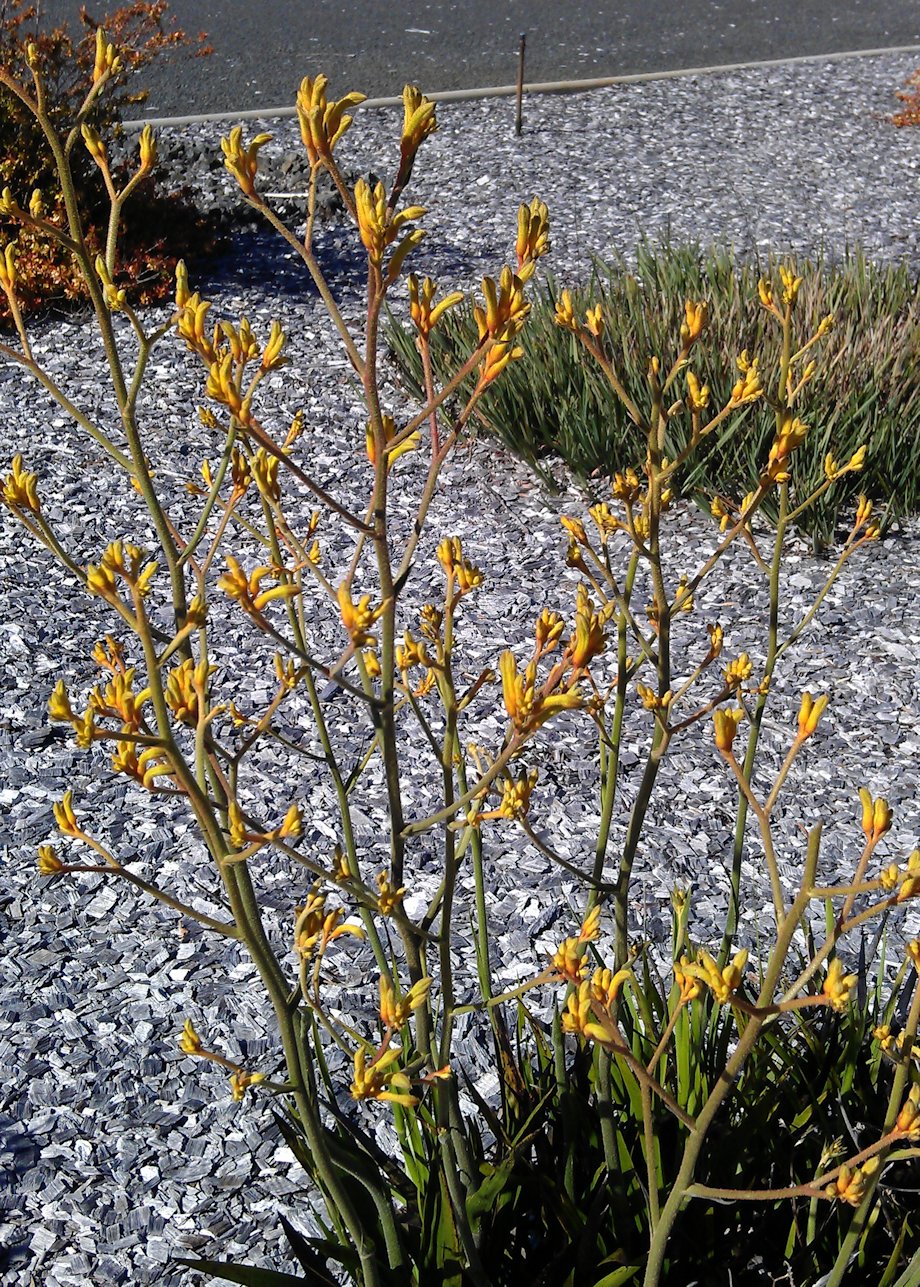
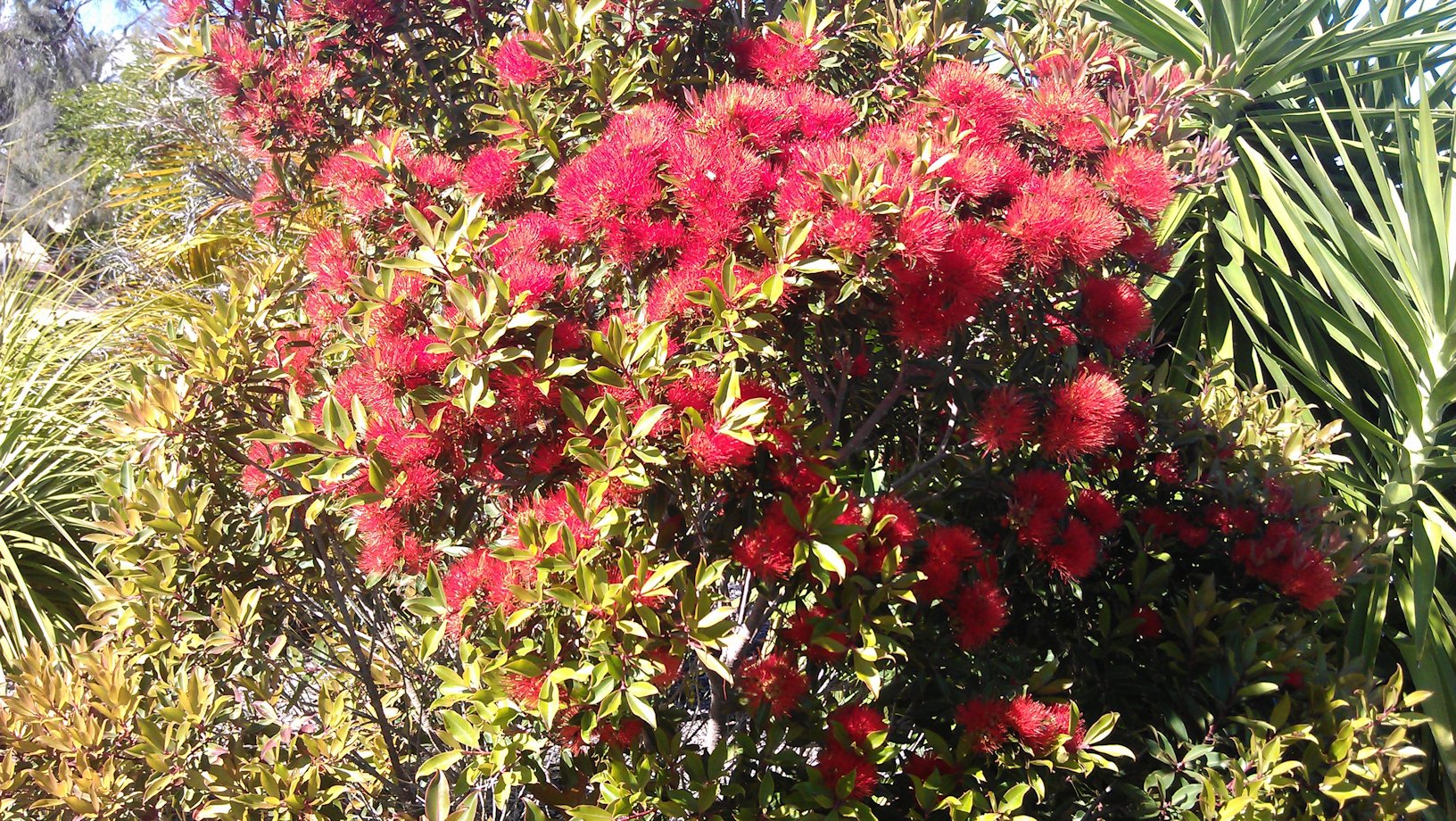
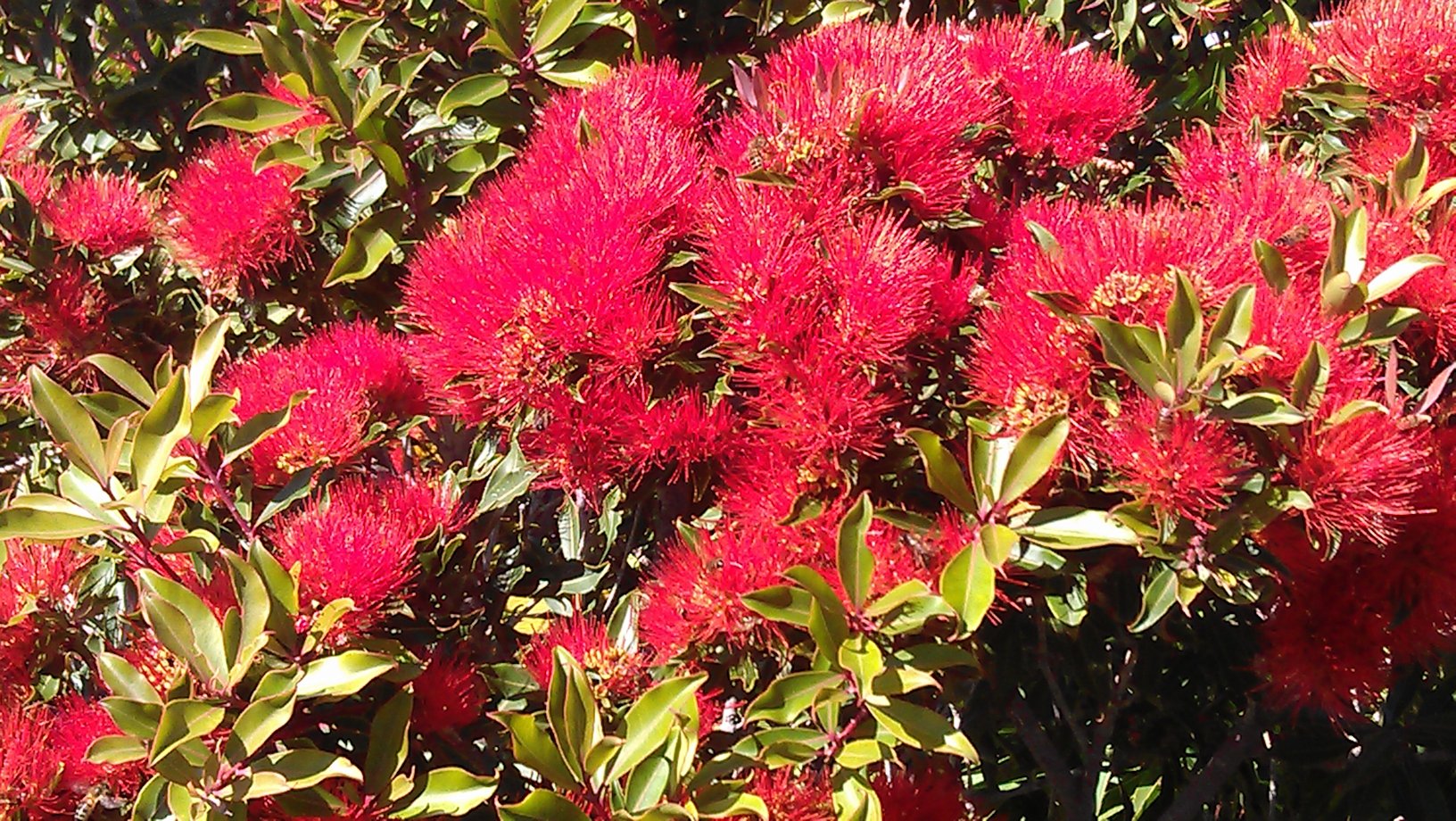
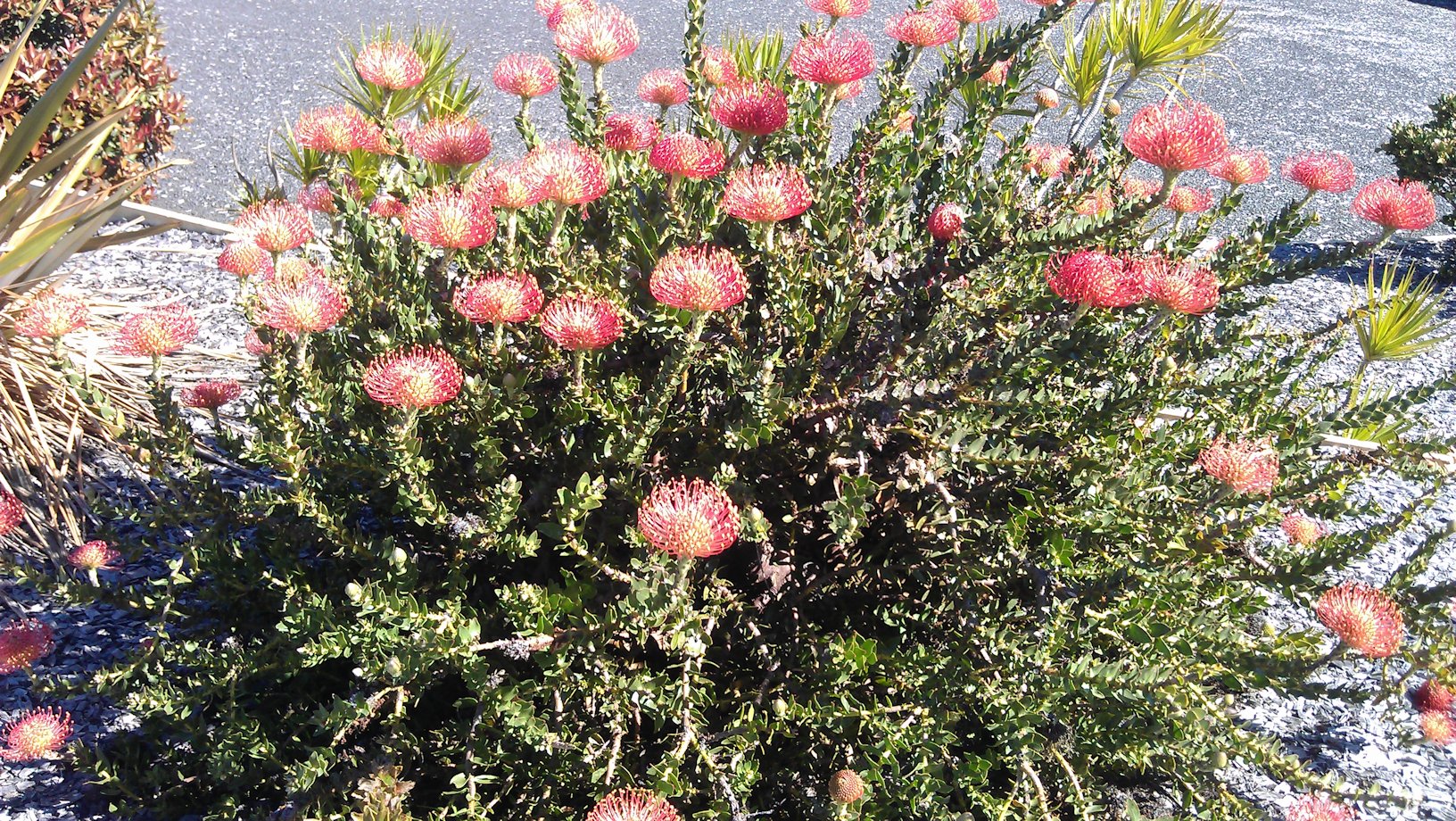
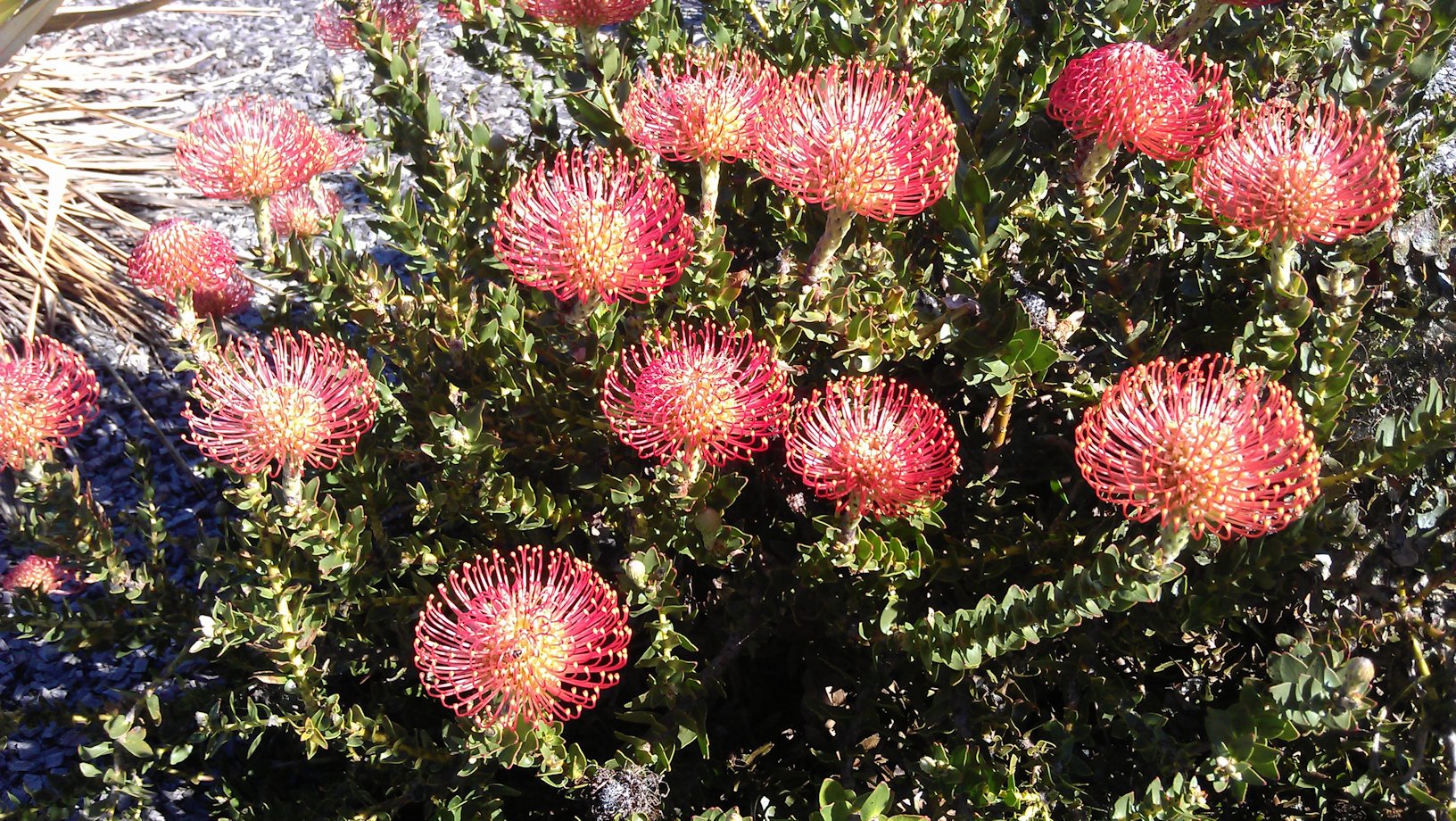
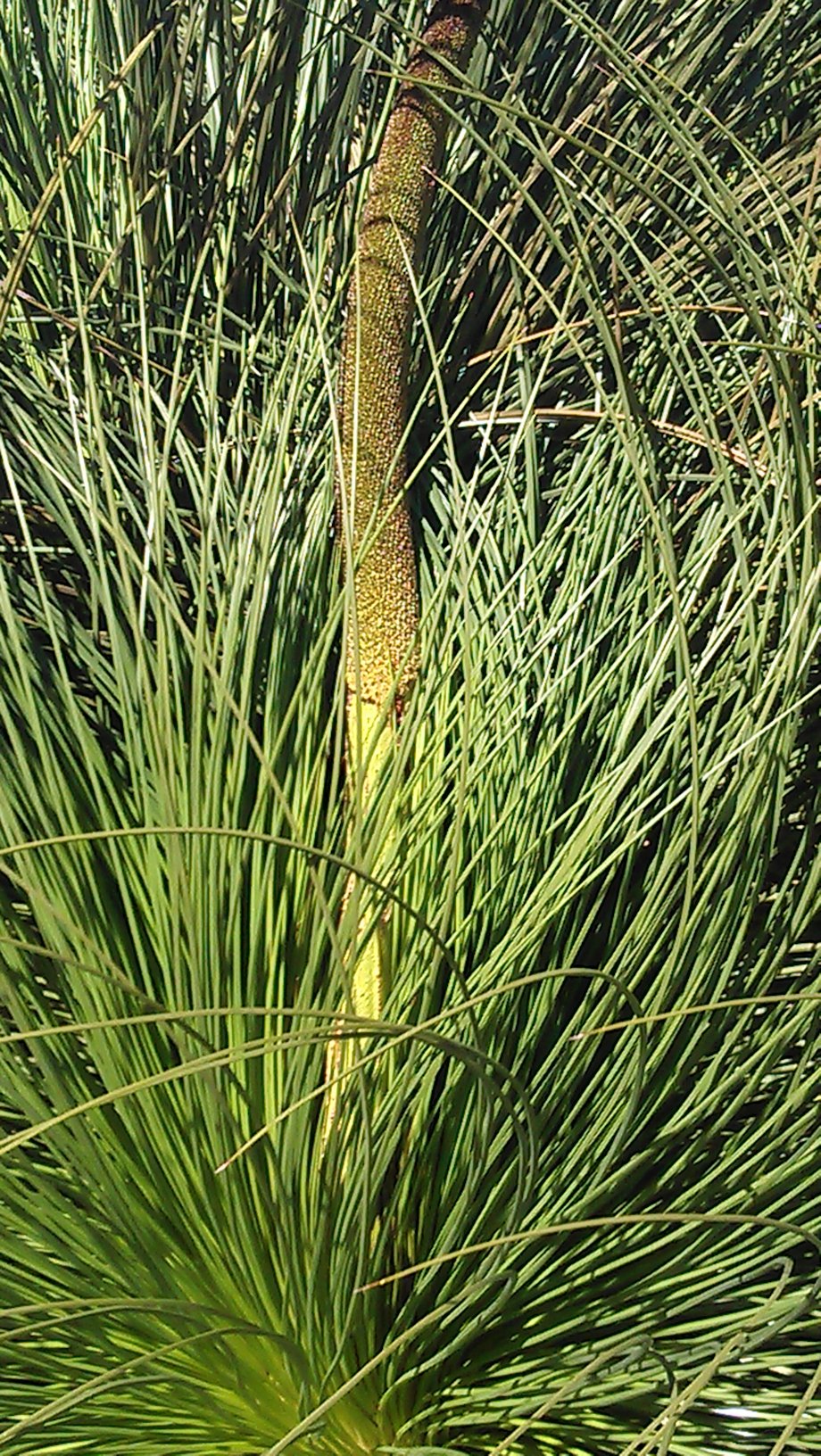
With solid rainfall in September, many of the native plants in our garden are in full flower at the moment, making the most of the spring sunshine before the heat of summer sets in. We have LOTS of varieties of Kangaroo Paws — one pink (I can’t recall seeing them flower before), several red varieties, a couple of greens, some oranges, and some yellow/oranges. The bottlebrush are also in full flower — we have some deep pink varieties. And the grass tree has a massive flower stalk on it, with the flower just starting to open. From one area out the back, all you can see is a sea of pink, orange and red! (the photo below doesn’t do it justice as many of the flower heads are quite small)

IMAG1320

IMAG1326

IMAG1328

IMAG1332

IMAG1316

IMAG1319


Making a difference in the lives of nesting turtles

14 10 2013

When we were coming home from a nearby town last weekend, I spotted what I thought was a black rubbery thing on the side of the road. As we drove past, I realised it was a tortoise turtle — I thought it was dead, but when I got out of the car to take a photo and put it on the verge, I realised it was very much alive.

It took off back over the road towards the wetlands, and I shepherded it across the road in case other cars came along (it’s a quiet street, but you never know). The poor thing must have been really terrified as it started to pee copiously while heading back over the road and continued peeing all the way to the other side.

The next day I mentioned it to a friend who used to live in the area — she said they came across the road from the wetlands to lay their eggs in the sandy soil on the other side of the road. So perhaps I was too eager to shepherd her (I assume it was a female) back to the wetlands as she may not have laid her eggs yet 😦

I wanted to find out what sort of turtle she was, so off to the internet where I found out that she was a snake-necked turtle (Chelodina oblonga); this species is also know by other common names. The species is endemic to the south-west corner of Western Australia and is found nowhere else. It is listed as ‘near threatened’ on the IUCN global endangered species list.

I decided to submit a request to the local shire council to see if they could place ‘turtle crossing’ signs on this stretch of road, and to be honest, I didn’t expect to hear back from them. But today — one week later — I got copied in on an email from a council supervisor to a worker: ‘Please arrange to obtain a couple of these signs and erect on the lower portion of [XYZ] Drive.’ FTW!!!

BTW, I never did get a photo of her as I was so surprised to see she was still alive and I was keen to make sure she wasn’t run down by any other vehicles.

I’ll post an update once the ‘turtle crossing’ signs are installed. It’s nice to know that my local government authority takes notice of requests like these. Maybe quoting the IUCN classification and how these turtles are ONLY found in this area helped…

(Correction: I misnamed her! She’s a turtle, not a tortoise! Thanks for your comment on Facebook, Leah, which made me check. I’ve always had in my head that those that live in the sea are turtles and those on land are tortoises. And I’m partially right, except that those that live in *water*, whether at sea or on land, are turtles.)

Update 21 October 2103: The turtle signs are installed! I noticed them yesterday when driving home from town but couldn’t take a picture. Now that was quick. What a great response from the Shire.

Update 28 October 2013: The sign is up!

turtle_sign


A negative consequence of all that rain

14 10 2013

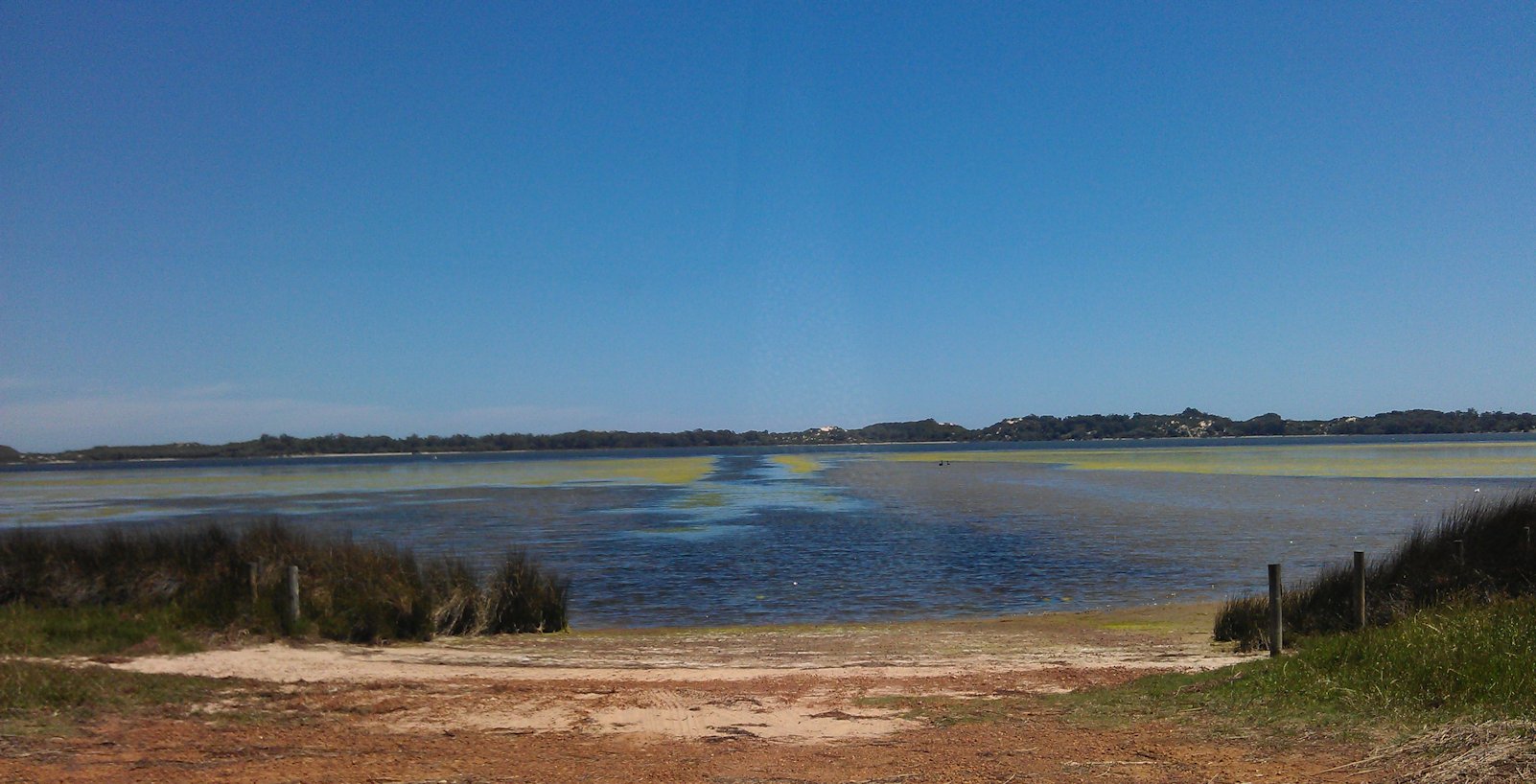
We had record rainfall in September, which was great for the farmers, the garden, etc. But it won’t be good for the bushfire risk over summer, which will be heightened with all that growth. And it hasn’t been good for the estuary. You’d think that record rainfall would flush the estuary, and no doubt it has, but it’s also flushed out a lot of nutrients from the land, such as from fertilisers etc. and dumped them in the estuary.

As a result, there are massive yellow-green algae blooms covering big amounts of the surface area. These (toxic?) blooms may well harm wildlife living, nesting, and breeding on or alongside the estuary, and thus causing loss of life. A LOT of bird species call the estuary home — black swans, pelicans, egrets, herons, spoonbills, ducks — and a lot of other bird species live close to the estuary (ibis, magpies, wagtails, etc.), as well as crabs, fish, even dolphins in the deeper parts, and tortoises in the wetlands surrounding the estuary (the wetlands are covered in algae too).

We’ve been in our current house for more than three years and I drive by the estuary at least four times a week. In all that time, I have never seen algae like I’ve seen in the past two weeks.Actually, I can’t recall seeing algae at all.

Here’s a photo I took today — the blue bits are the ‘clear’ water, the brown bits are the sand bars (the estuary is quite shallow), and the yellow-green bits are the algae floating on the surface of the water. And the black dots are two black swans (click the image to view it larger).

algae


Seen on Facebook….

7 10 2013

Warning! Don’t call your parents’ bluff!

brilliant


On my way to my annual quilting retreat…

22 09 2013

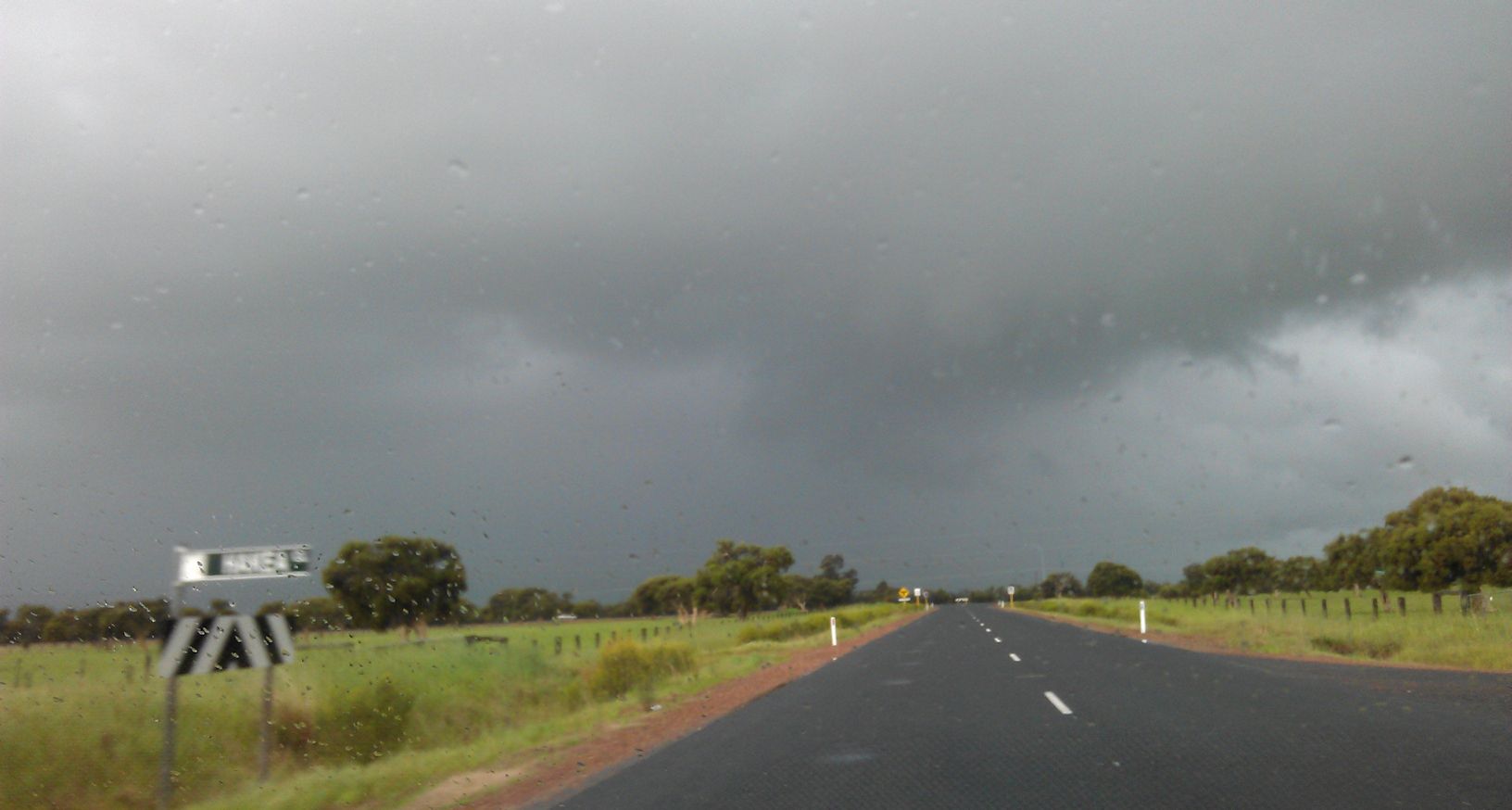
I forgot I had these photos on the camera! Our annual quilting retreat was held on a very stormy weekend in September (we usually have GORGEOUS springtime weather). The drive down for me on the Friday morning was a white knuckle one for about 40 km or more (Boyanup to Kirup, for those familiar with the south-west of Western Australia) as the rain was super heavy and the wind was howling. It took me 90+ minutes to do a drive that normally takes about 75 minutes.

Here’s a photo from the car of the weather up ahead (I was north of Dardanup at this stage, so it hadn’t hit with a vengeance — yet…):

weather

And between Dardanup and Boyanup there’s a patch on the road where you can see that the dairy cows cross regularly. In all the years I’ve travelled on that road, I’ve never seen the cows crossing, but they were crossing that Friday morning 😉 It was a big herd, too. The farmer had on wet weather gear but he was soaked — and splashed with all manner of cow excrement…

cows

We had raging storms all Saturday and Sunday too, and on Sunday night, the last night of our retreat, the power went out about 11 pm. So we all went to bed, fully expecting the power to be back on the next morning. It wasn’t. Fortunately the people we were staying with had a wood tile fire linked into their hot water system, and a manual switch to switch over to town water from their usual rainwater tank, so the girls heading back to Perth got to have a shower next morning.

The power was out for our hosts (and their town and about four other surrounding towns) for well over 60 hours. Poor buggers.


Spring has sprung

8 09 2013

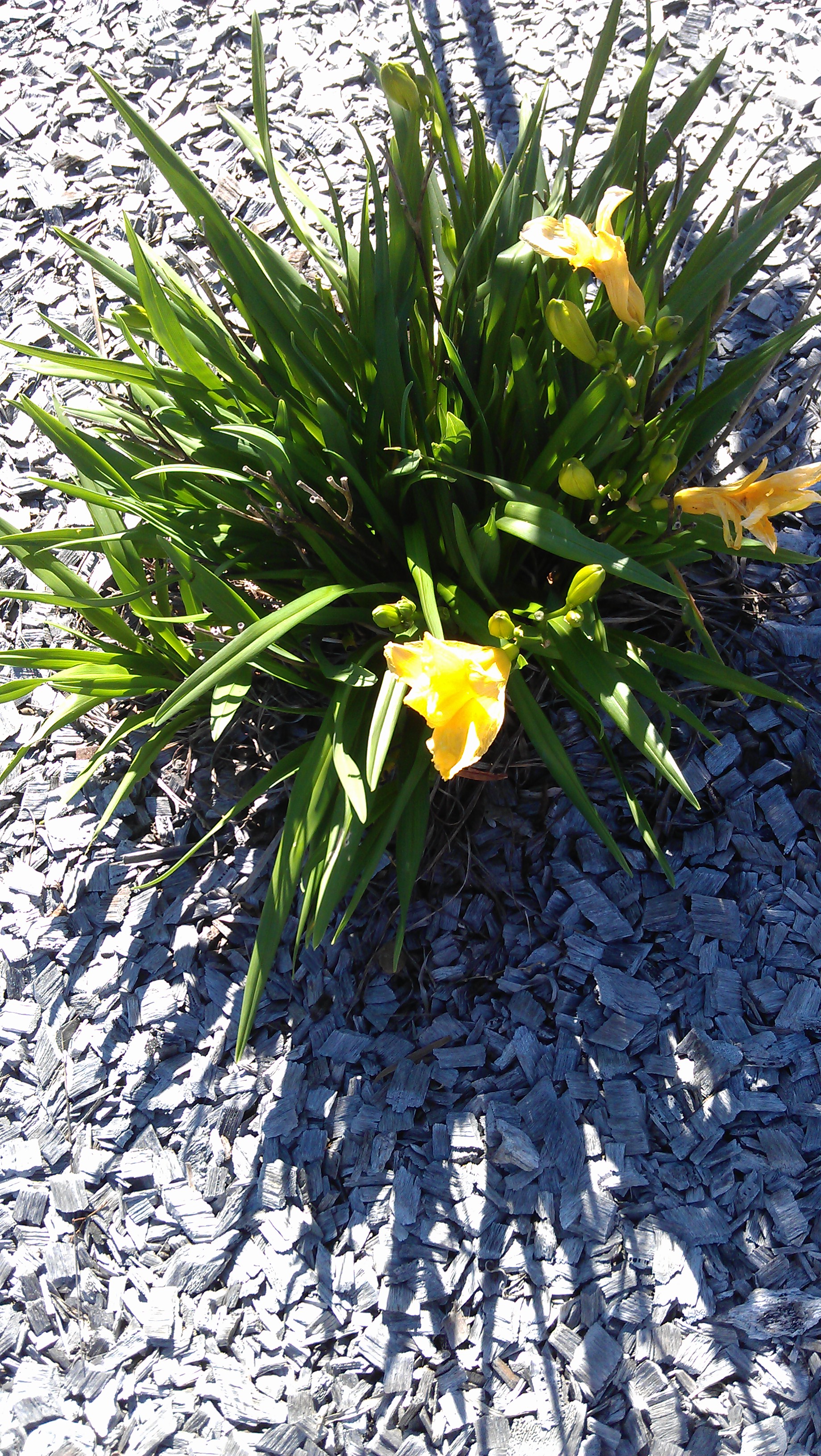
I spent part of this gorgeous spring Sunday morning in the garden (spraying weeds — not much fun) and I noticed how lots of the plants are bursting into flower. The bees are hard at work too!

Oh, and we have some ancient plant species in our (mostly) native garden.

garden01

Green and black kangaroo paw

garden02

These orange kangaroo paws are ready to burst into full flower

garden03

Something (I suspect birds) is chopping off the new flower heads of some of the kangaroo paws

garden04

Yellow kangaroo paws ready to burst into full flower

garden12

I think this is a NZ Christmas tree. Magnificent red flowers, though the camera doesn’t do the red justice.

garden13

NZ Christmas tree?

garden14

One of several varieties of proteas we have in the garden. The flower heads are bright orange, but again, the camera didn’t capture the true colour very well.

garden15

Protea flower heads

garden16

Closer view of those proteas

garden17

Grass tree sending forth its spear. Soon this spear will be about 2 metres long and covered with tine white/yellow flowers

IMAG1067

No idea what this one is, but suspect it’s part of the aloe/agave family

IMAG1066

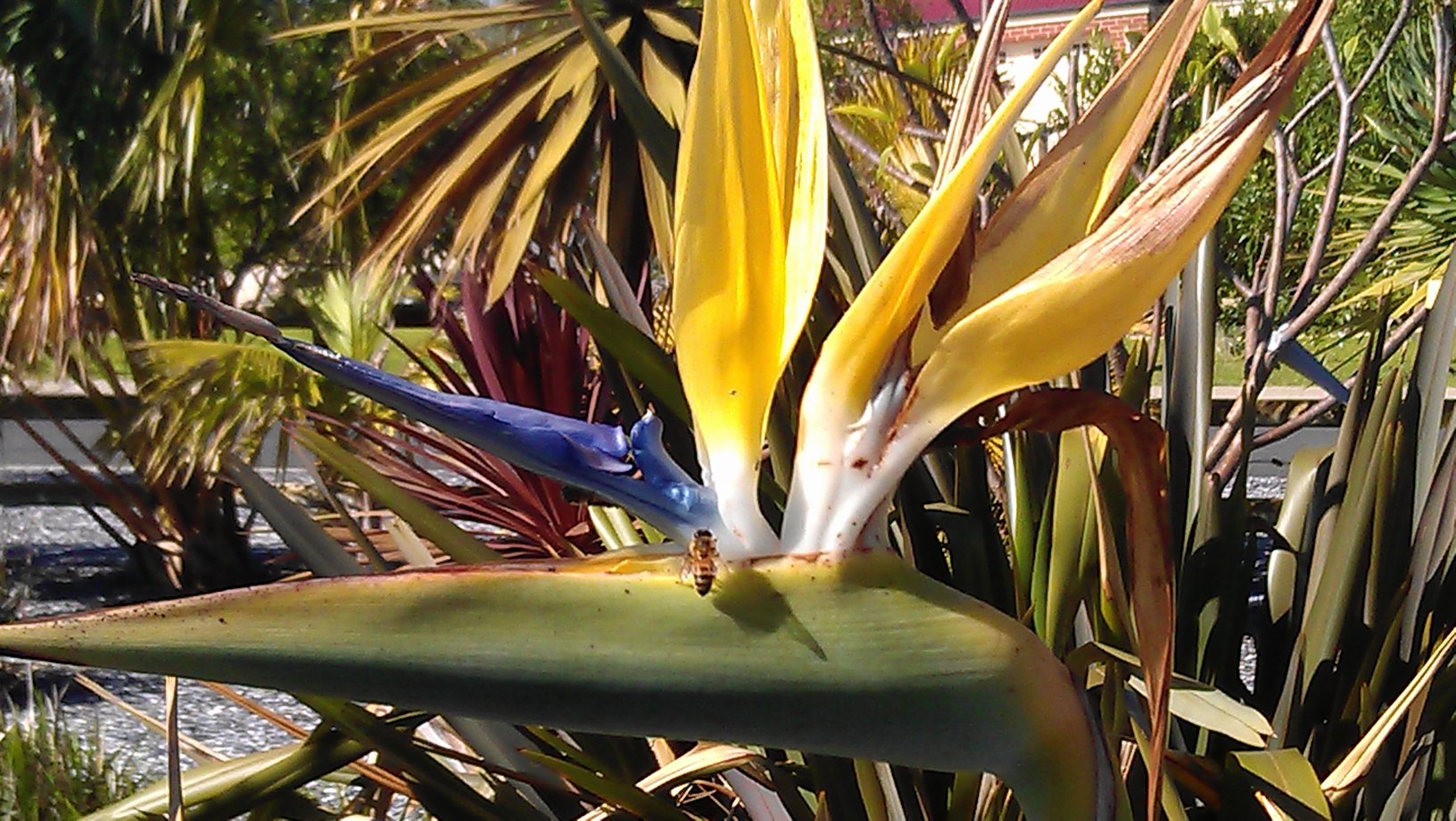
Yellow strelitzia

IMAG1065

Orange strelitzia

IMAG1064

I think this is a cycad of some sort. I’ve never seen that centre ‘crown’ before. The others I have of these don’t have such a dominant crown yet — perhaps they are less mature?

IMAG1063

No idea 😉

IMAG1062

Also no idea 😉


Solar panels are up!

30 08 2013

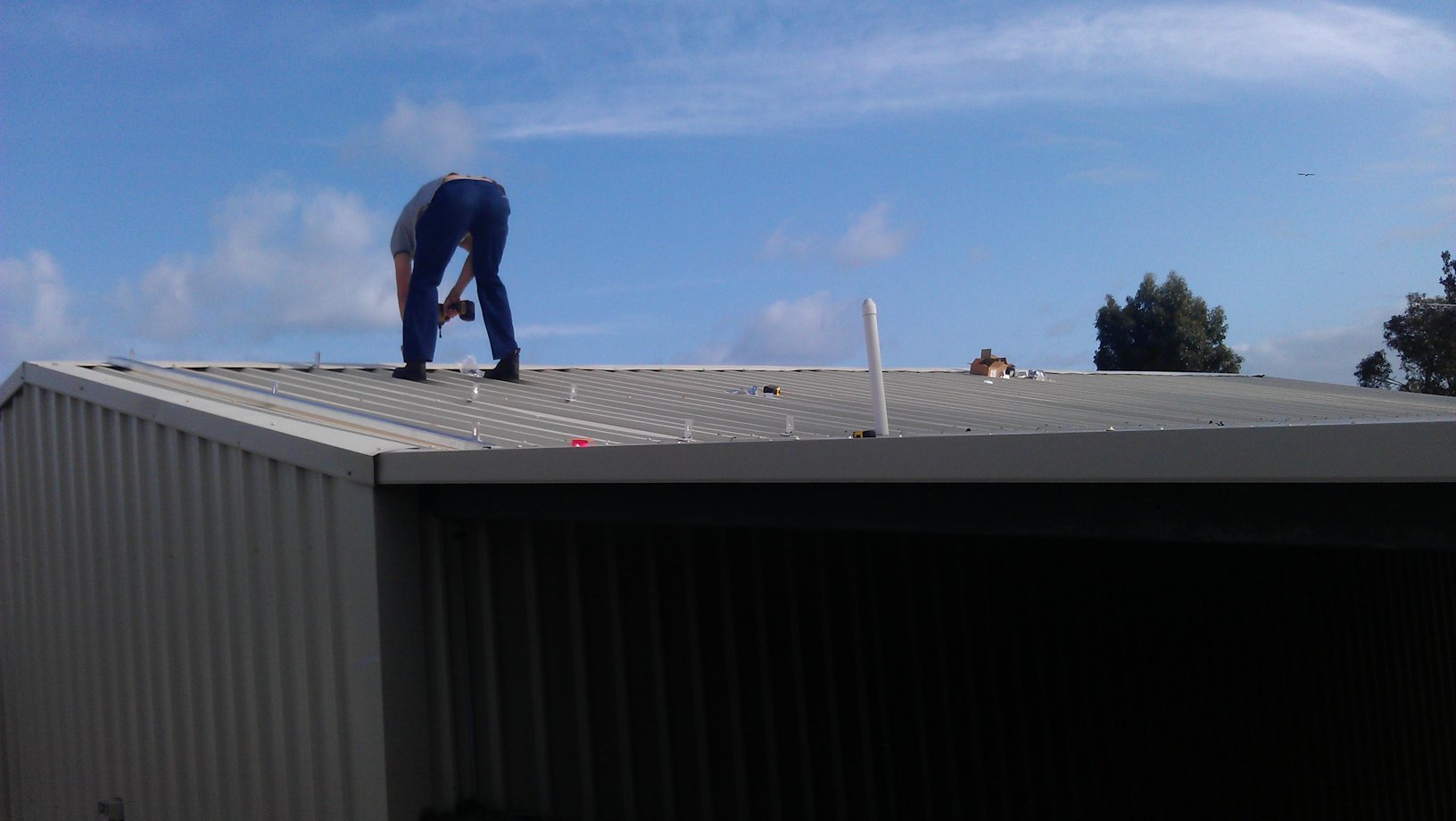
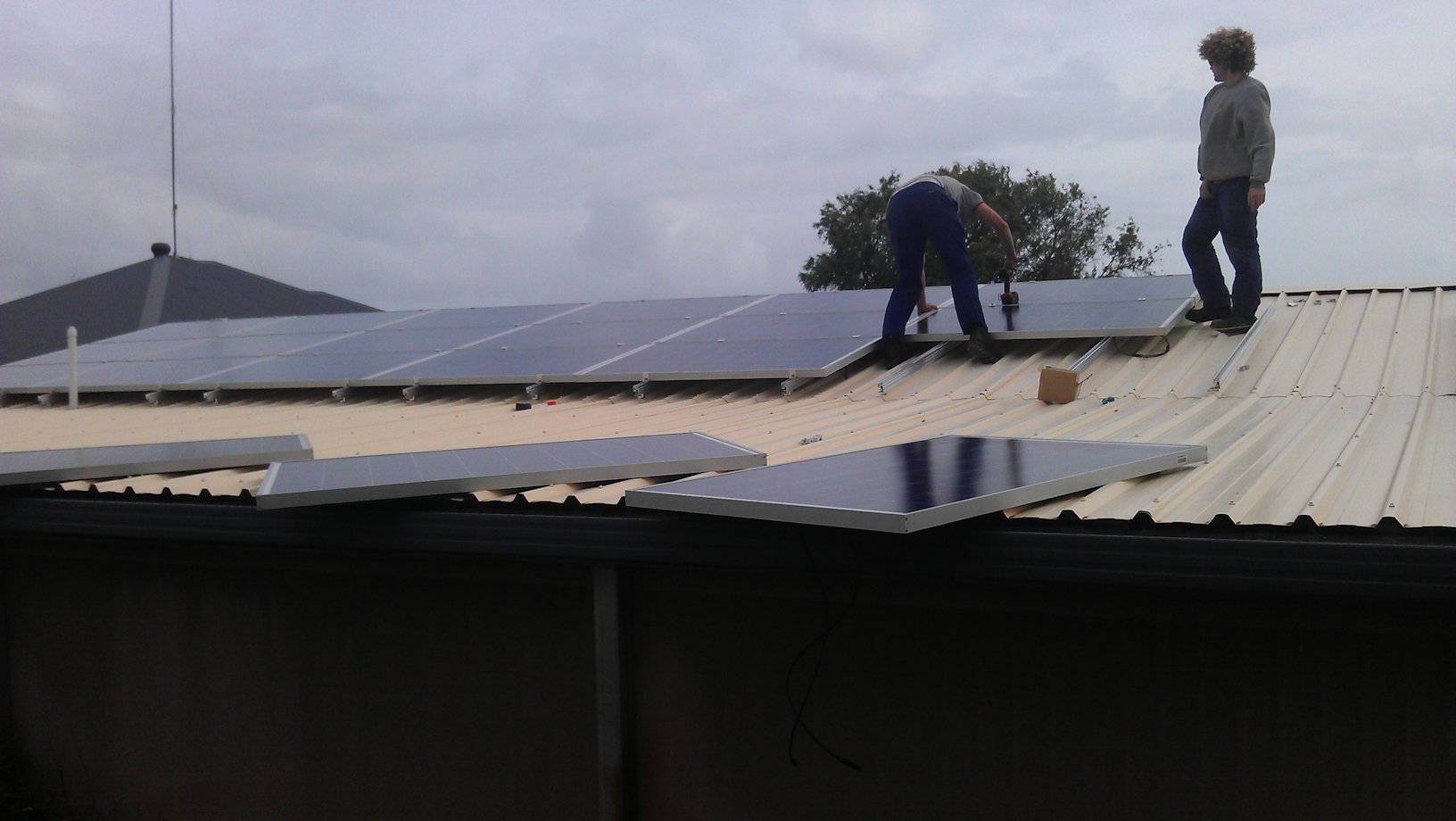
It took two months from signing the contract to getting our solar panels installed. A lot of stuff happened in between, so it’s not like anyone was slacking off in that time (that’s what you get for government [federal and state] intervention and approvals…). I took some progress photos today as the three guys did the installation. I didn’t think the installation would happen as the weather forecast for today was for storms, heavy rain, and strong — even gale force — winds.

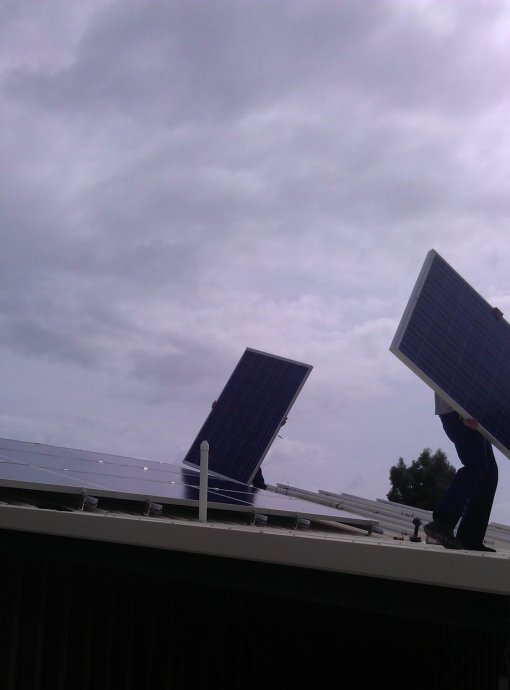
But the guys turned up on time at 8 am (that got them 10 big gold stars from me, right there!) and got straight into the job. They were all done and about to drive out around 2:30 pm just as the storm hit, so they were able to work on the metal roof without having to deal with the slipperiness that rain would have caused. But they did have to deal with the wind, which fortunately was coming from the opposite direction to the side of the shed they were working on.

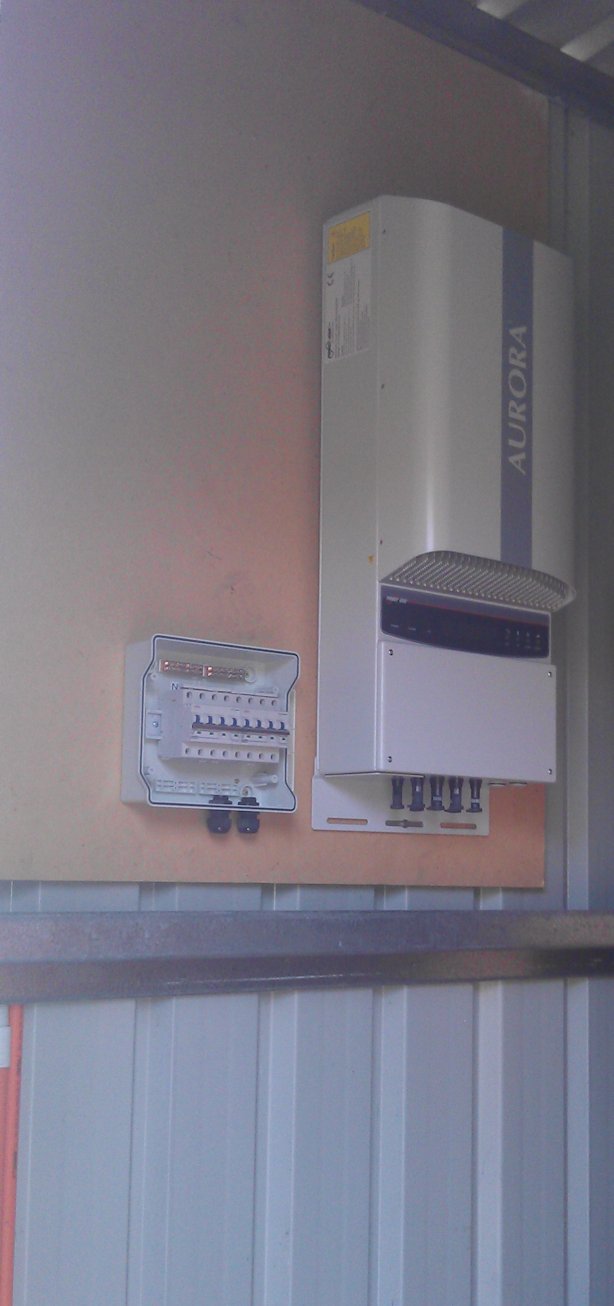
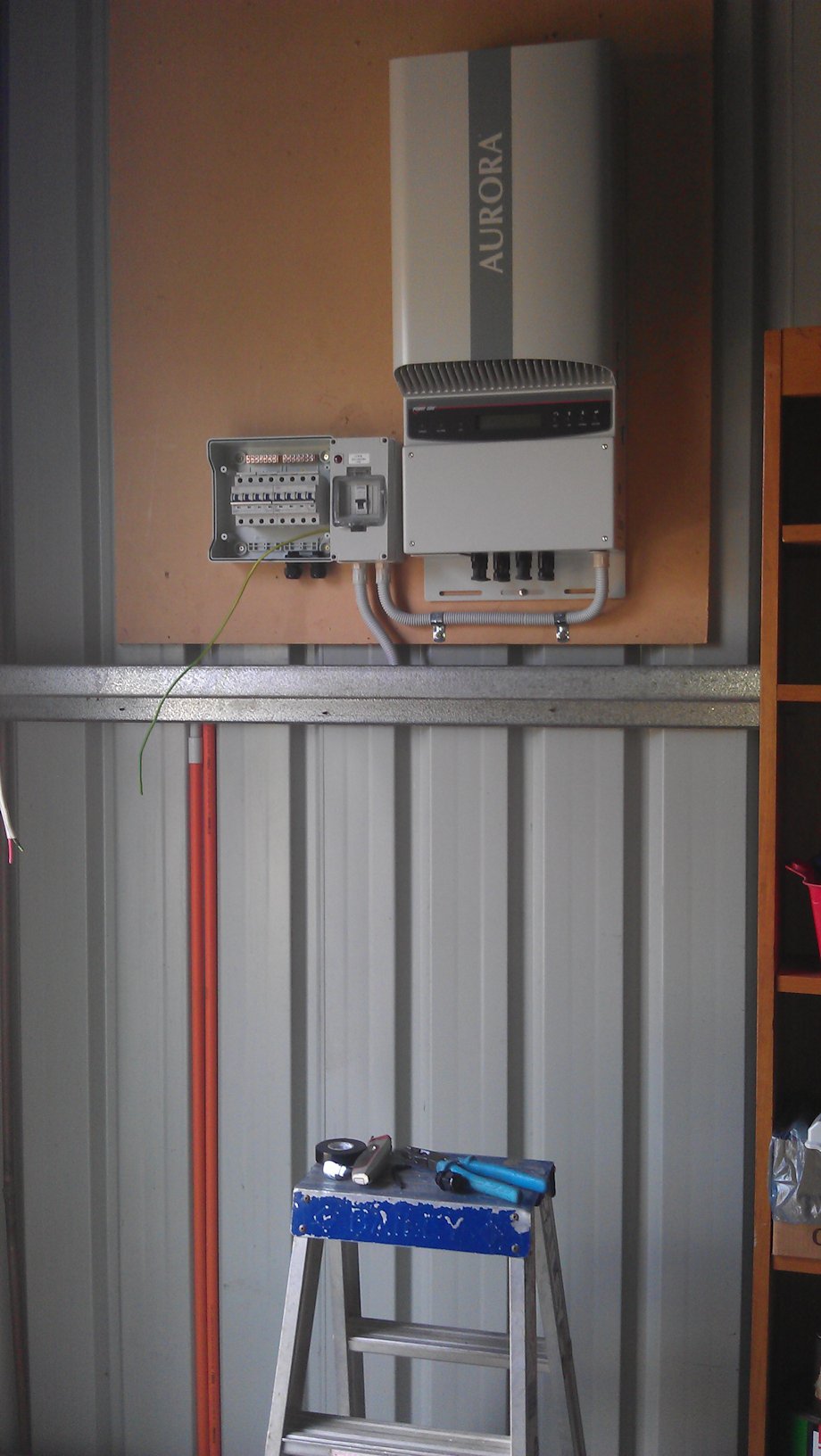
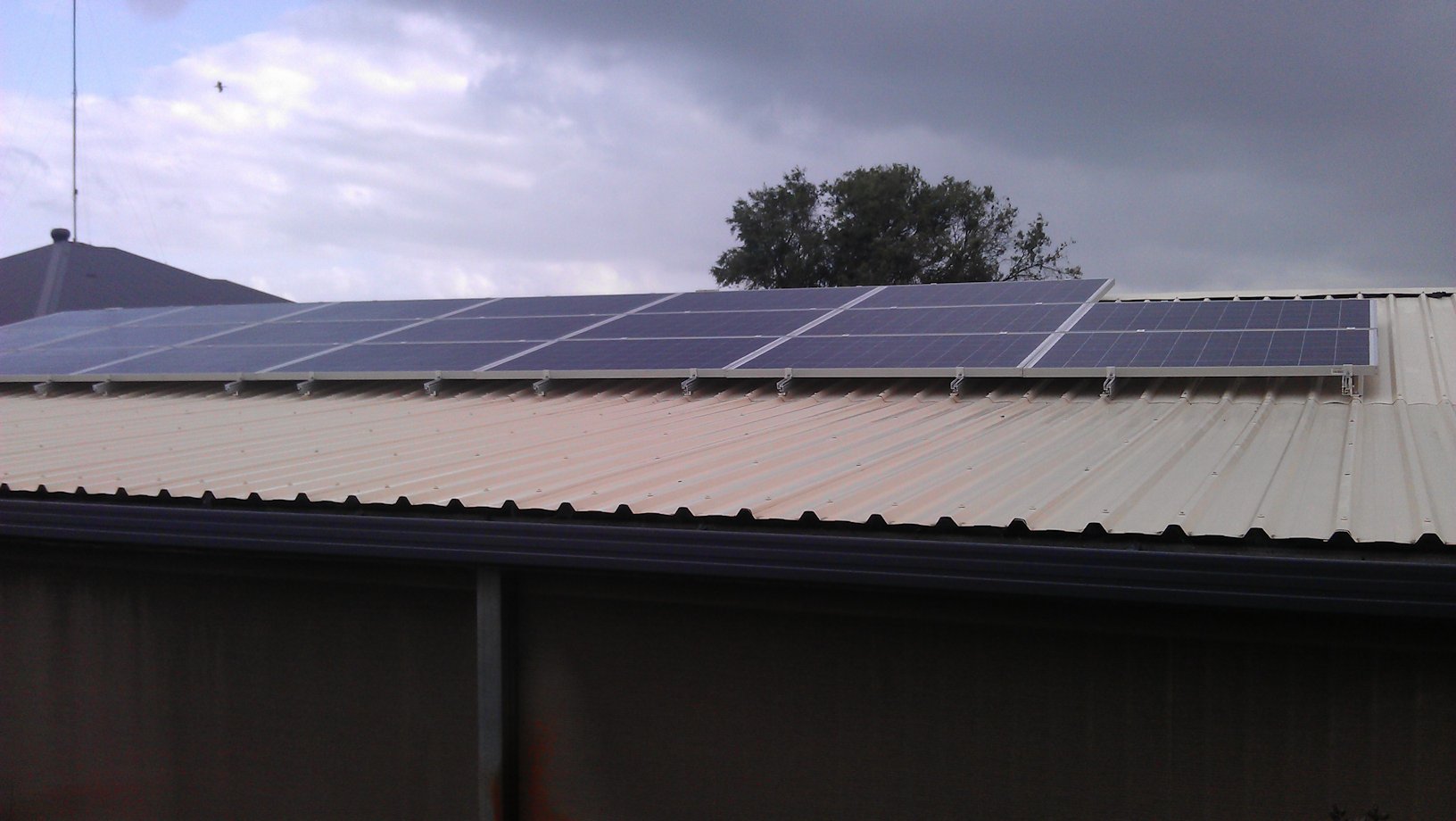
We have a BIG shed (about 6 m x 12 m), and there’s lots of room inside for things like the inverter. There’s also an electrical sub-board there too, so it was easy peasy for them to install the 20 panels on the shed. They installed them in landscape mode, not portrait like most installations, as the roof space on top of the shed meant they could get the 20 panels installed evenly and neatly that way.

Oh, and they earned another 10 gold stars for cleaning up after themselves (roof, driveway, inside the shed… though they lost a couple for not cleaning up after themselves in the shed’s toilet…), and some more gold stars for being friendly and polite and explaining everything I asked about (and anyone who knows me knows that I would have asked LOTS of questions!). And another set of gold stars for removing an old (unused) TV antenna from the shed that they said would cast a shadow on one panel in summer, reducing its efficiency — so even though removing that antenna wasn’t part of their brief, they did it for me at no extra charge. One final set of gold stars was for them not having to turn the power to the house off at ANY stage of the installation. The only power outage we had during this whole process was for about 10 to 15 minutes some weeks ago when Western Power swapped out the main electricity meter.

Even in the short time between the system being turned on this afternoon and the storm hitting, we were producing more electricity than we were using — and that was on quite an overcast day. Of course, the proof will be in the next couple of electricity bills, which should be substantially less than the current $250 to $300 per month that they are now.

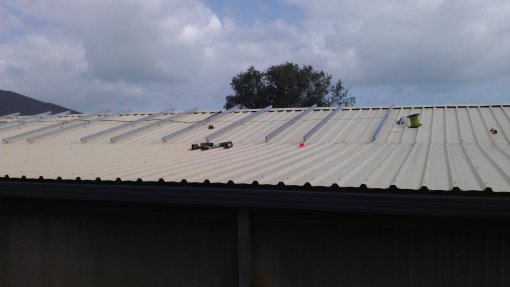
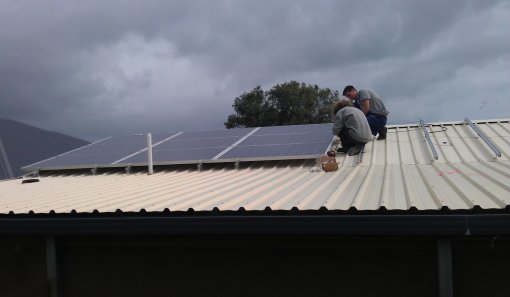
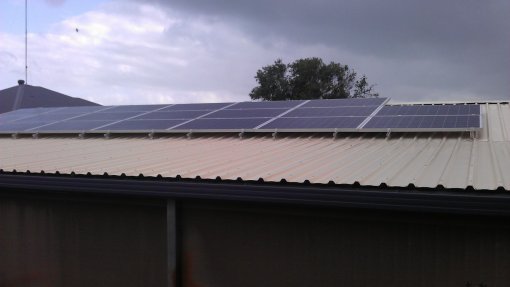
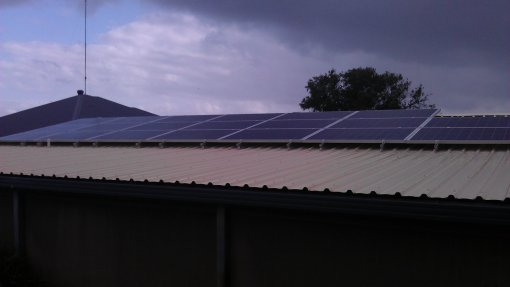
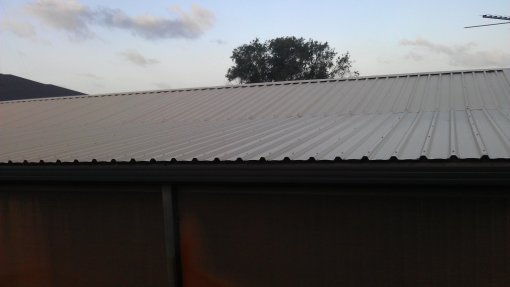
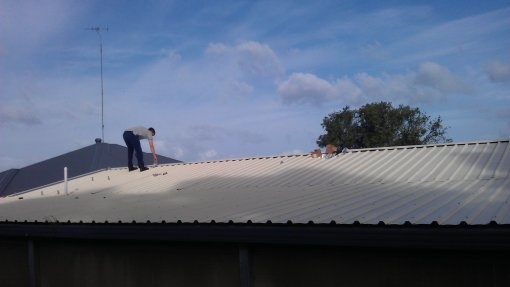
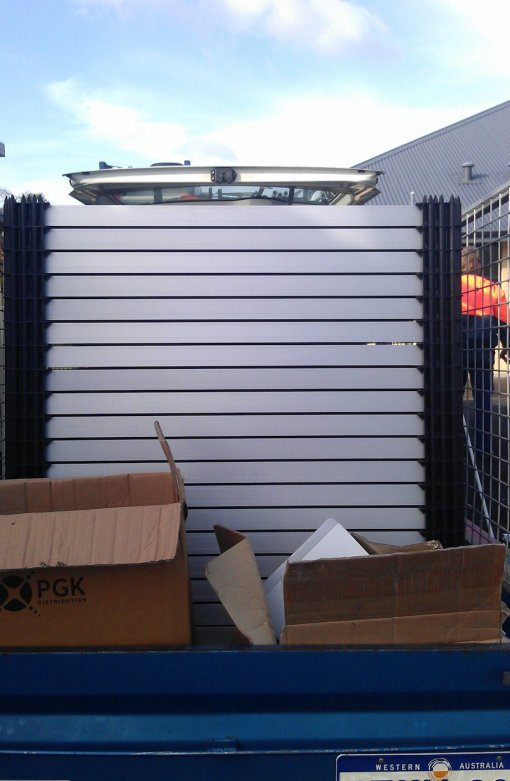
Here are progress photos of the shed before installation, during installation, and when it was all done:
IMAG1004

Eastern side of the shed first thing this morning; the main shed roof is the one at the greater angle — the lower sloped roof in front is the roof of the boat/caravan/car bay at the side of the shed
IMAG1005

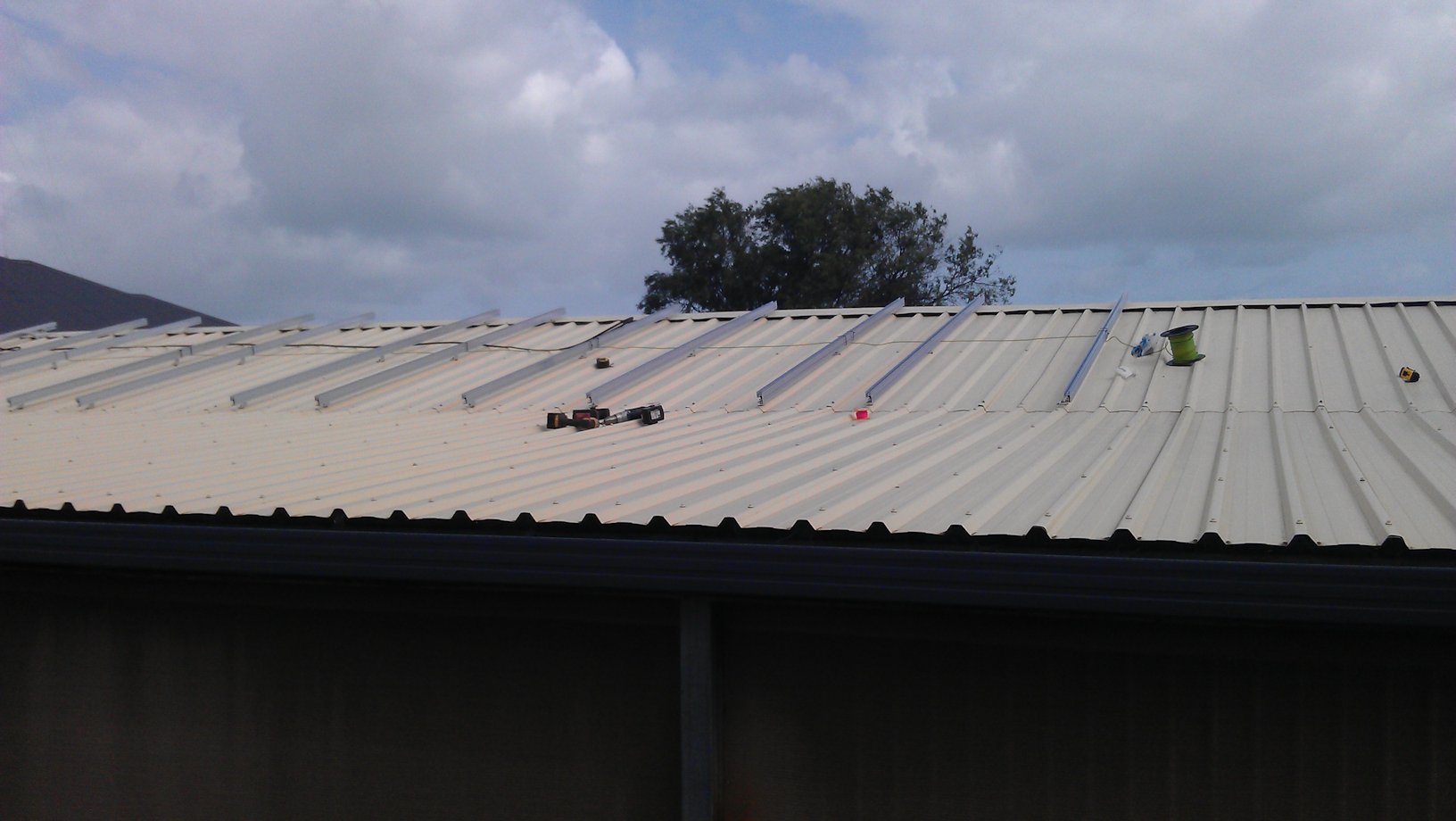
First of the rail holders getting installed. The weather was good then — just windy.

IMAG1006

No tradie bum crack! Extra gold stars for that! Note the height of the vent pipe…
IMAG1007

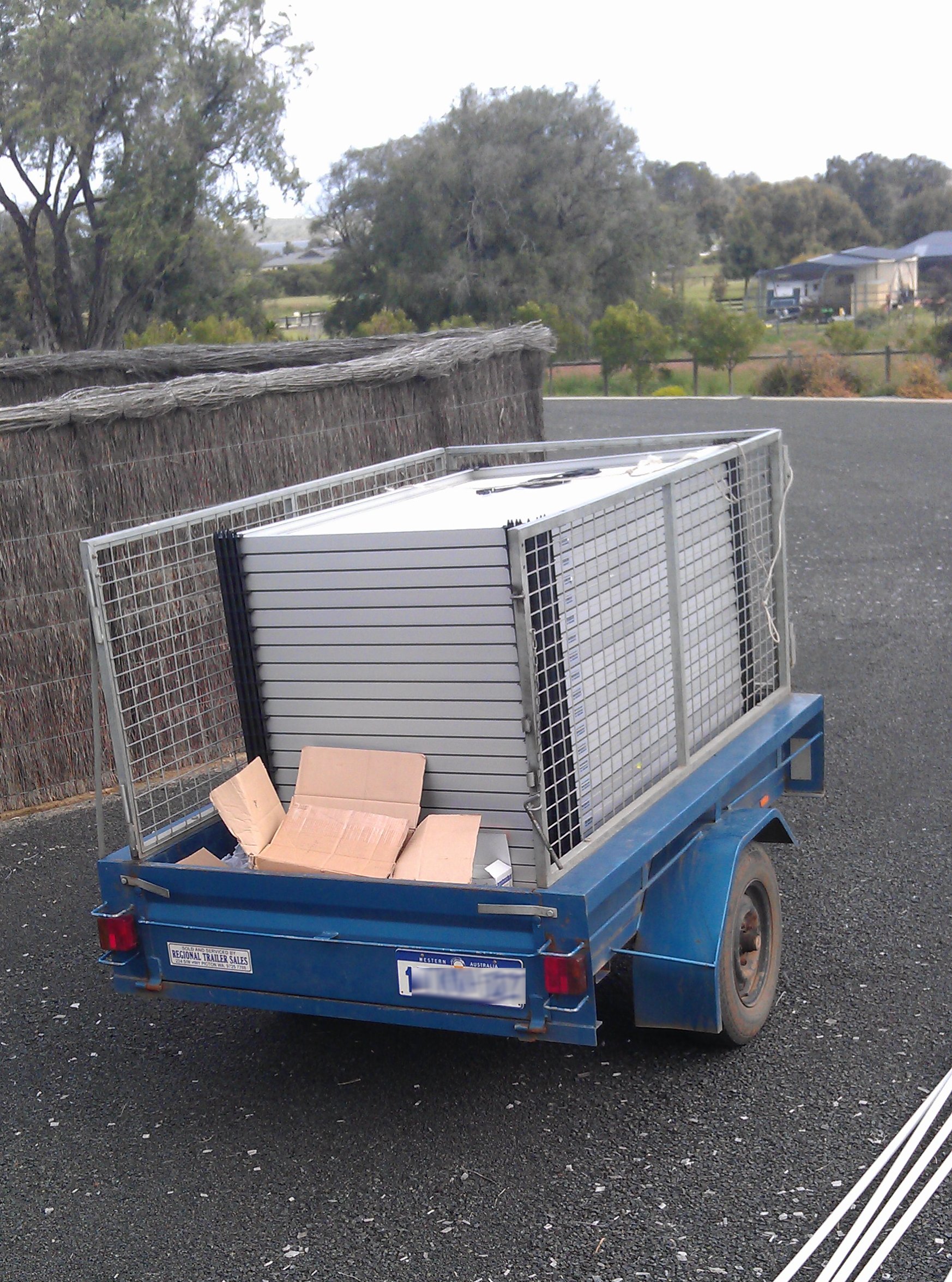
German-made Conergy (division of Bosch) solar panels all stacked and ready for us
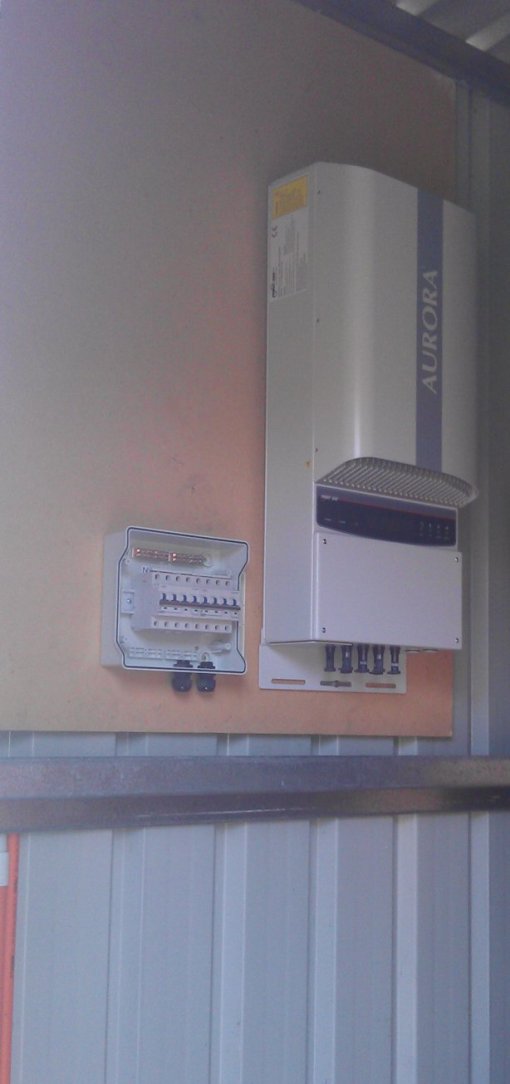
IMAG1008

Initial stage of the inverter installation. First they had to install the board it was mounted on…

IMAG1010

Now the rails. I like how they used fluoro coloured string for getting their lines straight – much easier to see than normal white or tan string
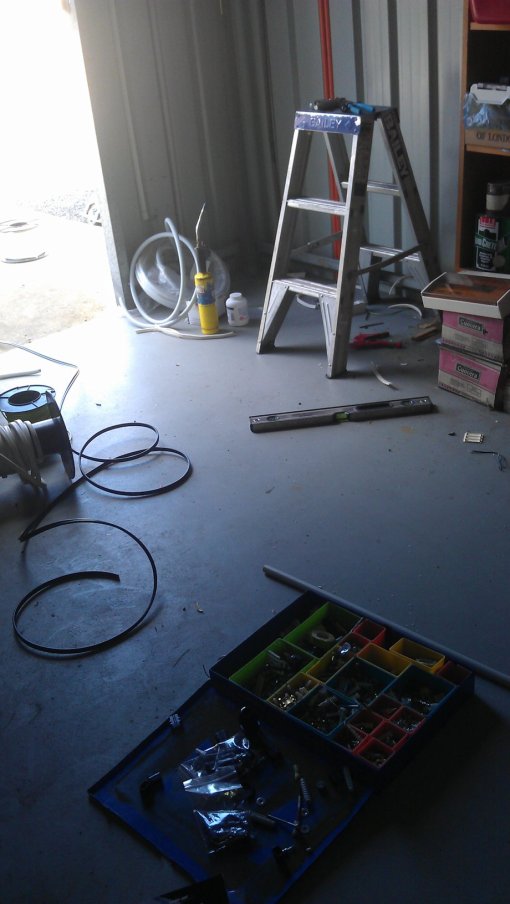
IMAG1011

Progress inside the shed for the inverter installation
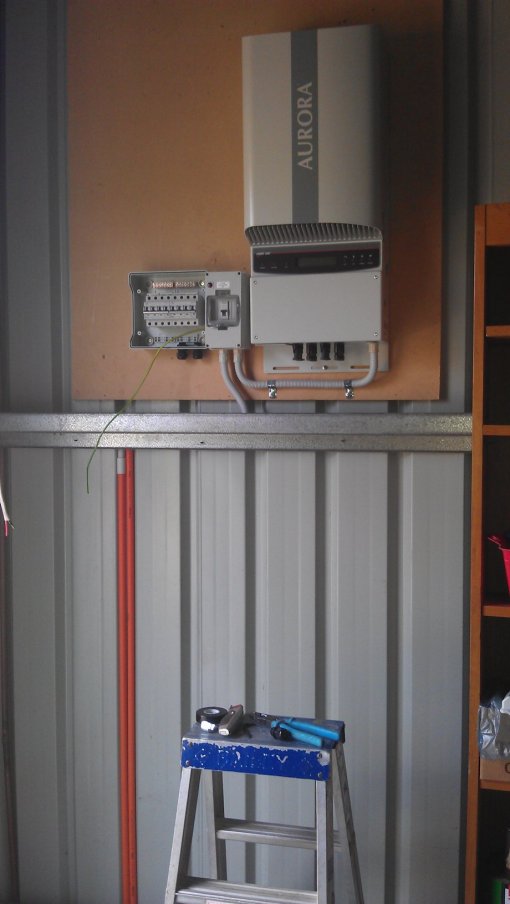
IMAG1012

IMAG1013

IMAG1014

IMAG1015

The first nine panels are almost done. Note the threatening sky…
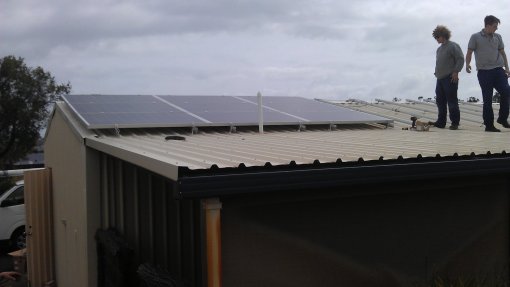
IMAG1016

Nine down, eleven to go… Can they get it done before the rain hits?
IMAG1017

In this wind, solar panels are like sails…
IMAG1018

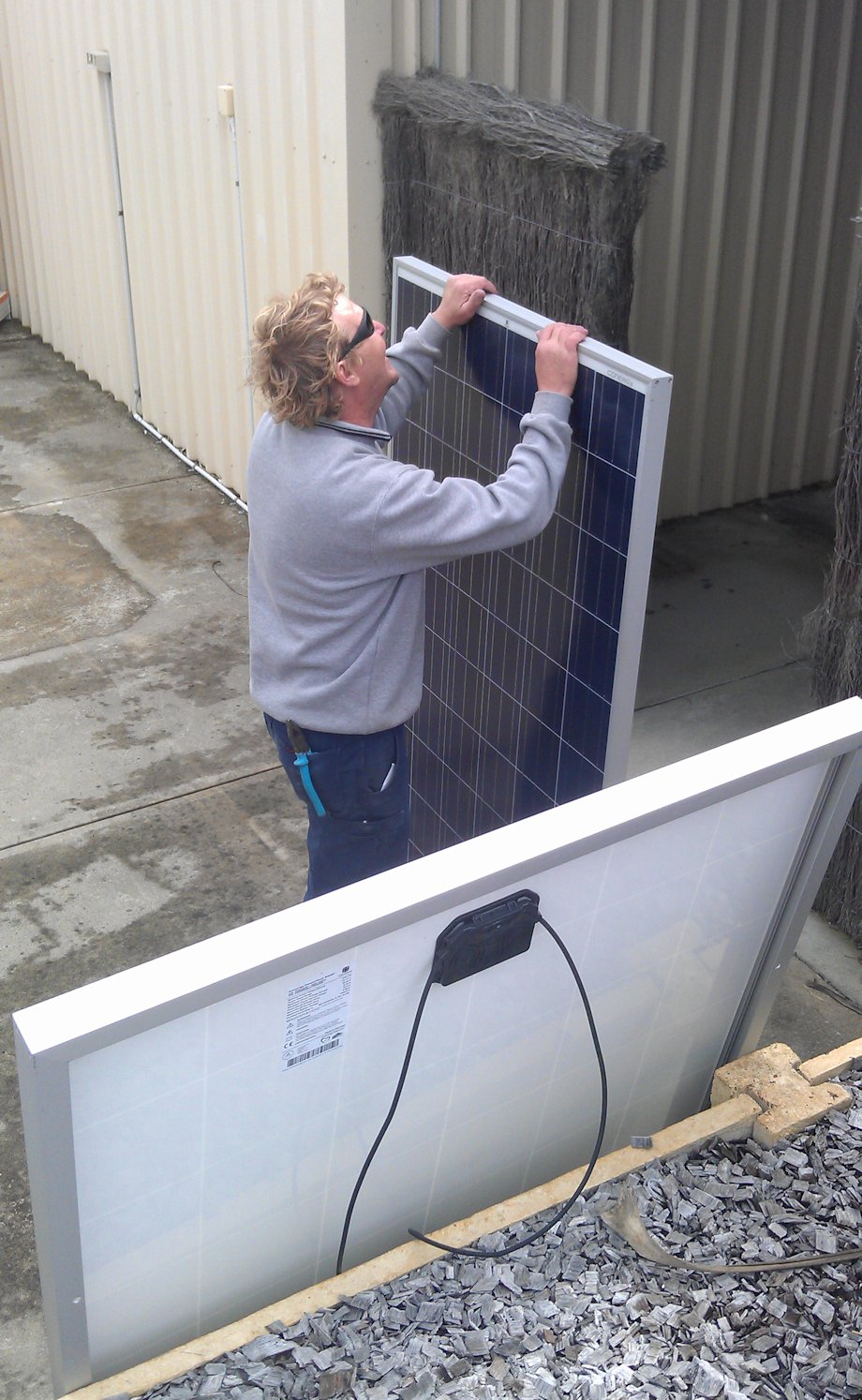
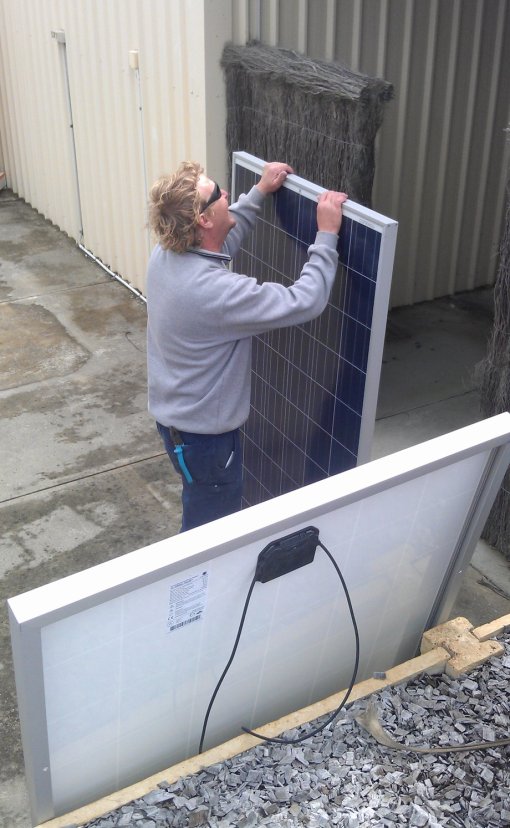
The boss passing up the panels to the young bucks on the roof. He did all the work inside and kept out of the weather 😉

IMAG1019

17 down, 3 to go…

IMAG1020

All done!

IMAG1021

And here comes the rain… Note the height of that vent pipe now — they cut it down so that it won’t cast a shadow on the panels thus reducing efficiency a tad (more gold stars)

Update (next day): Even with the gloomy, very overcast and stormy weather today, we’re currently producing twice what we’re using. Part of the deal was a ‘tracker’ than lets us know in real-time exactly how much electricity we’re using in the house at any moment, so I know what we’re using and can see on the inverter panel what we’re producing. For example: Usage = 1.4; production = 3.2. Of course, as the days get longer, less cloudy, and there’s more UV radiation, I expect that the production rate will go up even more.

Update 9 September 2013: So far our system has averaged 21 kWh per day, even though it’s only producing a maximum of about 3.4 (of 5) at the highest point in the day (that’s expected to increase to 5 or more in the next couple of months as the sun’s angle changes and the number of hours of daylight increases). I called the providers of the system and the chap on the phone answered heaps of my questions:

  • Yes, the solar system powers our house while it is producing power; any excess that we don’t use is sent to the grid. At night and when the output is low (overcast, low light), of course, we’re taking from the grid.
  • It’s far better for us to use power during the day when it’s effectively ‘free’ than at night. So, doing laundry, cooking etc. are all better done during the day. And in summer or the depths of winter, it will be better to turn on the air conditioning in the morning to cool/heat the house for ‘free’ and thus not expend as much energy getting hot house cool (or vice versa) later in the day. Working from home helps too, as our computer use will mostly be in daylight hours (though I have a server that’s on 24/7, so only some of its power usage will be ‘free’).
  • Over 12 months, a 5 kW system like ours should average 20 kWh (20 Western Power units) — some months will be much more, some much less, but on average 20 kWh per day is expected to be the average. Based on our pre-solar usage of around 31 to 34 units per day, that means that effectively about 2/3 of our daily power will be produced by the system. We may not use all those 20 units per day, of course, so there will still be a bill, which I was expecting — I knew the 5 kW system would not cover ALL our usage.
  • He also confirmed that hot days don’t equal best production. In fact, on very hot days the system is less efficient than on days around 25C. The system uses UV light, not heat to generate power.
  • Our optimum production time in summer is likely to be around 10 am as our system faces east and is at a low angle. So he encouraged us to do as many powered activities as possible in the mornings, if we could.
  • And no, we shouldn’t feel guilty any more about turning on the air con in summer or winter! That’s not to say we should waste power, but more that we should take advantage of the optimum times to use power so that we use as much as possible that’s ‘free’.

Update 31 August 2015: Two years on…

  • Total kWh produced since installation = 14,884, which averages out at 20.36 kWh per day throughout the year — rain, hail, or shine. Right on track with expectations.

Update 30 August 2016: Three years on…

  • Total kWh produced for the past 12 months = 7,359, averaging out at 20.1 kWh per day for the past 12 months. Again, on track with the expected average output. And this year, we’ve had quite a wet, cloudy winter — much more so than the past two years, so that may be why the average is down just a tad.
  • Total kWh produced since installation = 22,243, averaging out at 20.29 kWh per day since installation.

Update 30 August 2017: Four years on…

  • Total kWh produced for the past 12 months = 7,542, averaging out at 20.66 kWh per day for the past 12 months. Again, on track with the expected average output.
  • Total kWh produced = 29,785, averaging out at 20.38 kWh per day since installation.

Update 30 August 2018: Five years on…

  • Total kWh produced for the past 12 months = 5,748, averaging out at 15.74 kWh per day for the past 12 months. In addition to a wet and quite cloudy winter and a very mild summer, one of the isolators was faulty for up to 8 months, not the couple of months I’d thought. When I checked the electricity bills, the number of renewable units fed back into the grid dropped dramatically around January 2018, which indicated that the system wasn’t producing as expected.
  • Total kWh produced since installation = 35,533, averaging out at 19.45 kWh per day since installation, so just a tad under the expected 20 kWh, despite the fairly big drop this year. This should go back to average next year, because the faulty isolator has been replaced and the output from both arrays is now similar.

Update 30 August 2019: Six years on…

  • Total kWh produced for the past 12 months = 7,383, averaging out at 20.22 kWh per day for the past 12 months. Again, on track with the expected average output.
  • Total kWh produced = 42,916, averaging out at 19.58 kWh per day since installation.

Update 30 August 2020: Seven years on…

  • Total kWh produced for the past 12 months = 7,437, averaging out at 20.32 kWh per day for the past 12 months. Again, on track with the expected average output.
  • Total kWh produced = 50,353, averaging out at 19.69 kWh per day since installation.

Update 30 August 2021: Eight years on…

  • Total kWh produced for the past 12 months = 7,327, averaging out at 20.07 kWh per day for the past 12 months. Again, on track with the expected average output.
  • Total kWh produced = 57,680, averaging out at 19.74 kWh per day since installation.

Update 30 August 2022: Nine years on…

  • Total kWh produced for the past 12 months = 7,320, averaging out at 20.05 kWh per day for the past 12 months. Again, on track with the expected average output.
  • Total kWh produced = 65,000 averaging out at 19.77 kWh per day since installation.

Update 30 August 2023: 10 years on…

  • Total kWh produced for the past 12 months = 7,405, averaging out at 20.2877 kWh per day for the past 12 months. Again, on track with the expected average output.
  • Total kWh produced = 72,405, averaging out at 19.8261 kWh per day since installation.

Update 30 August 2024: 11 years on…

  • Total kWh produced for the past 12 months = 7,371, averaging out at 20.1393 kWh per day for the past 12 months. Again, on track with the expected average output.
  • Total kWh produced = 79,776, averaging out at 19.8547 kWh per day since installation.

Update 30 August 2025: 12 years on…

  • Total kWh produced for the past 12 months = 7,429, averaging out at 20.3534 kWh per day for the past 12 months. Again, on track with the expected average output. Very wet winter—wettest for nearly 30 years.
  • Total kWh produced = 87,205, averaging out at 19.8962 kWh per day since installation.


Postal service mistimings

15 07 2013

I’m not sure if Australia Post or the US Postal Service is at fault, but I’ve had three parcels sent to me from friends in various parts of the US in the past couple of months and two of them have taken an AGE to get to me — far longer than I would have expected for the ‘First Class International’ postage fees my US friends paid.

The first parcel was sent from a town in Connecticut on 4 May 2013 and I received it on 21 June 2013 — some 47 days later. There were no signs of inspection by any security or customs agencies, so that doesn’t explain the delay. The parcel wasn’t overly large or awkward.

The second was sent from San Diego, California on 31 May 2013 and I received it today (15 July 2013) — some 45 days later. With this one, my friend had paid $16.75 postage and her local Post Office told her it would take ‘5 to 7 days’ to reach me. Based on previous experience, I knew that 5 to 7 days was overly optimistic, and figured it would be more like 15 days. But 45??? Like the parcel from Connecticut, there was no evidence of customs or security agency inspection. Again, the parcel wasn’t large or awkward.

The third was sent from Oklahoma City, Oklahoma on 26 June 2013 and arrived on 12 July 2013, some 16 days later. Postage paid was about $31. No evidence of security or customs inspection. This parcel contained two books and a calendar, so it wasn’t overly large or awkward either.

The 16-day time frame is what I expected for all of them, based on my previous experience with getting things from the US, not 45 or 47 days.

I don’t know which postal agency was at fault for such tardiness, though my local Post Office lady says ‘it’s likely the US’; well, she would say that, wouldn’t she, seeing as though she works for Australia Post! I wonder if the budget cuts to the USPS are starting to affect general and international postal services.

Lucky I wasn’t in a hurry for any of the parcels I received….

See also: https://rhondabracey.com/2011/09/05/whats-up-with-australia-post/

Update: I sent a parcel on 24 June from Western Australia to Connecticut. It arrived on 3 August, some 40 days later. My Connecticut friend said this: “I think the slow mailing times are a temporary result of some consolidations in the larger distribution centers in the US postal systems. Some tightening on customs rules might be jamming things up, too. Just as TSA guidelines made inspectors lose perspective and spend too much time inspecting elderly folks in wheelchairs and little kids’ teddy bears at one point, some printer cartridges filled with explosives caused mail inspectors to lose perspective on packages.”


Moving into the solar age

29 06 2013

When we purchased the block of land down south back in 2005 or thereabouts, one of the things that we thought we’d have on the house we built on it was a solar photovoltaic (PV) system. At the time, they were very rare for domestic purposes — and VERY expensive.

As it happened, we didn’t build on the block — the GFC followed by a close encounter with bushfires meant that we moved from that town back in 2010. When we first moved into the house we’re now in, we got a quote on a 5 kW solar PV system. The quote was for about $25,000 and the sales rep said if we wanted the panels on the shed and the inverter in the shed (our preference, particularly after she said the inverter was noisy), then we’d have to dig up the driveway/concrete pad between the shed and the house or have an overhead wire between them, all for extra cost. We decided to hold off as there was no way we were going to pull up hardstand to get electrical conduit to the house. And $25K was a LOT of money already, with the unknown added cost of digging up and replacing the hardstand.

Three and a bit years on, and with the sale of an investment property we’ve had for 18 years, suddenly a solar PV system was back in the frame. Since our quote for $25K some three years ago, the price has come down a lot, and the technology has improved and become far more common than it was when we bought the land back in 2005. And in my investigations over the past few years, battery storage/backup is now a possibility.

Over the past two weeks, we’ve been talking to a solar company and last week we signed an application to Western Power for a 5 kW system. It’s not the cheapest system available, but all the panels are made in Germany, not China, by a big name German company. Likewise the inverter.

We now have to wait to see if Western Power will approve our application, or if they will reject it and only allow us to have a smaller system (e.g. 3 kW or 3.5 kW).

Some of the things I’ve learned this time round:

  • The Western Power transformers in our area are the determining factor for what size kW system they will allow. While I’d like to have a 10 kW system, that’s not going to happen any time soon. In fact, we may not even get the 5 kW system we’ve applied for.
  • It is illegal to have battery storage/backup on a solar PV system in Western Australia, though this may change in the near future. It seems Western Power are testing permanent battery storage/backup units that are wired into the fuse box and that act as a UPS for the entire house. These battery units are independent of solar PV systems.
  • We *can* have the panels on the shed and the inverter in the shed and feed into the house *without* having to dig up anything or without stringing overhead power lines.
  • I learned this last time, but figured it’s worth mentioning again — heat is irrelevant for efficiency of solar panels. In fact, they aren’t anywhere near as efficient in very hot weather as they are when it’s about 25C. It’s the amount of light they receive, not the amount of heat.

So now it’s a waiting game. The first step after signing the application and the contract with the solar people is waiting for Western Power’s approval. Once that’s through, Western Power have to change out our meter to one that is suitable for feeding into the grid as well as taking from the grid (normal meter). Once the meter is changed, then the solar PV system installation can happen. The guy from the solar company thought it would be at least six weeks before we had an installation date.

At least we’ve started…

And when battery storage/backup systems for residences are approved by Western Power, we’ll be getting one of those too. I don’t want to be without power for 31 hours like we were last June. And I don’t want to be continually resetting clocks every time we have short brownouts too (we get a lot of those…). While a battery system may not ‘save’ us for 31 hours, with judicious usage in a power outage, I expect we would get several hours of backup. Most power outages here are less than two hours’ duration.

While we can’t be totally off-grid, at least we can reduce our reliance on an aging network and its fluctuating power. And reduce our continually escalating power bills (domestic power in Western Australia has risen by about 60% over the past couple of years).

Update 20 August 2013: Since I wrote this post, the installers came out and measured up everything for submission to Western Power, Western Power has approved us for a 5 kW system and has already swapped out the meter. I got a phone call today to set the installation date — the panels and inverter are being installed next Friday, some two months since we committed to buy.

The panels are going on to the shed roof, and on the eastern side, which is closest to a raised garden area, so I should be able to get some good shots of all 20 of them!

Blog post about the installation — with photos! https://rhondabracey.com/2013/08/30/solar-panels-are-up/


The bees are loving it!

24 06 2013

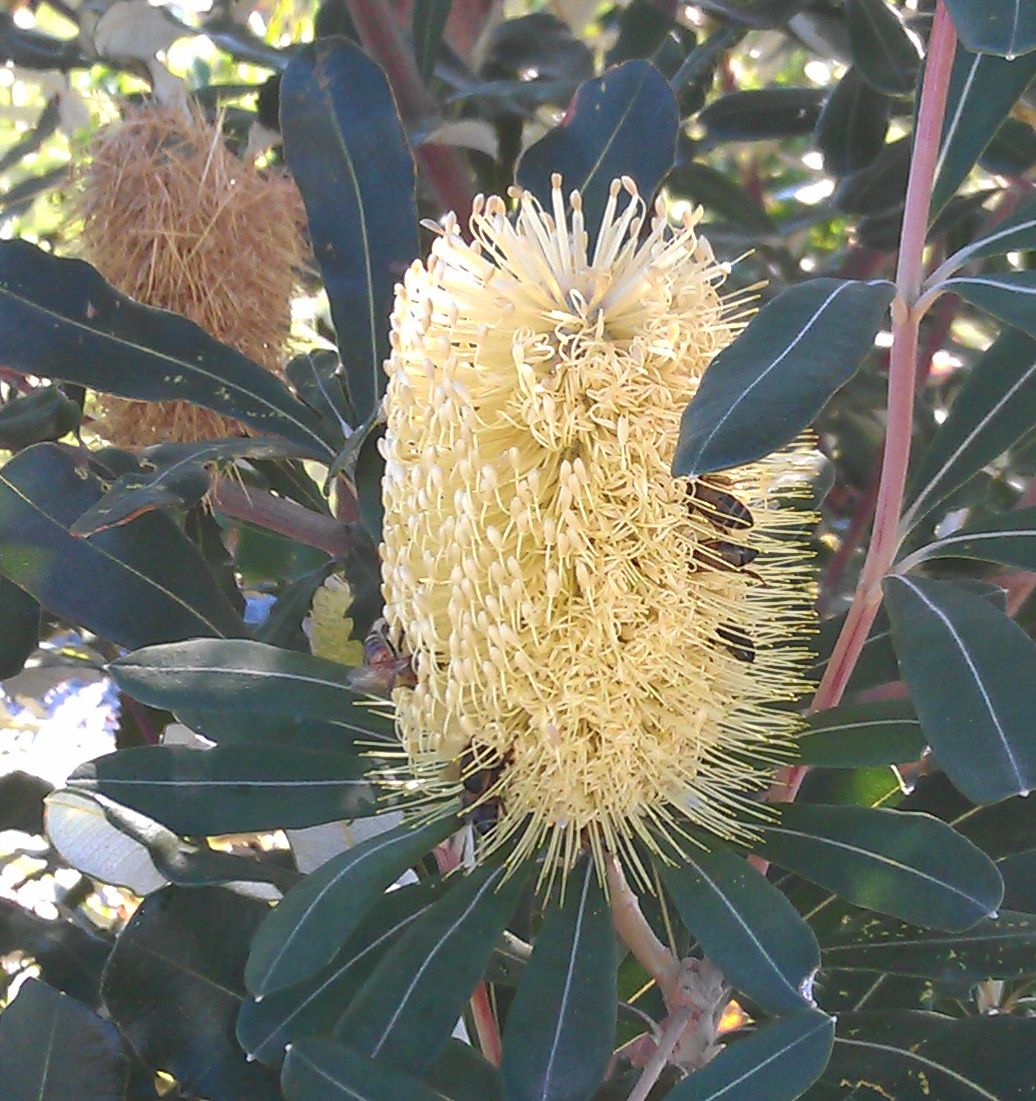
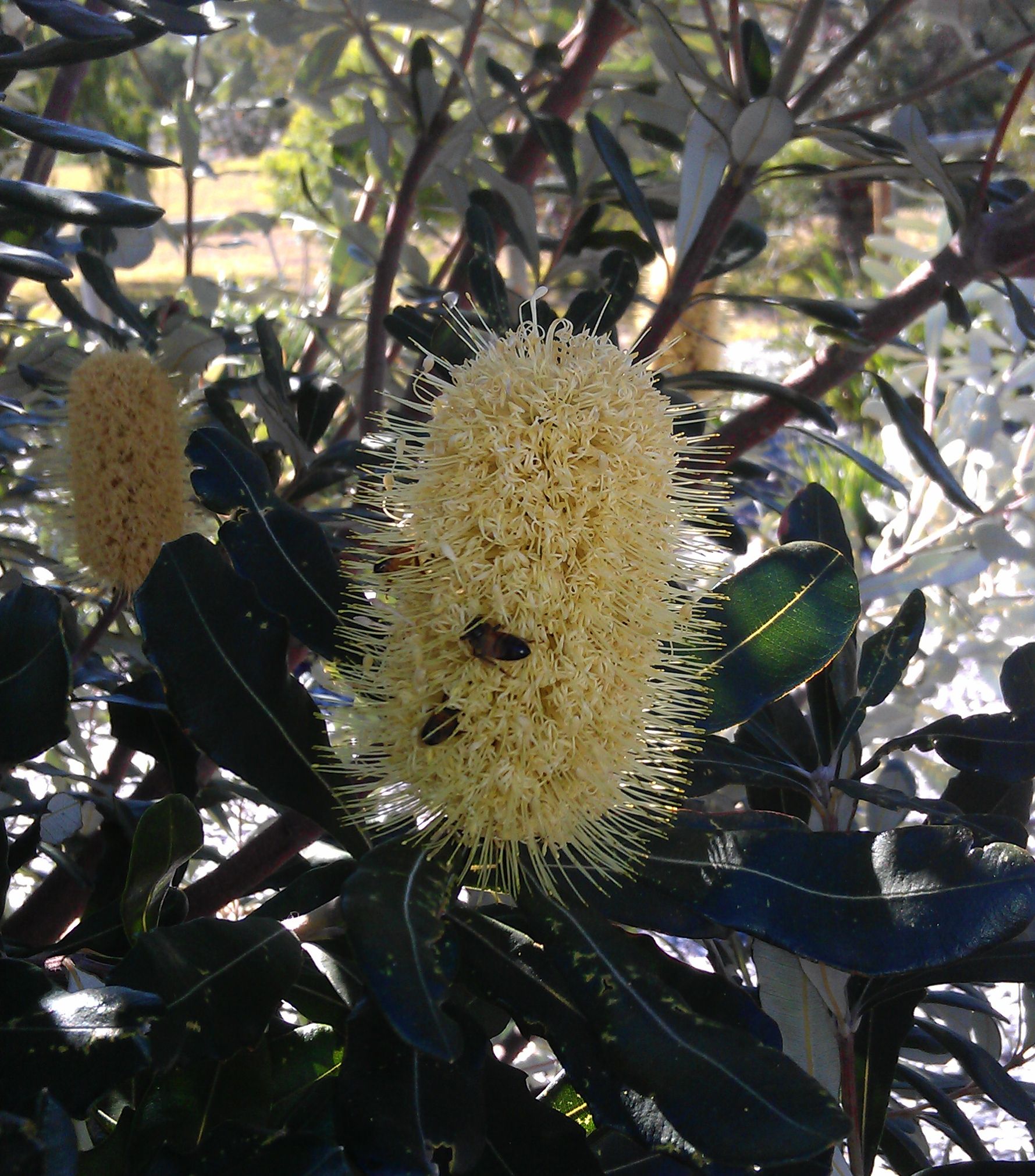
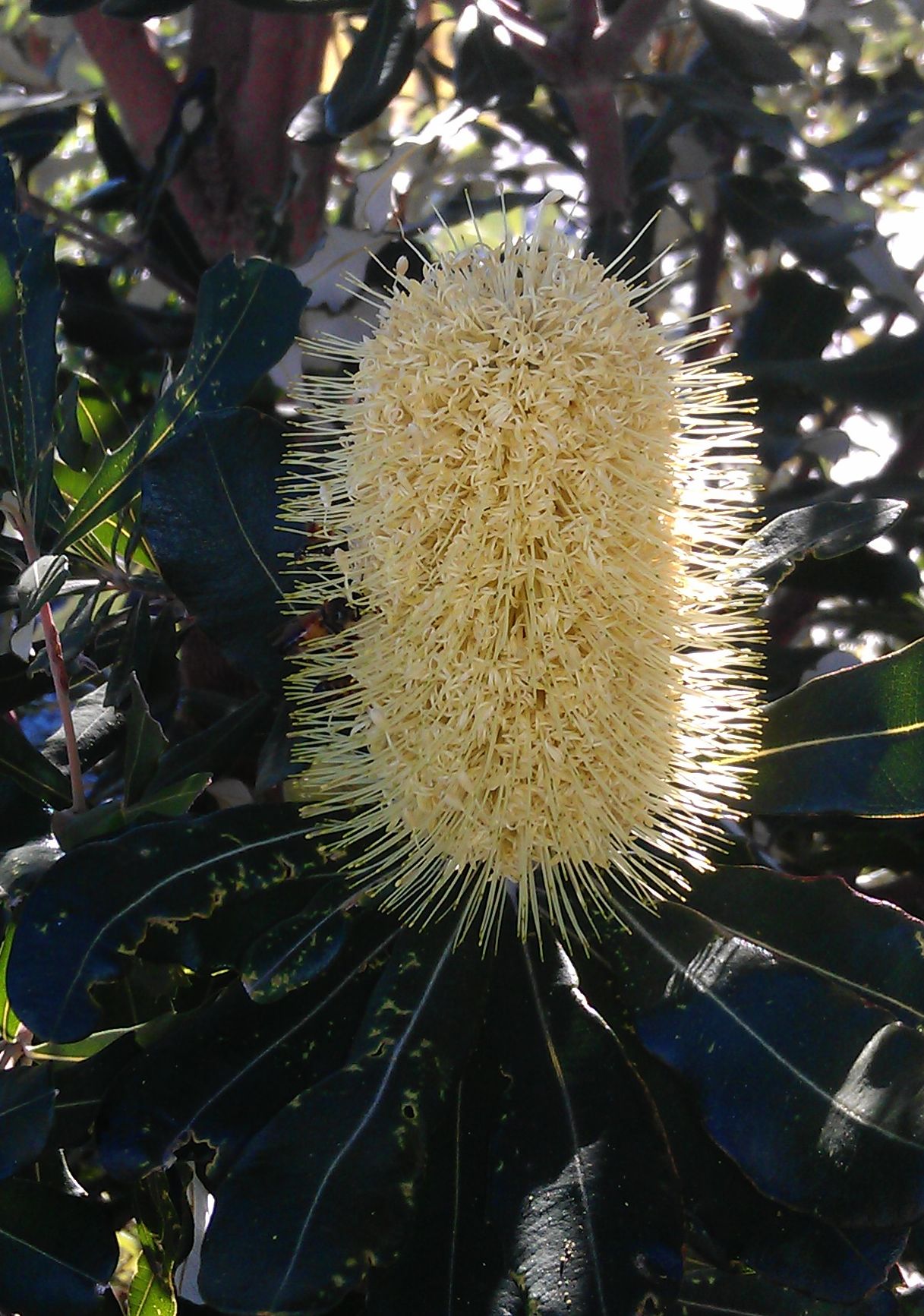
The banksia that self-seeded a while back has heaps of flowers on it at the moment, and some of them are just FULL of bees, with their whole bodies submerged in the flower head trying to get nectar and/or pollen. They sure weren’t interested in what I was doing!

I did notice that they didn’t seem interested in the flowers that were still in perfect condition — only those that had started to die off. Maybe that’s when the nectar is the sweetest? Or has fermented and the bees become drunk? (I used to have grape vines at a house I owned a long time ago, and the bees would get very drunk when supping on the fermenting bunches of grapes — they were really funny to watch.

banksias01

banksias04

banksias03

banksias02