Community Quilt 216

8 07 2015

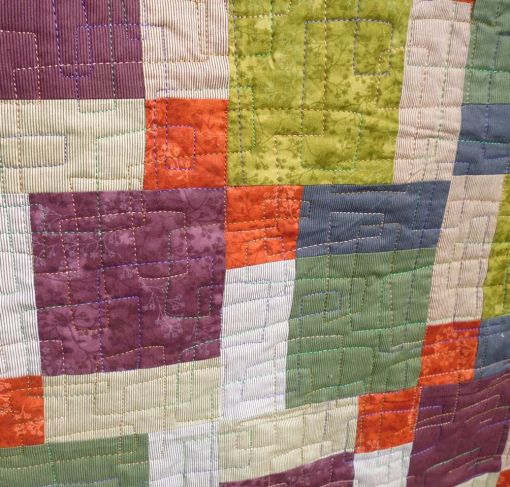
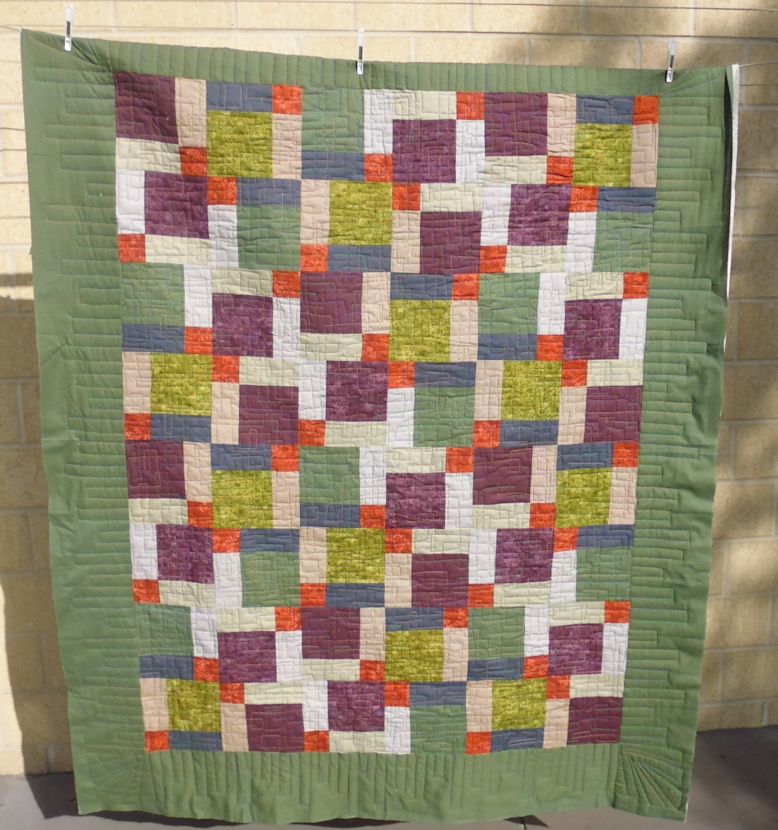
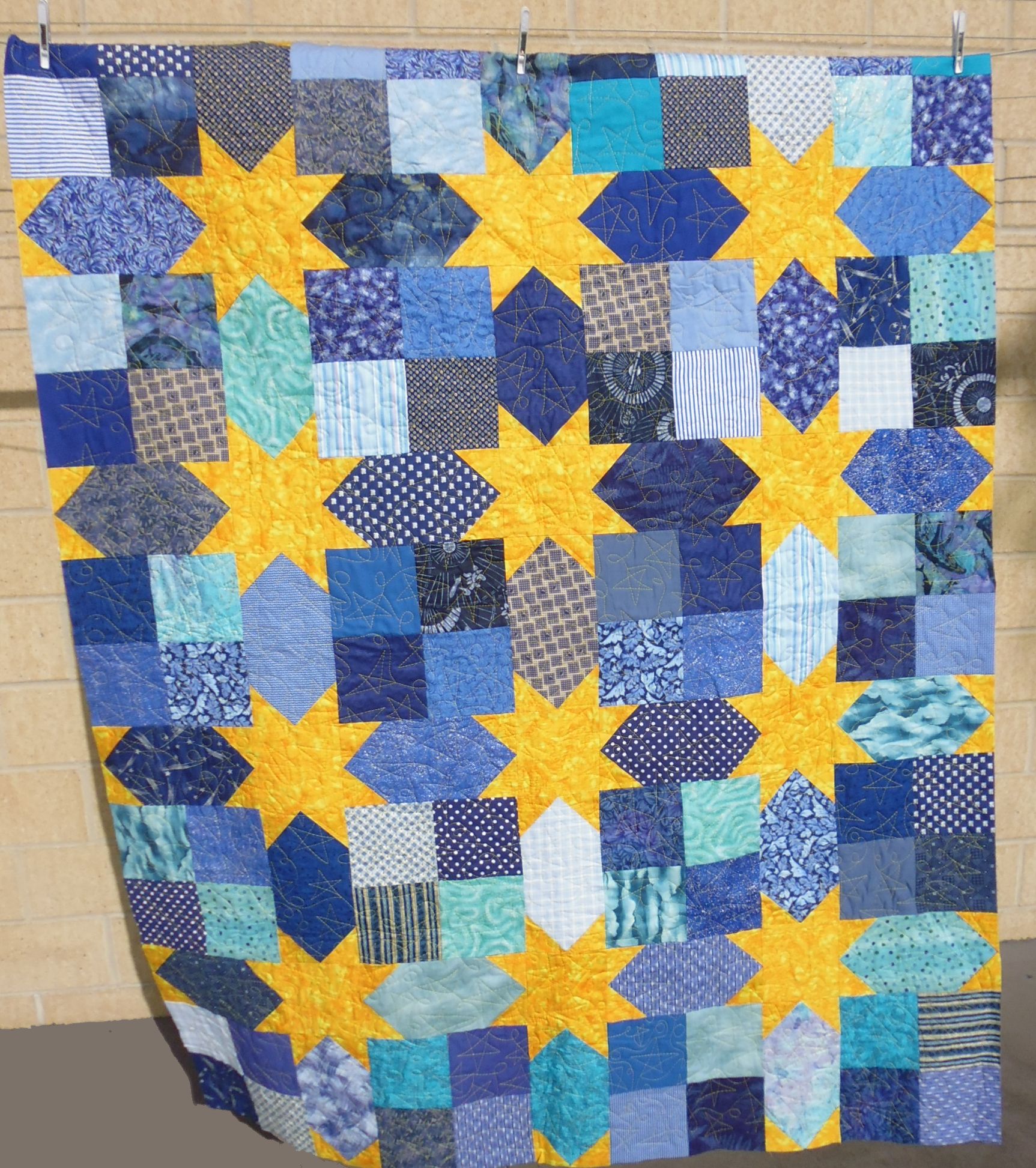
As soon as I took this quilt out of the bag, I knew I had to quilt it with stars! So I did. Free-motion stars and loops, in yellow.

(Click on a photo to view it larger)

quilt216_02

quilt216_01

Threads used:

  • Top: Isacord ‘Citrus’ (40 wt, trilobal polyester, colour 0600)
  • Bottom: Fil-Tec Magna Glide Classic pre-wound bobbin (light tan)


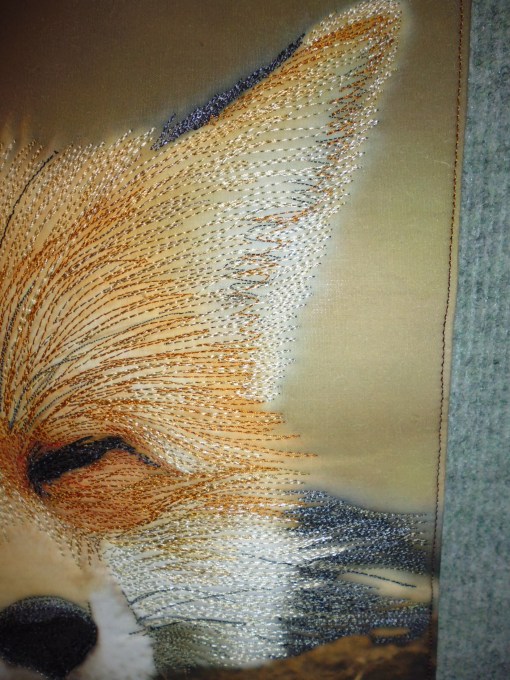
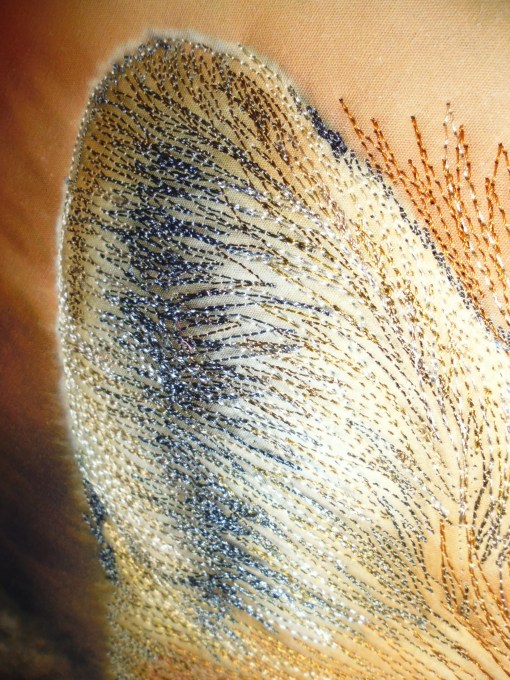
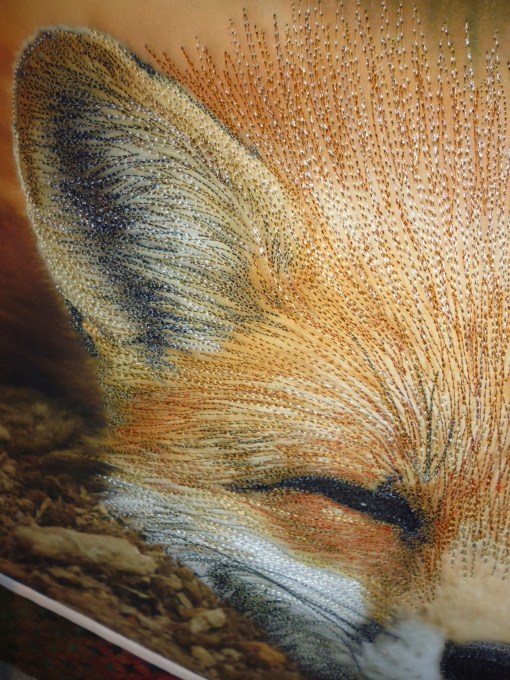
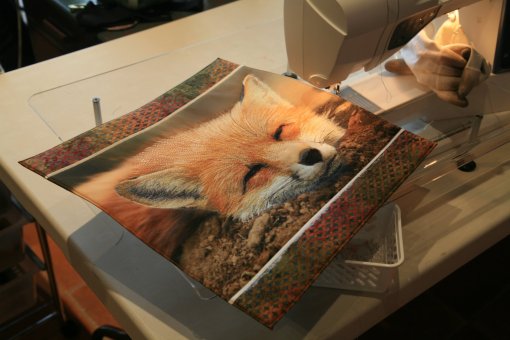
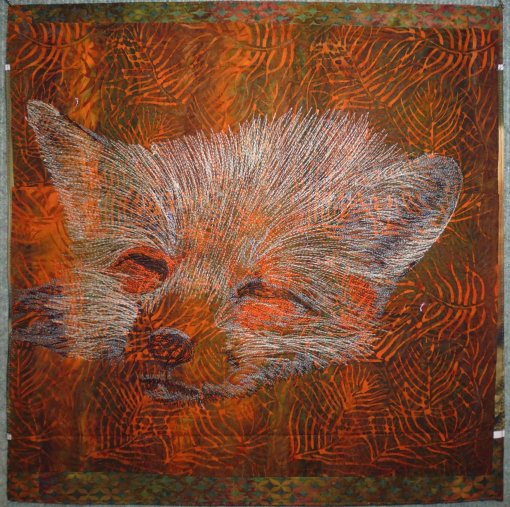
Thread painting Fabulous Mr Fox!

8 07 2015

In the group of photos I had printed onto fabric during the Quilting Adventures workshop I took in March 2015 with Lura Schwarz Smith and Kerby Smith was a gorgeous photo of a fox that I’d found on Flickr. Prior to the workshop, I’d emailed the owner of the photo to get permission to use it for printing on fabric and then ‘painting’ with thread, which he gave.

On my annual quilting retreat this past weekend I finally got around to thread painting ‘Fabulous Mr Fox!’. The techniques for putting this piece together are detailed below the photos.

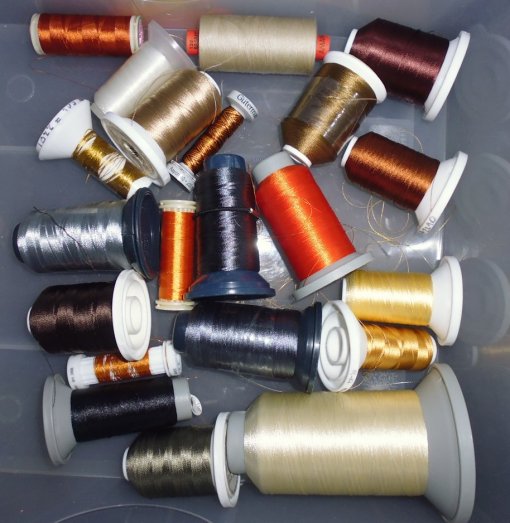
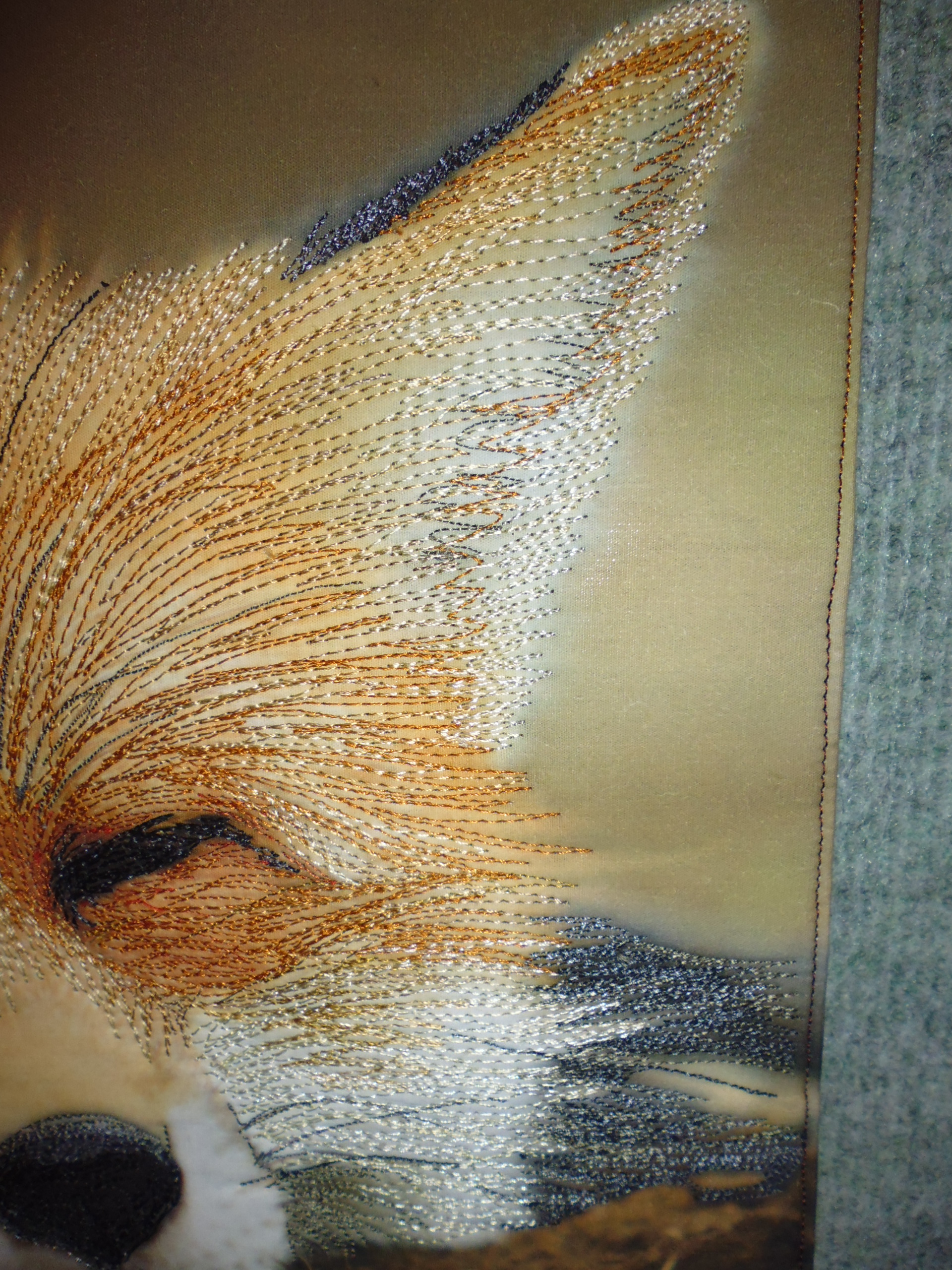
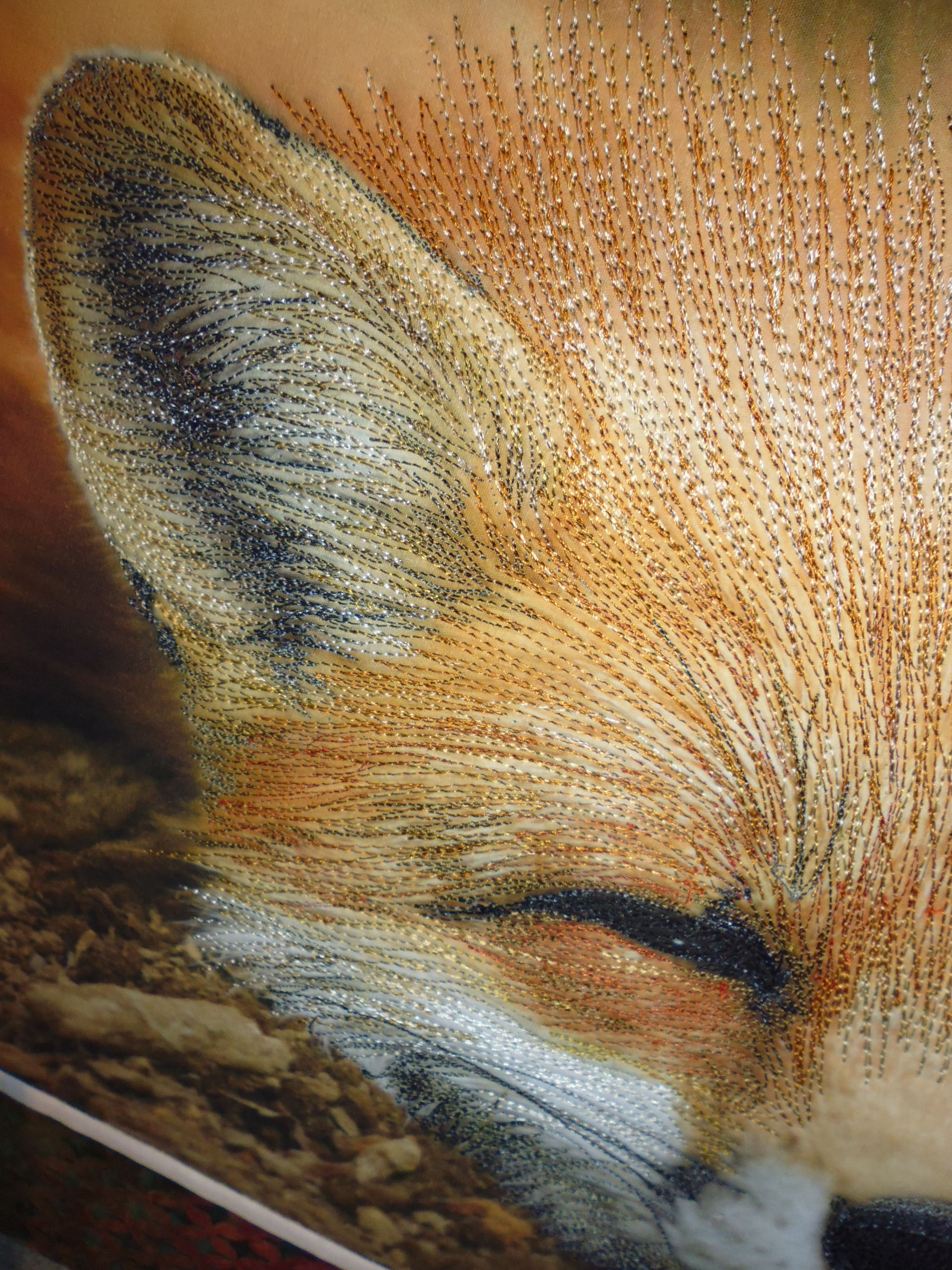
I had a lot of fun playing with various threads (about 20 different ones) and free motion stitching (on my domestic sewing machine) to get the effect of the fur, and the life in his eyes (no, I don’t know if the fox is a male or female, but I’m calling him ‘Fabulous Mr Fox!’). I used the knowledge I’d gained from Pam Holland’s workshop I’d attended in February 2014 at Empty Spools at Asilomar to do the thread work — starting with the eyes and dark areas first, then adding lighter and lighter threads as I went along. I decided not to stitch the ground, the background, or the body of the fox in the distance, instead concentrating on the face. I also didn’t stitch the muzzle as I wanted it to puff a bit.

I really love how Fabulous Mr Fox! turned out, and I was especially pleased with how I captured his ear on the left side of the photo.

Oh, I got an email from the photographer after I notified him of the completion of this piece and linked to my in progress photos on Flickr. Here’s what he said: “VERY VERY NICE WORK!! I am glad to see your work! I think your friend is happy person. Thank you for using my photo!”

(Click on a photo to view it larger; Note: These photos are big and may take a while to download on a slow connection)

P1040744

P1040745

P1040746

P1040747

P1040748

P1040749

IMG_7128

Back:

P1040750

Threads used:

P1040751

How I put this piece together

To make this piece I used:

  • Floriani Stitch ‘n’ Shape as the heavy duty stabiliser
  • a piece of batting to go between the stabiliser and the top of the piece
  • a piece of batik that I wrapped around the stabiliser and batting, creating the ‘border’ fabric
  • another piece of batik on the back (I only had a fat quarter of the front piece of batik and it wasn’t enough to fully wrap around the piece)
  • approx 20 different threads of various weights and types (trilobal polyesters, silks, rayons, cottons, invisible threads etc.)
  • MistyFuse to fuse the photo in place
  • Elmer’s School Glue to help wrap the batik tightly around the stabiliser

I started with the Stitch ‘n’ Shape cut to the final size, then layered a piece of batting on top of it and cut that to the same size as the stabiliser.

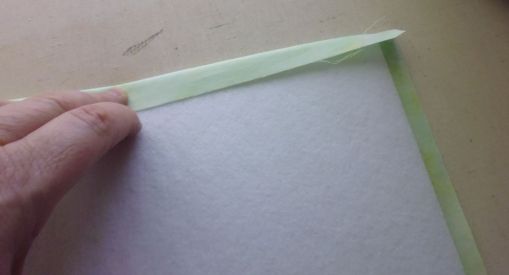
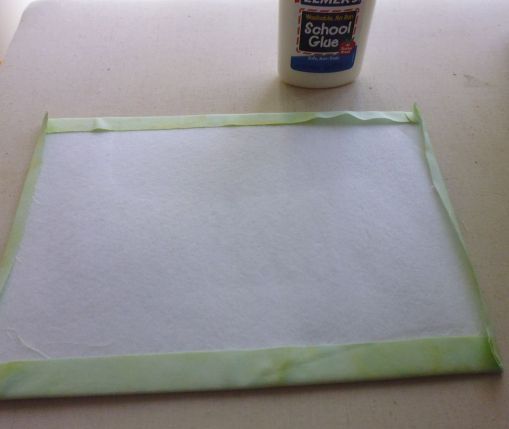
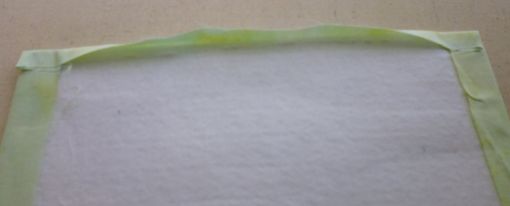
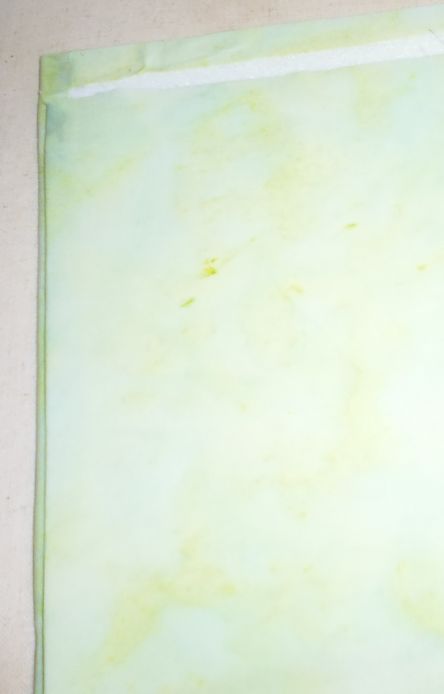
Next, I took the top batik fat quarter and covered the front of the piece, wrapping the top and bottom edges to the back and fusing them in place. Then I wrapped the side edges of fabric to the back and held them in place with a bead of Elmer’s School Glue before heat pressing the glued edges to make them stick.

Back on the front, I trimmed the photo printed on the fabric to the size I wanted, leaving a quarter inch of white fabric surrounding the photo as a framing border top and bottom, and leaving the sides uncut so that I could wrap them to the back (I didn’t want raw edges at the edges of the piece). I applied MistyFuse to the back of the photo, then fused the photo into place on the front, being careful to make sure I had the photo centred vertically on the piece (i.e. same width of the top and bottom ‘border’ fabric). Next, I wrapped the overhanging side edges of the photo to the back, and heat pressed them to seal them to the back with the MistyFuse.

I cut a piece of toning batik fabric the size of the finished piece, then turned and pressed about a half inch hem around each side. I placed this fabric on the back of the piece, ran a bead of glue on each turned-over hem (one at a time), then pressed the backing in place, heat sealing the glue to make sure the backing piece was secure.

Now I was almost ready to start stitching! But before I did, I used invisible thread to stitch a line between the photo and the white framing border, top and bottom. Then I top-stitched the whole piece with some variegated brown/gold thread. The reason for these two lots of stitching was to prevent (as far as possible) warping associated with heavy thread work. That said, I still got some warping, which I fixed at the end with both dry and steam pressing, followed by placing the piece under some heavy books immediately after steam pressing.

The stitching was fairly basic — I started with the black areas (the eyes first), and then added lighter and lighter colours as I went. I mostly free-motion stitched in straight and slightly curved lines as the fur and most other elements in the photo were straight lines.

All told, this piece took about 8 hours to make from start to finish (not including getting the photo onto the fabric). Sizes: Photo: approx. 27 x 40 cm (10.5 x 16 inches); entire piece: approx. 37 x 38 cm (14.5 x 14.75 inches)

See also:


2015 Challenge

4 07 2015

Our quilt challenge for this year was set last 4 July by Brian (Bobbie’s husband). We had to create something quite interesting (QI) related to the history of quilting (HQ). Oh, and we decided that Brian had to make something too — in a medium of his choice (e.g. wood, photograph), any size, but pink had to be used in it somewhere.

Here’s the challenge:

2015_challenge

I had some ideas right from the beginning, initially focusing on Amish quilts. Later in the weekend I remembered the Gee’s Bend quilts and decided on that, as I love their improvisational nature and bright colours and their ‘modern quilt’ aesthetic. By that time F had given me her colour (any blue) and once I decided on creating something in the Gee’s Bend spirit, I decided to add at least red, and passed that colour on to B.

When I got home, I did a little research to see some pictures of the Gee’s Bend quilts, read a bit about their history, and how they came out of necessity using whatever fabric was to hand to make a warm bed covering.

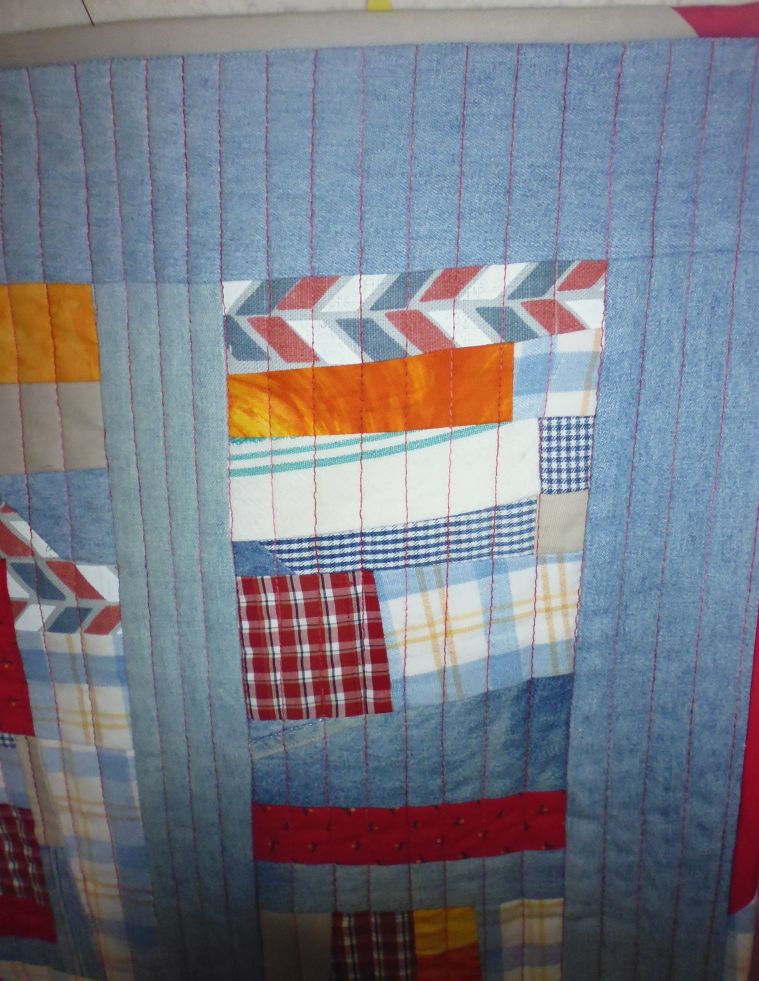
I decided to start by raiding my box of rags!!! After eliminating any stretch knits (t-shirts, undervests, etc.), I was left with a small pile of old almost threadbare jeans, old work khakis, old work shorts, old tea towels, and even an old pair of cotton boxers! Some rags had stains from years/decades ago, but I didn’t try to get these out. While I had lots of blues, creams, whites, and khakis, I didn’t have those bright spots of colour I needed (except for the red plaid boxers!), so I went to my scrap stash and boxes of decades-old fabrics, where I found some bright yellow, plain red lawn, and a heavy (curtain?) fabric with red and blue chevrons. I added these to the mix.

rag_bundle

The next step was deciding what to do. After checking some of the images of the Gee’s Bend quilts, I decided to do three strips of crazy piecing, using the faded denim for the borders and sashing strips. To keep it simple, I trimmed down the crazy strip piecing to 6.5 inches across (the width of my main ruler). I also slashed some pieces before I added them to the strips and inserted yellow or red bits to cross more than one colour strip.

I also slashed the border and sashing pieces and added yellow and red fabrics there too. I used the leftovers for the binding. For the back, I made another crazy strip of scraps, surrounded by the rest of the red lawn fabric, and then a dark grey gabardine I’ve had forever. By the time I’d finished, I had almost no rag scraps left!

Stitching was interesting — all those different fabric types and weights and thicknesses made for some interesting times on the sewing machine. The walking foot was my friend! As I wanted to keep with the ‘make do’ theme, I had deliberately left some seams in the denim and checked shorts fabric, but the sewing machine dealt with those very thick bits without a hitch.

I quilted this quilt with simple vertical lines approximately 1/2 inch apart. Again, in keeping with the Gee’s Bend aesthetic, I didn’t want to be too precise with the quilting. I used a heavy weight variegated red cotton thread (12 wt, Wonderfil Tutti Frutti, colour FT12).

Oh, and I had it all finished — including a label — by 26 July 2014!

This quilt has quite a bit of ‘quilt history’ associated with it: Gee’s Bend of course, crazy patchwork, making do with any sort of fabric scraps (from the Great Depression), improvisational piecing, even a ‘modern quilt’ look.

I’ve called it ‘Crazy Ragbag’.

finished01

finished02

finished03


finished04

Some YouTube videos about the women of Gee’s Bend and their quilts:


Community Quilt Bee June 2015

29 06 2015

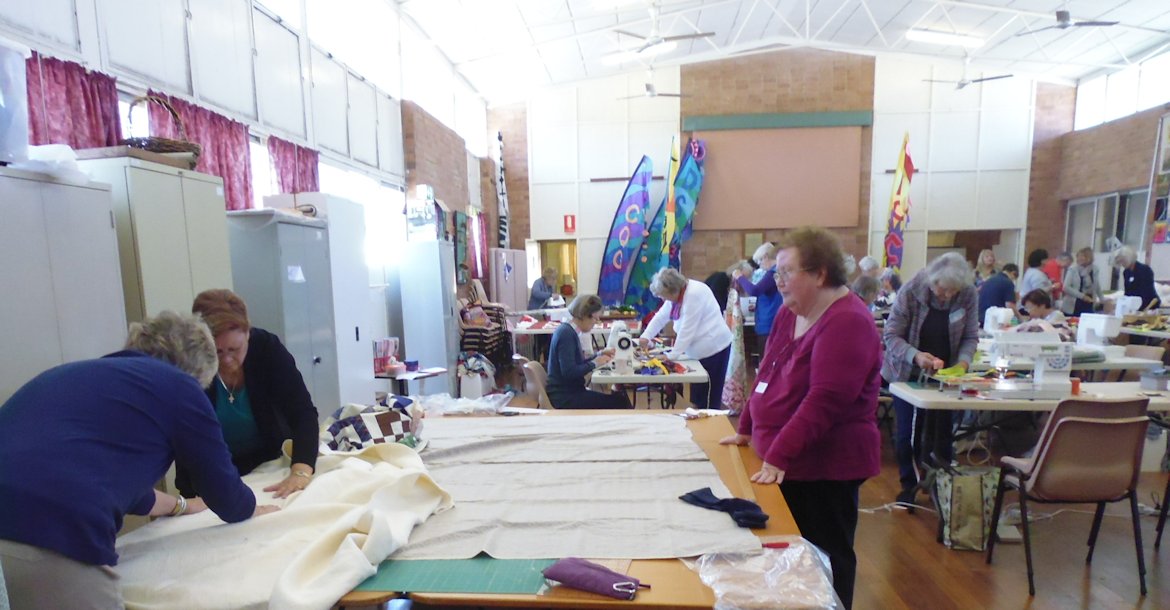
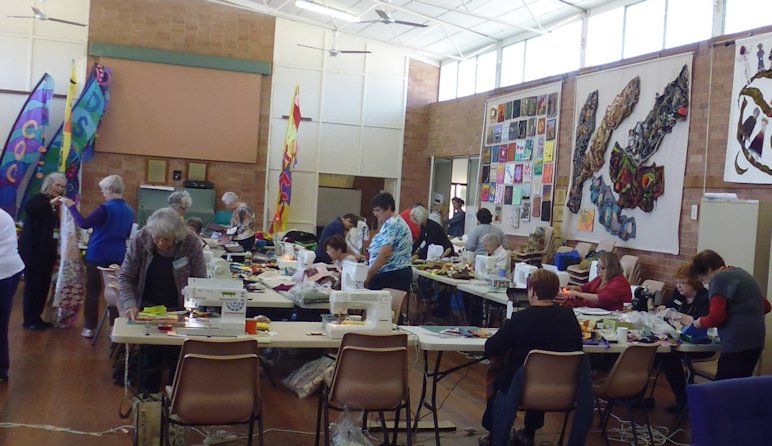
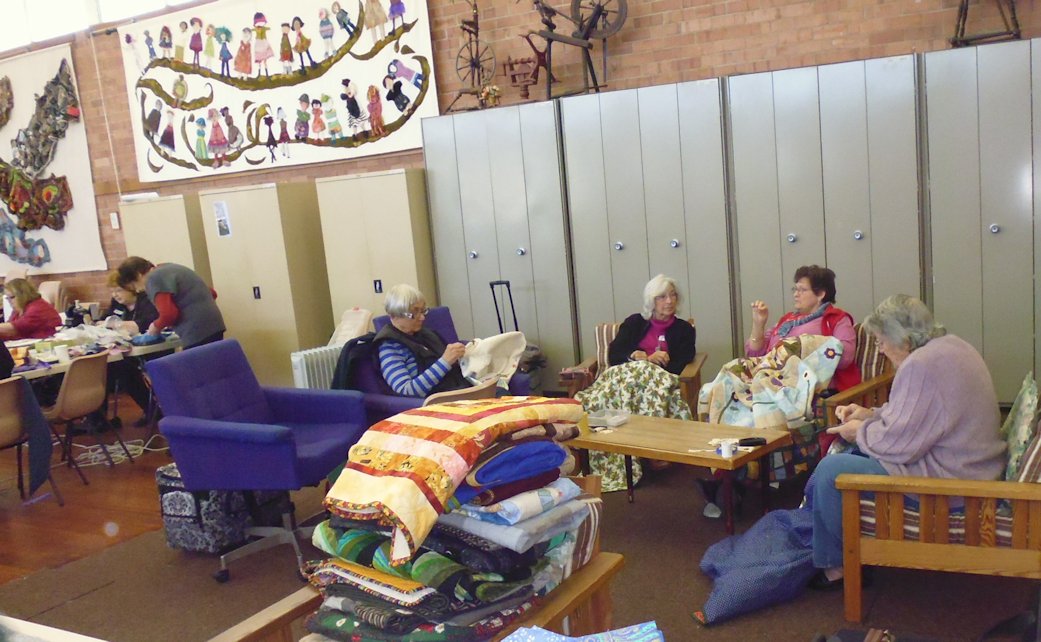
I drove to Perth yesterday for one of the regular ‘bees’ for the Community Quilts participants. There was a great turnout — about 40 people by my estimation. Much of my time was spent out the back with about 5 others, sorting donated fabric.

After lunch Gwen, the Community Quilts Coordinator, thanked everyone and shared with the group the award she won at the recent Australian Quilt Convention in Melbourne for her contribution to the Western Australian Quilting Association. And shared with us some of the recently finished community quilts. To top that off, she shared a cake that the lovely Janice had made (designed as a quilt block, of course!) and some bubbly.

It was a lovely day, spent with some lovely people. Despite being the middle of winter, my 3-hour round trip to Perth and back home again was dry and uneventful, with clear sunny skies all the way.

P1040677

P1040676

P1040675

P1040674

P1040673


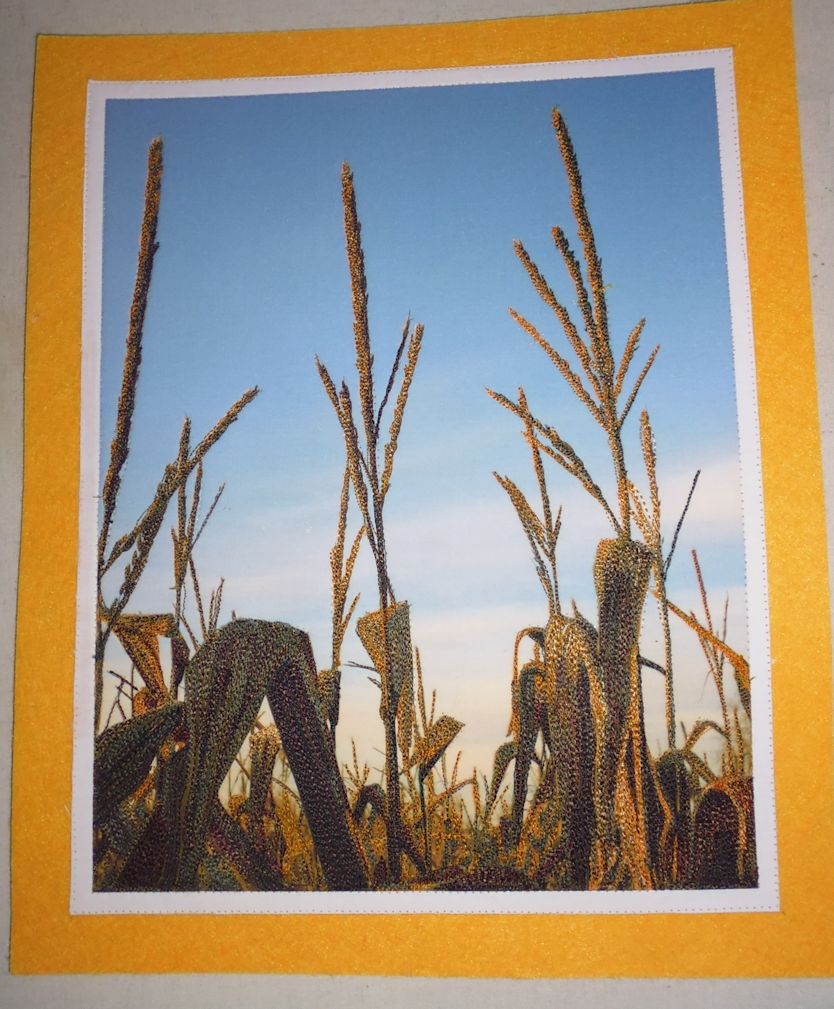
Thread painting the corn

27 06 2015

When I was in Michigan last October (2014), I took some photos on my family’s farm in the crisp early mornings. The one I most liked of the corn ready for harvest I had printed onto fabric at my Quilting Adventures class in Texas this March (2015).

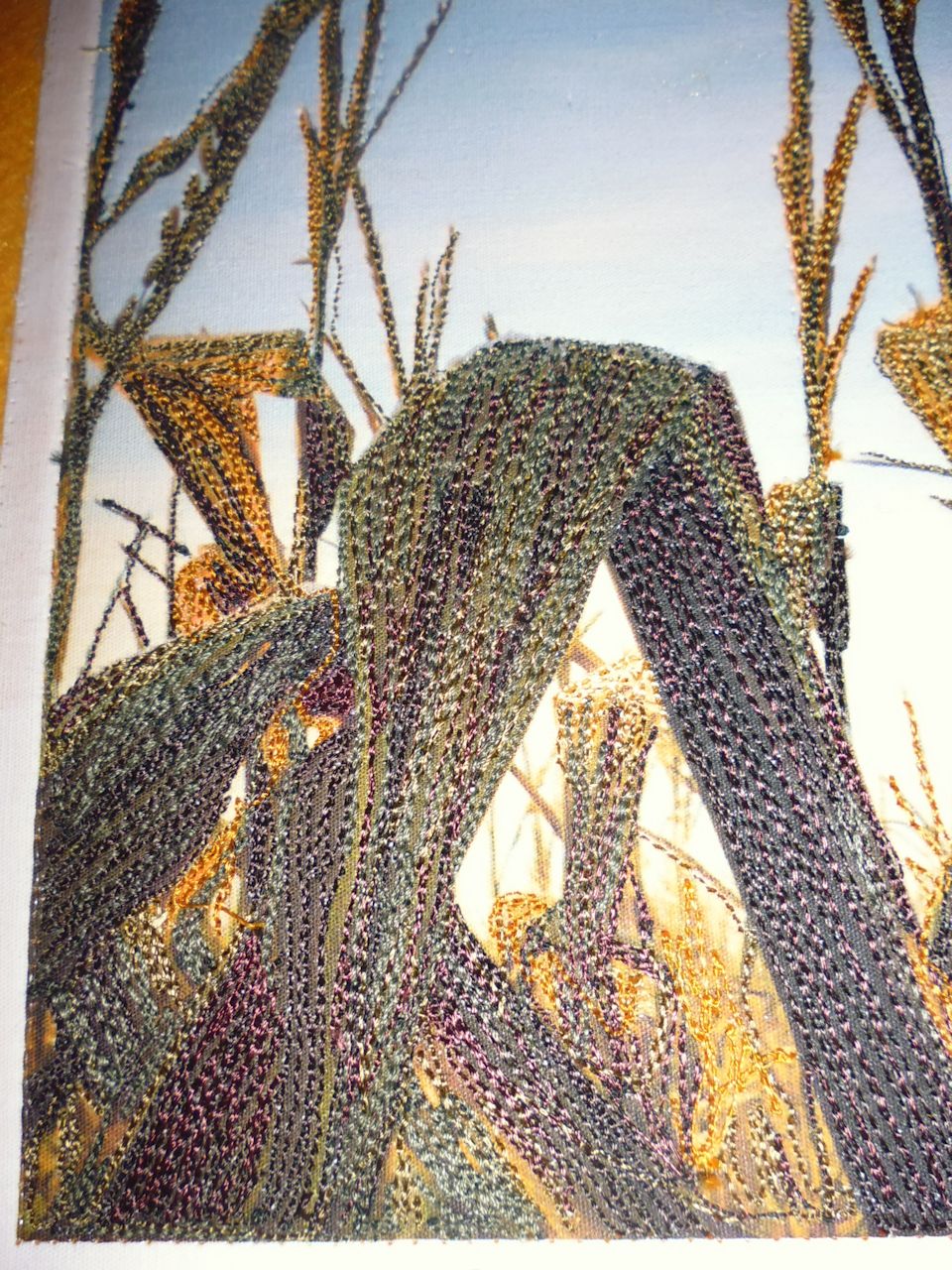
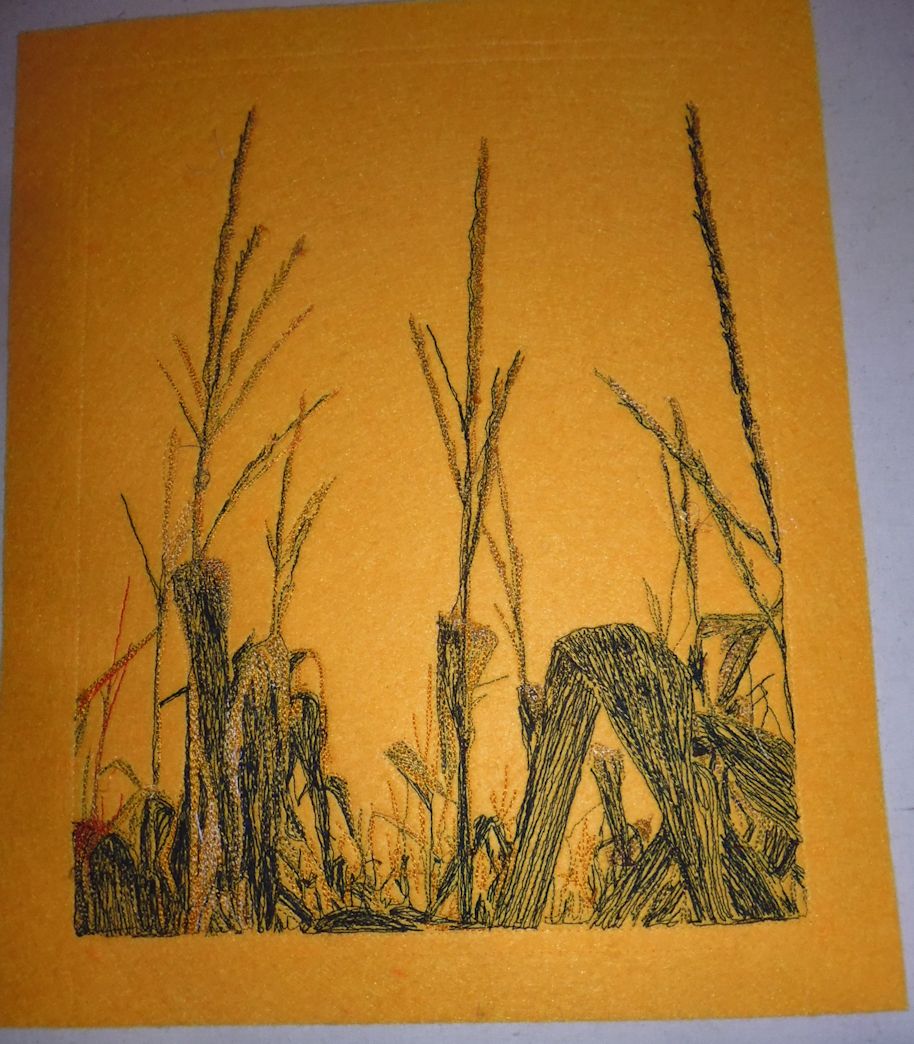
I finally got around to stitching it, doing something a bit different, which was fusing it to a piece of hard felt. I’d bought this piece of orange felt for another purpose, but had decided not to use it and when I pulled the cornstalks photo from my design wall to see what fabrics I could use as the background, it landed on the felt and a new idea came to mind… Prior to fusing it I decided to keep some of the white fabric the photo was printed on to add a quarter inch border between the photo and the felt and thus set it off like a mounted piece of art.

I only stitched the cornstalks, not the sky, and not the very fuzzy cornstalks in the background. It took several hours to do the stitching to enhance the photo, and I used quite a number of different threads in the process. I did this stitching on my domestic sewing machine, using the spring-loaded free motion foot.

I even like how the back turned out 😉

The photo is approx. 20 x 25 cm (8 x 10 inches), and the finished piece on the felt backing is approx. 25 x 30 cm (9.75 x 11.75 inches).

(Click on a photo to view it larger)

cornfield_01

cornfield_02

cornfield_03

cornfield_04

cornfield_back

cornfield_thread

See also:


Community Quilt 215

27 06 2015

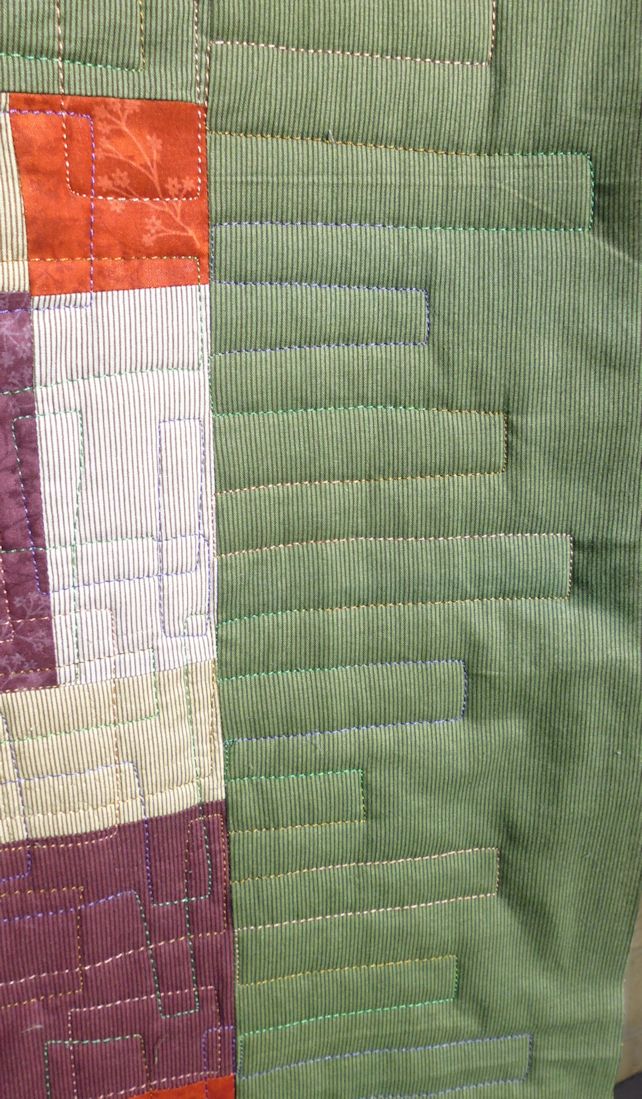
This geometric disappearing 9-patch quilt cried out for geometric quilting, so that’s what I did. I did a square ‘stipple’ all over the main quilt top, then ‘skyscrapers’ in the borders (yes, I made up that name!).

(Click on a photo to view it larger)

quilt215_04


quilt215_01

quilt215_02


quilt215_03

Threads used:

  • Top: Wonderfil Mirage (30 wt, rayon?, colour SD29)
  • Bottom: Fil-Tec Magna Glide Classic pre-wound bobbin (grey)


Thread painting the beach

16 06 2015

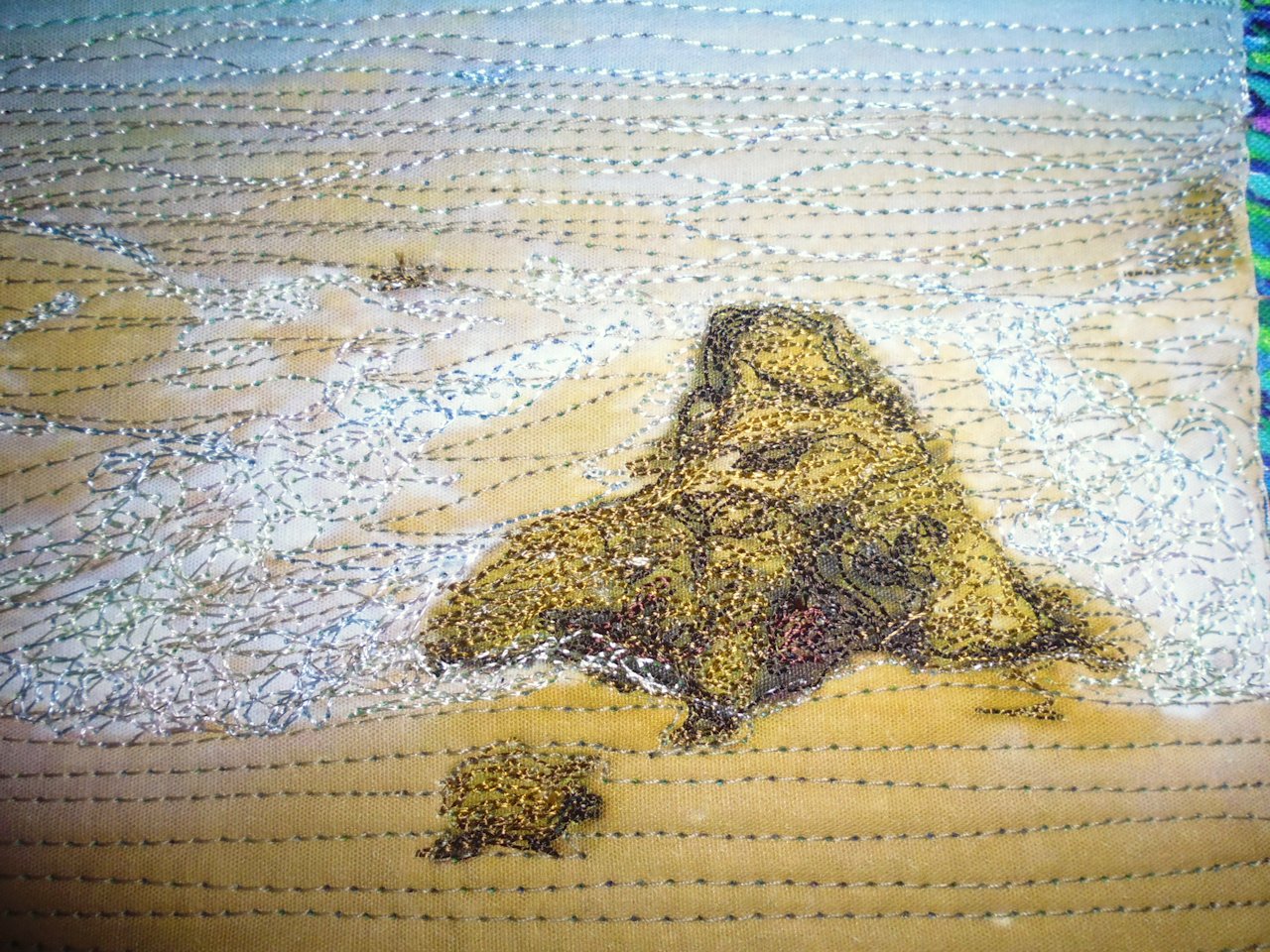
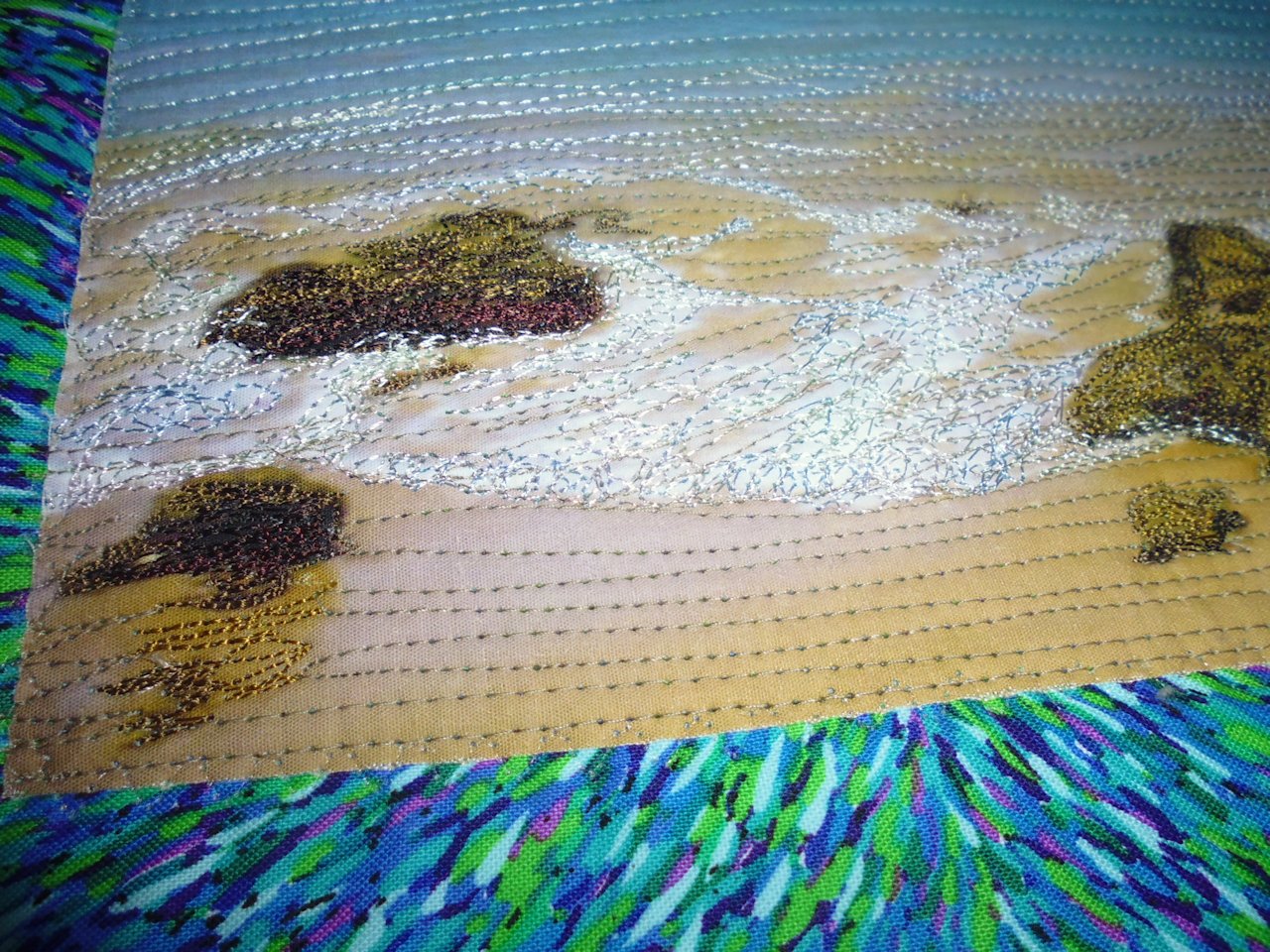
Back in March 2015, I attended Quilting Adventures’ Spring Seminars in New Braunfels, Texas. The workshop I did was on digital photos for quilts (run by Lura Schwarz Smith and Kerby Smith). Kerby printed off several of my photos using his printer and special fabric ‘paper’ and it’s only now I’ve got around to doing anything with these fabric photos.

Here are the printed photos on fabric, plus some of the other exercises I did in class:

P1030583

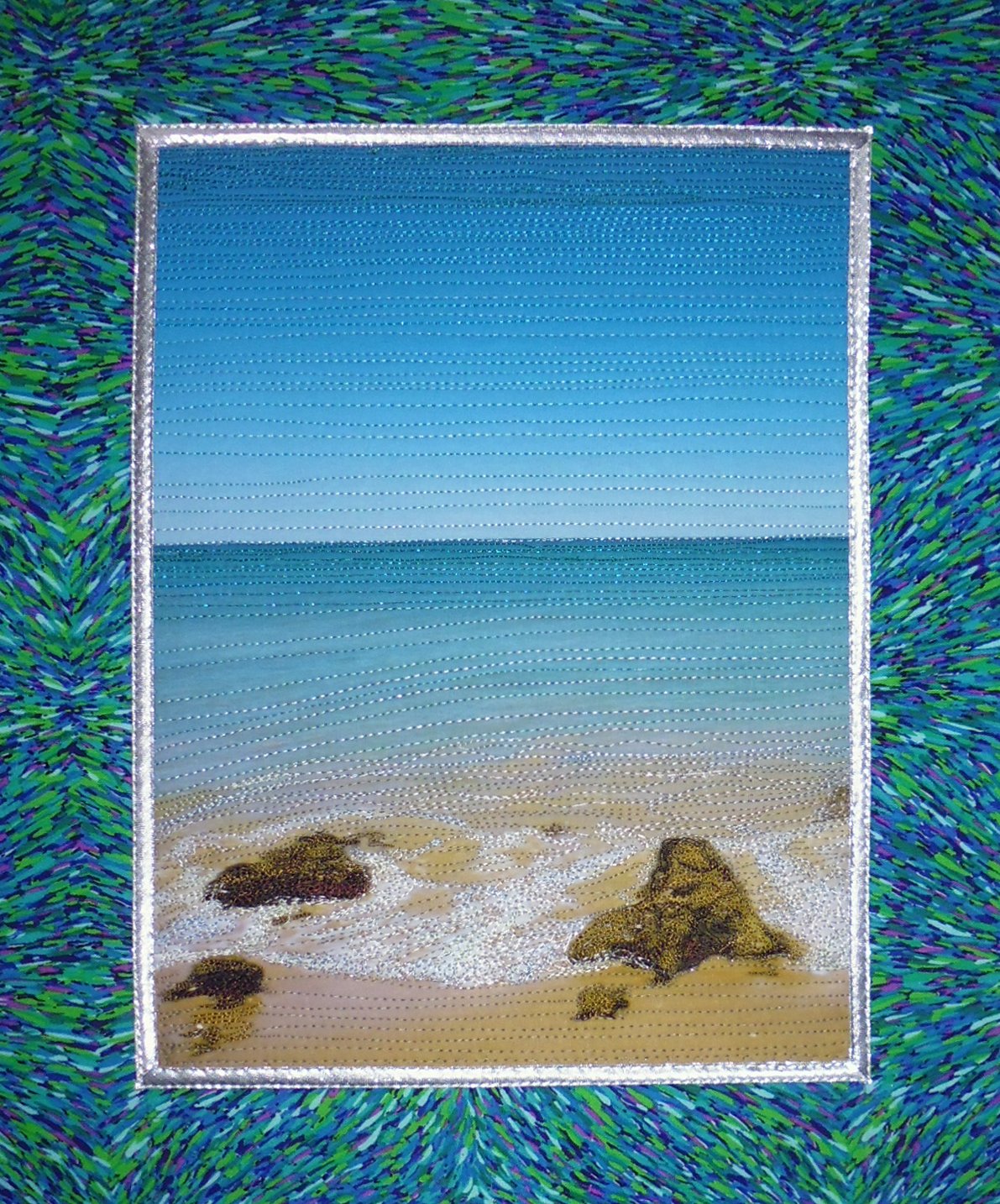
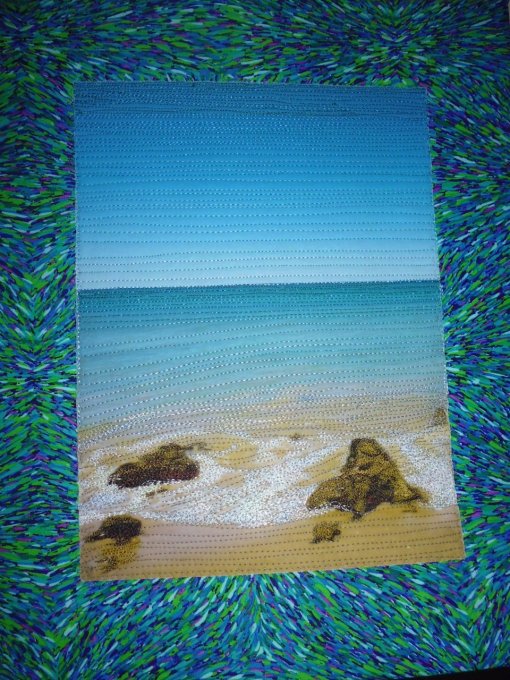
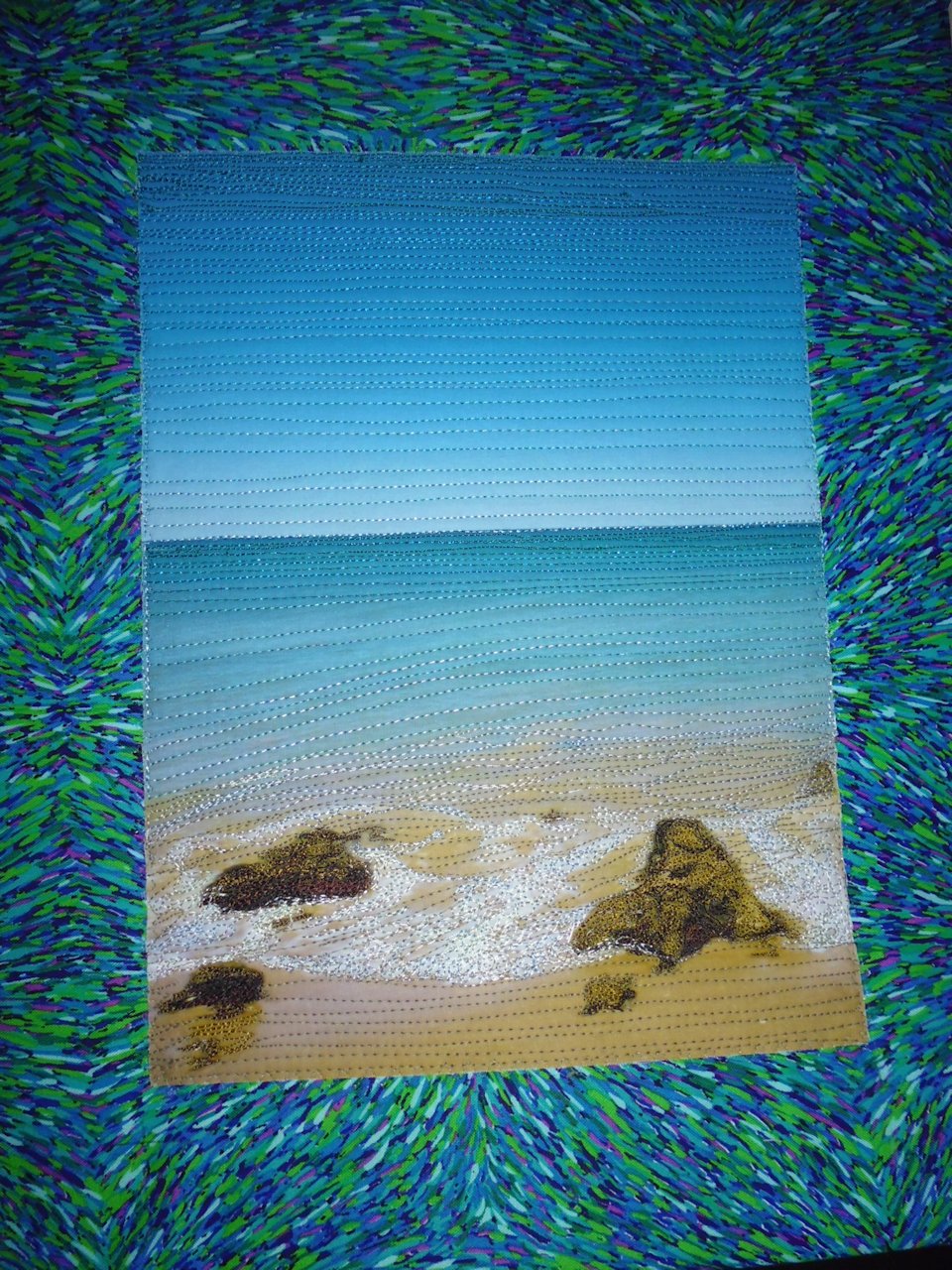
The first photo I decided to tackle was one I took in December 2014 of Buffalo Beach, near Bunbury, Western Australia.

I covered a piece of Floriani Stitch ‘n’ Shape with the background fabric, then fused on the fabric photo. I used several threads of various blues and browns to thread paint the sky, the ocean, the rocks, the sand, and the water.

The photo is approx. 20 x 25 cm (8 x 10 inches) and the finished piece is approx. 30 x 36 cm (12 x 14 inches).

(Click on a photo to view it larger)

P1040787

P1040638

P1040641

P1040640

P1040642


P1040639

P1040637

Update: That raw edge butted up to the background fabric bothered me, so I added a quarter-inch silver bias binding to it to separate it. I’m happier with it now.

See also:


Community Quilt 214

7 06 2015

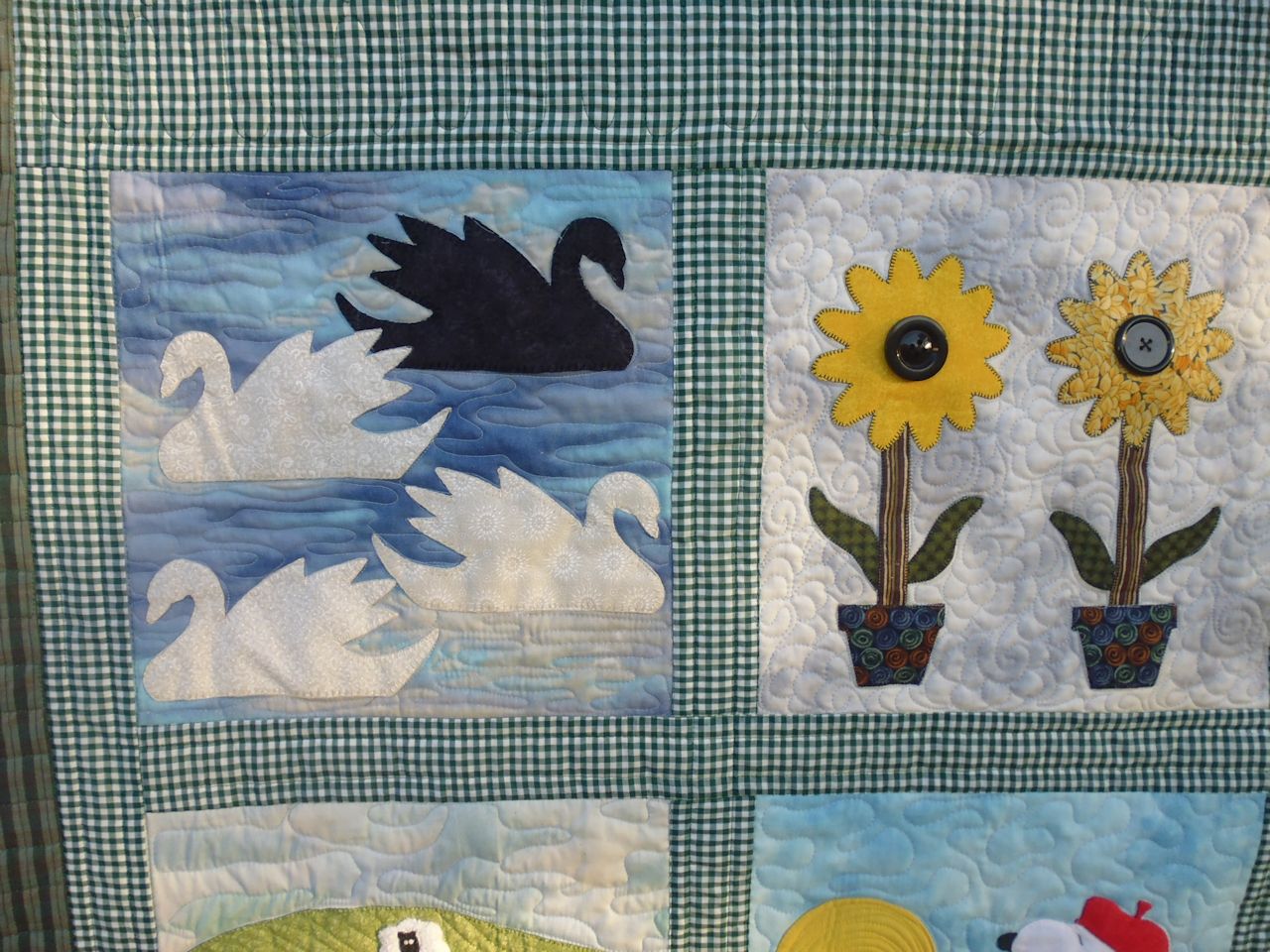
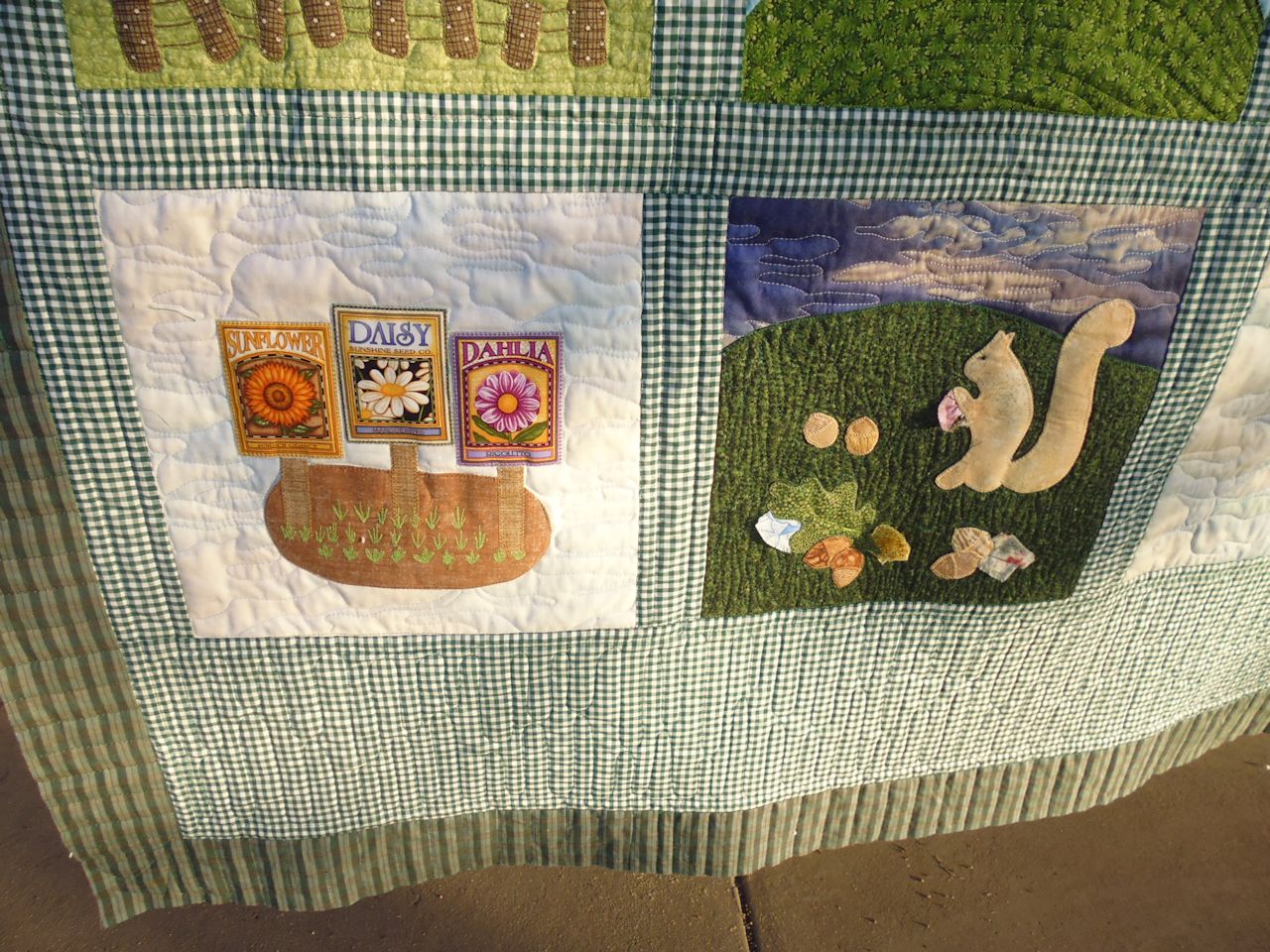
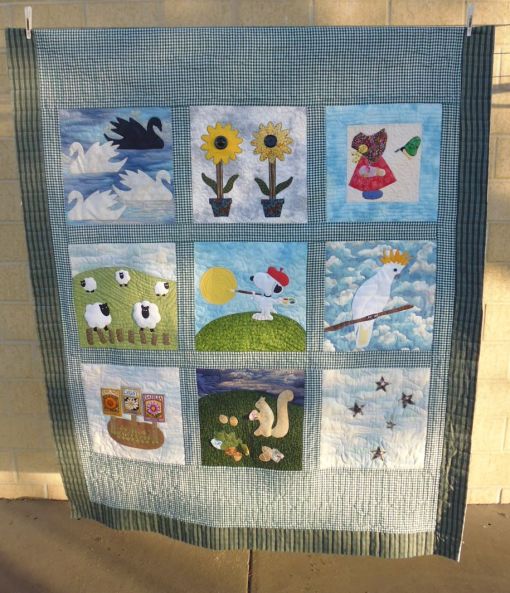
Even after working with it for some hours, I still couldn’t figure out the ‘theme’ of this quilt — the closest I could some to it was the sky, as it seemed to be the only element that linked the various blocks.

Anyhow, how to quilt it? As usual, I started by stitching in the ditch around all the blocks and appliqued pieces. In some blocks I followed the cloud pattern to stitch the sky; in others, I just did something more random.

I echo stitched about half an inch outside the blocks. In the wide checked border I stitched large ‘U’ shapes, alternating their height and repeating on the other side. For the striped border, I free-motion stitched lines about one inch apart (no rulers).

(Click on a photo to view it larger)

quilt214_06

quilt214_01
quilt214_05

quilt214_04

quilt214_03

quilt214_02


Threads used:
  • Top: Various threads: Robison-Anton ‘Evergreen’ (40 wt, rayon, colour 2315) and ‘Paris Blue’ (colour 2283); Madeira Rayon (40 wt, colour 1169); Floriani (40 wt, rayon, colour PF546); Wonderfil Silco (4o wt, colour SC03)
  • Bottom: Fil-Tec Magna Glide Classic pre-wound bobbin (white)


Community Quilt 213

1 06 2015

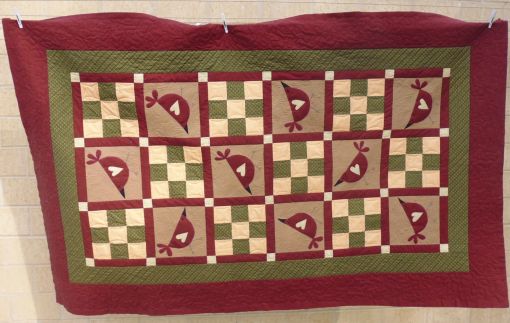
Birdies! This BIG single-bed quilt was done in traditional heritage colours, with stylised birds appliqued into every alternate block. (It was so big, I had to hang it sideways on the clothes line to take a picture of it without it falling onto the ground.)

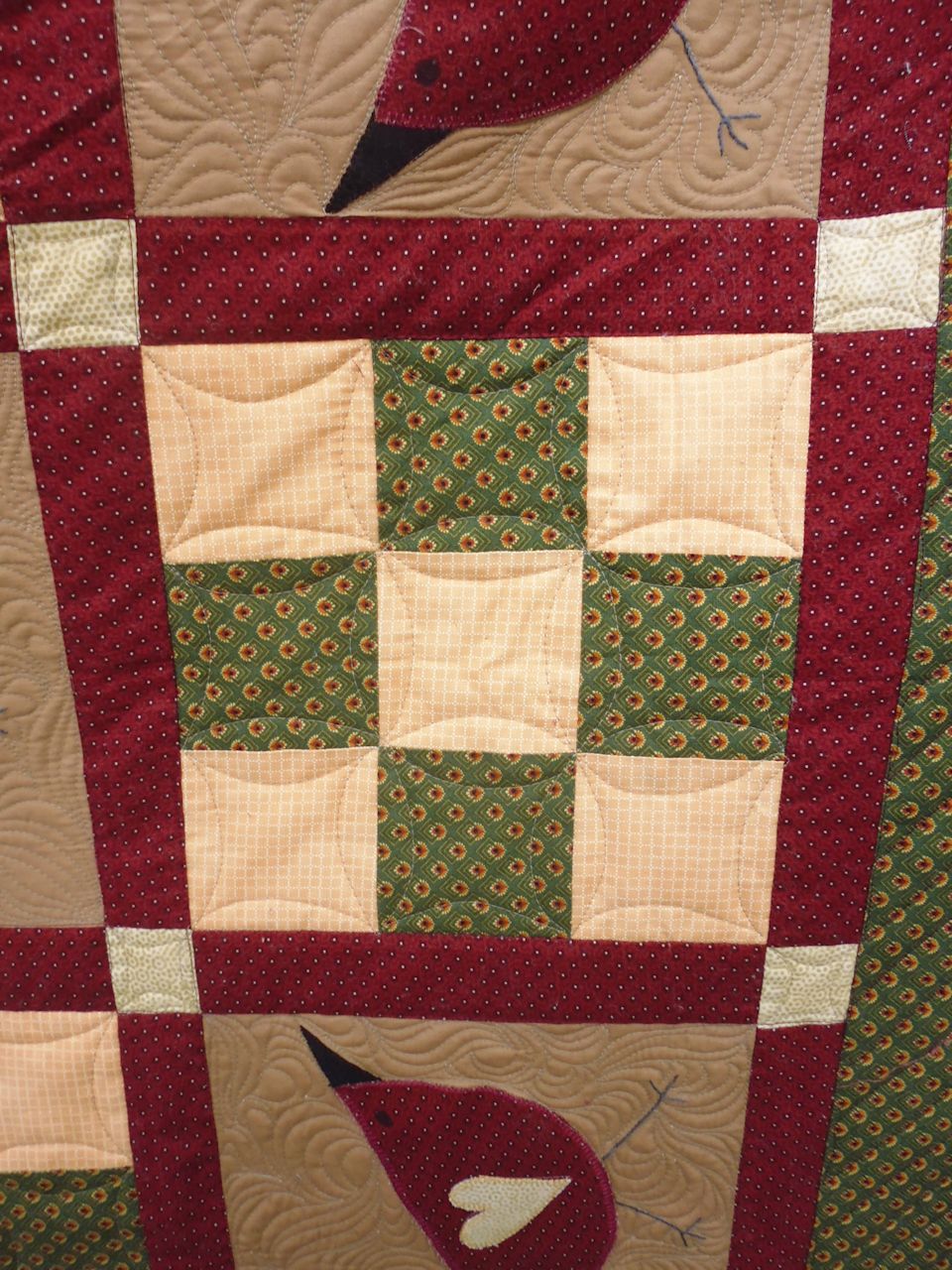
I started by stitching in the ditch around all the blocks, sashing strips, and borders. Then around the appliqued birds.

I then filled the background of each bird block with McTavishing, and stitched cathedral windows in the other 9-patch blocks. I left the sashing strips unstitched, but added a small cathedral window in each cornerstone.

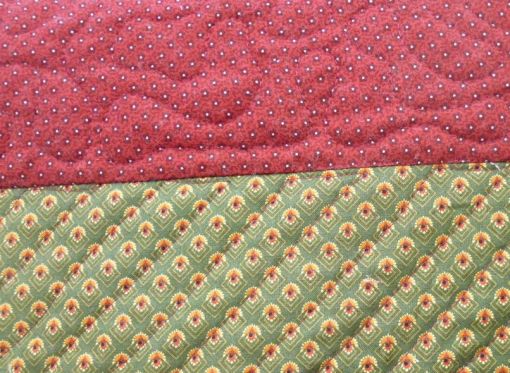
In the green border I followed the pattern of the fabric and free-motion stitched through the centres of the little flowers, giving an overall diagonal effect.

Because the outer border was so dark, I just did a large meandering stipple in it to hold the layers together.

(Click on a photo to view it larger)

quilt213_01

quilt213_02

quilt213_03

quilt213_04

Threads used:

  • Top: Robison-Anton (40 wt, rayon, burgundy colour); Rasant (40 wt, cotton, beige/tan colour)
  • Bottom: Fil-Tec Magna Glide Classic pre-wound bobbin (black and light tan)


Xylem

24 05 2015

I’ll be submitting this one to the OMG (Organic Modern Graphic) quilt movement (https://www.facebook.com/groups/OMGQuilts/) for acceptance as my second OMG quilt. If accepted, it will get an OMG #, but until then, I’ve called it ‘Xylem’.

My interpretation of ‘organic’ for this one was at the cellular level and beyond, as per ‘Synapse‘ that I created a week ago. It’s a 7×10 piece, and represents xylem cells that are in plants and trees. The dark green base is cheesecloth that I painted with a mix of blue and yellow fabric paints.

How I made it is described below the photos (click on a photo to view it larger); I go into all the steps (with photos) for those interested in finding out how I do my pieces on a very stiff interfacing.

But first, the finished piece! (This art quilt is now available for sale from my Etsy store: https://www.etsy.com/au/listing/605097136/xylem-art-quilt)

xylem05

xylem04

xylem03

xylem02

Threads used:

  • Fil-Tec Affinity ‘Forest’ (40 wt, trilobal polyester [variegated], colour 60293)
  • Isacord neon yellow/ lime(40 wt, trilobal polyester, colour Fb6010/A2941)

xylem06

Process

Preparing the cheesecloth

(No photos for this bit)

I roughly cut some white cheesecloth, then made some holes by pulling apart the threads. I mixed together some blue and yellow fabric paint to make green. I was aiming for a blue/lime colour, but that didn’t happen! I then lightly mist sprayed the cheesecloth with water and applied the paint with a sponge applicator. I left it outside to dry.

Making the front

Next, I made the base that the cheesecloth would be stitched to. The steps below describe the whole process (with photos). You can deviate from these steps at various stages, if you want, and I’ve indicated where these options are most likely to occur.

  1. Cut a 7×10 inch rectangle of Floriani Stich ‘n’ Shape (or Timtex or any other similar stiff interfacing). Preferably use a non-fusible for this, but if you only have fusible, make sure it’s just fusible on one side, not both.
  2. Cut a rectangular piece of batting slightly smaller than 7×10 measurements — you want the batting to fit on the 7×10 interfacing but not go over the edges. Cut it about an eighth of an inch smaller on each side.
  3. Cut two pieces of fabric about a half inch more on EACH side than the interfacing (i.e. about 8×11 each). You can use different colours — one for the front, one for the back — or the same colour (I’ve used the same colour in the steps below).
  4. Cut four 2″ pieces of hook-side Velcro for hanging.
    7x10_making01
  5. Lay the batting over one side of the interfacing (if the interfacing is fusible on one side, lay it on the fusible side). Do not go over the edges — the batting has to fit within the dimensions of the interfacing.
    7x10_making02
  6. Lay this combined piece (interfacing + batting) on the wrong side of the top fabric, making sure that there’s some top fabric overhang on all sides sufficient to wrap over the edges and onto the back. Flip the piece over and check the placement of the top fabric.
    7x10_making03
  7. Finger press and then press (with an iron) the edges of the top fabric to the back, keeping the fabric taut.
    7x10_making04
  8. If your edges won’t stay in position, run a bead of Elmer’s School Glue under the fabric and heat set it into position with an iron. This glue is a boon for quilters as it will hold things in place that would normally shift.
    7x10_making05
    7x10_making06
    7x10_making077x10_making08
  9. The top part of the base is now complete. Set it aside.

Making the back

You’ll make a ‘hemmed’ piece with the backing fabric.

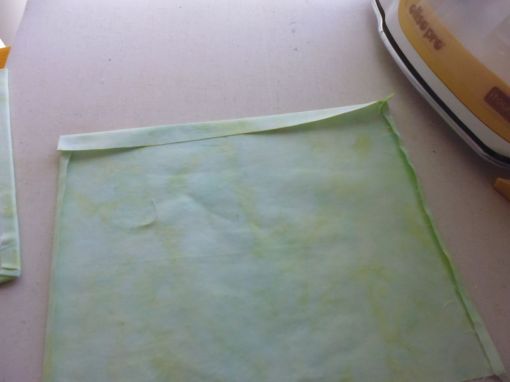
  1. Place the backing fabric right side down. Turn over and finger press one ‘hem’, then iron it.
    7x10_making09
  2. Place the backing fabric over the back of the main piece to see how much hem you need to turn over on the opposite side. Make sure you keep the final size of the backing fabric slightly smaller (about an eighth of an inch on each side) than the 7×10 main piece.
    7x10_making10
  3. Repeat for the other sides, testing the placement as you go.
    7x10_making11
  4. Again, use Elmer’s School Glue to hold the hems (especially the corners) down once they are the correct size. Heat set the glue with the iron.
  5. Test the whole backing piece against the back of the main piece, making sure all edges are smaller than the dimensions of the main piece.
    7x10_making12
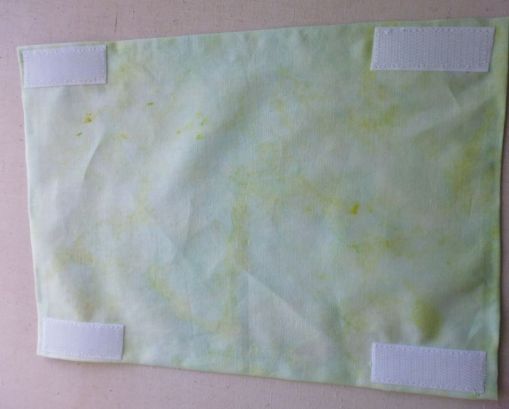
  6. At this point you have several choices — you can set the backing piece aside and do any applique, quilting etc. on the top piece, then add the backing piece and then the Velcro; OR you can add the Velcro to the backing piece now (which is what I did so that the stitching used to hold down the Velcro didn’t show through on the front of the main piece) and then either set the backing piece aside and do the applique/quilting, then add the backing piece; OR you can topstitch/glue the backing piece (with or without the Velcro) to the main piece and then do the applique/quilting, stitching the Velcro on when you’re finished if you didn’t add it earlier. Much will depend on whether you want your quilt stitching to show through on the back, whether you’re OK with the Velcro stitching showing through on the front (not such a big deal for very dark and/or busy fabrics), and/or whether you want topstitching (I didn’t on this piece). Whatever you do, at some point you have to add the Velcro to the right side of the backing fabric, and at some point you have to stitch and/or glue the backing fabric to the main piece.

    7x10_making13

    I made the backing piece separately and added the Velcro BEFORE I attached the backing fabric to the main piece.

  7. Because I chose to add the backing later, I now placed the cheesecloth on the main piece and did all my quilting stitches.
    xylem01
  8. Once that was done, I glued the backing fabric to the back. The backing fabric covered up the mess of stitching on the back of the interfacing, giving a much cleaner look to the piece.
  9. Don’t forget to add a label!