Eleanor Burns: American Barns Trunk Show

18 03 2011

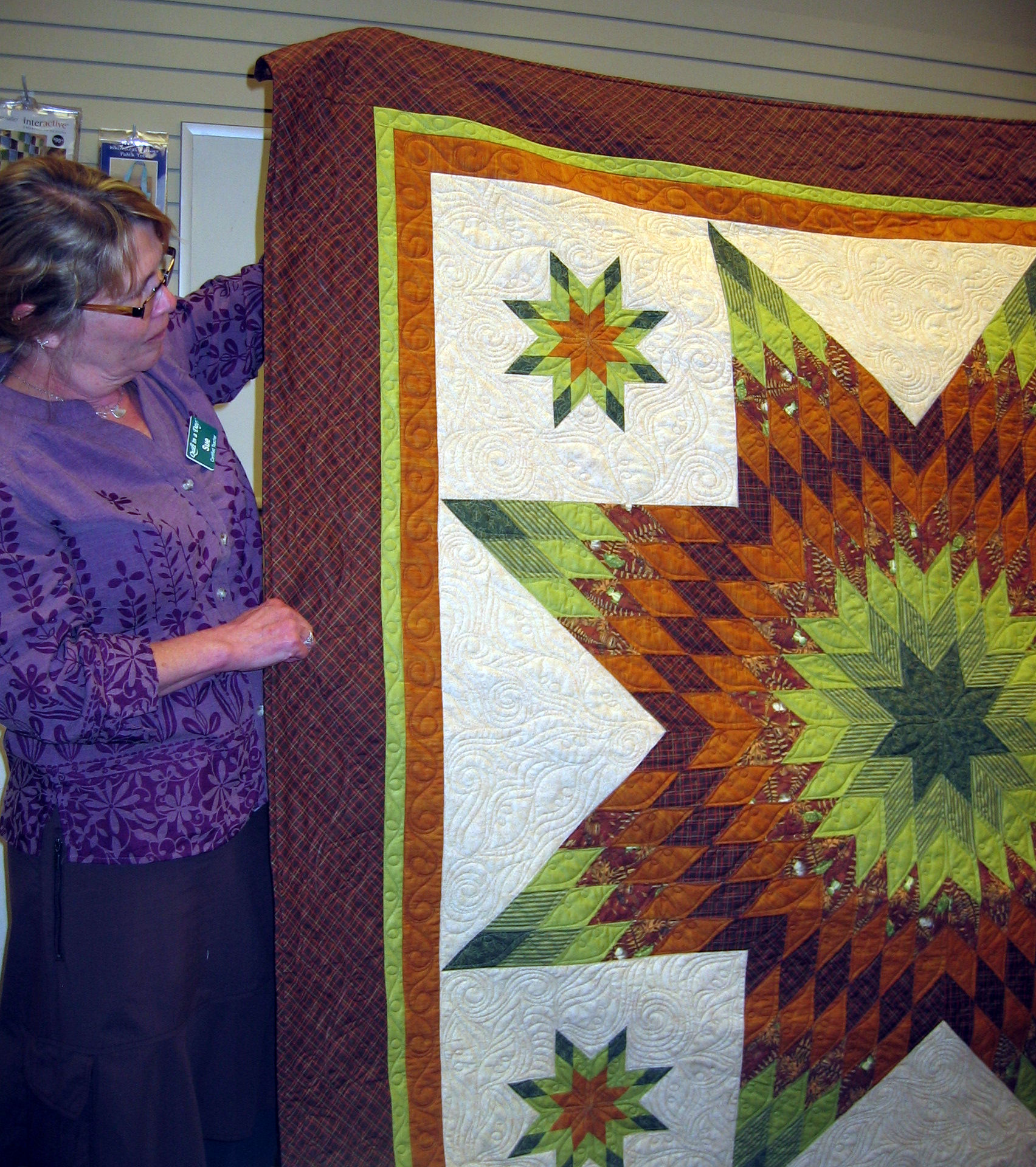
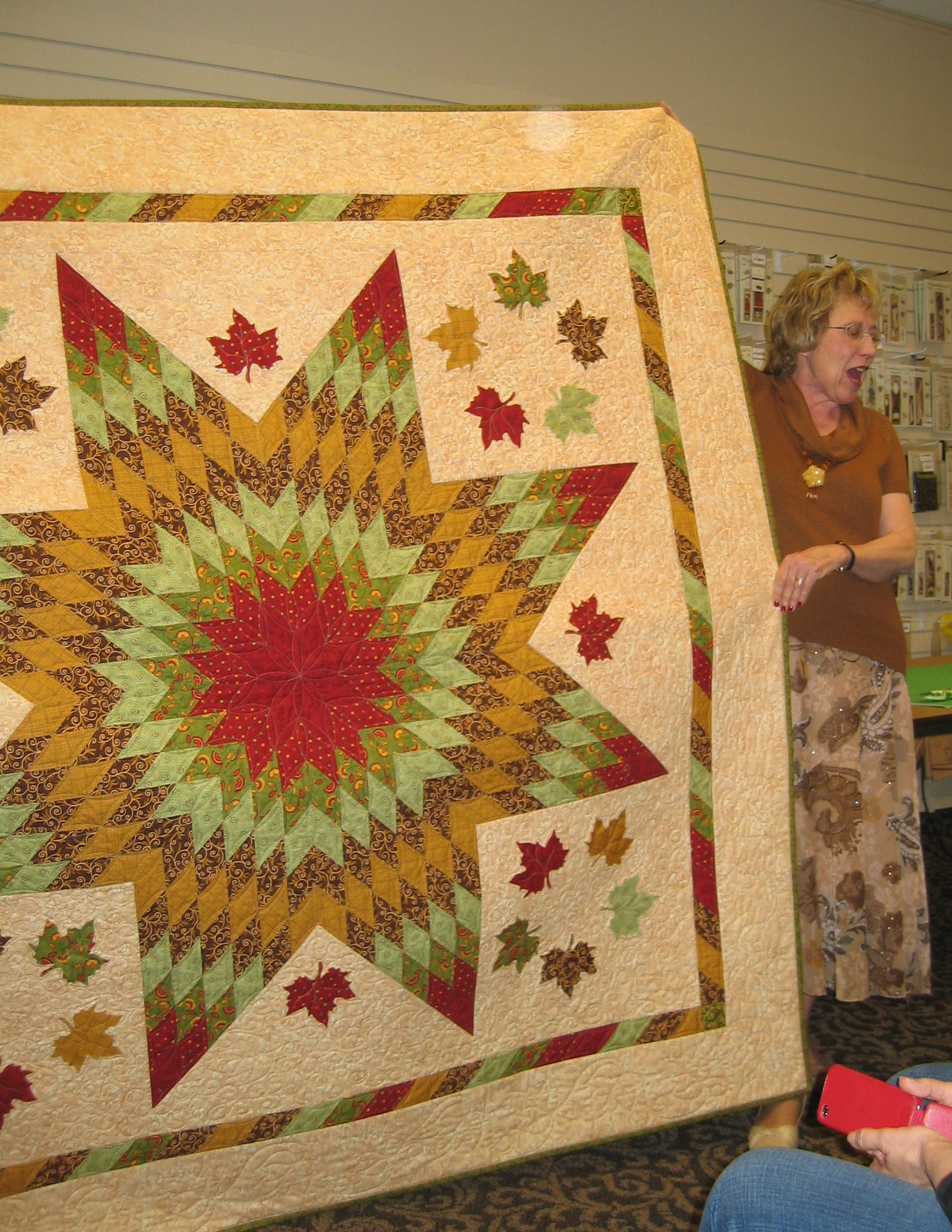
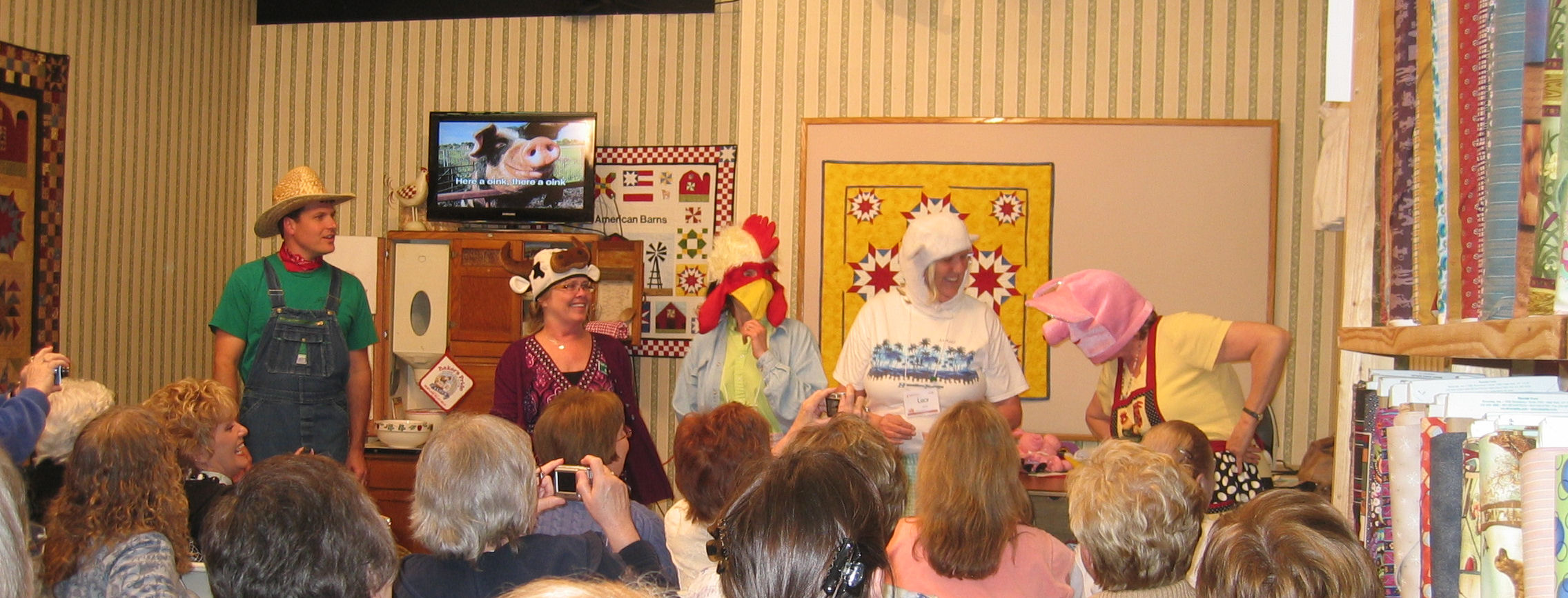
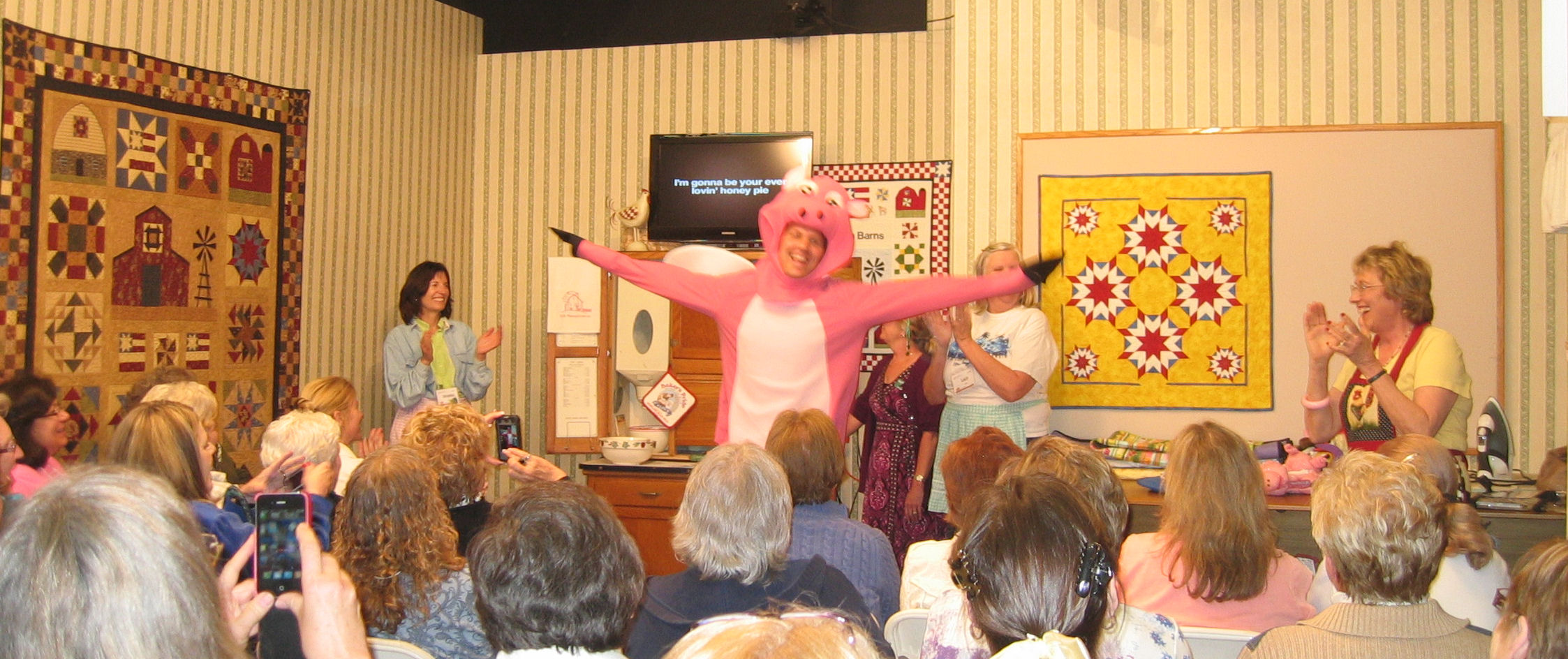
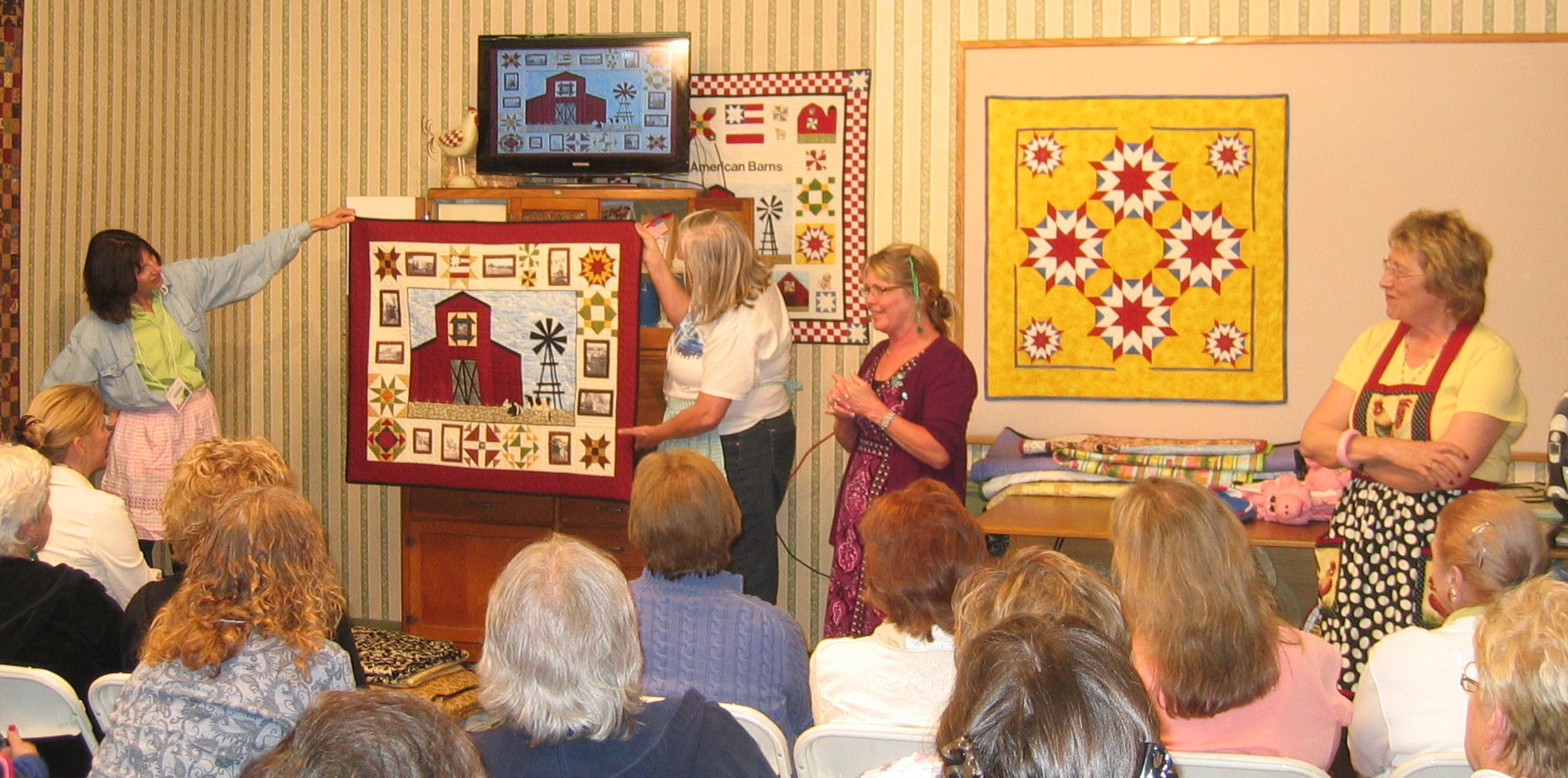
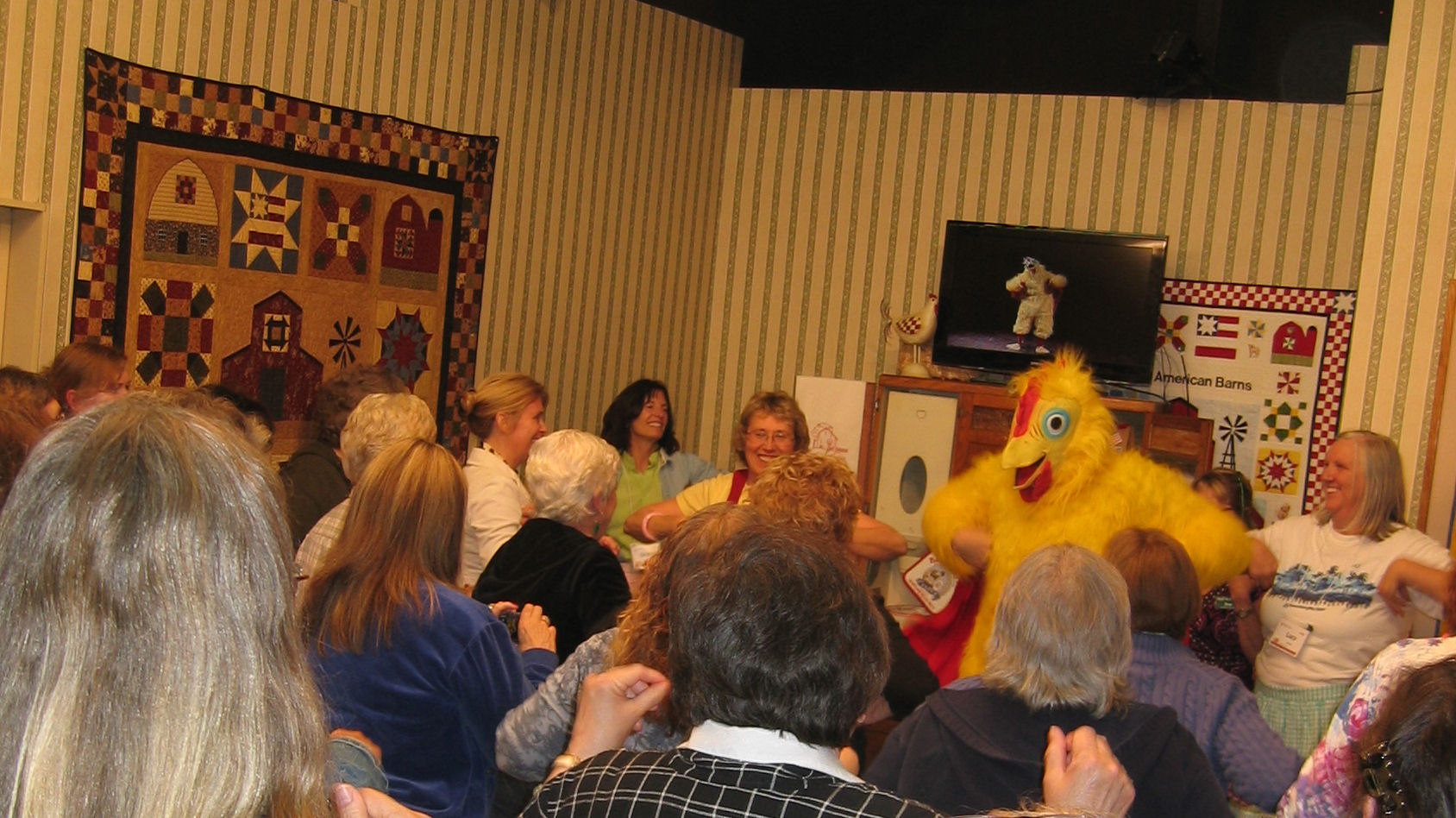
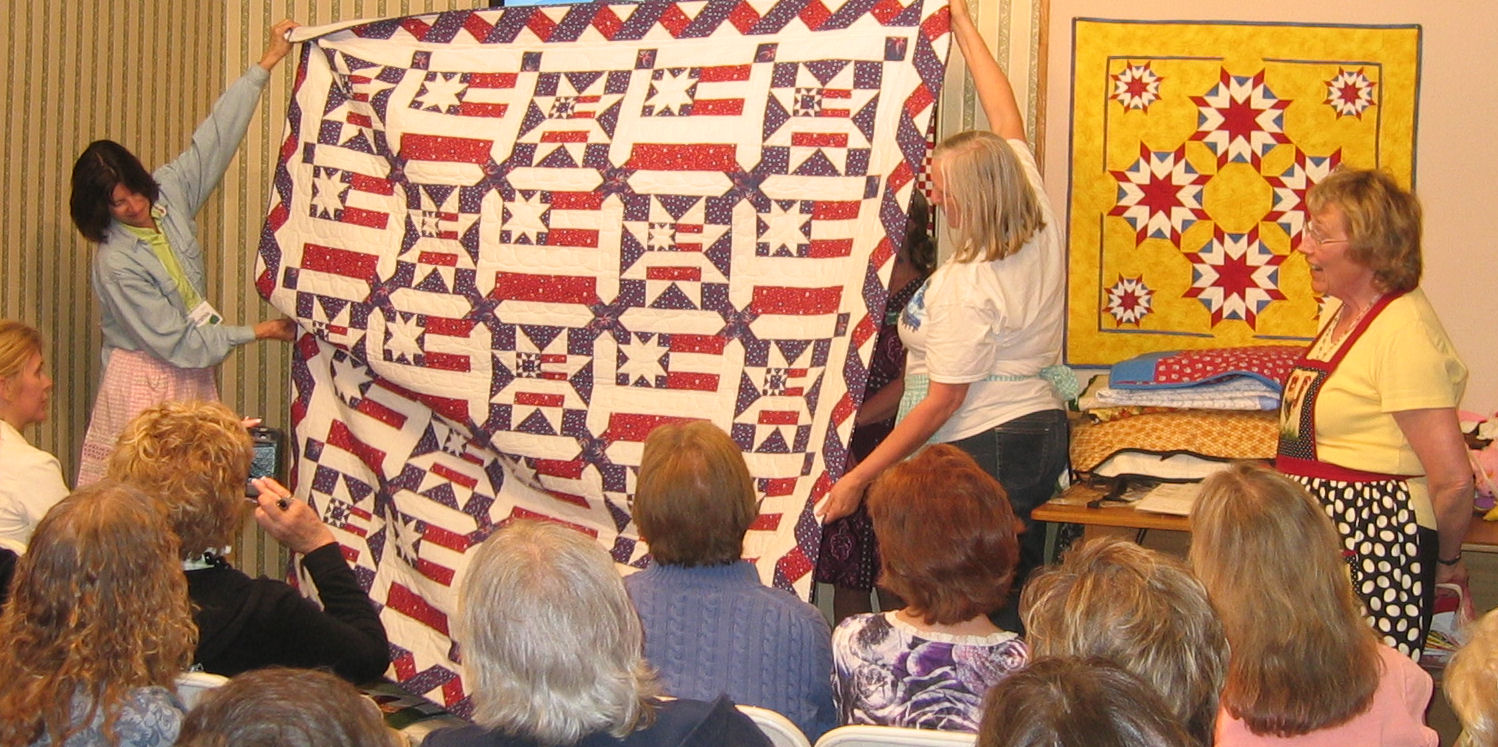
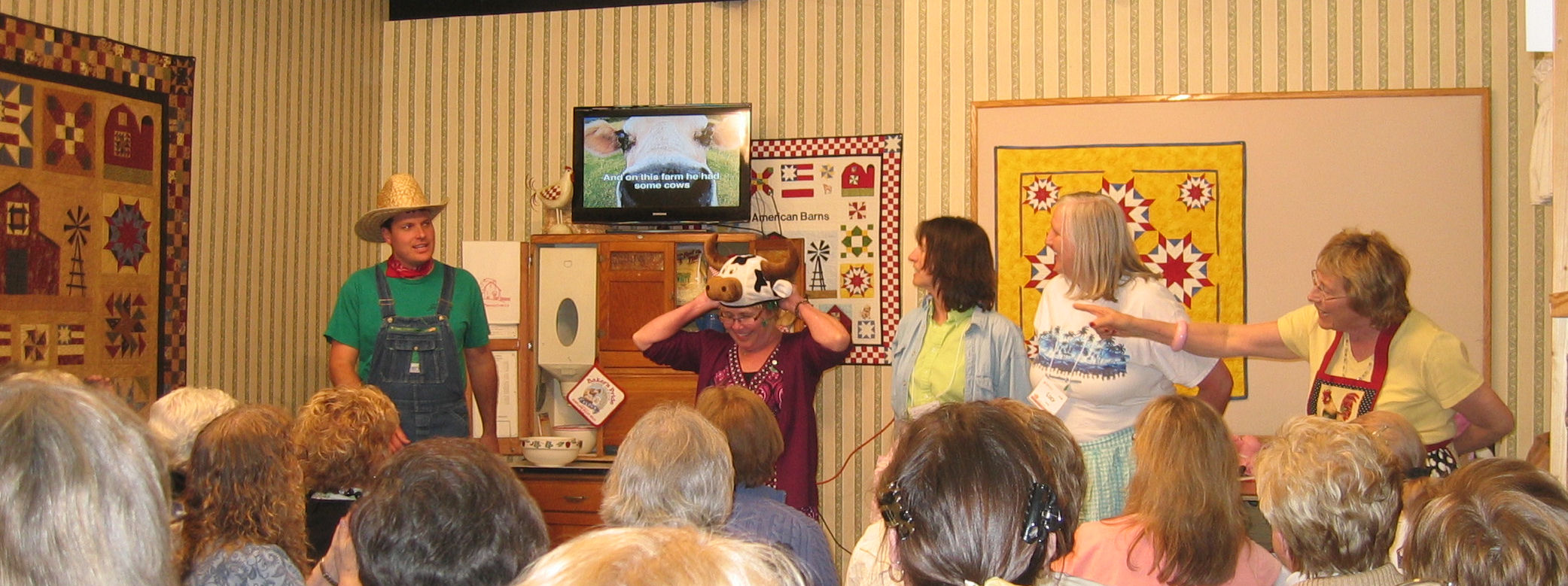
After the first day of the Quilting Academy, we were invited to Eleanor Burns’ Quilt in a Day store, and attend her 90 minute American Barns Trunk Show.

She was just like she appears on TV, except even more personable. The American Barns Trunk Show was full of information and techniques  and some history of the barns , the quilt blocks, and the project to get quilt blocks painted onto barns (some 3000 barns now have them). The evening was full of fun, laughter, song and dance (yes, really!). Her whole family is involved, with her son, brand new daughter-in-law and granddaughter all performing or being featured in some way.

While she may try to come across as a little hokey, behind that facade is a very bright and astute businesswoman!

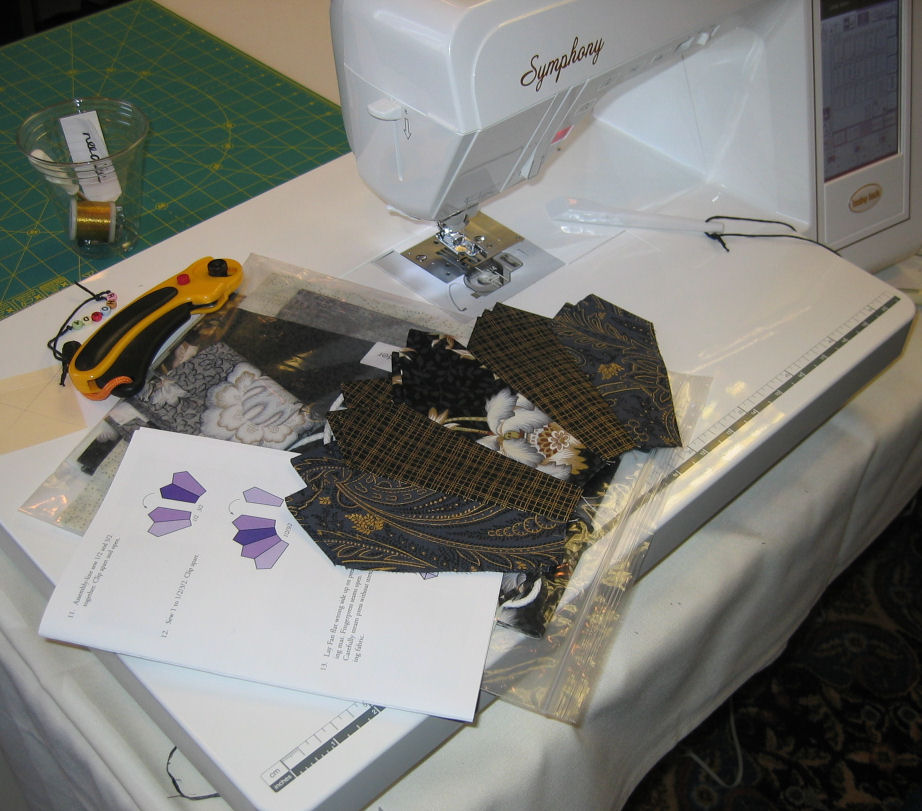
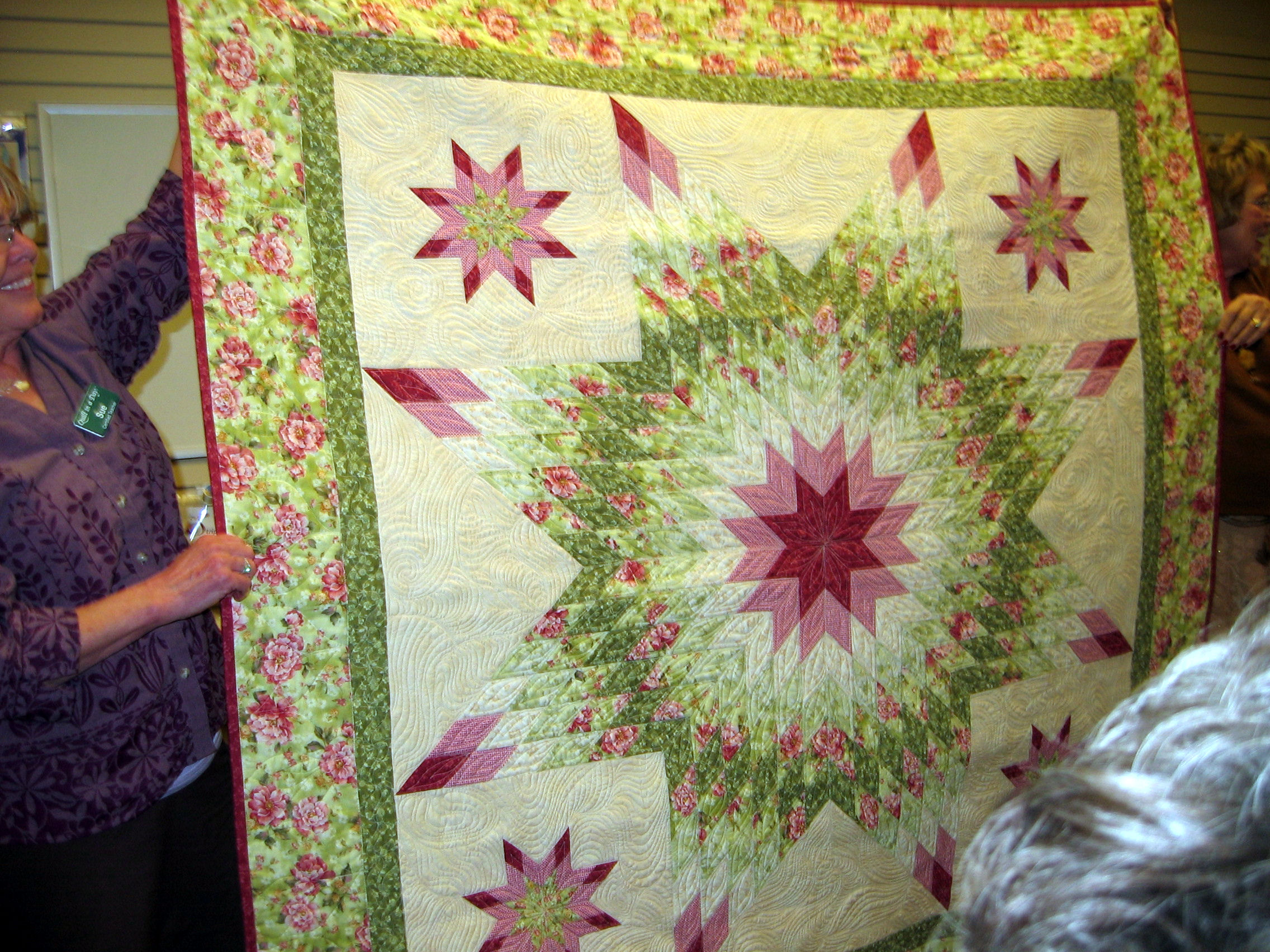
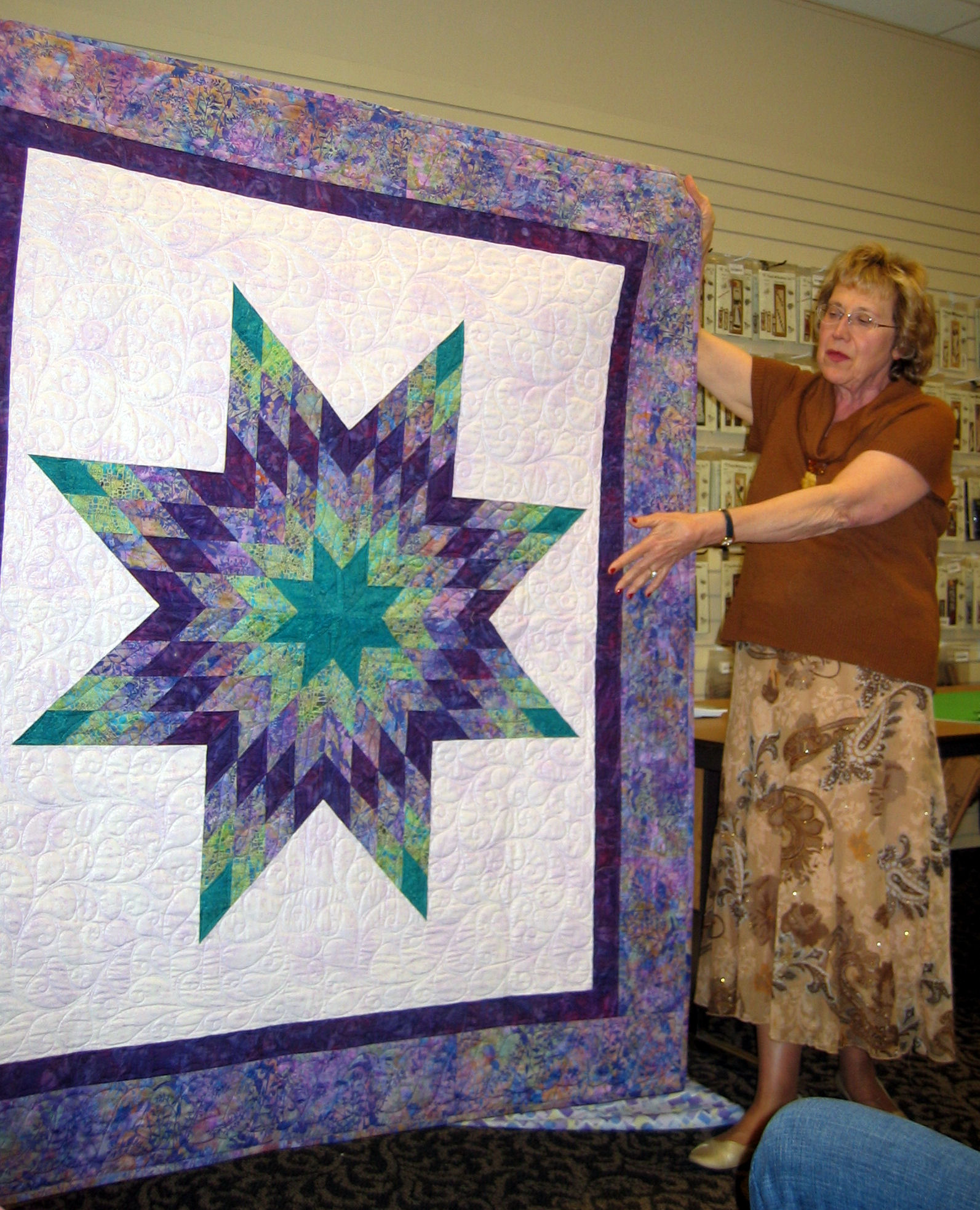
Some pictures from the Trunk Show; click on a small image to see it full size.

Tomorrow is the day I spend in her class — after tonight’s performance, I’m really looking forward to it.


Behind the scenes at Quilt in a Day

18 03 2011

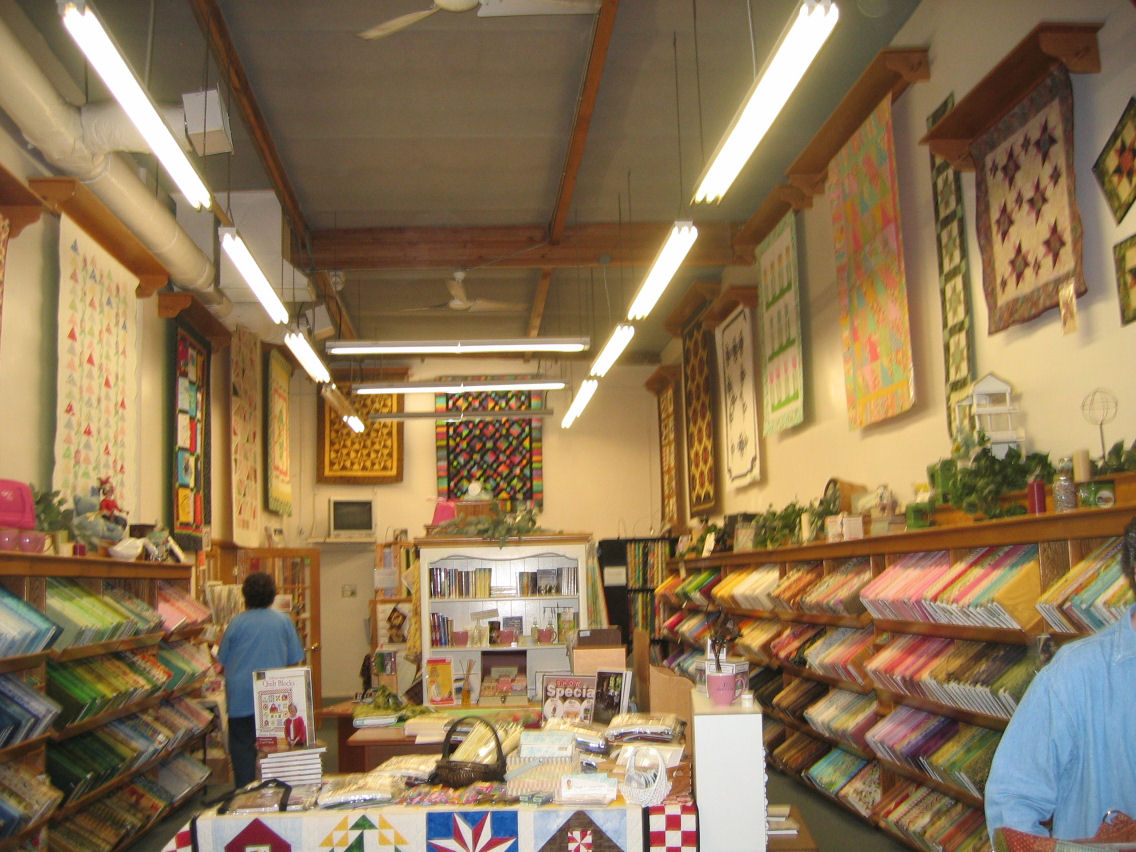
After the first day of the Quilting Academy, we were invited to travel to San Marcos (about 30 minutes away, but maybe less if we had taken the right turn!) to see Eleanor Burns’ Quilt in a Day store, and attend her 90 minute American Barns Trunk Show.

The store was like many others, though it did have quite a lot of fabric on sale (Yes, I bought some! At sale prices of $4 and $5 a yard, who wouldn’t? especially as fabric in Australia is upwards of $20 a metre.)

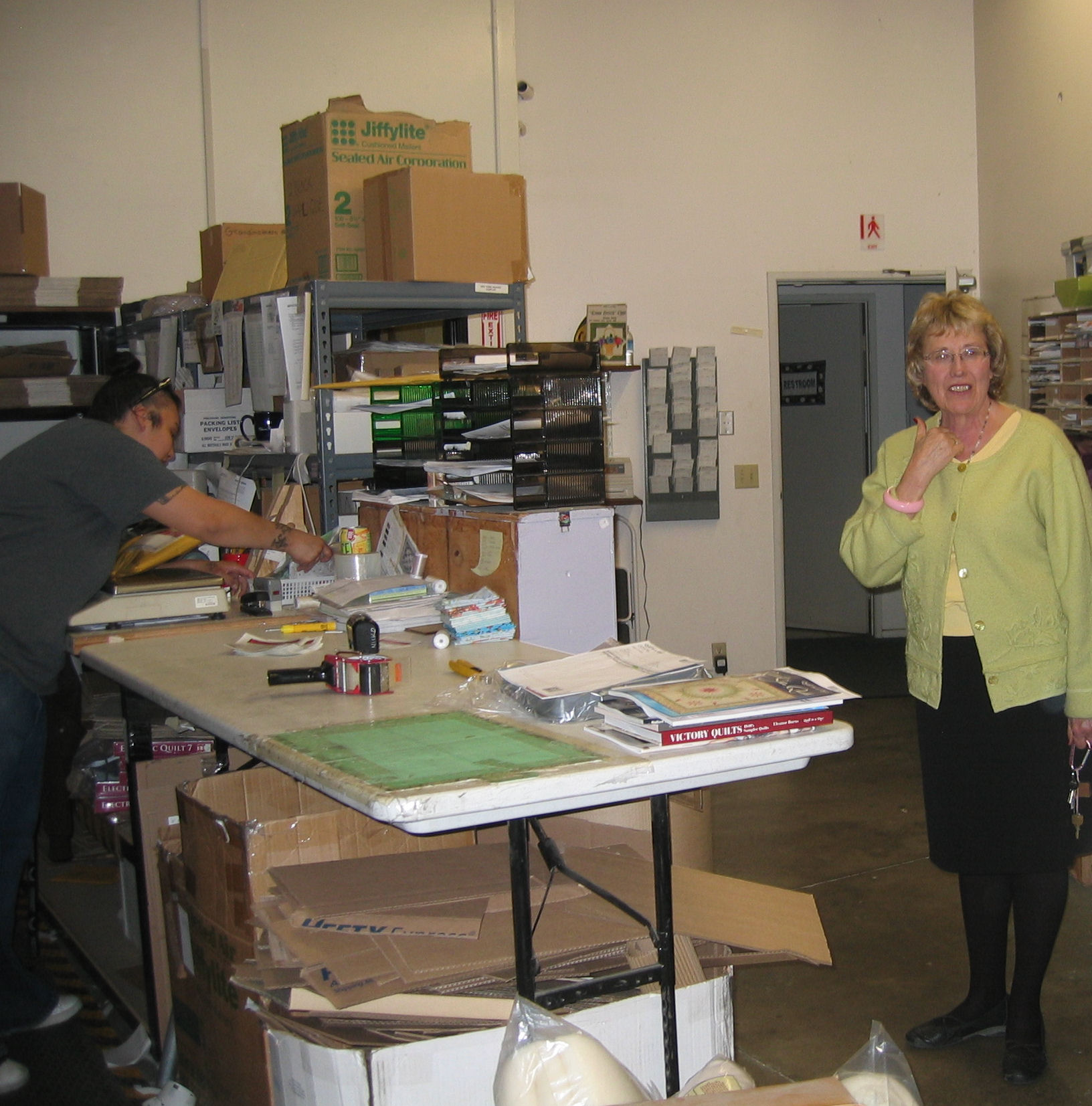
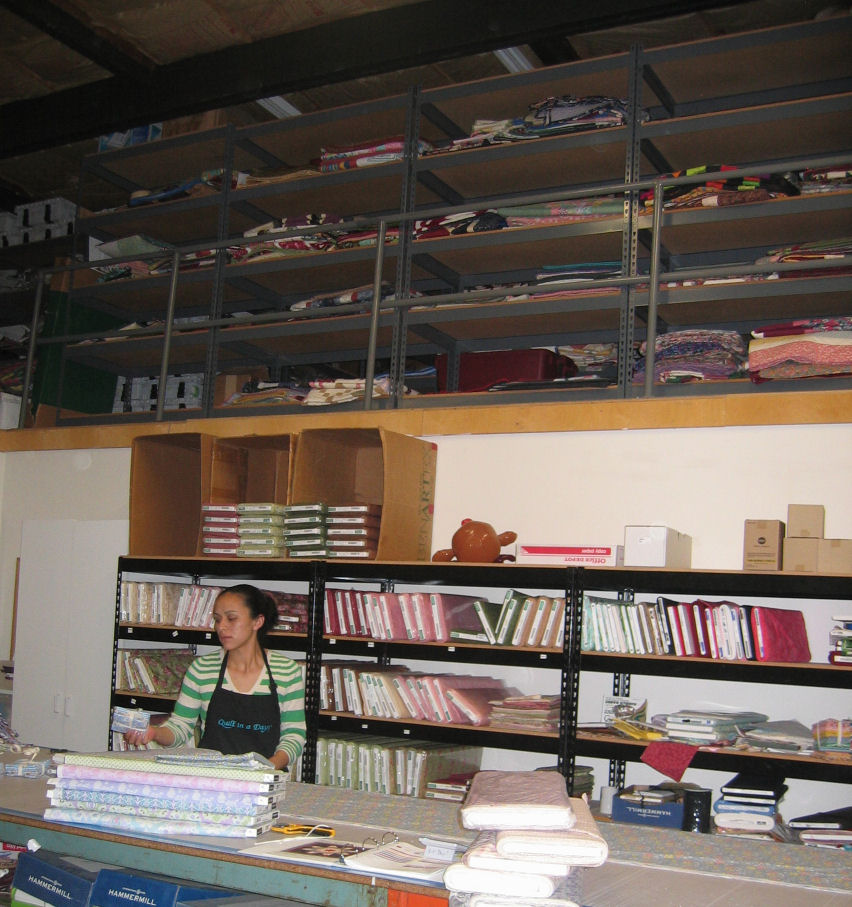
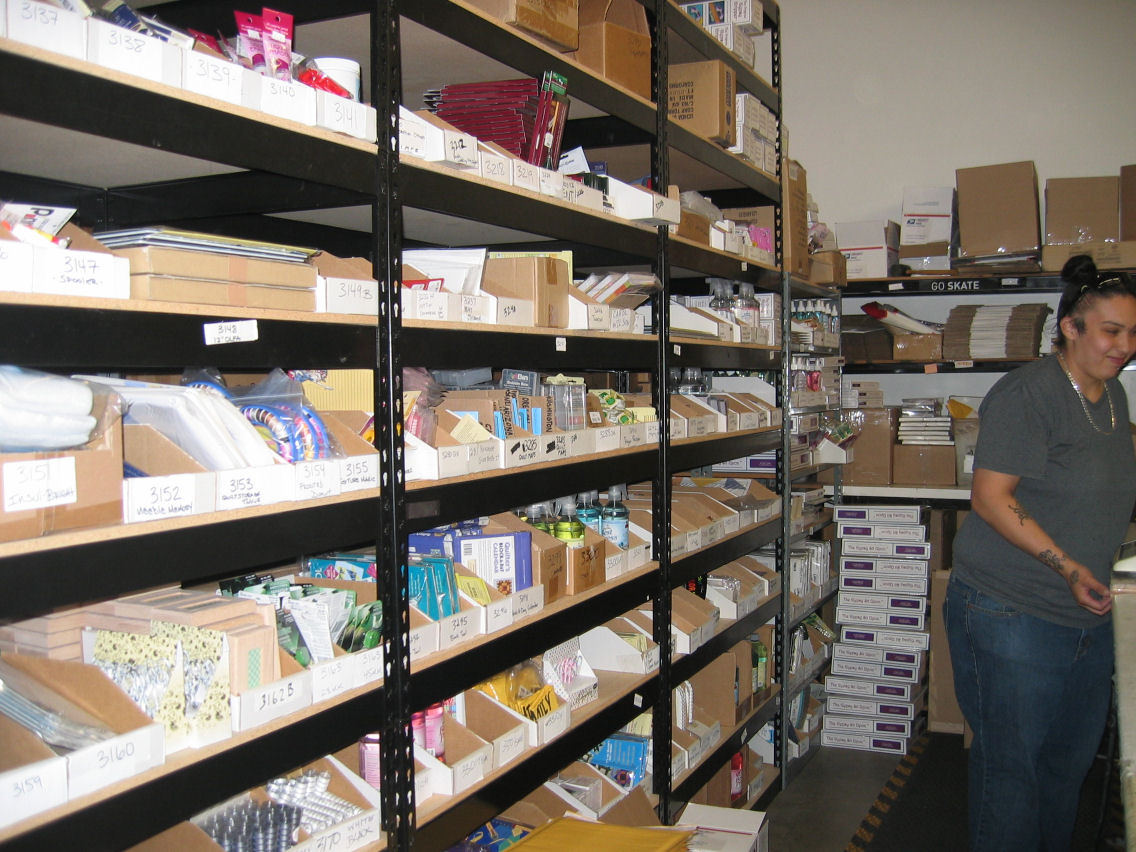
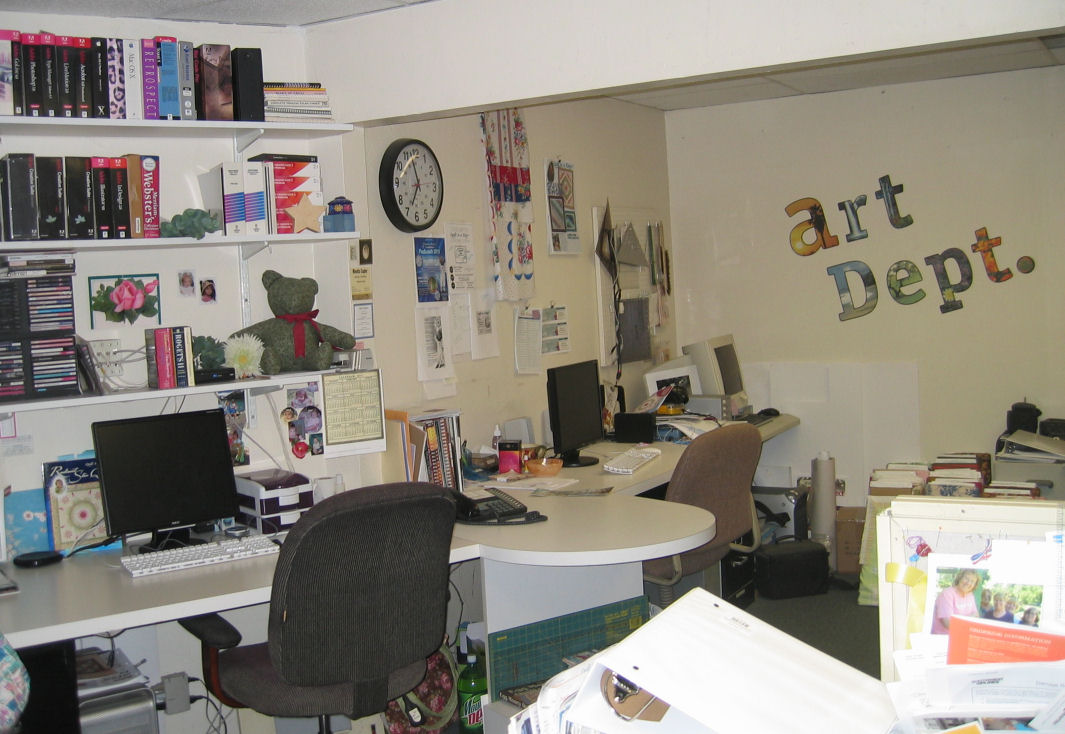
The highlight though was the ‘backlot’ tour conducted by Eleanor herself. This is a MAJOR one-woman brand industry! Most of her sales are via the internet and the back area is HUGE. Even at close to 7 pm, many staff were still working, packing orders, cutting fabric for packs, testing new designs, etc. They even have their own art department (for magazines, books, and web), and their own digital printing press for short-run books on demand. Oh, and she has her own recording studio, which is where she held the Trunk Show (and I suspect it was video’d as the full studio lighting was turned on when she came out to perform.)

Some ‘backlot’ pictures; click on a small image to see it full size.


Quilting Academy: Day 1, March 2011

18 03 2011

Today was the first day of the 3-day Eleanor Burns Quilting Academy in Del Mar, California. I’m not sure how many women attended but I suspect somewhere around 70 to 100. We were split into six groups (I was in a group of around 15 others) and allocated session times. Each group gets to spend one day with Eleanor working on one of her projects. And the other two days are spent with other trainers working on other projects or learning about other techniques and equipment. The whole Academy is being run by the SewingMachinesPlus.com people and Eleanor’s Quilt in a Day people.

The group I was in spent the first day in two separate 3-hour sessions.

The morning session was conducted by the lovely Debi from Babylock.  Under Debi’s  expert guidance, we made a project that allowed us to learn how to use some of the features of the Babylock Ellisimo embroidery machines.  These are really high-end machines that cost some US$9000. I’d never used a computerised embroidery machine before, so it was a great opportunity to try one out first hand. While it was a pretty spectacular machine, I doubt I’d ever buy one as I couldn’t see myself using many of the high-end features that make these machines so expensive.

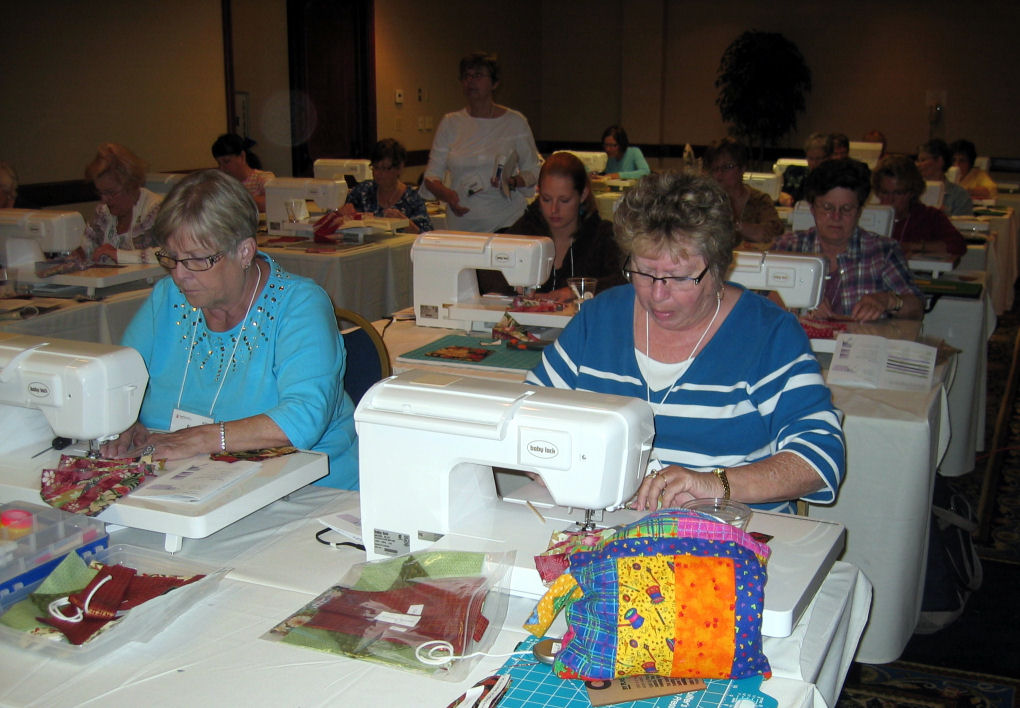
The photos below show the room, the machine and part of the piece we worked on (yes, this is mine); click on a small photo to show it full size.

At lunch I met a few people, in addition to those I met at the continental breakfast and at registration. Ages ranges of those attending appear to vary from early-mid twenties to mid-seventies. Nearly all are from the local area, though there are a few from out of state — Michigan, Virginia, etc. and me, of course, from Australia.

The afternoon session was disappointing. We were meant to learn about long-arm quilting machines and get to play on them.  When we walked into the room, three machines were set up — two big ones and a HQ Sweet Sixteen. This was going to be good! The presenter then spoke to us AT LENGTH (two hours out of the three) on how to choose a long-arm quilting machine. She didn’t do a single demonstration in all that time. Then, when it was time for us to play, she had difficulty rolling up the previous group’s work (she was introduced as an expert in all types of these machines). Once one machine was ready to go,  it wouldn’t run as the bobbin had run out and no-one from the two stores had thought to put in a spare or two!  So we all moved over to the second big machine (except those who heard that icecream was being served for the afternoon break!). She took ages to roll that one too, and had to get help. Then after about 1 minute, its bobbin ran out too! So now BOTH large long-arm machines are out of action! Many left at this stage, particularly after the lady from SewingMachinesPlus said that she’d open the doors to that room at 8 am tomorrow to let us play for an hour. Problem is: 8 am is when they serve breakfast. I don’t know why the presenter didn’t prepare the machines BEFORE the class (there was an hour’s break between classes), or even as she was talking for TWO hours (she could’ve then demo’d how to roll a quilt further on the machine). Instead she spent an inordinate amount of time on her favourite threads!

I did get to play on the HQ Sweet Sixteen — and it was wonderful. The motion for free motion quilting was really smooth and even, and I was very impressed with its small ‘footprint’ (the table it sits in is about 30 x 36 inches) as well as its ease of use. I want one!! Fortunately, a friend of mine in Perth sells them, so it’s not out of the realms of possibility 😉

After the day was over, we were all invited to go to Eleanor’s Quilt in a Day store, then stay on to attend her American Barns Trunk Show.


My first quilts…

18 02 2011

I bought one of those little slide/film negative scanners today. After figuring out how to work it (instructions were terrible!) — and after finding my stash of negatives — I started the VERY long project of scanning in all my old negatives. This could take years… I have over 3000 negatives from my year in Canada alone!

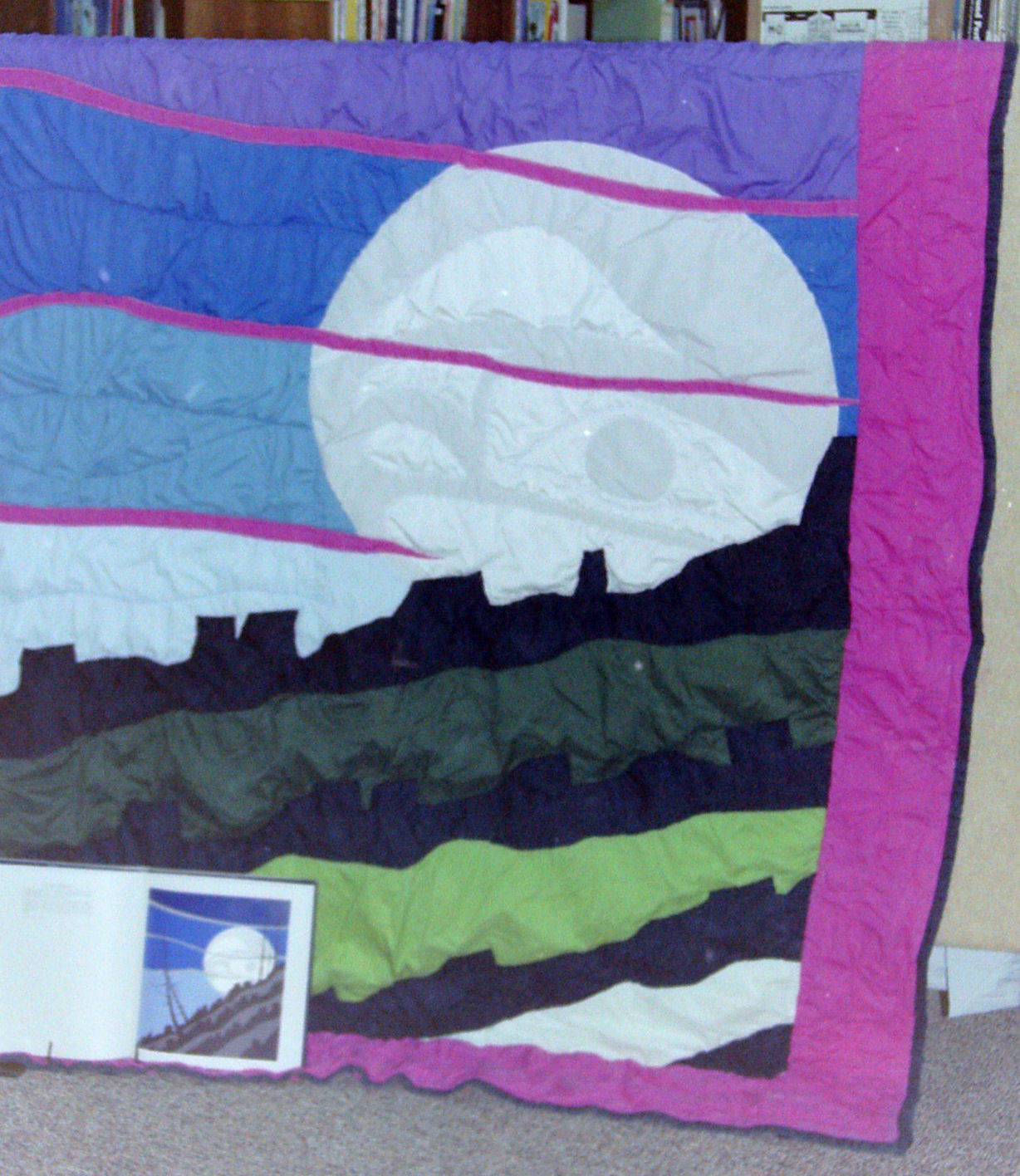
Anyhow, some of the first bundles of negatives I pulled out happened to have pictures of the first-ever quilts I made back in the late 1980s (I think I made my first quilt in 1987). And also some photos of some tapestries I did before I got into quilts (I made them some time between 1979 and 1985, though I have no idea when exactly).

Here they are (click a small image to see a larger version of it)…

Very astute observers might recognise some of the fabrics in the log cabin quilt — I had plenty left over and used some of them 20 years later in my Challenge 28 quilt!


My first chillies!

13 02 2011

Some months back I bought a chilli seedling, and planted it out. The slaters etc. nearly ate it all while it was still a very young plant, so I put a little cardboard carton around it to protect it from voracious bugs. I’ve been watering it, but nothing else. A few weeks back it had flowers, then some green fruits, and now some red chillies!

This is what I picked off the little plant yesterday, with more to come. Supposedly it’s a hot chilli — I’ll find out tonight with I cook with a couple of them.


Sewing morning

12 02 2011

I heard about the Leah Day free motion quilting project some time back — she had decided to video 365 different free motion quilting designs and share them for free via YouTube and her websites. Trying out her designs was something I’d had on my ‘to do’ list for a while. And over the past couple of weekends, I’ve had a chance to do so.

I set up my laptop in the sewing room and connected via my WiFi connection to the internet and off I went! So far, I’ve made about 30 samples of her designs. Some are easy, some will take a bit more practice to flow smoothly, and some just do my head in!! 😉

Here’s the photo I took this morning before starting:

Do you like the view from my sewing room? 😉

Behind the laptop is my overlocker (pushed back to allow space for the laptop). In the machine is some bright green rayon thread, with red thread in the bobbin so I can see when I need to adjust the tension (later, I changed later to Bobbinful as I was using so much thread).

On the sewing machine extension table is a completed quilt sandwich in cream, basted to allow for four designs per sandwich. And the sandwiches are the correct size to go into plastic insert sleeves and into a file when I’m done. I’m also using a Sharpie to label each design with the names Leah’s given them so I can refer back to the video if there’s a design I want to use but can’t remember how to create it.

I’m using the spring free motion quilting foot and a Supreme Slider. I’ve set the free motion pivot to -5 and my tension is 1.8 (this is in case I don’t remember!).

Oh, and Leah’s site is such a valuable resource for quilters that I’ve done the right thing and sent her a donation.


Big storm coming…

28 01 2011

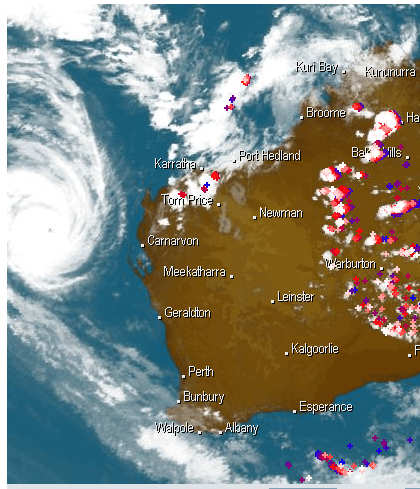
This is the satellite photo from 2:30 pm this afternoon (Jan 28, 2011), showing Cyclone Bianca. She turned the corner (NW Cape) dumping rain etc. on Onslow and Exmouth last night. Now she’s off the west coast. There’s a strong chance she will cross the coast on Sunday, with heavy rain and very strong winds, somewhere around Bunbury. We live somewhere near Bunbury… We’re on cyclone watch now.

The unusual thing is that tropical cyclones typically don’t come too far south at this time of the year — they tend to stay in the Kimberley or Pilbara, crossing the coast there then petering out into a tropical depression over the inland areas, dumping rain on places like Kalgoorlie and Esperance. Later in the season (about March/April) they tend to track further south, though they’re rarely a cyclone by the time they reach the Perth area. Exception: Cyclone Alby in (April?) 1978 that wrecked homes in a swathe from Bunbury to Albany.

Of course, this cyclone may peter out, or just fade off into the Indian Ocean. Or collect more power, water and force and come screaming down the coast…

It’s time to get the outdoor setting into the shed, find the battery-operated radio, etc.

Oh, for my non-Aussie friends, to give you some idea of the size of this thing, the section you can see on the map is most of Western Australia and Texas would fit into it about four or five times over (depending on who you ask)!

Update: Satellite image from 3:30 am 29 Jan, 2011. That area of pink/red north of Perth is about to hit us now — 6:15 am. Sky has gone black, rain hasn’t started yet, but imminent. Thunder rolling… Oops. Rain just started. Very heavy rain — can’t see the estuary or the sand dunes in the distance as we normally can. And did I mention it’s hot? 28C in the house at 6:00 am.

Update 7:15 am 30 January 2011: Well, it looks like all we’ll get is some strong winds and some rain, thank goodness. The 5:30 am satellite image (below) shows that the main part of the cyclone has weakened considerably, so if/when it does hit the coast, it will bring rain and some winds. We’ve had very little of both so far, though areas to the north of Perth (Geraldton) and to the east of Perth (Northam, York) copped a fierce battering in that storm you can see in yesterdays’ photo — the big white blob with red and blue blotches between Perth and Geraldton. That one missed us totally and went inland following the other red blotchy bits. There are still plenty of warnings out for coastal areas though, as along with the wind and rain, there are also some pretty high tides.


See also:


Cockroach updates

27 01 2011

I just realised that I haven’t written a few updates about ‘my’ cockroach that’s now living with one of the entomologists from the Australian Museum (do a search on this blog for ‘cockroach’ to see my earlier posts — or just click this link). The quoted bits are from his emails to me advising me of the progress of my cockroach.

April 2010:

At least one of the oothecae ‘your’ female produced did hatch – the young were a pale grey all over – I only found 5 but then they all promptly disappeared into the leaf-litter and in the few rudimentary searches I’ve made I haven’t seen them again. This may mean nothing as their mother can remain hidden and unseen for a few weeks until I get worried and start looking for her – whereupon she is found hale and hearty. The species seems to be very good at avoiding detection and the smaller ones due to their size even more so.

The ‘related’ species they are in with – which seems to be not that closely related based on behaviour – is far more obvious and diurnal and so far NONE of their eggs have hatched. The cockroach expert hasn’t been down to Sydney to have a look at all the bodies of yours and various others – for a while yet so I have nothing to report on that other than it seem to check out now pretty well with Polyzosteria cuprea but the expert on the group will have to let us know if this is indeed correct and or if the locality is a new record for the species or not. Either way they are very useful specimens for us of a species we had very few specimens of before.

8 October 2010:

… your original female cockroach has just emerged from her winters sleep and seems as healthy as ever. I haven’t seen any babies as yet but then considering how well she can hide amongst the leaf litter in the cage there is still hope that they made it through to winter as well.

25 October 2010:

Just thought you’d like to know I saw your cockroach again yesterday and she was carrying yet another ootheca. I have now caught her out of the main cage and put her in a smaller one where I can better track the progress of the eggs. Anyway clearly P. cuprea is a very hardy long lived species! They are also very good at escaping detection – I still haven’t noticed any babies but can’t discount them as the original female was so good at hiding that several times I assumed she was dead and started looking for her body only to find her hale and hearty.

I replied, asking Martyn who the female had mated with! His reply:

Well that’s where it gets tricky. Most insects mate only once and store the sperm for the reproductive life of the female (this can be years). Some long lived species mate several times over a long lifetime, and some, like certain beetles and certain cockroaches can mate with multiple partners and the eggs are either fertilised with a mix of sperm OR the next eggs laid get fertilised by the last male to mate with her – in the latter case the earlier sperm are still viable but must now ‘wait their turn’.

Needless to say this is what I am hoping is the case here as the other species in there with her – although of the same genus – is of a different sub-set of that genus without the speckled legs. It is unlikely to be viable as a cross as a result OR maybe she’s laying blanks like a chicken does. The purpose of this segregation now is to see if the eggs hatch and what they look like.

4 November 2010:

Just thought you’d like to know that the last years babies are starting to appear now in the cage. All look like perfectly normal P. cuprea but all I have seen so far (about 3 ranging from half grown to adult) seem to be females so it might be option 3 and the result of parthenogenesis or it might be that this species throws more female offspring than males. Either way it is good news and the result is a success so far. If the colony can continue from here will be the next milestone.

More updates as they come to hand…

August 2014: The final chapter


Well hung!

27 01 2011

One of my work colleagues loved one of my fabric art pieces so much she got her husband to buy it for her for Christmas! She’s now had it framed and it’s hanging on the wall in her home.

She has a doctorate in marine ecology, so the undersea theme was a good match.

Thanks for sending me the photo showing it in its new home, Steph!


Etsy Treasuries #51 to 65

26 01 2011

It doesn’t seem that long ago when I posted the last set of Etsy Treasuries some of my stuff was featured in! Here it is, Australia Day (January 26), and I’ve got another 15 Treasuries to add — some of which are Australia Day Treasuries.

Click on a small image to show it full size.