Community Quilt 182

25 01 2015

Sometimes a quilt just sings to you — this was one of those. I loved its simplicity and how the quiltmaker had used all solids in graduated colour ranges in each rail fence block. And the use of various widths in the white sashing strips.

I decided to quilt it with a yellow thread — enough to show up on the white, but not enough to be overbearing and dominate the simple beauty of the coloured strips.

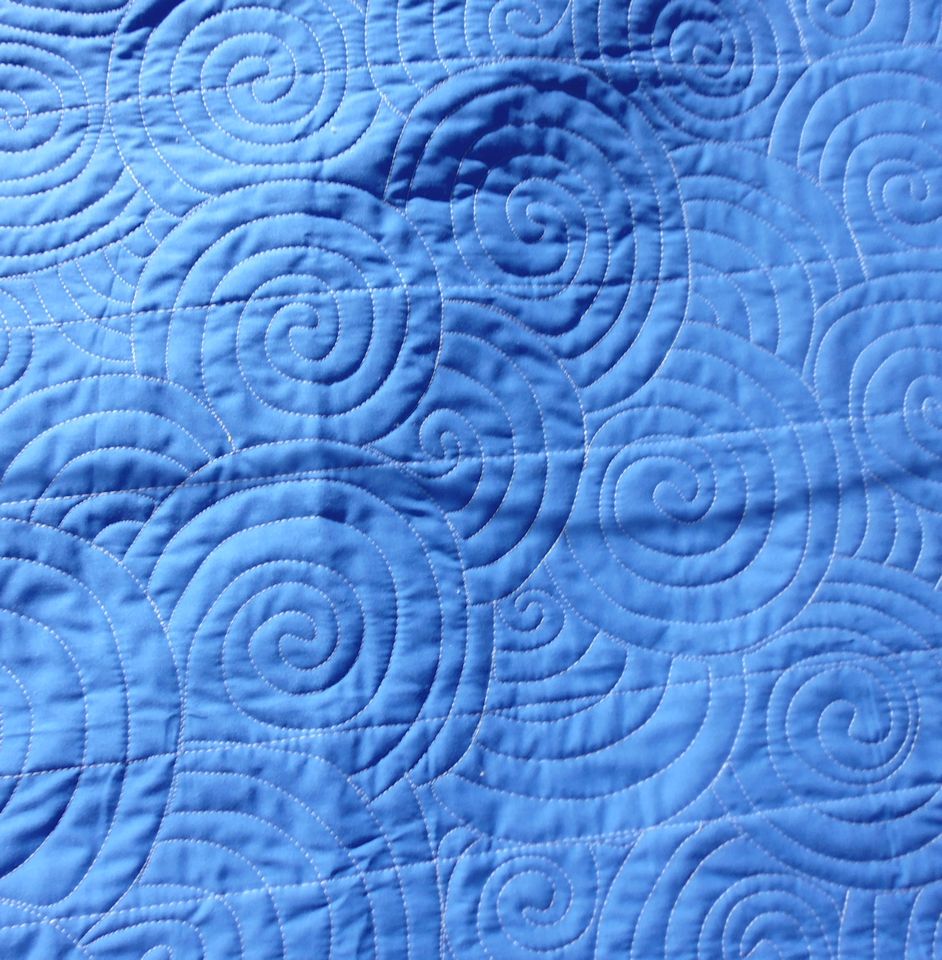
First, I stitched in the ditch around each coloured strip. Then it took me a while of looking at it to figure out how best to quilt it. I went through lots of options in my head and drawing over it with my finger 😉 Eventually, I decided on an all-over squared stipple motif and was about to start, but at the last moment I decided on really big swirly spirals, with about a half inch between the lines in each spiral.

I didn’t mark anything — all these spirals were free-motion.

I really like how it turned out. And I liked how the yellow added just a bit more life to an already vibrant and colourful quilt. The back looks pretty awesome too 😉

(Click on a photo to view it larger)

quilt182_01
quilt182_02

Back:

quilt182_03

Threads used:

  • Top: Isacord (40 wt, trilobal polyester, colour 0600)
  • Bottom: Fil-Tec Magna Glide Classic pre-wound bobbin (light tan)


Community Quilt 181

25 01 2015

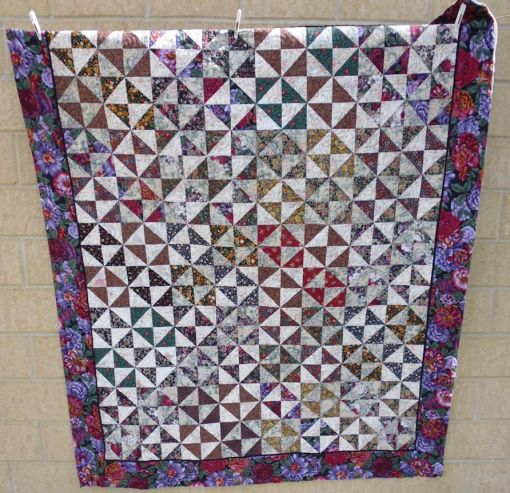
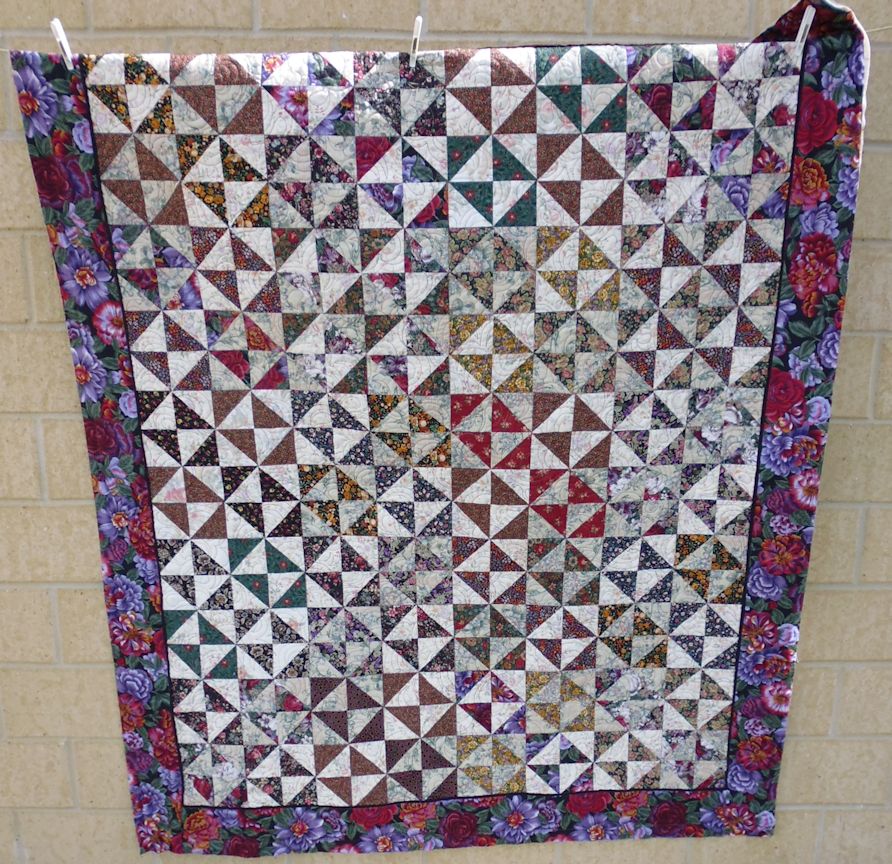
This was a very ‘busy’ quilt, with lots of tiny half-square triangles and many many different fabrics, including an equally busy fabric in the border.

How to quilt it? I realised that doing anything other than a simple all-over motif would be lost in the ‘busy-ness’ of this quilt, so I opted for a variation of my ‘go to’ open headband motif. Instead of arcs, the centre part of each motif is a paisley (or a really big comma!).

I used a variegated thread in autumnal colours in all parts of this quilt, including the stippling in the border.

(Click on a photo to view it larger)

quilt181_01

quilt181_02
quilt181_03

Threads used:

  • Top: Fil-Tec Harmony ‘Autumn’ (40 wt, cotton, colour 14081)
  • Bottom: Fil-Tec Magna Glide Classic pre-wound bobbin (gray)


Community Quilt 180

25 01 2015

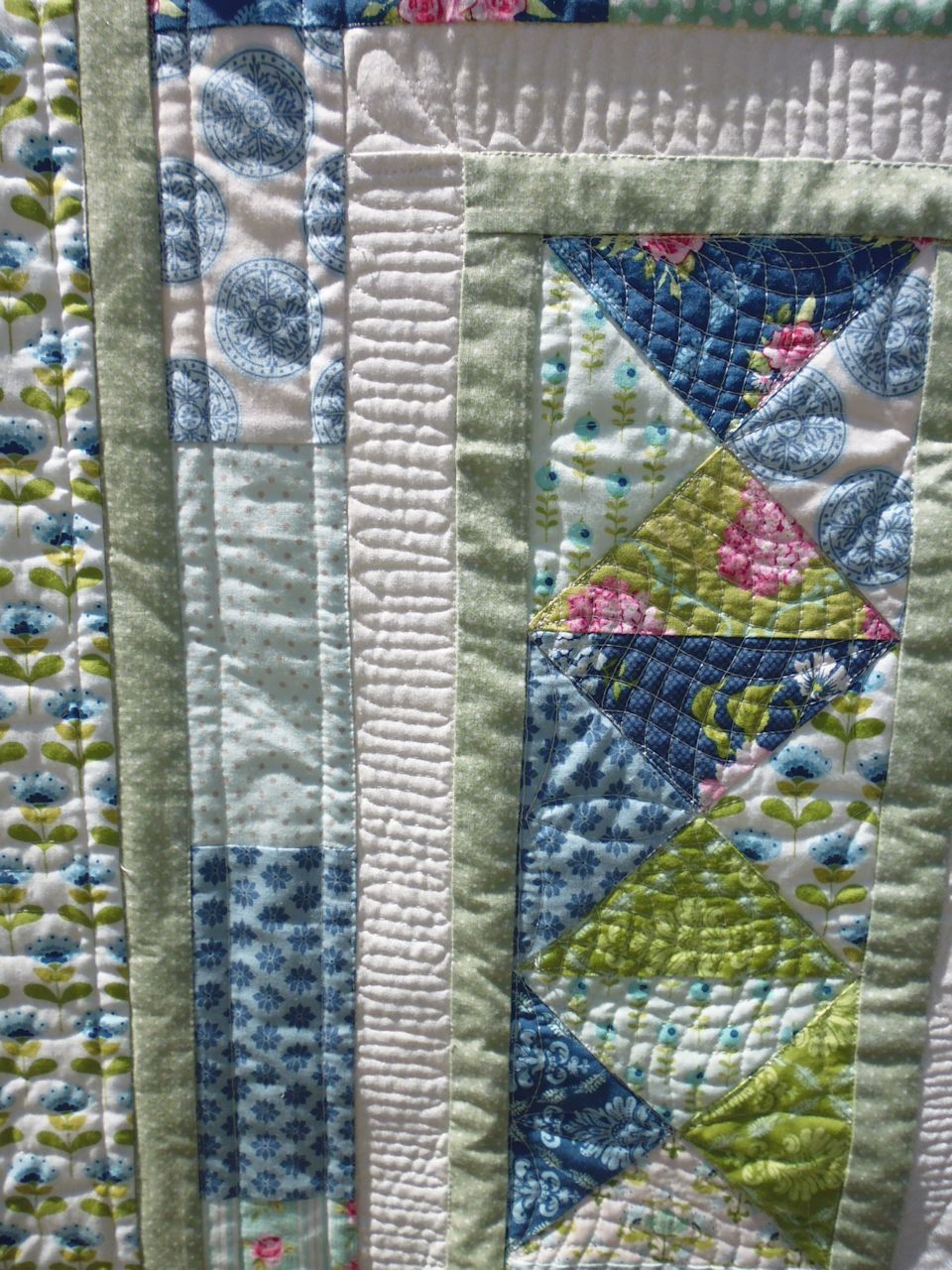
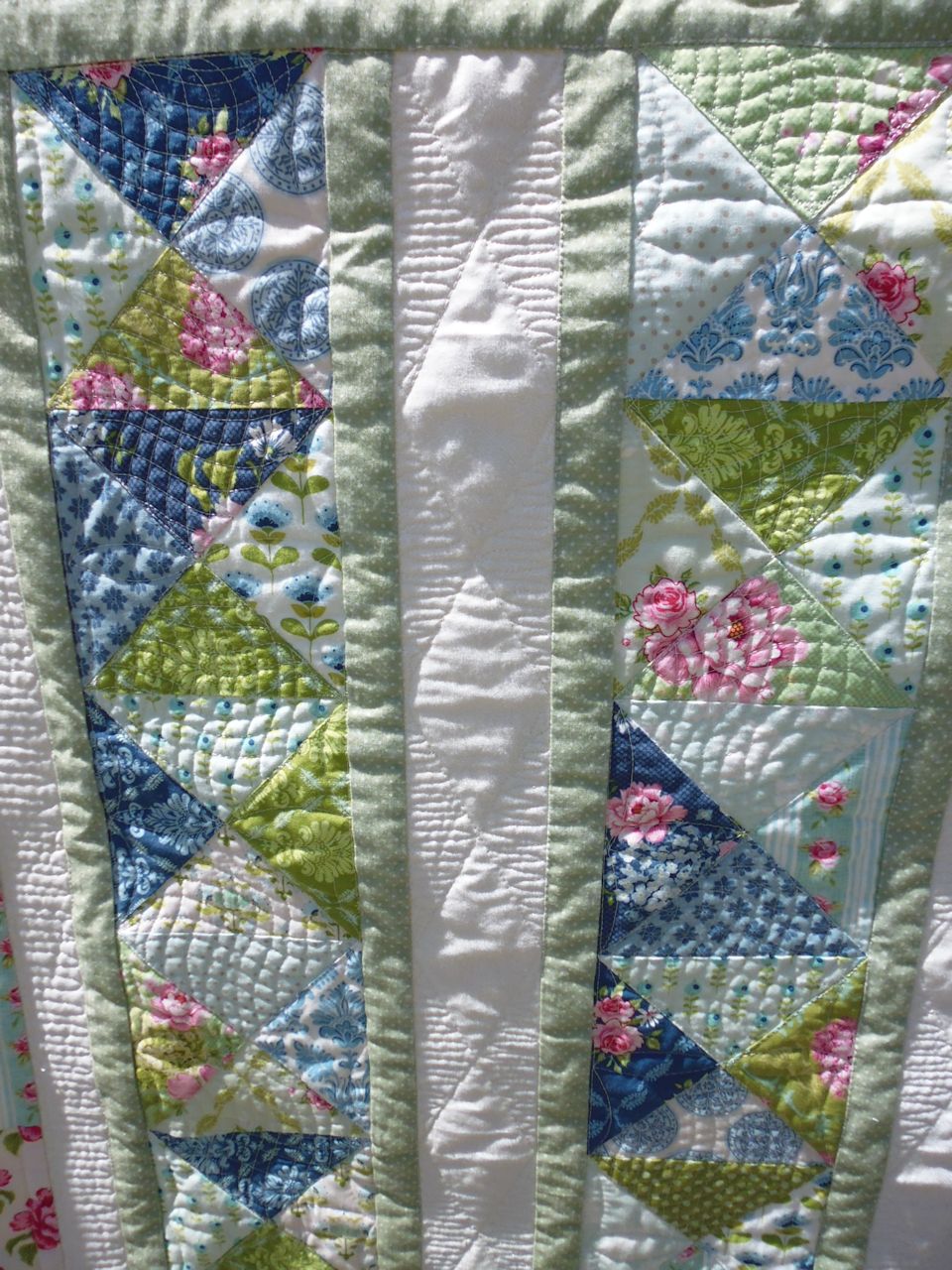
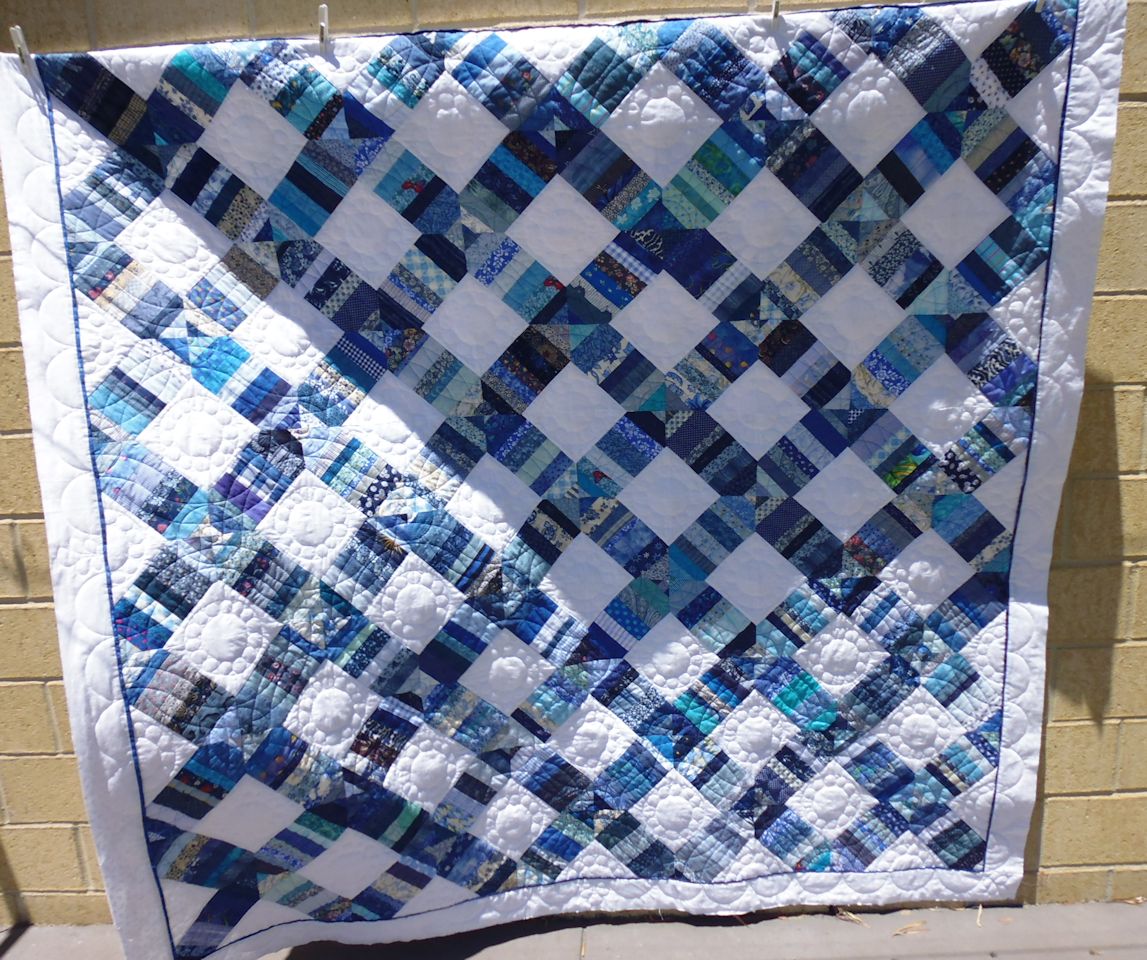
I liked the colours in this quilt — they were very cool and calming. And fresh.

How to quilt it? As usual, I started by stitching in the ditch around the main elements — the white strips in the middle and the borders. Then I tackled the white strips. I emulated the diamonds in the coloured strips stitching straight lines (with my Line Tamer ruler) from point to point (matching the side points of the diamonds in the coloured strips). Then I did a tight up and down ribbon stitch in the ‘background’ of these diamonds, causing them to ‘pop’.

Next, I did a wavy matrix in each coloured diamond (on-point square) in the coloured strips. But the setting triangles were too puffy, so I stitched a 3-petal flower in those to subdue the puffiness.

In the white border, I repeated the up and down ribbon motif, and then did a very large version of it in the widest border. In that border, I didn’t want the outermost points to be even, so I varied their length.

In the other borders I either stitched straight lines about a half inch from the seam lines, or left them unstitched (all the spotted green borders).

I was pleased with how it turned out — this was quite a ‘modern quilt’, and I hope my stitching showed that. And the back looked pretty awesome too 😉

(Click on a photo to view it larger)

quilt180_01


quilt180_04

quilt180_03

quilt180_02


Back:

quilt180_05


Threads used:

  • Top: Fil-Tec Glide ‘Linen’ (40 wt, trilobal polyester, colour 10WG1)
  • Bottom: Fil-Tec Magna Glide Classic pre-wound bobbin (white)


Community Quilt 179

25 01 2015

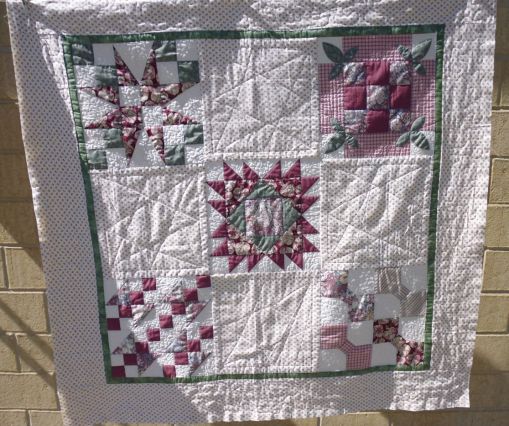
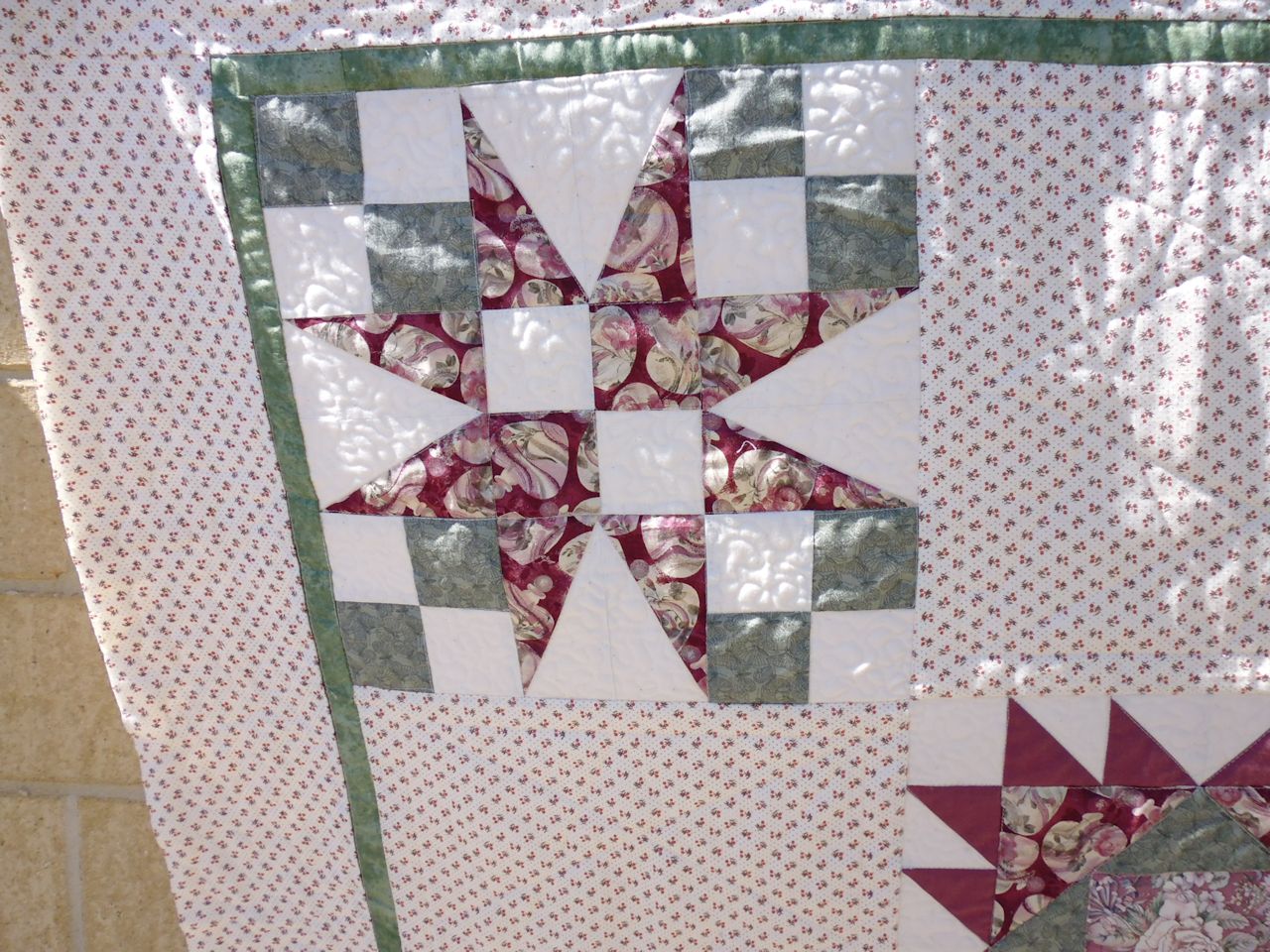
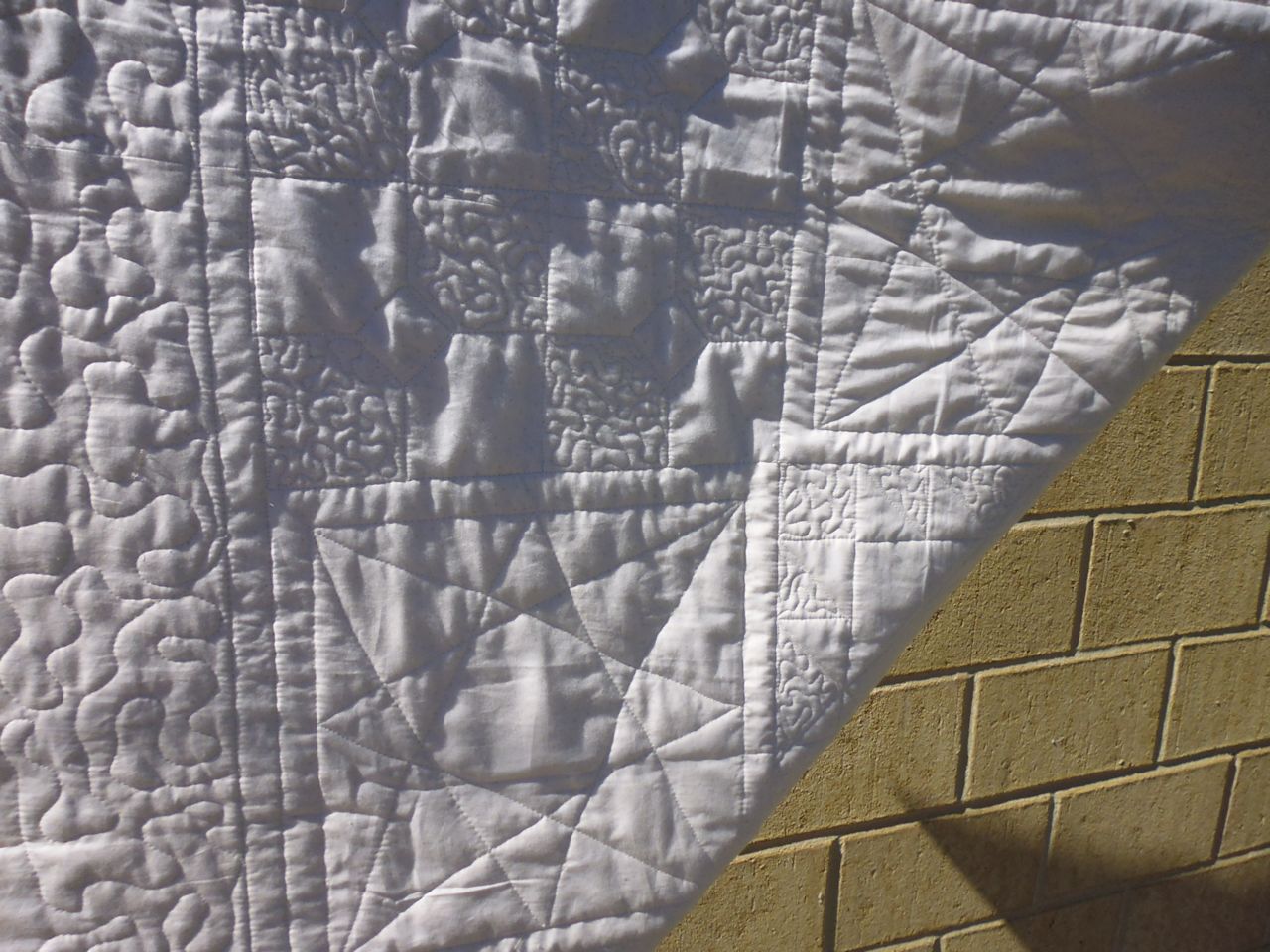
This was a big quilt with a lot of empty space. Each block was different but most had stars or diagonal lines, which helped me decide how to quilt the empty blocks.

First, I stitched in the ditch around each of the blocks, then around the main elements within each pieced block. To make these elements ‘pop’, I quilted the background only, in a simple smallish stipple.

To give definition to the empty blocks, I echo quilted about half to one in from the joining seam lines, then stitched a wonky 8-point star in each to stop them puffing too much. Finally, I did a large stipple in the main border and left the green framing border unstitched.

(Click on a photo to view it larger)

quilt179_01


quilt179_02


Back:

quilt179_03

Threads used:

  • Top: Fil-Tec Glide ‘Linen’ (40 wt, trilobal polyester, colour 10WG1)
  • Bottom: Fil-Tec Magna Glide Classic pre-wound bobbin (white)


Community Quilt 178

25 01 2015

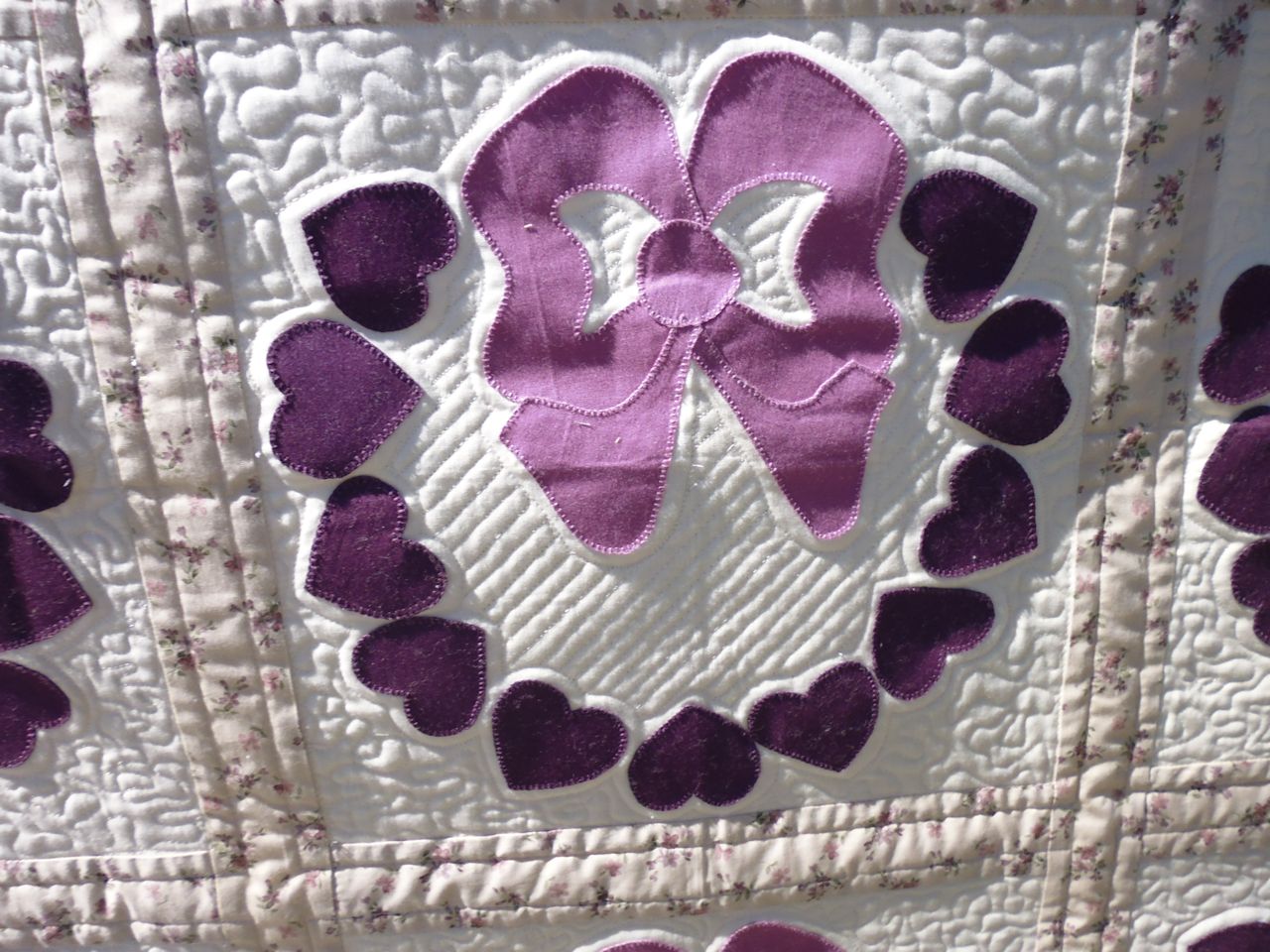
Someone had spent a lot of time cutting out and carefully appliquing all those little hearts and big bows to create wreaths inside each block of this quilt.

How to quilt it? I started by stitching in the ditch around all the blocks, then I echo stitched about a quarter inch out from each heart and bow. Next I used my Line Tamer ruler to stitch diagonal lines inside each heart ‘wreath’, then stippled in the remaining white space.

I kept the border simple, just stitching a straight echo line a half inch from the seams.

(Click on a photo to view it larger)


quilt178_01


quilt178_02

Threads used:

  • Top: Fil-Tec Glide ‘Linen’ (40 wt, trilobal polyester, colour 10WG1)
  • Bottom: Fil-Tec Magna Glide Classic pre-wound bobbin (white)


Handi Quilter Sweet Sixteen: Needle Sensor Failure

19 01 2015

Occasionally you might get this message on your machine. Stop stitching immediately and investigate the cause.

In my experience, it’s almost always caused by something caught in the bobbin area — a piece of thread (it can be TINY), or a broken needle tip.

If you broke a needle, have you found the needle tip? It might be jammed inside the bobbin area. Mine was and my machine wouldn’t work (see https://rhondabracey.com/2013/04/22/oh-no/). I had to take it back to the dealer for them to get the tip out and to reset the timing. A broken needle jammed into the bobbin case invariably throws out the timing, which means your stitches may not form correctly even if you can get the tip out and the ‘needle sensor failure’ message goes away.

However, the most common reason I’ve found for the ‘needle sensor failure’ message is that some thread is caught inside the bobbin area, which is stopping the bobbin mechanism from moving.  If it’s thread, try these:

  1. Turn off your machine and turn it back on again – do you still get ‘needle sensor failure’? If yes, go to the next step; if not, try stitching again but be aware that if you get badly formed stitches (or no stitches), your timing is likely out and you’ll have to take your machine to a technician.
  2. Remove the needle plate and dust out any lint. Look for and remove any thread caught in the bobbin area.
  3. Remove your bobbin and bobbin case. Again, look for and remove any thread caught in the bobbin area.
  4. Slowly turn the handwheel at the back of the machine while looking down into the bobbin area – you’re looking for any piece of thread that might be stuck in there. If the handwheel is jammed, apply some pressure but don’t force it – if you can’t turn it at all, take your machine to the technician.
  5. Assuming you can turn the handwheel, turn it back and forth (slowly) looking for anything caught in the bobbin area mechanism. If you see any thread, remove it with tweezers.
  6. Turn the machine off, then back on again, replace the bobbin/bobbin case, and try to stitch. If you still have ‘needle sensor failure’, take your machine to your technician.


Making koala mittens

10 01 2015

The call went out after the devastating bushfires in South Australia for cotton mittens for koalas to cover the bandaged burns on their paws. The mittens were to be 100% cotton (easy for a quilter — that’s pretty much all most of us sew with), a pattern was provided, and an address was provided for us to send the completed mittens to.

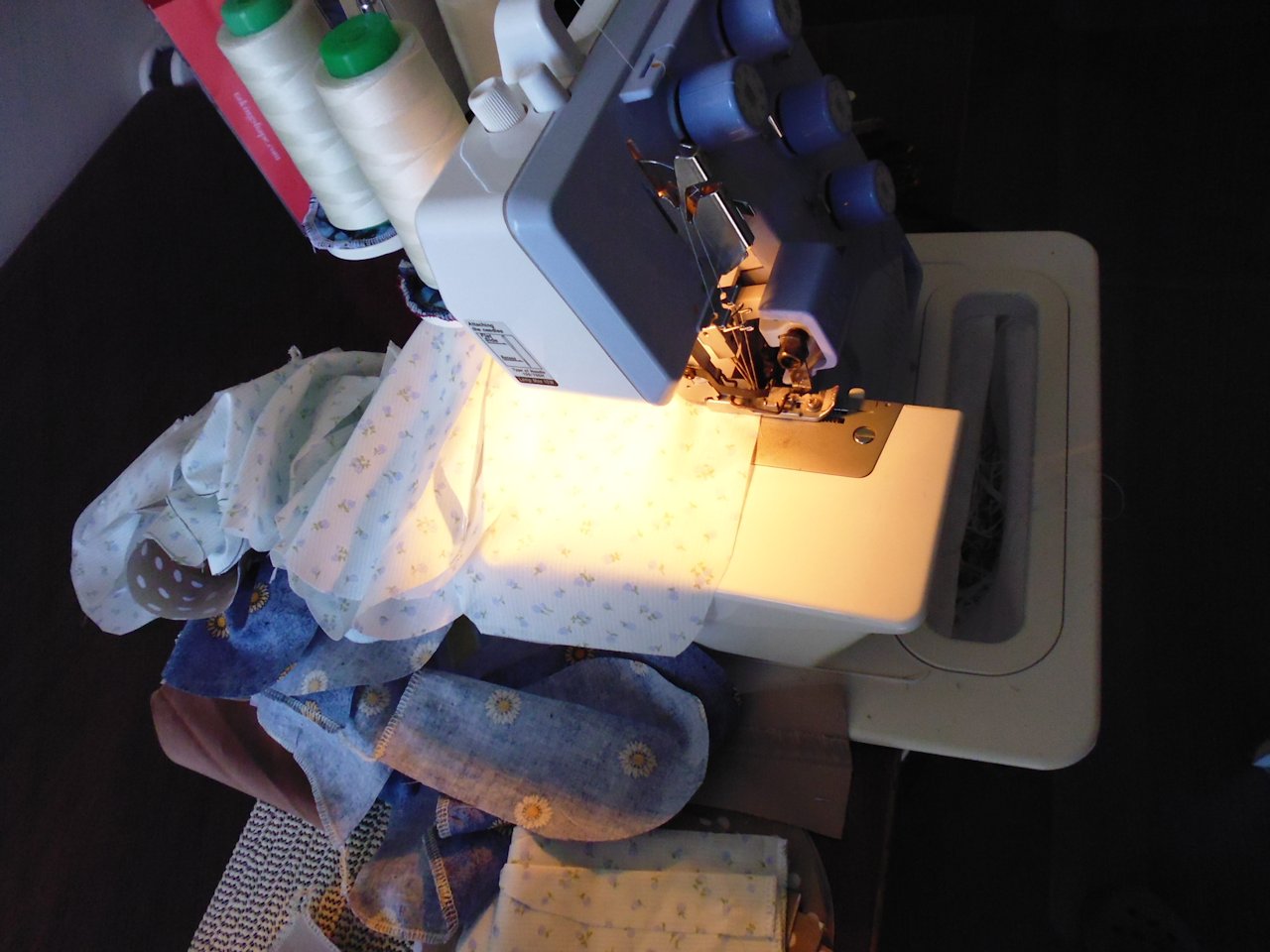
It took me no time at all to find some old fabric scraps and pieces of fabric I no longer cared for that were big enough to make mittens from. I ironed and cut out all the pieces, then dusted off my overlocker (serger), which I hadn’t used in several years. After rethreading it (fun… not!), I got sewing.

First I serged the straight bottom edges that were to remain open, chain stitching those.

P1030172

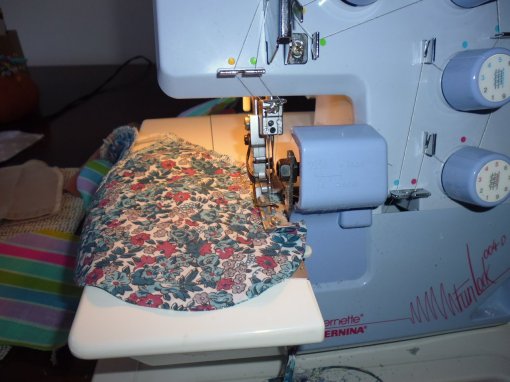
Next, I put two pieces together right sides out and serged around the edges. The reason I put the right sides out and left the stitching on the outside was two-fold — first, it was easier than stitching then turning each one, and second, I figured that having ragged seam joins inside wouldn’t be good for the koalas as their claws could get caught in any loose threads.

P1030174

P1030175

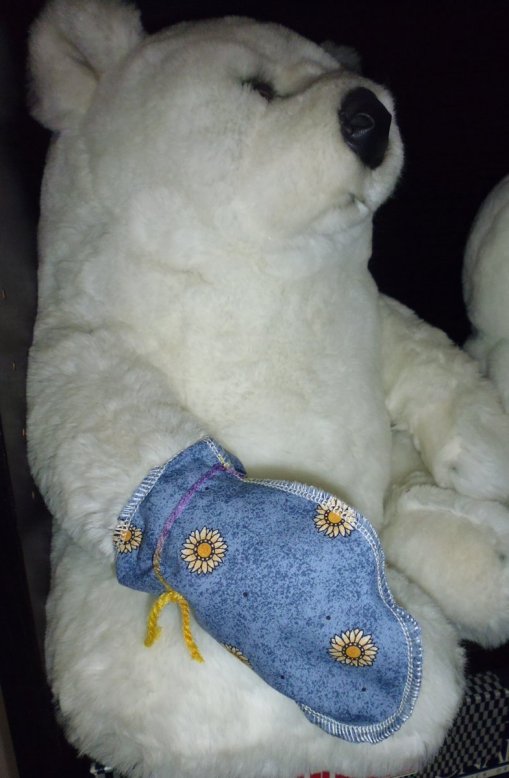
After I’d made 48 of them, I stitched on a piece of yarn to tie the mittens as per the instructions (which don’t tell you what length yarn — I used pieces about 10 to 12 inches long).

P1030176

And then I modelled a completed mitten on my polar bear 😉

P1030177

They are now all packed up and ready to send to the other side of Australia. I’m sure these mittens will be used for other animals too and/or distributed to other animal welfare agencies if they receive too many — I can see them being perfect for cats and smaller dogs too, as well as for the front paws of kangaroos.


Community Quilt 177

4 01 2015

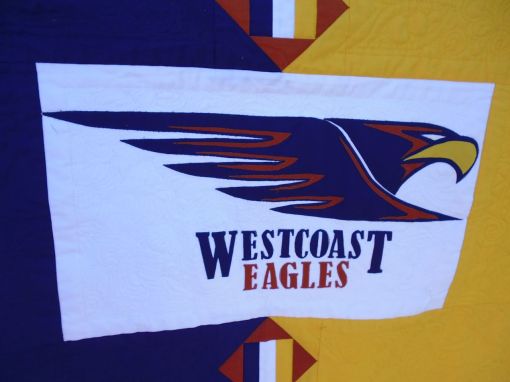
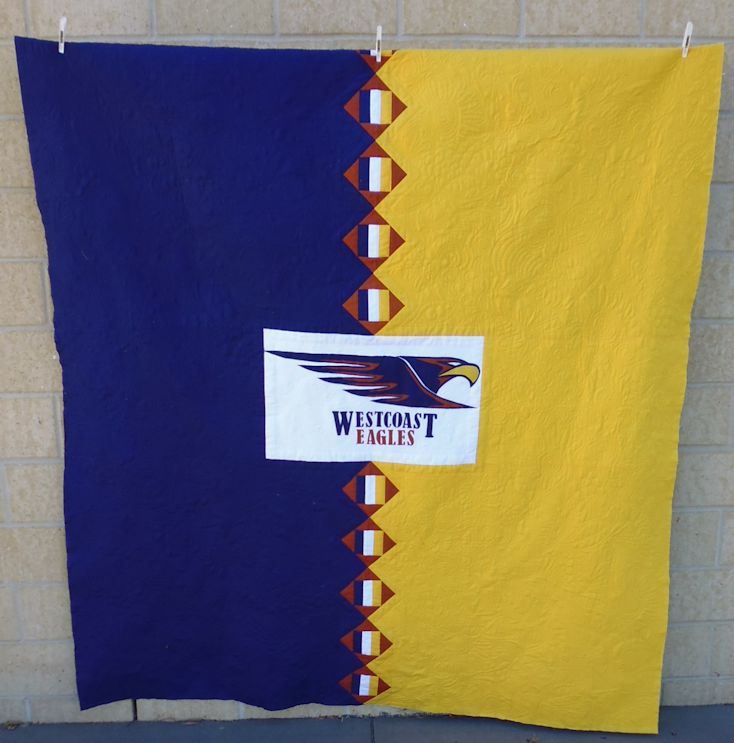
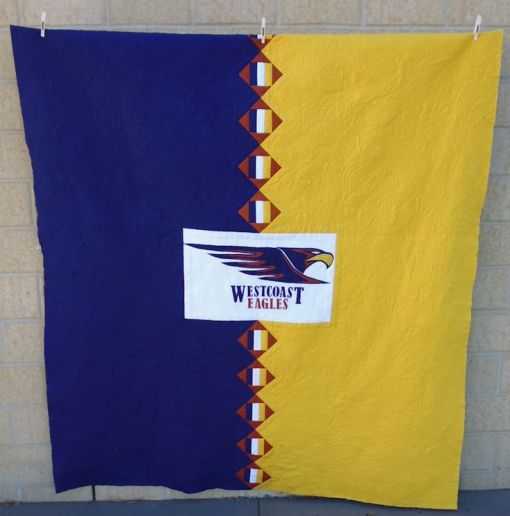
This was a BIG quilt, and my first done using Karlee Porter‘s graffiti quilting method. It’s a quilt for a West Coast Eagles fan (one of the two Australian Rules Football teams based in Western Australia).

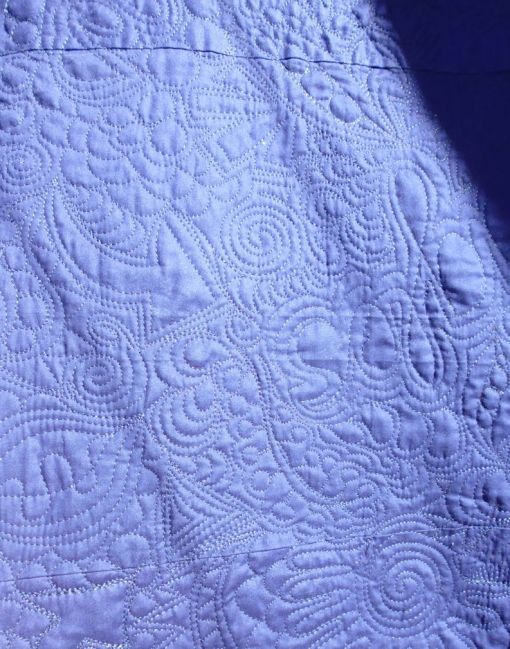
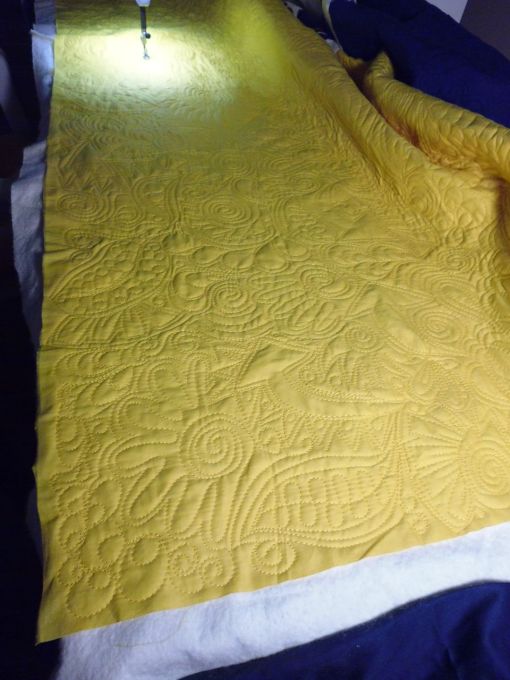
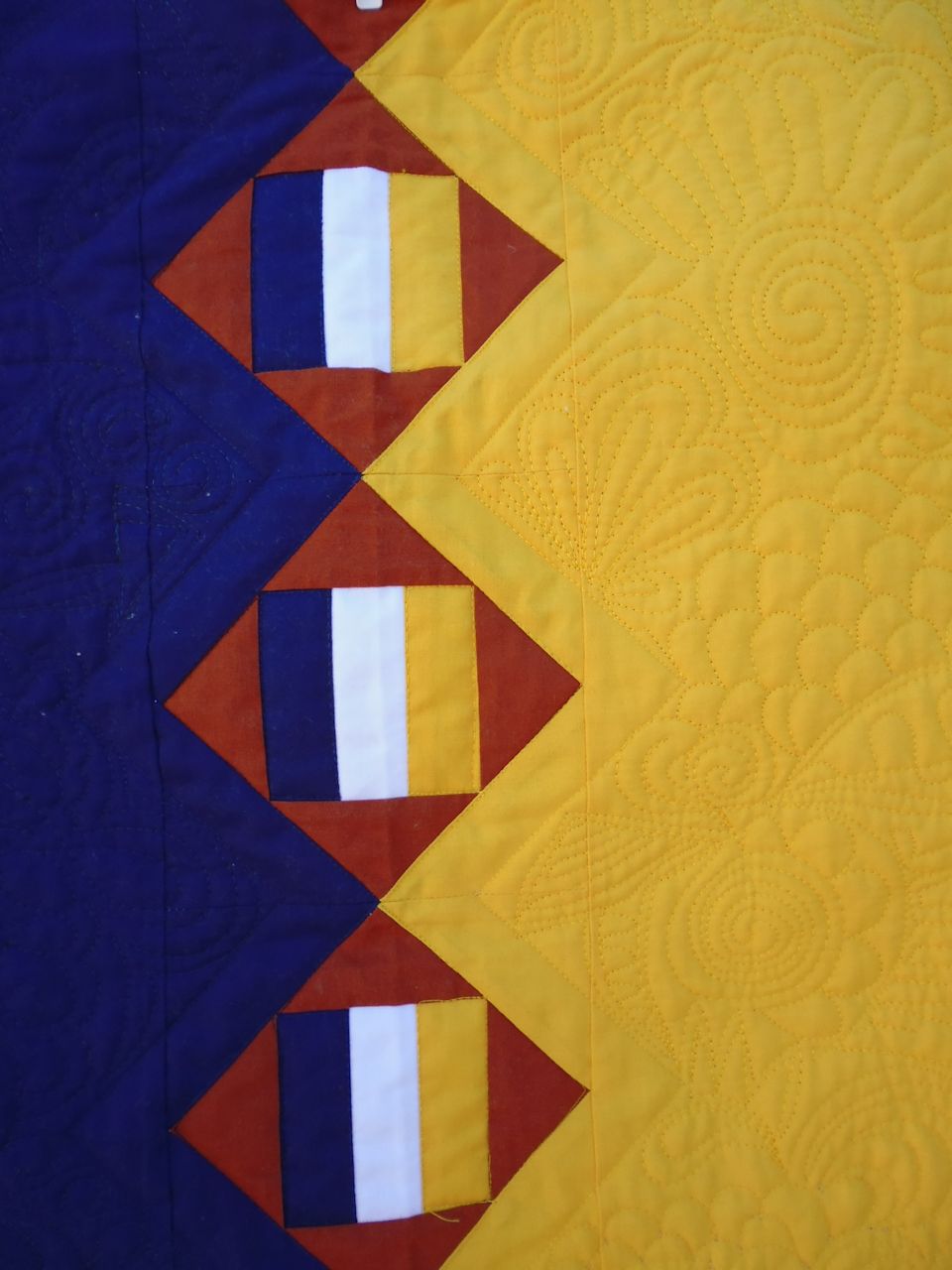
I stitched in the ditch around the centre strip of rail fence blocks, then echo quilted an inch out from these blocks, using a navy thread on the dark blue fabric and a yellow thread on the yellow fabric. I thought about quilting the yellow side in contrasting navy thread and the blue side in yellow thread, but decided against it, instead quilting each side in a matching thread for the fabric.

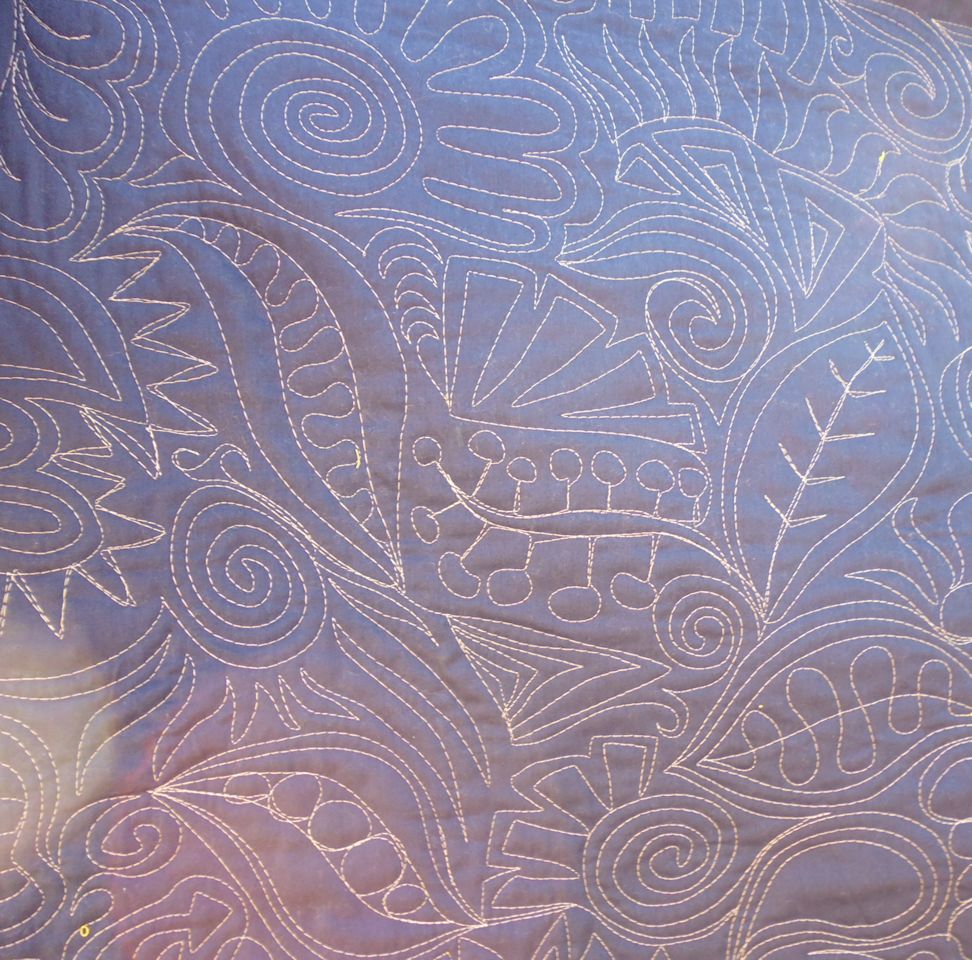
In each large blue and yellow sector, I quilted several instances of ‘eagles’ in cursive script, echo quilting around each one. But most of the quilting is free-form graffiti quilting, with me deciding at the last moment what motif to stitch next. I used McTavishing in the white centre, though it’s hard to see in the pictures below. I also thought about using a contrasting thread to emphasise the word ‘eagles’ on each side, but decided against that too as I thought it would spoil the effect.

This quilt took about 10 hours to quilt.

(I used to be a member of the Fremantle Dockers, the other Western Australia AFL team, so I’ve quilted about 10 small Dockers anchor symbols  in this quilt as well 😉 They are so well disguised I couldn’t find any of them the next day!!)

(Click on a photo to view it larger)
quilt177_01

quilt177_02

quilt177_06

quilt177_04

quilt177_03

When on the machine:

quilt177_08

quilt177_07

Back of the yellow section:
quilt177_05

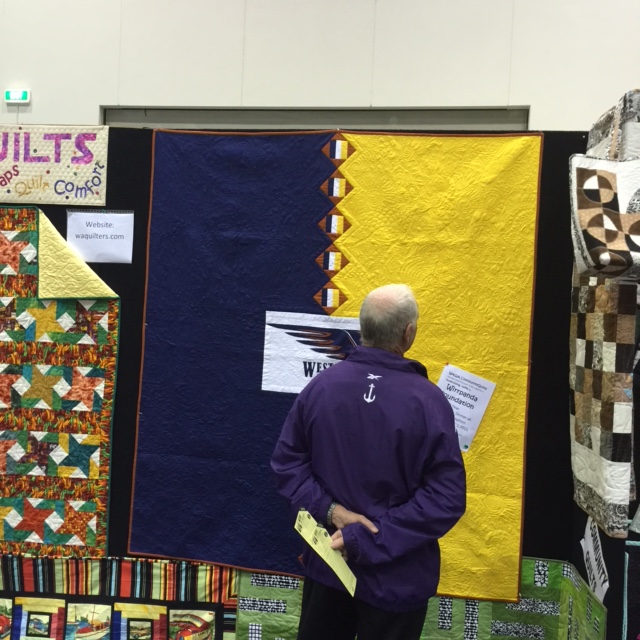
Update May 2015: This quilt was featured in the Community Quilts display at QuiltWest 2015, and I believe it attracted a lot of attention 😉 The Community Quilts organisers used it as a talking point for the Community Quilts program  and mentioned that I’d had the last laugh by stitching some Freo anchors into the design. They pointed out one anchor and challenged people to find more! It seems the men, in particular, were very interested. And everyone thought I had a good sense of humour as well as good quilting skills 😉 The quilt will go to the Wirrapunda Foundation as a raffle quilt later in the year at their 10th anniversary dinner.

Quilt177_QuiltWest02

Freo Dockers supporter looking for anchors! (note the anchor on the back of his Fremantle Dockers branded sweater)

quilt177_QuiltWest01

Hunting anchors

Quilt177_QuiltWest03

Found one!

Threads used:

  • Top: Fil-Tec Glide in yellow, navy, and white (‘Mango’ colour 80116, ‘Navy’ colour 32965, ‘White’ colour 10000) (40 wt trilobal polyester)
  • Bottom: Fil-Tec Magna Glide Classic pre-wound bobbins in Light Tan, Black, and White


Gwen’s quilt #3

1 01 2015

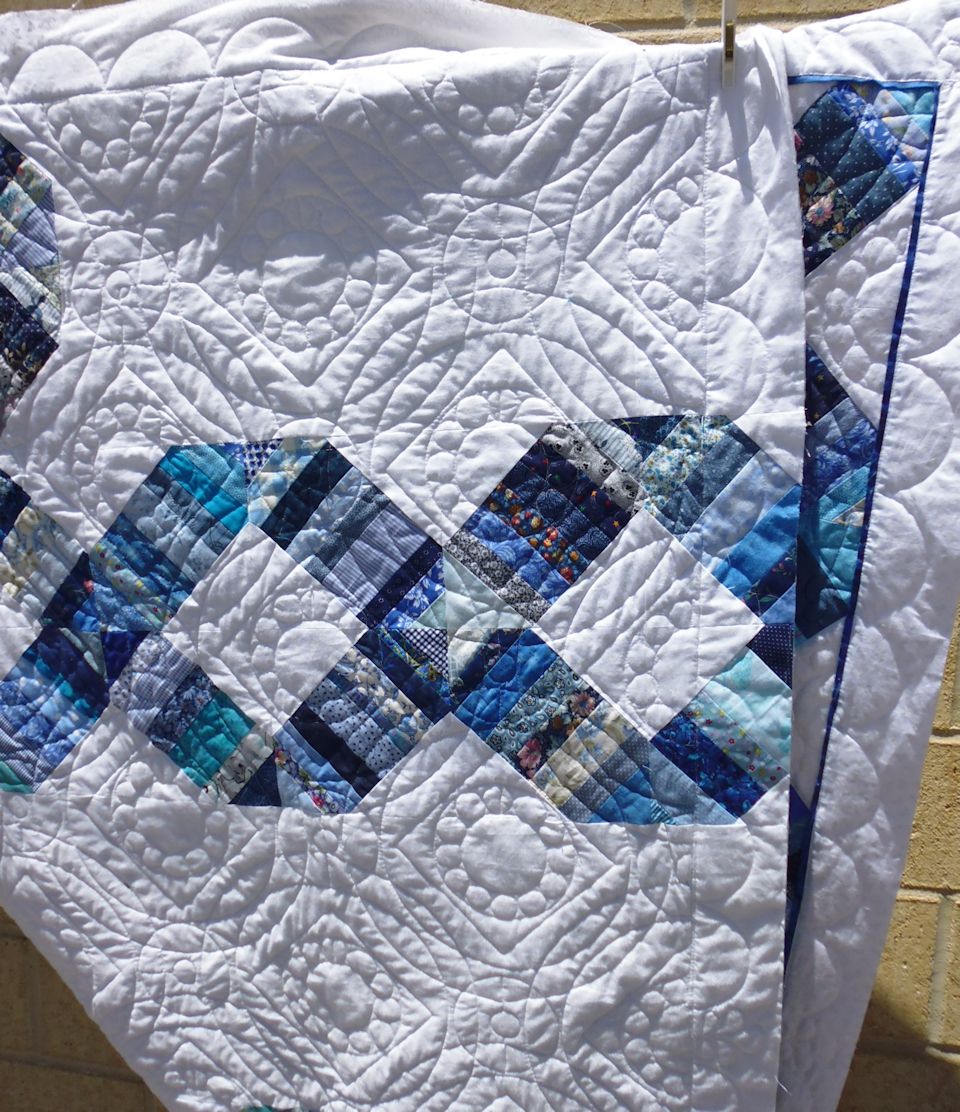
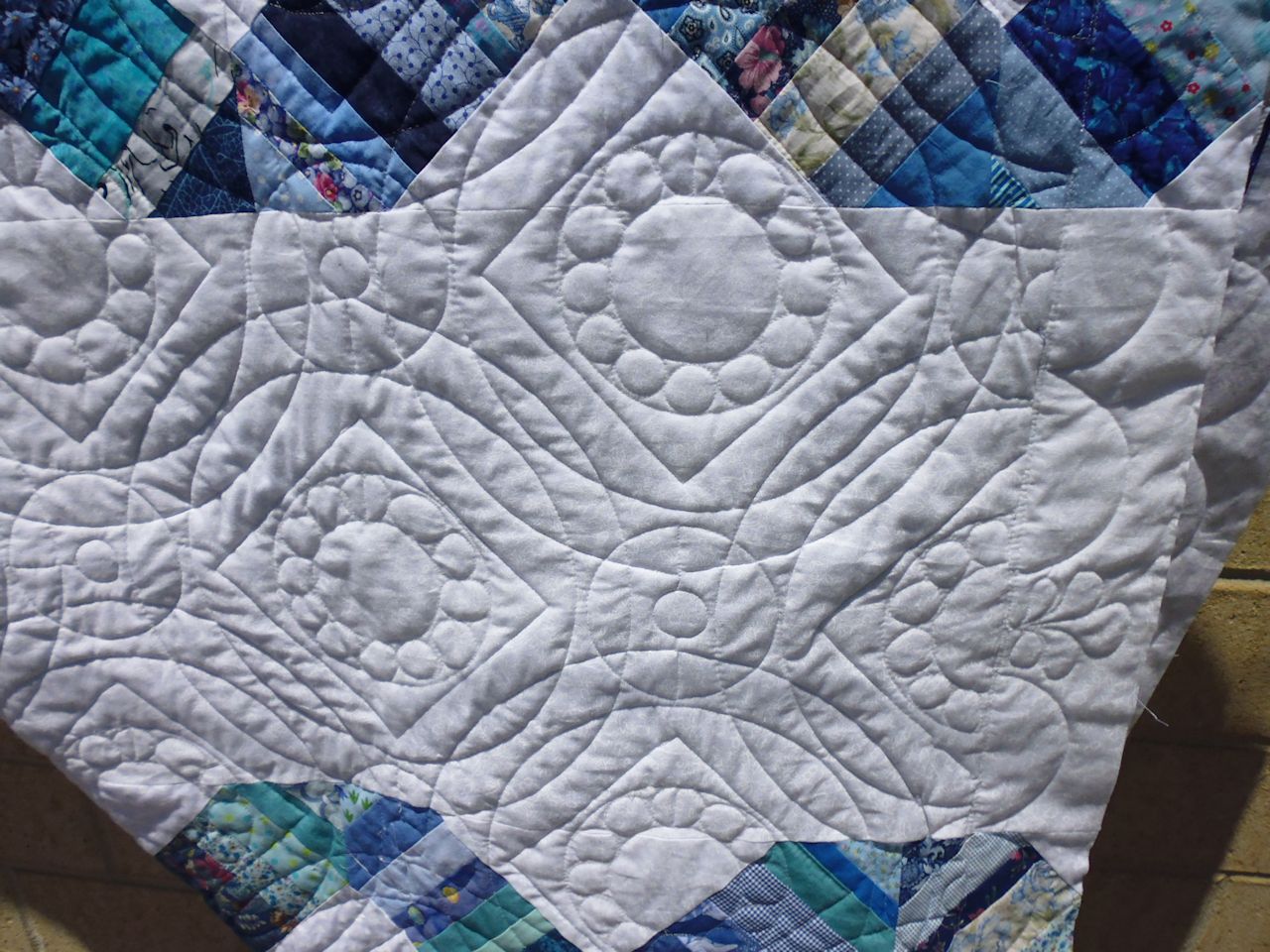
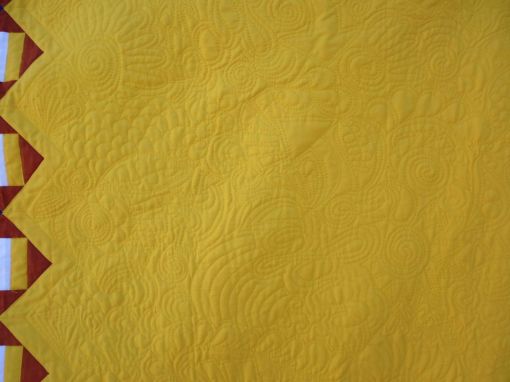
Gwen asked me to quilt another quilt for her for someone’s birthday. It was a modern version of a double wedding ring quilt (73 x 73 inches), and Gwen asked me to do something rounded to emphasise the double wedding rings.

My first step was to stitch in the ditch around all the white centre blocks and the border to stabilise the quilt. Next, I had to decide how to approach the blocks and emulate wedding rings. Circles were the obvious solution, but how big? should they be formal (with rulers and/or markings) or informal (free motion)? spirals or closed circles? how many? where to put them? should they overlap? what thread(s) to use? how to deal with the white centre squares?

I decided to use a variegated blue thread for the large circles and decided to use rulers (Handi Quilter’s half circle rulers) to stitch the circles. Each large circle almost hit the centre joins of the block. I then stitched another echoing circle about 1 inch inside the large circle. Then I stitched more in the offset blocks overlapping the first ones, and did some small ones in the centres where the blue blocks intersected.

For the white squares, I did more double circles (using rulers), this time free motion stitching rounded circles within the boundaries of the circles.

Last was the border. Again, I used rulers (Handi Quilter’s clam shell ruler) and stitched large clam shells from the corners to the centre, filling the centre point and the corners with a little three plumed feather.

This quilt took MUCH longer to quilt than normal — I estimate it took about 12 hours to quilt. Why? Well, rulers is one — you have to go slower and be more careful about hand placement, quilt movement, ruler placement etc. And then there are the stops and starts, which you don’t have when you do a continuous line all-over motif. Also, ruler work takes it out of your shoulders, neck and back, so I only did a maximum of four hours each day to get this one finished.

(Click on a photo to view it larger)
quilt_gwen_01

quilt_gwen_03

quilt_gwen_02

quilt_gwen_04
quilt_gwen_07

Back:

quilt_gwen_06

quilt_gwen_05

Threads used:

  • Top: Wonderfil Silco (40 wt, colour SCM 18); Fil-Tec Glide ‘White’ (40 wt, trilobal polyester, colour 10000)
  • Bobbin: Fil-Tec Magna Glide Classic pre-wound bobbin (white)


Graffiti quilting samples

15 12 2014

When I was in the US, I met the lovely (and so terribly young!) Karlee Porter at Houston and then again at Salt Lake City in the Handi Quilter offices. Like many others, I bought her book ‘Graffiti Quilting’, and yesterday I had some time to practise some of her designs and methods. I was pleased with my first efforts!

The first two pictures below are of my practice sandwiches I used to test each of her motifs, and the final two are of my ‘real’ piece. I used a variegated Silco thread in red, green and white.

For those not into quilting, all the designs were stitched ‘free motion’, meaning no computerised control over the designs, no markings, and no rulers. It’s basically doodling with thread 😉

Thanks Karlee!

P1020221

P1020222

P1020223

P1020224