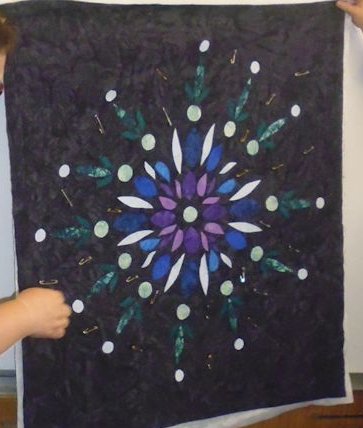
Busy weekend sewing joey and other wildlife pouches

14 01 2020

The call went out for people to make items for the wildlife carer groups who are trying desperately to save wildlife injured in the devastating bushfires that have claimed so much land and bush on the eastern side of Australia in the past few months. I heeded the call last weekend, as did many many others from within Australia and around the world. So many heeded the call, in fact, that the coordinating group of volunteers had to press ‘pause’ during the weekend to take stock of what they had received and still needed. One Facebook group went from 20,000 members to more than 200,000 members in a matter of days. Even if each person only made 5 items, that’s 1 MILLION items that have to be transported, cleared through Customs (if from outside Australia), checked for correct materials, sized, labelled, sorted, stored, and distributed. And that takes a LOT of storage space (which has to be paid for), and enormous time and energy from a small group of volunteers. I’ll talk about how best you can contribute—if you feel the need to do so—below.

Meantime, I was already well into finishing a 3-day sewing binge converting 15 m of flannelette and 10 to 15 m of fabric from my stash into nearly 20 day and night time joey pouches, and about 10 wildlife pouches in various sizes. I delivered these to my local hub yesterday, and won’t make any more unless there’s another call out for these types of goods.

Some examples of what I made, ably modelled by my teddy and other soft toys:

Daytime hanging pouch for a joey -- the scooped side allows joey to poke out its head to observe the world around it

Daytime hanging pouch for a joey — the scooped side allows joey to poke out its head to observe the world around it

Small wildlife pouch, with 3 removable liners (spares for when others are being washed -- frightened little animals poop... a lot)

Small wildlife pouch, with 3 removable liners (spares for when others are being washed — frightened little animals poop… a lot)

Night-time hanging pouch -- this time there's no scoop. Joey needs to sleep undisturbed and not be tempted to look out into the world.

Night-time hanging pouch — this time there’s no scoop. Joey needs to sleep undisturbed and not be tempted to look out into the world.
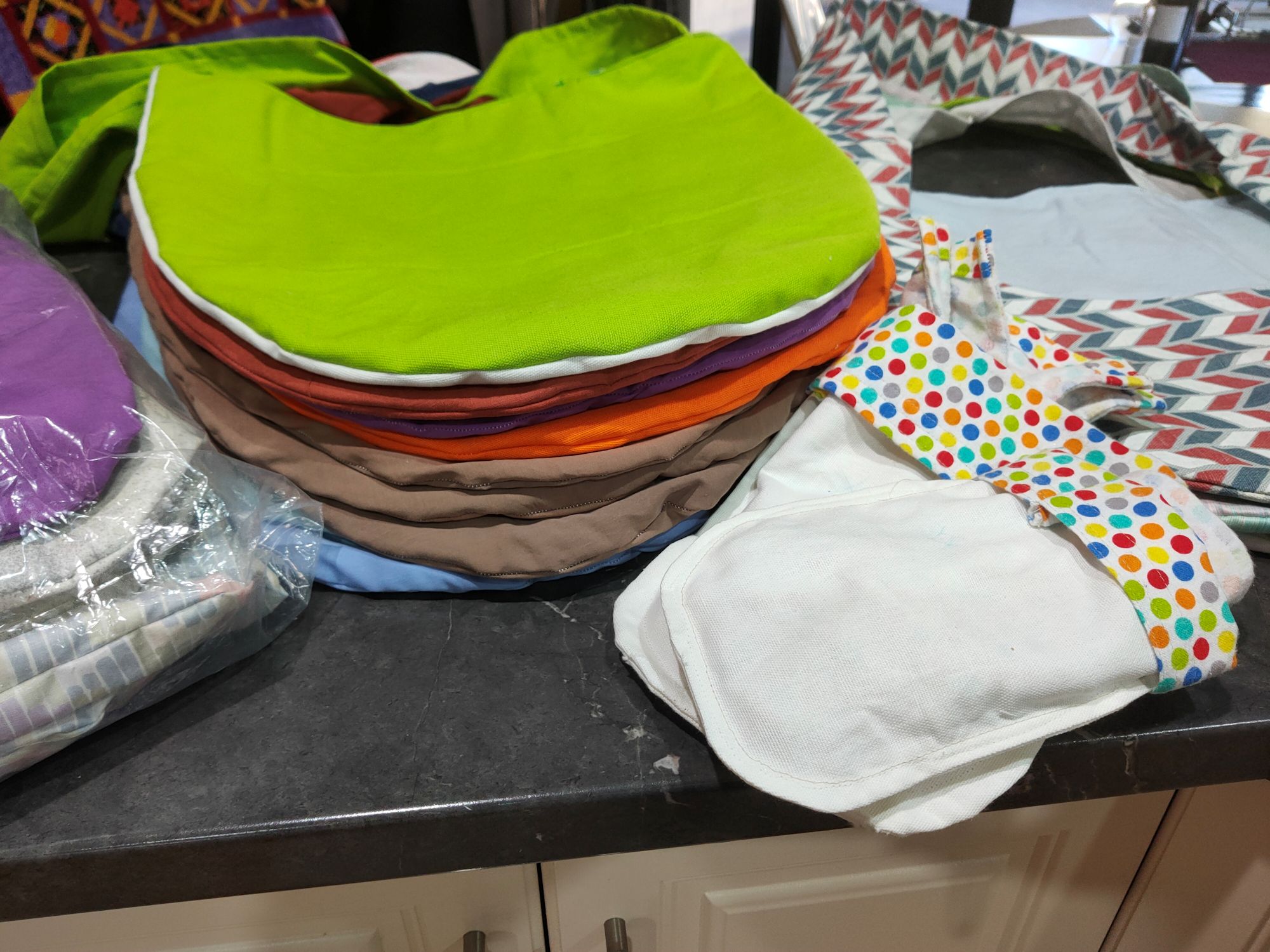
The items I made, ready to be bundled, labelled, and given to my local collection hub

The items I made, ready to be bundled, labelled, and given to my local collection hub

YouTube video of how these pouches are used: https://www.youtube.com/watch?v=UNNt8ssoTvE

How to contribute if you are outside Australia

NOTE: These are my personal opinions and not any official stance, though I believe they reflect the position of the many groups and charities that have been inundated with donations.

My message to crafters outside Australia:

We love and appreciate the need you have to ‘do something’, but there are some not-so-small logistical and biosecurity issues that could mean all your efforts could end up being wasted. Sending unwashed items, items washed in perfumed detergent, items not made of natural fibres, items with pet hair on them could mean rejection of a whole shipment. We don’t have rabies in Australia nor many insects, lice, ticks, etc. that live in other parts of the world—and we don’t want to introduce any pest to the Australian environment that could severely damage our wildlife and agricultural industries (we haven’t got a good track record with introduced pests… just Google ‘cane toad’).

Although it doesn’t feel like you’re ‘doing something’, money is what’s needed for the ongoing support of human and animal communities that have been devastated by fire. As an example, food needs to be supplied to surviving animals in burnt areas, and this need will continue for many months—this food has to be purchased (if not this week because someone donated it for free, then next week and onwards), transported (often by helicopter because roads are impassable, or the terrain is impenetrable), and put in places of need. That takes MONEY, not craft donations from overseas. We have many many crafters in Australia who are meeting the immediate need for animal pouches etc.

So while we are honoured and humbled that you are all feeling so helpless about the plight of the animals etc. that can’t help themselves, money is a far better contribution you can make. Consider how much you would have spent purchasing the fabric/yarn (or how much you’ve already spent on fabric/yarn in your stash) and the cost of sending the goods to Australia (it’s not cheap!), and donate the monetary value of that instead, if you feel the need to ‘do something’. Or make pet beds, nests, or similar and donate them to your local wildlife carer groups—they also have ongoing needs to help them care for animals, but without any of the recent media coverage.

Money is portable and can be given where it’s most needed based on conditions on the ground, noting that these conditions are changing daily. (For people, some want clothing, some want accommodation and food expenses, some want agistment and feed for their horses, cattle etc.; for animals, some carers need pouches, others need food, water, and/or medical supplies, or industrial washing machines to clean the pouches, carry baskets and containers to allow animals to be transported or to sleep without being disturbed etc.).

Money will be spent in the local communities that are hurting the most, helping their economies get back off the ground. Money can buy food for animals, helping the communities and farmers who have produce that they may not be able to sell otherwise (e.g. fruit and vegetables with smoke taint).

Donated goods of any type have to be stored (requiring massive storage space requirements), and have to be appropriate to needs (e.g. no perishables, ‘as new’ not cast-offs/discards/unwanted clothing or furniture), and then have to be sorted and allocated (a LOT of people and coordination is needed to make that happen) (see here: https://www.sbs.com.au/news/daniel-andrews-tells-people-to-stop-donating-food-and-clothes-for-bushfire-crisis). Consider the situation where someone’s house has burnt to the ground in your neighbourhood—someone says the family needs toys, so hundreds of (used, discarded) toys are donated. But the family is living in a single hotel room with no storage for toys, and don’t have a home where they can store the toys. At that point, toys, especially in large quantities, are next to useless for that family, when they are trying to survive by paying for the hotel room (remember, the parents may have lost their jobs because their place of work has burnt down too or because they can’t turn up to work while they’re trying to deal with this crisis), for food for their family, for clothing to replace what they’e lost, etc. Hundreds of toys are the last thing they need.

If you’re outside Australia, especially if you’re in the US, your dollar will likely buy far more than you expect. Currently (14 Jan 2020), US$100 will buy $144 worth of goods in Australian dollars, so you’re getting a good ‘bang for your buck’.

Here are some lists of registered charities that are accepting donations:

Links last checked 14 Jan 2020


Quilting retreat with friends, Jan 2020

13 01 2020

Each year I go on a couple of private quilting retreats with friends—private in that they are closed groups and by invitation only. One of them is held in January, one of the hottest months in Australia, but where we go has a huge studio room with super bright light and wonderful air conditioning to work in. This year I decided to make some things out of the three jelly rolls of fabric I bought in Bali last September.

Notes to my future self:

  • Use the Jelly Roll Sasher (https://pqw.com.au/product/jelly-roll-sasher/) to make life easier.
  • Invest in a pre-cut/pre-wound roll of batting suitable for this jelly roll technique—it’s SO worth it as the thickness and width are perfect. Yes, it’s expensive, but it’s less wear and tear on your machine (and needles), your time, and your sanity!
  • If you do cut your own batting strips as I did initially, try and use only thin batting, and make the width 2.25 inches, NOT 2.5 inches as I did (I then had to cut them down again to 2.25 inches as they were way too thick to go through the jelly roll sasher and/or the sewing machine (I broke a couple of needles…).
  • If you make a rectangular rug or a bag or container, don’t forget to put a few unsewn strips to one side for binding the top and bottom edges (rug), and for handles and to cover the inside seams (bag/container).

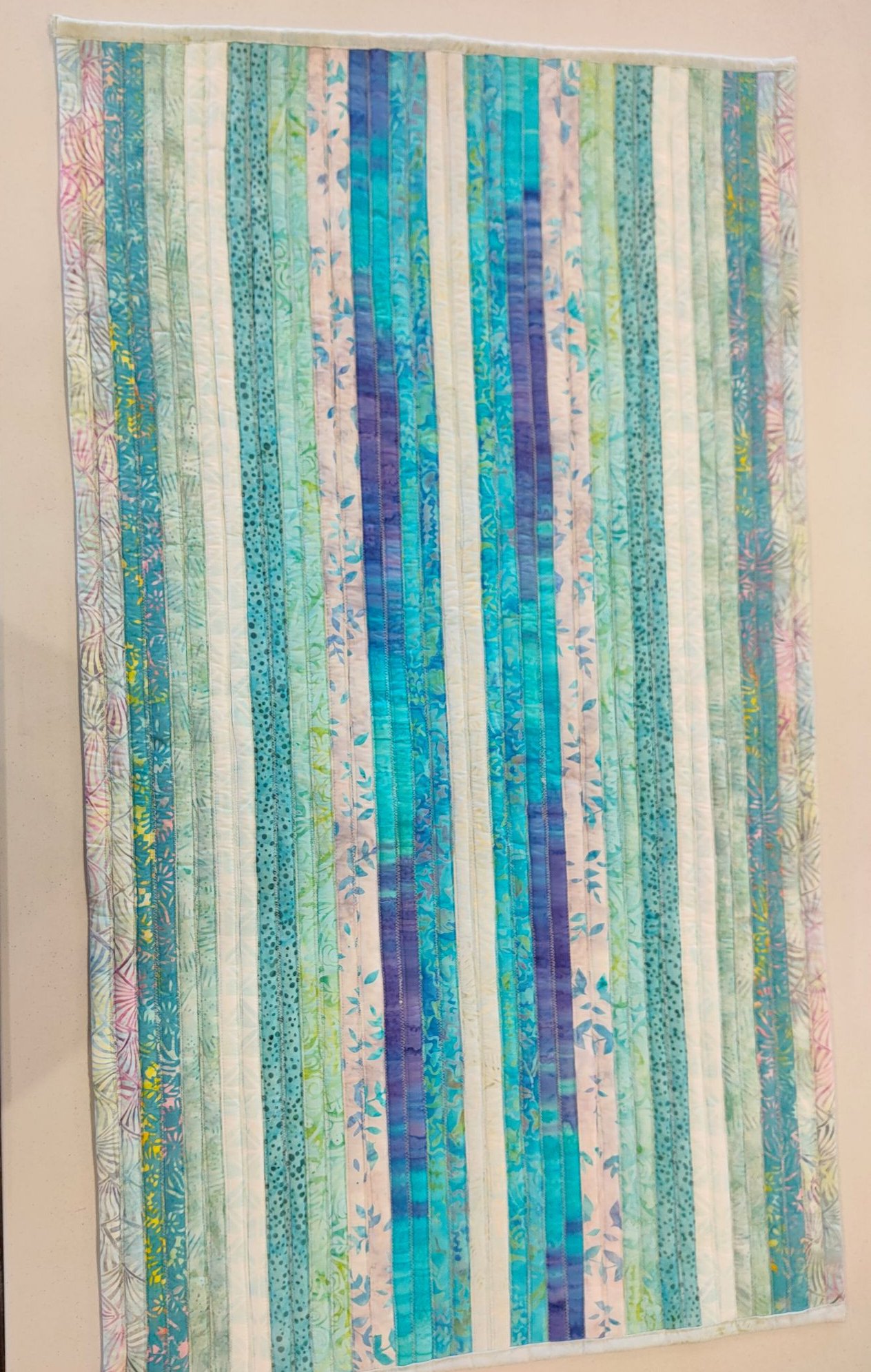
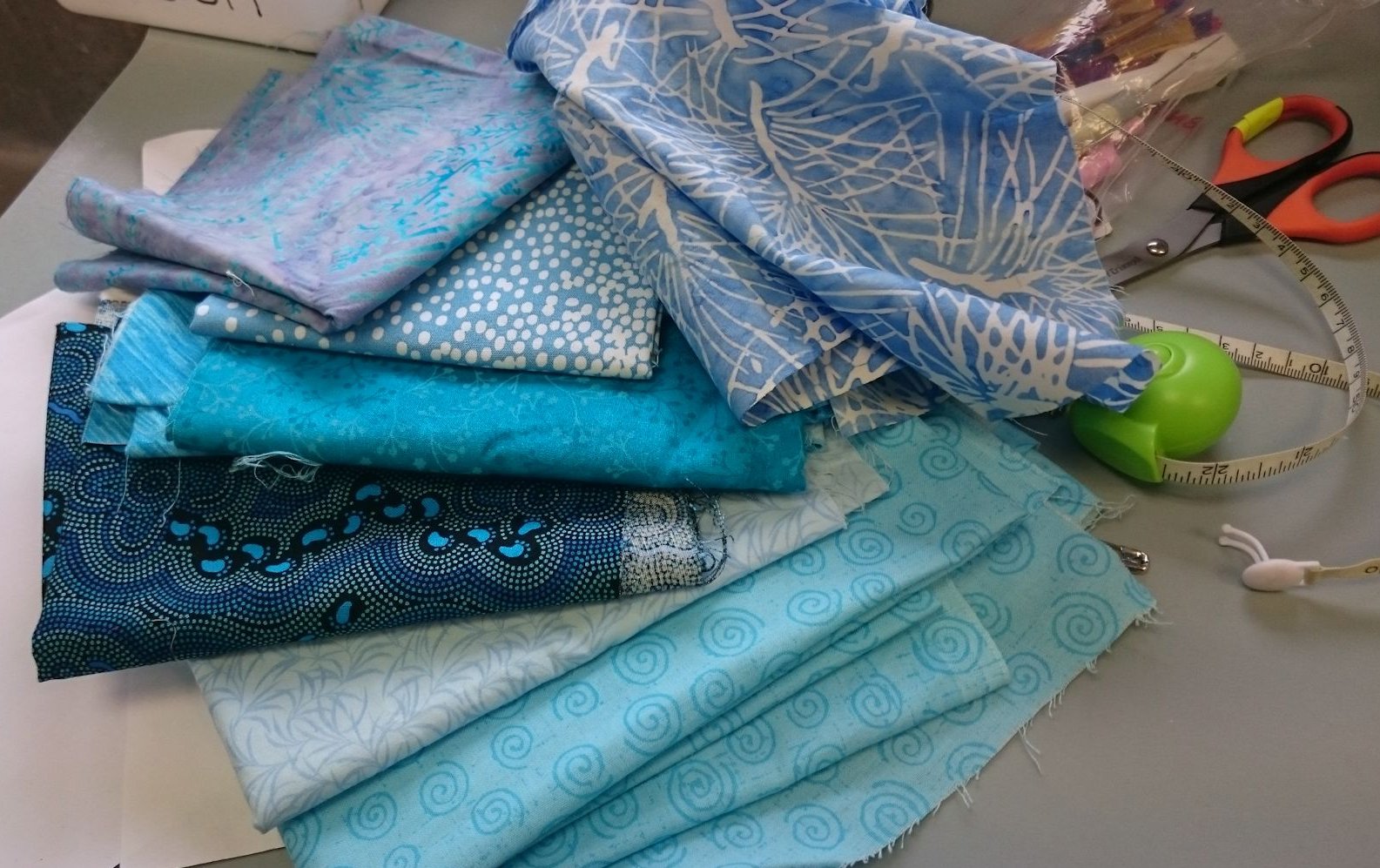
First up was a rectangular rug (I made an oval one last January, so this time I wanted to change it up), made with gorgeous aqua toned batiks.

The Jelly Roll Sasher helps keep the fold in place

The Jelly Roll Sasher helps keep the fold in place


The first few strips - for a rectangular rug, you stitch each strip separately. You don't join the ends of each strip to the next one

The first few strips – for a rectangular rug, you stitch each strip separately. You don’t join the ends of each strip to the next one

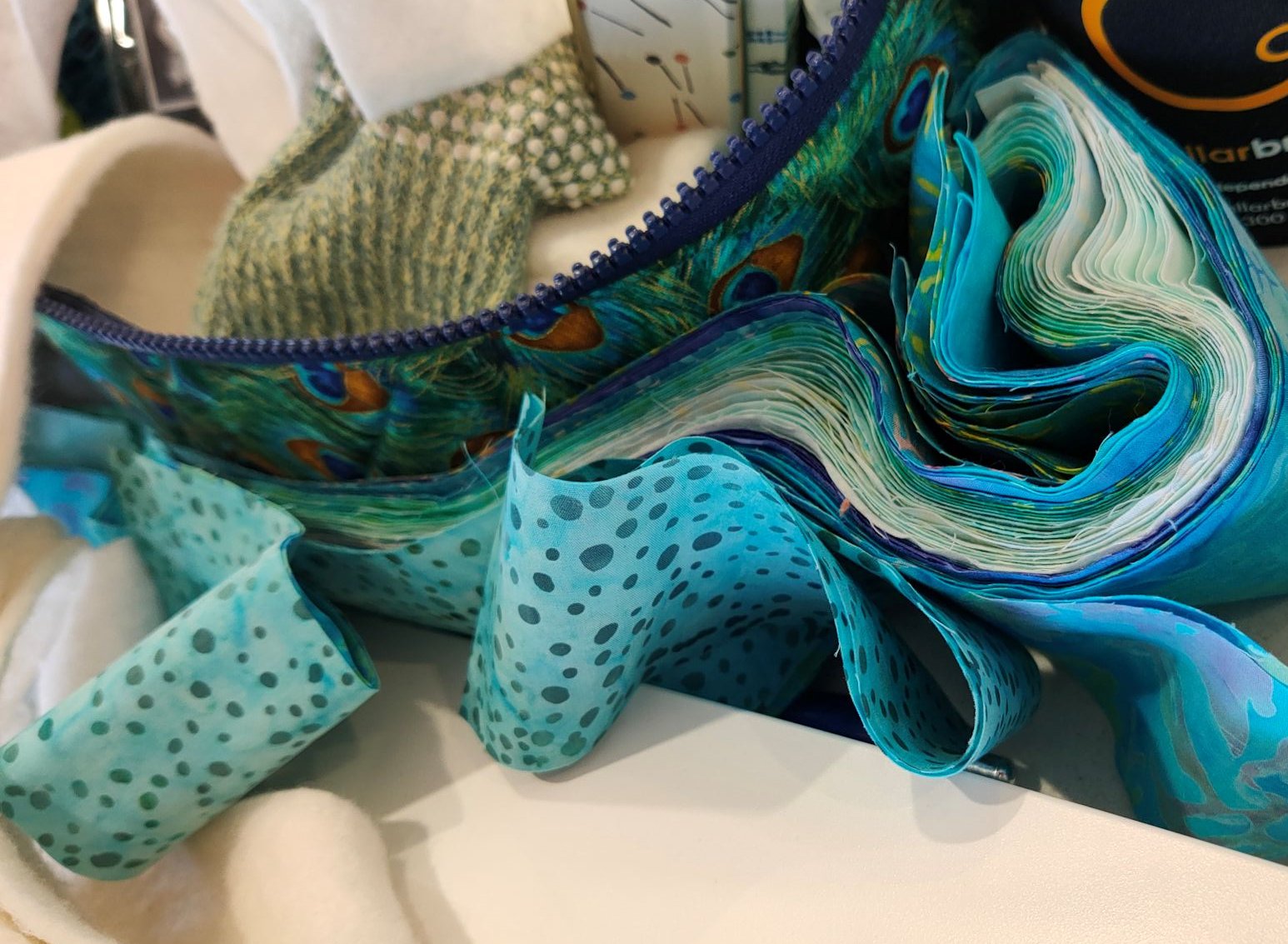
Strips waiting to be matched with batting strips and then stitched

Strips waiting to be matched with batting strips and then stitched

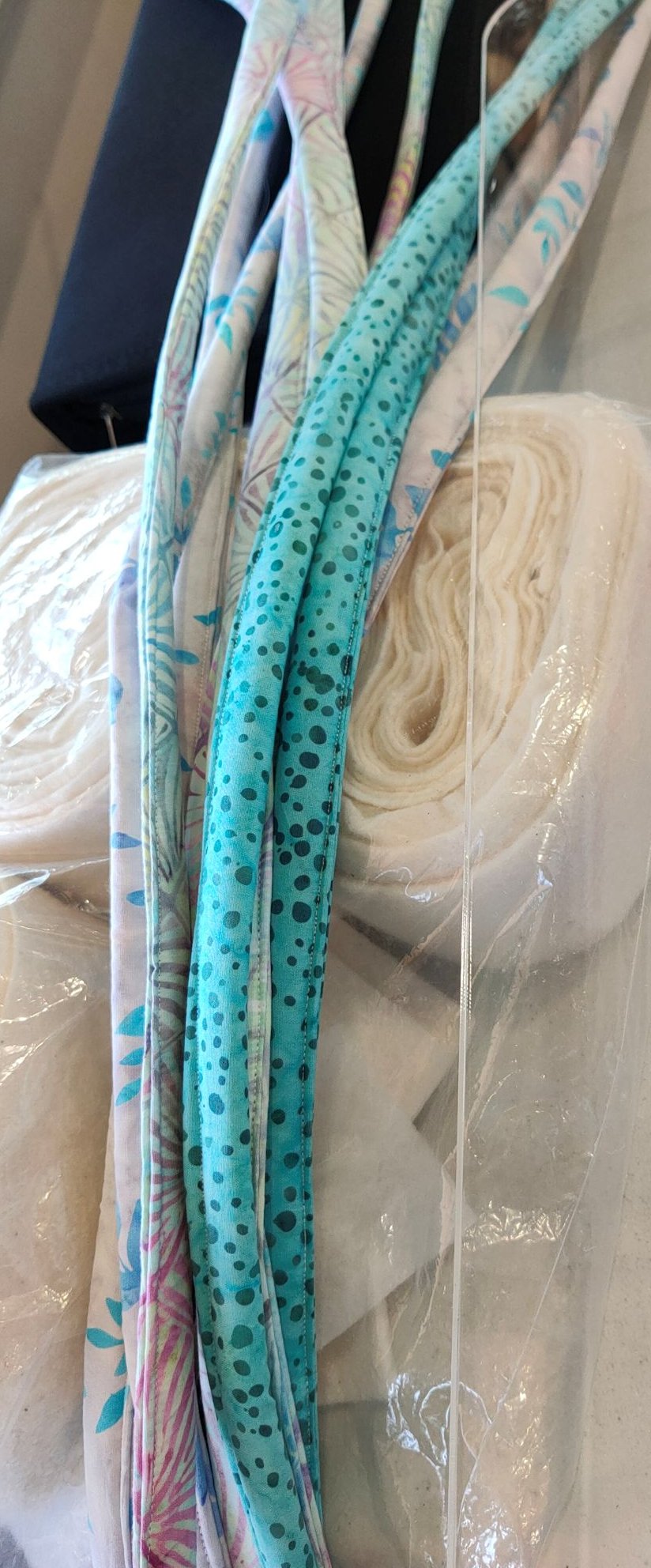
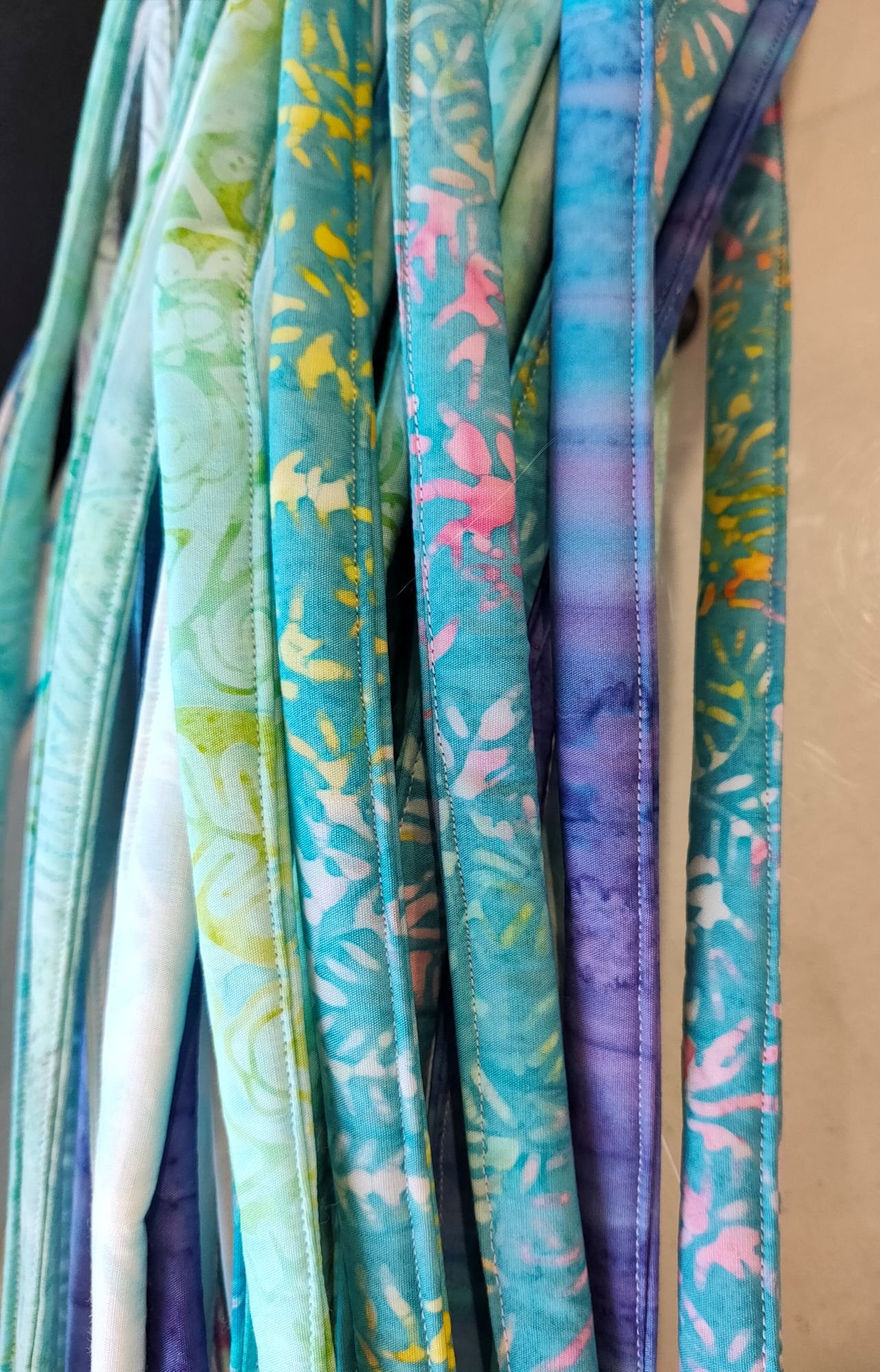
The jelly roll 'dreadlocks'. Eventually you'll have 40 to 42 individually sewn strips.
The jelly roll ‘dreadlocks’. Eventually you’ll have 40 to 42 individually sewn strips.

More strips. I chose to stitch at the edge of the join, not in the middle of each strip as some videos and instructions tell you to do. I like the slight puffiness this gives.

More strips. I chose to stitch at the edge of the join, not in the middle of each strip as some videos and instructions tell you to do. I like the slight puffiness this gives.

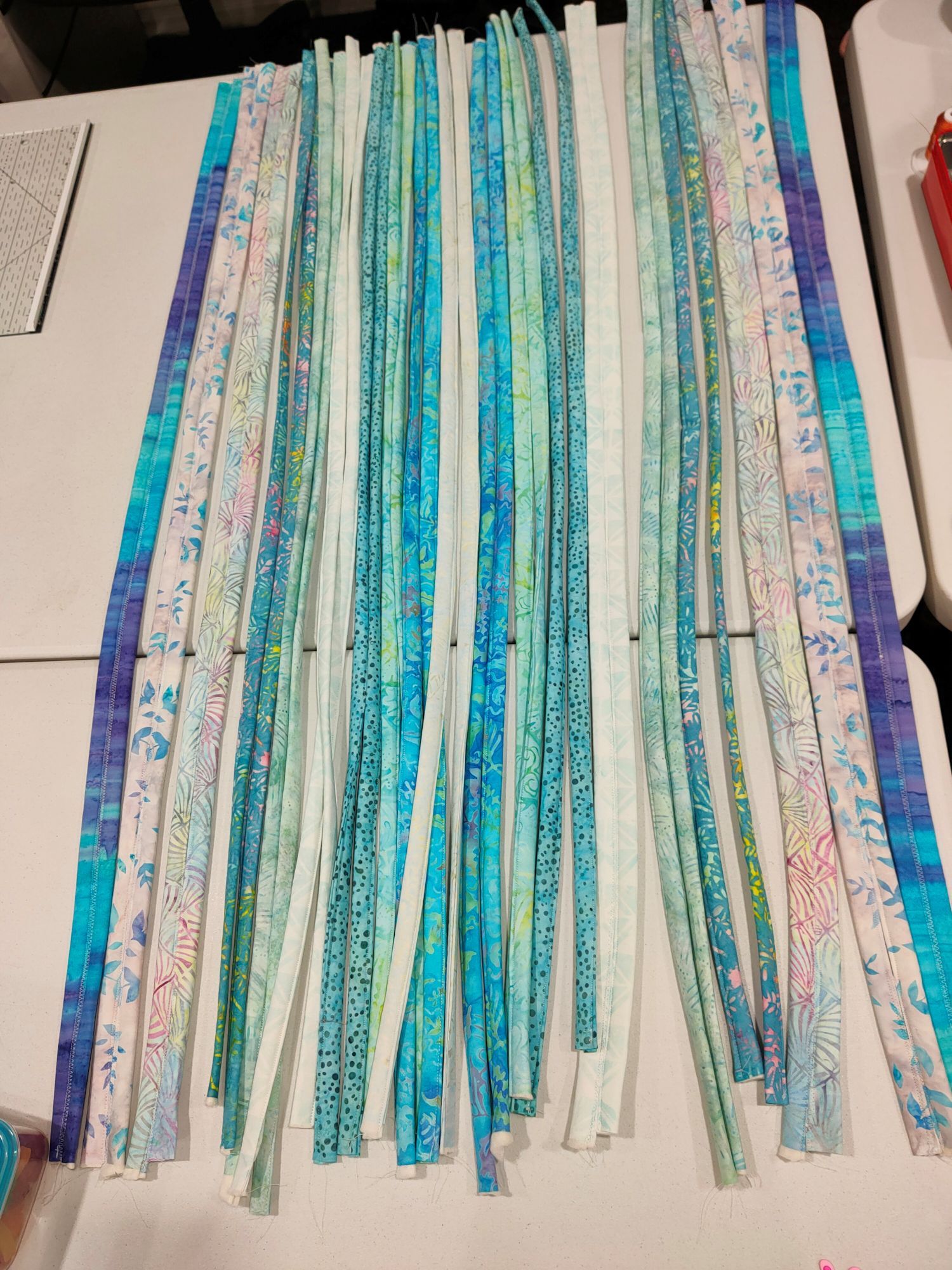
Auditioning the colour array. At this stage I was thinking of putting the darker strips on the outside of the rug.

Auditioning the colour array. At this stage I was thinking of putting the darker strips on the outside of the rug.

The final rug. I decided to put the darker strips closer to the centre, and kept aside a couple of unsewn strips for the binding at the top and bottom edges of the rug.

The final rug. I decided to put the darker strips closer to the centre, and kept aside a couple of unsewn strips for the binding at the top and bottom edges of the rug.

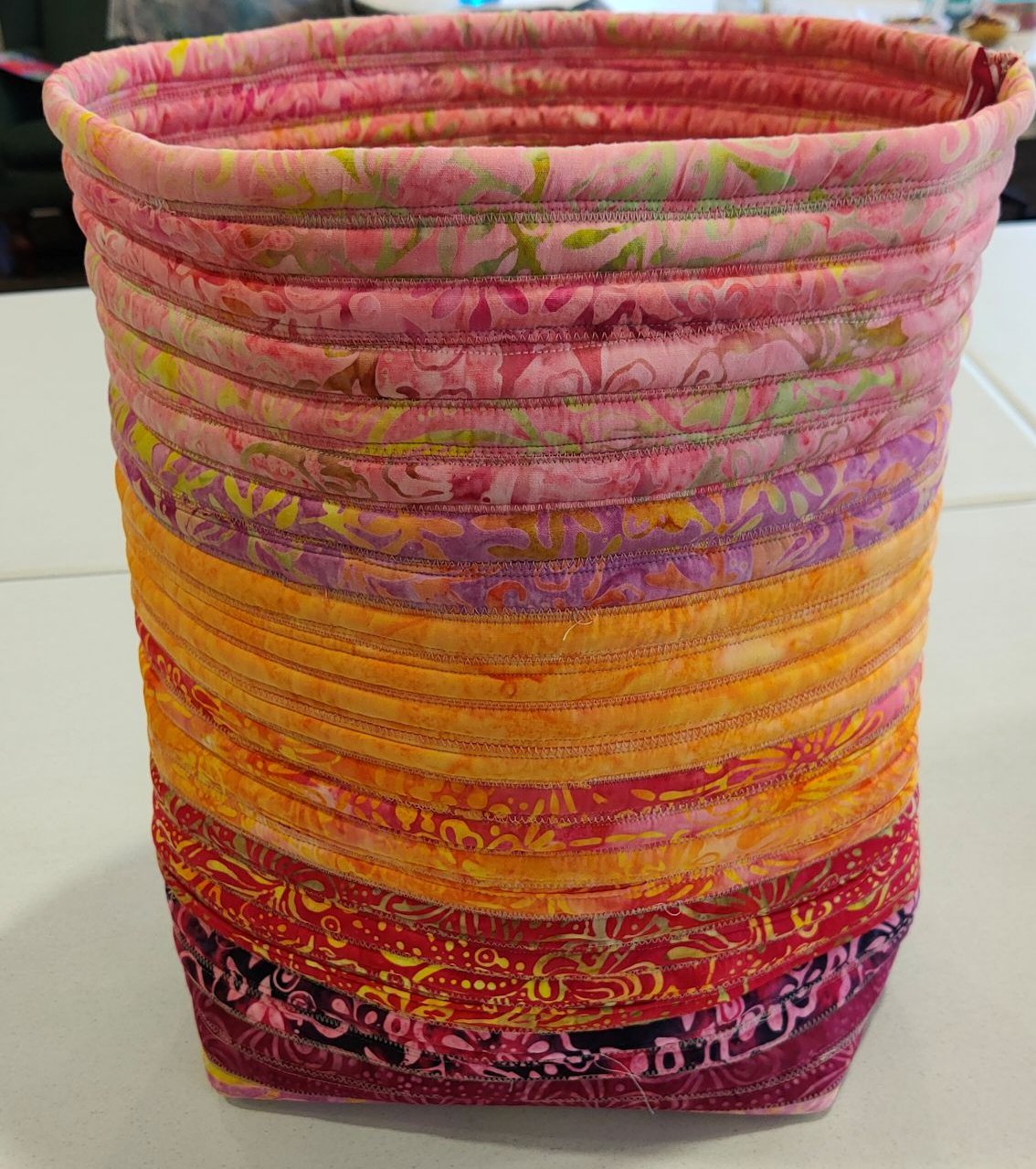
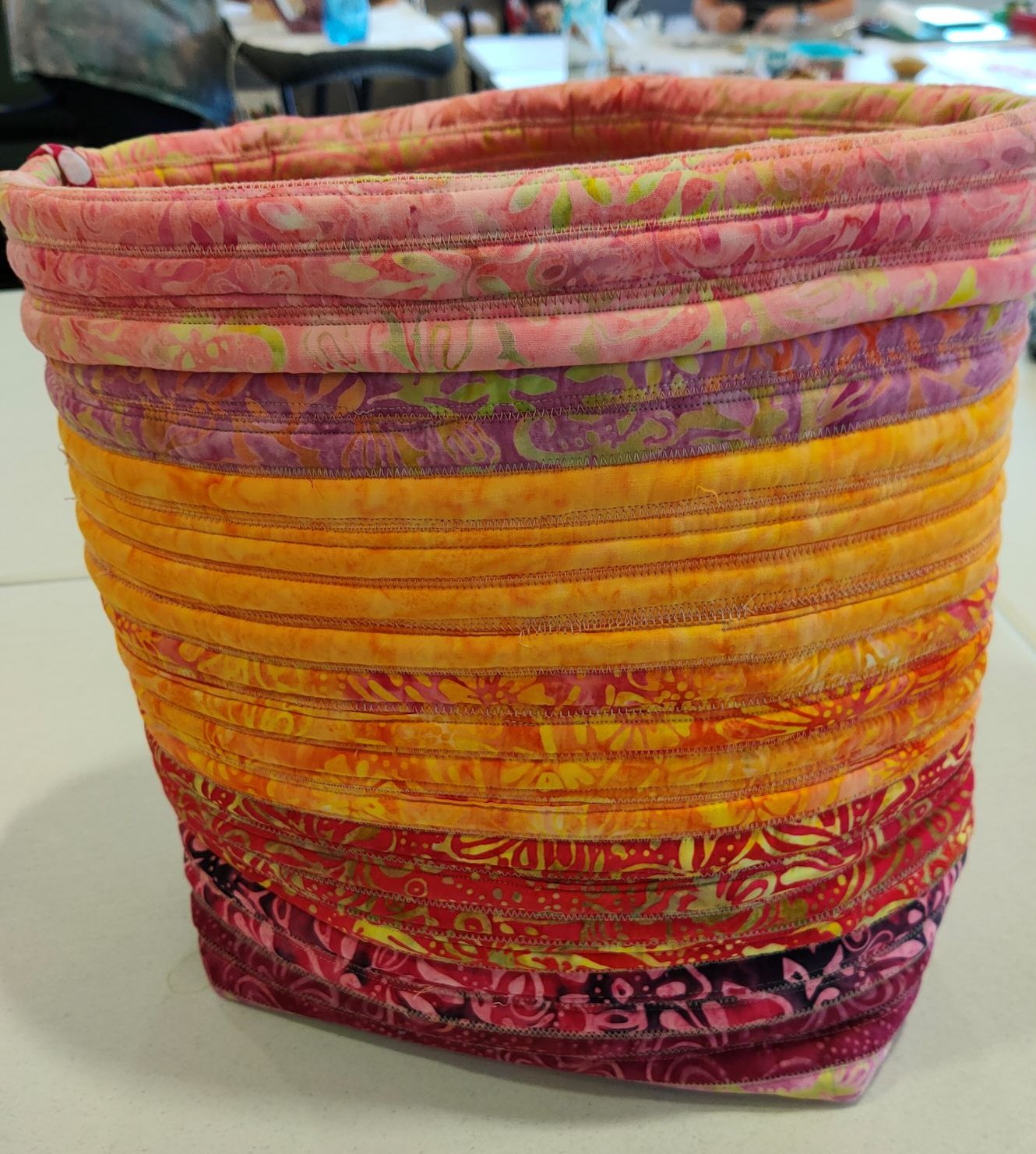
Next, I decided to make a bag. That changed when, on the advice of one of the other ladies, I left off the handles and made a large container, into which I think I’ll put the trash can in my sewing room. I love the oranges and purples and pinks and how those colours blend so nicely together. And turning down the top a couple of rows adds extra stability. Stitching through the layers at the bottom was hard, though, and really taxed my machine.

I used a pre-cut/pre-wound roll of jelly roll batting for this second piece.

I used a pre-cut/pre-wound roll of jelly roll batting for this second piece.

The finished container with the top turned over for stability.

The finished container with the top turned over for stability.

The finished container (top not turned over). Size is about 16 inches wide by a similar amount high and about 6 inches across the bottom.

The finished container (top not turned over). Size is about 16 inches wide by a similar amount high and about 6 inches across the bottom. I still have to add a covered piece of stiffening into the base to help stabilise it.

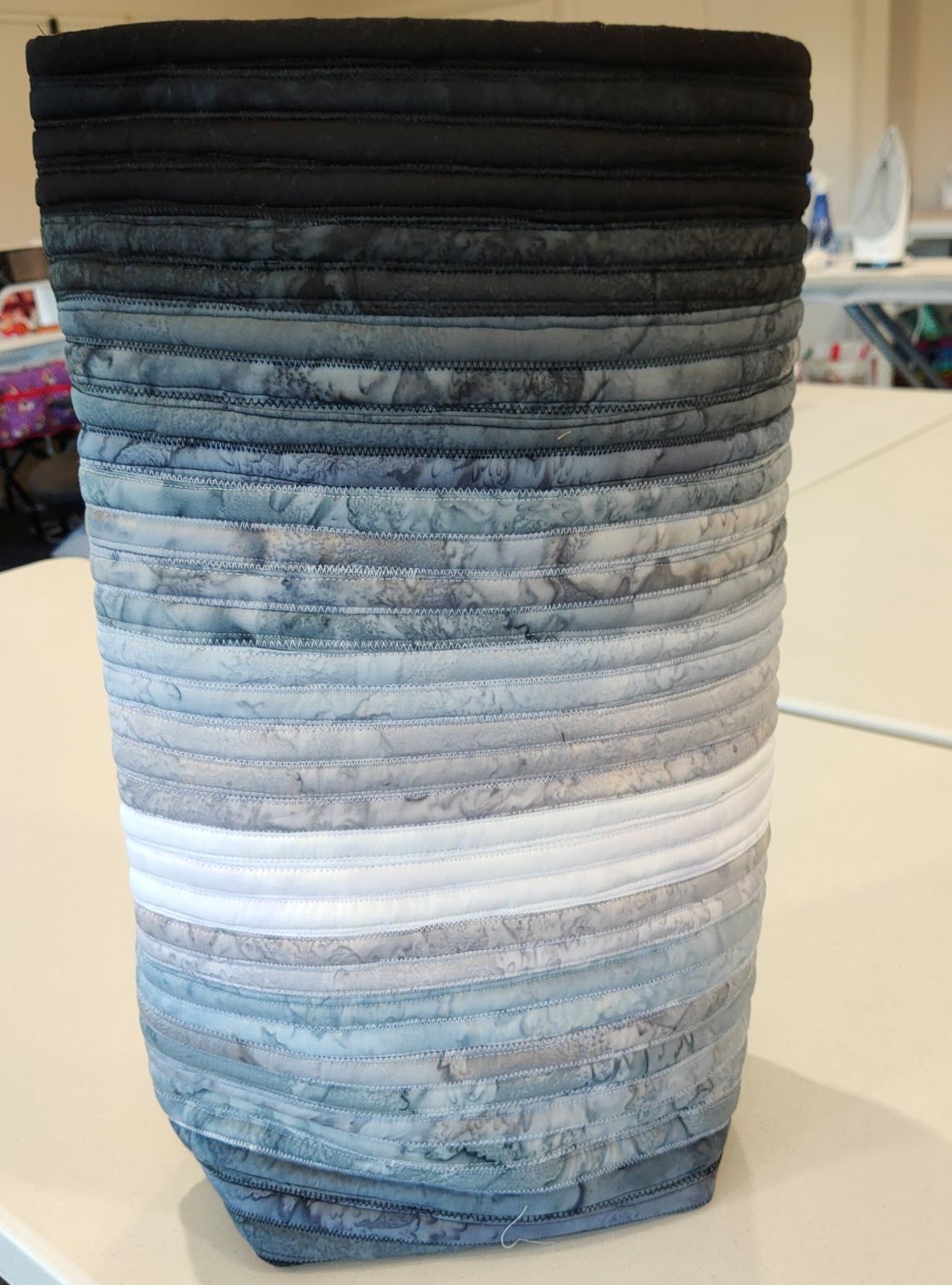
Finally, I made a similar one to the orange one, but this time in blacks, whites, and greys. However, I forgot to leave off about 8 rows so it’s way taller than I expected or liked. I’ve since unpicked those rows and removed them, but have yet to finish this container (my next blog post will explain why…).

The range of colours as per how the roll was put together.

The range of colours as per how the roll was put together.

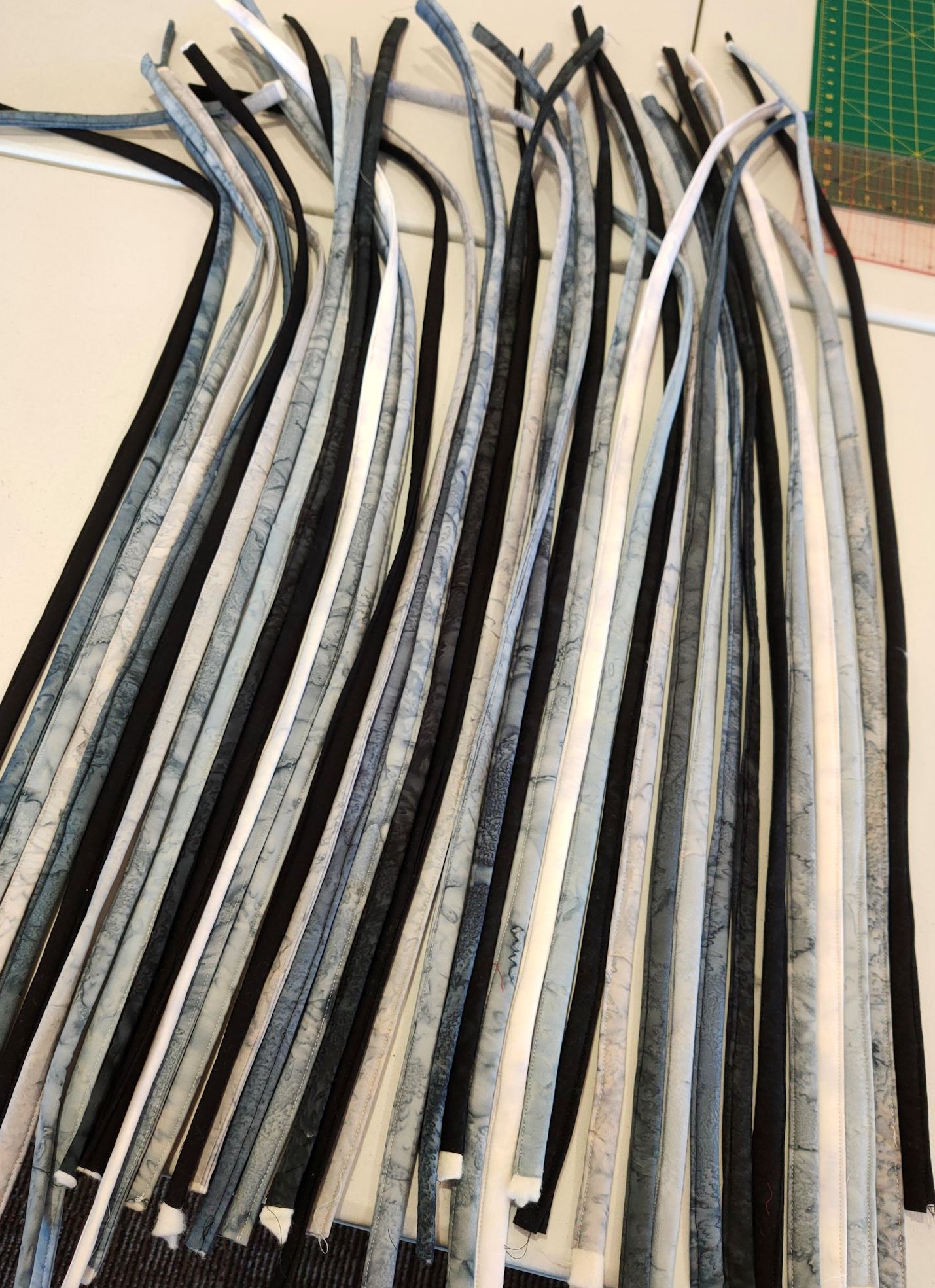
Jelly roll 'dreadlocks' in the colour order that the fabric came off the jelly roll. This was my original colour plan.

Jelly roll ‘dreadlocks’ in the colour order that the fabric came off the jelly roll. This was my original colour plan.

Next colour audition was gradation from black through the various shades of grey to white---an ombre effect.

Next colour audition was gradation from black through the various shades of grey to white—an ombre effect.

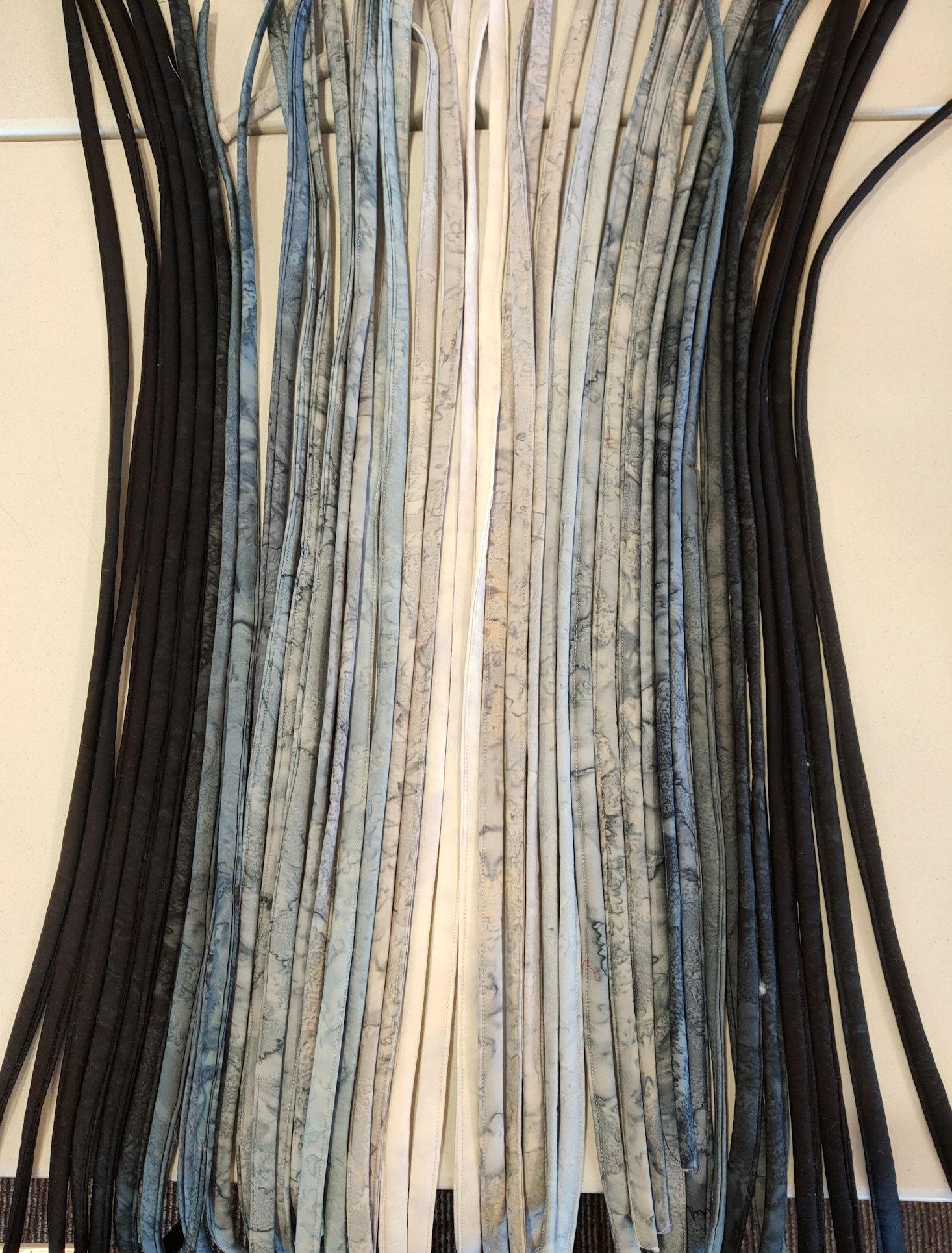
I finally settled on black on the outside, grading to white in the centre.

I finally settled on black on the outside, grading to white in the centre.

The sewn piece, ready to be made into a rug or a bag or a container, or whatever.

The sewn piece, ready to be trimmed and made into a rug or a bag or a container, or whatever.

The container made from the stitched jelly roll piece. It's way too high for a trash container or a bag, so I have to unpick about 8 rows from the top.

The container made from the stitched jelly roll piece. It’s way too high for a trash container or a bag, so I have to unpick about 8 rows from the top.


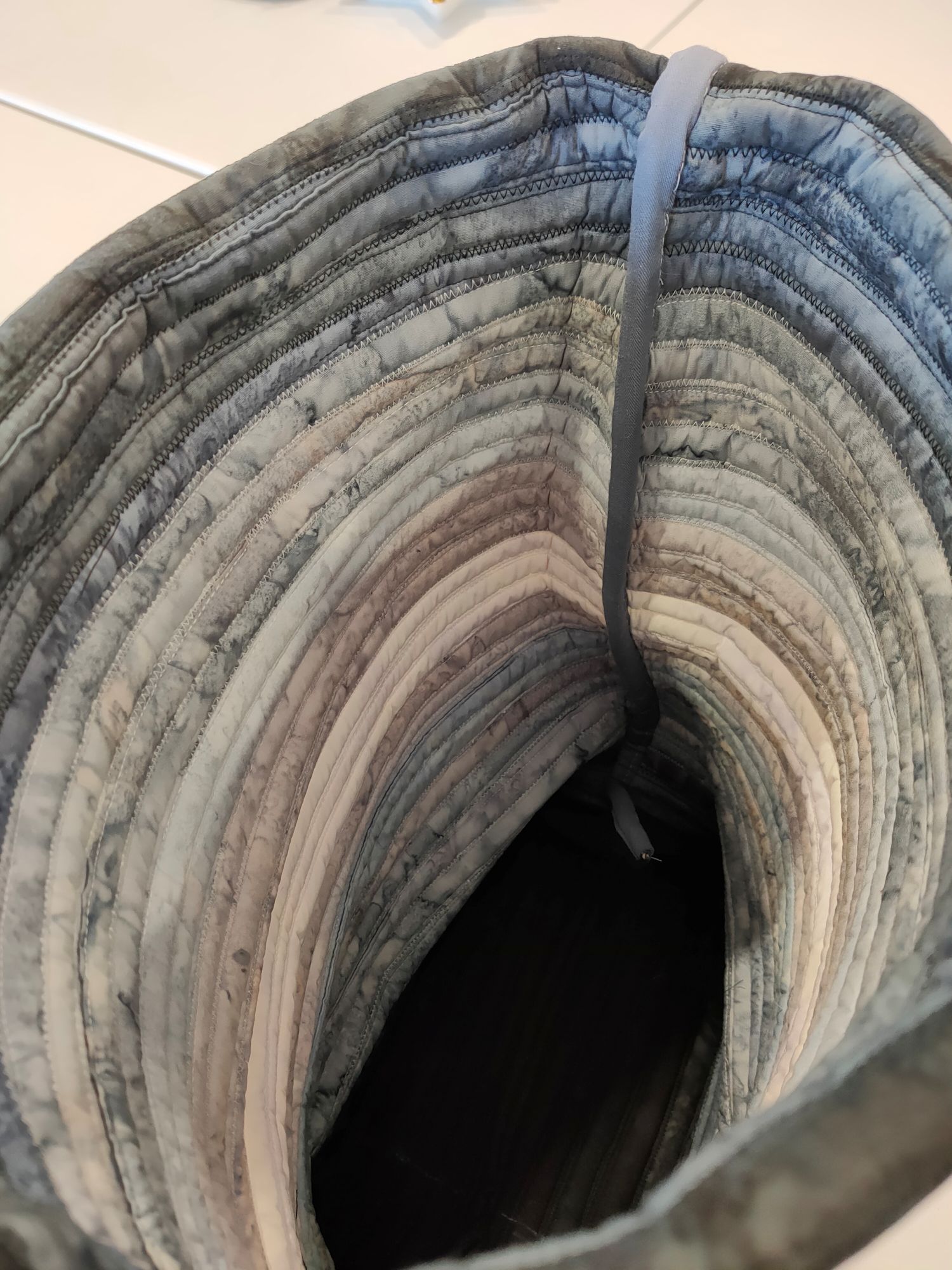
Looking down inside the container. I used a plain grey fabric to cover the open seams.

Looking down inside the container. I used a plain grey fabric to cover the open seams.


Community Quilts 470 to 476

11 12 2019

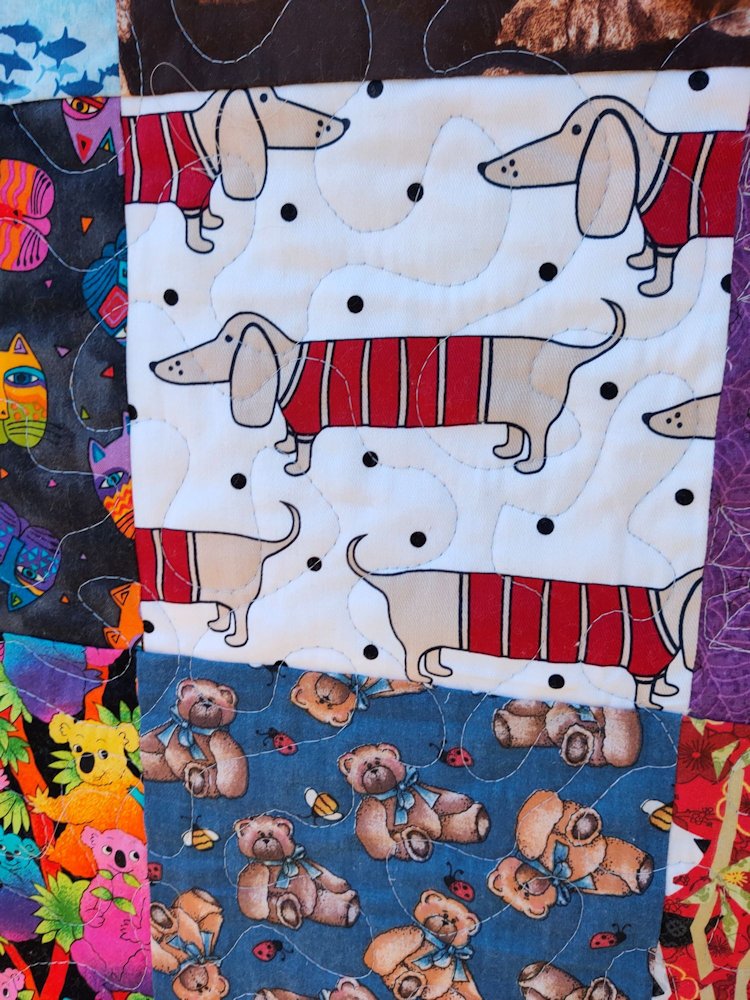
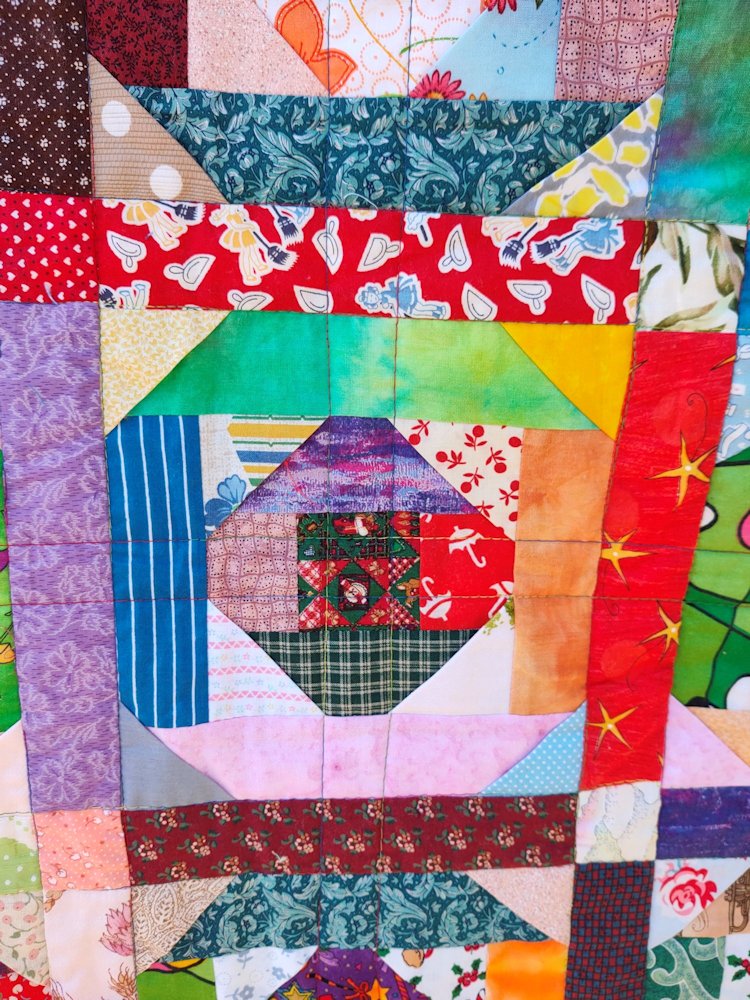
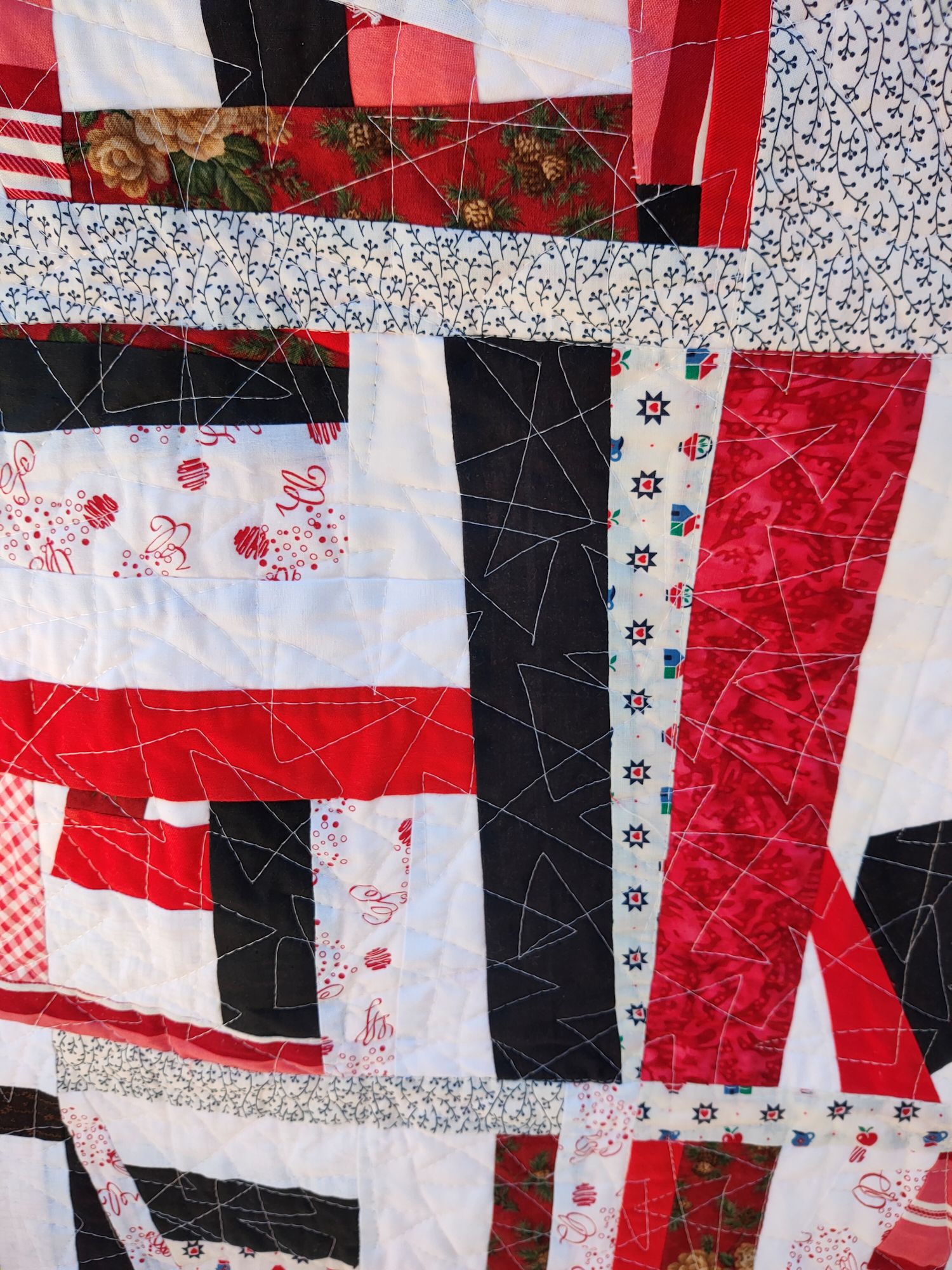
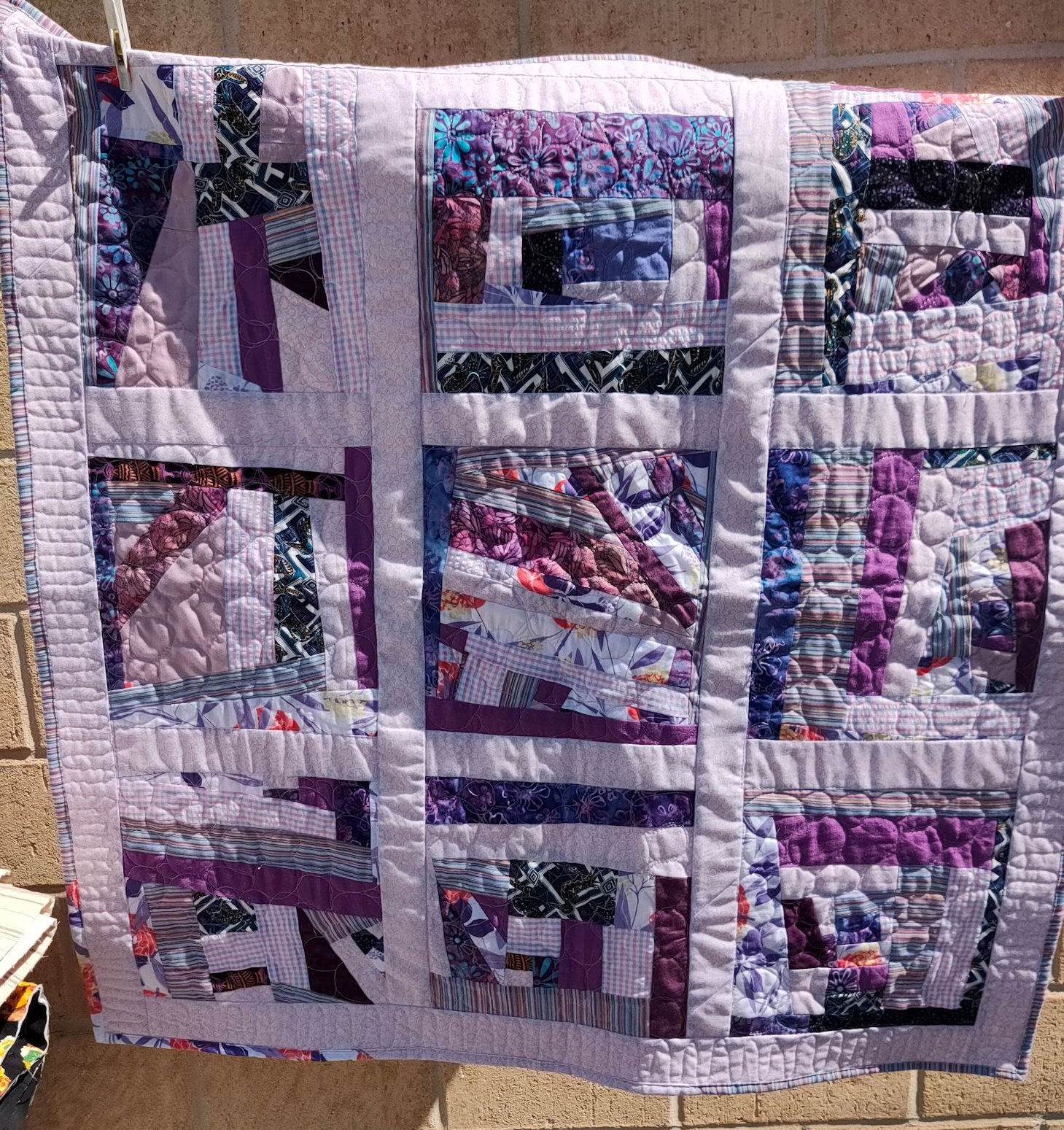
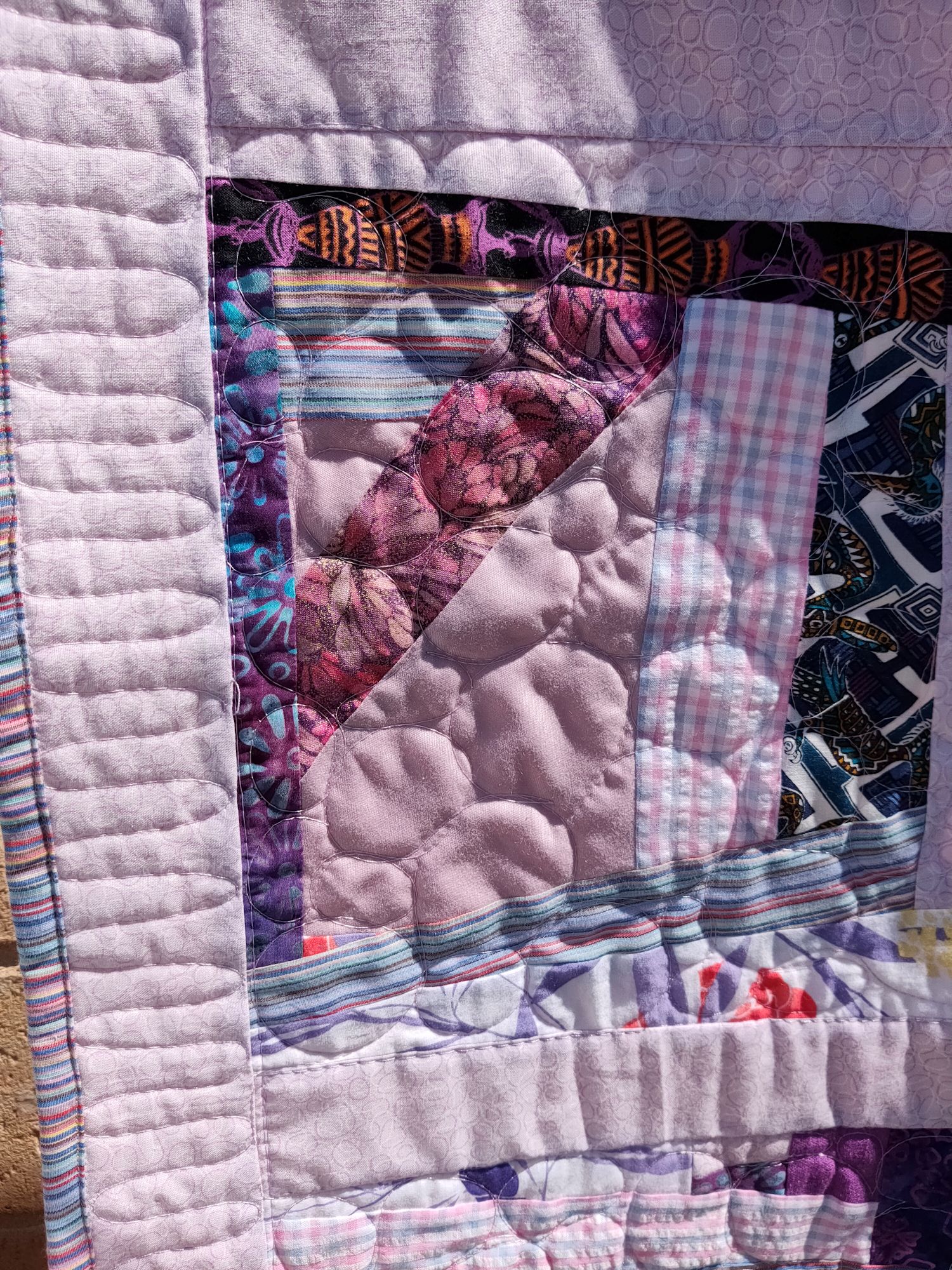
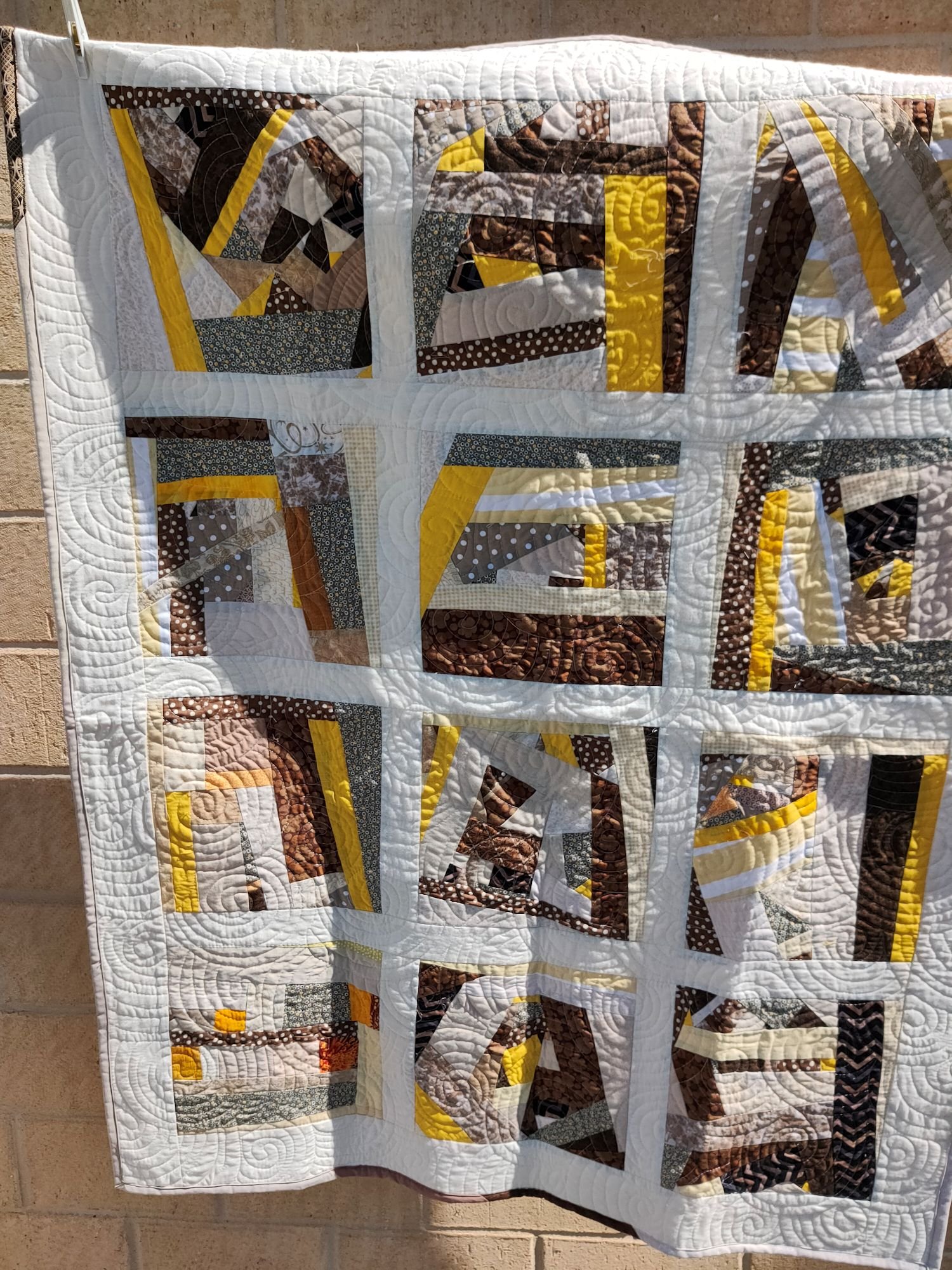
Here’s the latest batch of quilts I quilted for the West Australian Quilters Association’s Community Quilts program.

(Click on a photo to view it larger)

Community Quilt 470

Community Quilt 471

Community Quilt 472

Community Quilt 473

I used a glow-in-the-dark thread for the cobwebs—hopefully the kid who gets this quilt gets a nice surprise!

Community Quilt 474

Community Quilt 475

Community Quilt 476

I had to be careful when quilting this one as all those corner triangles are floating (i.e. not stitched down), so I avoided them by just stitching double straight vertical and horizontal lines.


Community Quilts 463 to 469

16 11 2019

Here’s the latest batch of quilts I quilted for the West Australian Quilters Association’s Community Quilts program; some were from them, others I made from my scrap stash.

(Click on a photo to view it larger)

Community Quilt 463

Community Quilt 464


Community Quilt 465


Community Quilt 466


Community Quilt 467

Community Quilt 468


Community Quilt 469


Combining classes

27 10 2019

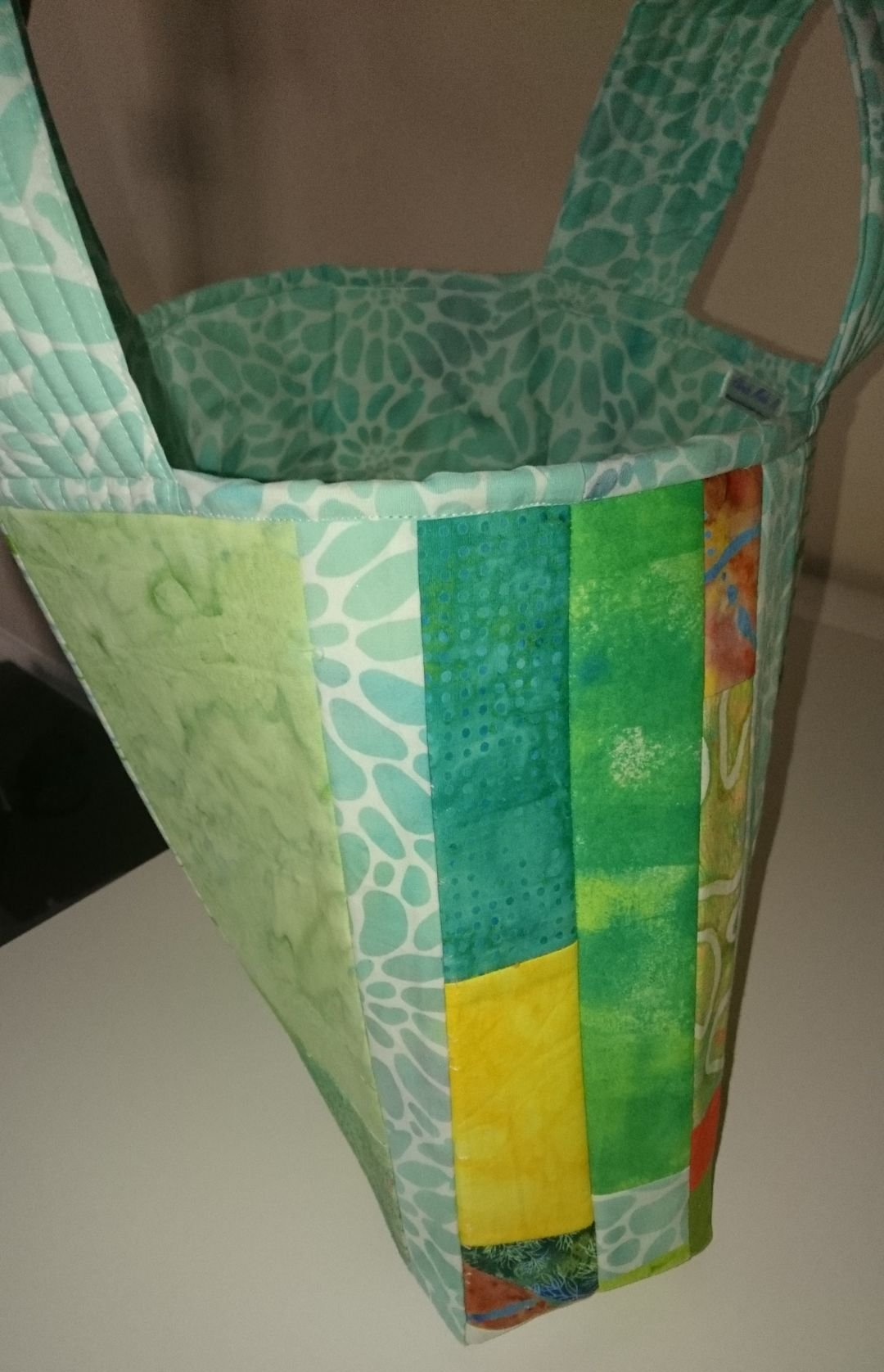
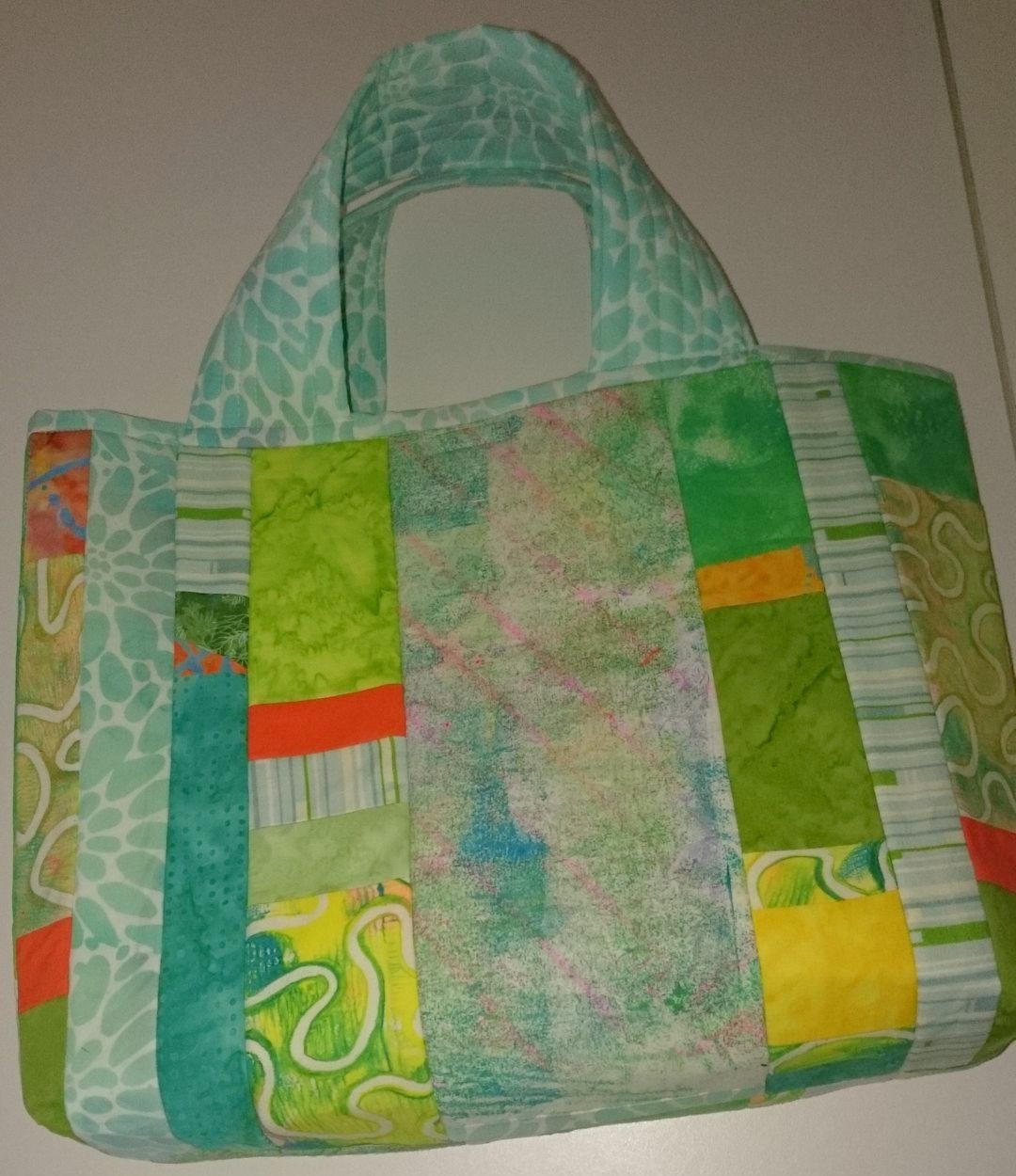
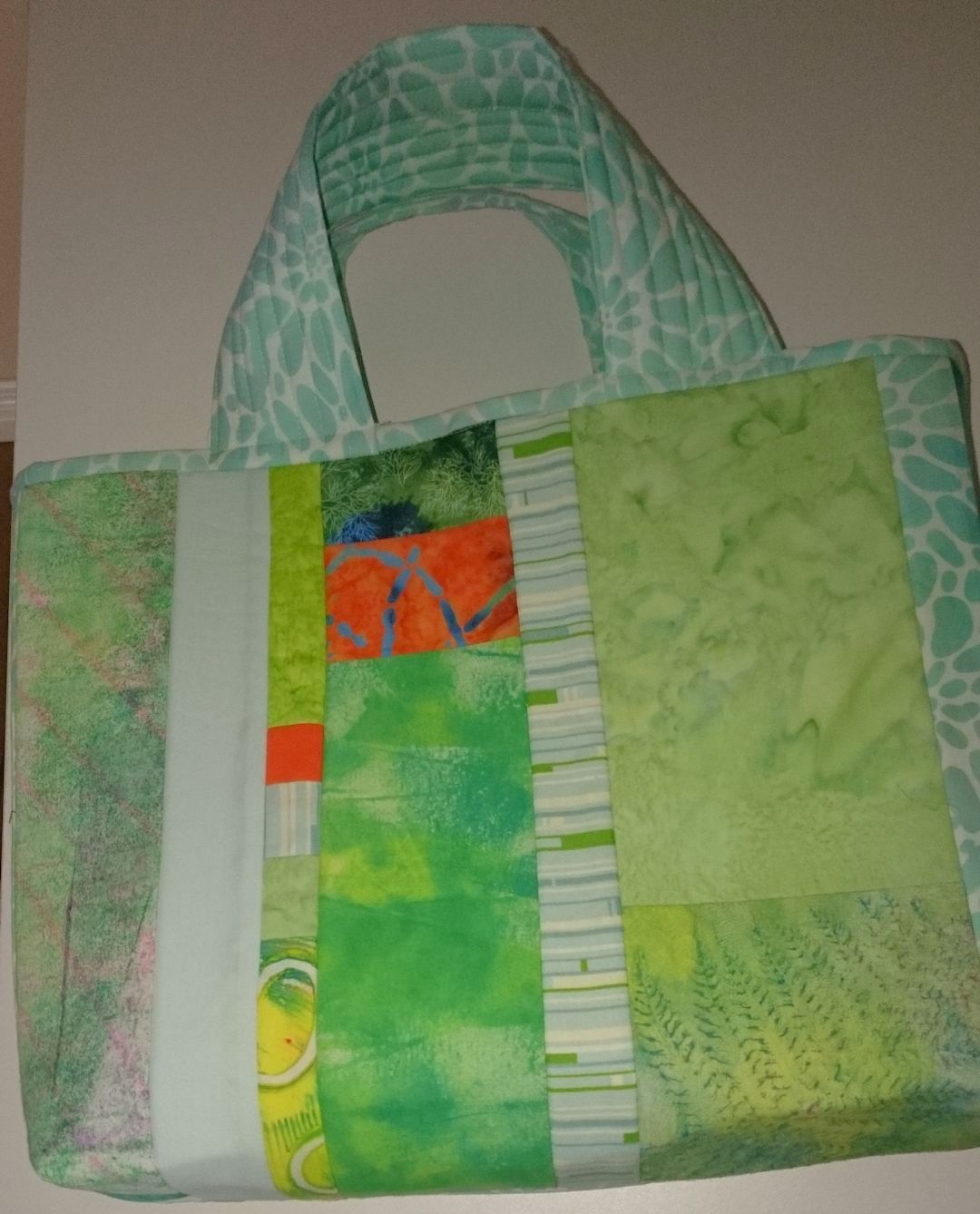
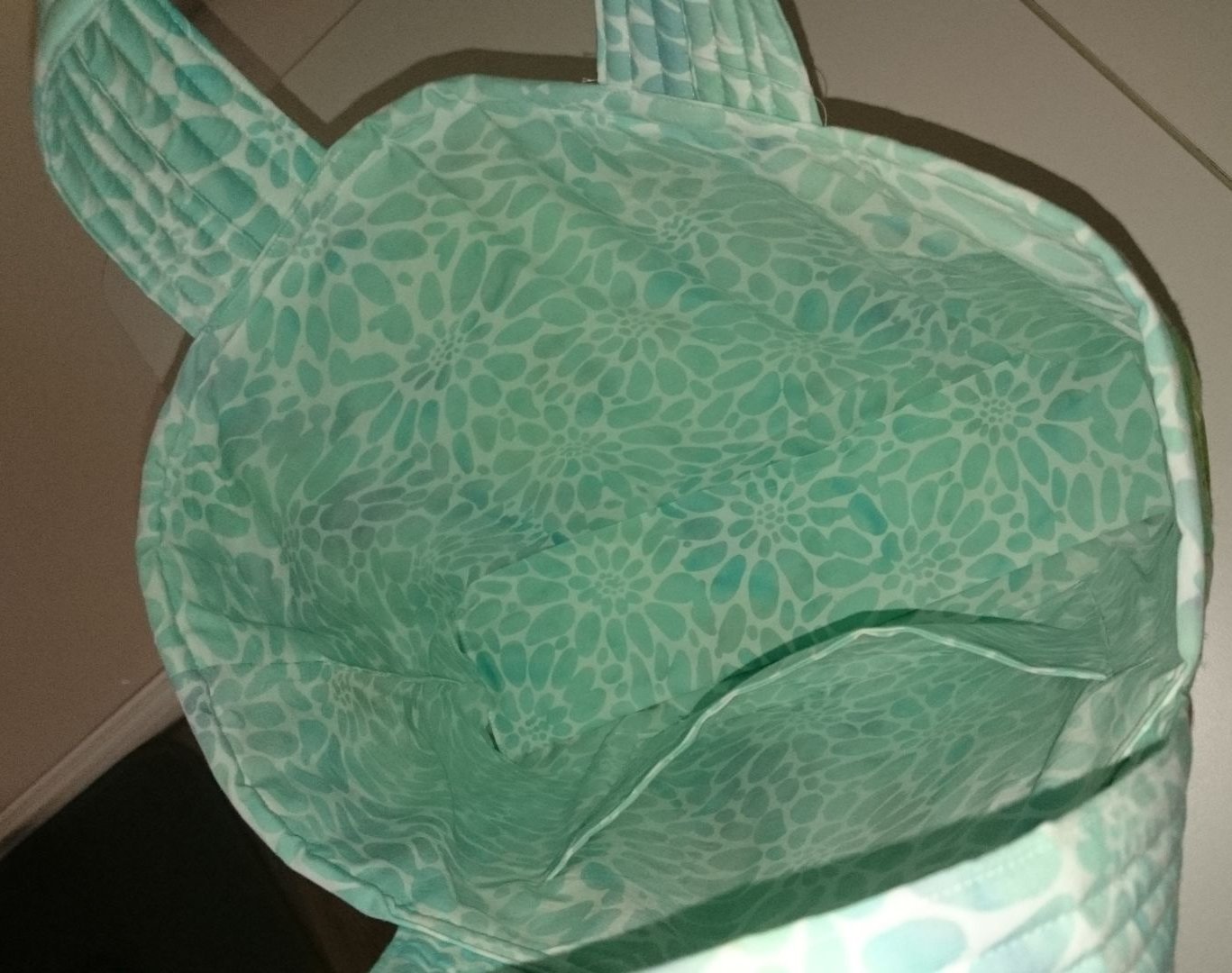
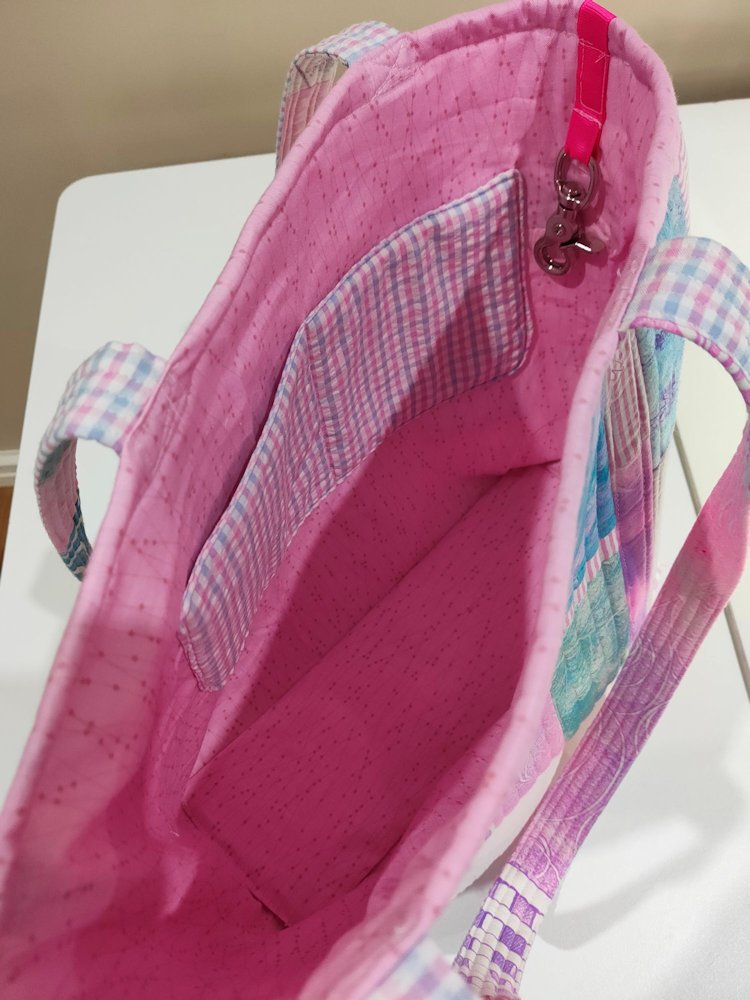
I attended the Quilt Symposium in Auckland, NZ a few weeks ago. I took two of Claire Smith’s classes—one on monoprinting and one on making a quilt-as-you-go bag. Today I combined them! I took the green/yellow tones fabrics I made in the monoprinting class, added some other greens, aquas, yellows and oranges from my scrap stash and made this bag. It took about 4 hours, as I had to remember what to do—Claire’s instructions were sparse… And a couple of weeks later I made another one, also using the monoprint fabric I’d made, this time in the pink/blue/purple colourway.


Heating a sandwich when you don’t have a sandwich press

11 10 2019

At the Quilt Symposium in Auckland, NZ, last week, ‘brown bag’ lunches were provided. For most of the classes I was in, we got sandwiches, which were pretty fresh. But on the last day, we got stodgy rolls, which were dense, slightly stale, and really only suitable for toasting in a sandwich/cafe press. So what do you do when you don’t have such an appliance? You improvise!

We used both baking paper (a staple for any quilters who do fusible applique) and brown paper bags to protect the irons, and the end result was slightly toasted bread—toasted enough to make these rolls far more palatable. We didn’t apply heat long enough for the heat to get all the way through, but it was enough to take away some of the stodginess! MacGyver would be proud!


Quilt Symposium, Auckland, October 2019: Claire Smith’s Quilt-as-you-go Bag class

11 10 2019

I’m a bit late posting this as I had paid work to do as soon as I got home from NZ.

My last two days of classes at Quilt Symposium were both with Claire Smith (a Kiwi), and they were very different. The first was monoprinting, and the second was making a ‘quilt-as-you-go’ bag.

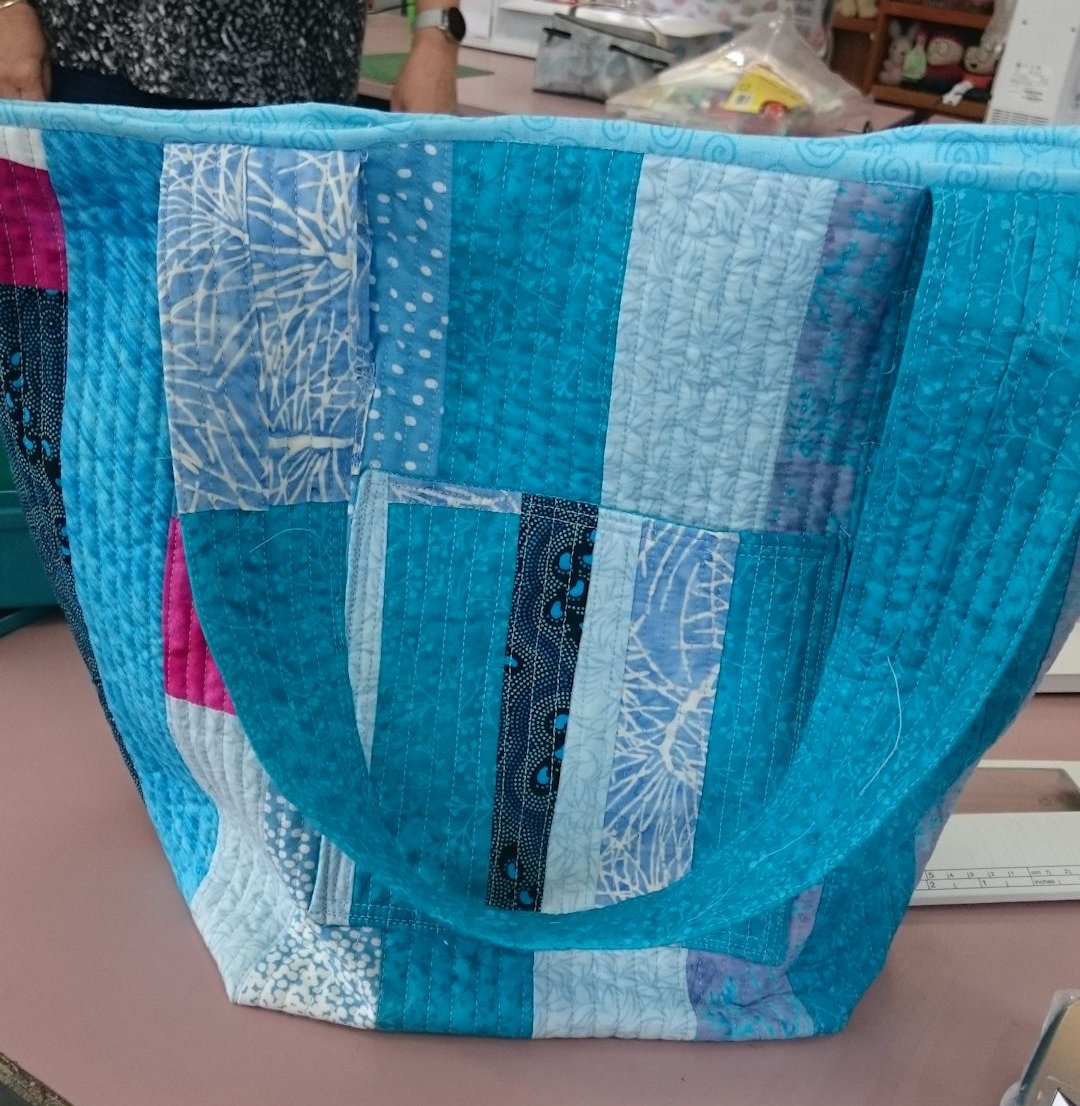
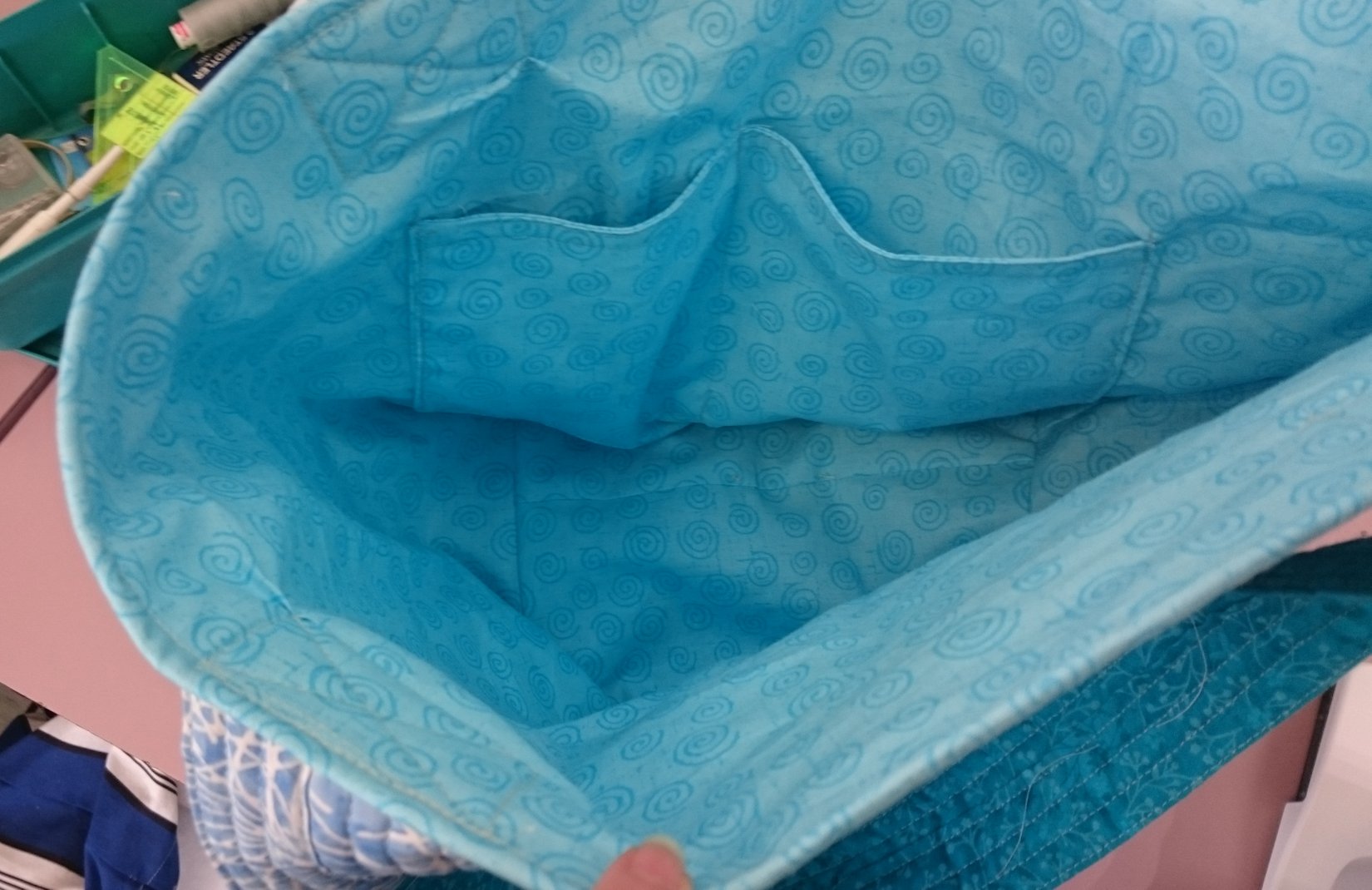
This bag was easy to make, and is fully lined. I even had time to add an outside pocket and two inside pockets. I also modified her design a little to add long handles, suitable for carrying this bag over your shoulder. I chose beachy colours—it would be perfect to take to the beach or have beside the pool, or even for more mundane things like shopping!

Some of the bags produced by the class


Quilt Symposium, Auckland, October 2019: Claire Smith’s Monoprinting class

11 10 2019

I’m a bit late posting this as I had paid work to do as soon as I got home from NZ.

My last two days of classes at Quilt Symposium were both with Claire Smith (a Kiwi), and they were very different. The first was monoprinting, a technique I’ve never tried before. I really enjoyed the process and the variations of what you can produce. I’ll likely use it again.

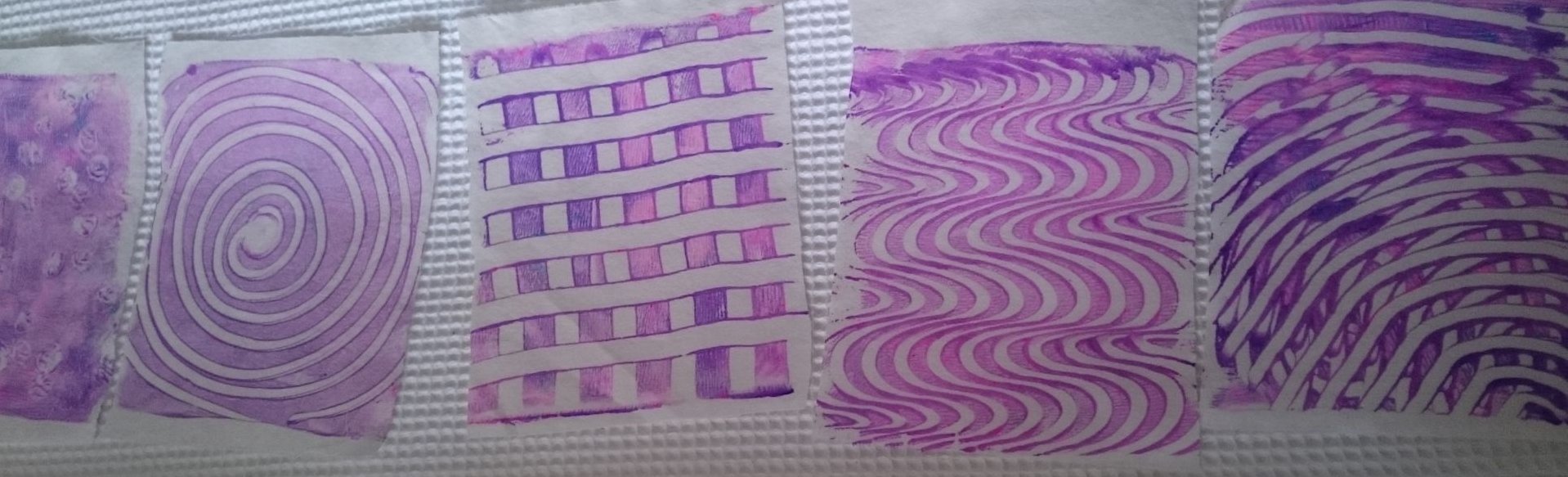
By definition, monoprinting means getting a single print from a painted surface. Here’s a summary of the steps:

  1. Lay down a paint medium on a surface (we used old x-ray films [with foam rollers], and Gelli plates [with a special brayer]; the paint was a thick acrylic paint like that used by school children).
  2. Optional: Use various objects and textures to make designs in the paint (I used everything from clothes pegs to the end of paint brushes, to notched baking scrapers, to bubble wrap, to fronds and leaves). NOTE: If you want to write something, you’ll have to write it backwards on the painted surface so that it prints ‘right side up’.
  3. Lay a piece of plain fabric over the top of the painted/marked surface.
  4. Gently rub the fabric to transfer the paint and design onto it.
  5. Remove the fabric from the surface and allow to dry.
  6. Once dry, repeat with different paints/patterns to create various print layers, or, if you’re happy with the result, iron the fabric to heat set the acrylic paint.
  7. Repeat for each other piece of fabric you want to print.

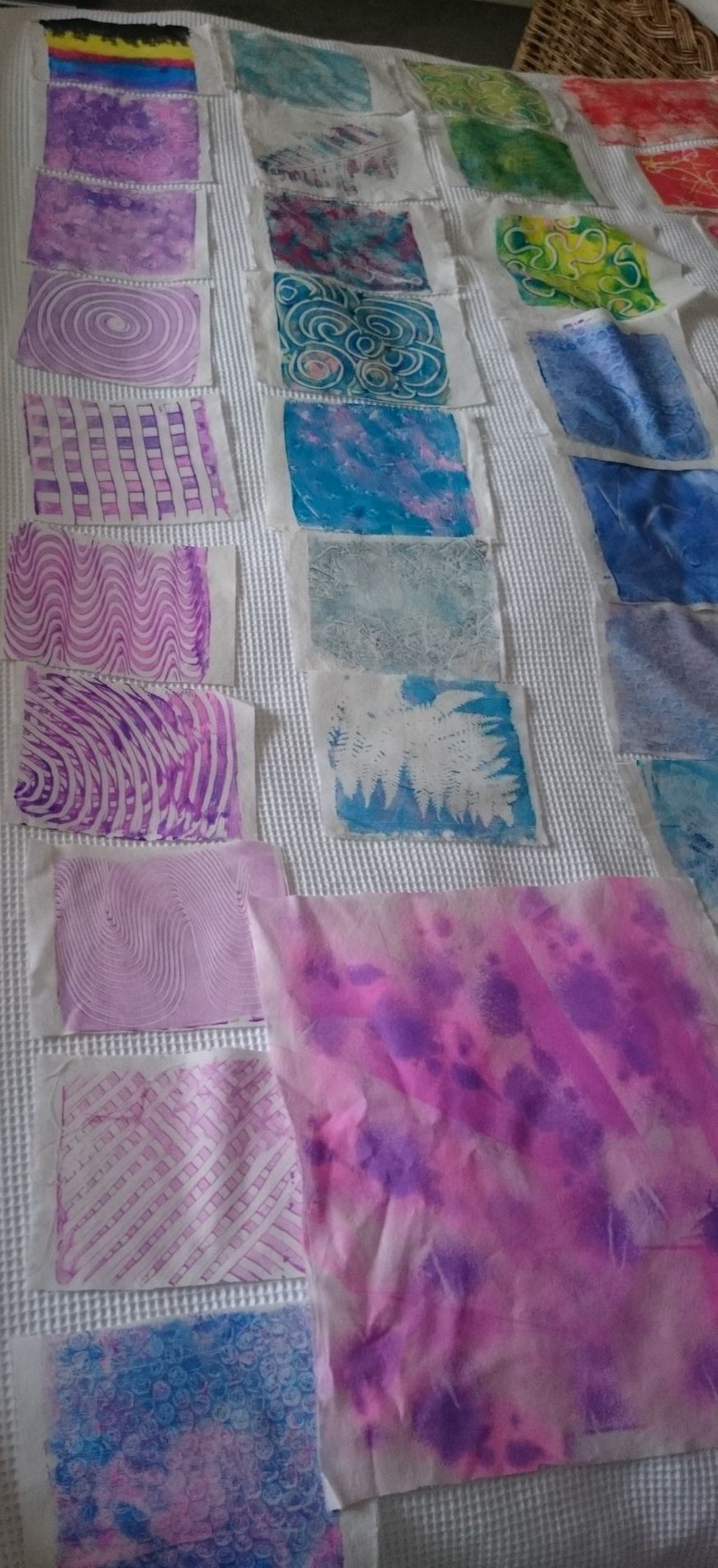
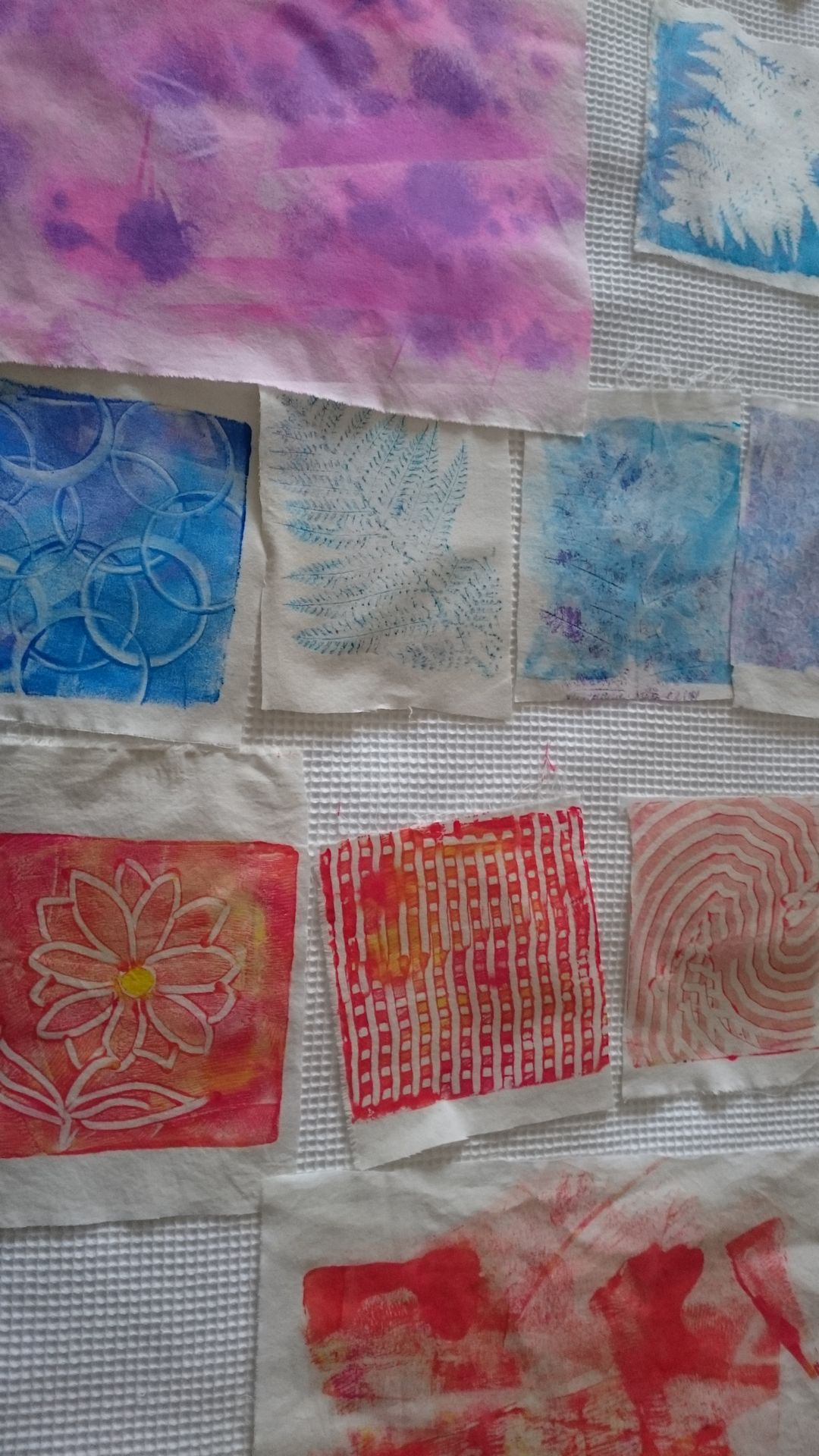
Some photos of the MANY pieces of fabric I produced during the day—most of the small ones are about 6″ square:

Plastic sheeting to protect the table, newspaper, x-ray film, small Gelli plate, foam rollers, brayer, pots of acrylic paint, fern for making a pattern on the paint

My first efforts, drying. The two large pink pieces were the result of rolling the excess paint off the roller onto spare pieces of fabric—you can get some amazing extra pieces this way and there’s no way to predict how they will turn out. The circles in the blue were created from the bottom of a drink cup.

Most, but not all, of the pieces I printed

The large pieces were all created by rolling off excess paint onto spare pieces of fabric


Quilt Symposium, Auckland, October 2019: Some photos from the exhibition

4 10 2019

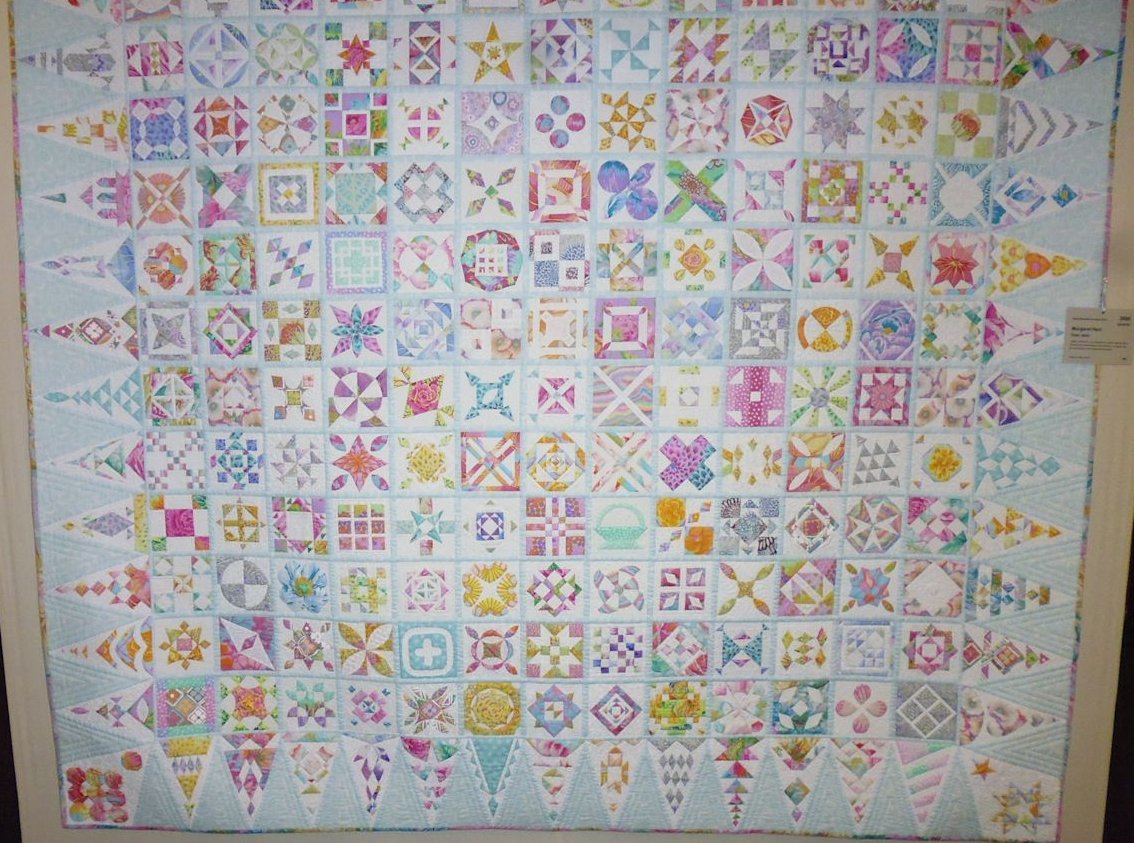
The quilt exhibition that’s part of the biennial Quilt Symposium has hundreds of magnificent quilts on display. There was no way I could take photos of them all, so this is just a very small selection of those I did photograph.

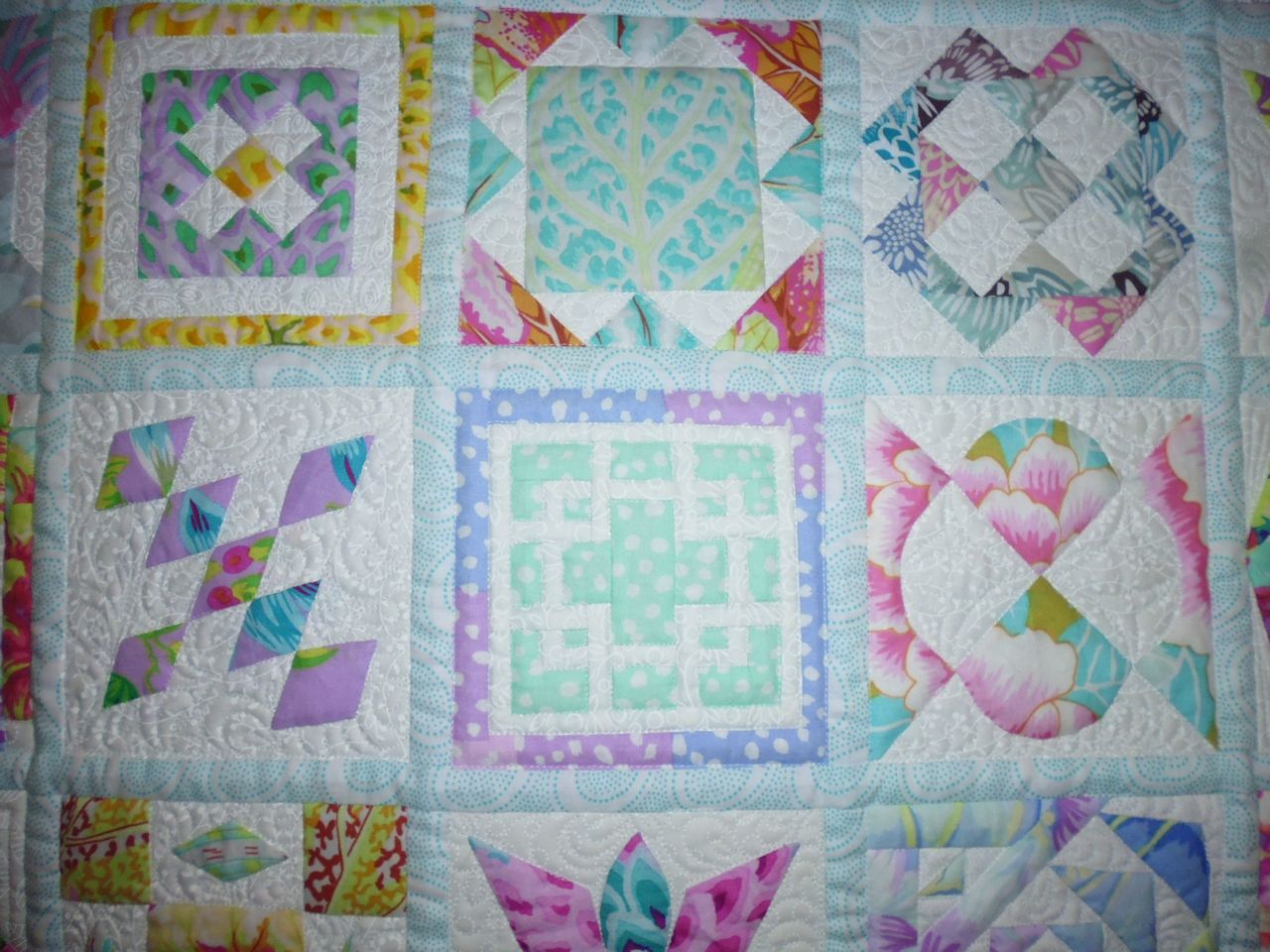
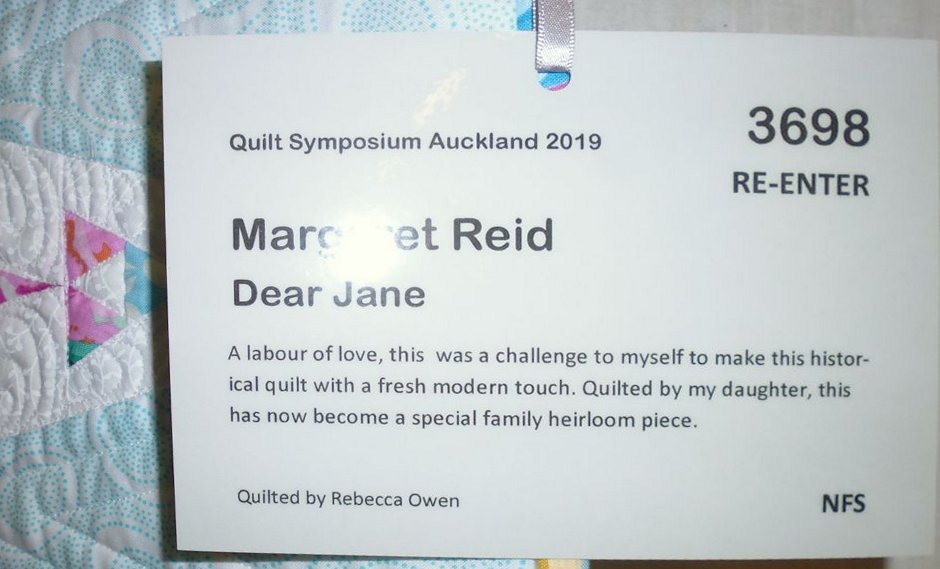
This Dear Jane quilt really attracted me because of the colours and fabrics used. I’m not usually a fan of traditional quilts, such as Dear Janes, but the pastel colours drew me in.

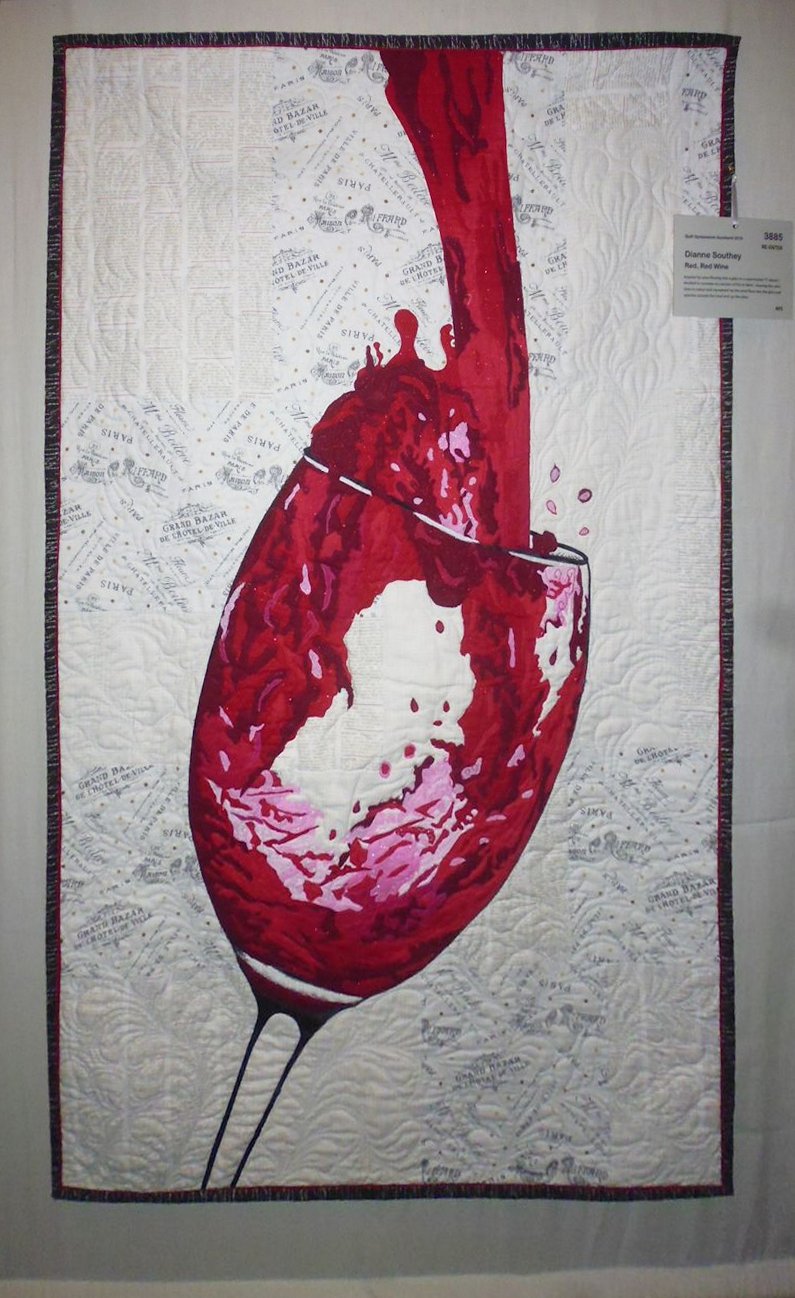
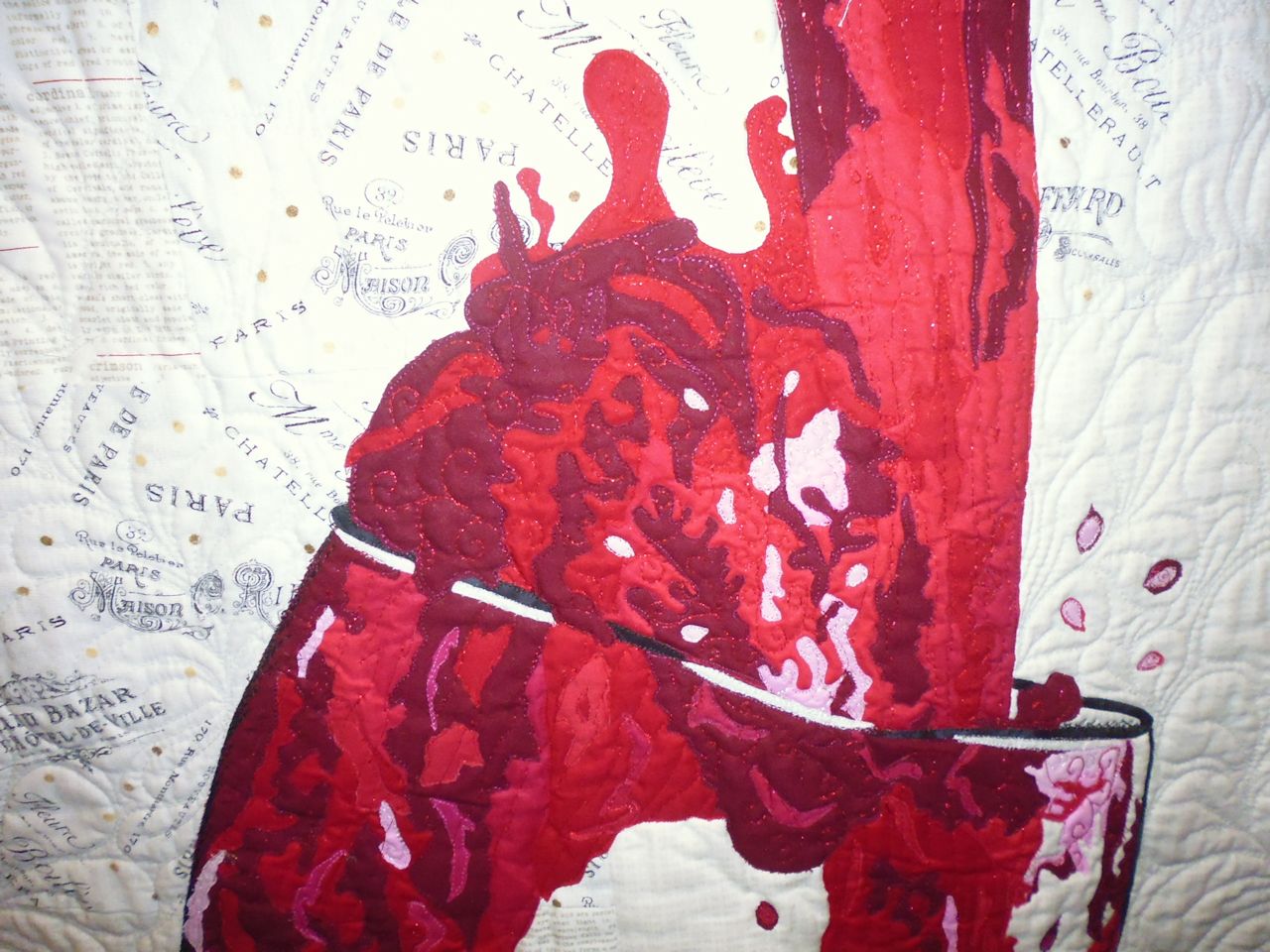
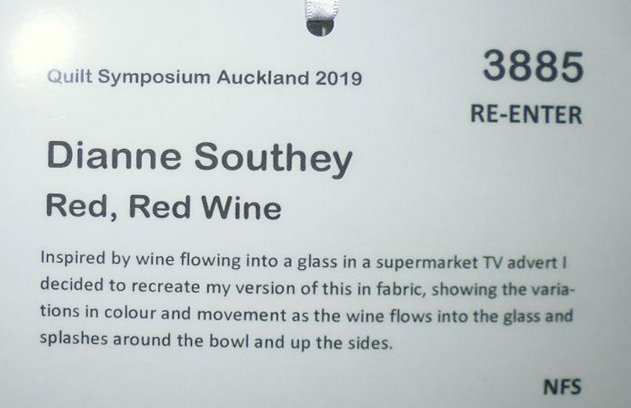
I loved this red wine quilt! The evocative splash and splosh of the wine hitting the glass, the movement, and the size — this was about 1 m long, so a great size for an art quilt for someone’s wall.

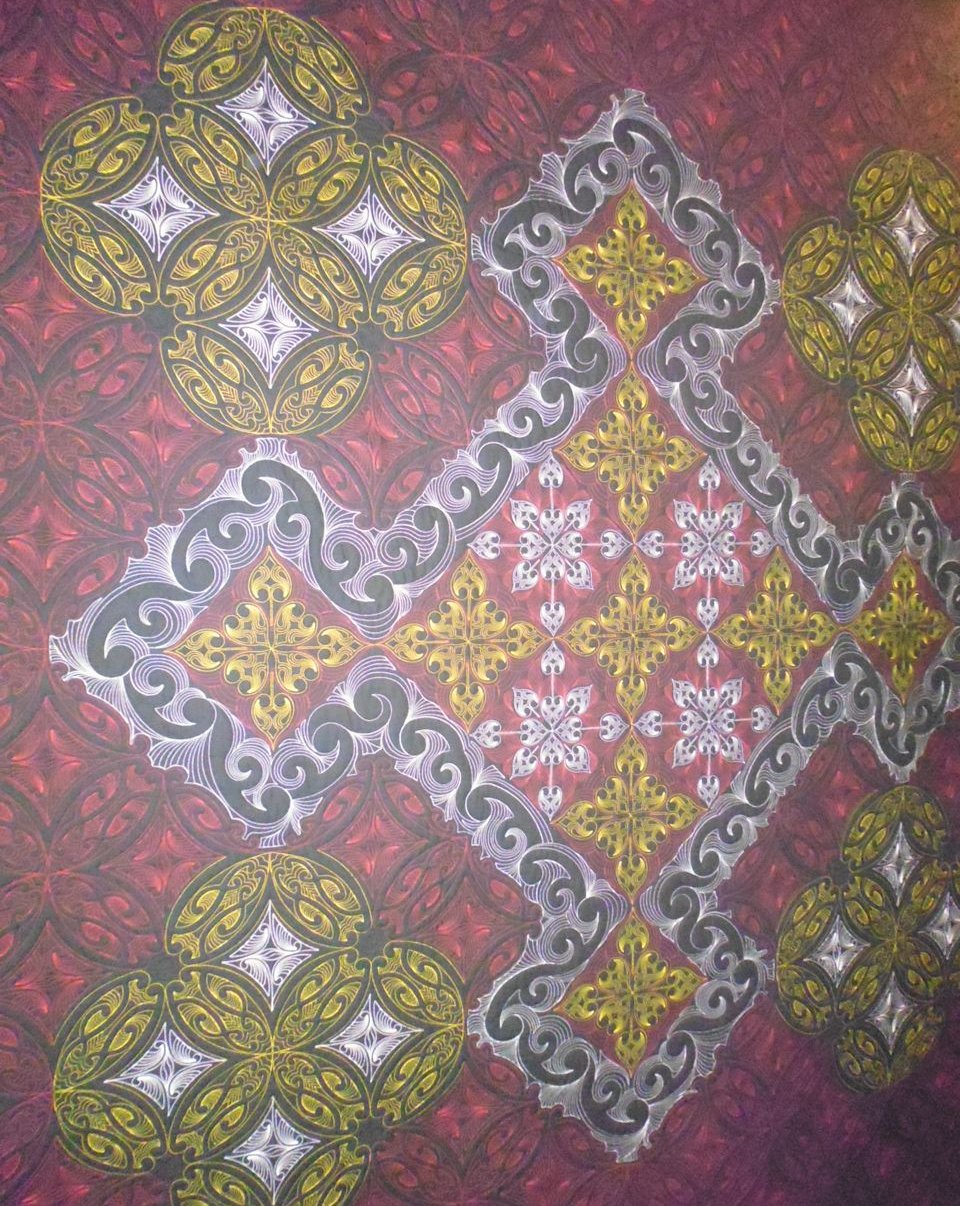
This wholecloth quilt was HUGE. And the threadwork to create the design was just magnificent. There’s just one fabric in this quilt — the black background. Everything else is thread.


Quilt Symposium, Auckland, October 2019: Chris Kenna’s Wholecloth Mosaic class

4 10 2019

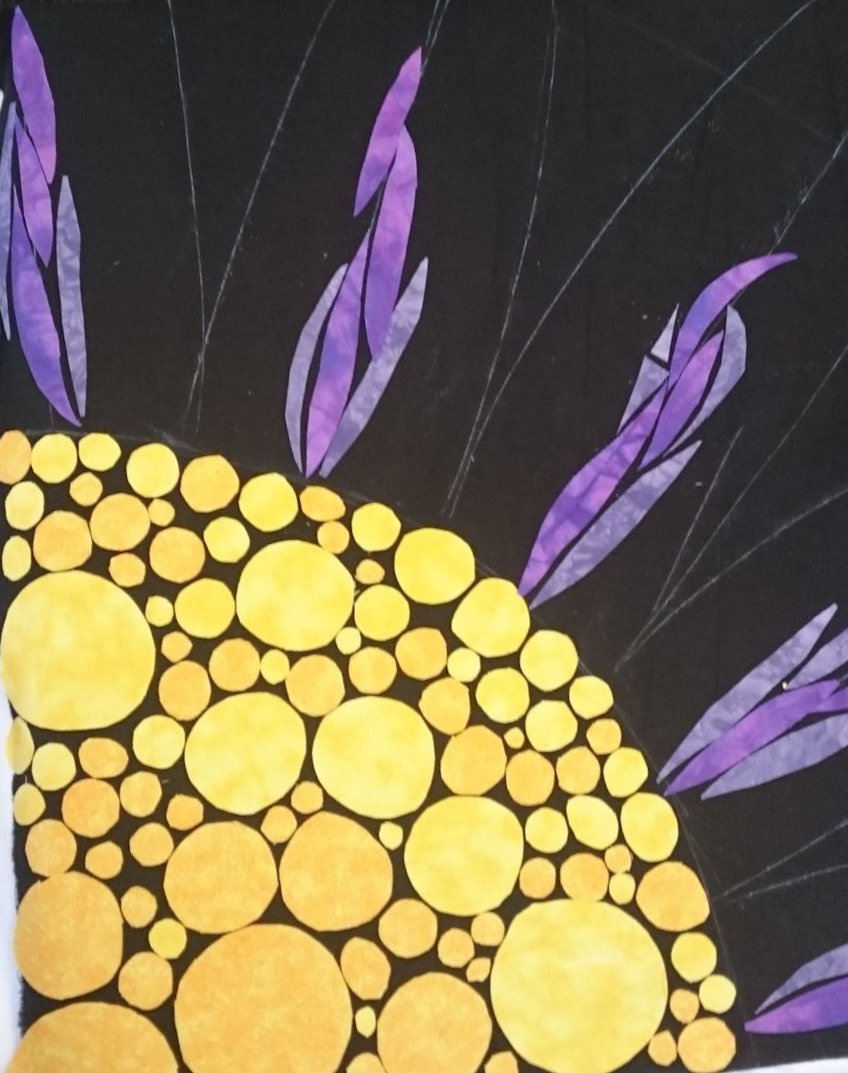
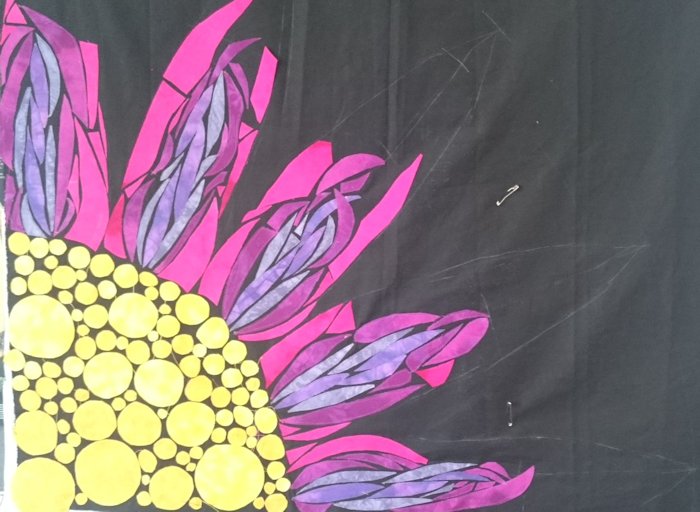
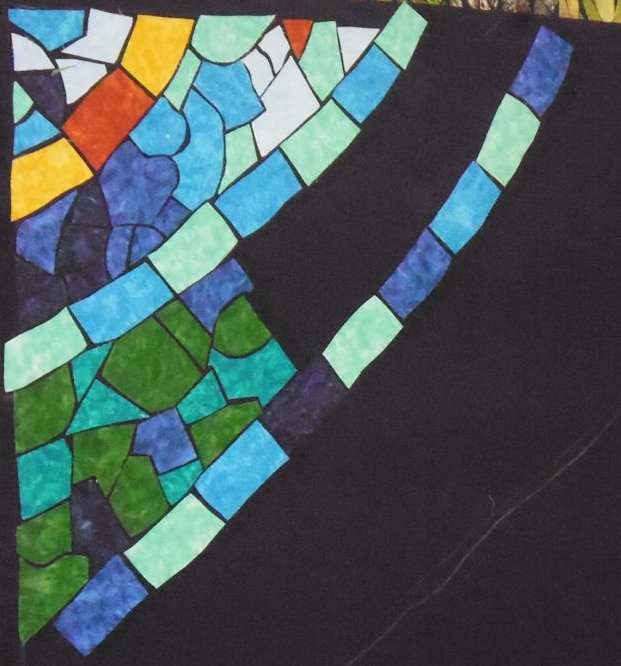
I’m at the Auckland Quilt Symposium, where I’m taking classes for 4 out of the 5 days. My first class was a 2-day class with Chris Kenna (a New Zealander), doing a wholecloth mosaic using her techniques. Our class supplies stipulated a 1 m x 1 m plain piece of fabric, and most chose white, off-white, or black as their background fabric. Almost all the class participants worked at this scale, though a couple varied it by using a rectangle of fabric.  We didn’t work from any pattern, instead making up our own designs. Below are the photos of my project in progress, Chris’ two magnificent pieces (both at least 2 m square), and all the projects done by the class as at the end of Day 2.

Update: My finished piece: https://rhondabracey.com/2020/01/27/finishing-off-art-quilt-started-in-nz/

My piece in progress

Chris Kenna’s samples

Class work at the end of Day 2