Notes from a conference trip

6 04 2016

I returned from a conference in Portland, Oregon, yesterday. I took a few notes on various random things while I was away…

Internet speeds

Internet speeds in hotels are notoriously slow, even those that say they are ‘high-speed’. And often the more you pay for the hotel room, the worse they are — I think they want you to pay the exorbitant ‘per day’ internet rate. Of course, with Australia’s overall general internet slowness, I don’t expect a lot.

The free wifi at the Holiday Inn, Melbourne Airport was the worst. The website where you log in said that the speed was limited to 1 Mbps download (I get 10 to 15 Mbps at home, and that’s not particularly fast). The actual speed (measured on http://www.speedtest.net) was a miserable 0.49 Mbps. That was glacial, so I decided to log off and use my phone as a Wifi hotspot instead — Telstra gave me a blistering 48 Mbps!!!!! Holy Speed Demon, Batman! Pity I didn’t have any photos to upload!

I stayed at the Hilton Portland Downtown and Executive Tower. There was a bit of an issue getting my luggage through the doors at the hotel, but the guy who checked me in upgraded me to a bigger room AND their so-called hi-speed internet (free) as a result. It wasn’t high speed! On speedtest.net it was consistently about 2 Mbps upload. So I tethered my phone as a portable Wifi hotspot – that still wasn’t super fast, but it was around 10 Mbps. While that was much better, it wasn’t as good as I expected on a 4G phone in the middle of a city. During the conference, the free wifi for conference attendees was very patchy, and very slow at certain times such as the breaks when people were checking their devices for email, Facebook, Twitter updates, and in certain conference sessions when attendees were ‘live Tweeting’ the session highlights.

General etiquette

Public Service Announcement: If you are in a large group of people, or in a confined space, or BOTH (you know, like on an aircraft…), and you have a cold and feel a cough or sneeze coming on, then if you can’t reach a tissue in time, cough/sneeze into your sleeve (‘vampire sneeze’) or the neck of shirt or anywhere other than over your fellow passengers! The rest of the passengers will appreciate it, I promise.

Memo to self for future reference: Do not fly in the US on a Saturday of a holiday weekend unless you can tolerate large numbers of children of all ages from babies and toddlers, to tweens and teens. Just sayin’…

Town car service

For only the second time ever, I ordered a town car to pick me up from the Portland airport (PDX) and drop me back 6 days later. I’d had experience of a town car service last year when I was in Miami and my friend had ordered it for us, and in Pittsburgh where I’d ordered my own. And those experiences were good. I expected the same in Portland, but that wasn’t the case. Unfortunately, TripAdvisor.com doesn’t take reviews for such services, so I’ll write my review here. Note: I won’t name the company — if you’re going to Portland and need to know, contact me directly. Interestingly, this company’s Yelp and Google reviews (I don’t review on either) are greater than 4 stars. That’s not what I would have given them, especially for such an expensive service compared to a taxi or airport shuttle. My rating would have been 2 stars at best.

Here’s what happened for the pick up:

  • When I made the original booking, the website said the cost of PDX to downtown was ‘from $55 each way’; I was charged $132 (i.e. $66 each way) for the booking. There was no information about whether the difference was because of tax, or some other reason (e.g. pick up on a Saturday, and drop off on a Sunday, though it was during the day both times). There was no discount for a return journey.
  • I sent a text message to the cell number (NOT the office number) on their website when I got my US SIM and US phone number on arrival in Los Angeles that morning, as I had said I would in my communications with them. I didn’t get a reply, which I thought was a bit odd. It seems I should have sent the text message to the office number, which I assumed was a landline not a cell. There was no information on their website two weeks prior to the trip about sending to that number; however, in the interim they had revamped their website and the new website only has the office number (which is a cell phone) as their contact number. They had all my details (including email address) for this booking, so they could have let all their current reservations know of the website and phone number change.
  • In their confirmation email they said the car would be at Island 3 (and explained where that was) and would have my name in the window. My name was not in any window of any of the cars at Island 3.
  • Based on their website photos, I expected a black car – it was champagne colour with nothing on the side identifying it, so I didn’t recognise it as from the company and I was a little skeptical if it was the right company, until the driver said my name.
  • We took quite a while to find each other. The driver was waiting in his car at the designated spot (there were several cars waiting), but as he didn’t tell the person who was directing people to taxis etc. that he was there, and as he didn’t have my name in the window as promised, we didn’t meet up for about 15 mins. The only reason we found each other was that the taxi herder guy took pity on me and contacted his despatch and asked them to call the company and see where he was. The taxi herder guy wasn’t busy — there were plenty of taxis and very few people (maybe two parties he dealt while I was waiting on the cold metal bench at Island 3), so the driver should have got out of the car and talked to the taxi herder guy at any time. I was sitting on a bench directly in front of his car and in his full view! There were only about 5 cars at Island 3 at the time.
  • Once we found each other the driver didn’t introduce himself at any stage. That was odd too. And he didn’t wear a name badge.
  • The driver said that when he couldn’t find me (like he looked! I was sitting right in front of him!) he called my cell number in Australia but got no answer — he should have got my voicemail telling him I was out of the country, so I doubt he called. On my return I checked my voicemail for messages — there was nothing. He also told me he emailed me (when he was waiting for me to come out of the airport, yet I was sitting in front of him!), but I rarely check emails on my phone, and couldn’t while I was flying from Los Angeles. Besides, his email went into my Junk folder and so I wouldn’t have seen it on my phone had I checked my emails while waiting for him at PDX — I found it the next day!
  • What’s with drivers texting and looking at their phone while driving??? I’ve seen this elsewhere in the US too (Miami and Pittsburgh, most recently) and it’s scary! There’s plenty of evidence that the inattention that arises from texting or looking at a screen on your phone can cause serious accidents. I’d rather not be in a car with a driver who is that irresponsible for himself and his passengers.
  • There was no bottle of water for the passenger — I’ve come to expect this in other town cars I’ve used in other cities.

And here’s what happened for the return journey:

  • Same driver, and he was early to the hotel (about 15 minutes before the pick up time). I was early too, so that worked out well for us both.
  • This time I was in a brand new (black) car.
  • However, the car had obviously had passengers partying in the back seat the night before because bits of costume and food (green cotton candy!) were on the back seat, with a globule of green cotton candy in the seam of the seat where I was to sit in my white pants! I had to point out to him that this stuff was there and he apologised and shifted it all to the front seat, where there was a cowboy hat! How could he not check the cleanliness of the car before picking up the next passenger????
  • The driver’s black trousers had some light-coloured marks on the lower leg (dirt? stain? dust?) — not a very professional look. They just looked grubby.
  • No bottle of water this trip either.

After this experience, I’d be hesitant to pay the extra for another town car service — ever!


Trusting my gut

6 04 2016

Copy of one of my Facebook posts from Portland, when I was there for a conference in March/April 2016:

So, I walk back into the hotel after the conference sessions and stand by the elevators. One elevator is closing, but there’s a guy standing waiting for the next elevator — he was there before me so he could have taken the other elevator, assuming it wasn’t full. I think that’s a bit odd. He gets into the same elevator as me, but I don’t see him press a button for a floor. He may have done, but I didn’t see him do it. Two other people get in the elevator and press buttons for their floors.

At my floor, I get out, as does this guy (who only has a backpack and no conference badge around his neck). I don’t see his room key card. He doesn’t know to step forward a few more feet before turning into the corridor, as would anyone who had got off on this floor before, so he hesitates a bit. I start walking in my direction and he starts walking a tad behind me in the same direction. I remember that there’s an ice machine alcove between me and my door, so I slip in there ostensibly to get ice (yeah, no bucket!) and hope this guy keeps walking. He does. I wait a few seconds then come out into the corridor and keep walking to my door. He’s about 2 doors in front of me. I get into my room, shut the door quickly, and put the extra security locks on. Had there been a knock on the door I would have called hotel security.

I felt threatened — but not in any obvious or overt way. Just a gut feeling that something wasn’t right. Nothing more happened. I hope that was all it was — just a gut feeling. But it emphasises the fact that EVERY woman has to be alert and vigilant EVERY damned moment, no matter what their age. I doubt that many men ever have to think like this – every moment of every day they are in public.


LAX: From hellhole to a pleasant experience

28 03 2016

I haven’t been through Los Angeles Airport (LAX) for several years — where possible, I’ve avoided it since Qantas started flying direct from Sydney to Dallas. But this trip it was unavoidable because the conference I’m attending is in Portland, Oregon.

To say I was pleasantly surprised is an understatement. LAX has gone from being a hellhole to be avoided at all costs to something closely resembling a pleasant experience (assuming that ANY airport experience can be pleasant).

Arrival: Before

It started with the arrival. Previously, you had to walk forever down dark soulless corridors to get to immigration and customs in the Tom Bradley International Terminal (TBIT). Then if you weren’t a US citizen, you had to go to the ‘Aliens’ line and queue for many minutes (the longest I’ve waited was more than 90 minutes) in hot conditions, and be herded by less-than-polite security and crowd control personnel. Eventually you’d get to the front of the line, where a sullen-faced person would process you — take all your fingerprints (not even the Australian government has my fingerprints!), take a photo, look you up and down several times, question why you were coming into the US, and eventually stamp your passport or a slip of green paper to put into your passport.

After that, you had to find your baggage carousel and jostle with hundreds of others for your luggage (no different to any other airport) and then join a very long line to go through customs and answer more questions. Once that was done, you could exit to the arrivals hall and then out into the street to find your transport to wherever you were going, or, if you were connecting to another flight, you went a different way to drop off your luggage and then had to walk outside and to the terminal for your next flight (yes, I know there were airside shuttles, but they were hard to find and weren’t as quick as walking!). Once you were outside, you could be accosted by hawkers trying to sell you stuff or help you with your bags (for a ransom, no doubt). If you were connecting, you had to get to your next terminal via the dodgy pavement, and then go through security in that terminal to get to your gate. As far as I’m aware, if you were connecting to another flight in several hours’ time, you couldn’t go back into the international terminal and your airline’s lounge (Qantas for me) and hang there until close to the time of your next flight.

And you always had to allow at least an hour for this arrivals process — and there were no toilets from leaving the plane until after you’d left the baggage claim area and customs.

Arrival: After

The new arrivals corridors at TBIT are light, airy, surrounded by glass and go over the top of the main concourse below. And I’m pretty sure I saw signs for toilets along the way. When you get to the air-conditioned immigration area, you can go into the US citizens line or the ‘Visitors’ line (we’re no longer aliens!); however, there’s also an ESTA line, which is NOT clearly marked, for those who have an ESTA and are on the same passport they’ve used to enter the USA in the previous two years. This line takes you to the electronic scanners — two of the scanners wouldn’t ‘read’ my name correctly and one of the staff had to help me on the third scanner (that was frustrating but not as frustrating as waiting in line in the heat for hours). Once your receipt is printed, you bypass the other lines and go to an immigration officer who does a very quick final scrutiny that you are the same person as the receipt and passport say you are, and that’s it. All over in a matter of minutes. That said, LAX could learn a lot from Dallas-Fort Worth Airport who have this down to a fine art — they use colour-coded lane dividers and signs to direct people to the correct lane; at LAX, all the lanes and signs are the same colour and you can’t easily find where you have to go if you have an ESTA.

Once immigration is done, you collect your baggage and head towards the exits. There’s a final check of your receipt (I think — can’t remember), and then you’re headed towards either the exit to the arrivals hall or to the baggage drop for your connecting flight. It was at this point that the quick process up until now was held up. The corridor leading to the connecting flight bag drop was filled with people — about 6 people across and as far as the eye could see. However, the line kept moving, although it was slow.

All up, I estimate it took about 20 to 30 mins from getting off the plane to heading to the exits.

Once your bags are dropped you now have a couple of choices — you can either do as you’ve always done and head out to the street and walk to your next terminal (or catch a shuttle), or you can head back into TBIT, go upstairs to departures and go through TSA security there, and then make your way to your other terminal (Terminals 4 to 8 only) via the airside (i.e. after security) walkways. If you have plenty of time between connections AND you’re a Qantas Club member, you can now go back to the Qantas Business Lounge or Qantas First Class Lounge (yes, two separate lounges now at LAX! And both are HUGE compared to what they were) and have a shower, have a bite to eat, a drink, relax etc. until you need to get to your next flight (Note: Your next flight will NOT be called if it’s from another terminal!!).

When you’re ready to go to Terminal 4, 5, 6, 7, or 8 leave the Qantas lounge and turn left — at the end of the corridor is the above-ground walkway to Terminal 4. It takes maybe 10 minutes to walk to your gate in T4. If you need to go to T5 or T6, go to Gate 44 in T4 first, then down two escalators and follow the signs — this connection is underground. It takes about another 10 minutes to walk from T4 to T6, so make sure you allow enough time to get from TBIT to your terminal. I didn’t know where to go or how long it would take, so I allowed a good hour before boarding time to get to T6. There are also upper level connections between Terminals 6 and 8. See here for a map and the gates where you access the connectors: http://www.laxishappening.com/assets/pdf/LAX-CTA-South-Tunnel-Map.pdf

NOTE: If you are a Qantas Club member (not just a frequent flyer), you can usually get into another OneWorld partner airline lounge by showing your card (Admirals Club for American Airlines; Boardroom for Alaska Airlines). Be aware that these domestic lounges are NOTHING like the Qantas lounges — food will be limited, drinks aren’t free, and there are no shower facilities. There’s also limited space, so you’ll likely be squashed in with a heap of other people.

As I have to go through LAX on my way home, I’ll update this blog post later about the process in reverse. With luck, I’ll just clear TSA in Portland and not have to deal with any more security lines after that!

Update: Yes! I only had to clear TSA in Portland!! Once I arrived at T6 at LAX, I stayed airside and connected via the underground and above-ground walkways to TBIT. No more security checks!


Neat as a pin!

20 03 2016

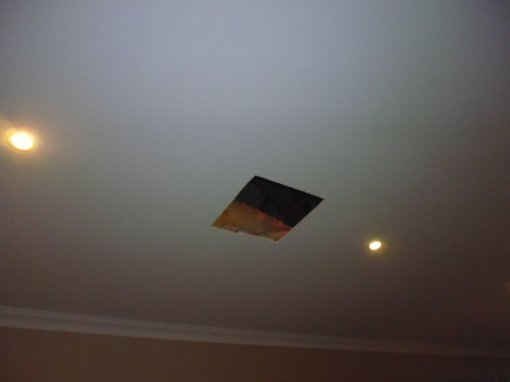
Over Christmas we had an air conditioning condensate pump fail, and subsequently water overflowed into the ceiling space, specifically above the linen cupboard. The ceiling inside the linen cupboard partially collapsed and everything on the top shelf got soaked (we lost two quilts). Fortunately, we discovered it within a day or so, so were able to wash the other linens before mould set in.

Since then we’ve had the pump replaced (and then decided to get ducted air installed), put in an insurance claim (they paid!), and had the ceiling inside the linen cupboard replaced. I decided to purchase tubs for the linen cupboard to store the linen in case anything like this ever happened again. I’d done most of the repacking, labelling etc. but still had a few tings to go, which I finished yesterday.

By using tubs and arranging everything better, I have SOOO much more space in the linen cupboard now!

Here’s the second top shelf with linen and toiletries in vague order (you can see the bow in the ceiling where the water was, and a faint water mark):

linen_cupboard_ceiling02

And here it is all finished! Almost everything is in lidded tubs, and all the tubs are labelled. Hopefully it will stay like this…

linen_cupboard_after01

linen_cupboard_after02


Driving to and from Perth

31 01 2016

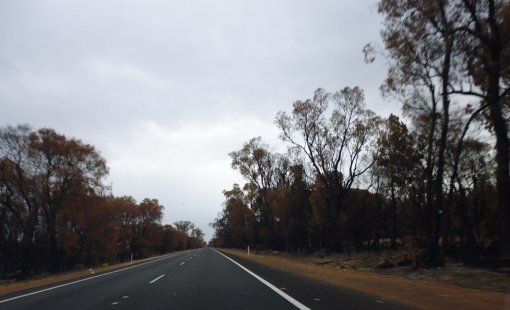
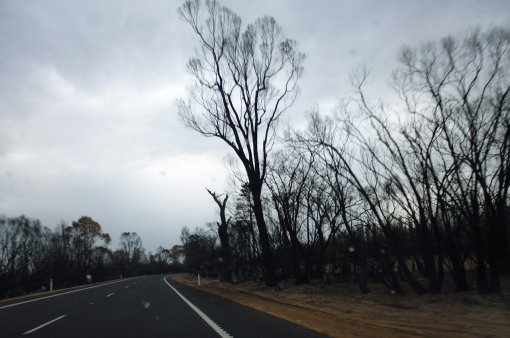
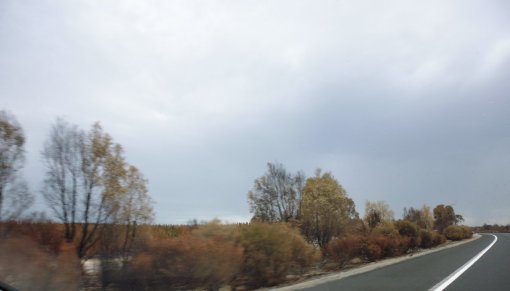
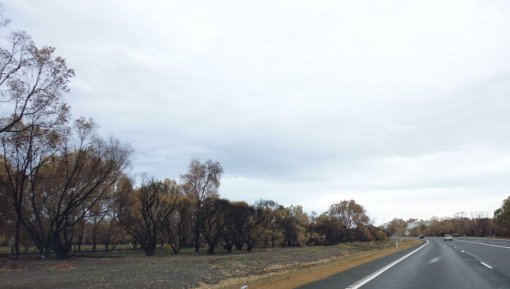
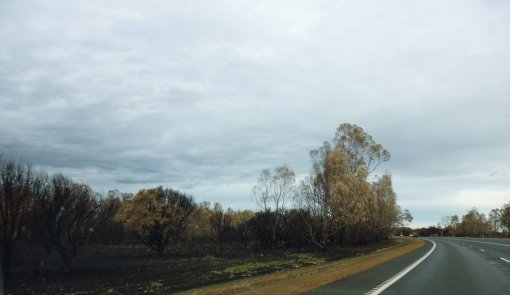
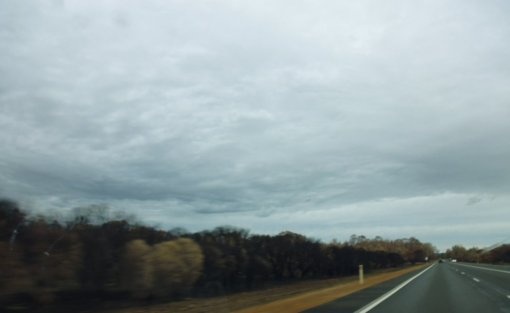
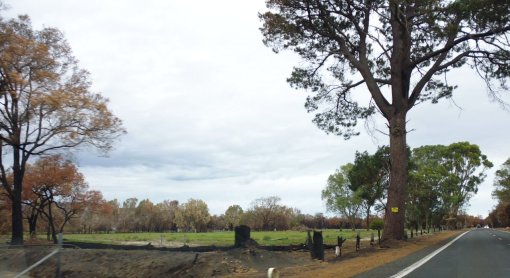
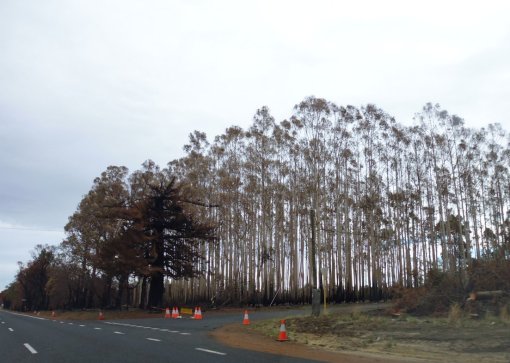
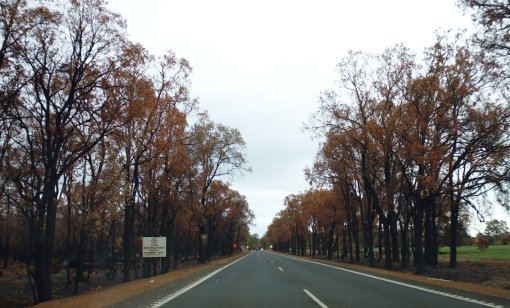
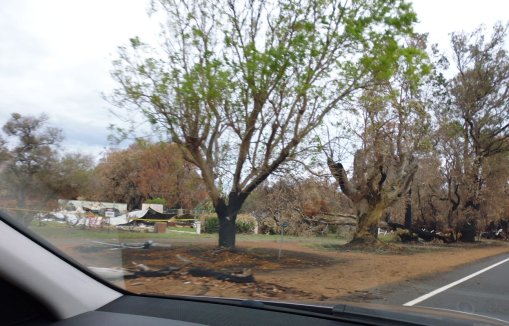
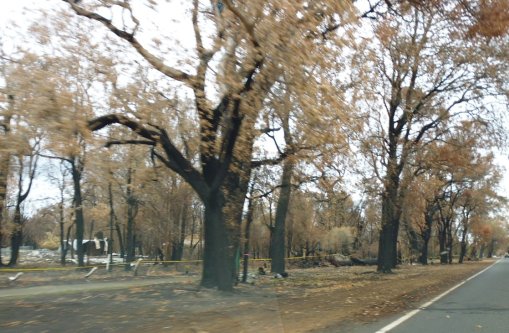
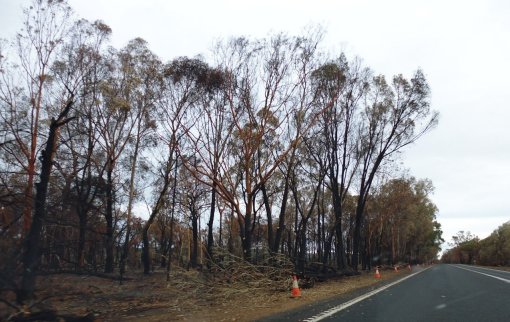
I had to go to Perth yesterday, some three weeks after the bushfire closed the two main highways between Perth and Bunbury. I went up via Forrest Highway and came home via South West Highway. On each highway, there was a stretch of about 12 km where the fire damage was extensive. Coming home on South West Highway, I was amazed at how close the fire came to wiping out Waroona too — the hills behind the town were all burnt, and the fire damage to the southern outskirts of town was devastating. There’s still no access to Yarloop (not that I would’ve wanted to drive through there anyway), but most of the houses on the highway just outside the town are ruined. How Hamel didn’t get wiped off the map too, is beyond me.

We had quite a bit of rain about a week after the fires, so parts are starting to ‘green up’ already, and we had more rain yesterday, which is why the skies aren’t the blue you’d expect from an Australian summer!
Forrest Highway

P1050235

P1050236

P1050239

P1050240

P1050241

P1050242

P1050243

P1050244

P1050245

P1050246

South West Highway

P1050247

P1050248

P1050249

P1050250

P1050251

P1050252

P1050253

P1050255

P1050256

P1050257

P1050258

P1050260

P1050262

P1050263

P1050264

P1050265


The blessed coolth

23 01 2016

If you can say ‘warmth’, why can’t you say ‘coolth’? 😉

We bit the bullet and invested in whole-of-house reverse cycle ducted air conditioning for our home. Previously, we’d had two split system reverse cycle air conditioners — one in the living area and one in the office, but they couldn’t cope with sending that cool air into the main bedroom or anywhere outside those areas during the heat of summer, or warming the other areas in winter. And one of the units (10 years old) had had a condensate pump failure over Christmas.

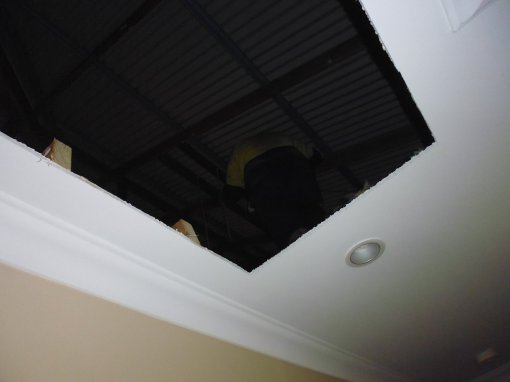
The guys arrived yesterday to install the ducted system. There were about 6 guys (the ‘duct monkeys’) here including an electrician, and between them it took them eight hours from start to finish. It was a big job, and I can see why it’s far easier to install it when a house is being built than to retrofit it.

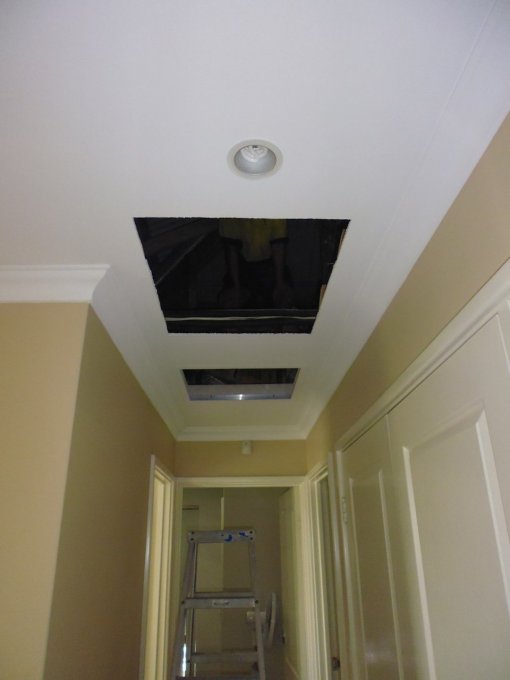
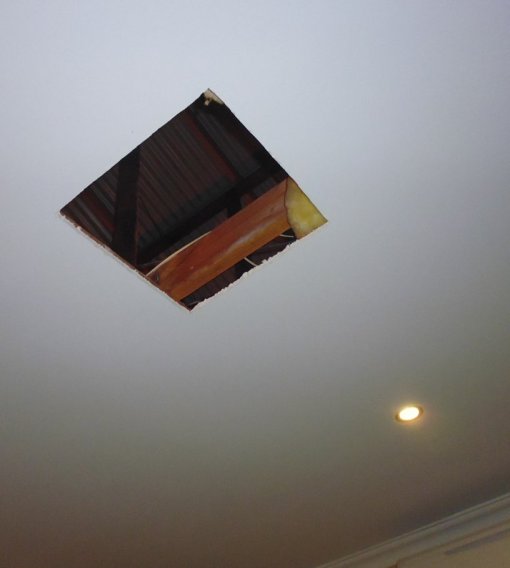
Our system is 6 zones with 9 outlets. Lots of cutting into ceilings had to be done, but the guys were professional every inch of the way — polite, listened, advised where necessary, positioned all outlets centrally so nothing looks out of place on the ceilings, worked well together, were a happy bunch, didn’t swear (that I could hear anyway), protected our wooden floors/property/possessions, cleaned up after themselves. I couldn’t have asked for a better team. And they turned up on time and with a great attitude.

I took quite a few ‘in progress’ photos. Needless to say, we’re currently enjoying the coolth in all parts of the house now 😉

Unpacking the truck:

P1050195

P1050196

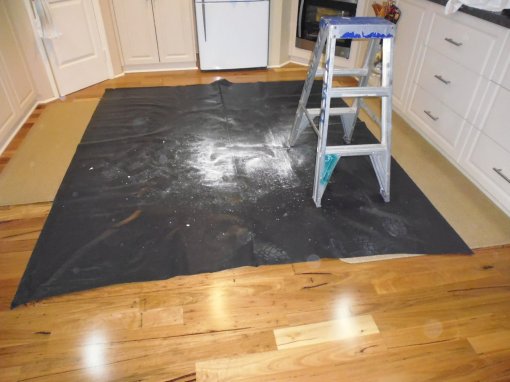
Taping protective plastic over the wooden floors:

P1050197

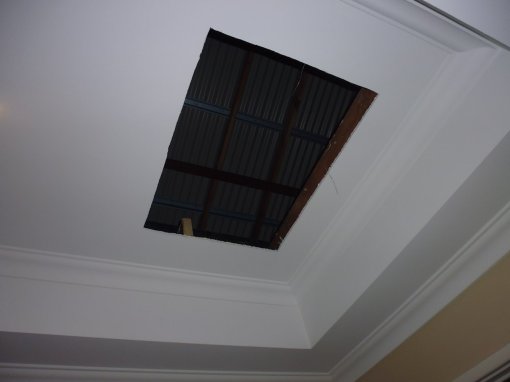
Cutting into the ceiling for one of the two the return air vents:

P1050198

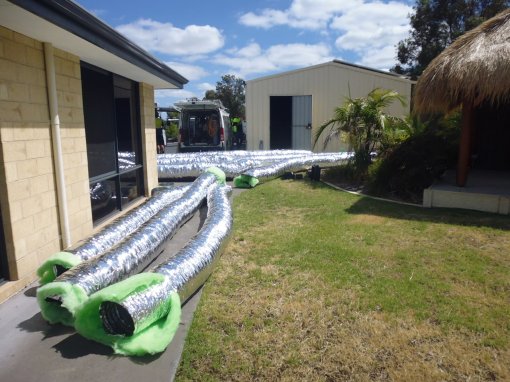
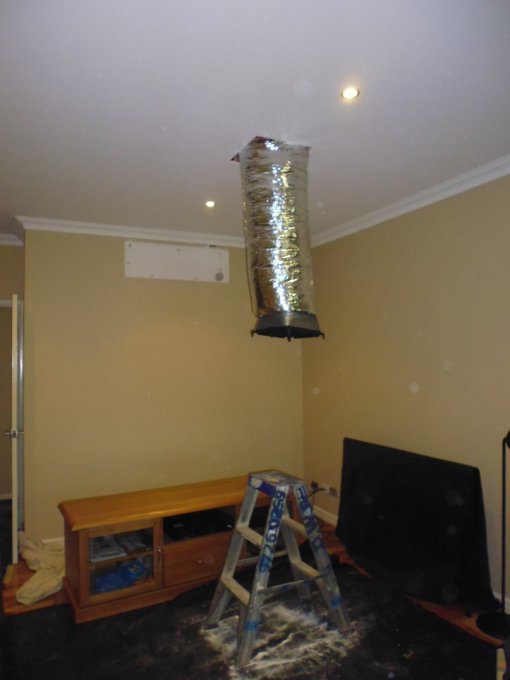
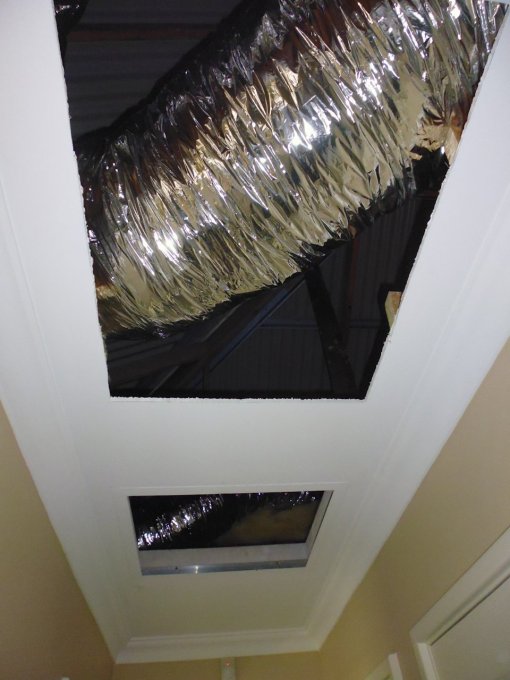
The ‘sandworms of Dune’:

P1050199

The big behemoth on the concrete is the compressor unit; the one on the wall behind it (in the foreground) is the old split system unit, which I’m giving to a friend who has no air conditioning at all in her house:

P1050200

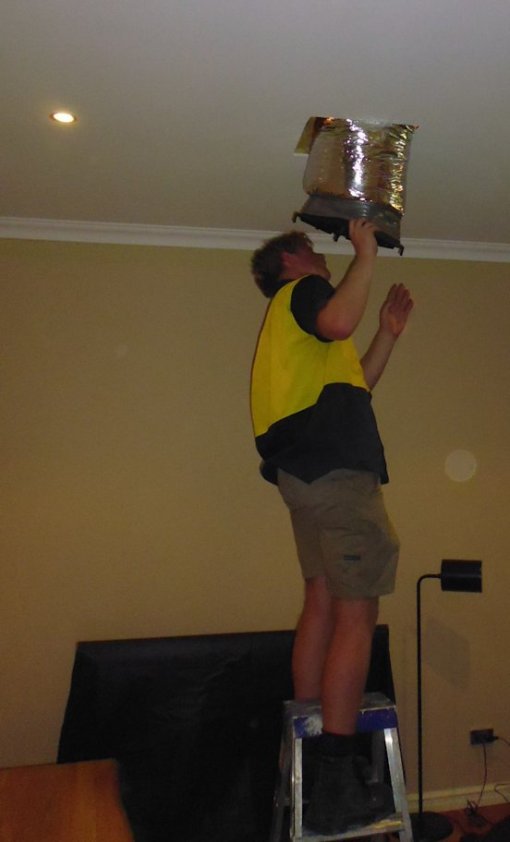
The closest I’ll ever come to seeing what’s in the roof space:

P1050201

P1050202

P1050204

P1050205

P1050206

P1050207

The controller:

P1050208

P1050209

P1050210

P1050211

Figuring out how to get this big unit up into the ceiling space through the hole they cut:

P1050212

P1050218

P1050219

P1050221

Starting to look like our house again:

P1050223

P1050224

Yes, a zone and outlet for my sewing room!

P1050225

P1050226


The past few days

11 01 2016

As I wrote last Thursday 7 January 2016, a major bushfire was in our vicinity. As that day progressed, the situation got worse and with the hot dry easterly then north-easterly winds, 40+ C temperatures, tinder-dry country, the fire was uncontained and out of control. And it was headed in our direction. We were still some 30 km (20 miles) from the fire front, but by mid-afternoon, our locality was on the lowest of the three emergency alert levels, and a locality just 8 km (5 miles) north of us was on the next highest. With no expected change in wind direction, the fire was headed our way. Already the two highways between Perth and Bunbury had been closed, and people from various towns were being evacuated. We weren’t being evacuated, but the fire warnings were asking us to prepare for such a situation.

One of the things that gets drummed into us with fire warnings is that if you aren’t prepared to stay and defend, evacuate early. And by ‘stay and defend’, they mean you must be physically and mentally capable of staying and defending, with an independent water source (large water tanks, swimming pool, dam etc.), pumps and suitable hoses (not rubber garden hoses!), and a generator because the mains power and water supply cannot be relied on. This is something that most people cannot do as it requires not only physical resources that most people living in towns or suburbs don’t have, but also requires physical and mental stamina to deal with some of the severest conditions a human being can endure.

Because I have a terror of bushfires (as I found out in the January 2009 fires near Bridgetown where we lived at the time), my body was on a path to evacuate. My husband said he felt safe in our house; me, not so much. I actually think our house is very safe (if any house in Australia can be considered safe from fire), but a massive firestorm like the one heading our way was a different matter. Heat and smoke are more likely to kill you than the fire itself. So I packed up my computers, some clothes and toiletries, my ‘vital info’ folder, some woollen blankets, water bottles etc. and headed to my parents’ place in Busselton around 3:30 pm on Thursday afternoon (7 January). I spoke to my husband that evening and pleaded with him to join me, which he did the following morning, bringing the server, his computers, backup drives, some clothes etc. The house and its contents are insured, but nothing can replace a human life. I was very pleased to have him with me.

Here are some of my Facebook posts over those few days…

7 Jan 9:30 pm: Even though I’m safe, I doubt I’ll get much sleep tonight. The two towns within 10 km north of our house have just been put on a bushfire advisory. Not an emergency warning, but scary nonetheless. Who knows what will happen overnight, with still high temps, easterly winds, low humidity, and exhausted firies. And no aerial support until first light tomorrow. A good strong sea breeze would be very welcome, as it would force the fire back on itself. I have nothing but gratitude for those putting themselves on the line to save others and their homes. But mourn the loss of some of the best dairy farm country in our state and the very likely loss of prime livestock.

8 Jan 7:30 am: Our area is now on a bushfire alert (lowest level of 3). In fact the whole of outer Bunbury is on alert – Australind, Eaton etc.

8 Jan noon: Been offline for a while doing stuff with family. But we’re fine here (my husband arrived about 9 am). Hearts go out to those who’ve lost everything in these fires, especially those in my birthplace of Yarloop where 95 houses have been obliterated.

9 Jan 7 am: Reporting in…. We’re still safe at my parents’ place in Busselton. Based on the Department of Fire and Emergency Services (DFES) info this morning, the locality where our house is is still on Alert. The bushfire had now burnt some 60000 ha and the fire perimeter is more than 200 km. The two highways between Perth and the Southwest remain closed and only essential traffic is being routed via Albany Highway/Collie. Yarloop has been devastated with the loss of 121 homes. I haven’t checked any news reports yet to see what other devastation there’s been. I won’t be checking FB much each day, but be assured we are safe for now and our house remains out of the high danger zone.

10 Jan Sunday morning update: We should go home today. The weather conditions have eased, and the wind is now blowing away from our area. I think the amazing firies saved Harvey last night, which along with Wokalup and Cookernup were under immediate threat. The consequences of this fire will be with us a long time – devastation of properties, a prime agricultural region, state and national parks, livestock (dairy and beef cattle, sheep, horses…), market gardens and orchards and wineries, wildlife, infrastructure (roads, bridges, power etc), tourism … And will be felt throughout the Southwest, which relies on summer holiday makers to survive the rest of the year. And of course all our insurance policies will increase. Our hearts go out to those who have suffered unimaginable losses, and our heartfelt thanks go to those who bravely face the fires of hell to protect our communities.

10 Jan afternoon update: We returned home this afternoon, once the weather conditions had eased and the fire starting going back on itself and in the opposite direction to our house. And after the warnings for our area and the nearby areas had been lifted.

Statistics

Here are some statistics about this fire as listed in ‘The West Australian’ newspaper today (11 Jan):

DAMAGE

  • Two people dead
  • 143 structures lost in Yarloop, including 128 houses (as at 15 January: 181 properties including 162 houses and 18 other structures including sheds, caravans, community and commercial properties have been confirmed lost. A number of bridges have also been lost.)
  • Four firefighters injured
  • More than 71,100 hectares burnt (71,357 ha as at 15 January)
  • Fire perimeter in excess of 232 km (see comparison map below) (327 km perimeter as at 15 January)
  • Fire first reported 7.25am on Wednesday 6 January 2016
  • Caused by lightning
  • Declared a natural disaster
  • Several recreation sites and roads closed

RESOURCES

  • More than 350 firefighters, including about 130 from the other states
  • Aerial support
  • More than 80 appliances, including 28 heavy machines

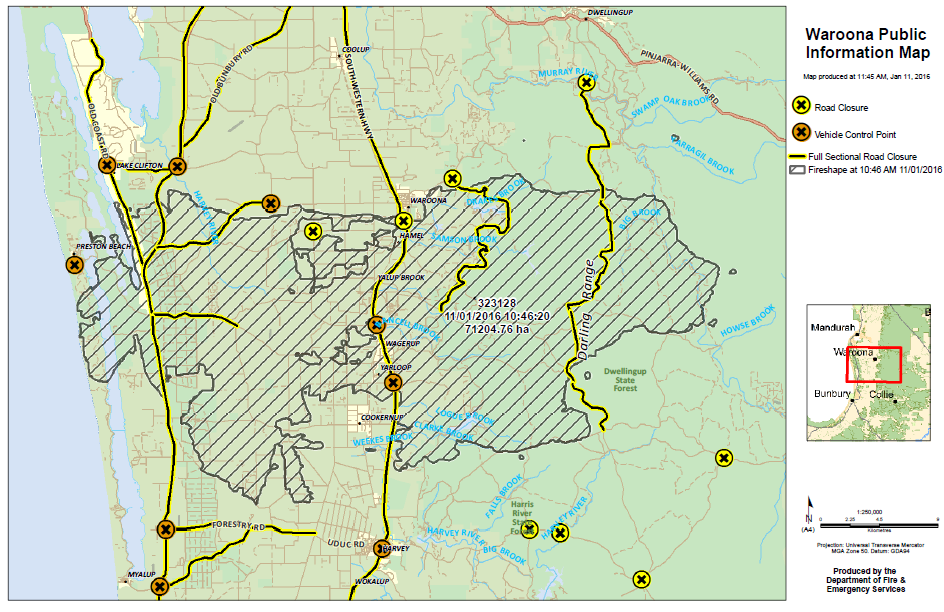
Map of the impacted area

waroona_firemap

Note: The length of the scale for this map is 9 km (just over 5 miles). The locality of Myalup (bottom left corner) is 8 km from where we live. Click on the map to view it larger.

Comparison maps

A Stephen Swain on Facebook uploaded these two comparison maps just to give some perspective as to the area covered by the fire. The inner blue line is where the fire went; the outer blue line is the danger zone. The comparison maps superimpose the fire and danger zones over Sydney and London respectively, just to give you some idea of the size of this fire.

firemap_sydney

firemap_london

The plume as seen from space

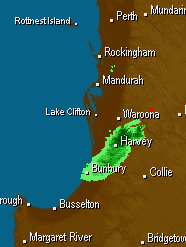
In my earlier post, I included a weather radar map showing supposed ‘rain’, which I suspected was smoke. NASA released this photo (I got it from http://www.sbs.com.au/news/article/2016/01/10/wa-bushfire-contained-not-controlled), which pretty much confirms that what the weather radar thought was rain was actually thick smoke:

waroona_fire_nasa_photo

Personal connection

This fire had a very personal connection to me, in addition to its location relatively close to our current home. It started near Waroona, where my paternal grandparents and my father lived from 1935 to the late 1960s (my uncle also lived there, but left before the others). It threatened Harvey, where my mother and her family lived from about 1939 or so until the late 1960s. My parents lived in Waroona after they married in the early 1950s, and Waroona was where my sister and I spent our childhood. And it destroyed Yarloop where my sister and I were both born (Waroona didn’t have a doctor or a hospital, but Yarloop, which was much smaller, did because it was a timber mill town). The old Yarloop Hospital where I was born and where I nearly died a few hours later, was totally destroyed, along with another 128 homes in Yarloop, plus many of this small town’s other buildings. Preston Beach was the closest beach to Waroona and it’s where my parents owned a beach block for several years, and where we used to go if we wanted to swim in the ocean. All this territory is very much part of my family history.

Consequences

The short-, medium-, and long-term consequences of this fire will be felt for a long time. Obviously there’s the impact to those who’ve lost everything — homes, farms, livestock, livelihoods, etc. I can’t imagine how they will cope. And there’s the impact on those brave heroes (and their support teams) who fought the many fronts of this fire saving strangers’ lives and properties, often when their own properties were being destroyed. I can’t imagine how they cope, either. My heart goes out to them all.

There’s also the flow-on impact to the region. The immediate impact is from the closure of the two highways linking Perth and Bunbury. This would be similar (albeit on a much smaller scale) to closing the roads between Los Angeles and San Diego for a week and routing the traffic via a small state road that adds three hours to the usual duration of the trip. These two roads supply the southwest region with goods from Perth and the rest of the world, and equally, supply Perth and other places with produce. Having to detour both ways on a smaller, less-maintained road, adds costs both in time and fuel, and I’m sure the prices of some goods may increase. There may also be shortages of some products for a time.

The affected area is a prime agricultural area for Western Australia, supplying much of the dairy produce (milk, cheese etc.), beef cattle, citrus orchards, vegetable market gardens, etc. Cows still need to be milked, and if they aren’t milked, serious consequences can occur to both the cow and its milk. They also need to be fed — much of the pasture land where the beef and dairy cattle grazed is now a charred wasteland. I don’t know how many of the citrus orchards or market gardens were affected by either fire or smoke, but either could damage these producers for many months to come.

And of course, all our insurance premiums will go up.

At this stage, those providing relief to people dispossessed do NOT want goods (goods are too hard to organise and manage, and often can’t be matched to those needing help). Cash donations are far better as the organisers/recipients can then use the cash to purchase exactly what is needed. The Perth Lord Mayor’s Distress Relief Fund has been activated and details for donating are available here: http://www.appealswa.org.au/currentappeal.html. WAFarmers have set up a GoFundMe page for donations for feed etc. for livestock: https://www.gofundme.com/8gx38ezg

Finally, this fire is not yet under control. Hot weather conditions are expected later this week, so hop-overs and spot fires could cause further flare-ups and damage. And if we get thunderstorms with lightning with that hot weather, then we could see a repeat of the past five days.

Update 19 Jan 2016: Given time, more favourable conditions, and the resources thrown at it, this fire is now contained and controlled. And the best news? Overnight (18 Jan) we had some 20 mm of rain in the area — good soaking rain, too.


Scary…

7 01 2016

We woke this morning to bushfire warnings and evacuations for two towns about 35 km from us. The fire was caused by lightning from a summer storm in a forest north of here.

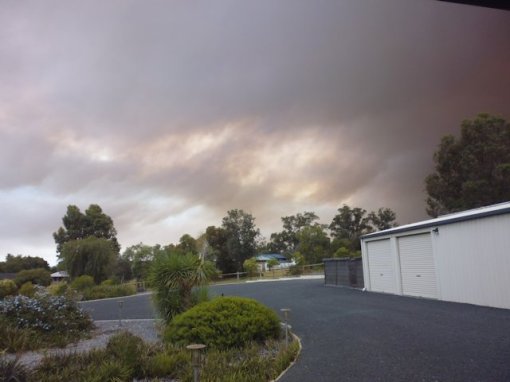
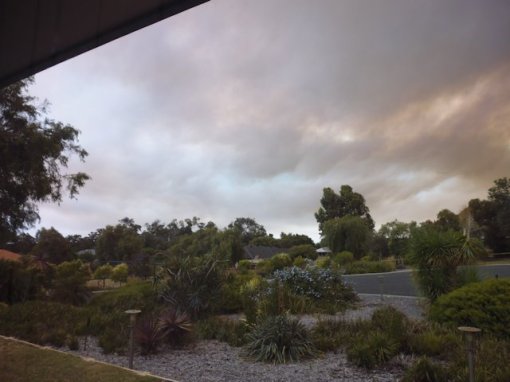
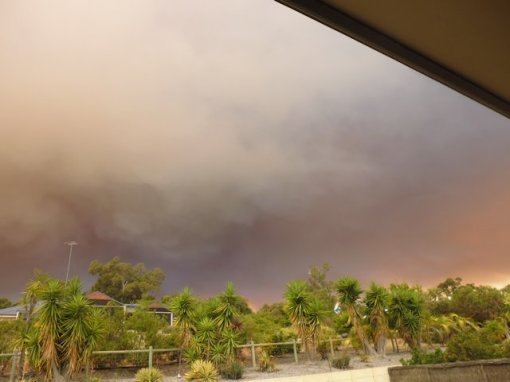
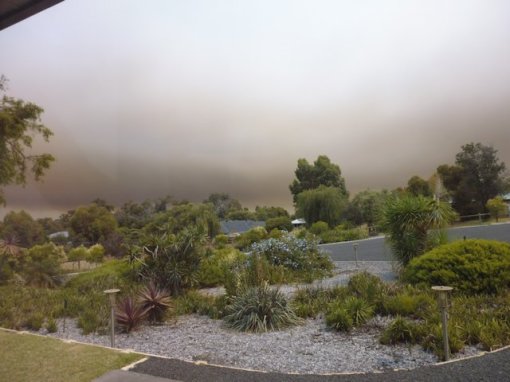
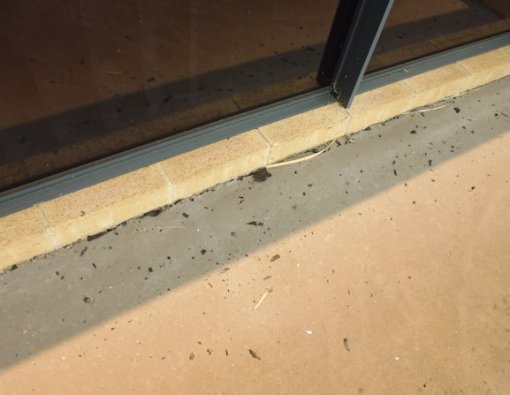
We’ve had no warnings here as yet, and I pray there won’t be. The sky has been full of smoke, obscuring the sun, and potentially messing up the weather radar, which seems to be reporting it as rain! In the past hour or so, burnt embers have been raining down — mostly burnt leaves. The wind is fickle, though mostly from the east pushing the fire towards the coast and blowing the smoke cloud towards the coast and the southwest. It is stinking hot and the humidity is around 10% — ideal fire conditions.

How do I feel? Sick to my stomach! My fight or flight response has been activated, and I’m continually checking the emergency warnings websites and the weather websites for changes to location, wind speed/direction, etc. I have a list of things to pack urgently if it comes this way or this far, and my ‘vital info’ folder is up-to-date with all the details of insurance policy numbers, bank account details, copies of passports, drivers licenses, Wills etc.

I hate summer — it should be renamed ‘fire season’.

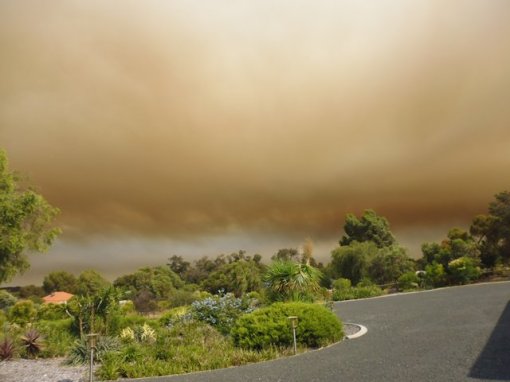
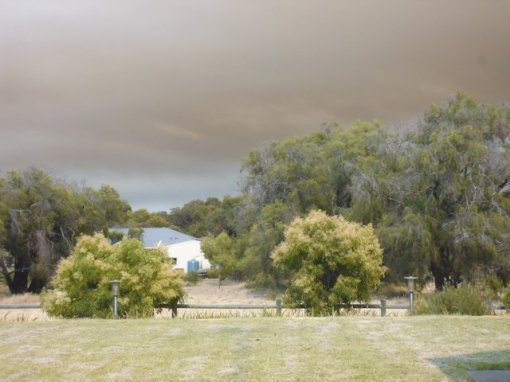
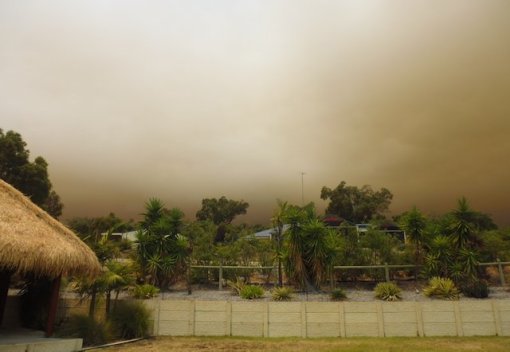
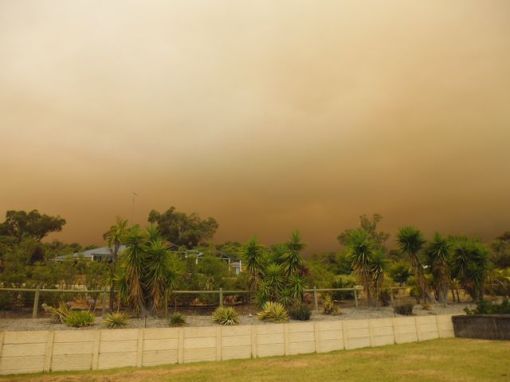
Here are some photos from this morning.

Photos from around 9am (from eastern side of our house):

P1050162

P1050163

P1050164

From western side of the house:

P1050165

Photos from around 11:30am:

P1050168

P1050169

P1050170

P1050171

P1050172

P1050173

P1050166

P1050167

Radar image around 11:45am:

rain_or_smoke02

That green stuff looks like rain, but I expect it’s the smoke cloud that’s being reported. The town of Waroona has been evacuated, and the two highways between Perth and Bunbury have been closed.

Update 12 noon: An Emergency Warning is now in place for Harvey townsite and it is being evacuated now.

Photos from 12:15pm:

P1050174

P1050175

Burnt leaves rained down on us…

P1050176

Photos from 12:40pm:

P1050178a

P1050177a

P1050179

Photo from 1:50pm:

P1050180

Update Sunday – 3 days later: All safe and sound and back at home now. Will write another blog post in next few days about what happened after I wrote the post above.

See also:


Shoulder surgery: Second time around

26 12 2015

Five years ago I had shoulder surgery on my left shoulder.

However, in the past 12 months my upper right arm has exhibited the same pain as the left one did in the months prior to the operation. I’ve had bursa injections, done physio, had acupuncture done by the physio, etc. Everything gave only temporary relief (from a couple of hours to a couple of days [the injection]). I’ve also been on anti-inflammatories for several months. So it was back to the orthopedic surgeon who did my left shoulder, and yes, I had to have the same procedure done on the right shoulder.

I had surgery on my right shoulder on Dec 19, the Saturday before Christmas. As before, it was an Arthroscopic Subacromial Decompression (ASAD), with a something called a ‘Capsular Release’. Basically, the surgeon scraped away some of the bone in my shoulder so that the tendon could move freely. He also told me afterwards that he had found some spurs, which he also removed.

The operation was late in the afternoon (after 4pm) and I spent Saturday night in the hospital in a fog of anaesthesia and pain killers. I was still a bit wonky and woozy on Sunday, but by mid-morning I was able to shower myself (with minimal assistance) and after the surgeon and physiotherapist visited and they’d checked all my vitals were OK, they sent me home with LOTS of strong drugs and my arm in a sling.

The anaesthetist told me in no uncertain terms that I was going to be in a LOT of pain afterwards and that I had to take the drugs whenever I felt the first twinges of pain and not be brave! He gave me a nerve block prior to putting me under. Fortunately, I’d had one five years’ ago, so I had an idea of what to expect. My whole upper right chest/shoulder area went into uncontrollable spasms until he was satisfied he’d hit the right place. A very weird experience.

This time, they didn’t leave a pain pump (like a grenade) hanging out of my shoulder — the general consensus is that it really doesn’t work.

I was in reasonable discomfort on Sunday, and still woozy every so often. I wore a sling for the first 24 hours, which helped a lot.

I actually felt pretty good — until I took the drugs I was prescribed. They knocked me around and I got really woozy fairly soon after taking them (they also give you really bad constipation!).

After a day at home, the pain wasn’t too bad (despite all the warnings from the anaesthetist and a friend who has had the same operation), so I stopped taking the drugs — they really were quite debilitating. But I had to take a laxative to clear the blockages caused by the drugs.

I spent the days after surgery doing not a lot. I read, I slept, I watched some movies and TV programs I’d recorded a while ago, I worked on a couple of jigsaws. I hardly turned on the computer, I didn’t touch the sewing or quilting machines, and I definitely didn’t go into the garden! Unlike five years ago, I can now get groceries home delivered so I avoided the Christmas crowds by doing so — that saved a lot of anguish for both me and my husband (I’m not allowed to drive for 2 to 4 weeks after the operation, and he’s not a fan of crowds/supermarkets/shopping at the best of times, let alone in the madness of Christmas!).

I’m doing all the exercises that the physio gave me to do when she visited me in hospital. And I can handle meal preparation, with only a small amount of assistance from my husband when I need to reach up.

No, I’m not pushing myself and ‘being brave’. Seriously, the pain isn’t too bad — it’s just a tad worse than I’d been putting up with for the past year or so. Very bearable. I can feel my range of movement improving with the exercises, so here’s hoping that continues to improve with time. After all, it’s only been 7 days since I had my surgery. I’ve had the occasional bit of pain, enough to take an anti-inflammatory overnight, but only once or twice. And I haven’t worn the sling since the first day home.

I had expected that I’d be in a lot of pain and have a very limited range of movement for some weeks, if not months, after this surgery. To say I’m delighted with the results so far, would be an understatement. As at Christmas morning, I can dry my back after my shower. I still can’t reach up high in the pantry or carry anything heavy in my right hand yet, or do up my bra from behind, or put on a t-shirt over my head, but these activities will come back in time.

I see the surgeon for the post-op appointment on December 29, so we’ll see what he says about my progress and what he found (I was pretty dopey when he saw me the next morning in hospital).


Shopping for groceries online

12 12 2015

I’m having shoulder surgery the Saturday before Christmas and won’t be able to drive, shop, prep meals etc. for a couple of weeks at least. Although my DH will help out, I think it’s a big ask to get him to go to the supermarket just to get usual groceries during the madness of the days prior to Xmas. He doesn’t deal with supermarkets/shopping/crowds at the best of times, so I’ve decided to try Coles’ online shopping and delivery service (Australia only). The registration, ordering, and checkout processes were surprisingly good and very easy, though it was a bit scary to see evidence of what they know I buy regularly! The next stage will be how timely and accurately the goods will be delivered on Saturday afternoon. I’ve shopped for all sorts of things online before, just never my weekly groceries! New experience.

Update: Saturday 12 December 2015

Well, my first Coles online shopping experience was probably the best customer experience I’ve had in an awfully long time, so much so that I’ll have no hesitation in repeating it. (Note: Long read! Might be useful info for Aussies.)

Why? Online ordering via their website was simple, easy to understand, with clear instructions and notifications — a great user experience. However, the critical thing for me was would they deliver when they said AND would the quality of the items picked for me be up to par. A resounding ‘yes’ on both counts.

I had an email this morning telling me that my 3-5pm delivery window was now 3:40-4:40pm with a link to track the progress closer to the time. I did that, and the delivery window narrowed to 4:02pm. I watched out for the Coles delivery truck and it was 3 minutes early! The chap who delivered the groceries to the front door also offered to bring them inside for me and put them on the kitchen counter. As I was a first-time customer, he also explained the delivery docket and showed me the number to call if ANYTHING wasn’t right.

He also told me that getting groceries delivered was actually cheaper than going to the store (which it definitely is in my case as I don’t have to do a 20-25 minute round trip to do my weekly shopping). The price is the same as the store price, and as this was my first order, delivery was free. If I order again and the order is over $100 and I get it delivered on a Wednesday, it’s also free delivery. Under other circumstances, delivery fees range from $6 to $12 depending on the time slot you want. Considering the goods come not from my local store but from a store some 25 km away (50 km round trip), that a pretty good deal.

Now, to the quality. They use a refrigerated truck and the items were nice and cold when I got them. The capsicum and the nectarines had no blemishes. The milk’s ‘use by’ date is a week hence. The celery was crisp and fresh. But the biggest test I set them (in my own mind) were the avocados. Would they be firm and just ripe, but not rock hard? Would they be over ripe and mushy? Would they be the smaller runts in the litter? They were perfect!! Firm with just enough softness when gently pressed–they’ll last for up to a week by my guess, though I’ll have eaten them by then 😉

Would I do this again? Absolutely! I’m going to have to when I have my surgery next Saturday anyway, but I think I’ll now change my habits and just go to the shops (for the few things not available online [e.g. hot chicken]), newsagency, and post office once a week (instead of twice a week) and get the bulk of my groceries delivered. It saved a good hour or more of my time, plus wear and tear on the car, parking hassles, people hassles, standing in line waiting to be served, screaming kids, and Christmas muzak!!!

Update 17 December 2015

I had my second delivery last night. All went as well as the first, except I was the biggest numduck around because instead of ordering five individual nectarines, I ordered five 1 kg packs of nectarines! All my fault for not checking the details closely. I won’t make that mistake again…