Community Quilt 189

21 02 2015

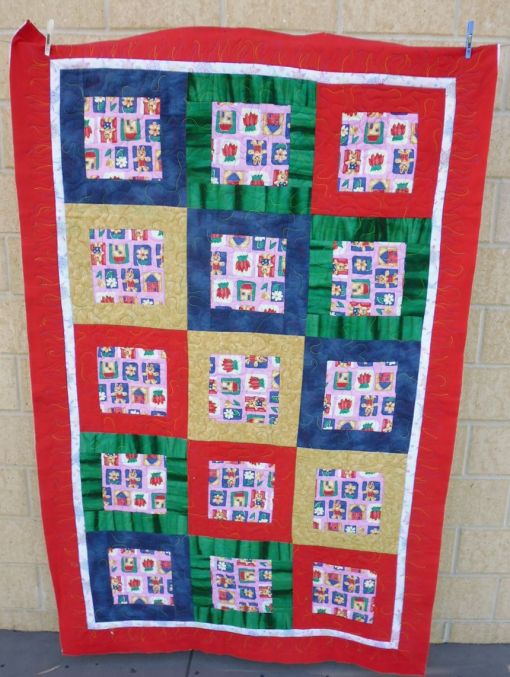
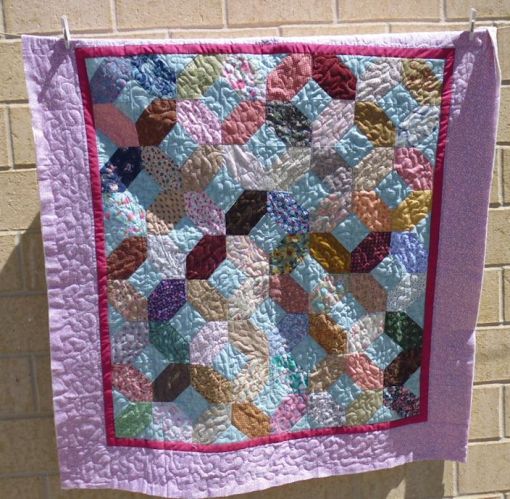
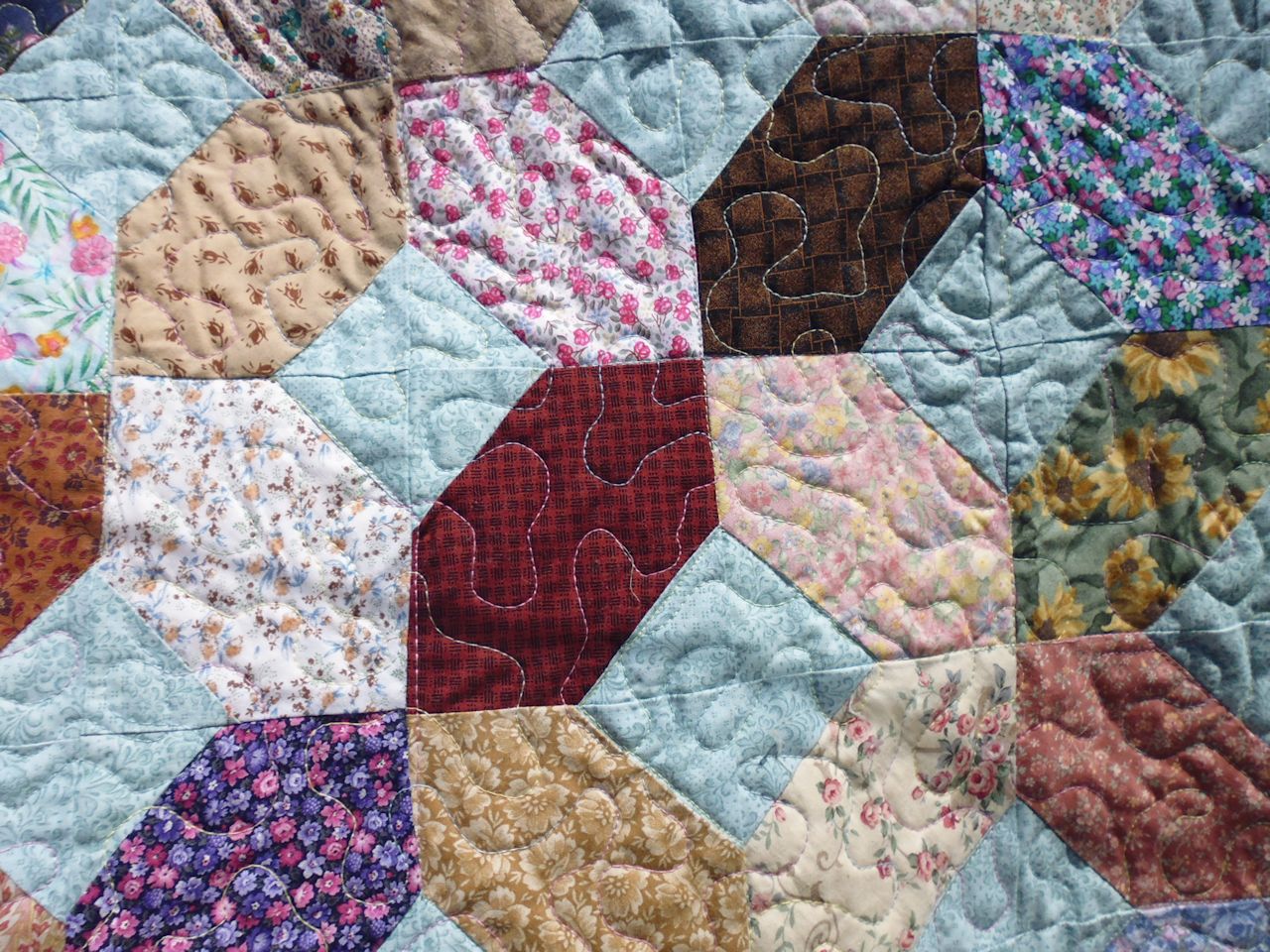
This was a big quilt, with big pinwheel-type blocks. It was nice and square and well-constructed using some lovely fabrics (colour as well as ‘hand’).

How to quilt it?

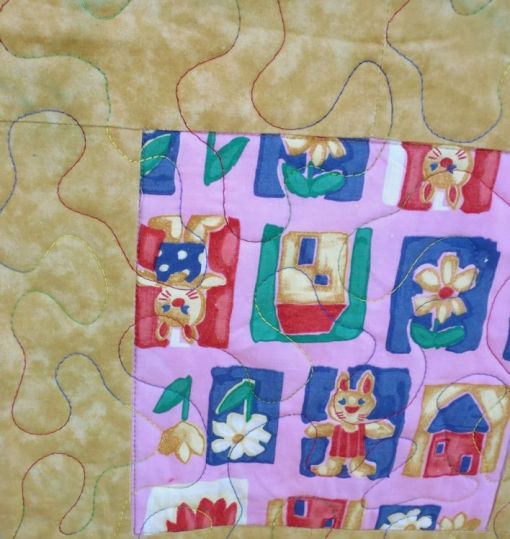
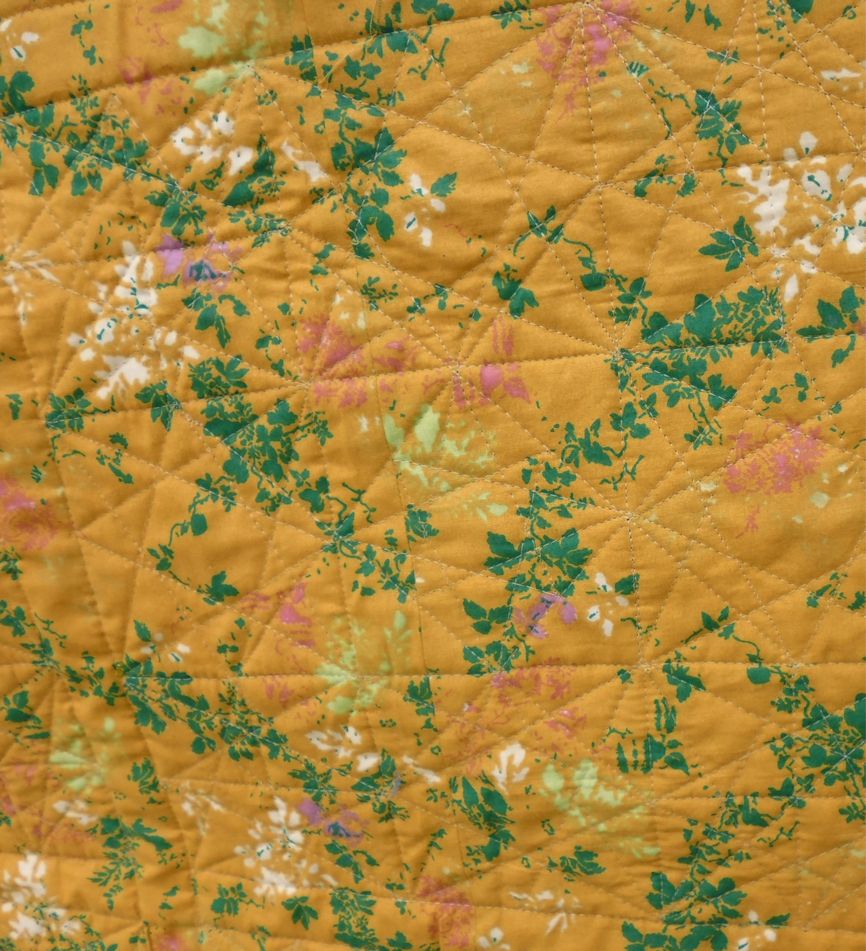
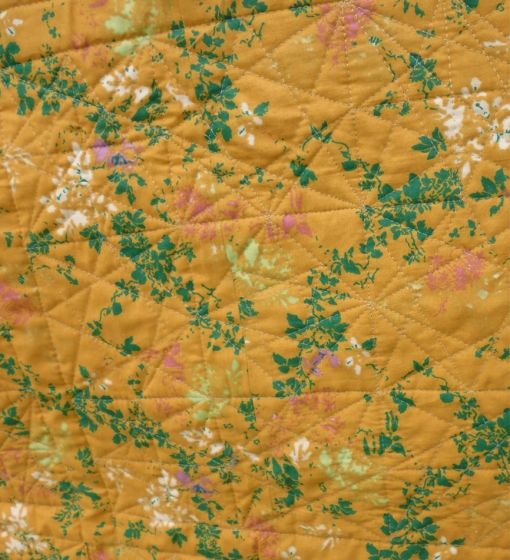
First, I stitched in the ditch around all the blocks using a matching Invisifil thread to stabilise the quilt. Then I free-motion stitched big brown leaf motifs in the brownish pinwheels, followed by big green leaf motifs in the green pinwheels. I used the same green thread for the large circles in the border.

(Click on a photo to view it larger)

quilt189_04


quilt189_02

quilt189_01

quilt189_03

Threads used:

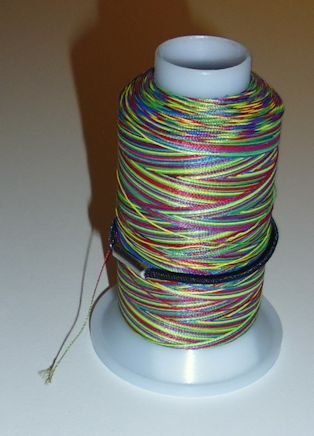
  • Top: Robison-Anton ‘Date’ (40 wt, rayon, colour 2290); Madeira (40 wt, rayon, colour 1106 [yellow-green]); Wonderfil Invisifil (100 wt, colour IF 168)
  • Bottom: Fil-Tec Magna Glide Classic pre-wound bobbin (dark gray)


Community Quilt 188

15 02 2015

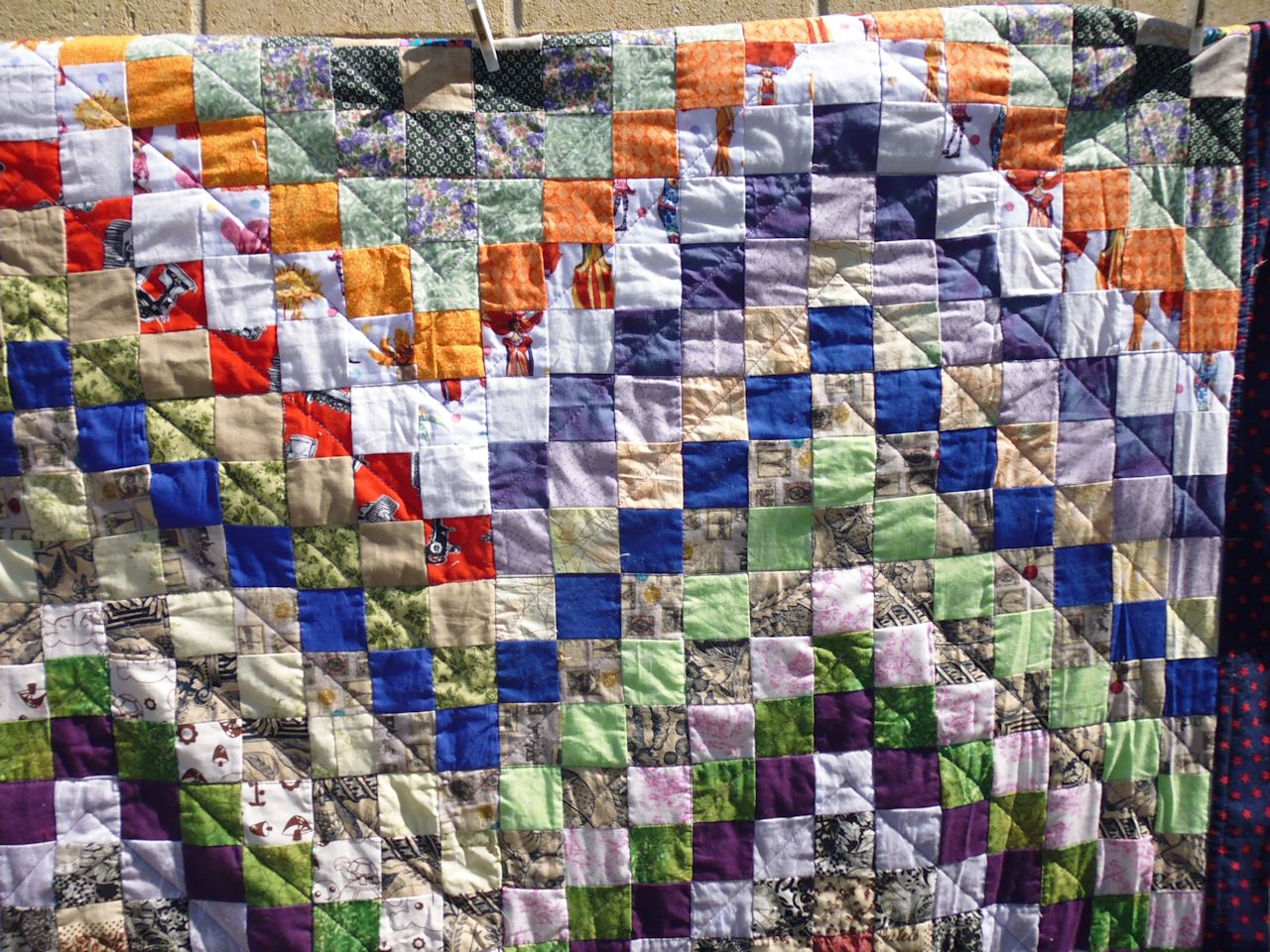
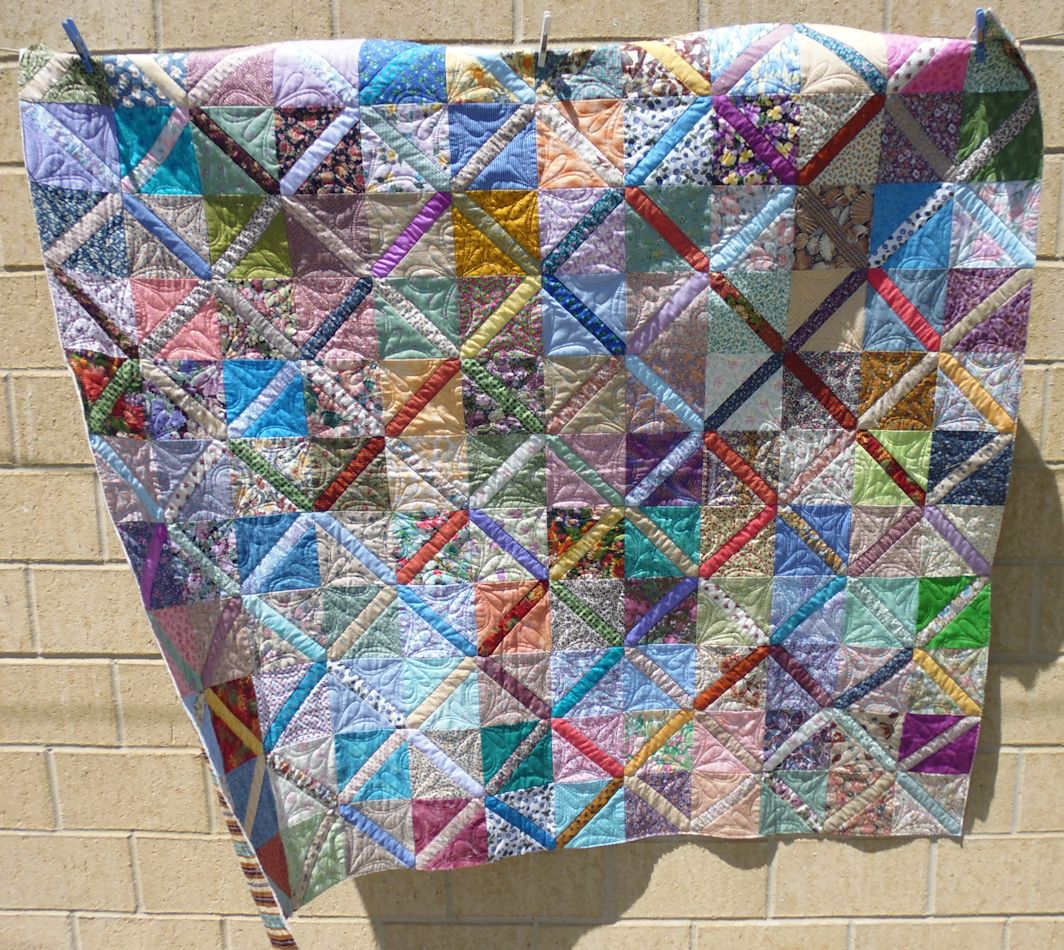
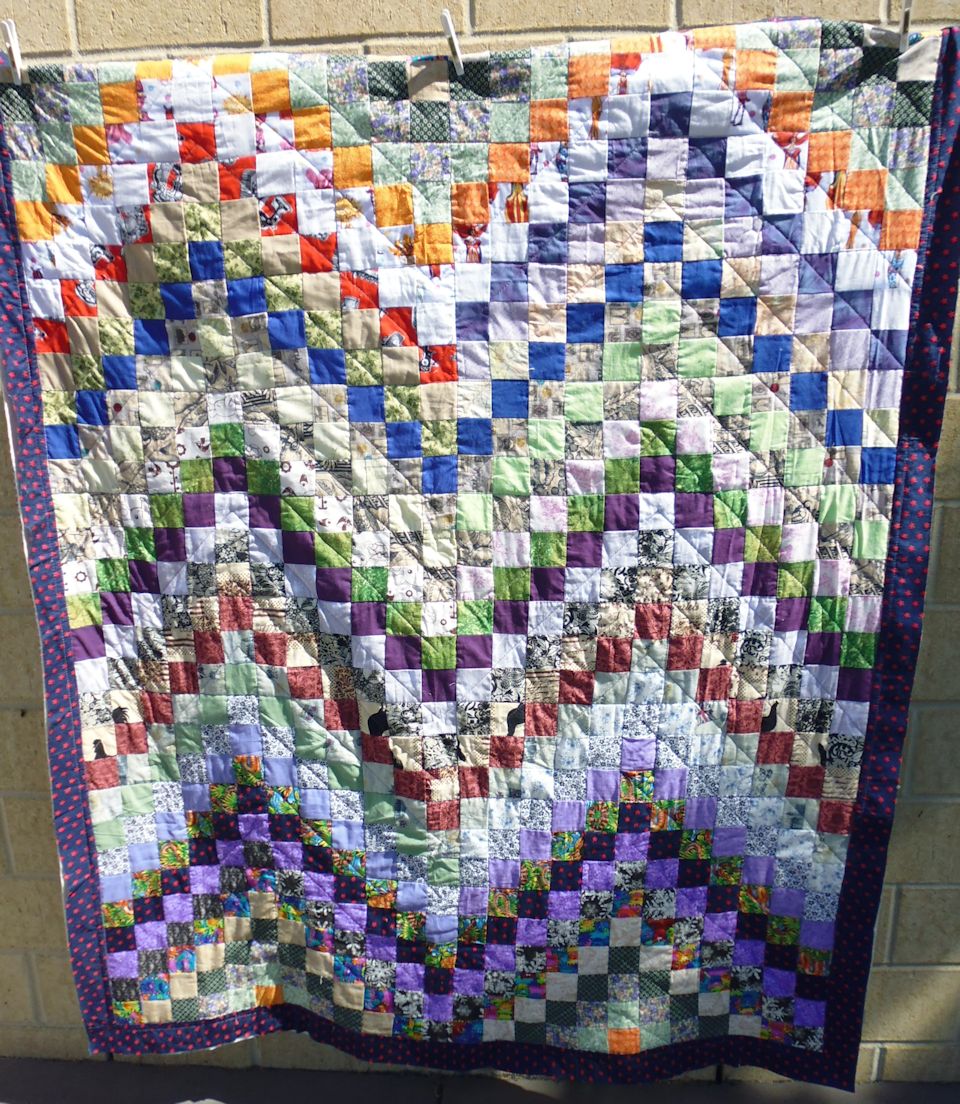
This was a BIG scrappy quilt, made up of lots of 2″ squares in a sort of chevron pattern.

My first task was to stitch  in the ditch to stabilise it (there were quite a few wonky seams, especially by the time you got to the border). I stitched in the ditch every 3×3 ‘block’, which helped hold it together. Then I stitched diagonally across every second chevron, following the pattern of the fabrics, and pivoting at the apex and returning down the other side of the chevron. I used a variegated purple thread.

The overall effect is of very large chevrons, which is what I set out to achieve. My Line Tamer ruler got a good workout 😉

(Click on a photo to view it larger)

quilt188_02

quilt188_03
quilt188_01

Threads used:

  • Top: Fil-Tec Harmony ‘Violets’ (40 wt, cotton, colour 14072)
  • Bottom: Fil-Tec Magna Glide Classic pre-wound bobbin (gray)


Community Quilt 187

15 02 2015

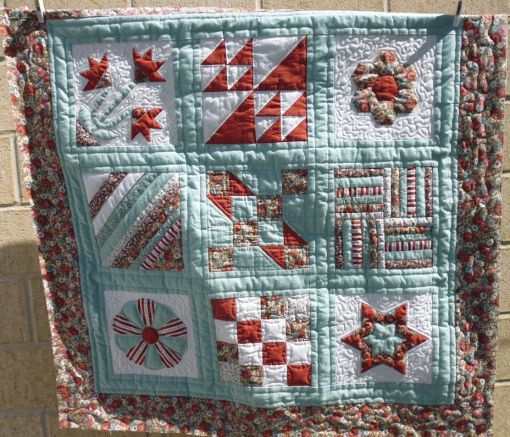
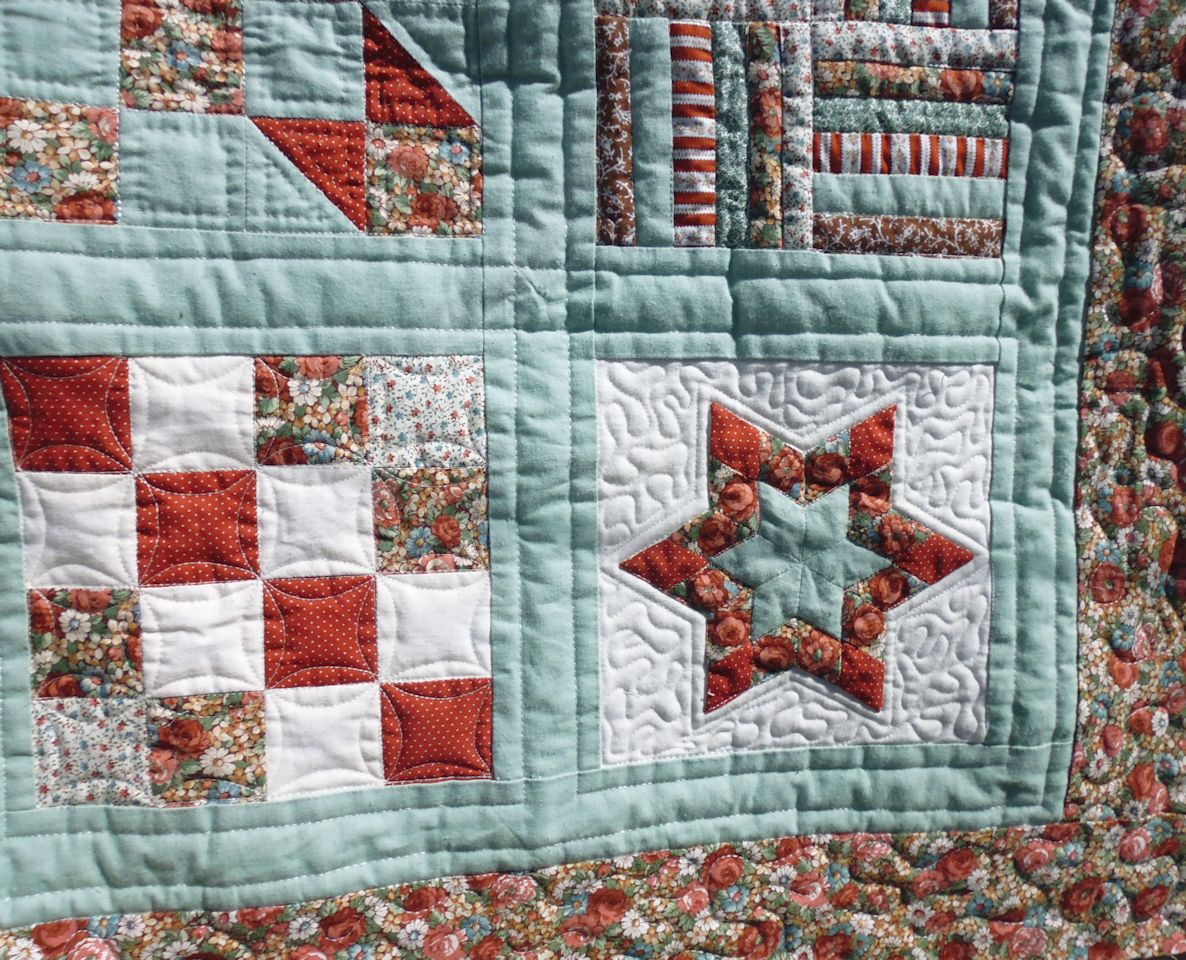
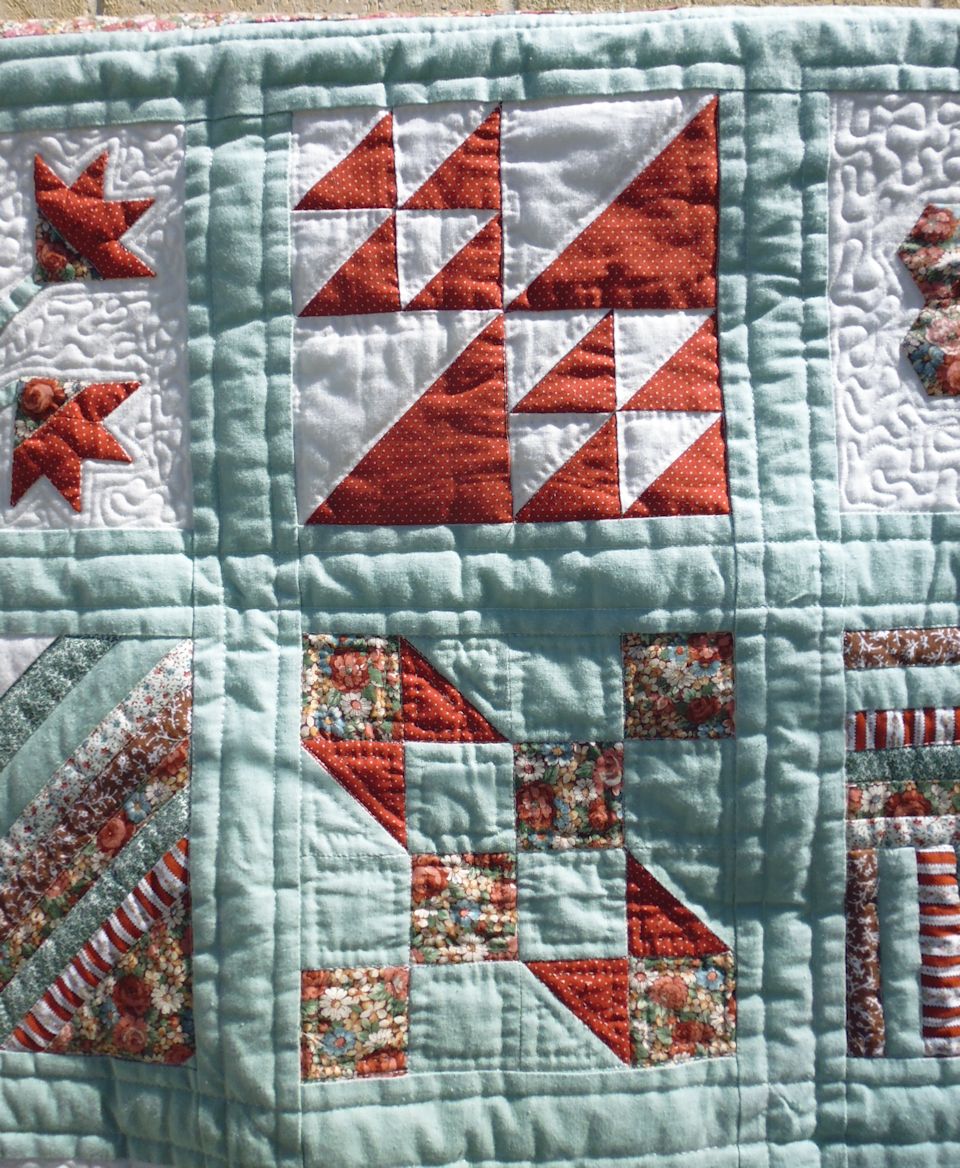
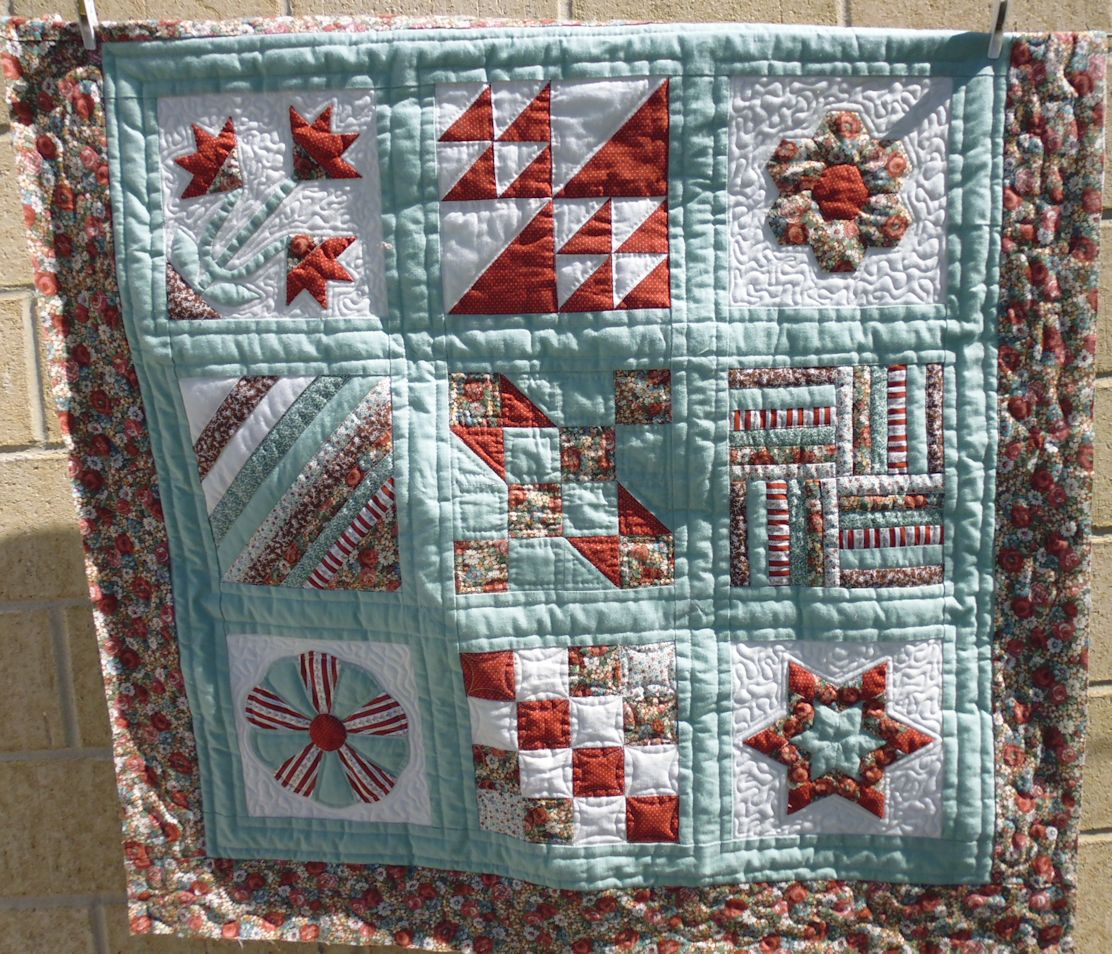
This was a special little quilt. According to the note that came with it, it was from a deceased estate and the Community Quilts coordinator intended to get it completed and handed back to the family. The original quiltmaker had started hand quilting it, but hadn’t finished. My job was to finish the quilting.

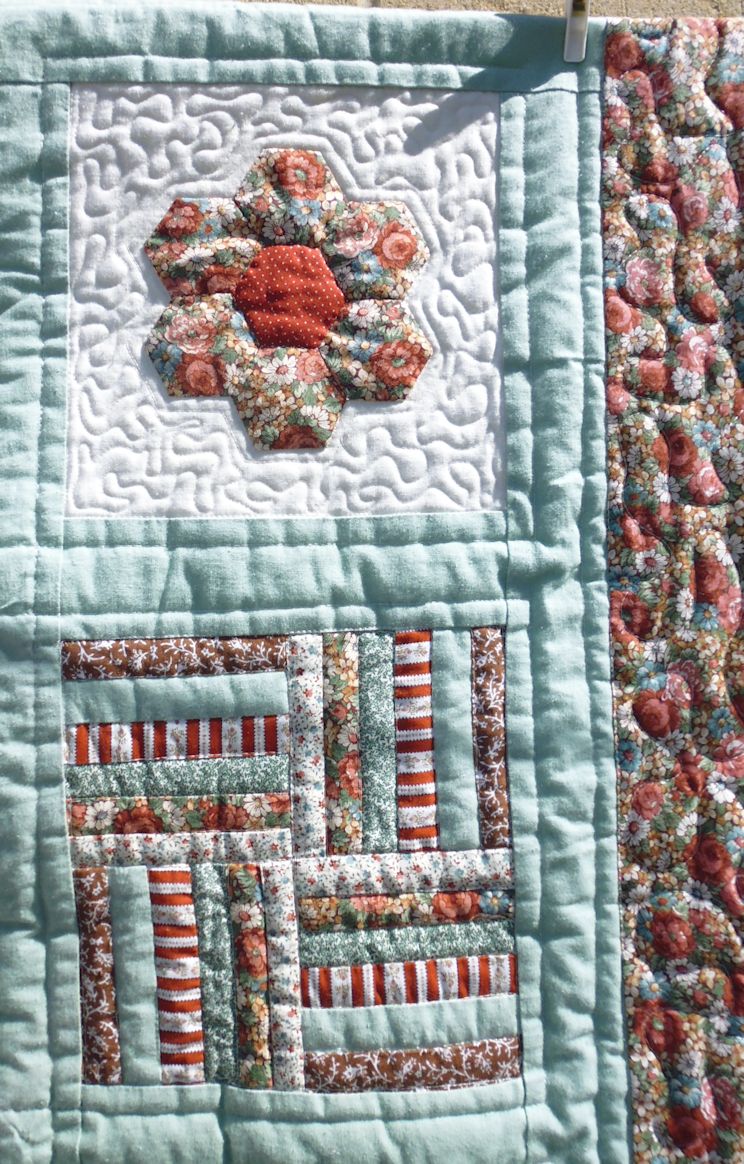
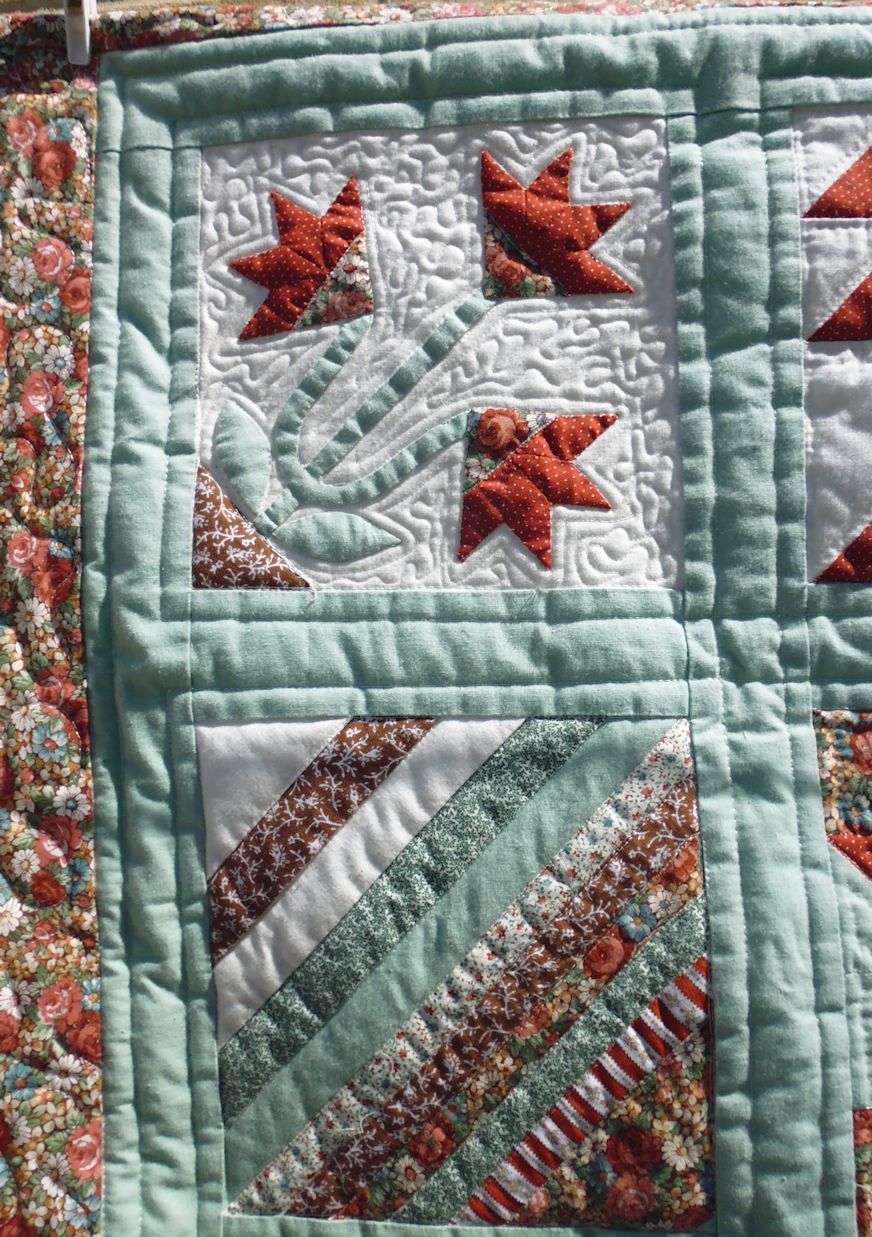
The quilt comprised a traditional set of blocks, was hand basted, and was sandwiched with a high-loft polyester batting. So my first task was to stitch in the ditch around all the blocks and the borders. Then I echo stitched around the motifs in some of the blocks and stippled the remainder of the white space in these blocks.

In the green sashing and border, I stitched a straight line a half inch from the seam line, following around the blocks and crossing over the stitching lines in the sashing joins. I did a large meandering stipple in the floral border.

I hope I did it justice and that the family appreciates getting back their loved one’s quilt.

(Click on a photo to view it larger)

quilt187_02

quilt187_04

quilt187_03


quilt187_01

quilt187_06

quilt187_05

Threads used:

  • Top: Fil-Tec Glide ‘Linen’ (40 wt, trilobal polyester, colour 10WG1)
  • Bottom: Fil-Tec Magna Glide Classic pre-wound bobbin (white)


Searching a Yahoo! Group

14 02 2015

These instructions are mostly for members of a specific Yahoo! Group I belong to, but the general principles should apply to searching all Yahoo! Groups.

Often, newbies will ask questions that others have covered some days, weeks, months, or even years ago. We were all newbies once and we all needed help at various stages, but when you’ve been on any sort of group for a while, you see the same questions seemingly a million times, so you tune out and tend not to answer — or you leave the group.

So here are some instructions for searching a Yahoo! Group BEFORE you ask a question, just to see if it’s been covered before and if there are some pearls of wisdom that have already been shared by other members.

  1. Open your Group’s page in a web browser. If you get your Group’s messages via email, the quickest way to do that is to click the link to View Your Group at the bottom of each email from the Group. (Note: Email programs may differ in how they display this link — the screen shot below is from Outlook 2010)
    yahoo_search06
  2. If asked to do so, log in to your Yahoo! Group.
  3. On your Groups’ home page, there’s a search box (it has ‘Search Conversations’ in it) near the top of the screen. Type your search word or phrase into that search box.
  4. Click Search Groups.
    yahoo_search01
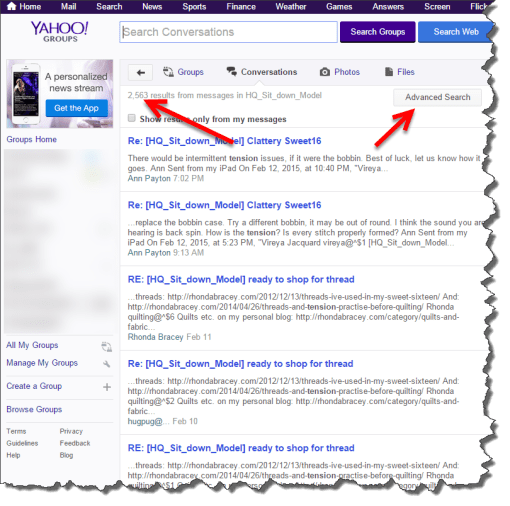
  5. Your results will display, telling you how many results in total, and showing the latest message first.
    yahoo_search02
  6. If you want to narrow the search results (advisable if there are too many to deal with), click Advanced Search.
  7. Complete some of the details on the Advanced Search form, then click Search.
    yahoo_search03
  8. Your result set will be much smaller.
    yahoo_search04

In the screen shots above, I first searched for tension and got some 2500 results, then I clicked Advanced Search, added my own name as the Author and tension as a word I wanted to find in any Message I’d sent to the Group. This time the search revealed 119 results — a much more manageable number.

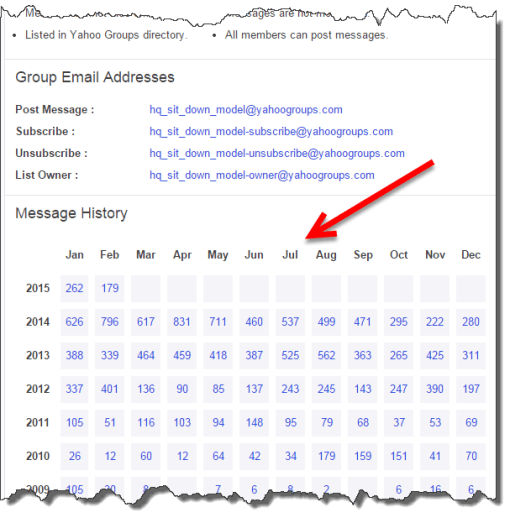
Another option is to browse messages by month, which is very handy if you go ‘no mail’ for a period of time (such as when you go on vacation). The links for messages by month are at the bottom of the home page for your Yahoo! Group.

yahoo_search05


Community Quilt 186

8 02 2015

I didn’t particularly like this quilt, but that’s me. I’m sure the person who put it together liked it and I’m sure the recipient will like it.

Anyhow, my job was to quilt it and pass it back to the Community Quilts organiser.

How to quilt it? With the wonkiness of the seams, and the puffiness of some of the centre blocks, I started by stitching in the ditch around every centre square and block and the first border. Then I decided to just do a simple large meandering stipple to hold it all together. I left the first border (a dotted turtle fabric?) unstitched, and stitched flames in the red border in the same variegated thread I’d used for the stipple.

(Click on a photo to view it larger)

quilt186_01


quilt186_03

quilt186_04
quilt186_02

Threads used:

  • Top: Wonderfil Silco (40 wt, colour SCM02)
  • Bottom: Fil-Tec Magna Glide Classic pre-wound bobbin (light tan)


Community Quilt 185

1 02 2015

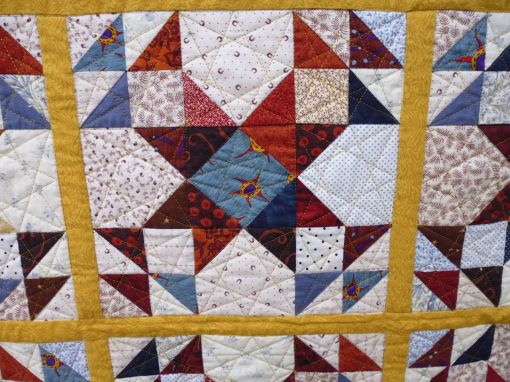
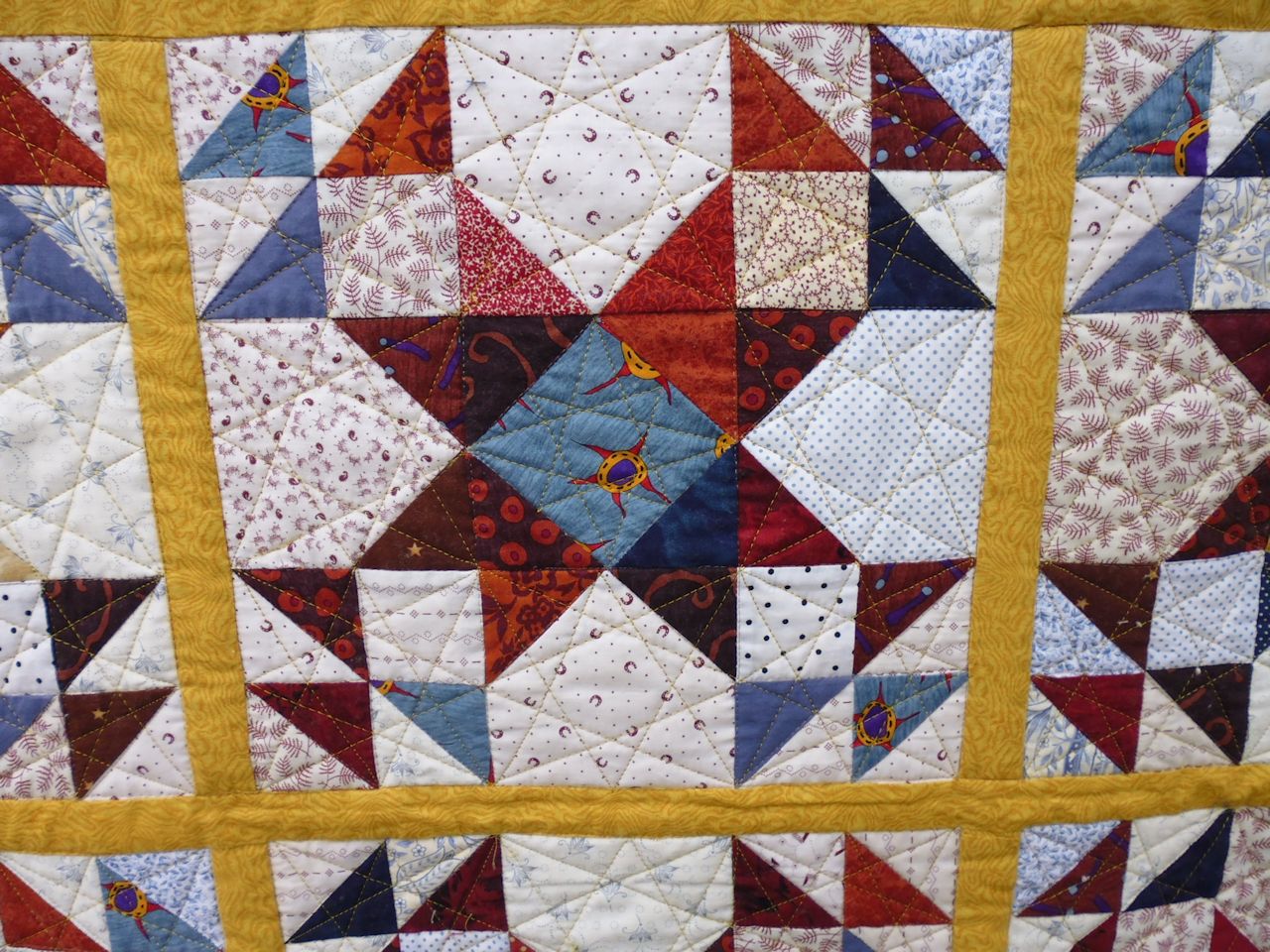
This Ohio Star variation was nicely put together. I liked the colours too!

My first step in quilting it was to stitch in the ditch ESS (every stinkin’ seam). Painfully tedious but necessary to stabilise everything. I did this with an 8o wt Deco Bob thread.

Next, I stitched wonky 8-point stars in the centre square of each big star and each block surrounding the big star. Yes, that was a LOT of stars — nine in each of the 16 blocks, so that’s 144 stars! Each star has eight lines, so that’s 1152 straight lines! Thank goodness for my Line Tamer ruler, which made the process of stitching all those straight lines MUCH quicker.

For the border, I just stitched straight lines down the centre of the squares. I left the yellow sashings and the maroon borders unstitched.

(Click on a photo to view it larger)

quilt185_01


quilt185_02


quilt185_03

Back:

quilt185_04

Threads used:

  • Top: Robison-Anton ‘Shimmering gold’ (40 wt, rayon, colour 2471); Wonderfil Deco-Bob (80 wt, colour DB 414)
  • Bottom: Fil-Tec Magna Glide Classic pre-wound bobbin (light tan)


Community Quilt 184

29 01 2015

This was quit a large quilt, but fortunately it didn’t have any bias edges and most of the seam joins were nice and flat. First, I stitched in the ditch along every diagonal strip (painfully tedious, but had to be done).

Then, because there were a lot of floral scrappy fabrics in this quilt, I stitched an 8-petal flower motif in the centres of each each on-point block. Instructions for doing these flowers are here: https://rhondabracey.com/2015/01/27/quilting-an-8-petaled-flower/

(Click on a photo to view it larger)

quilt184_03

quilt184_02

Back:

quilt184_01

Threads used:

  • Top: Wonderfil Deco Bob (80 wt, DB 414)
  • Bottom: Fil-Tec Magna Glide Classic pre-wound bobbin (light tan)


Quilting an 8-petaled flower

27 01 2015

In a recent Community Quilt (blog post to come), I stitched heaps of 8-petaled flowers in the centre of each on-point block. I took some photos and with some (very) rudimentary computer drawing skills, I’ve tried to describe how I stitched it (I still don’t have the hang of videoing anything!! and my computer-drawn lines leave a lot to be desired…)

Basically, you start in the centre, loop out to a corner, then back down through the centre to the opposite corner in a fat-topped figure eight fashion (let’s assume you do the first one vertically), then scoot back through the centre and make another figure eight going on the other plane (e.g. horizontally). You don’t stop and start for the entire flower, just cross over in the centre point.

After making your two big figure eights, you swing back to the centre and make two smaller and narrower figure eights to fill in the gaps between the large one.

Then you swing back to the centre again and echo stitch inside the fat figure eights so that there’s a double line for them. And that’s it.

It’s certainly much easier to do than to describe! Hopefully the pictures and the diagram below will help.

This is what the finished flower looks like:
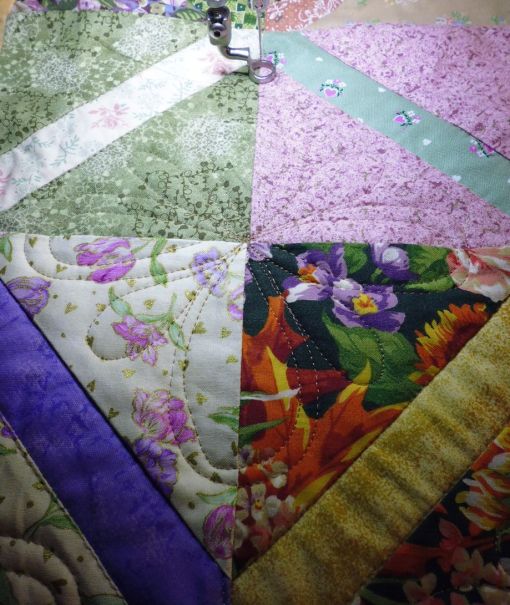
FMQ_flower_design11

And this is how I got there. First, start in the centre and loop out to a corner, swinging back to the centre.

FMQ_flower_design01

Next, finish the bottom of that figure eight.

FMQ_flower_design02

When you get back to the centre, keep stitching and loop out to the horizontal plane, doing another figure eight to the left….

FMQ_flower_design03

…and then to the right (or whatever feels most comfortable for you).
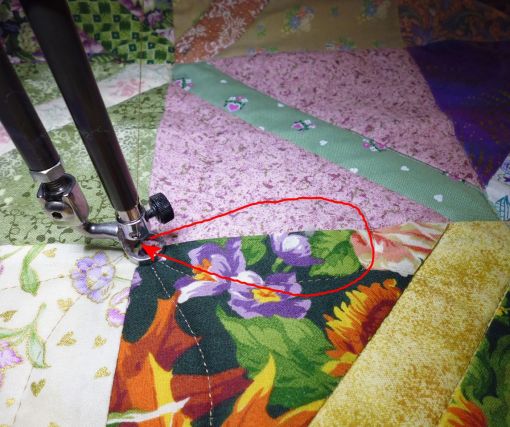
FMQ_flower_design04

Swing back through the centre again, and this time stitch a smaller, narrower petal in between two of the large loops.

FMQ_flower_design05

Swing through the centre again and repeat on the opposite side.

FMQ_flower_design06

Next time you come back through the centre, swoop to the left to make another skinny loop, and repeat on its opposite side. (no photos for this figure eight — however, you can see the stitching in the photo below)

After completing all eight petals of your flower, add some extra oomph to the large petals by echo stitching about 1/8 to 1/4  inch inside each one — you don’t have to be precise!

Swoop back down inside one of the large petals and echo stitch it from the centre, around the loop, and back to the centre.
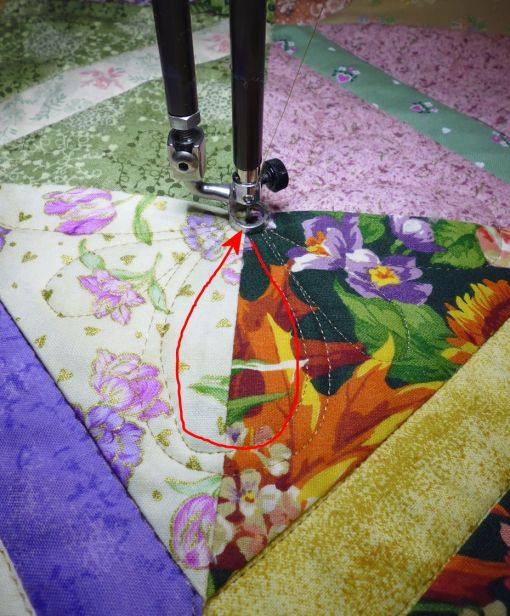
FMQ_flower_design07

Keep on stitching through and echo stitch the opposite fat petal.
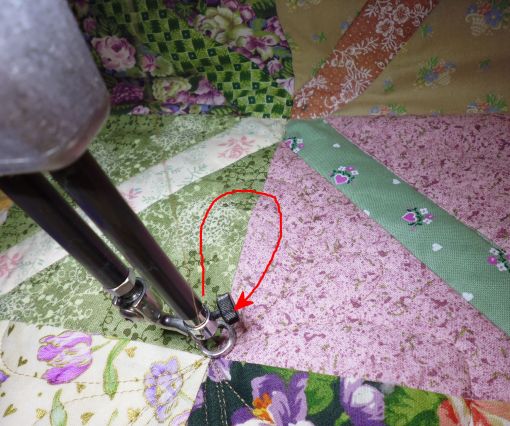
FMQ_flower_design08

Swoop back through the centre and echo stitch inside the last two petals, forming yet another figure eight through the centre of the design. Again, unless you are using plain fabric, you don’t have to be perfectly precise with where your centres cross — the crossing point will get lost in the fabric design.
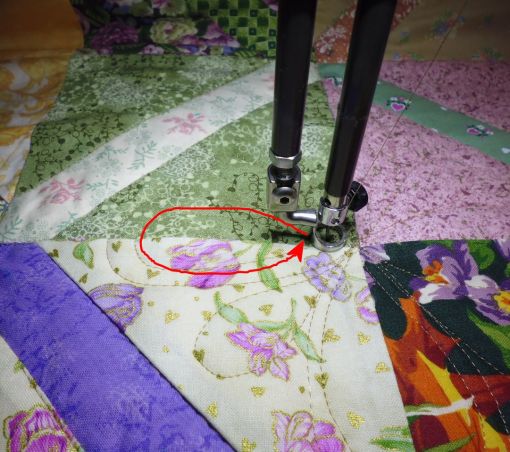
FMQ_flower_design09

FMQ_flower_design10

And you’re done! Here it is all stitched out:

FMQ_flower_design11

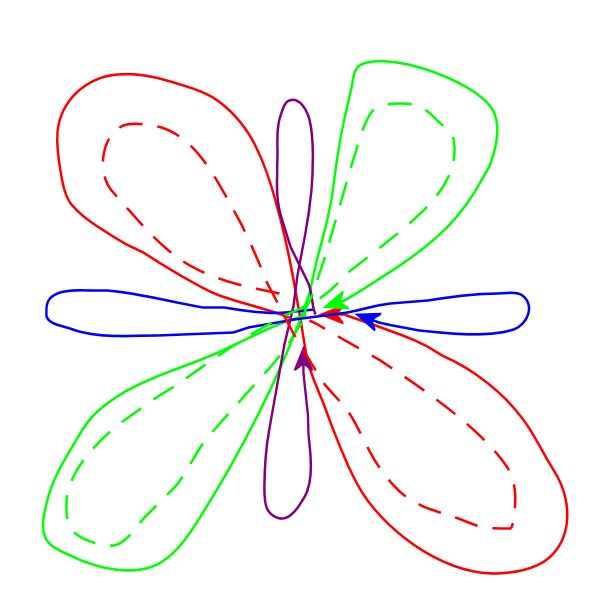
And below is a really basic drawing of the stitching lines — each colour is another figure eight loop/infinity symbol, with all crossovers occurring in the centre of the block.
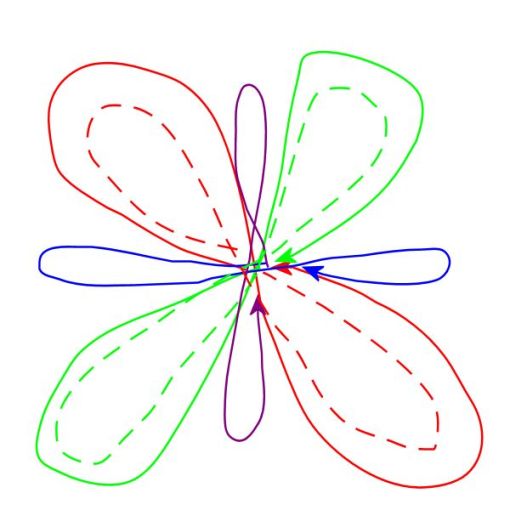
FMQ_flower_design12


What the…?

27 01 2015

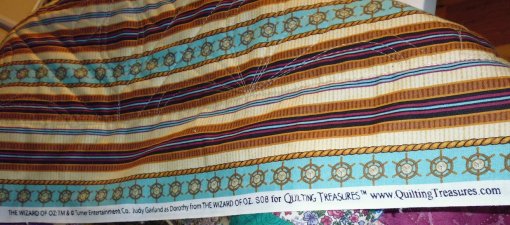
I was working on a Community Quilt yesterday (separate blog post to come), when I happened to turn over to look at the stitch tension on the back. I was close to the edge, and this is what I saw on one selvedge:
P1030230

This is what I saw on the other selvedge:

P1030231

Now, I don’t know about you but my immediate reaction was ‘What the…?’ I can understand the copyright on the fabric (though how on Earth a ship’s wheel and some stripes relate to The Wizard of Oz movie is beyond me… And yes, that’s ALL that design was – just more of what you see in the pictures above), but the ‘License is required for any use beyond individual consumption’??? What’s up with that?

So I researched it a little bit and found some interesting articles on the internet, none of which I can take as more than opinion, though the Tabberone one looks reasonably authoritative:

I still don’t know what all this means for the consumer or for the shop owner that sells these ‘licensed’ fabrics. I particularly don’t know what the ‘license required for any use beyond individual consumption’ statement means to either consumers or shop owners. And whether the licence is for just one country (which one?) or many (which ones?) or all? It can’t be ‘all’ as every country has different copyright and trademark laws.
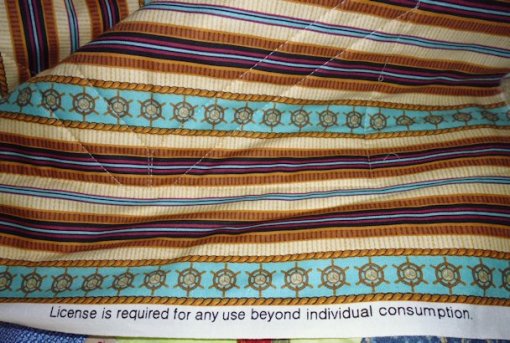
What does ‘beyond individual consumption’ mean? If you have purchased fabric for a project and have cut it up and used it, does that mean you’ve individually consumed it? Or if you sell that item or give it away, is that still classed as ‘individual consumption’? Or are the lawyers having a lend of us all and scaring us into submission with words that sound scary but may well be meaningless and unenforceable?

Personally, if I saw that ‘personal consumption’ statement on the selvedge of fabric I was intending to buy, I’d ask the shop owner to explain, and if I couldn’t get a satisfactory explanation, I’d refuse to buy it AND I would ask the shop owner to tell the manufacturer’s agent why customers weren’t buying it. If I was able to remember the manufacturer, I’d also drop them an email asking them to explain what it meant AND telling them why I wouldn’t buy it when the meaning is not at all clear.

And what if the fabric had been cut by a store into fat quarters and offered for sale without selvedges? How is the purchaser to know that some weird restriction or limitation may exist on the use of that fabric?

This sounds like a legal minefield! Surely designers want to design fabrics and manufacturers want to sell those designs, but if they start putting restrictions on the use of the fabric, then they won’t have a business. And only the lawyers will have won. Again.

It’d be like buying a dozen eggs and then being told that legally you can only use them for yourself and no-one else. Stupid.

If anyone can shed some light on what these printed license and copyright statements on fabric mean to the final purchaser of the fabric, I’d appreciate it if you could add your comments below.


Community Quilt 183

25 01 2015

Some quilts (like #182) sing to you; others make you want to get them off your machine table ASAP… #183 was one of those. I didn’t like the fabrics (I suspect some were quite old), the colours, or the HUGE amount of biased edges and wonky blocks. It was one of those quilts that has to be stitched into submission.

Normally for a smallish quilt like this, with this many fabric variations, I’d just stipple it all over nin a neutral thread and not worry about stitching in the ditch. But it was obvious as soon as I put this quilt on the machine’s table that I’d have to stitch in the ditch otherwise I’d end up with massive puckers if I just stippled it, even if I started from the centre (as I usually would).

So, even though I wanted this one off my table ASAP, it had to remain on there long enough for me to stitch in the ditch for almost ESS (‘every stinking seam’), and then for the stippling.

I was glad to be done with it. Fortunately, it was small and didn’t take too long.

(Click on a photo to view it larger)

quilt183_01

quilt183_02

Threads used:

  • Top: Fil-Tec Harmony ‘Spring’ (40 wt, cotton, colour 14062)
  • Bottom: Fil-Tec Magna Glide Classic pre-wound bobbin (white)