An era has come to an end

7 12 2015

And it’s all good!

Late in October we had a call from the real estate agent that someone wanted to look at the final investment property we owned. Within a week contracts were signed, building and termite inspections done (and passed), and the waiting game began for final settlement (‘closure’ for my US friends), due to occur before Christmas. Considering we haven’t had even a nibble in the 5.5+ years it’s been available for sale (though on ‘silent listing’ for most of that time), this was a very welcome surprise.

One of the sets of documents we had to sign was for the discharge of two (small) mortgages that were linked to that property. And I realised that with the discharge of those mortgages, we would be totally debt-free as far as housing is concerned! (Yes, there’s always credit card debt, but we pay that off in full every month.)

After more than 35 years of mortgage payments, suddenly there’ll be none.

And that got me thinking about the properties/houses I’ve bought and that we’ve (my DH and me) purchased together (all in Western Australia; all dates approximate)…

  • Me: Guildford — 1979 to 1987 (residence)
  • Me: Subiaco — 1987 to 1991 (residence)
  • Us: South Perth — 1991 to 2007 (residence)
  • Us: Busselton — 1995 to 2013 (investment/rental house)
  • Us: Geraldton — 200? to 2010 (investment/rental unit)
  • Me: Nedlands — 200? to 2007 (commercial investment/office)
  • Us: Bridgetown — 2004 to 2015 (investment/rental house, and main residence from 2007 to 2010; this is the one just sold)
  • Us: Bridgetown — 2005 to 2010 (vacant land)
  • Us: Bridgetown — 2005 to 2013 (vacant land)
  • Us: near Bunbury — 2010 to now and ongoing (residence; we paid cash for this house and have never had a mortgage on it)

Except for our current house and the South Perth house, all these properties were purchased below the median price for the area at the time, and probably sold at around the median price, so we’re not talking property moguls here! Many were properties in regional areas, and regional real estate doesn’t reflect city real estate in its growth or price movements.

I purchased my first house before I was 25, in an era where it was very unusual for banks to lend money to single women for buying a house. I borrowed 100% of the funds for that first house as I had very little savings, having taken the previous year off work to finish my degrees. How did I borrow 100%? Well, for starters, I didn’t use a bank — I didn’t want the humiliation and misogynistic platitudes about getting a husband/bread winner first! I borrowed the deposit as a personal loan from a teachers’ credit union I belonged too, then used that as collateral to borrow the remaining amount from another credit union/friendly society (later it became a bank). In those days they didn’t check where the deposit money had come from — I doubt you could do that today 😉

I was able to make all my mortgage payments throughout the years, except for 1987/1988 when interest rates jumped to 17+%. I’d taken out the mortgage on the Subiaco house just a few months earlier at around 13.25% interest. I budgeted a buffer up to 15%, not even thinking that rates would keep increasing to 17%. Like many, I was in mortgage stress — I’d only just purchased the house and had stretched my finances to do so, then suddenly I was looking down the barrel of ballooning payments on a static income. Fortunately, I met up with an old friend who knew someone who was new to Perth and was looking for somewhere to live. Although sharing my house wasn’t my preferred choice, I ended up with a 23-year-old American girl as my ‘roomie’ — I had to pay that mortgage somehow! We ended up sharing the house for a couple of years, and we’re still good mates. Thanks Kris — you may never have known until now how much your rental contribution kept me from going under.

But as at noon today, it’s all over. NO MORE MORTGAGE PAYMENTS. EVER.

It feels very good to say that!

And look! 0.00 balances on the mortgages!!

mortgage-free


Cutting board rack

24 11 2015

I saw something on the internet the other day about using spring-loaded expandable rods inside your cupboards to create vertical space for storing your cutting boards, baking trays, cooling racks, etc. Well, I couldn’t find these rods in Bunnings (like Home Depot in the US), except in full shower rod lengths. But when I was in Officeworks (like Office Depot in the US) looking for something else, I decided to see what they had in the way of possible storage solutions I could repurpose.

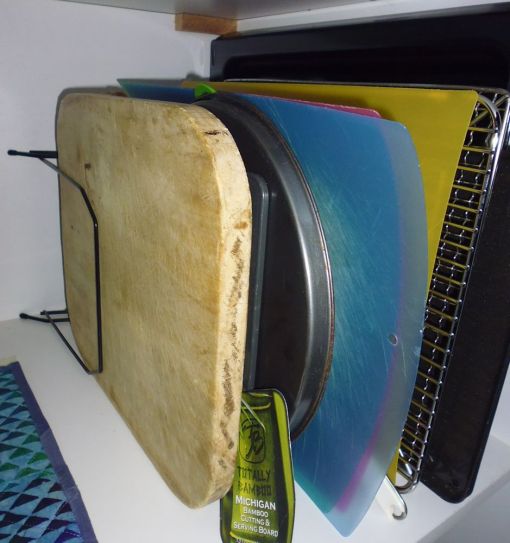
And I found the PERFECT solution for storing my boards and racks vertically — a wire rack for storing file folders on a desk! I tipped it on its side, and voila! A storage system that won’t let these items fall over or slide down. And it takes up less space than the previous storage solution (a wine box). It was cheap too — about AU$14. Now that’s a hack 😉

wire_vertical_file


board_rack


Pond mother bleeping peacefully

15 11 2015

I’ve been researching family history, following leads in the National Library of Australia’s ‘Trove’ digital newspaper collection. One of the great things about this collection is that in addition to the scanned images of the newspapers, they’ve also been converted to text using OCR (optical character recognition).

Anyone who’s scanned text using OCR will know that the resulting text is hit and miss — the accuracy depends on the state of the original document/image, the OCR software, and the settings you use when converting. And so it is with these images — some are good, some are great, some are just woeful. Anyone can correct the resulting text, and with many people doing just that, over time the text becomes more readable — and most importantly, correctly represented in the indexes used for searching.

As I’m doing family history research, I’m looking for dates of birth, marriage, and death, so some of the entries I read are heartbreaking. Others are just plain funny because the OCR has incorrectly translated certain letter forms to other letters — e.g. F to P, i to l, H to II, S to B, 8 to S etc.

Although this one was not part of my family, I corrected it anyway. This is before…

pond_mother


Safari suits – not just a 1970s fashion statement!

15 11 2015

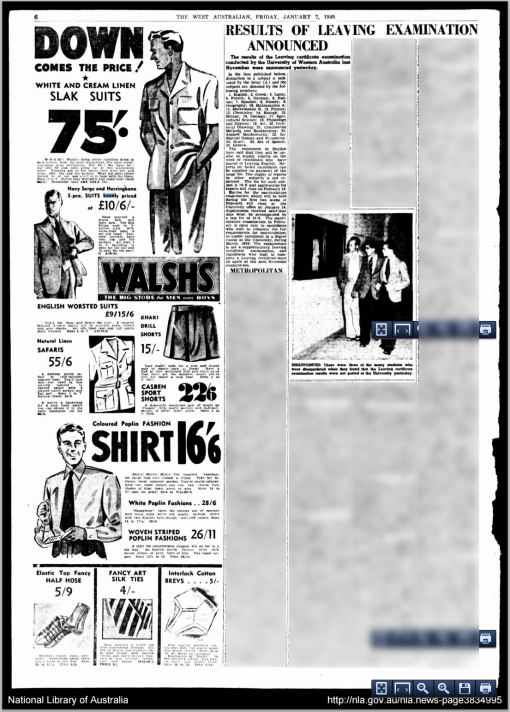
I’ve been researching family history, following leads in the National Library of Australia’s ‘Trove’ digital newspaper collection. While looking at the 1948 Leaving Certificate results (published January 1949), I spotted this advertisement for safari suits and other summer men’s wear.

(Click the image to view it larger)

safari_suits

I always thought the safari suit was fashionable in colonial India and Africa, and then later in the late 1960s/70. I didn’t realise it was fashionable for Australian men in the late 1940s! And look at those tight whities!


More shed reorganisation

1 11 2015

Several months ago I had a rush of blood to the head and organised my gardening area in the shed. However, the other storage racks in the shed had become higgledy piggledy, with tubs of old documents (tax receipts etc.) filling up available spaces instead of being organised. And I’d noticed that some of the storage racks weren’t coping well with the weight of the storage tubs — they hadn’t collapsed, but they were a bit bowed. I’d also run out of space for storing empty boxes that I needed to keep (e.g. the box my Sweet Sixteen machine came in). And my husband needed to get his cardboard file boxes filled with paperwork for his research into conditions safe from bugs, mice/rats, snails,direct sunlight etc. — i.e. black plastic tubs with sealable lids.

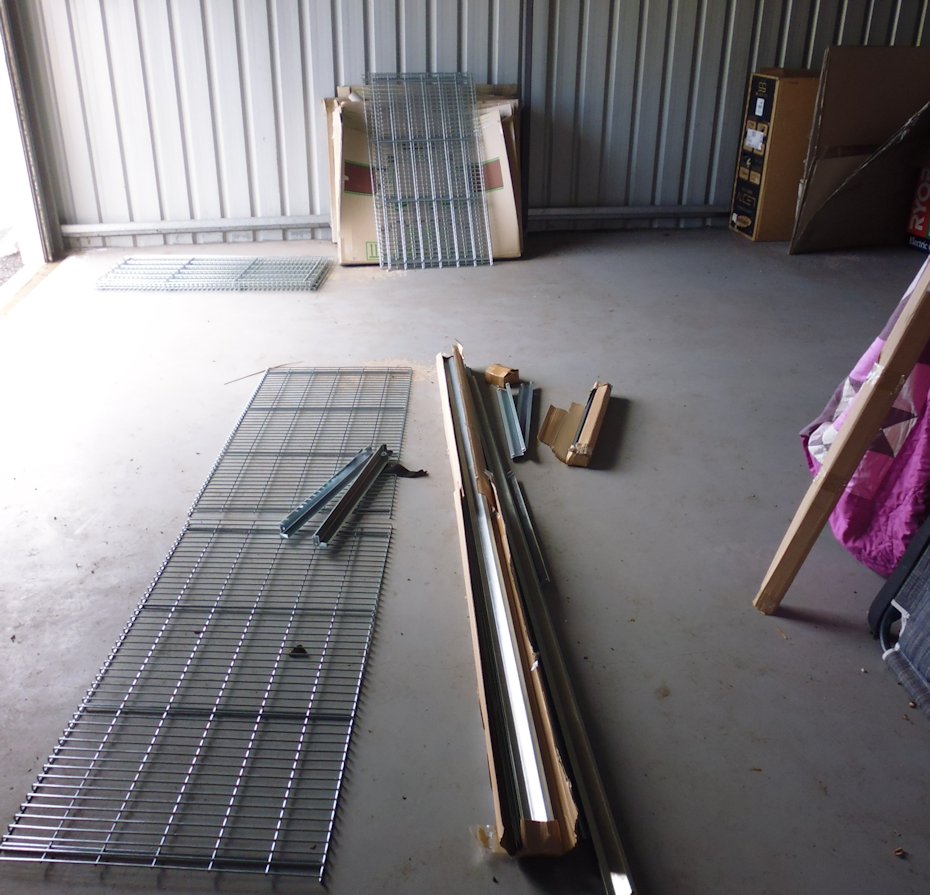
I decided to purchase two more shelving units that are much stronger and deeper than the originals. They arrived last week, but they came with NO instructions! Fortunately, the chap who delivered them works for the company I bought them from and he gave me a very quick summary of how they went together. Based on that info, I put together the 1.5 m wide rack within a few days of getting it. I took my time, and made sure everything locked together as it should — the rubber mallet was very handy! I only needed help lifting the long shelves into place.

The second unit was much longer than the first, at 2.4 m (both are 2.1 m high, with 5 shelves), but as there’s a centre dividing support, the shelves were only 1.2 m long and were very easy to get into place. And because I’d already constructed the 1.5 m unit, this second one was easy to put together, taking me about an hour.

I was pleased with how I channeled my inner Meccano-building skills in constructing these two units. Already I’ve totally rearranged my storage tubs and the spare boxes… My husband has yet to do his!

P1050053

All the parts for the 2.4 shelving unit…

P1050056

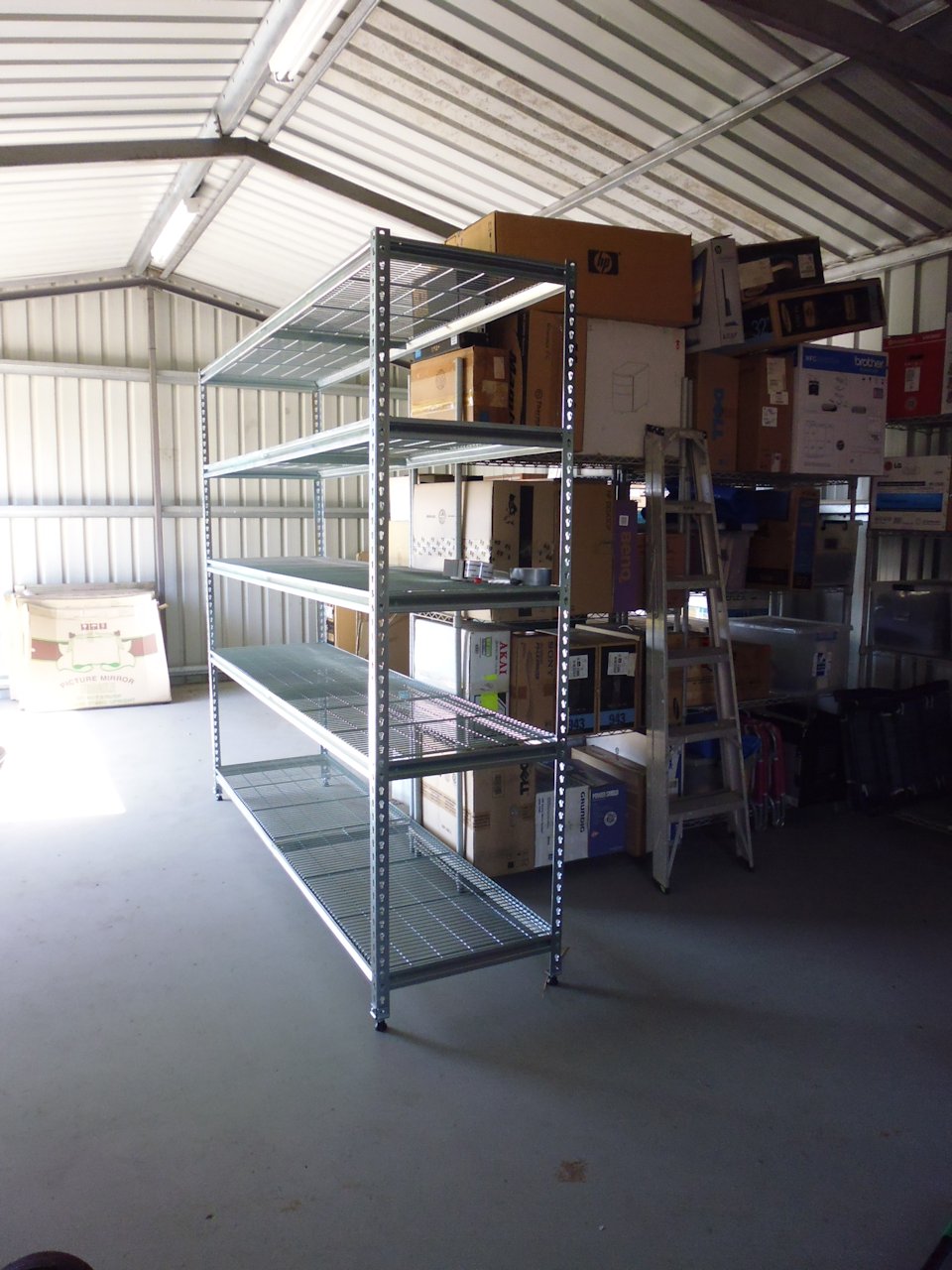
Finished!

P1050057

The finished 1.5 m unit (far right), with some of the original racks now holding empty or less weighty boxes


Bali hut has a new roof

11 10 2015

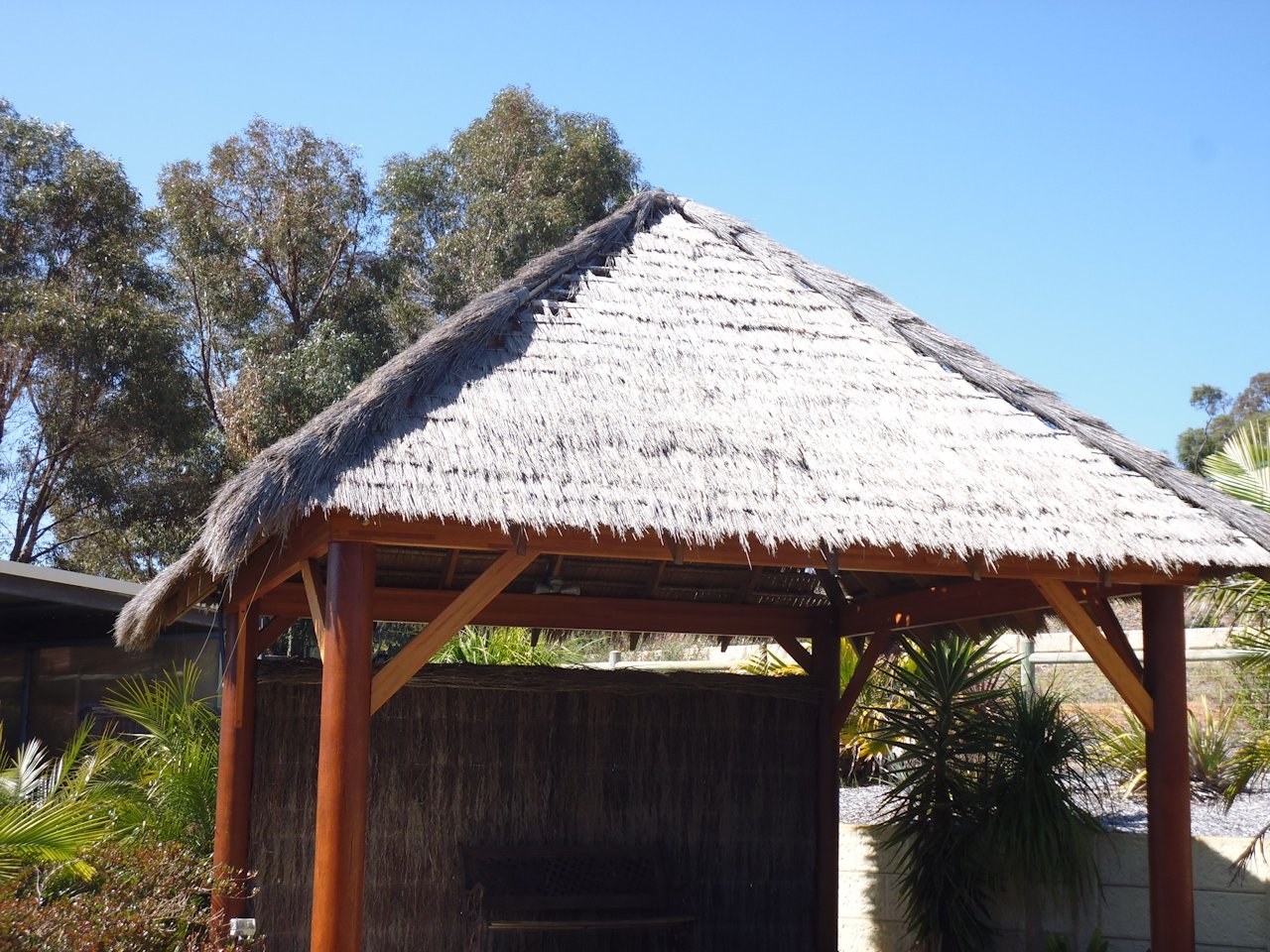
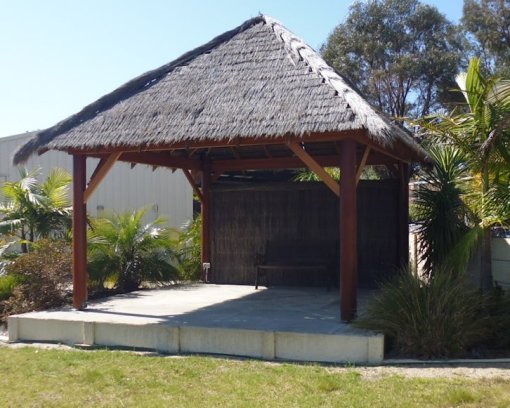
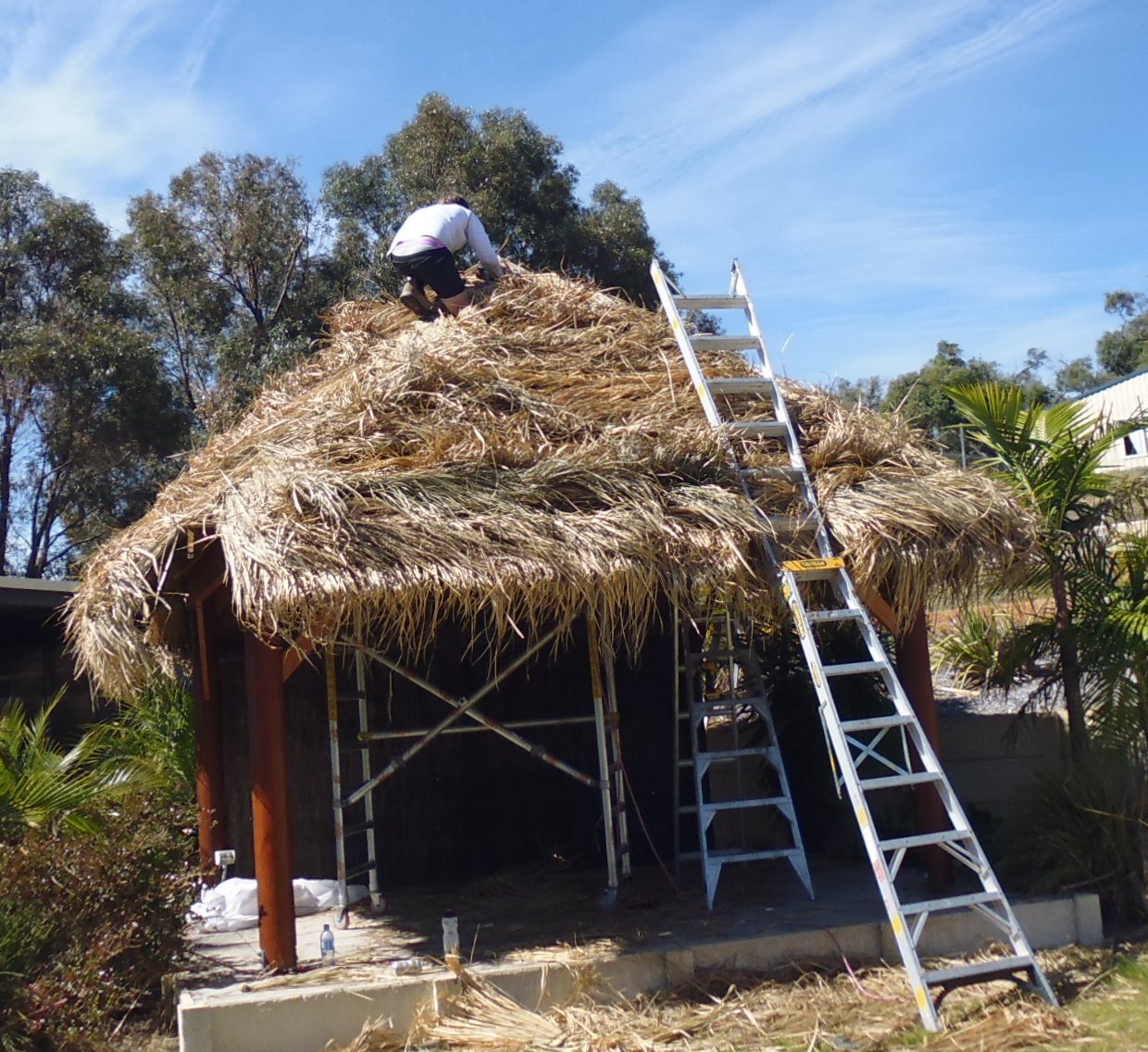
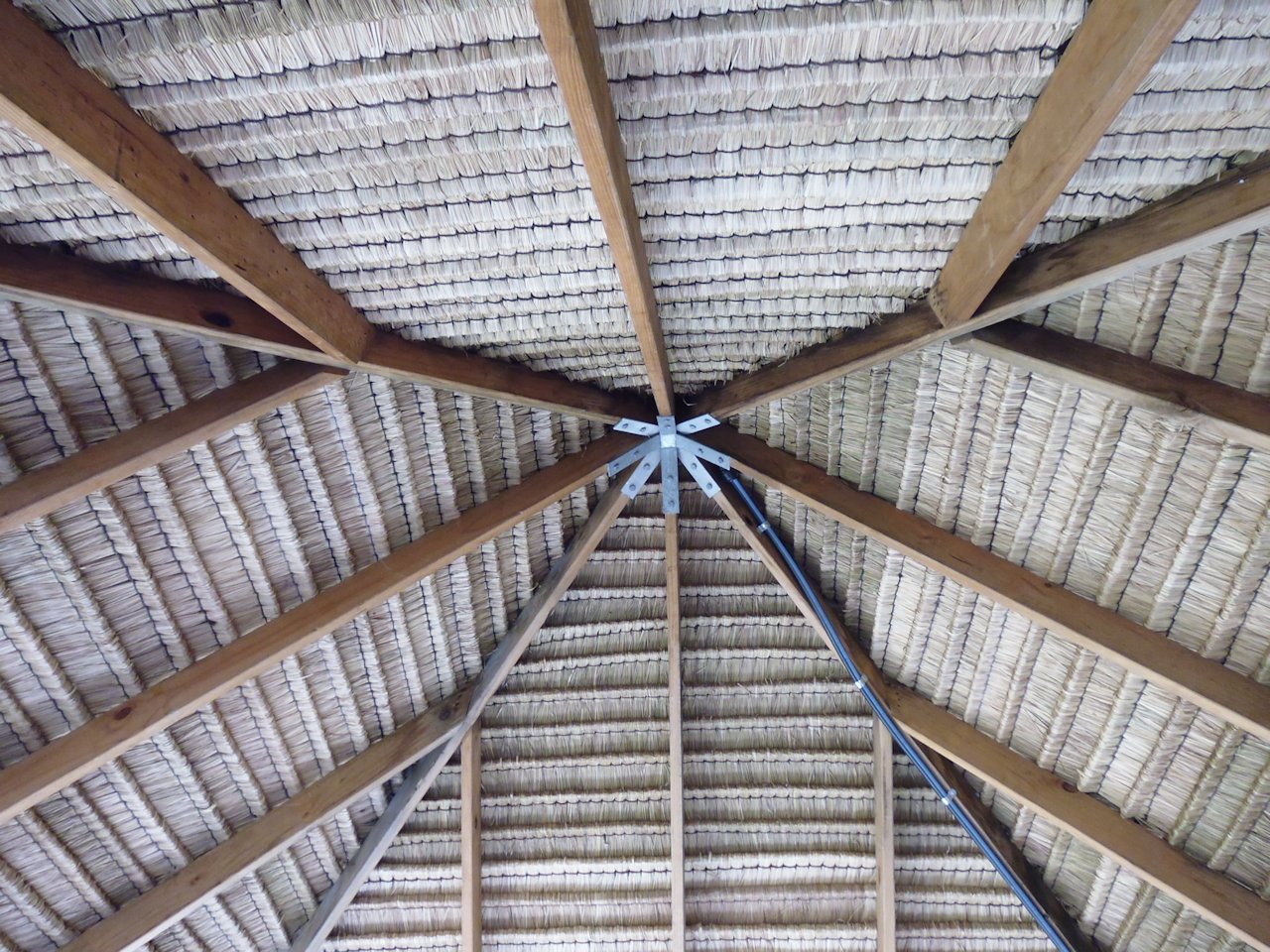
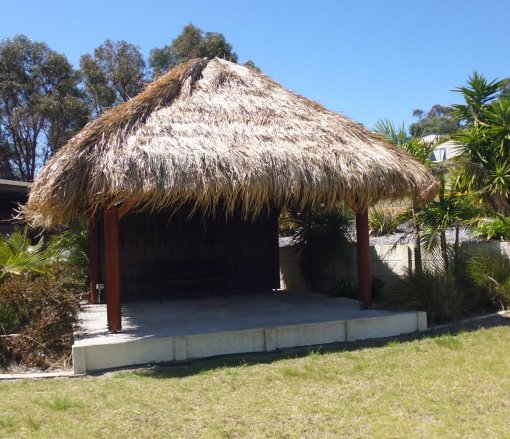
Our Bali hut, which was part of our house purchase 5.5+ years ago, has been looking the worse for wear. Holes in the roof, broken bits of thatching rows, chunks out of the hips etc. So it was time to see if it could be repaired, or if a complete rethatching job was the only option. Guess what? Unable to be repaired…

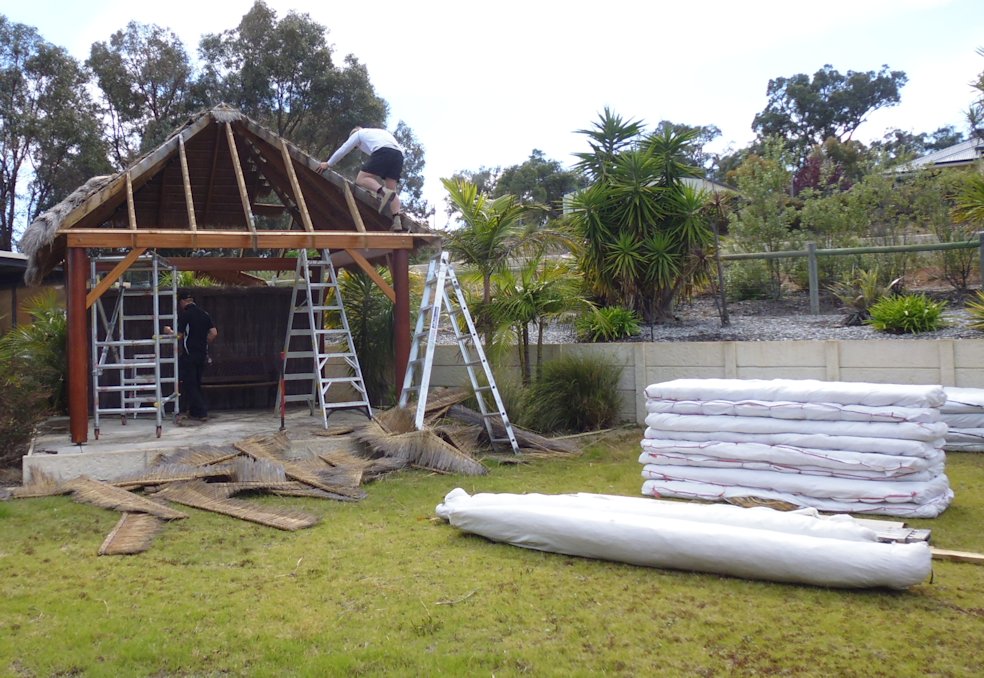
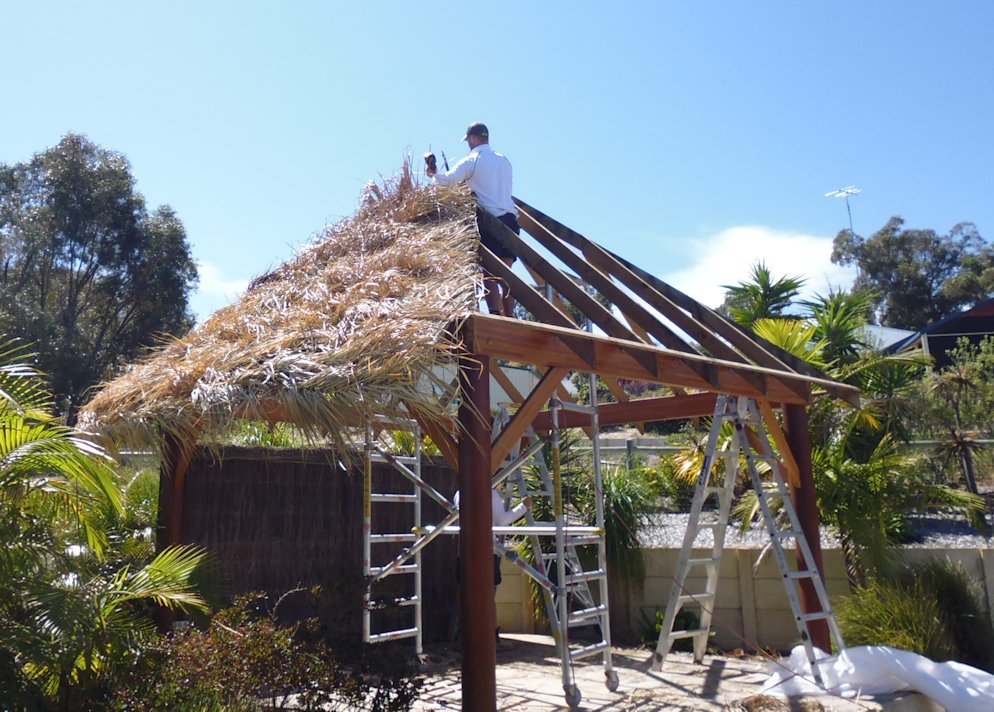
It got rethatched over a couple of days last week. (For those in the south-west of Western Australia, the company I used was Carpenters R Us, from Mandurah. The tradies were young, polite, and cleaned up after themselves. Cost: About $4000… ouch! Expected life — 12 to 15 years.)

Before

If you look closely near the hips/ridges, you can see gaps, which are much more obvious from the photo taken from the inside.

P1040923

P1040931

P1040927

During and after

P1040951

Removing the old thatching; new stuff (Alang Alang) wrapped in the ‘body bags’

P1040952

All the old thatching is now gone

P1040953

The new stuff is pretty hairy! This is before it was raked and tied down

P1040957

P1040958

P1040959

Before the new hips (with metal flashing beneath) were added

P1040971

No daylight to be seen!!

P1040968

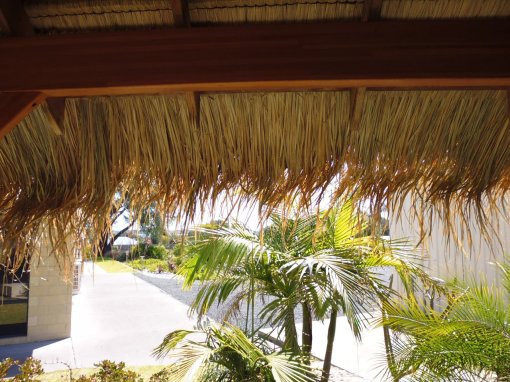
Hairy hut, with a big fringe. Yes, I opted for fire retardant on the thatching (extra $450), and had a butterfly sprinkler installed on top of the hut a few weeks earlier.

P1040972

Looking through the fringe


Capturing memories

11 10 2015

A recent post on Facebook linked to an article on the printing of the last library catalogue cards by the biggest printer of cat cards back in the day. Article (with video): http://www.dispatch.com/content/stories/business/2015/10/02/the-last-card.html

Oh wow! That brought back some memories, which I figured I should document before my memory of that time faded…

I started working in school libraries in Western Australia in the 1970s — mostly we did our own cataloguing and catalogue cards, although there was a minimal centralised service from our state’s Education Dept. That central cataloguing department increased over the years to become the main provider of cat cards to all schools in our state by the mid-80s (perhaps earlier). However, I always made sure we had a copy of Dewey in the library workroom for things the centralised service didn’t provide (like full cataloguing of articles within yearbooks), and a copy of Sears subject headings.

By the late 80s (1988?), I was part of an Australia-wide project to centralise ALL school library catalogue data. By the very late 80s the first library automation systems were coming in to schools, and schools started to have the choice of printed cards (minimum of two for any book/multimedia [author, title]; sometimes up to nine! [author, title, one for each subject heading ascribed to the resource]) or digital catalogue records from the centralised service.

The high school library where I was Head of Department was a pioneer in our state, becoming one of the first libraries to automate their catalogue in/around 1989 — I think our system cost somewhere between $20,000 and $40,000 all up, with the computers, backup tapes, barcode readers, barcodes for 25,000+ resources, dot matrix printer, and other costs (like a motorised sit/stand desk for the library clerks — $1600 in 1989!). We kept our catalogue cards and drawers for a couple of years (some kids really liked the familiarity of them), getting rid of them before I left that school in at the end of 1991. When I asked the Ed Dept furniture people about what to do with the catalogue drawers, I was told they didn’t want them back and I could dispose of them however I wanted. I still have a 3-layer bank of 6 drawers — my DH used it to store audio cassettes for many years, and I now use it to hold large 5000 m spools of thread.

All this was a precursor to my next career, though I had no idea at the time what it would segue into. Around May 1992, I started working for the library automation company (my first job outside education and the first with a software company), which lasted until July 1998 when the company imploded (another tale for another time…).

During that time, I pushed for our company to get a website, and, as no-one else was interested in doing it, I taught myself HTML and wrote and edited our company’s 600+ HTML pages in Notepad. For those who remember, these were the days of <font> tags and NO CSS!! Why 600+ pages? Our company’s site became a repository of vetted websites in all sorts of subjects for school kids, and was heavily used by teacher-librarians around the world as a reliable resource. These were the days before Google — I used to check websites for their suitability using Alta Vista and DogPile, and used Netscape as my browser. But that’s a story for another time.

Ah, memories…


New babies are thriving

2 10 2015

I saw the ducks again today — they’ve been ‘missing’ for the past couple of weeks when I’ve driven into town, but they were back today. (see: https://rhondabracey.com/2015/09/15/new-babies/)

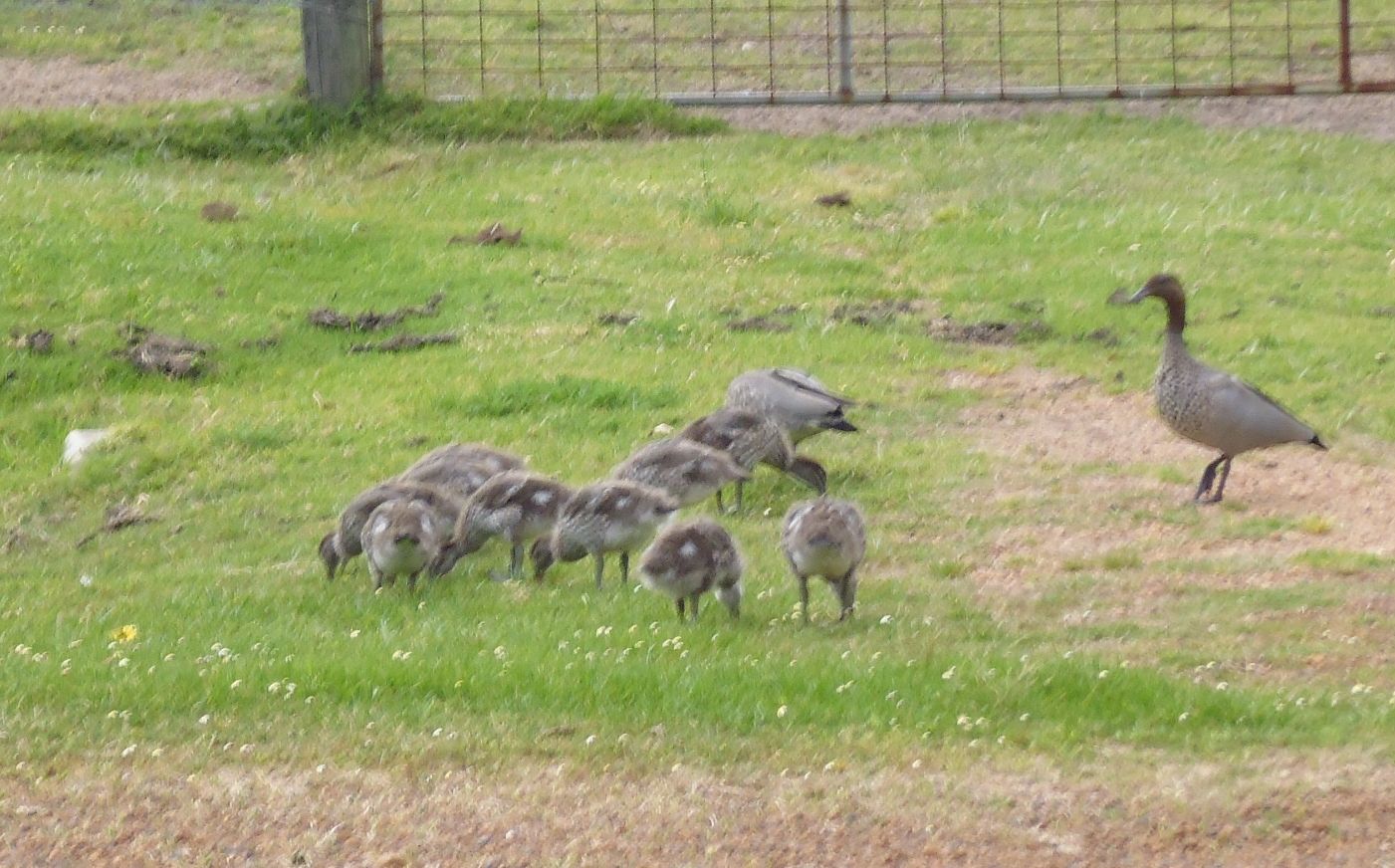
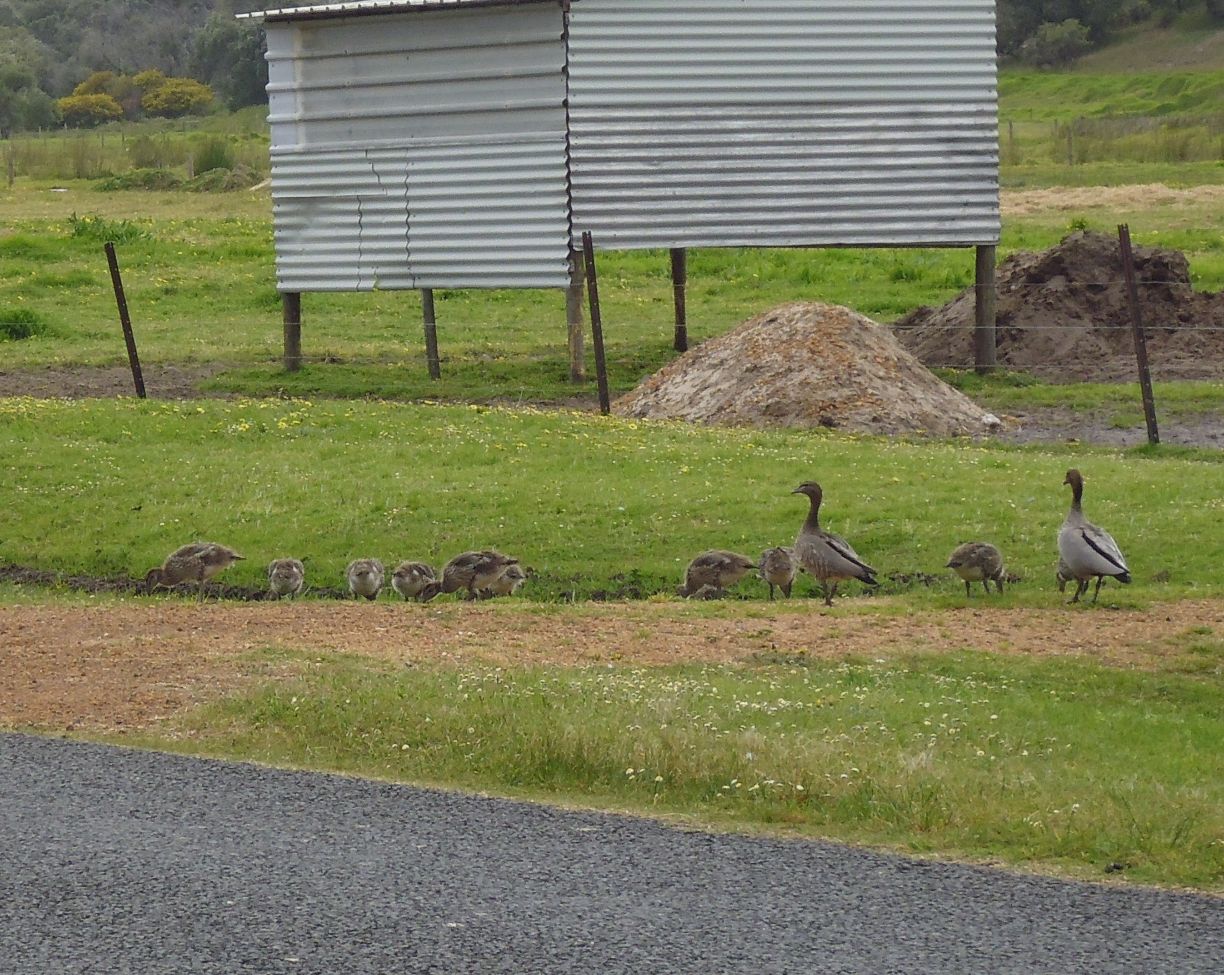
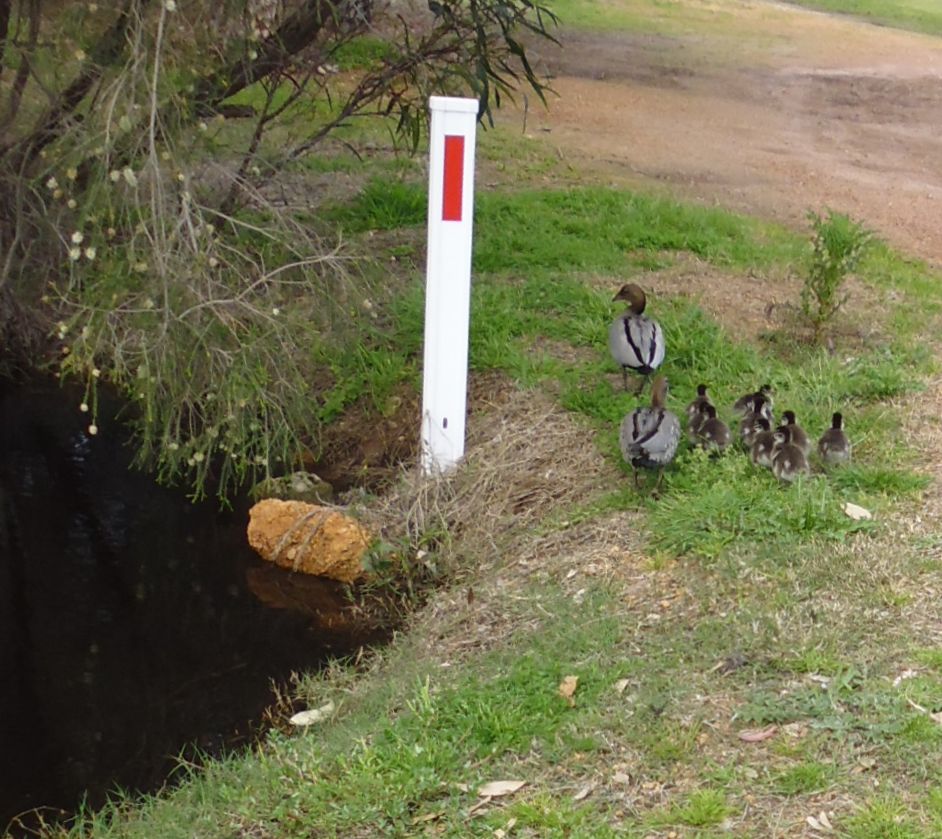
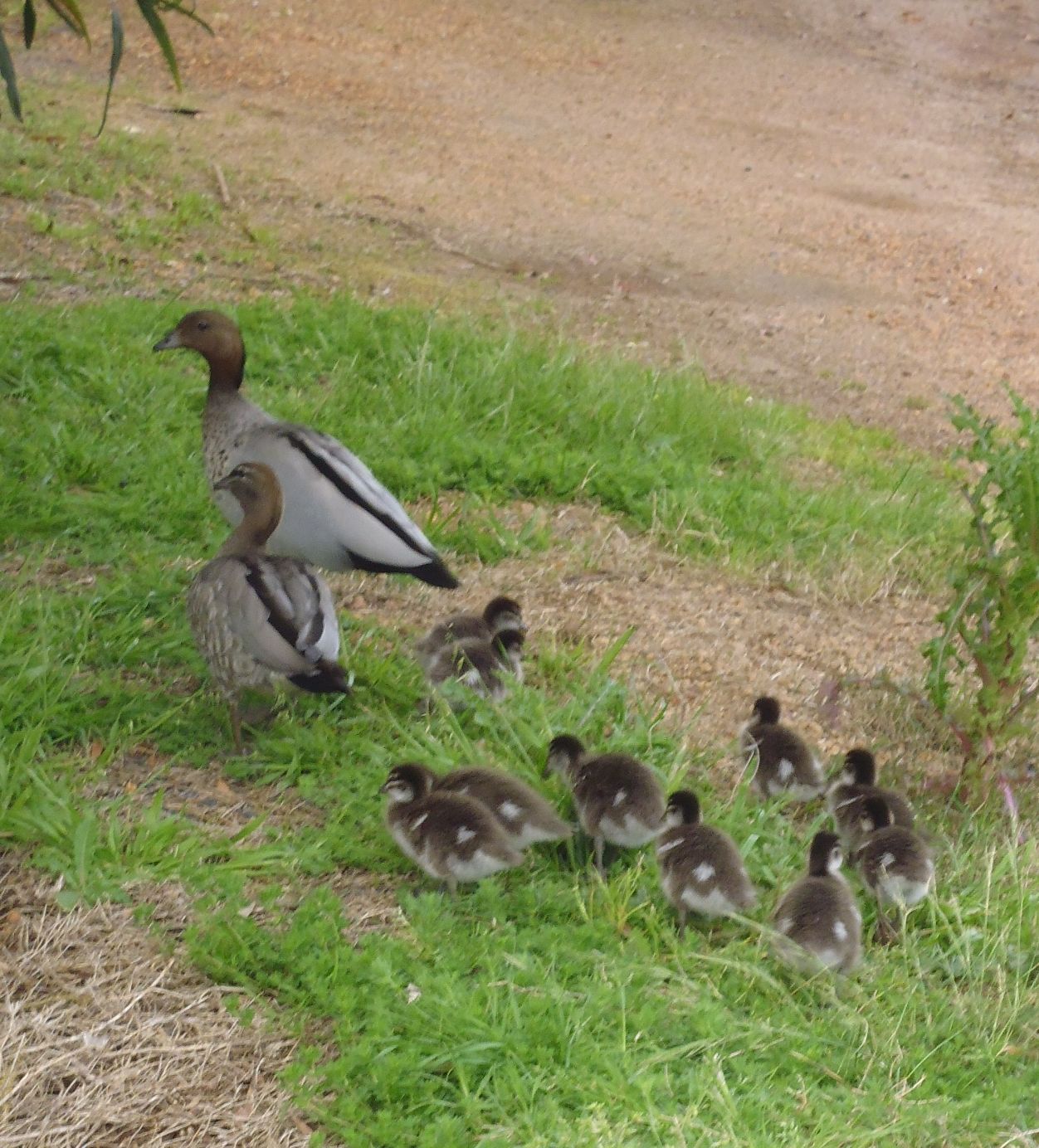
Surprisingly, 10 of the 11 babies are still alive, and from the size of them, they are thriving! I didn’t think that many would survive those first few weeks as I thought predators such as snakes, foxes, and raptors, as well as the big killer — the cars on the road that runs right by where they live — would get a few.

The photos were taken from the car so that I didn’t disturb the family.

P1040945

P1040946

P1040943

P1040944


New babies!

15 09 2015

One of my nieces (I only have two) had her first baby last week, and yesterday I saw some new ducks (11 was the most I counted!) on the drive into town, as well as a kangaroo with a joey leg sticking out of her pouch. Spring has sprung!

P1040913

P1040910

P1040911

P1040912

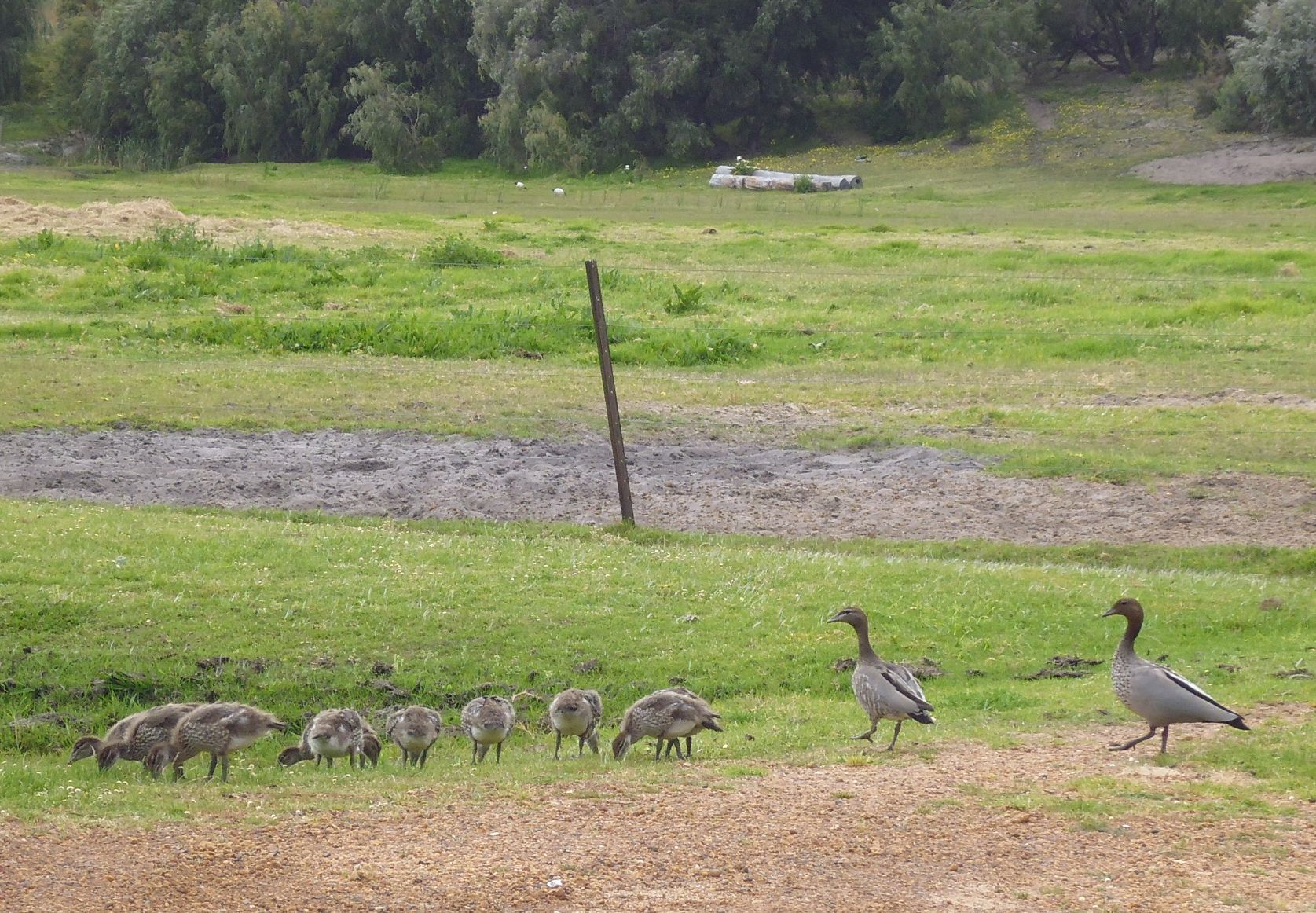
Update 15 August 2016: This breeding pair is early this year! I saw the new babies following Mum and Dad today, a month earlier than last year. No photo as we had traffic behind us.

Update 22 August 2016: Two pairs of ducks now have babies. The first pair (those I saw last week) have about 10 babies, and the other nearby pair have about 6 (photo of that family below).

wood_ducks


Here’s looking at you, kid

13 09 2015

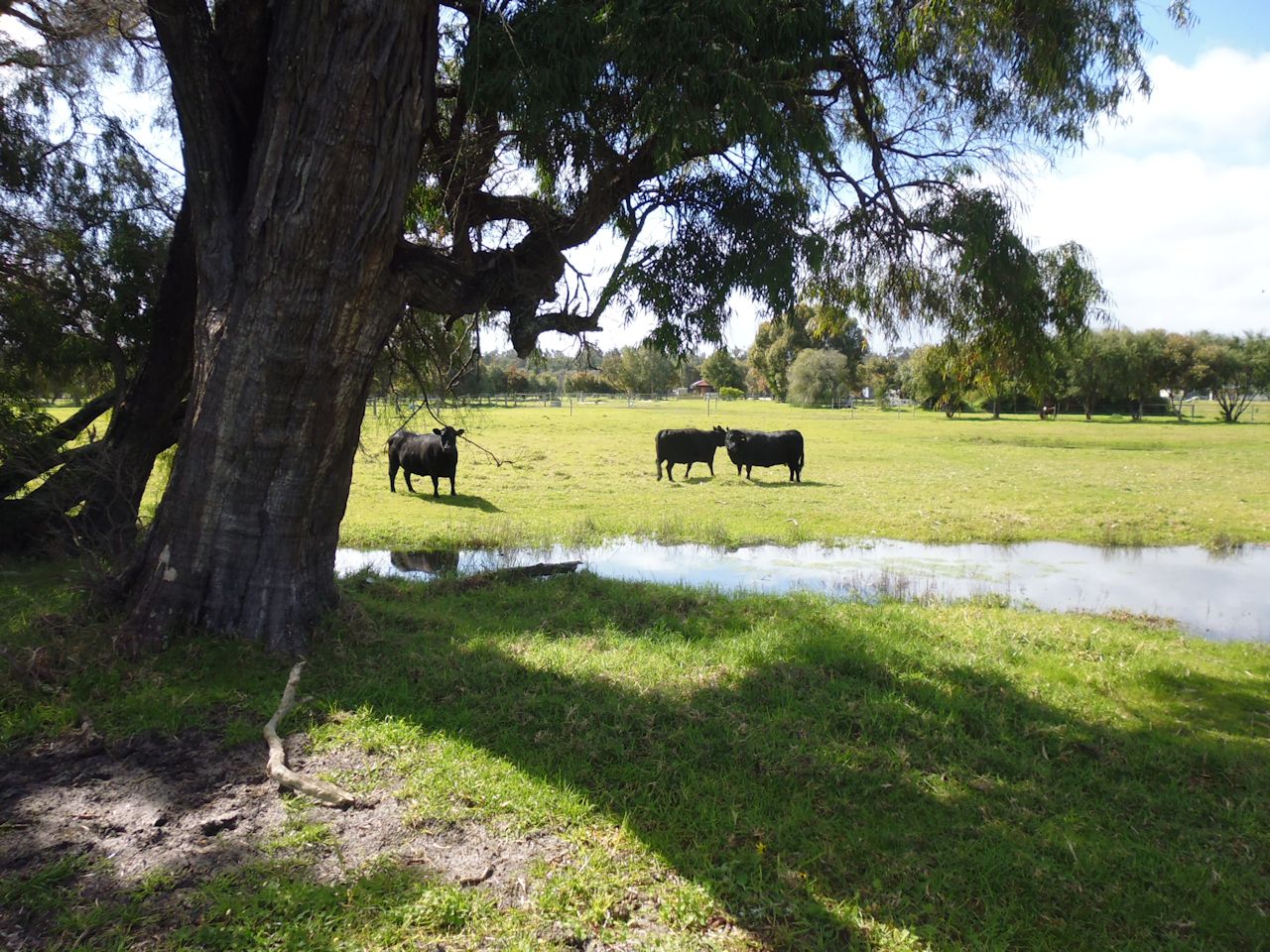
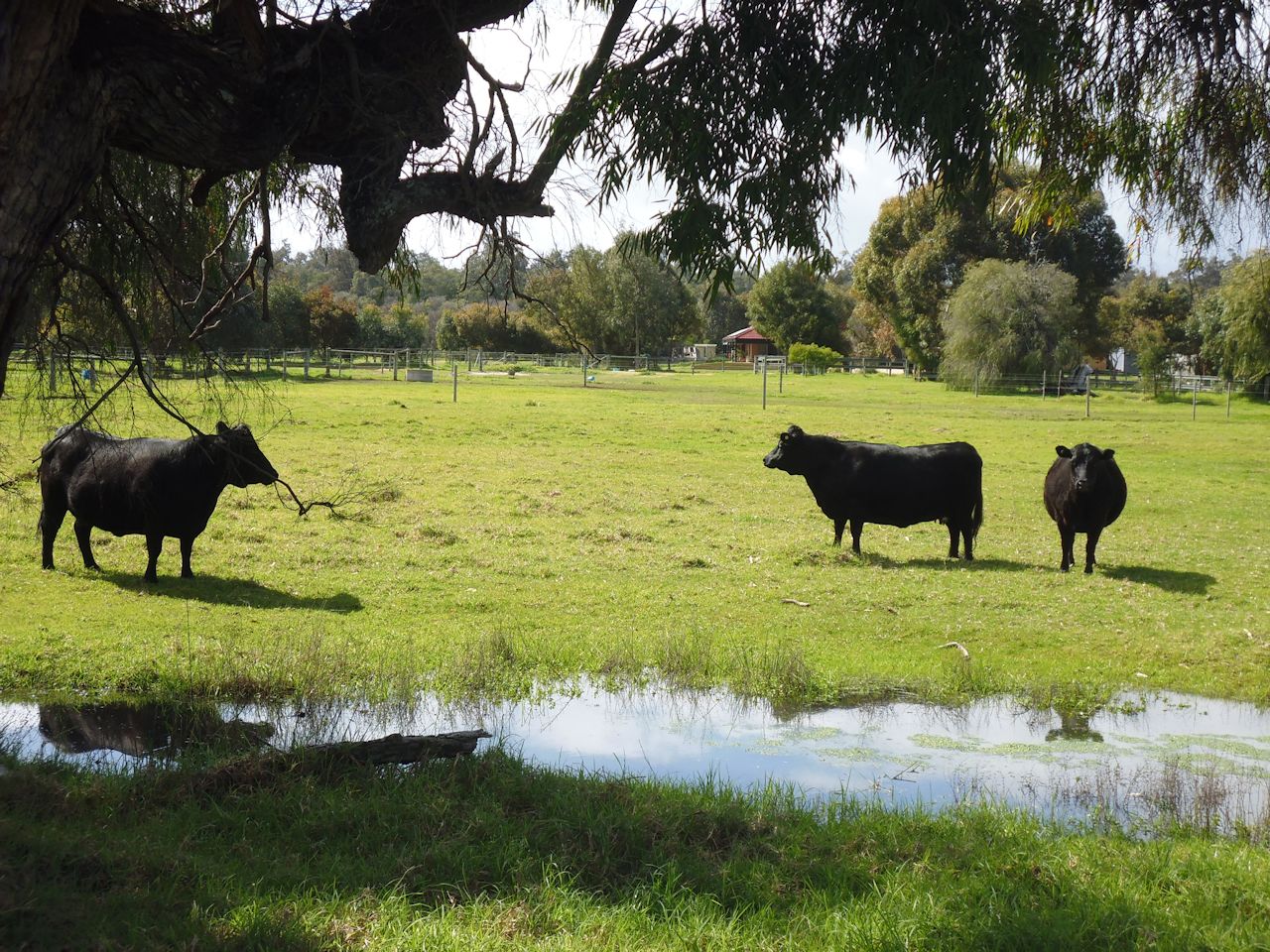
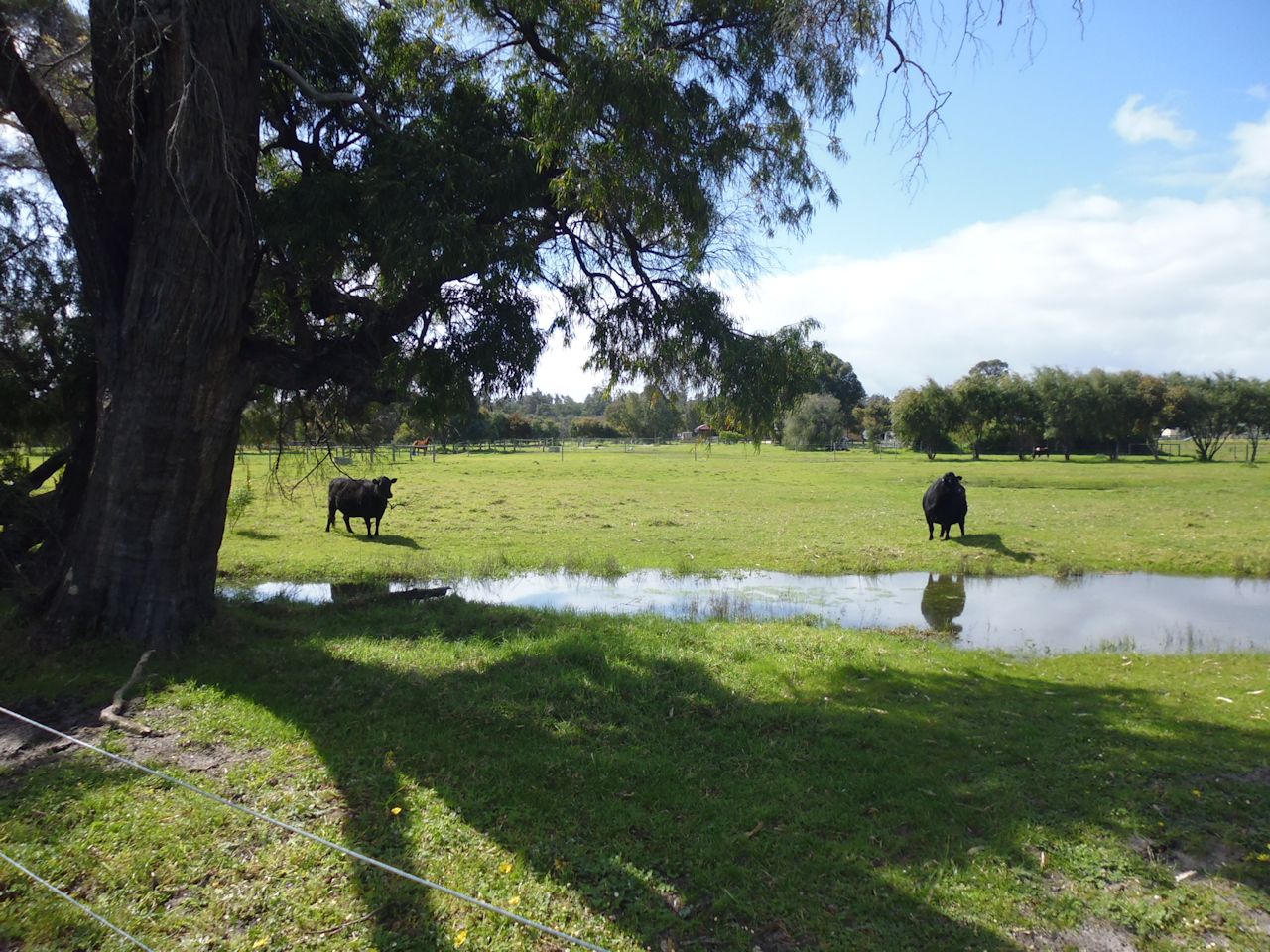
Some neighbourhood cows (and a horse) decided I was interesting enough to stare at as I was walking by…

P1040904

P1040905

P1040906

P1040907

P1040908

P1040903