Challenge Quilt 2011: Piecing the top

15 10 2011

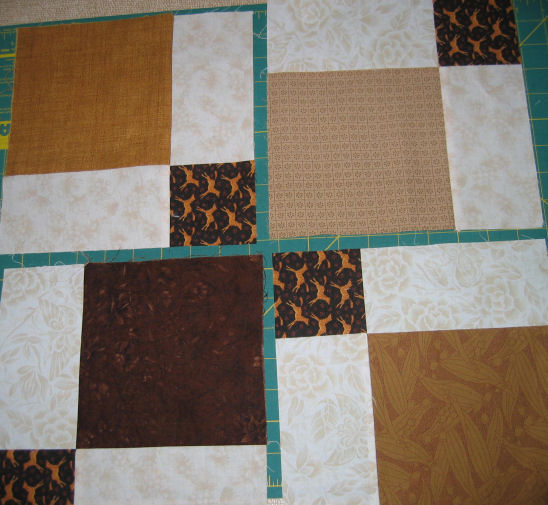
After deciding on the design, the colour, and the fabrics, then doing all the cutting, it was time to start putting the main part of the quilt top together.

I stitched a sashing strip to one side of all the squares in a each row (70 squares in total). I chain pieced these so that I kept the squares in each row together, and in the order in my ‘design wall’ photos.

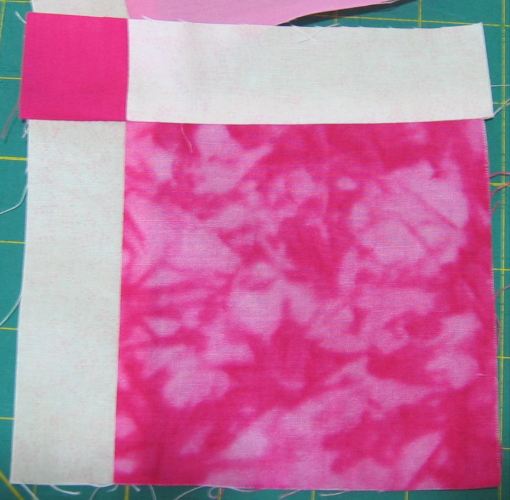
Then I stitched a sashing strip with a ‘key’ square to the adjacent side of 6 of the 7 squares in each row (the last square didn’t get one as I didn’t want the key squares in the border area). I only stitched these sashing/key strips to 9 of the 10 rows — the last row didn’t get them either as I didn’t want the key squares in the border area.

Here’s what one row looked like chained together:

Next, I stitched all squares in a row together, and pressed them alternately — I pressed the seams of the even rows towards the sashing pieces, and pressed the seams of the odd rows away from the sashing pieces (into the square).

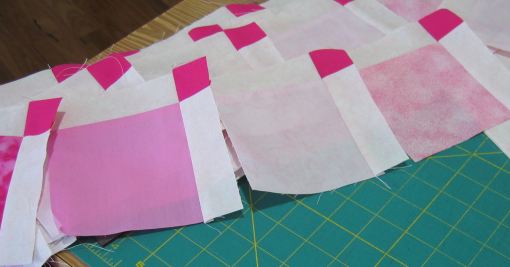
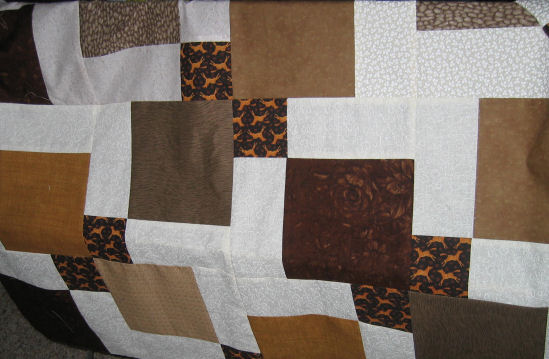
Here are all the rows pressed and laid out ready to piece together (notice the use of numbered pins to indicate the rows):

Finally, I stitched the rows together. To avoid warping and skewing, I stitched rows 1 and 2 together in one direction, then row 3 to row 4 in the same direction, then 5 to 6, 7 to 8, and 9 to 10 all in the same direction. After pressing the seams, it was time to join rows 9/10 to rows 7 /8 — this time stitching in the OPPOSITE direction. Likewise, I stitched rows 1/2 to rows 3/4 in the opposite directions, then rows 5/6 to both large pieces.

This ‘stitch in the opposite direction’ was a technique Michelle Pearson (at Handcrafter’s House in Midland, Western Australia) showed me at a quilting workshop a few years ago — it stops large joined pieces from skewing… and it works! One way to know which direction you’ve stitched is to leave a decent amount of thread either at the beginning or end of a stitched row (but NOT at both ends!). I leave the thread at the beginning of my stitching. That way, after I pin the next rows together, I can tell which end to start stitching from (the opposite end is the one without the long threads).

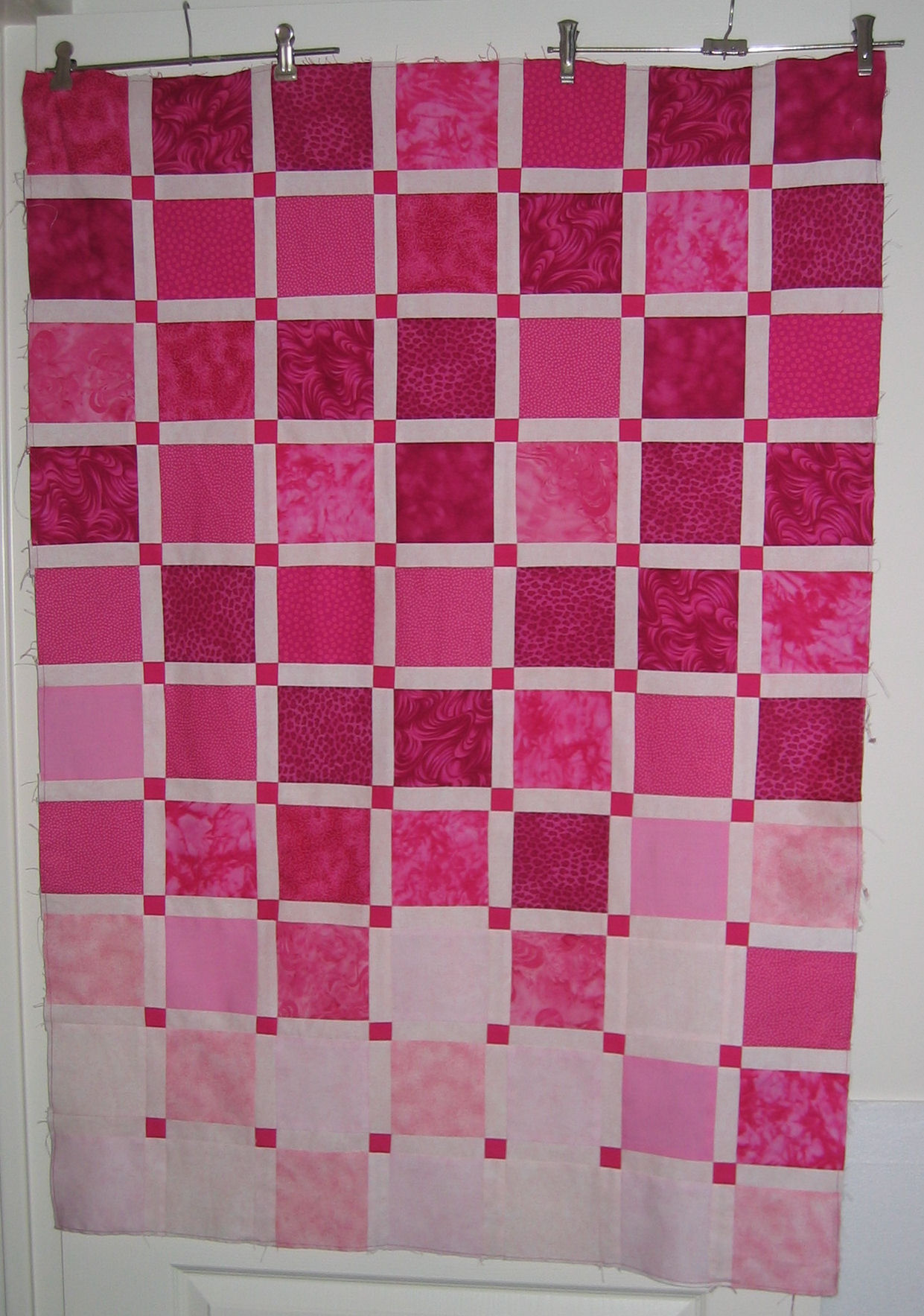
A final press and the main top was all done — the only thing to do was stay stitch about 1/8 inch in from the edges just to hold everything in place as it may be some weeks before I get back to this quilt.

No need for a design wall this time — I just hung it over the door with some skirt hangers!

See also:


Marine life art quilt

17 07 2011
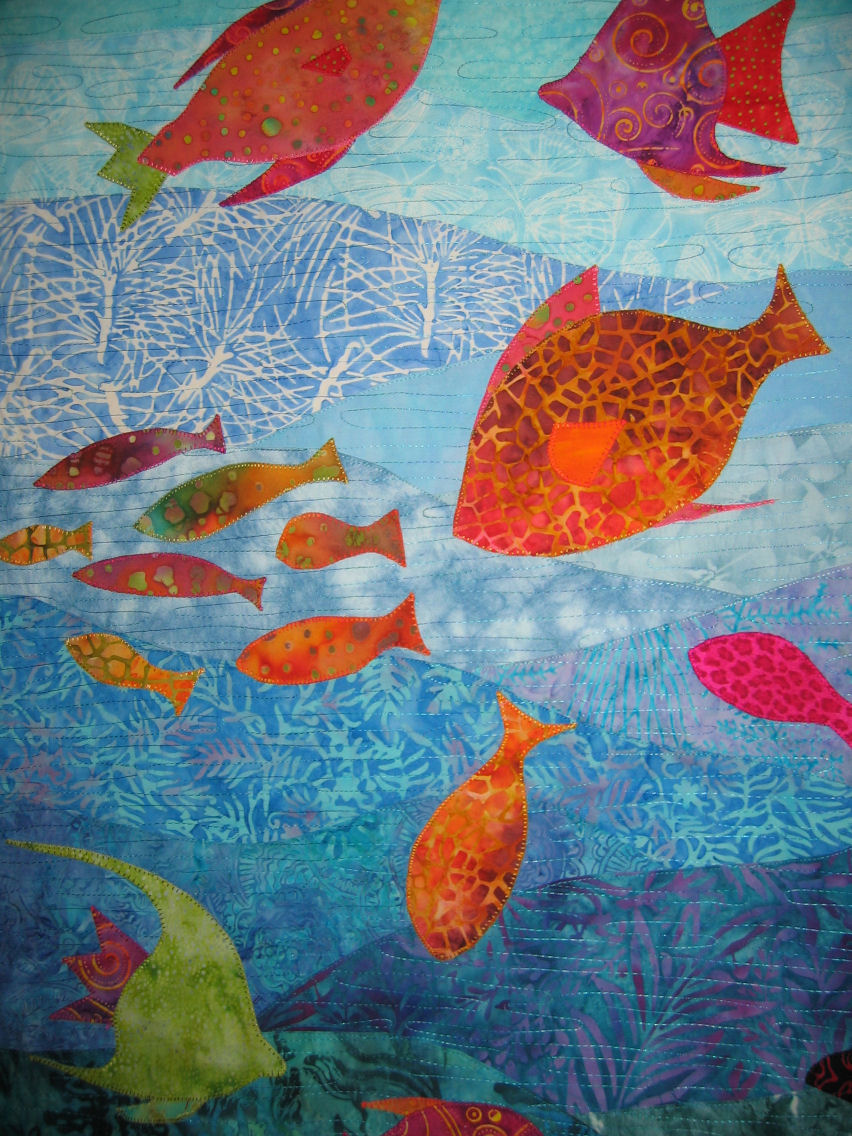
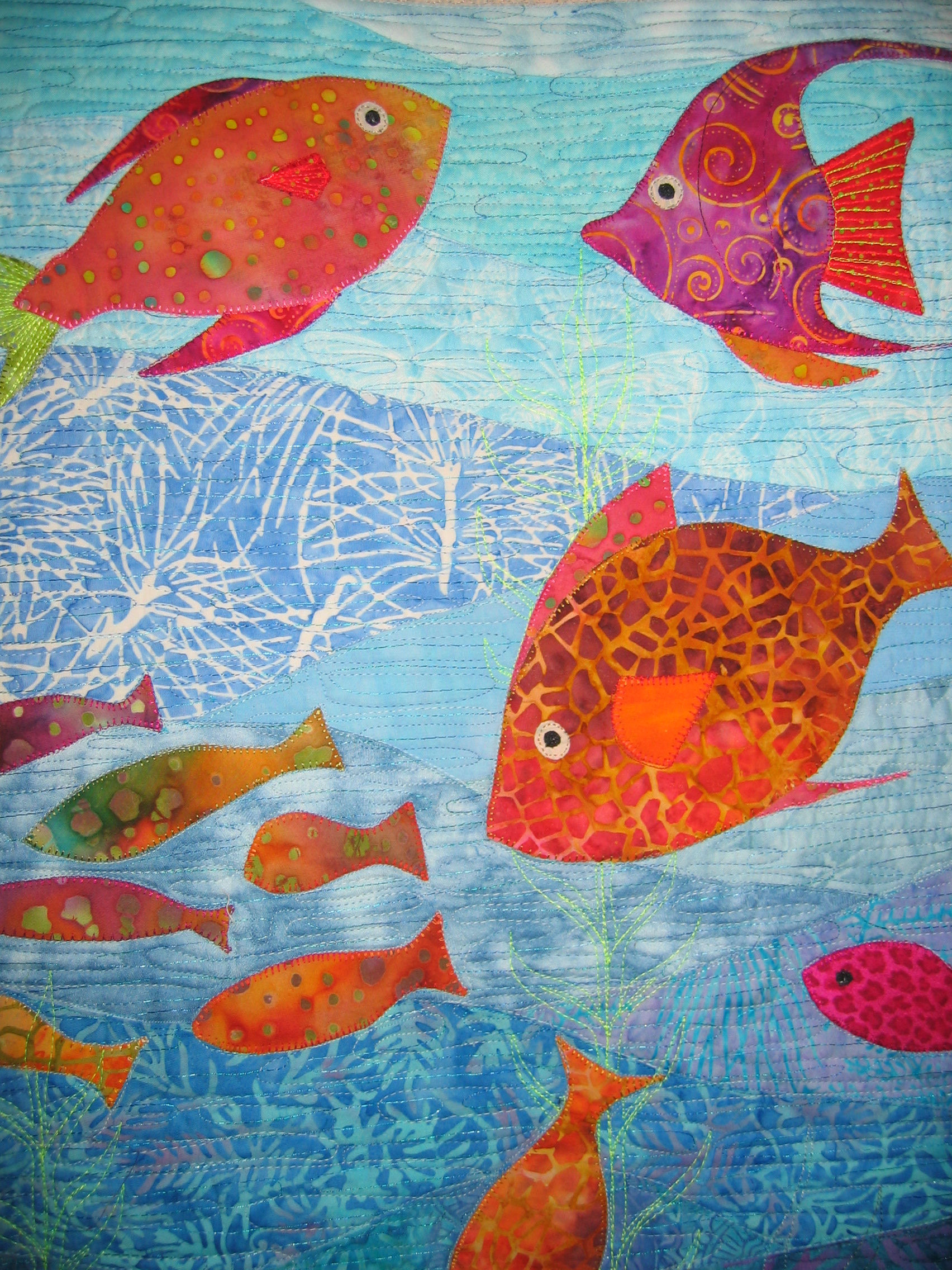
The finished quilt

The finished quilt

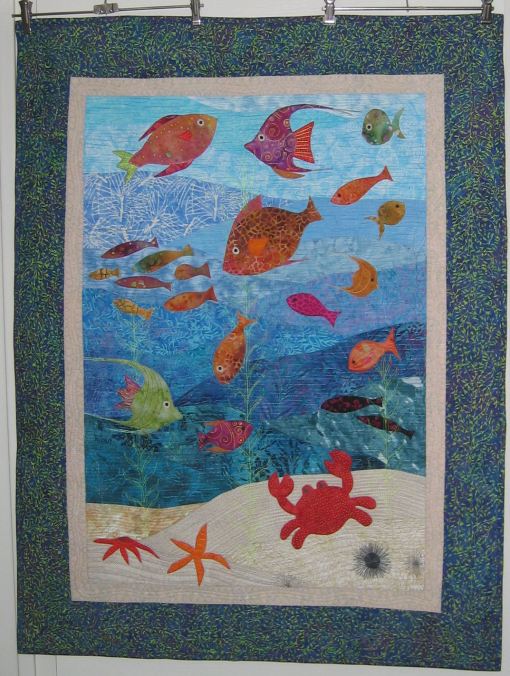
Susan, a work colleague, commissioned me to make a quilt for her friend, who is pregnant with her first child. The original thought was for me to make a cot quilt a little bigger than usual that could carry through to the child’s toddler years. However, my friend Bobbie, who used to be an infant health nurse and lactation counsellor before she retired, insisted that quilts for babies are NOT good. It seems babies get too hot under them and, as they can’t kick off the quilt like children and adults can, that can affect the baby’s core temperature. She strongly cautioned me against making a cot quilt, and instead suggested I turn the piece I’d already started into a wall hanging for the baby’s room.

Susan had told me that her friend was going with a maritime theme, with aquas and greens predominant. So I decided to make a fishy art quilt.

This blog post details the steps I took to make this quilt. To see a photo at full size (especially if you’re interested in the stitching), click it, then click it again in the window that opens to show it full size.

Step 1: Design the background

I decided to use various fabrics in a wavy pattern to emulate the layers of colour in the water, with some sea floor at the bottom of the quilt.

The first step was to create the master design: I taped some sheets of white paper together and drew the wavy lines with a Sharpie, adding sequential numbers to each shape.

Next, I taped some ‘tearaway’ on top of the white paper master design and traced the outlines and added the same numbers. The tearaway is what you pin the fabric too and what stabilises the fabric as you do the surface stitching. Hint: Use pencil or ballpoint pen on the tearaway, NOT a Sharpie — Sharpie ink will show through any light fabrics. I learned this the hard way and had to remove the tearaway and replace it with unmarked tearaway — fortunately, I caught it early in the process, so it wasn’t too disastrous.

Finally, I taped freezer paper on top of the tearaway/master design sheet (shiny side down) and traced the shapes again and added the same numbers again. I also added little arrows to indicate the edges that would be covered by another piece of fabric.

Master design traced onto tearaway and freezer paper

Master design traced onto tearaway and freezer paper

Step 2: Cut out the freezer paper pieces

The next step was to separate the design sheet layers — the master design on the white paper got folded up and put away in case I need to make something similar again some day; I put the tearaway to one side as it’s what I’ll use to pin the fabrics to and to stitch over; and I cut the freezer paper into all 19 background shapes.

Freezer paper shapes

Freezer paper shapes

Step 3: Audition the fabrics

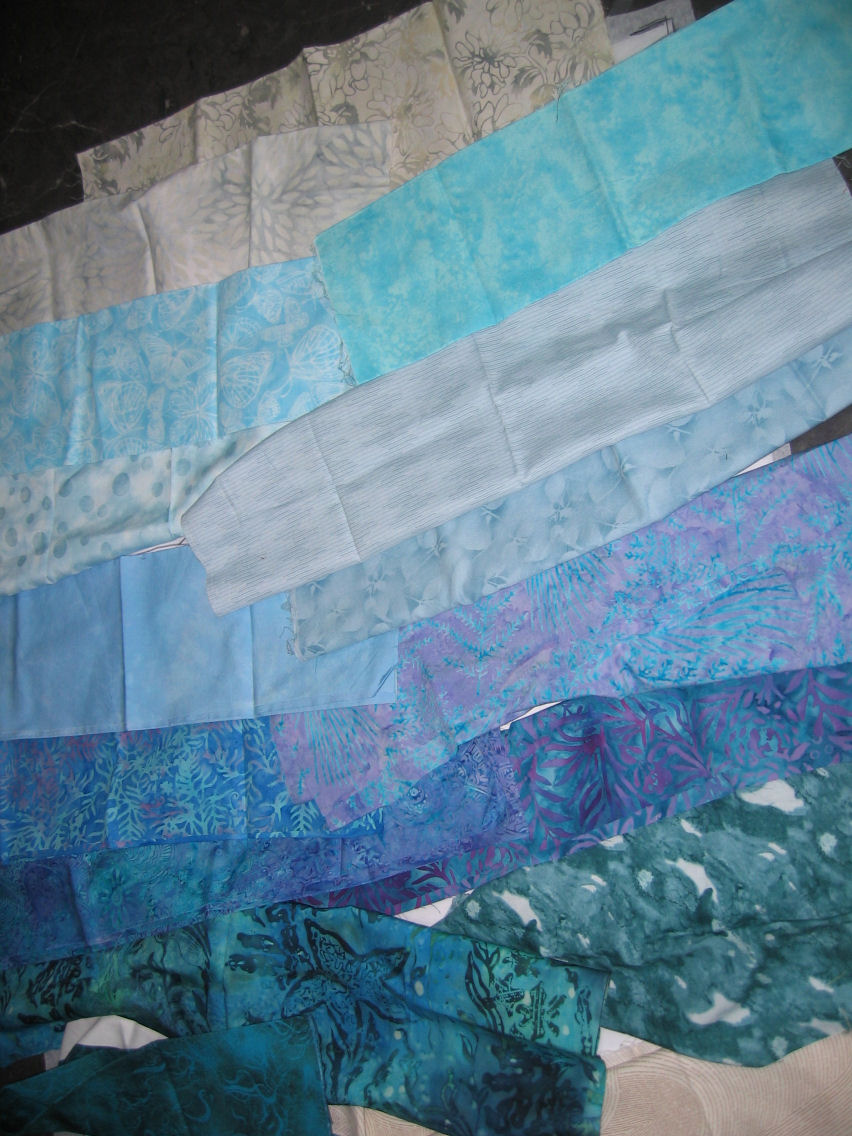
The next step was to audition the fabrics. I’d already pulled out a heap of potential blue/green fabrics from my stash, but until I put them next to each other (‘auditioning’), I didn’t know what would and wouldn’t work. Some fabrics that looked fine in the sewing room ended up being way too dark when laid out, which is why auditioning is so important. Remember, this quilt is for a child’s/nursery room, so I wanted to use bright, clear fabrics.

Audition potential fabrics

Audition potential fabrics

Step 4: Iron the freezer paper to the fabrics

I’d never used freezer paper before, so I followed the instructions in Gloria Loughman’s Luminous Landscapes book.

I ironed the freezer paper pieces (shiny side down) to the FRONT of each piece of fabric. Then I cut around each piece, leaving about 1/2 inch (1 cm) of fabric showing.

Iron freezer paper to fabric then cut out fabric pieces

Iron freezer paper to fabrics then cut out fabric pieces

Step 5: Turn under the top fabric edge and pin the fabric pieces to the tearaway

Remember I marked with arrows all the edges that would be hidden by other pieces of fabric? Here’s why… Find the edge with NO arrows, and turn it under so that the turned edge is lined up with the freezer paper edge. Press. Leave the other edges ‘free’ and hanging out from the freezer paper pattern.

Starting from the top, place each numbered pattern piece on top of the tearaway, making sure that the pattern piece and the outline on the tearaway match. There will be some overlap where the ‘free’ edge of the fabric covers part of the next piece below it. That’s OK. Pin the top (turned under) edge to the tearaway only.

(Why did I start from the top? I wanted each piece to overlap from the bottom up, giving some illusion of depth. That meant I had to lay the pieces out from the top down. Make sense? 😉 )

Pinned freezer paper pieces

Pinned freezer paper pieces

Step 6: Sew the fabric pieces to the tearaway

Next, I sewed the turned fabric edges to the tearaway. Again, I started from the top and worked down the numbers to the bottom.

DON’T take off the freezer paper until you’re finished — I initially tore off the freezer paper of the first two pieces (see photo above), but in doing so I realised that I was warping the fabric out of shape. So instead, I just lifted the edge of the freezer paper where I was to sew and sewed the stitching line about 1/8 inch (or less) from the turned under edge of the fabric.

After sewing all the pieces down, I removed the freezer paper and discarded it (I believe freezer paper can be used a couple of times, but as it’s unlikely I’ll ever make this quilt again, I didn’t see any need to keep it).

Finally, I pressed the completed background piece.

Background fabrics stitched to tearaway

Background fabrics stitched to tearaway

Step 7: Stitch the water and sand

I free motion stitched the water effects and the sand effects using my my HQ Sweet Sixteen quilting machine. This helped hold the background in place on the tearaway.

Step 8: Applique the marine creatures to the background

I chose some bright fabrics from my scrap stash for the fish and other marine creatures, then hand drew some fish shapes on to fusible web.

I  cut out the shapes from the fusible web, leaving about 1/4 inch spare all round, then fused these shapes to the BACK of the fabrics I’d chosen for the fish and the crab.

Next, I cut out the fused fish/crab/starfish shapes from the fabrics, using the outlines as my cutting guide. Then I placed the marine creatures on the background in a way that pleased me, before removing the fusible web from each shape and pressing it to the background fabric.

Once the shapes were fused down, I used the blanket stitch on my sewing machine to stitch down the raw edges of each appliqued piece, matching the threads to the colours of each creature. Some fish had different tails and fins — tails and top/bottom fins were fused down first, then the fish body, then the body fins last.

Appliqued fish
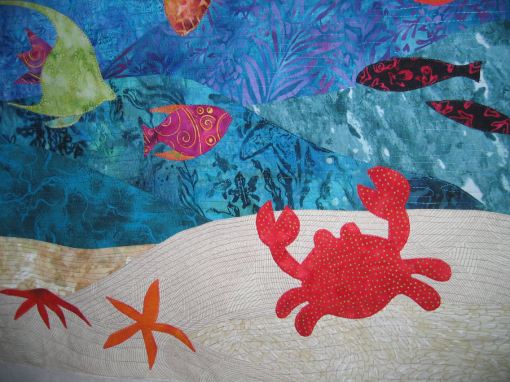
Appliqued fish

More appliqued marine creatures

More appliqued marine creatures

Step 9: Surface stitching

Next, I decorated the fish and other marine creatures with a lot more free motion stitching in various colours and added some seaweed plants in a variegated dark green thread. I added eyes to the fish and the crab with both fabric and thread. And added a couple of spiky sea urchins with thread to balance the life on the sea floor.

As this quilt is for a child, I didn’t want to use embellishments such as beads and buttons as these are dangerous to young children if swallowed.

Step 10: Remove the tearaway

Such a simple step — such a LONG time!

I wanted to remove the tearaway from the back of the fabric so that it became soft again (with tearaway behind it, fabric is fairly stiff, as the tearaway is a stabiliser that is very much like interfacing). Easier said than done. I’d done a LOT of stitching, so tearing away the tearaway wasn’t easy as there were no big patches to be torn. So over three nights, I sat in front of TV with my piece, some tweezers, and a garbage bin and slowly took out very last skerrick of tearaway from the back of the fabric.

Step 11: Add the borders

Time to audition fabrics again, this time for the borders. I wanted a thinnish framing border, and a larger outer border. I decided on a beige/sand toned batik for the inner border and a blue/purple batik with lime green leafy/seaweed shapes for the outer border.

I thoroughly pressed the quilt top before squaring it up, then I added the borders, pressing them flat as I went.

Step 12: Make the quilt sandwich

I found a large piece of batik fabric in my stash that had lots of blues and greens and decided that would be good for the backing. And I used bamboo batting in between the top and the backing fabric. I pin basted the entire quilt then started on my favourite part of the process — the quilting!

Step 13: Quilt the quilt

Now that I have my own HandiQuilter Sweet Sixteen (woohoo!), this part of the process has become my favourite. I just get into a zone and off I go. It’s very meditative!

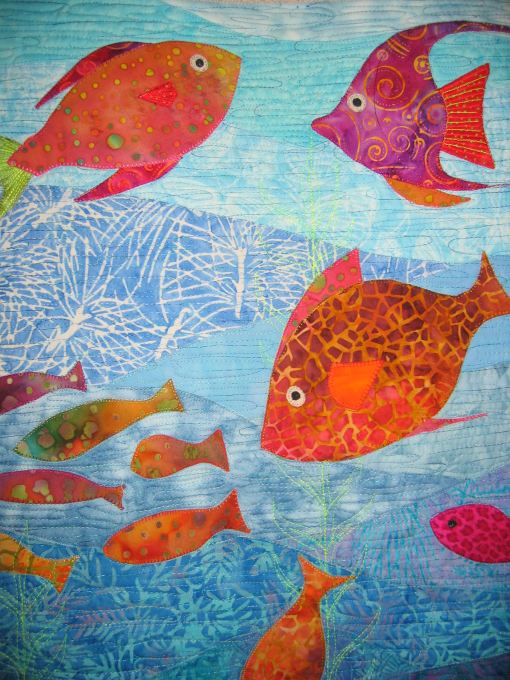
I wanted to make the fish stand out, so I made sure that I quilted around them, not over them. This forces the fabric around the fish to flatten, thus creating a certain puffiness in the fish. I added more water stitching, sand stitching, and some bright green seaweed plants/fronds to the main quilt top.

In the framing border, I stitched some wavy lines and filled the area outside them with bubbles or pebbles.

In the large border, I stitched more lime green seaweed fronds starting from each corner and moving to the centre of each side, then filled the areas between the fronds with a dark filler stitch.

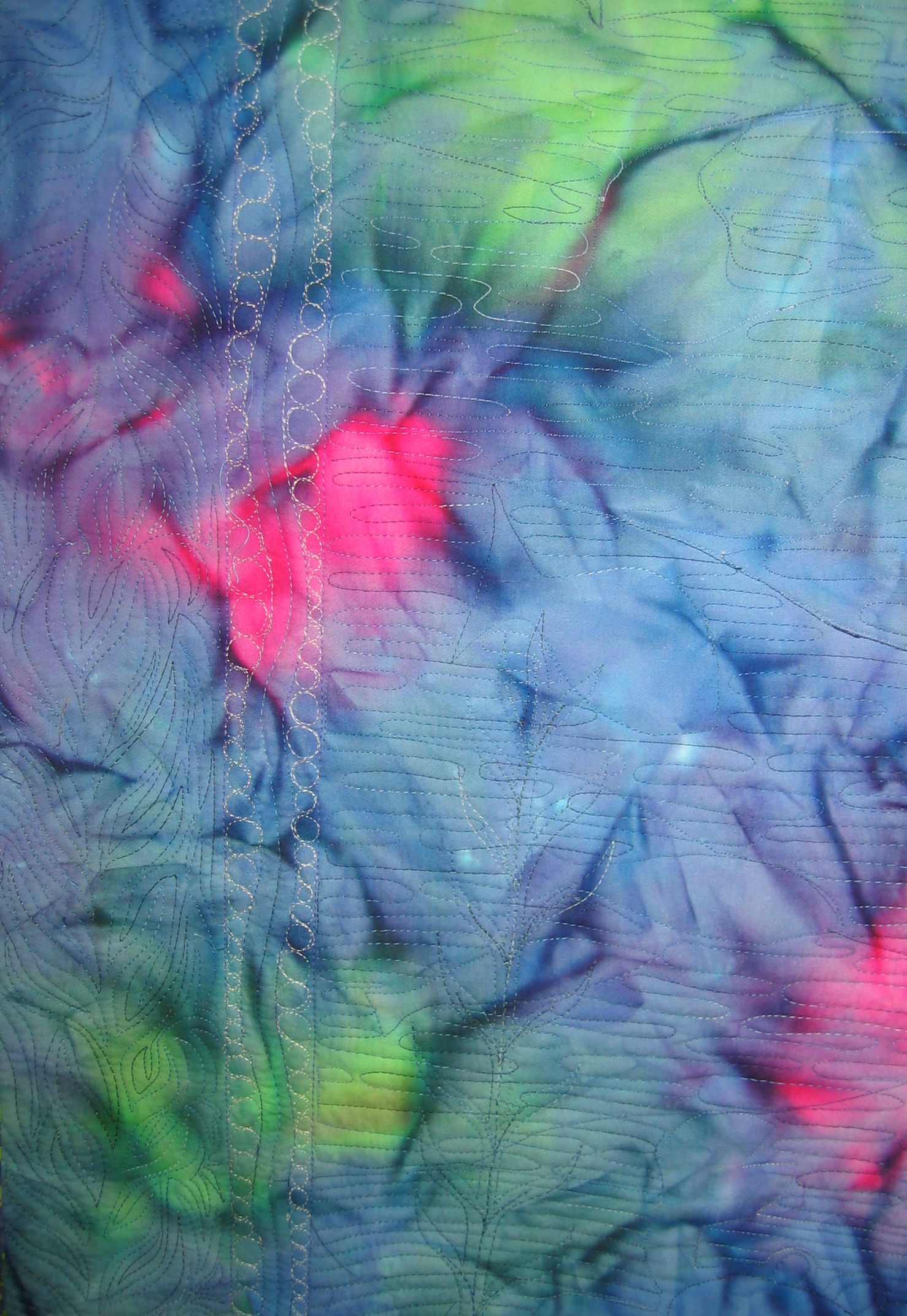
Stitching detail

Stitching detail
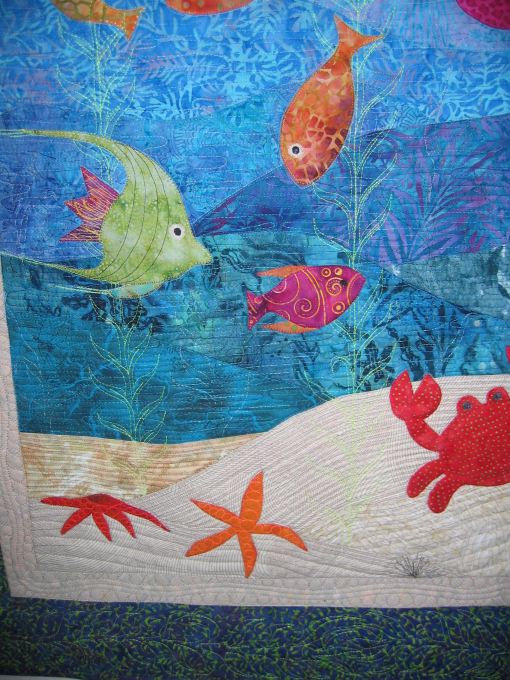
Stitching detail
Stitching detail

Stitching detail

Stitching detail

Stitching detail

Stitching detail

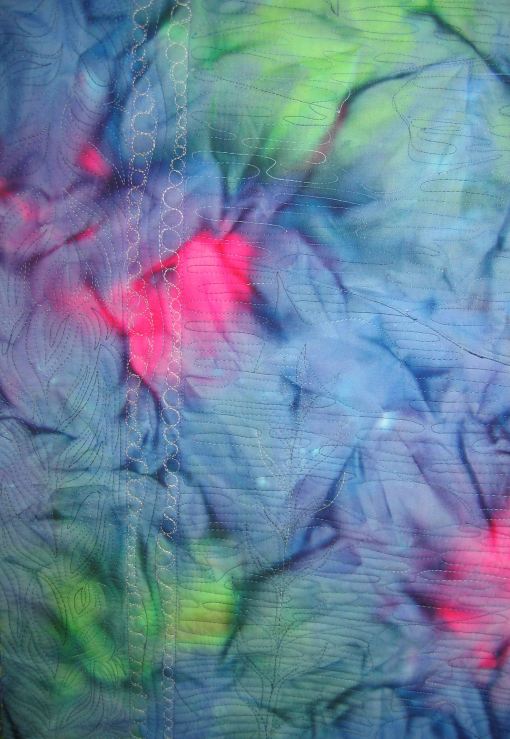
My Sweet Sixteen machine records the number of stitches. I forgot to reset it to zero when I did the surface stitching, so I don’t know how many stitches I did in that step. But I remembered to reset it when I started the quilting step… I did 110,769 stitches JUST in the quilting stage. I suspect the surface stitching stage was about 60 to 80,000 stitches, so all told, this quilt has between 150,000 and 200,000 stitches in it! Not bad for a piece that’s only 26 x 30 inches! (66 x 76 cm)

And here’s what some of those 110,000 stitches look like from the back:

Stitching on the back
Stitching on the back

Stitching on the back

Stitching on the back

As far as possible, I used a variegated blue thread in the bobbin, but for the bubbles in the framing border, I had to use a beige bobbin thread as the dark blue bobbin thread showed through too much on the front of the quilt. That’s why the bubbles on the back are in a different colour.

Step 14: Add the binding and the finishing touches

The final step of any quilt is to press it thoroughly, square it up and trim it, then add the binding and a label.

I decided to use the same fabric for the binding that I used in the large border. That way there was no further visual distraction that moved the eye away from the marine life in the main section of the quilt.

After some 40 hours of work, this quilt is finished! The commission price I will get for this quilt in no way reflects the number of hours of work or the creative process of designing and making a quilt from scratch (no pattern!) — but it’s for a good friend and it was fun to do! 😉

The finished quilt

The finished quilt


Cleaning fusible glue off sewing machine needles

30 07 2009

Following on from my earlier post about cleaning fusible glue off a Teflon-coated iron, here’s the problem I had with gunked up sewing machine needles and how I solved it with the help of a couple of people on the Etsy forums.

Problem

I’ve been doing some fast free motion quilting on a piece that’s made up of stiff interfacing onto which is fused a piece of fabric. I’ve gunked up (technical term!) 7 sewing machine needles already this evening.

The speed of the needle going through the layers seems to be re-melting the glue on the fusible and sticking to the needle, ultimately causing the thread to snap and the eye and shaft of the needle to become sticky and full of sticky gluey gunk.

How do I clean the gunk off these needles? I’ve tried an orange-based cleaner (which helped to an extent), and am now trying acetone. Any other suggestions?

These needles are perfectly fine otherwise.

Solutions

These options were suggested:

  • Sewer’s Aid: “If you put a drop on your needle before sewing through fusible it even prevents the build-up”
  • Rubbing alcohol
  • Soak in orange cleaner then wipe off
  • Soak in orange cleaner and use a scourer to wipe off
  • Holy Cow (degreaser)
  • Nail polish remover (acetone)
  • Rubbing with a wet rag
  • Scraping off with a fingernail
  • Acetone
  • Put under a flame and wipe clean

What I did while waiting for all these suggestions to come through:

  1. Soaked the needles in acetone overnight.
  2. Wiped down and then scraped with a fingernail and a pin.
  3. There was still a bit of gunk in the eyes and the slot along the shafts of these needles, so I put them in one of those little sort of ‘sonic’ things for cleaning jewellery, then scraped them again. That pretty much got all the gunk off them.
  4. I’ve also ordered some Sewer’s Aid from the local fabric store…

The next day I discovered something else: Leave the fused fabric alone for some hours before sewing it!! I left another piece for 24 hours before starting to free motion quilt it and had no problems with glue getting on the needle, whereas the first piece that caused the grief I was sewing within an hour of fusing. I shouldn’t be so keen and eager!


Cleaning fusible glue off a Teflon coated iron

30 07 2009

Over time, I get a gunky glue build-up of glue from fusible web on the sole plate of my Teflon iron. I try hard to use an applique ironing sheet (which prevents LOTS of fusible disasters!), but sometimes the glue is almost invisible and before I know it, it has stuck to the bottom of the iron. I also use distilled water for the steam in my iron. I never use the tap water because of all the chemicals in it. It can clog up your iron something terrible.

Today I had a spare 30 minutes, so it was time to tackle the problem…

Teflon is not stainless steel, so using harsh abrasives and scrubbers is not the answer. Off to the internet, where I didn’t find many answers. However, I found some, so I thought I’d collate them here for future reference for me and anyone else looking for a solution.

I’ll try each option over time and report their effectiveness here. But first, some options using things I already had in the house (Note — except where stated, your iron must be COLD):

  • Orange oil-based glue remover (De-Solv-It): Smells great, but required a lot of elbow grease and still didn’t remove it in a timely manner. Perhaps if I had more patience…
  • Xylene-based glue remover (Goof Off): Use in a well-ventilated situation with NO possibility of sparks or flames. Highly flammable and toxic to the respiratory system — you’ve been warned! Like De-Solv-It, it worked to a degree, but required a lot of elbow grease and didn’t remove it as quickly as I’d hoped.
  • Acetone (cheap nail polish remover): Same as for the xylene-based cleaner — worked to a degree, but required a lot of elbow grease and didn’t remove it as quickly as I’d hoped.
  • Damp cloth: I wet an old kitchen sponge with just water and squeezed out the excess, then laid it over the sole plate holding it down with elastic bands (you could put it on the bench and just put the iron on it!). After about 15 minutes, I removed the sponge and used my thumbnail to scrape off the residue. It worked pretty well! If you don’t have longish fingernails, perhaps use a credit card or a piece of thin, hard plastic or wood (like a pop stick, orange stick or clean satay stick) on an angle to gently scrape off the residue.
  • Nylon scourer: I took the iron to the kitchen, turned it on to the highest setting, put it on steam, held it over the kitchen sink and pressed the steam button several times. Then I turned off and unplugged the iron. While it was still pretty hot, I used a nylon kitchen scourer to remove the residue (I used a scourer  with a sponge back — one of those thin ones would probably let too much heat through and burn your fingers!) I don’t know whether it was all the other things I’d done, but this worked really well. Next time, I’ll just try this without using any of the other techniques first to see how well it really works.
  • The winner!!! Cheap, easy, and it works a treat!! This from Zzazz on Etsy: I use a soft brush, like an old toothbrush, and some white vinegar suitable for cleaning. It’s amazing what comes off the bottom. Rinse with warm water and dry with a clean towel. It should be good to go after that.

I found these suggestions on the internet but I haven’t tried any of them yet:

  • Baking soda paste: Make a paste of baking soda and water, and scrub with a washcloth. Requires a bit of elbow grease and you have to clean out the steam holes when you’re done. See http://farmgirlheart.wordpress.com/2007/07/17/a-new-purse-and-a-new-tip/
  • Bounce dryer sheets: This tip wasn’t specifically for a Teflon sole plate, but I can’t see that a dryer sheet would hurt Teflon. Wet a new dryer sheet (Bounce brand is recommended, though it’s possible other dryer sheets may work as well), wipe it over the iron and you’re done. I suspect this would work very well for a just-created gunk of glue, not for a build-up of some weeks. See http://forums.marthapullen.com/read.php?f=7&i=189779&t=189779
  • Use an iron cleaner made specifically for Teflon irons.
  • Salt and waxed paper: I think this solution is specifically for irons WITHOUT a Teflon sole plate so read the information on the web forum I’ve linked to BEFORE trying this. I have not tested this and offer no guarantees for its efficacy on a Teflon sole plate. You’ve been warned. See http://answers.yahoo.com/question/index?qid=20090104073641AA6cmjA
  • Tin foil (!) and other options: A wide variety of solutions is listed here: http://www.blockcentral.com/tips-pressing.shtml

Of course, avoiding the problem in the first place is the best solution so use an applique ironing sheet (or baking paper if you don’t have one), clean off the sheet between each use with a scrap piece of cloth, and have a scrap piece of cloth an old plastic card (like  a credit card) near the iron to scrape it immediately you realise that you’ve got fusible stuck to it.

If only I practiced what I preach! 😉


Log Cabin Quilt: 6

29 11 2008

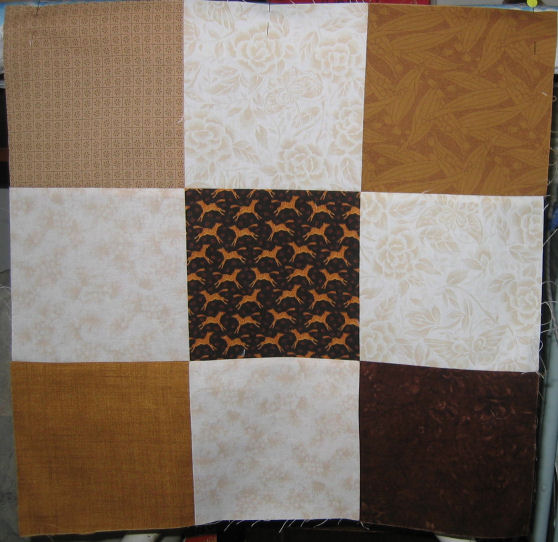
As promised, here are some photos of the Disappearing Nine Patch I’m doing for the back of the log cabin quilt. Basic instructions are in the photo captions.

9-patch of 6.5 inch squares

9-patch of 6.5 inch squares

Cut the 9-patch across the middle both ways

Cut the 9-patch across the middle both ways

Turn two diagonally opposite patches 180 degrees

Turn two diagonally opposite patches 180 degrees

Sew back together again

Sew back together again

Join the big blocks together

Join the big blocks together

Yes, my mother also wonders why I would take perfectly good pieces of fabric, cut them up, join them together, then cut them and join them again! 😉

See also:


Quilting: Easy double-fold bias tape

22 09 2008

I’m off to a Japanese Meshwork workshop this coming weekend and had to cut the fabrics and make double-fold bias strips from it. Bobbie lent me her 1/2″ bias tape maker, but I wasn’t happy with the results on my first few tries. I just couldn’t get the folds even, and on the lighter fabric, I got puckering in the centre, even when using spray starch to ‘crisp’ up the fabric.

So off to the internet to see if there was an easier way! I couldn’t find anything on YouTube but I did find an easy method here:
http://creativelittledaisy.typepad.com/creative_little_daisy/2007/11/diy-version-of.html

In case that blog post ever goes missing, here’s my variation on it (apologies for the blurriness of some of these photos).

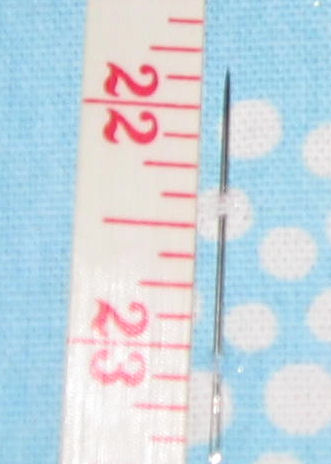
Position a needle on the ironing board so that the gap between the ‘grabs’ of ironing board fabric is 1/2″.

Needle on ironing board with 1/2" gap

Needle on ironing board with 1/2″ gap

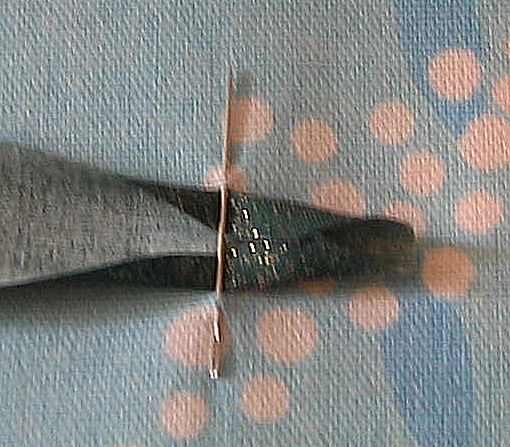
Clip one end of a 1 inch fabric strip to a point so that it can slip under the needle easily.

Snip the end and pull through gap

Snip the end and pull through gap

When you gently pull the fabric through, you may need to wiggle it a bit to get the folds even.

Wiggle the folds to make even, if necessary

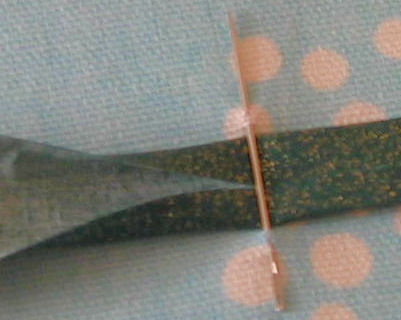
Gently pull the fabric through, about an inch or two at a time. Watch that the folds remain even, and help guide the fabric through if necessary. I found that with some fabrics I had to use my left hand on the lower fold to keep it even—the upper fold sorted itself out when I did this.

Pull through gently

Pull through gently

Iron as you go. Press each inch or two as you pull it through the needle. Be careful you don’t burn you fingers—the fabric gets pretty hot with all that pressing.

Iron as you go

Iron as you go

End result—perfect 1/2 inch double-fold bias tape strips! Give the strips a squirt of spray starch and a final press, then, if you’re not using them straight away, roll them around a cardboard tube and pin until you need them. The folds will separate if you’re not using them immediately.

Perfect 1/2 inch double-fold bias tape

Perfect 1/2 inch double-fold bias tape


Cleaning secateurs

11 04 2008

I caught the tail end of The Martha Stewart Show yesterday (Wednesday 9 April 2008 episode), where she was describing how to clean secateurs (pruning shears, bypass shears, whatever you want to call them!).

So after I’d finished doing some gardening this morning, I followed her simple instructions and cleaned up a couple of pair very quickly and easily. Her secret: lemon juice, salt, and a cork!

Rub a little lemon juice on the blades, sprinkle a little coarse cooking salt over the lemon juice, then rub the lemon and salt mixture into the blades with the end of a cork from a wine bottle—the cork protects your hands and adds a slight grittiness to the mix too. A bit of scrubbing with this mixture and even the stubbornest plant stains come off the blades. Wipe off the mixture after you’re done.

Then to protect the blades and prevent corrosion I squirted a drop of olive oil (any oil should work) on the blades and wiped them clean, leaving enough oil on the blades to protect them.

It works a treat. Think of it as salad dressing for your tools.

Oh, and I added this information to the Wikipedia article on secateurs as there was so little on their maintenance. My good deed for the day!