Wow! First Prize!

14 02 2013

I entered two of my art quilts into a local art awards competition/exhibition (Boyup Brook Art Awards), and found out last night that one of them had won FIRST PRIZE in the Textiles division! Not only do I get the honour and glory of being a first prize winner, but I’ll also get $300! One of the conditions of entry is that all pieces have to be for sale, so if it sells, then that will be another bonus. Gotta be happy with that!

The exhibition is on until this Sunday, 17 Feb 2013, at the Boyup Brook Town Hall (Western Australia), as part of the Country Music Festival.

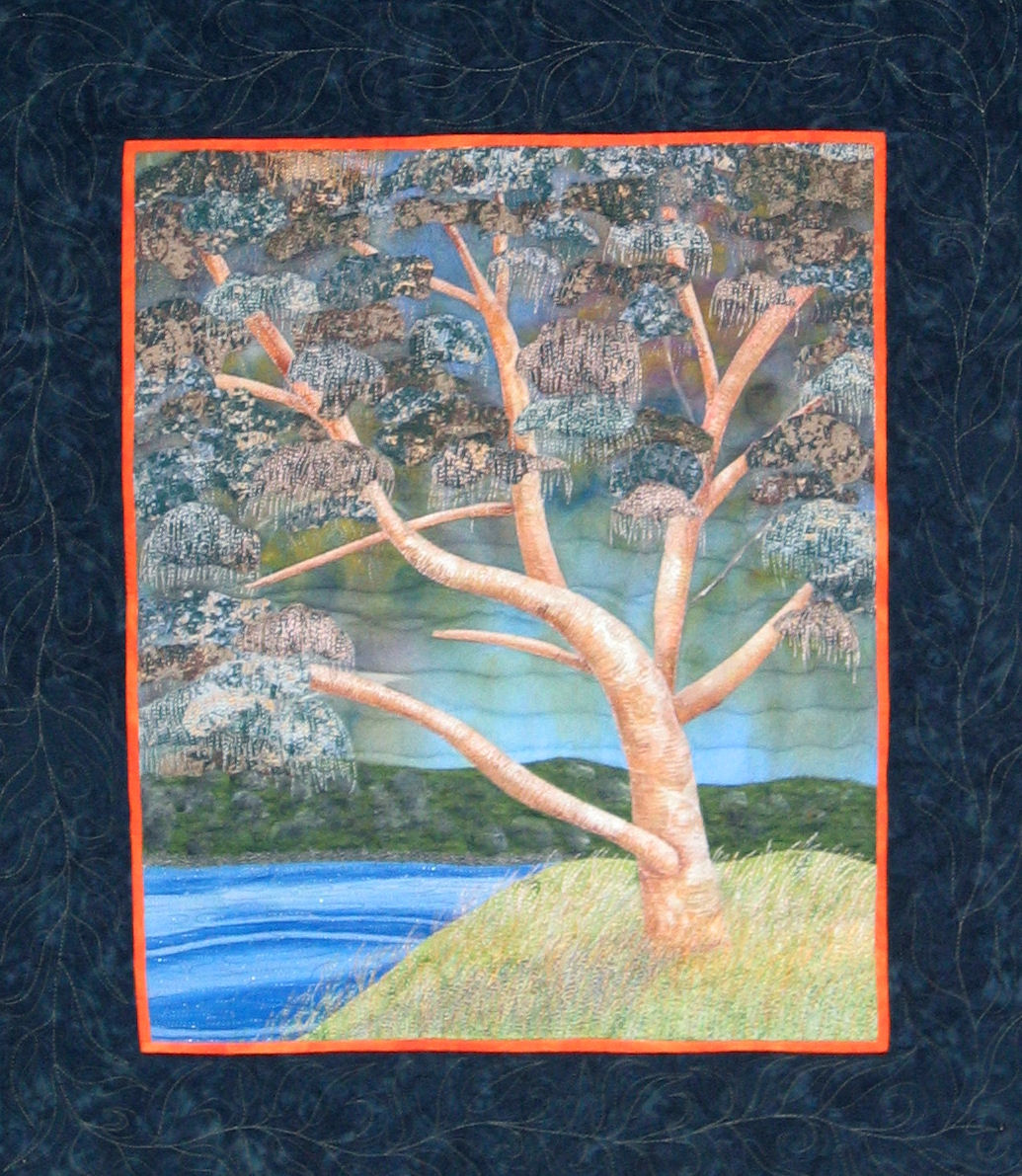
The art quilt that won first prize was my ‘Estuarine Eucalypt’ piece:

01_full

My friend Bobbie won second prize for her art quilt that she made for our annual Challenge (the piece she entered is the second photo in this post: https://sandgroper14.wordpress.com/2012/10/20/2012-challenge/).

IMG_4750

Way to go, us!!! 😉

Many thanks to the organisers and the sponsors, without whom these art awards would not have been possible. The cash prizes were donated by IGA (overall), Scotts Brook Wines (paper, canvas, and mixed media) and Boyup Brook Farm Supplies (textiles, 3D sculptures, Indigenous, and packer’s prize).


Community Quilt 63

12 02 2013

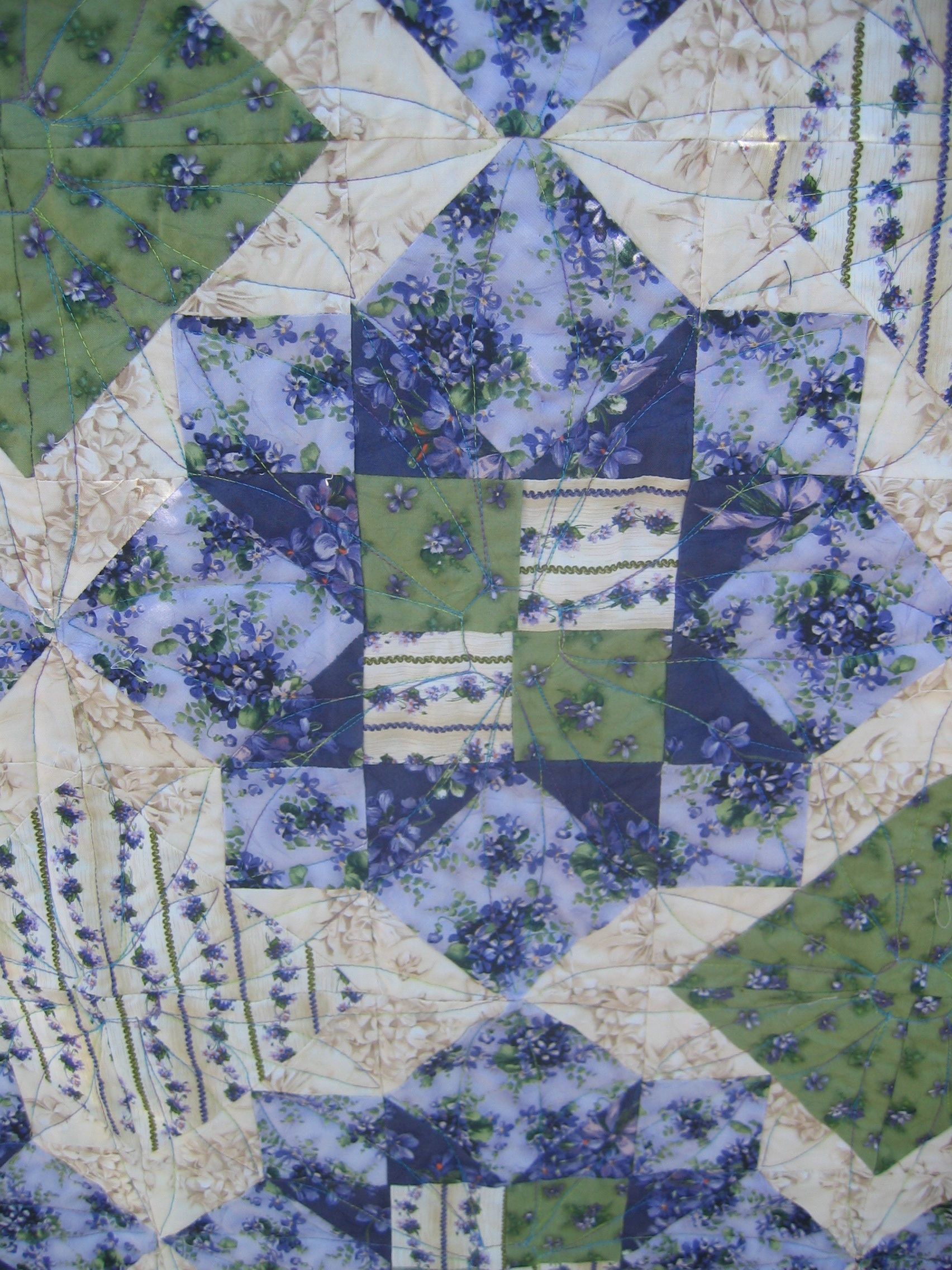
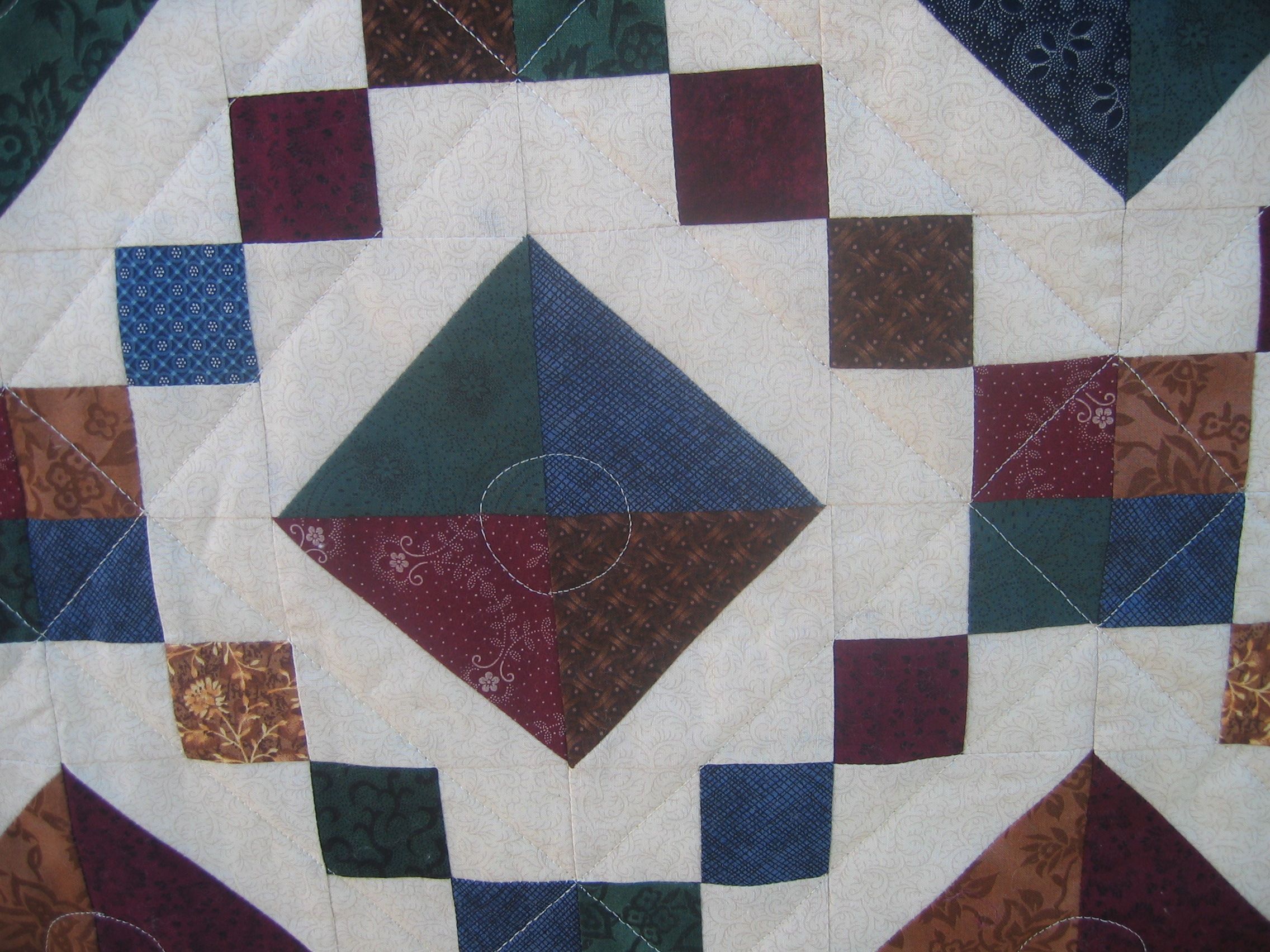
This one was quite a traditional quilt, with some big star blocks in purple, green, and cream florals.

How to quilt it? I decided to get away from the geometry of the blocks and quilt large freeform flowers in each star block, starting with the purple blocks where the star points were evenly spaced, then continuing into the cream/green blocks where they weren’t. I was originally going to quilt the flowers in the cream/green blocks in a cream, but then decided to continue using the same purple, blue, and green variegated thread I used in the purple blocks in these blocks too. For each flower, I stitched a sort of circle around the centre join in the block, then radiated out the petals from there, doing the long petals all the way around first, then filling in with the petals to the shorter points.

For the border, I kept with the same thread and stitched loopy flowers and leaves.

(Click on a photo to view it larger. The colours look a little washed out as this photo was taken in the heat of a very hot summer’s day. Sorry about that!)

quilt63_01

quilt63_02

quilt63_03

Back:

quilt63_04

Threads used:

  • Top: Superior King Tut ‘Cairo’ (40 wt, cotton, colour #932)
  • Bobbin: Bobbinfil (white, cotton)


Community Quilt 62

12 02 2013

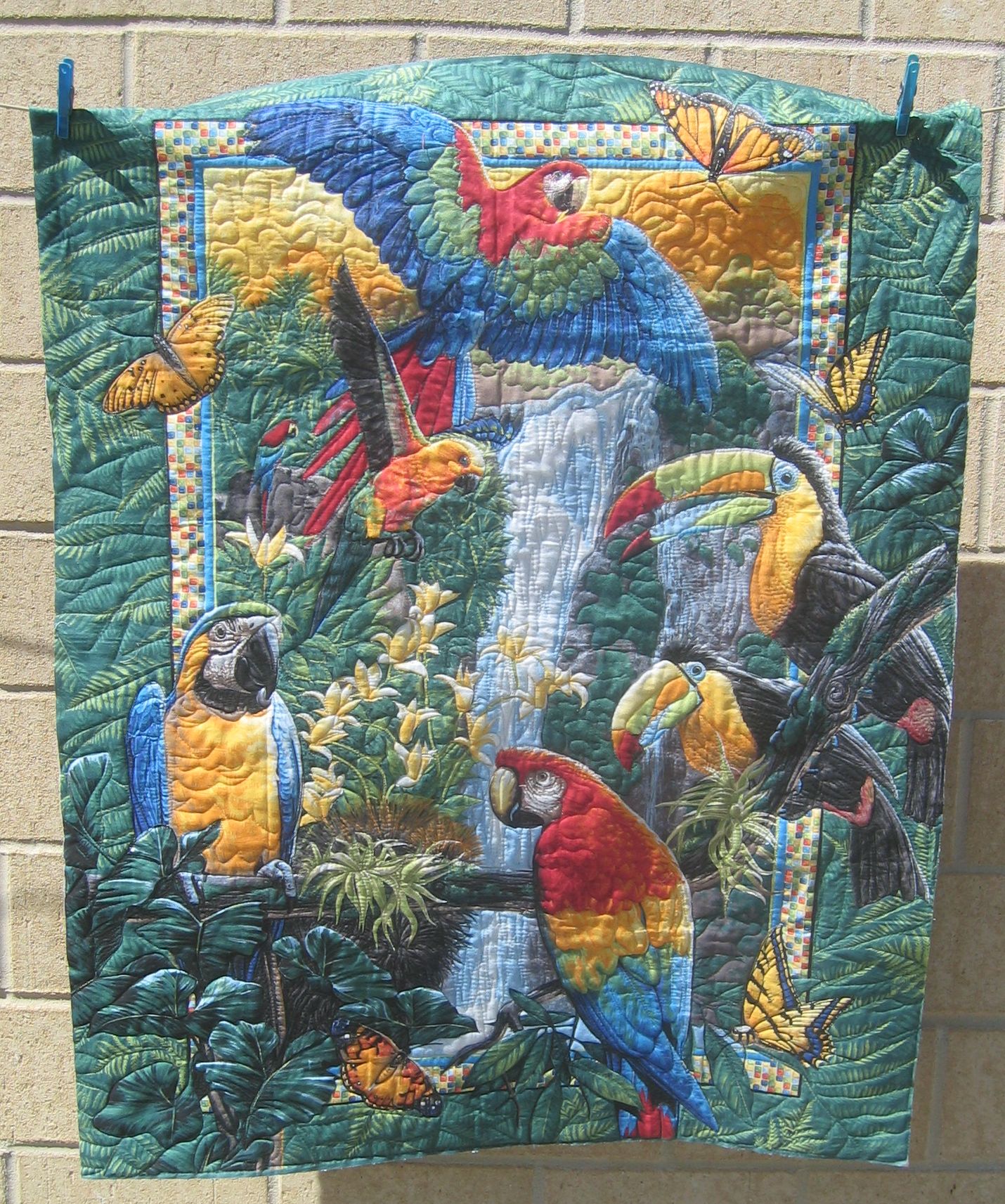
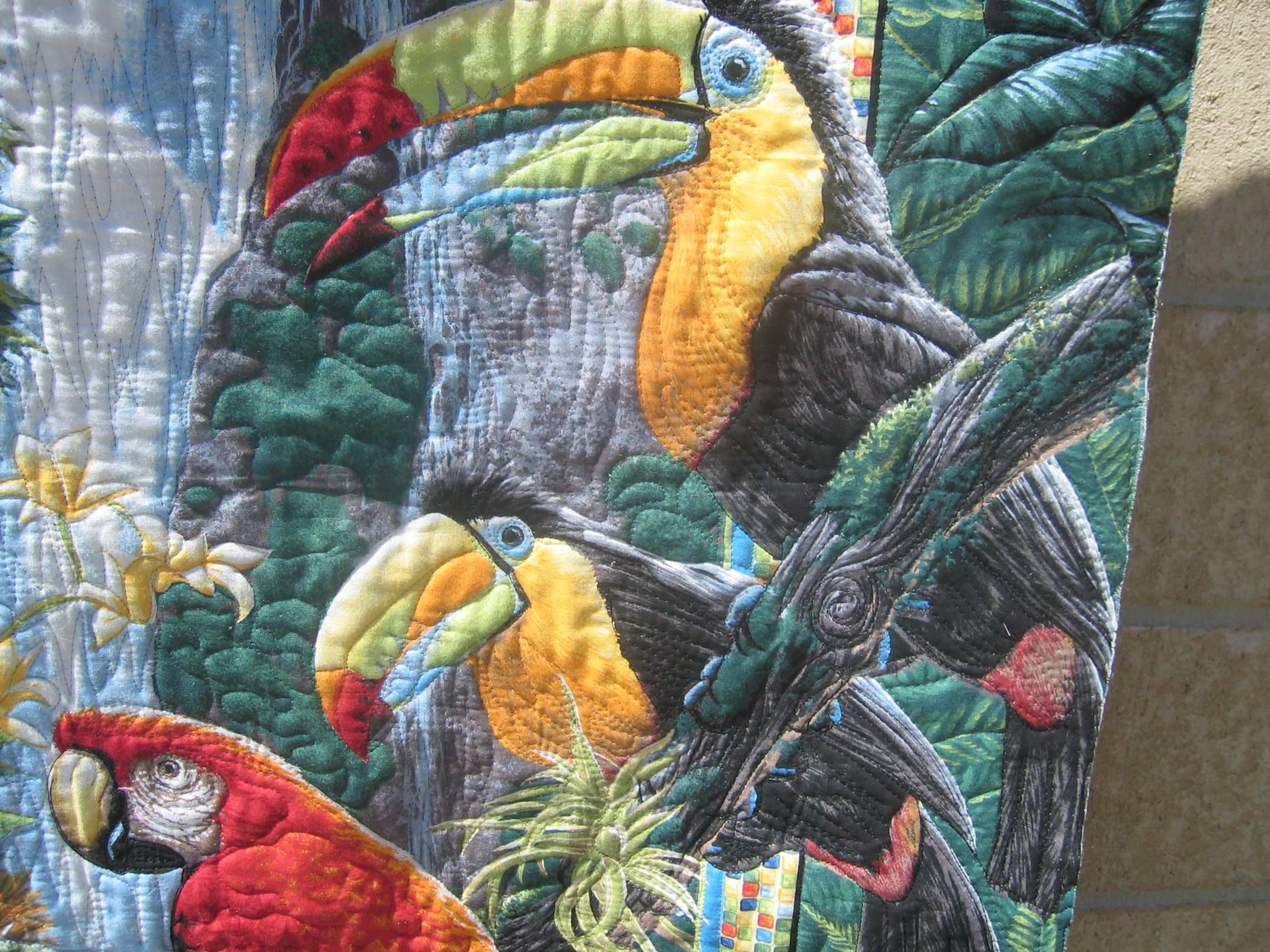
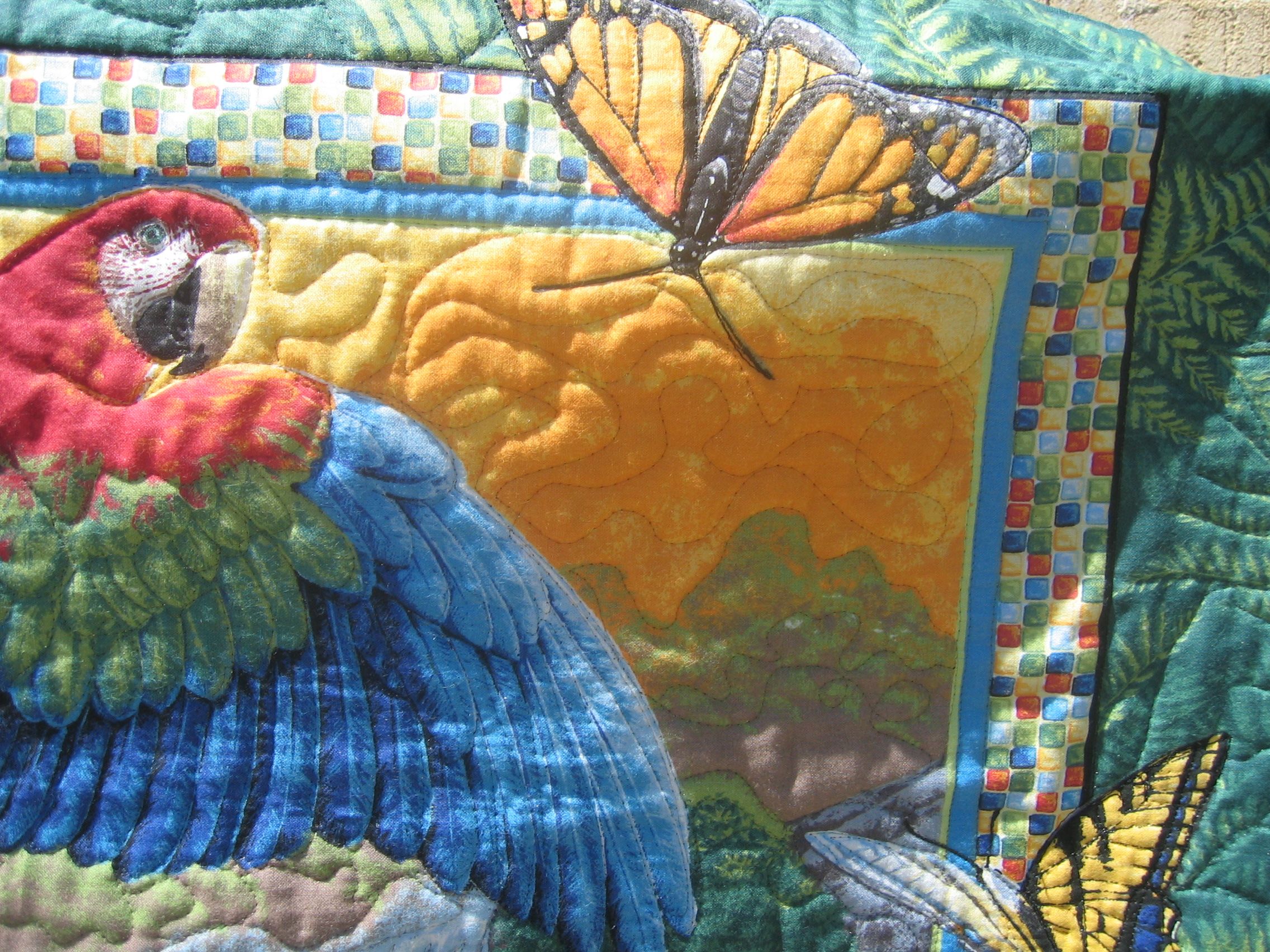
I LOVE this panel! Normally, I’m not fussed by fabric panels. Either I don’t like the colours or the theme, but this one was different and not like any panel I’ve ever seen before. I love the colours and I especially like the birds — macaws are some of my favourite birds, and I love the over-the-top design of the toucans.

I was originally going to do a lot of thread painting on this quilt in matching colours, but realised fairly quickly that all that would do would be to tighten up the quilt and make it quite stiff. I suspect this quilt will go to a small child, and it needs to be comforting. So after doing a little thread painting in black, I switched to an invisible thread in smoke and mostly just outlined the main features, adding a bit of texture to the waterfall, the tree trunks, the edges and veins of the leaves, etc.

(Click on a photo to view it larger. The colours look a little washed out as this photo was taken in the heat of a very hot summer’s day. Sorry about that!)

quilt62_01

quilt62_04  quilt62_03

quilt62_02

Threads used:

  • Top: YLI Wonder Invisible Thread ‘Smoke’ (nylon)
  • Bobbin: Wonderfil Deco-Bob (80 wt, colour DB 245)


Community Quilt 61

12 02 2013

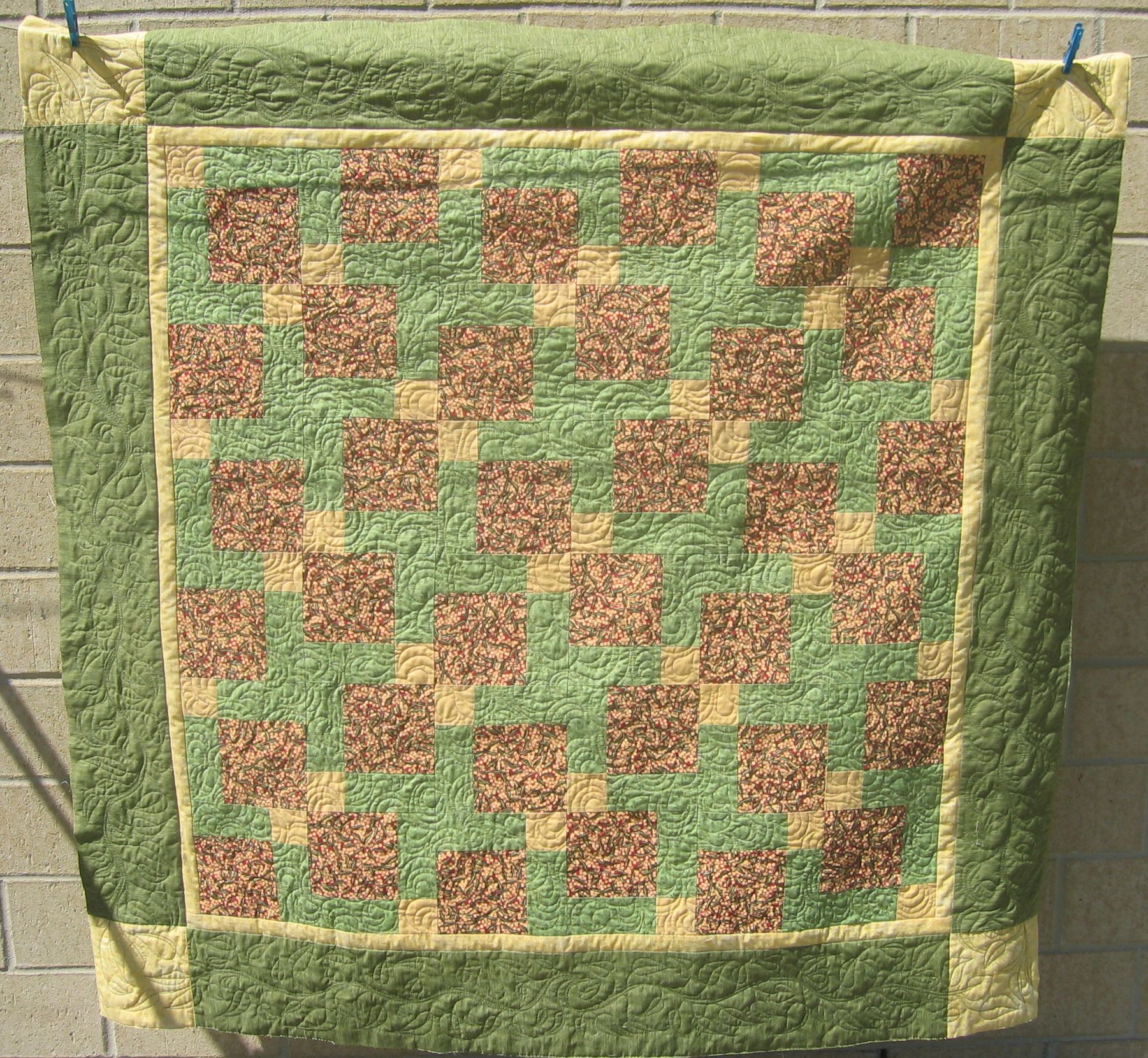
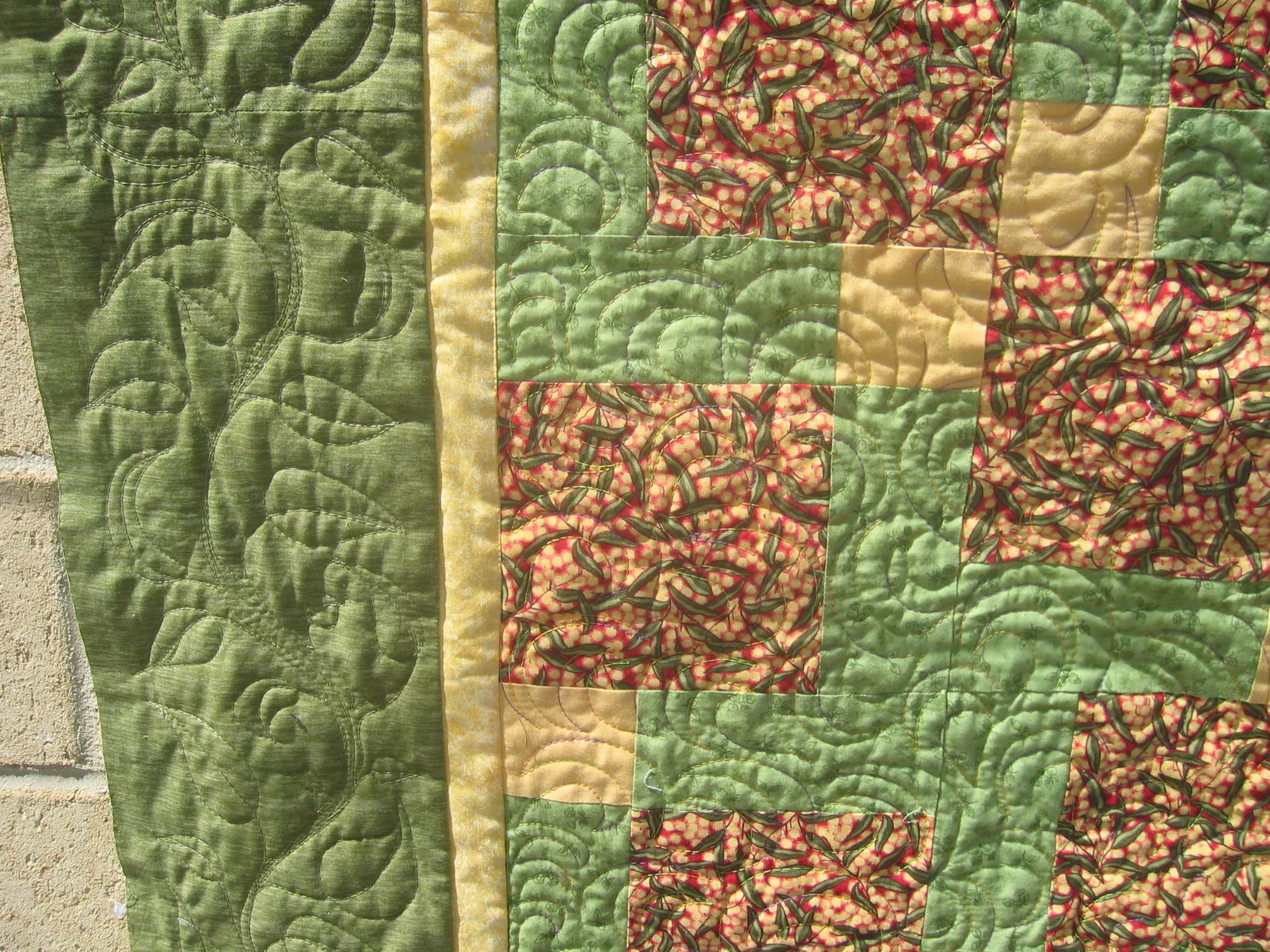
Another Disappearing 9-patch quilt, this time in yellow and green, with patches of a red wattle fabric — I’ll call it an Aussie quilt! Green and gold are Australia’s national sporting colours, and the green and gold wattle is our national flower.

I used my favourite quick and easy ‘open headband‘ motif all over the main top of this quilt in a variegated yellow, purple, and green thread. And for the borders I also used a variegated green thread to stitch the meandering leaves and stems. Each stem starts at the centre of the border and extends to the yellow corner block, where it meets the leaves from the opposing side.

(Click on a photo to view it larger. The colours look a little washed out as this photo was taken in the heat of a very hot summer’s day. Sorry about that!)

quilt61_01

quilt61_02

Threads used:

  • Top: Superior King Tut ‘Passionfruit’ (40 wt, cotton, colour #931) for the main top; Superior King Tut ‘Green Olives’ (40 wt, cotton, colour #990) for the border
  • Bobbin: Wonderfil Invisifil (100 wt, colour IF 702)


Community Quilt 60

3 02 2013

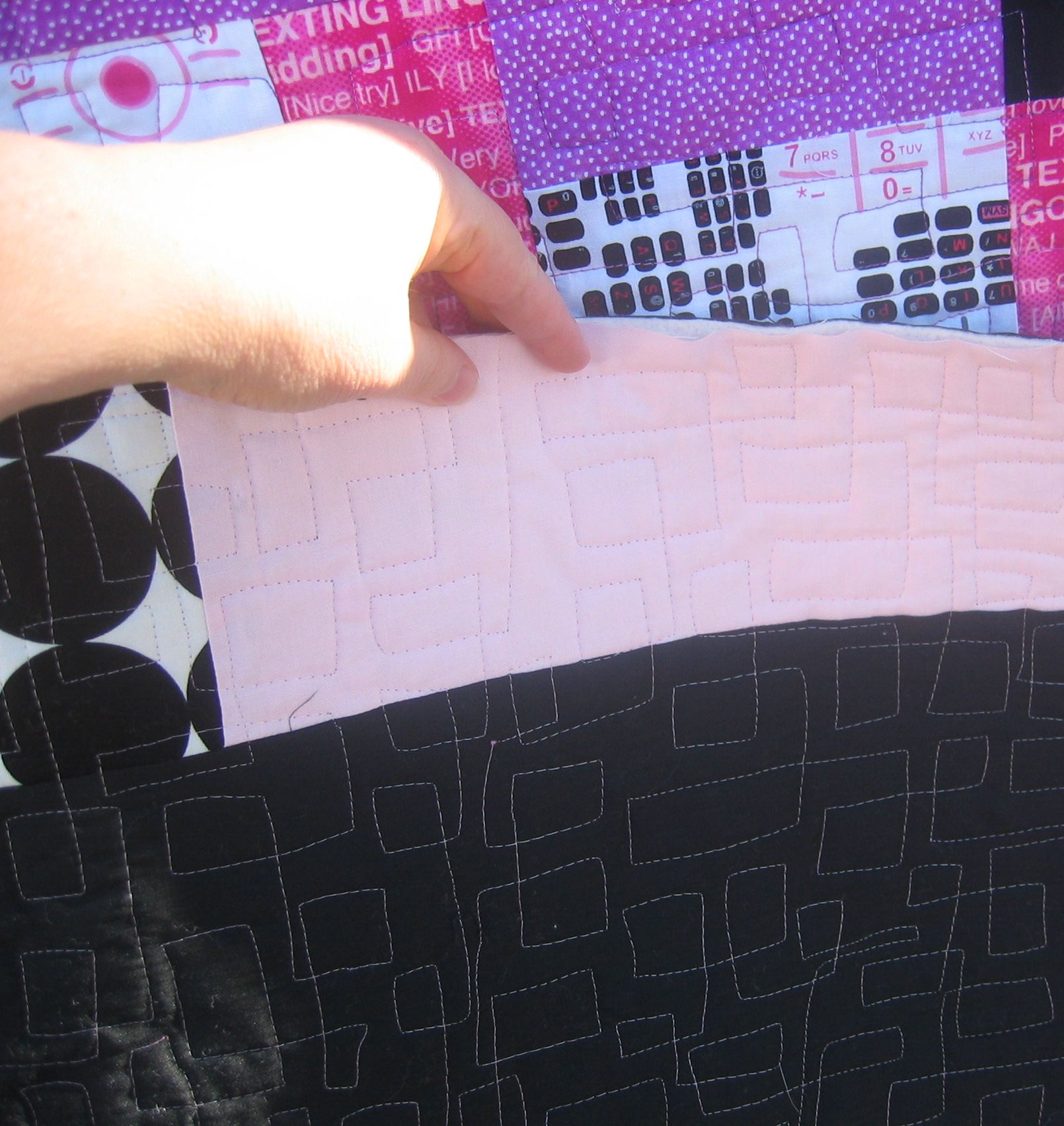
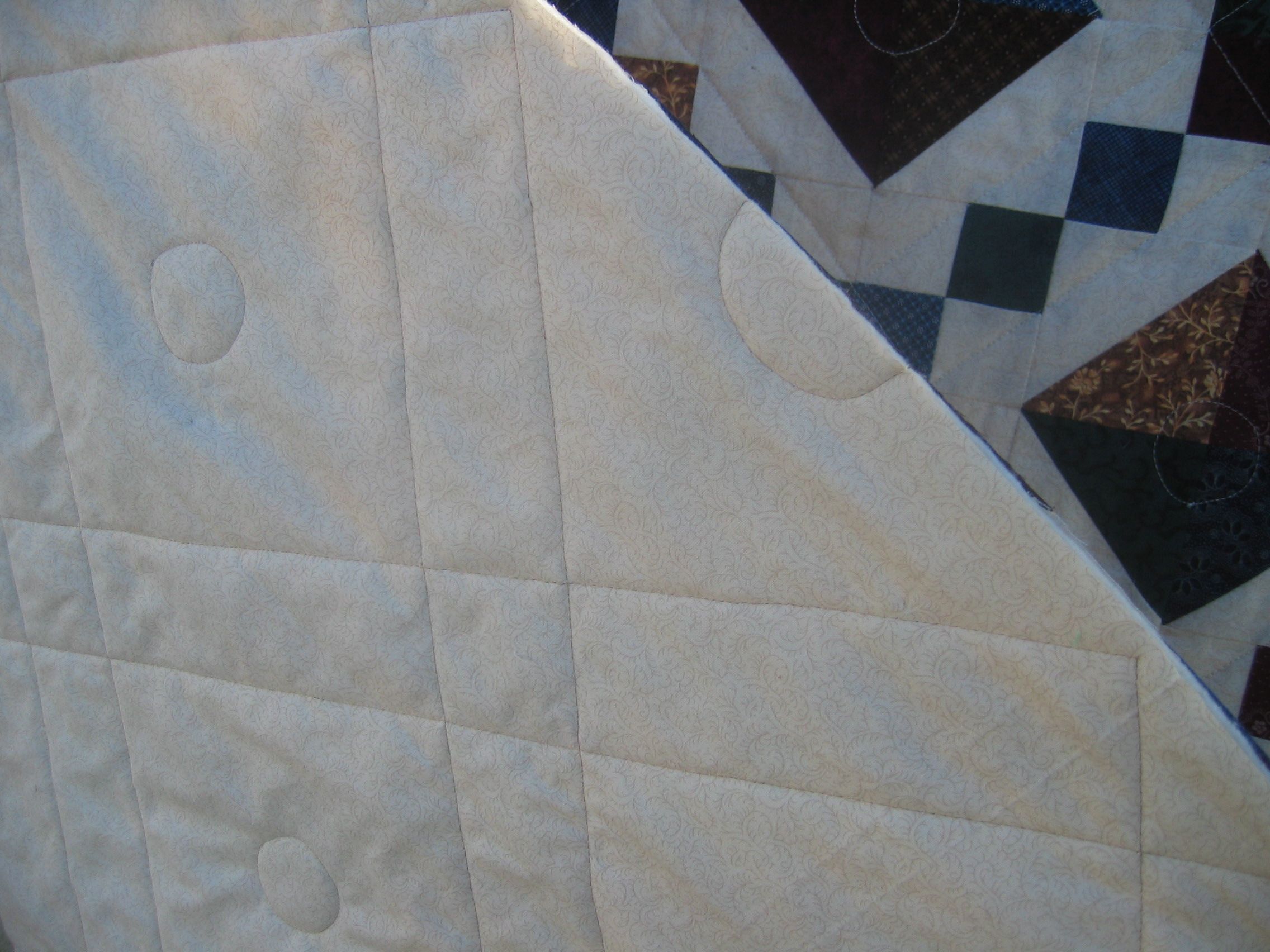
I really liked this quilt! The colours were so bright and cheery, and the black set them off perfectly. I’m pretty sure it’s a Disappearing 9-patch quilt, and it had a pieced backing in fun coordinating fabrics.

I suspect this quilt will go to a teenager (likely a girl as boys tend not to choose pink!), as the text on the pink fabric is all text message shorthand, and the pattern on the white fabric is of phone keypads and keyboard keys.

So how to quilt it? I wanted to echo the straight lines of the pieces in the blocks and give a hint of a computer circuit board, so I did a ‘squared stipple’ as an all-over motif. But unlike a traditional stipple, the stitching lines in this one are meant to cross, though typically only once per square/rectangle. I continued the single line stitching (yes, there’s only one long continuous line of stitching in this quilt top) into the border to tie the border to the quilt’s theme. And I decided on a purple/pink variegated thread to coordinate with the pinks and purples in the quilt. I think the black border sets this thread off nicely too.

(Click on a photo to view it larger.)

quilt60_01   quilt60_02

Back:

quilt60_023JPG

quilt60_04JPG

Threads used:

  • Top: Superior King Tut ‘Egyptian Princess’ (40 wt, cotton, colour #403)
  • Bobbin: Wonderfil Deco-Bob (80 wt, colour DB 205)


Community Quilt 59

3 02 2013

This quilt was already completed — the binding was on and some very basic ‘stitch in the ditch’ had been done around the large blocks. But the Community Quilt organiser thought I could add some ‘magic’ to it and lift it from mediocrity to something a bit more special.

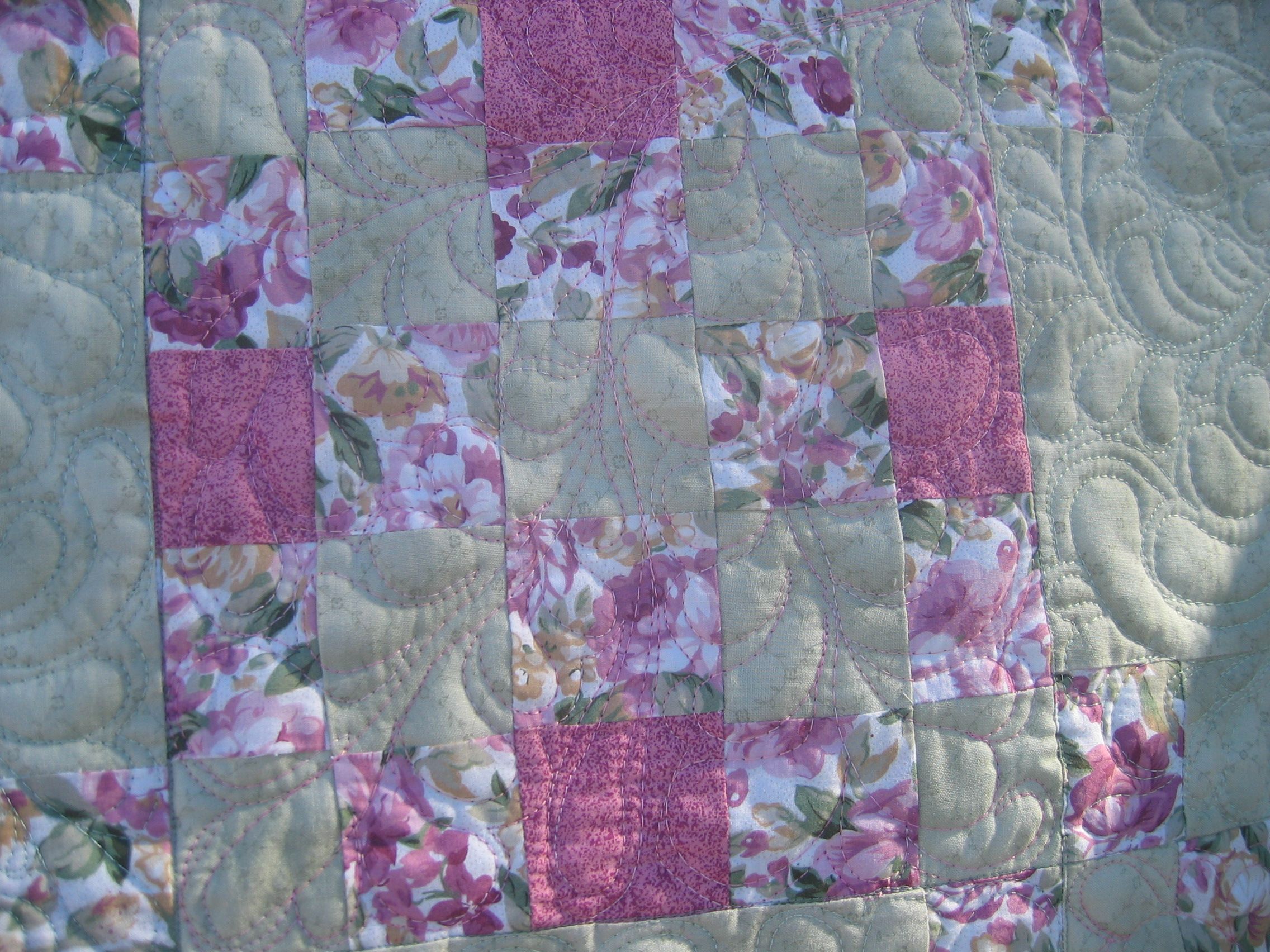
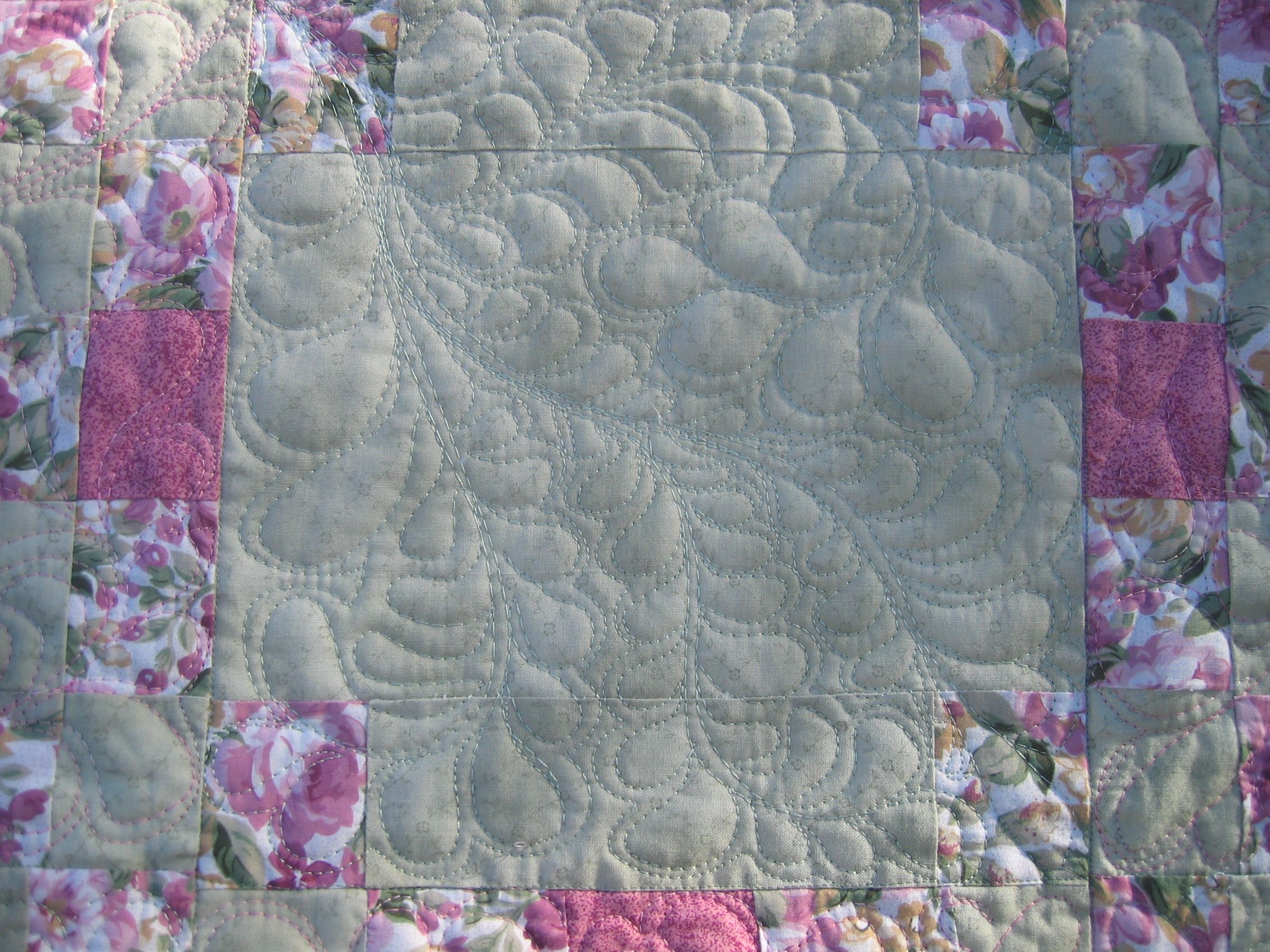
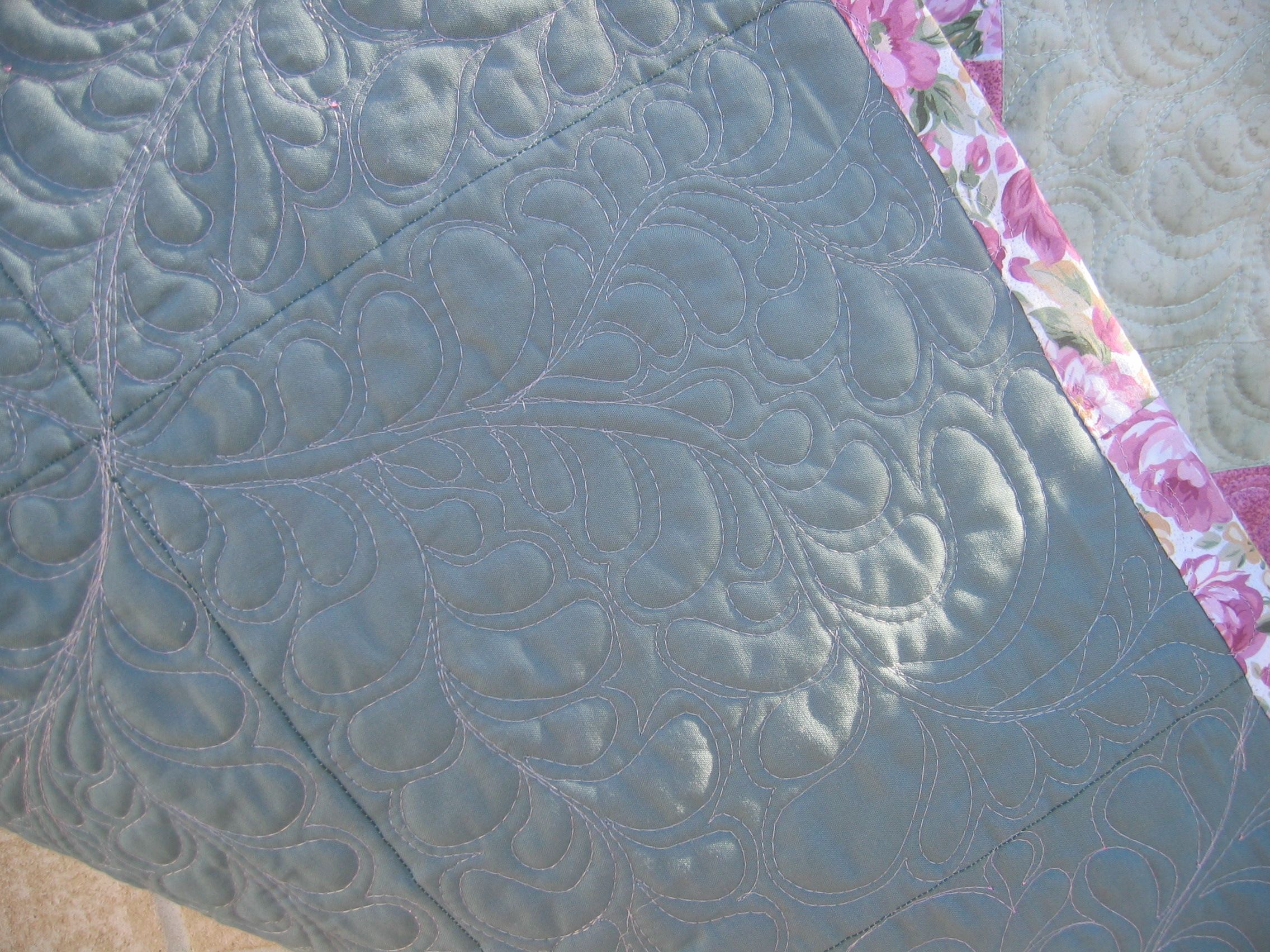
I decided to quilt loopy feathers in each block — using soft green thread in the green blocks and a soft pink variegated thread in the pink and green blocks. All the large swathes (the big ‘X’) of feathers meet in the centre.

(Click on a photo to view it larger.)

quilt59_01  quilt59_03

quilt59_02

Back:

quilt59_04

Threads used:

  • Top: Fil-Tec Glide ‘Sea Foam’ (40 wt, trilobal polyester, colour #97494) and Fil-Tec Affinity ‘Mauve’ (40 wt, trilobal variegated polyester, colour #60149)
  • Bobbin: Wonderfil Deco-Bob (80 wt, colour DB 205)


Using the Line Tamer ruler with the Handi Quilter Sweet Sixteen

28 01 2013

I haven’t done much ruler work with my Sweet Sixteen, with the exception of straight line work (e.g. stitch in the ditch) using the Line Tamer ruler from Four Paws Quilting. I love this ruler as it has channels to hold the hopping foot in place and so there’s very little that can go wrong — for example, it’s not easy to wander off line if you use it correctly.

However, I initially had a few trials and errors in using it, so this short tutorial shows you how I use it and what to watch for so that you can keep your stitching lines nice and straight.

PLEASE NOTE: This ruler is NOT for use with domestic sewing machines — it is made specifically for mid-arm and long-arm quilting machines and it comes in two sizes, depending on the machine you have.

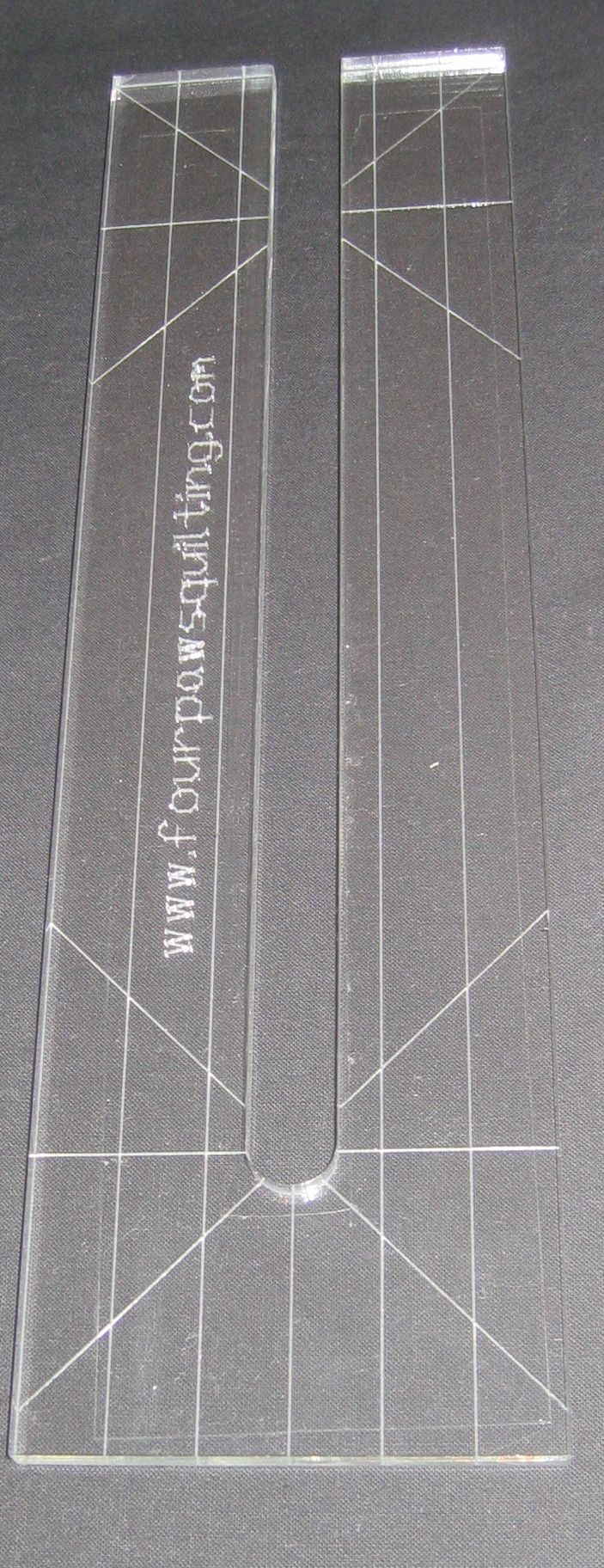
First, let’s take a look at this ruler (click on a photo to view it larger):

line_tamer04

The ruler is 10.5 inches long, with vertical lines laser-etched into the plastic every 0.5 inches. There are two horizontal lines — the top one near the opening is 1.5 inches down from the top, and the bottom one is 1.75 inches from the base of the ruler. On my ruler (suitable for the HQ Sweet Sixteen hopping foot), the half-inch lines near the inner edge of the slot are in effect 0.25 inch vertical lines. There are also some 45 degree lines.

You have several positioning choices when using this ruler:

  • place the slot vertical to your body position, then either pull the ruler and quilt towards you, or push it away from you
  • place the slot horizontal to your body (i.e. push/pull it to the left or right)
  • or some other angle of your choosing.

NOTE: If you are using the open-toe hopping foot, be careful if you’re trying to use the ruler at any angle other than vertical — the sides of the hopping foot need to touch the edges of the slot, and at non-vertical angles, that can be an issue.

If you look closely at the picture above, you’ll see other faint ‘lines’ — this is the cut edge of the ‘ClearGrip’ I have put on the underside of the ruler. ClearGrip helps hold the ruler in place on the quilt. (UPDATE: I now use small squares of Handi Grip on the underside of the ruler — it sticks the ruler to the fabric much better.)

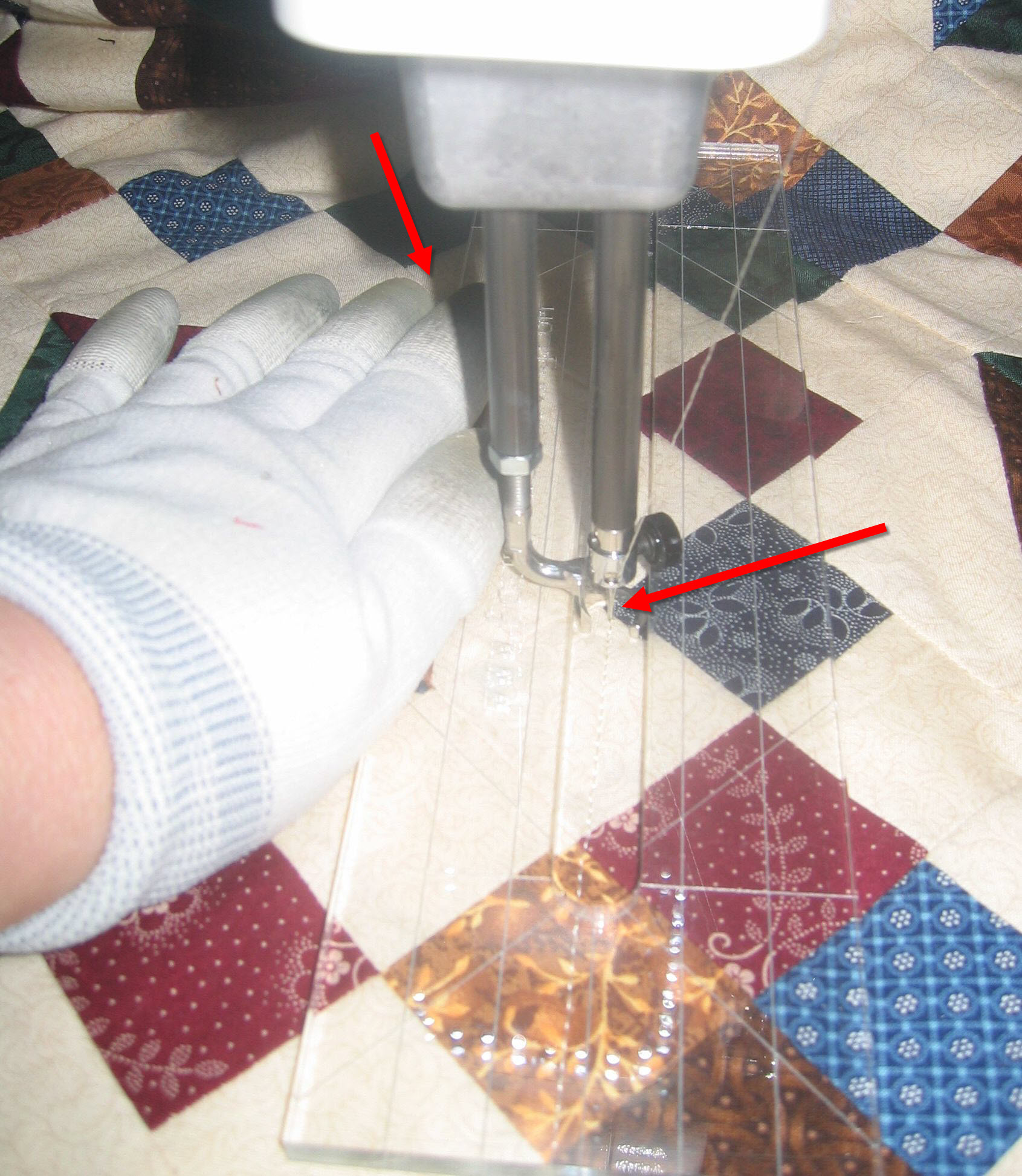
I tend to use the ruler vertically, and slide the slot around the foot so that the open part of the slot is furthest away from me. I then pull the ruler (and quilt) towards me. But that’s me — you’ll need to practice to find out the best position for you.

I also use Machingers quilting gloves when using the ruler as it gives me better grip. In the photo below, you can only see my left hand as I used my right to take the picture! But I’d normally have both hands on the ruler, applying downward pressure with the heels of my hands, thumbs, and forefingers as I move the quilt and ruler towards or away from me. Notice that my third finger (left red arrow) is resting against the edge of the ruler. I do the same with my right third finger, and in this way I can adjust the position of the ruler as smidge if I need to as I’m stitching just by moving those fingers to the left/right as required. I think of this finger control like a horse’s bridle — with a well-trained horse, you only have to adjust the bridle a tad to the left or right to make the horse go where you want it to go. Or, if you’re not familiar with horses, think of power steering in your car — you only need to touch it a tiny amount to make small changes in direction. In the example below, I’d use my right finger to make a tiny leftward adjustment to the ruler so that I didn’t stitch over that point (right red arrow). Actually, I’d normally have made that adjustment a few stitches back. NOTE: In this photo I’m using light coloured thread, so I’d make any adjustments in direction in the light areas of fabric, not in the dark areas where they’d be noticeable.

line_tamer01

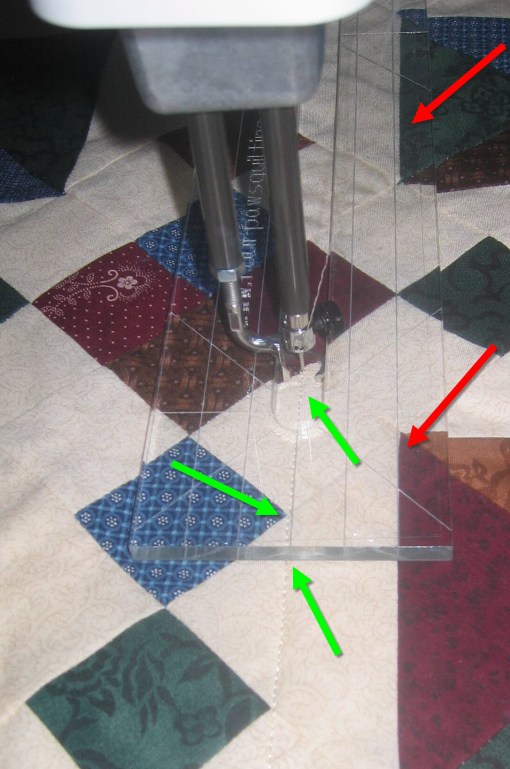
In the picture below, you can see how I’ve lined up the ruler — the green arrows show the alignment of the centre line with the previous stitching and how the stitches just touch/skim the dark fabric points. The red arrows show another alignment method — placing the laser-etched lines parallel or on the seam lines. Of course, this will only be successful if the elements in the block are perfectly square ;-). Notice the area where the top green arrow is pointing — see how the hopping foot is snug against the edges of the slot? Sometimes, when you move the ruler to the next position, you can end up with it sitting on top of the hopping foot if you’re not watching carefully — if you stitched with it like that, you could damage your hopping foot, the needle, the timing of the machine, and/or the ruler!
line_tamer03

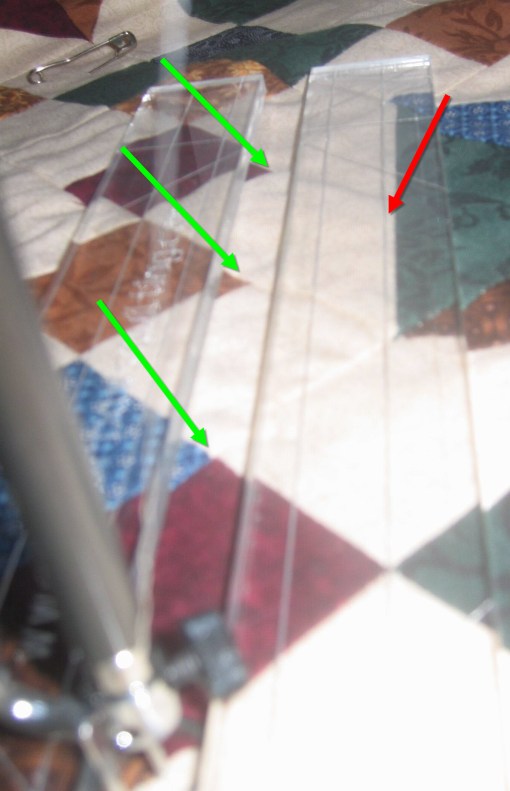
The final picture (below) shows how I’ve lined up the stitching line so that it will go exactly in the centre of the slot. I eyeball this, and with some practice have got pretty good at ‘guessing’ where that stitching line will go. Again, the green arrows show the visual cues I use to align those points with the centre of the slot, and the red arrow shows the vertical line parallel to the block.
line_tamer02

Takeaways:

  • Rulers work best with the machine set to the ‘needle down’ position. If you have to make adjustments, you won’t have jumps in your stitches if you use ‘needle down’.
  • You only need to make small adjustments to change direction.
  • You need to apply downward and push/pull pressure to move the ruler and quilt under the needle.
  • Make sure the hopping foot is snug in the slot before you start stitching.
  • Use the laser-etched lines on the ruler as guidelines. You can line them up with seams, with other stitching lines (for an exact echo measurement), or with other elements on the quilt.
  • When stitching long lines, you don’t need to stitch the full length of the slot before adjusting the ruler. Stitch as far as you’re comfortable with (this might only be 4 or 6 inches), then stop. Adjust the ruler and start stitching again. With practice, you’ll be able to guide the ruler a smidge with your fingers as you’re stitching, but initially stop, then start again.
  • You WILL improve with practice! On my Sweet Sixteen, I can now stitch straight lines at 60-70% speed; when I first started using this ruler, I was going at about 15% speed.

Quilts I’ve stitched using this ruler: https://rhondabracey.com/?s=%22line+tamer%22


Community Quilt 58

28 01 2013

Another large quilt. This time a ‘Road to California’ (or similar) block.

Like Community Quilt #22, I stitched straight lines for this one, with a free-form (not marked) circle in the centre of each inner square. Again, I used my trusty Line Tamer ruler for the straight lines and knocked this big quilt out in an afternoon.

(Click on a photo to view it larger.)

quilt58_03  quilt58_01

quilt58_02

Threads used:

  • Top: Fil-Tec Glide ‘Cream’ (40 wt, trilobal polyester, colour #20001)
  • Bobbin: Wonderfil Deco-Bob (80 wt, colour DB 414)


Community Quilt 57

26 01 2013

This was a BIG quilt, with heaps of lovely autumnal fabrics. In the photo below, there’s about a 12″ fold at the top to stop it dragging on the path.

(Click on a photo to view it larger.)

quilt57_01

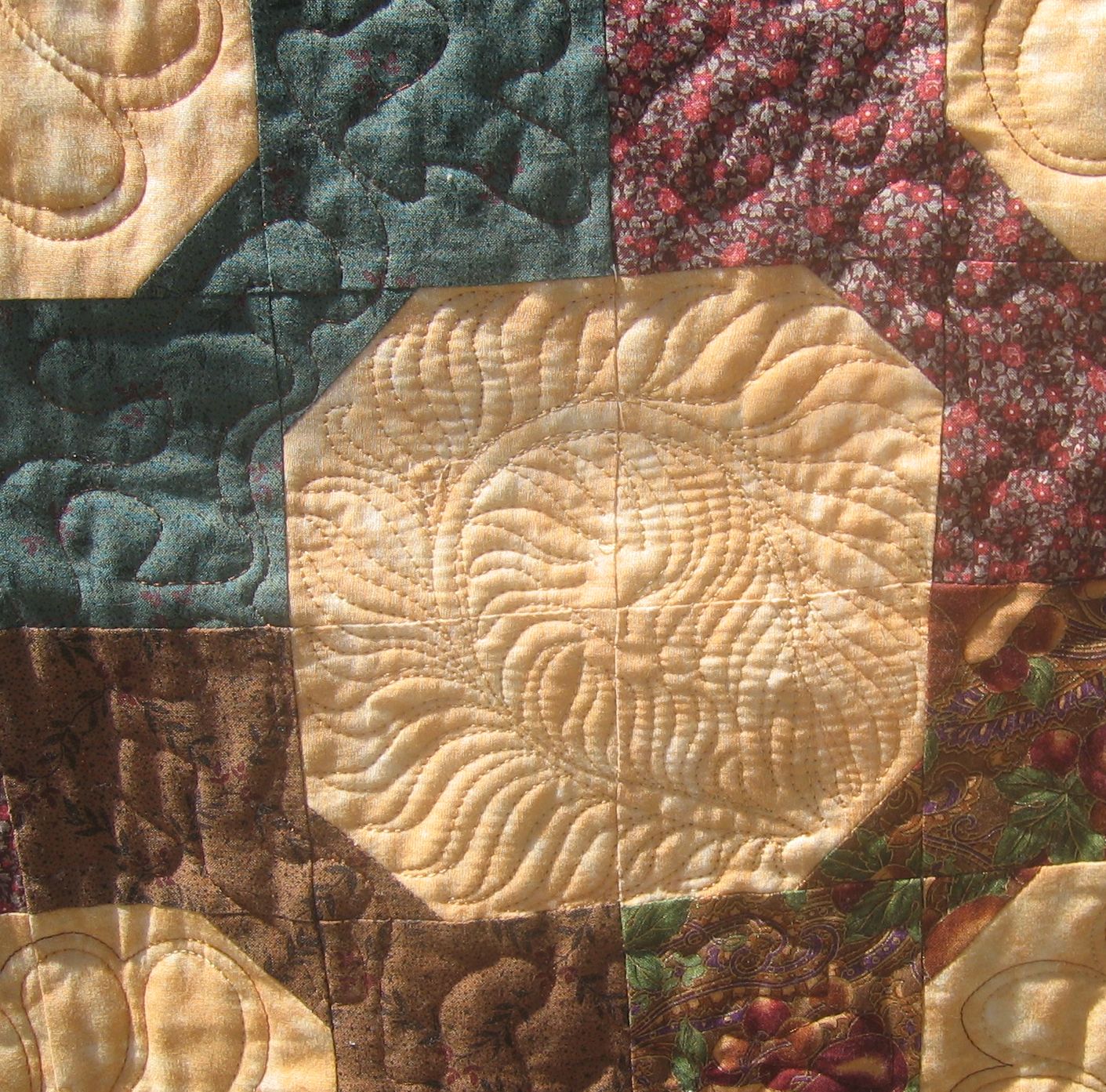
How to quilt it? I decided to start with the light areas of the snowball blocks (I think they are snowball blocks…). I picked out a lovely variegated thread in tans and golds and stitched a small centre circle around the joins in the fabric, then radiated out with nice big bulbous feathers (with echoes), thus creating big flowers. I decided not to do these flowers for ALL the light coloured blocks — there were a LOT of them, so I only did flowers every second row.

quilt57_04

What to do with the other light coloured centres? Ah! My favourite — bird feathers! I knew I’d have to curl them around so stitched the spine of each one first in a big ‘J’ shape, then came out to the edges of the space with the ‘S’ curves needed for each feather.

quilt57_03

Again, I used the variegated Sulky thread, but I had to change to a different thread after doing about five of these blocks with that thread. It played up something awful — shredded, snapped, bunched up in a mass on top and below the quilt. It had been mostly OK when I stitched the flowers.

I tried all the tricks I knew — I changed the needle to a brand new one in a larger size; I oriented the needle at the 5:30, 6:00, and 6:30 positions; I rethreaded the thread from different spool holders and through various tension holes; I adjusted the top and bobbin tension; I slowed down the speed dramatically… NOTHING would make that thread behave. It would stitch for a minute or so and then something would go wrong and I’d have to stop and fix it and unpick etc. This was becoming very tedious… So I eventually bit the bullet and swapped to a soft gold thread in a single colour and from a different manufacturer. This thread behaved perfectly. I wasn’t going to unpick all those other feathers I’d already done and redo them, so someone with a keen eye will see that they are slightly different, but for most people, they probably wouldn’t notice.

quilt57_05

Next, how to quilt the half blocks on the edges of the quilt… I kept with the bird feather motif as these would have been bird feather blocks had they been full size. But instead of trying to do half a feather, I just did a double stitched arc for a ‘spine’ and radiated out on only one side with the ‘S’ curves. It looks a bit like a rising sun.

quilt57_02

Finally, I did a large meandering stipple in all the dark areas, in a tan coloured thread. I figured it didn’t need any more close quilting 😉

I like how the quilt sort of ended up looking a bit Japanese with the big flowers and the bird feathers.

Threads used:

  • Top: Robison-Anton ‘Penny’ for many of the bird feathers in main quilt top (rayon, 40 wt, colour #2332); Robison-Anton ‘Date’ for the stippling in the dark areas(rayon, 40 wt, colour #2290); Gutermann Sulky variegated thread in tan and gold tones (rayon, 40 wt, colour #2120)
  • Bobbin: Wonderfil Deco-Bob (80 wt, colour DB 115)


Jelly Roll Race

20 01 2013

I keep looking this up on YouTube, so figured I’d link to it on my blog so I don’t have to remember where to find it 😉

I might sew one of these today…

The main part starts at about 2 minutes in.

Later the same day…

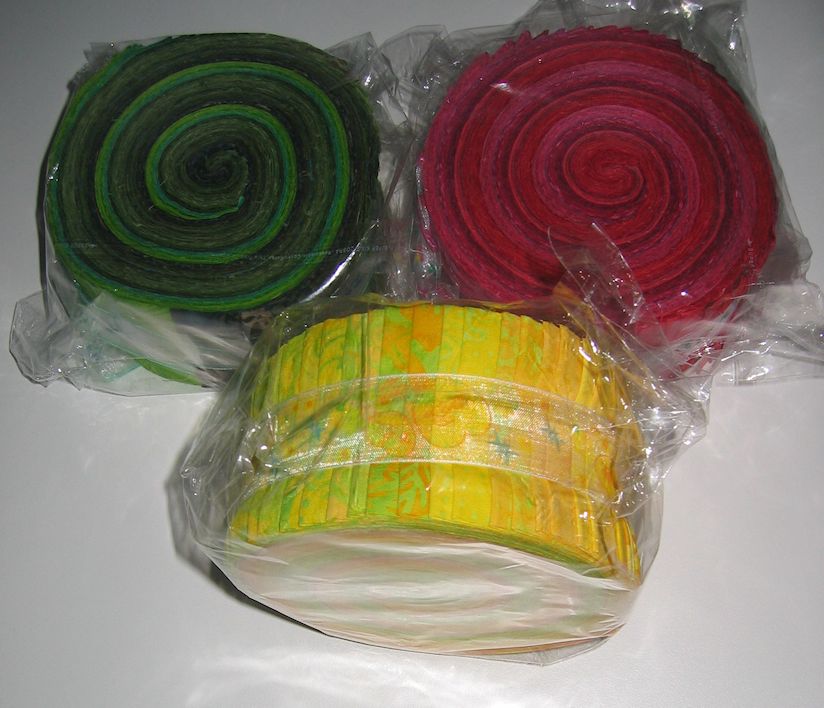
I had a green batik jelly roll I picked up in Bali last September. I have three baby quilts to make, so thought I’d use this technique and that jelly roll for the quilt tops.

batiks07


Here’s all those strips sewn into one long 1600″ strip:

green_jelly_roll01

However, I was disappointed in the final result.

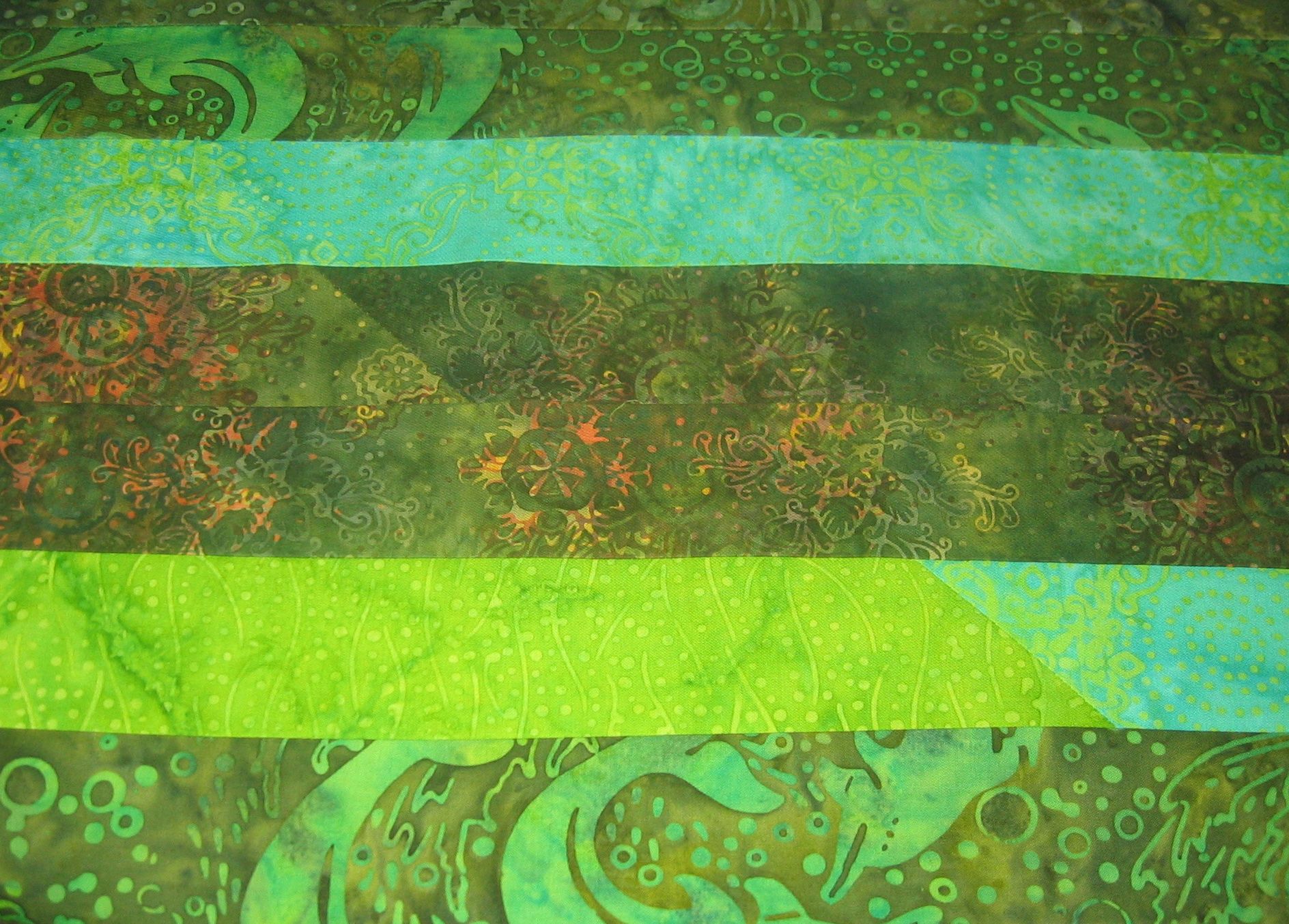
I think there were a couple of reasons — the jelly roll seemed to have a lot of medium and dark fabrics and not many lights, and the technique of just grabbing them off the roll in the order they were in meant that like colours were stitched together giving double strips of the same fabric; even where different fabrics were joined, the contrast wasn’t enough to be noticeable (see picture below where there are two strips that have joins).

green_jelly_roll02

Had I realised this earlier, I might have started again and mixed in the pink jelly roll strips with the green (the yellow is to be used for something else) or deliberately picked a light, then medium, then dark, the light again etc. instead of stitching them straight off the roll as per the instructions in the video.

While this took me longer than an hour (probably about two hours), it was a very quick way to make a quilt top. I have enough to make four baby quilt tops, but as I’m not happy with the effect (I just got stripes, not that slashing effect that you see in the video), I may well use what I made as the backs for the baby quilts. And as I’ve sewn and cut down the finished top to about 25″ wide, I’ll use one of the clever techniques for backs that Elizabeth Hartman shares on her free Craftsy lesson to make the backs a bit bigger: http://www.craftsy.com/class/creative-quilt-backs/117

I was glad I tried this technique and would use it again, but next time I’ll be more careful about the fabric contrasts in the jelly roll and perhaps pick and choose what fabric goes with what, instead of just doing them in the order they are on the roll.

Update: There’s a new Jelly Roll Race video, showing how to add little squares between the ends of each jelly roll strip: