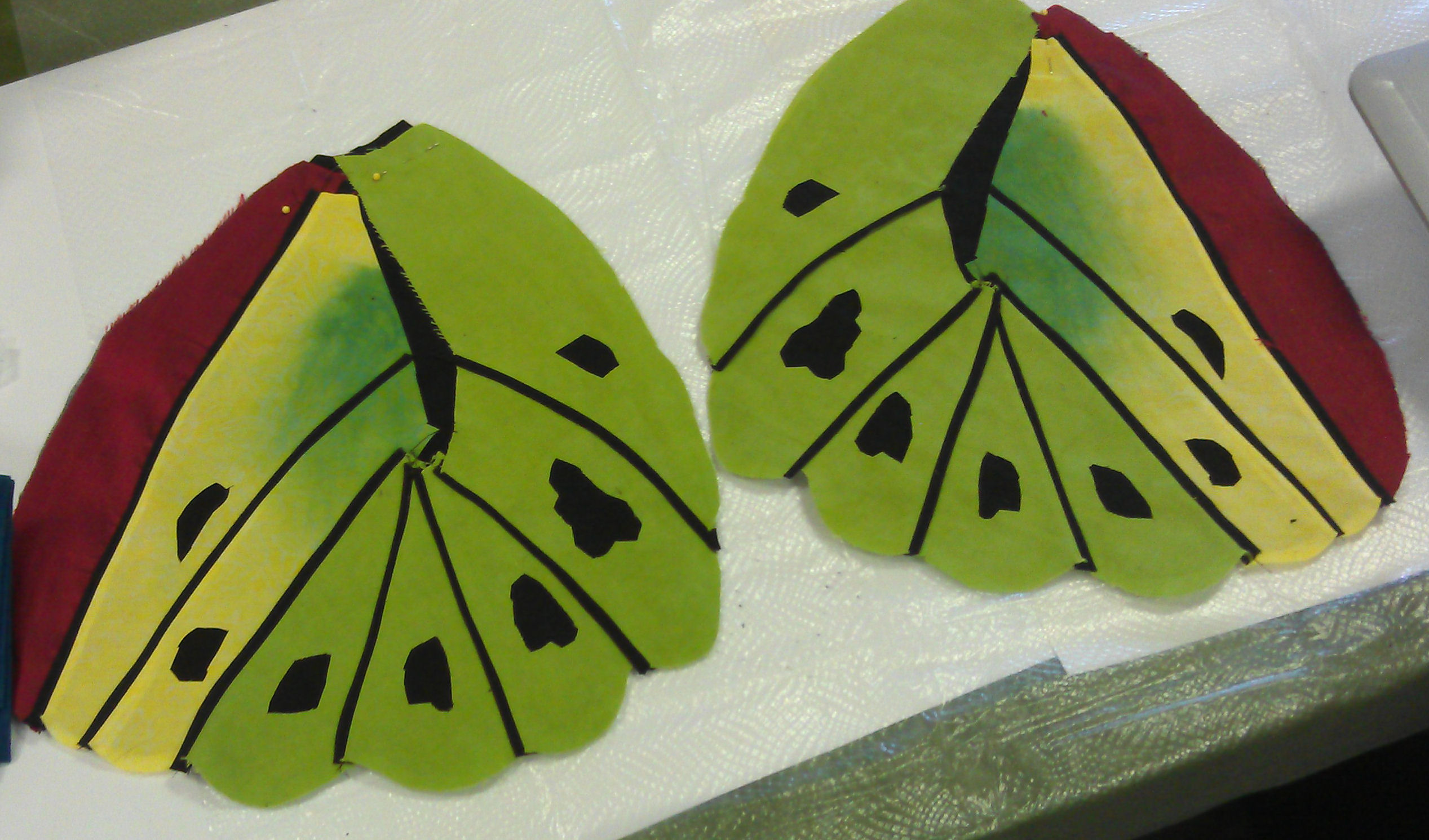
Turtle quilt

25 03 2013

When I was in Seattle earlier this month, I went down to Pike Place Markets on my only day off. Not for the fish throwing (been there, seen that…) or the Chukar Cherries (though I made sure I did stop by and get some…), but to pop into Undercover Quilts, which is a tiny quilt store packed to the rafters right near the pub.

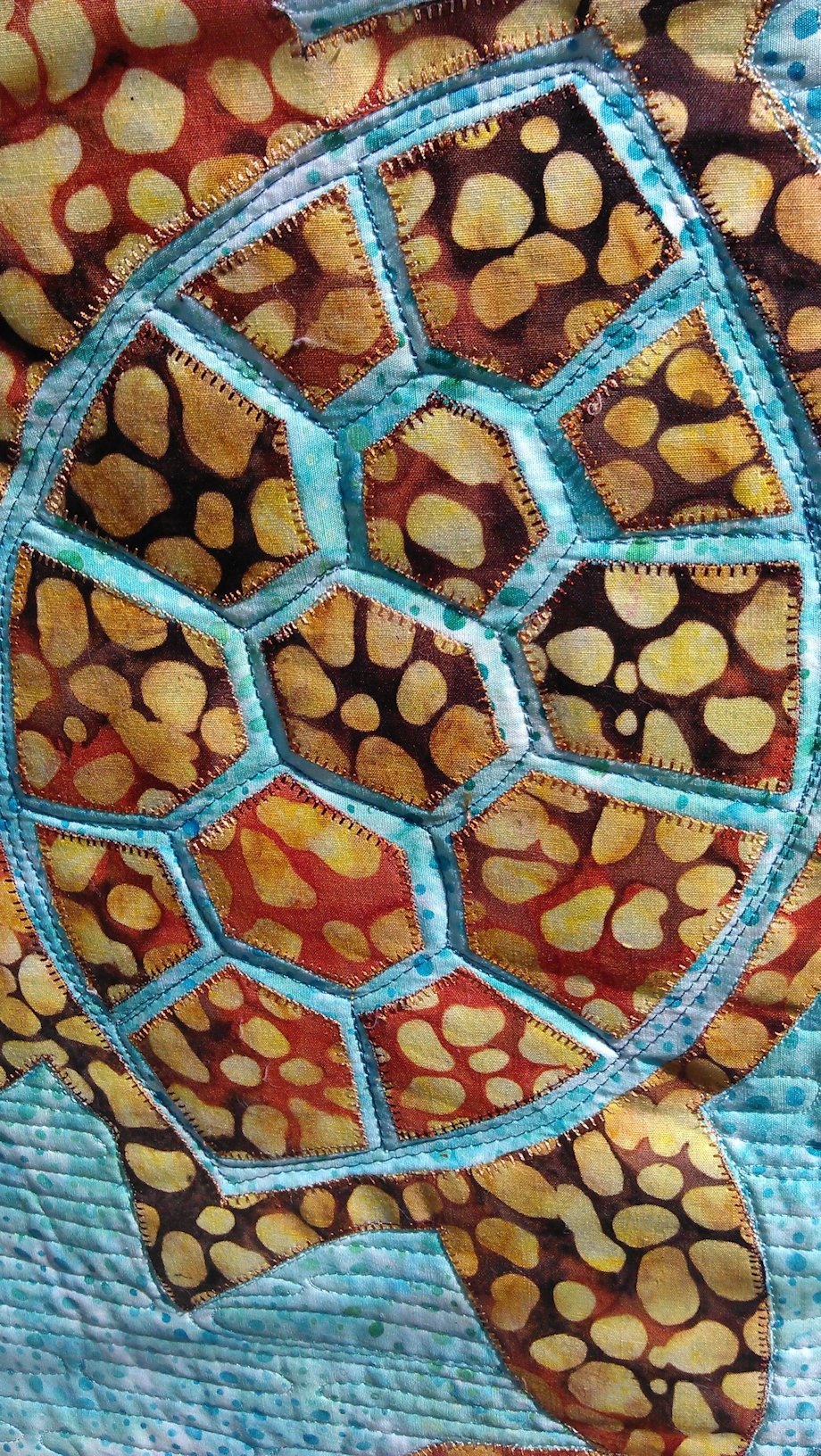
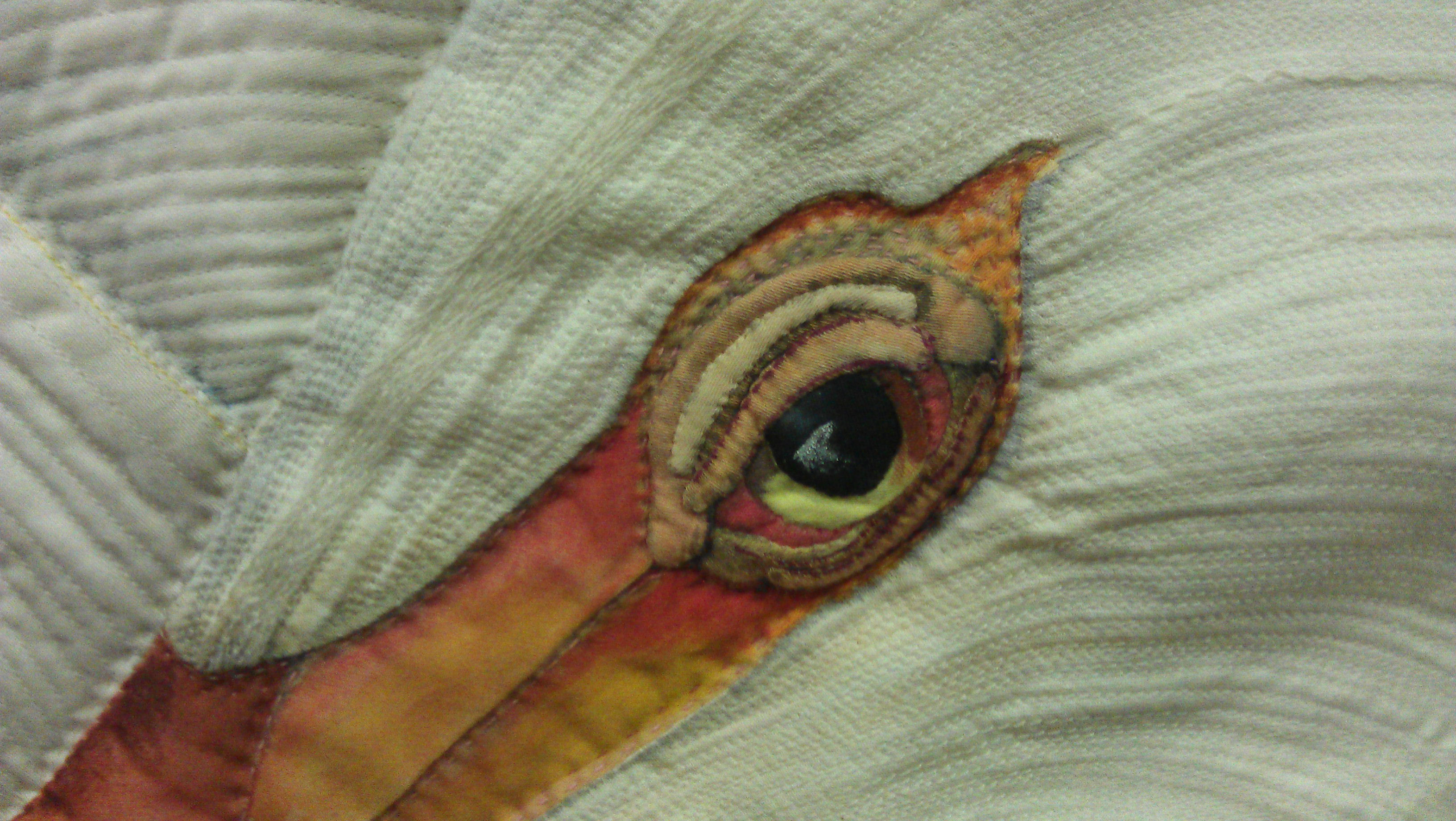
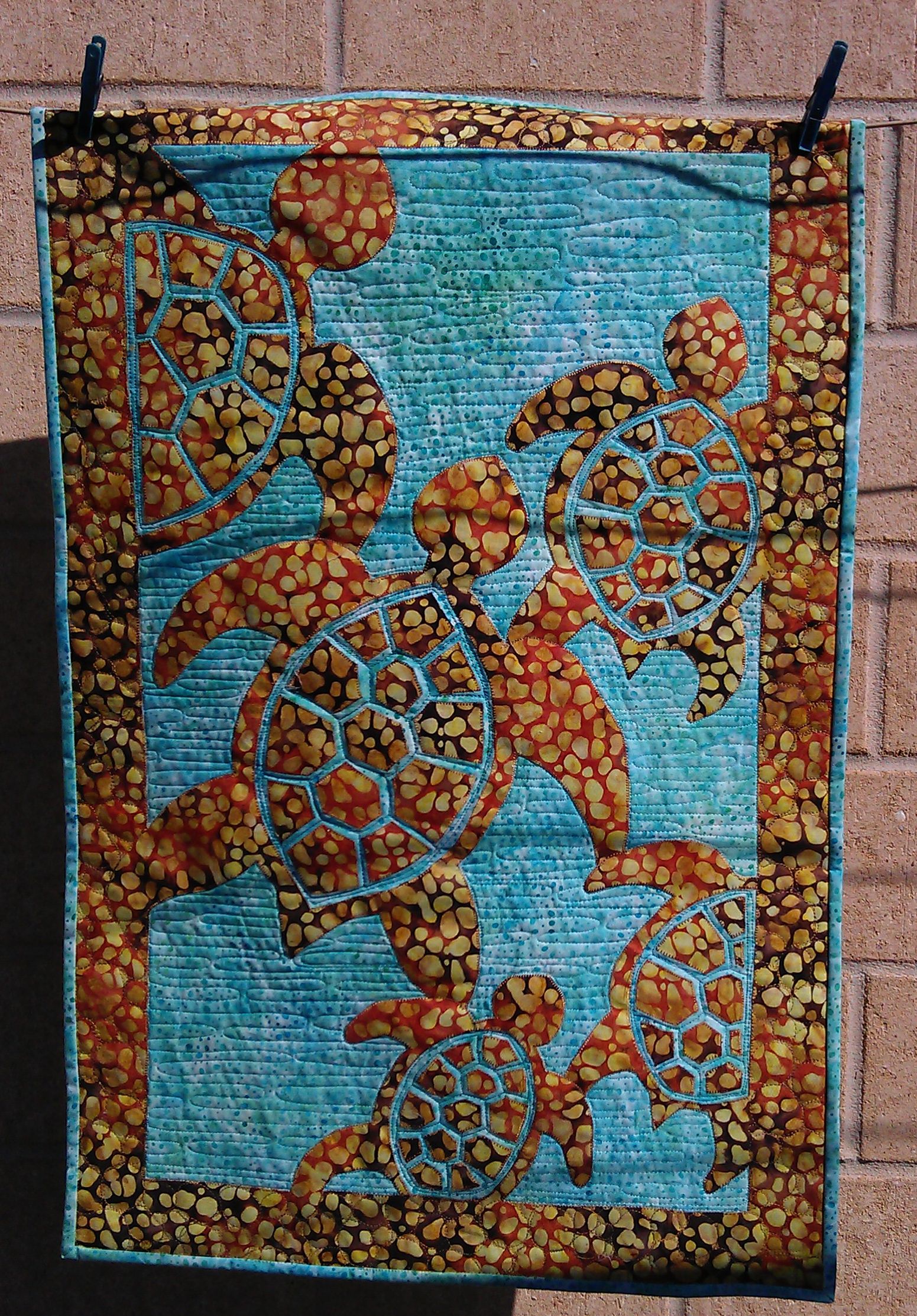
They had some great quilts, kits, and patterns on a Pacific North West theme and I was tempted… But eventually I settled on a ‘reverse applique’ type of pattern from one of their 2 fabric applique patterns: ‘Herd of Turtles’.

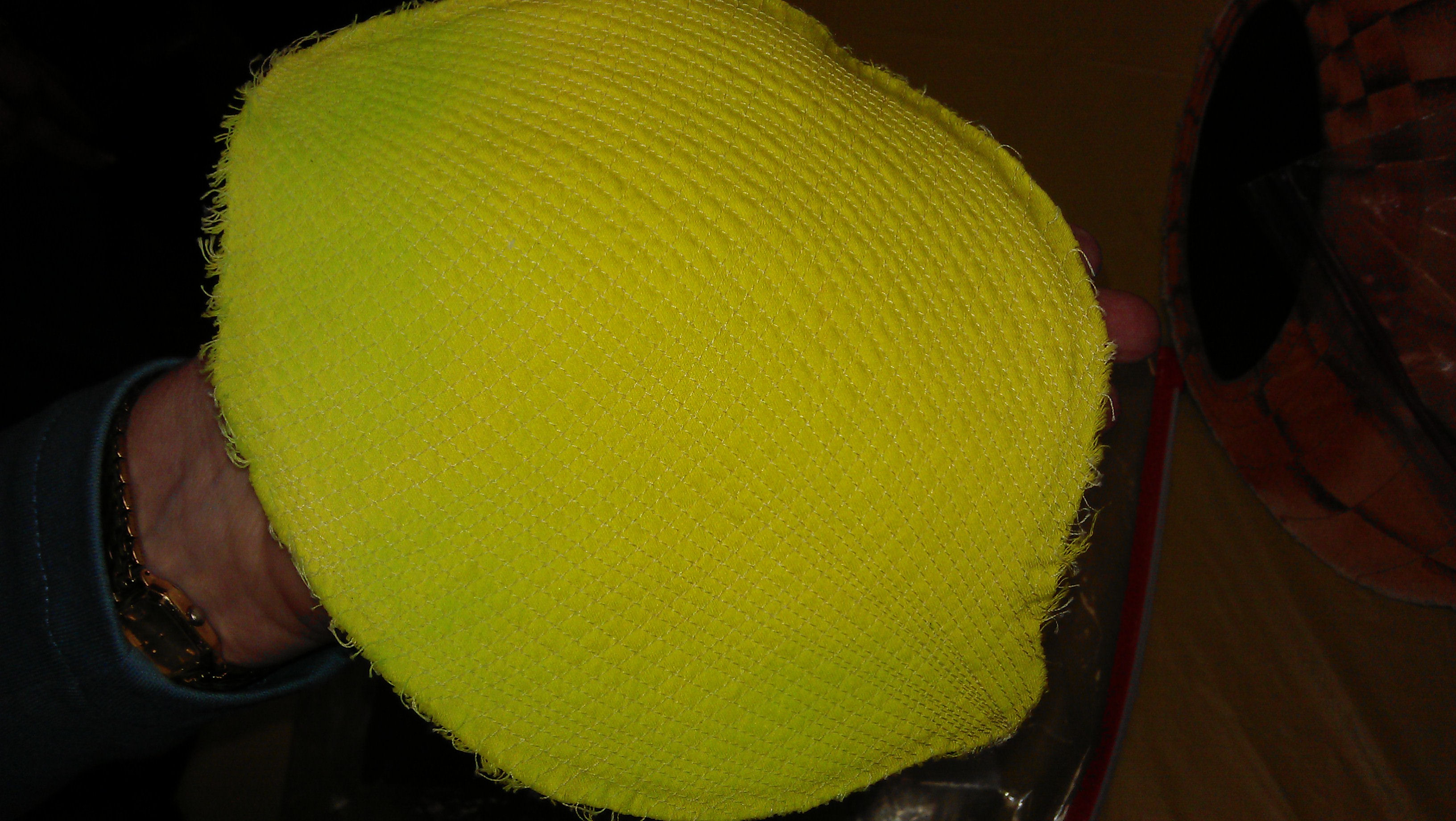
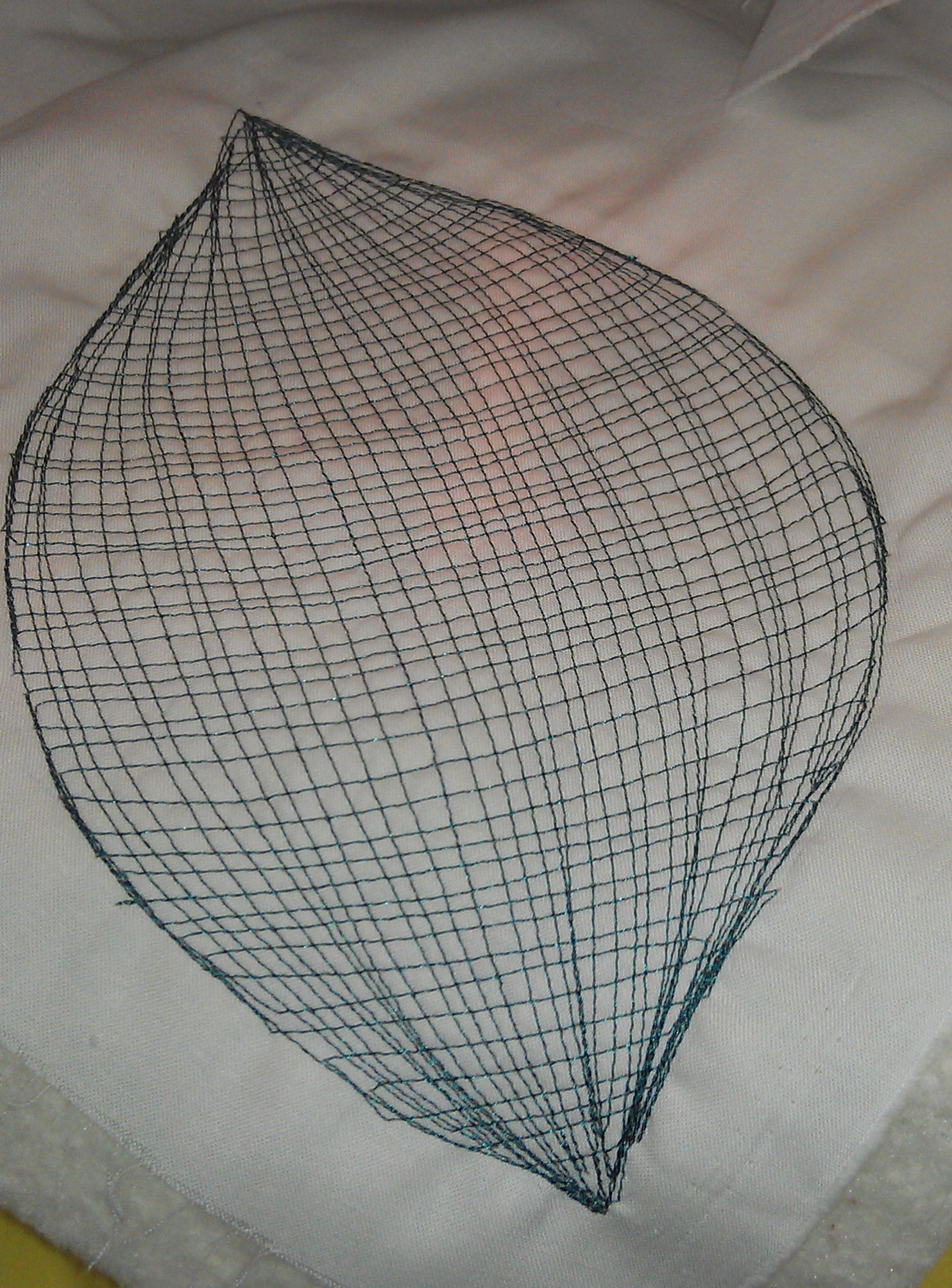
I made it up over the weekend and here’s how it turned out. Next time (if there is a next time) I might use more contrasting colours. BTW, I used two of the fabrics I bought in Bali last September. The pattern offered three applique options — hand -turned (nope!), fusible (I did this version and it was quite time consuming…) and raw edge. If I make this pattern again, I’ll try the raw edge applique option.

One other thing… the pattern piece is printed on a very flimsy and easily torn piece of paper. Before I taped it to the siding door glass, I reinforced the edges all round with clear packaging tape and then I traced it onto some tracing fabric (like a very light interfacing) so I don’t ever have to use the paper pattern again. I was disappointed that this pattern came on such flimsy paper, especially as the instructions are to tape it to the window or use a light box. If you did that straight ‘out of the box’, you’d wreck the pattern very quickly.

Threads used: water — ‘Mint’ (Robison-Anton, rayon, 40 wt, colour #2310); around turtle carapace pieces — ‘Wonder Blue’ (Robison-Anton, rayon, 40 wt, colour #2577); in border — ‘Pistachio’ (Fil-Tec Harmony, 40 wt cotton, colour #14066).

(Click on an image to view it larger)

turtles01

turtles02

turtles03

Update: The recipient of this quilt and his wife had a baby girl, Isabella, on 30 April 2013.


Quilt design inspiration is everywhere

25 03 2013

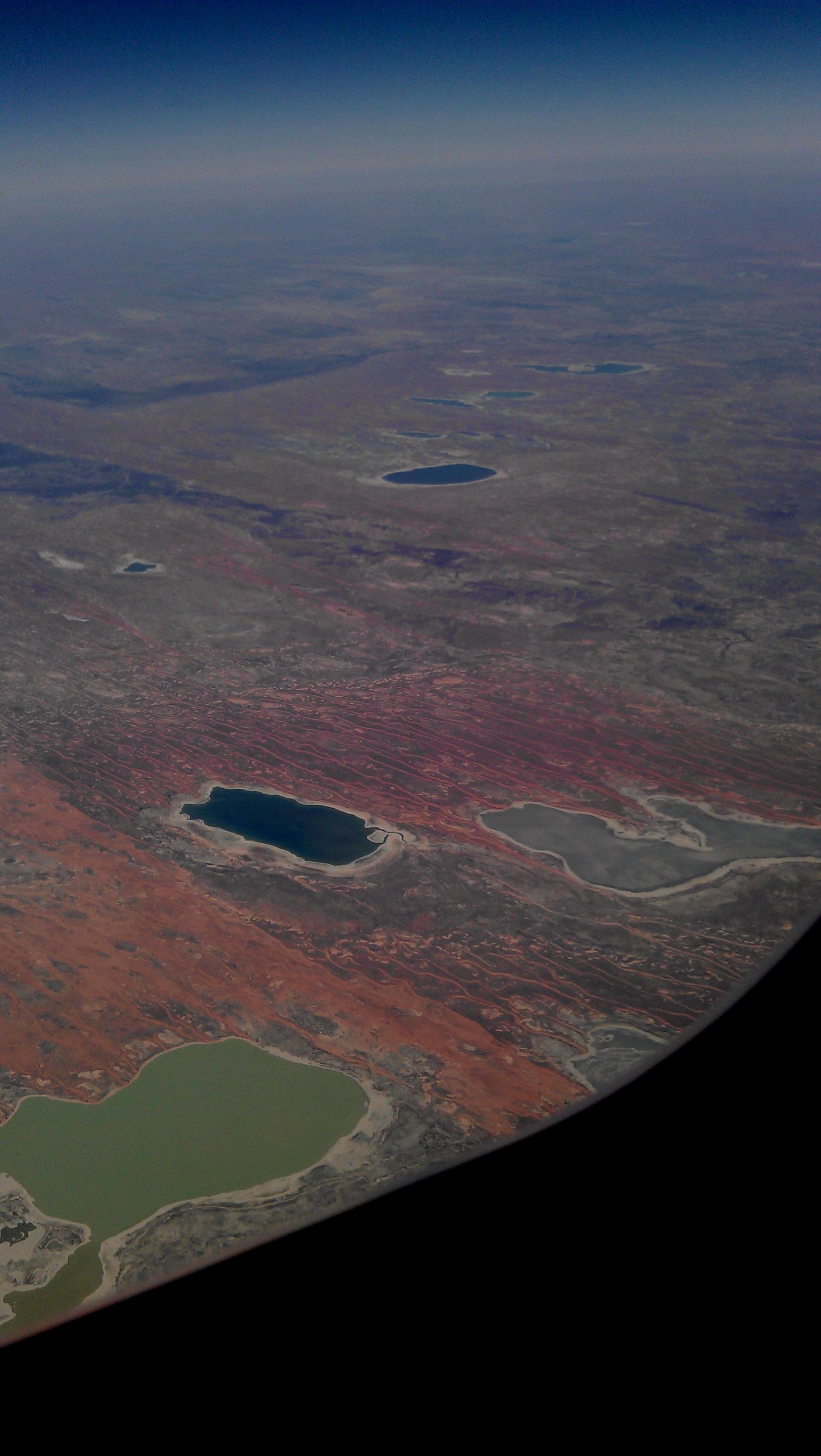
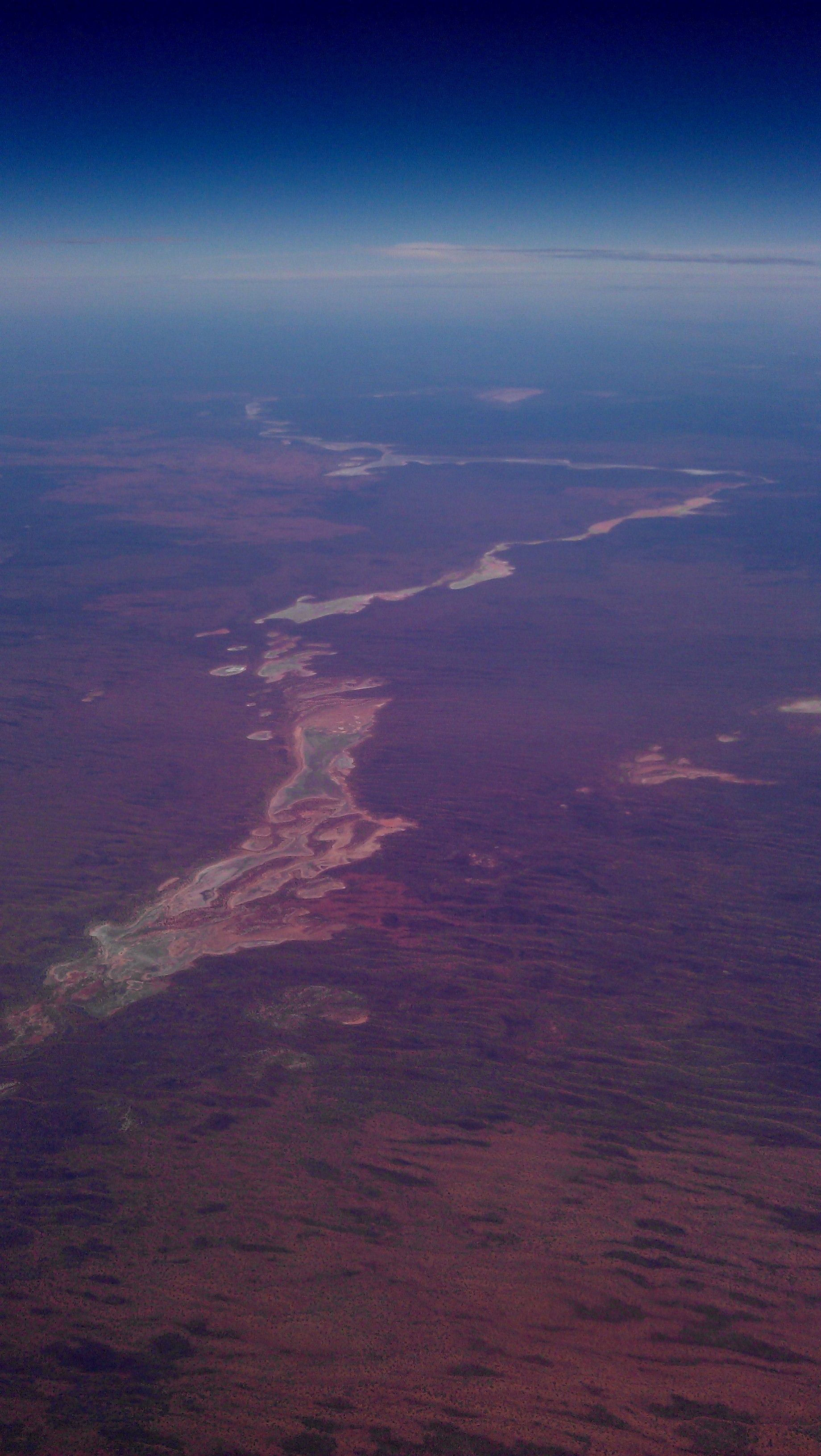
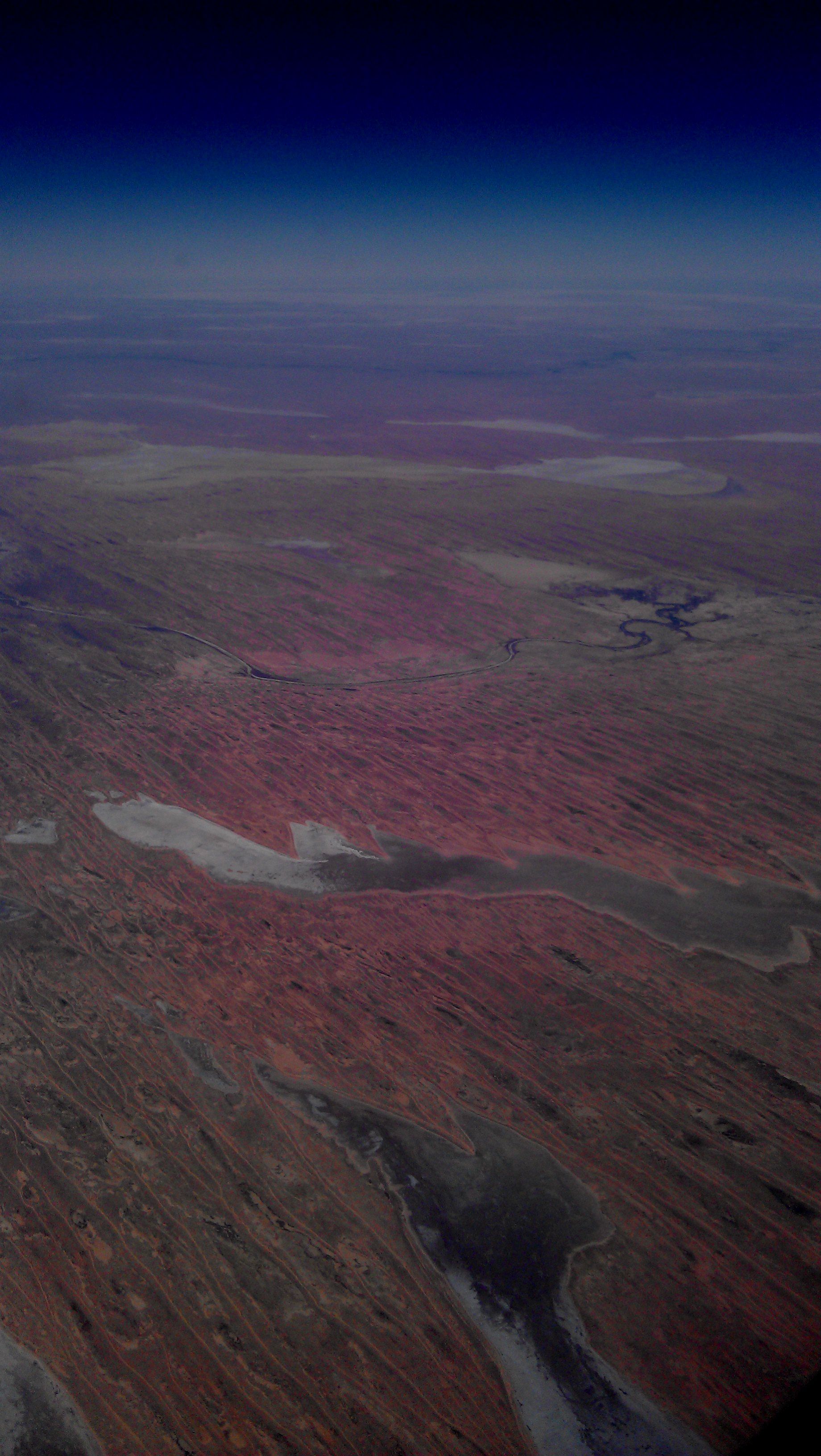
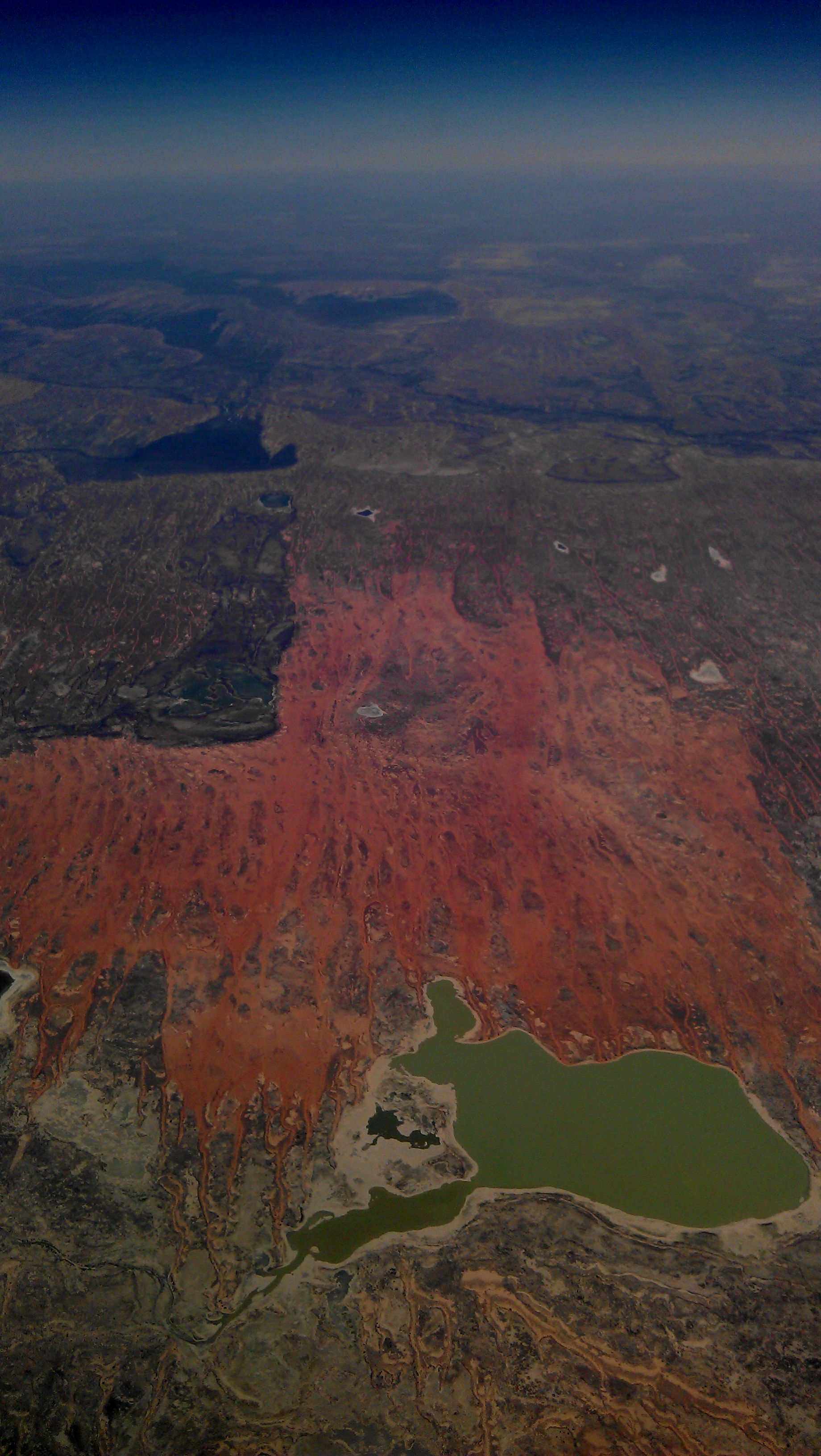
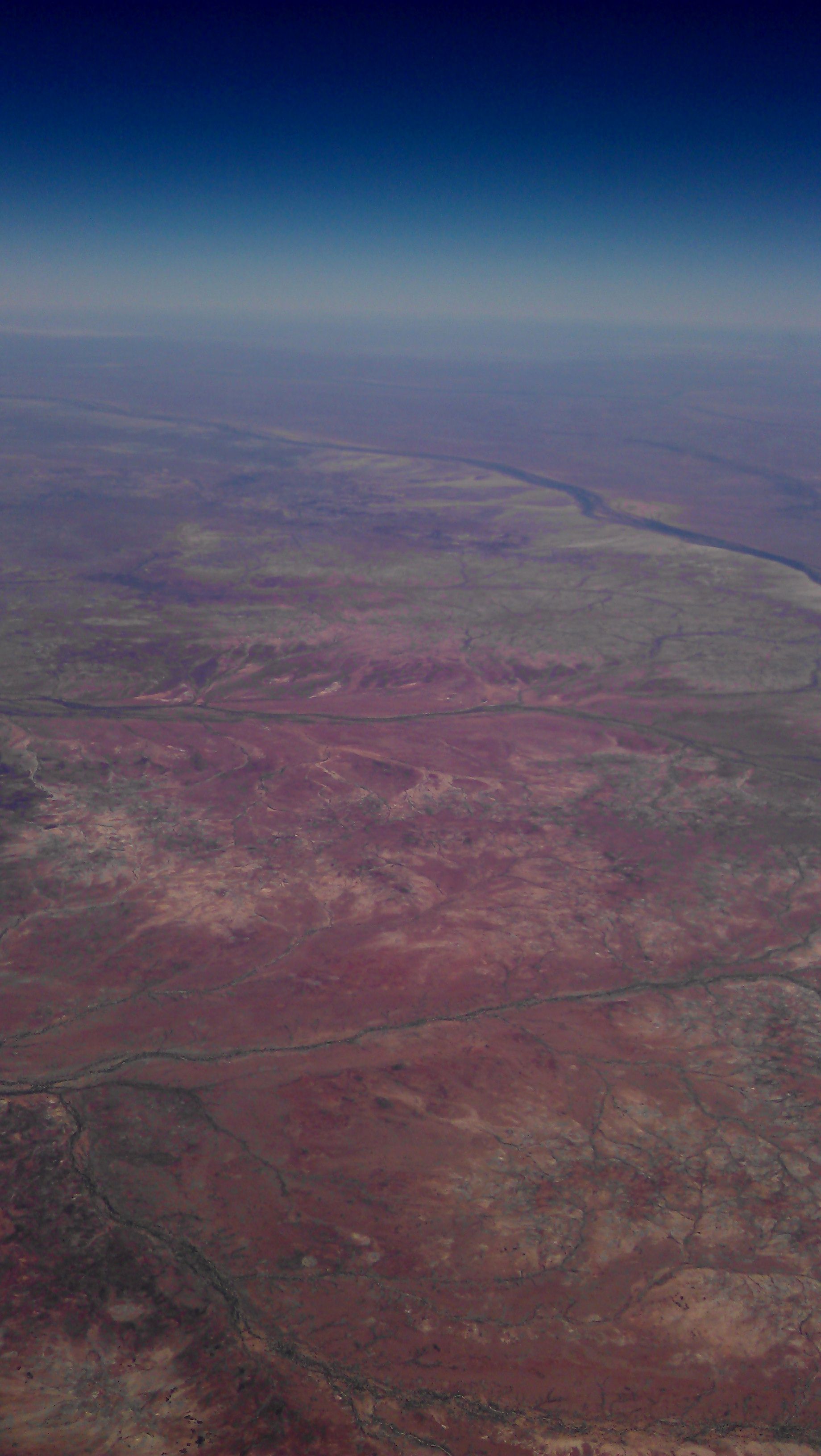
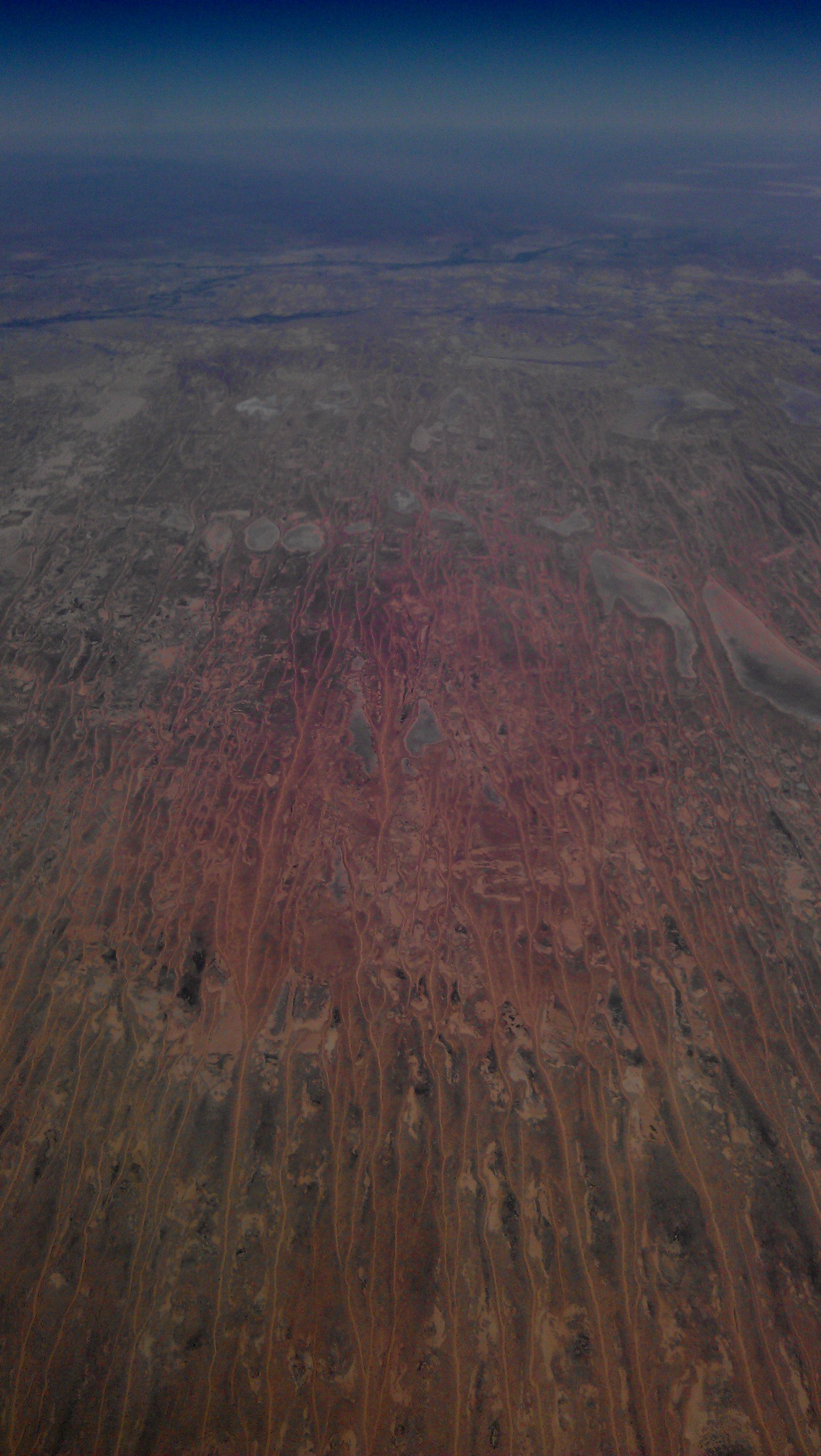
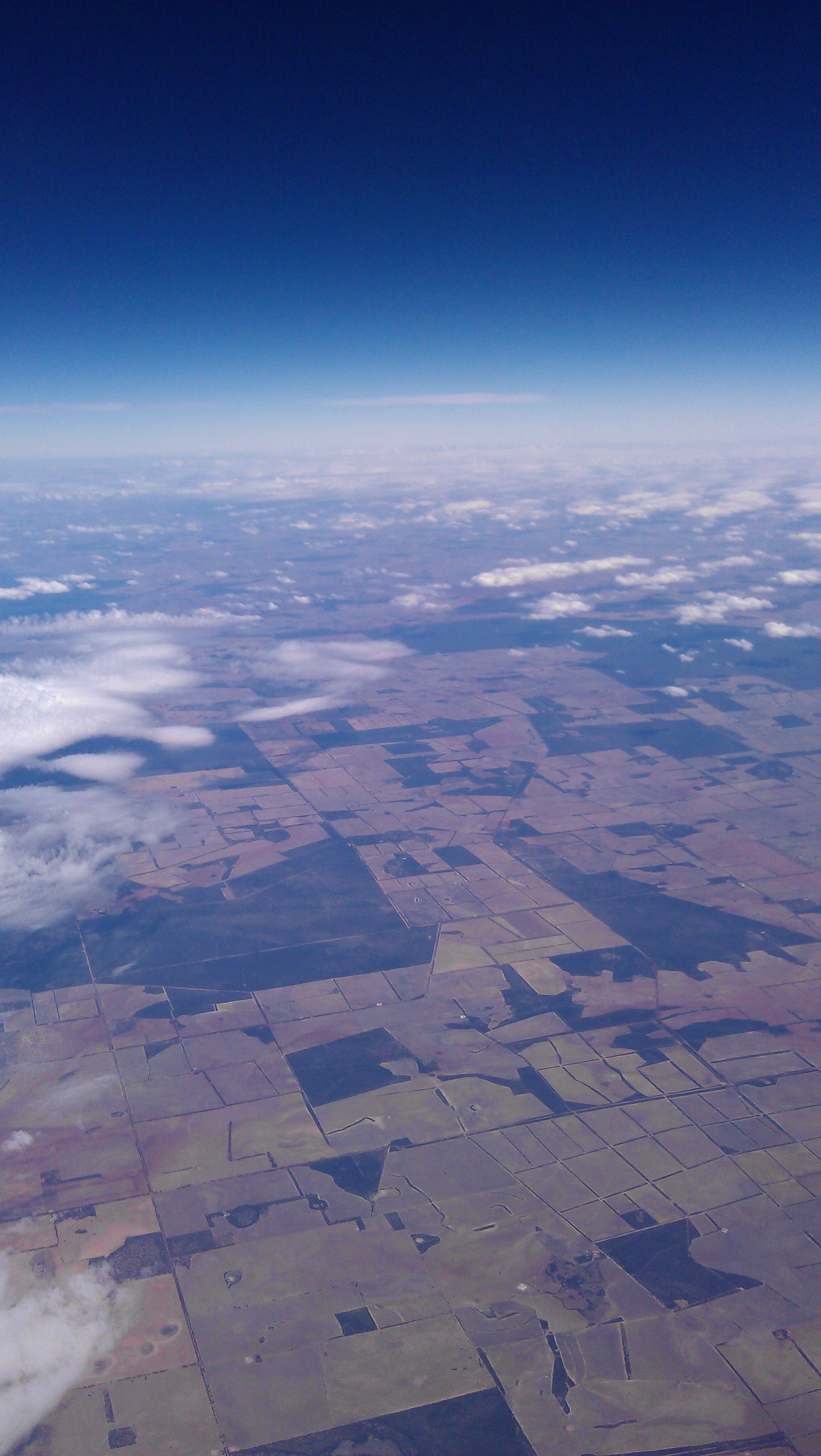
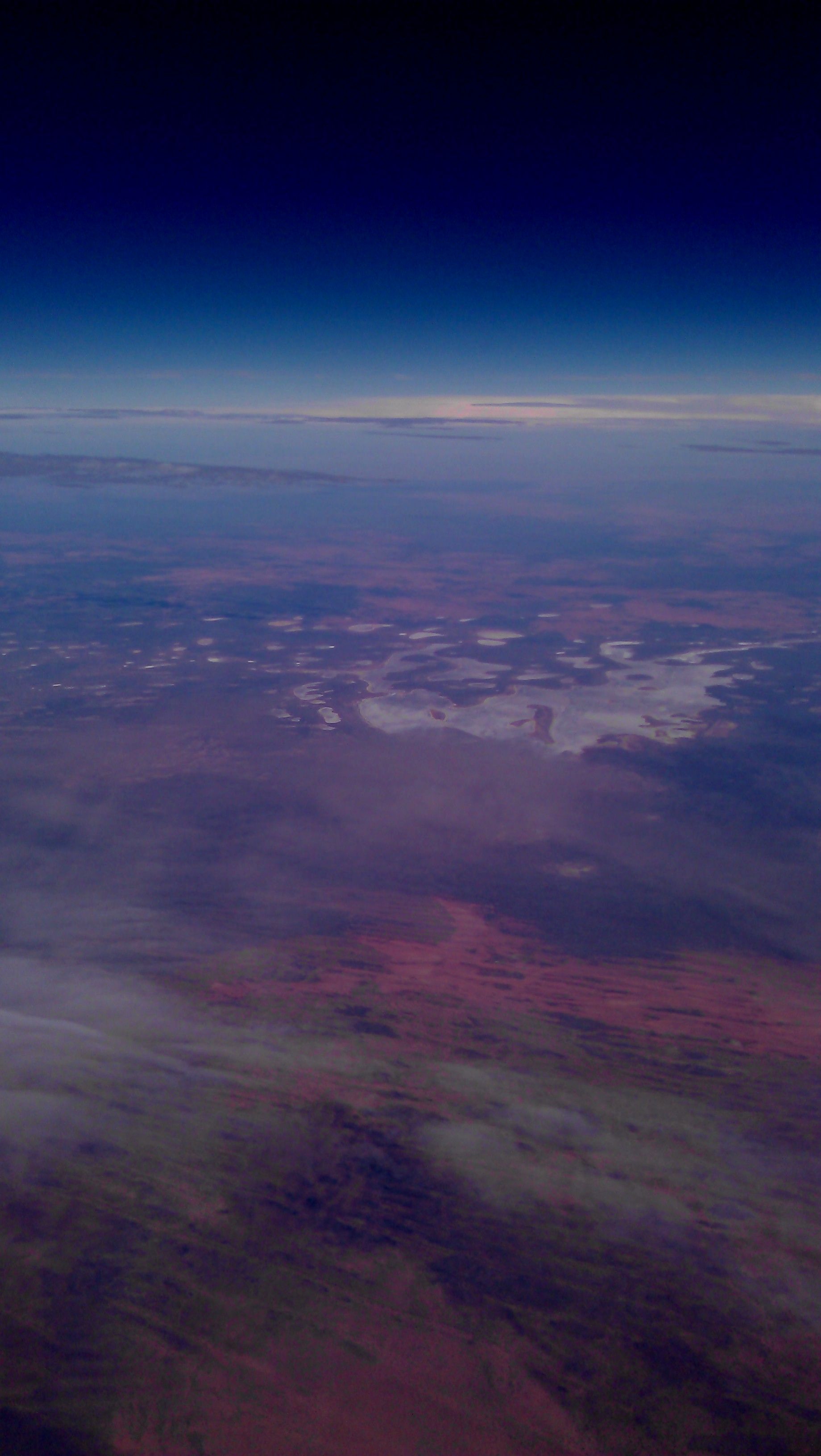
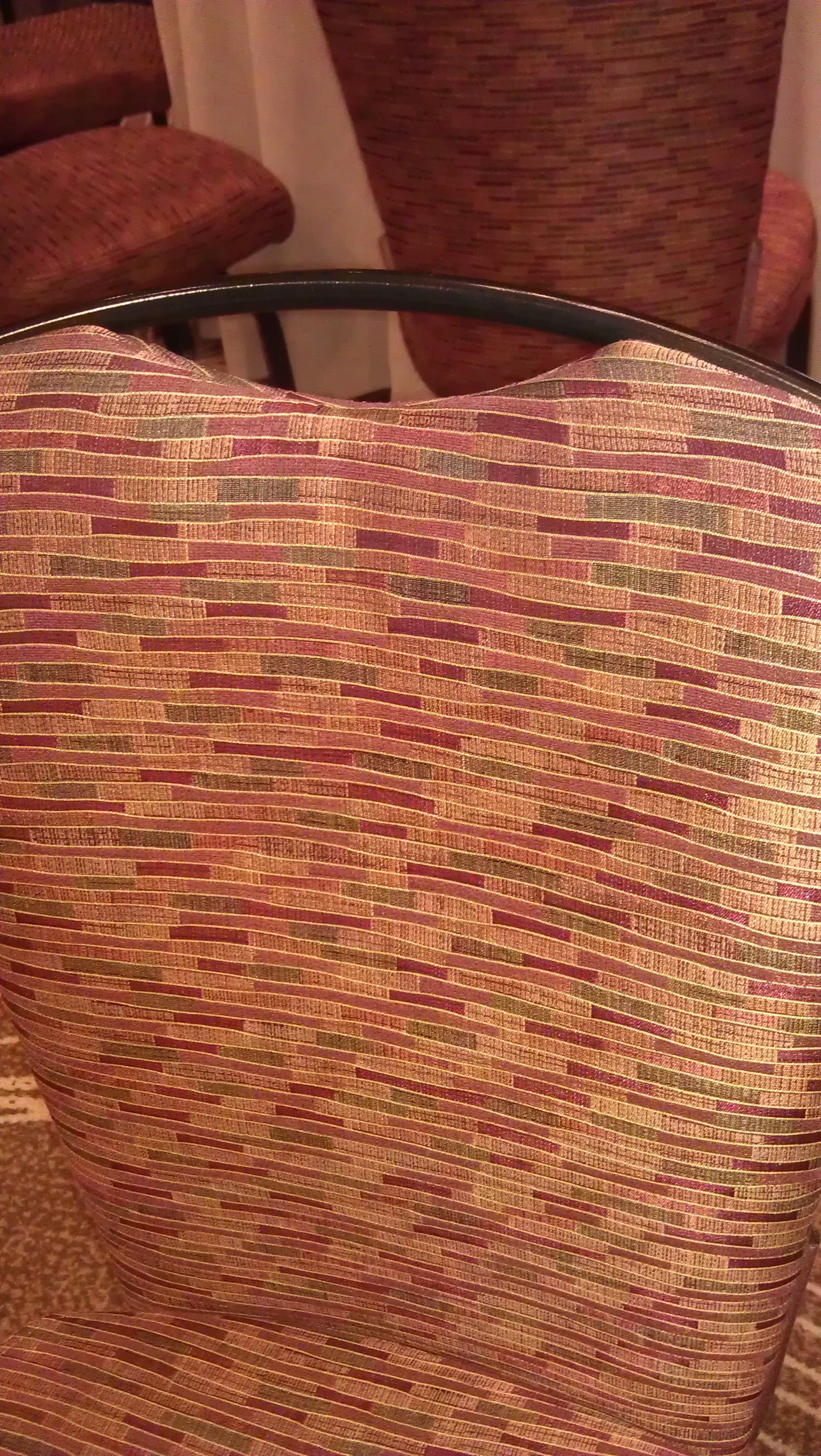
Some photos I took on my trip to and from the US. Maybe one day I’ll make a quilt of the Australian landscape from the air… or based on the chairs in the function areas of the Hyatt at Olive 8 in Seattle!

australia_from_the_air_march_2013_02b

australia_from_the_air_march_2013_03b

australia_from_the_air_march_2013_04b

australia_from_the_air_march_2013_05b

australia_from_the_air_march_2013_06b

australia_from_the_air_march_2013_07b

australia_from_the_air_march_2013_08b

australia_from_the_air_march_2013_09

brisbane01

australia_from_the_air_march_2013_01b

quilt_inspiration


My notes from Velda Newman’s workshop

21 03 2013

These notes are for me — I wrote them while attending Velda Newman’s workshop at Quilting Adventures in Texas in 2013. The originals are on paper in a notebook, so I wanted to record them digitally in case I ever lose the notebook! They may not make much sense to anyone who didn’t attend this 5-day workshop, but hopefully they’ll make sense to me when I try to apply some of the techniques we were taught to future art quilts I make.

For most outline drawing directly on to fabric , use a quilt marking pen that fades/disappears or irons/washes off. If you make a template first with something like TruGrid, then DON’T use a quilt marking pencil — use something more permanent; mark the fabric with a quilt marking pen, but not the template. If you use a template, cut out on the drawn lines, then place on the fabric and draw around the outline. Only cut the fabric later after you’ve finishing sewing, painting etc., and when you do, leave up to 1/2″ for turning under the edges, if you’re not doing raw edge applique.

Curves

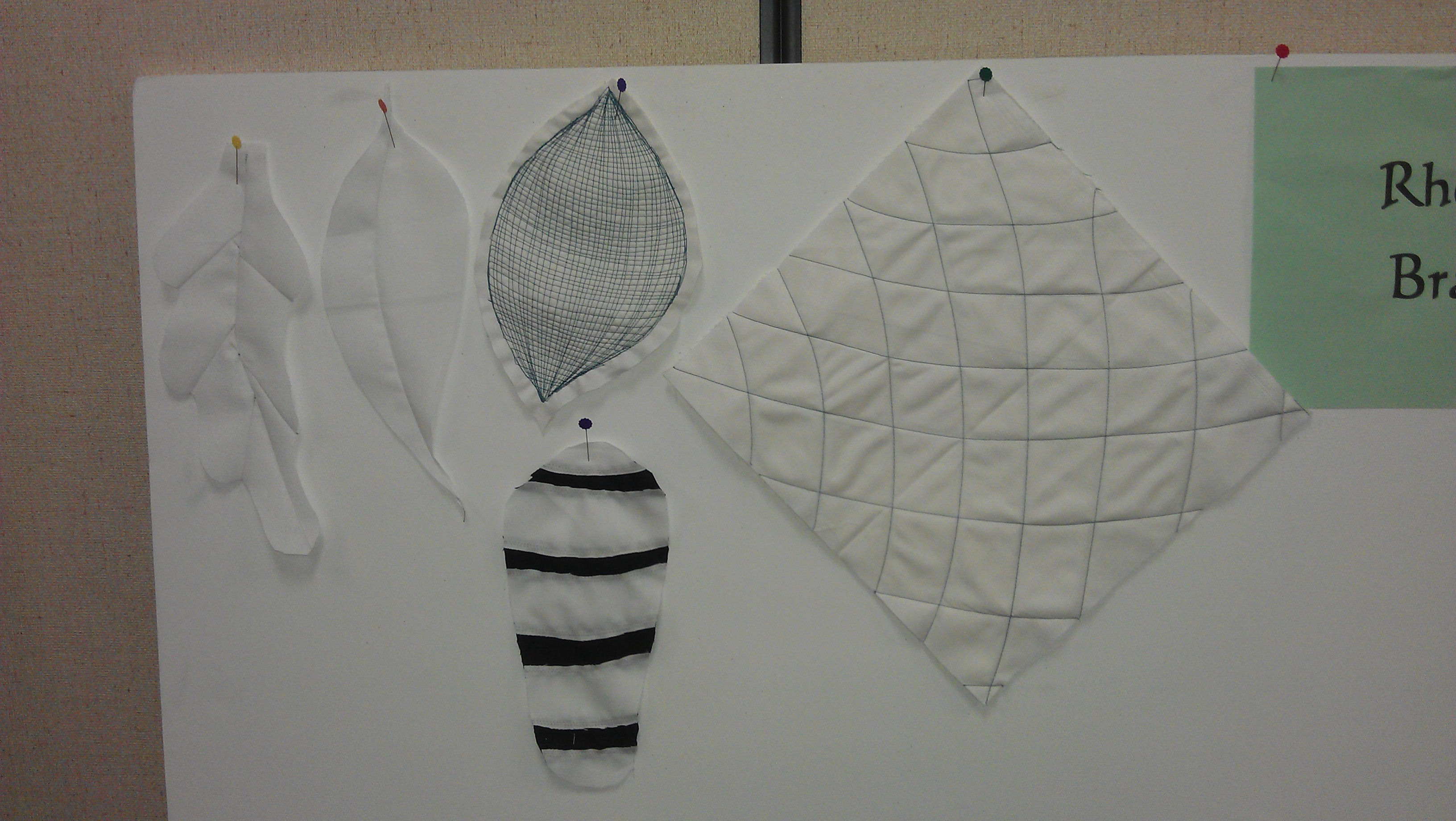
  1. Draw basic curves and concentric curves on fabric.
  2. Add some thin batting or stabiliser behind the fabric.
  3. Stitch along the drawn lines — use a normal foot or a walking foot. Stitch off the edge of the outline of the object.
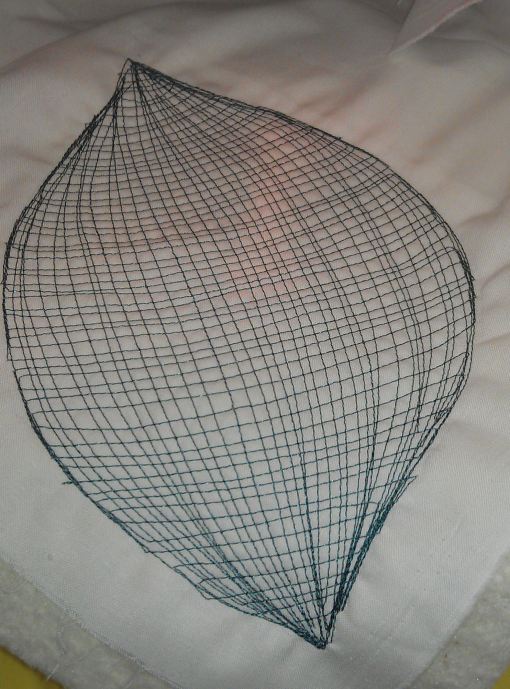
  4. ‘Divide and conquer’ the lines to get the texture you want (e.g. lemon skin); i.e. stitch halfway between the lines each time, until the gaps between the lines is quite tiny.

qa_2013_day1_velda_newman19

qa_2013_day1_velda_newman02

qa_2013_day1_velda_newman17

qa_2013_day1_velda_newman18

Tucks

Useful to give the illusion of piecing without piecing! Great for objects like leaves, fish fins, curves on shells, etc.

  1. Draw a basic outline of a shape (e.g. a leaf) and draw a curved line for the centre line or vein (draw on the right side of the fabric for a tuck that sticks up; draw on the wrong side for a tuck that looks like a seam).
  2. Fold on the curve of the centre line and use ‘spit and pinch’ to finger-press the tuck line.
  3. Stitch about 1/16″ from the edge of the folded curve, creating a tuck.

If you’re doing lateral veins coming off a main vein on a leaf, stitch the lateral veins first from the outer edge to the centre line (tapering at the centre line), then stitch the centre vein, catching the lateral veins along the way. Press all lateral veins in the same direction.

Don’t forget — these leaves will be smaller than the original design/template, so don’t cut them out until you’ve done any stitching/tucks. Then cut them into whatever shape you want.

qa_day1_tucks

Reverse applique variation

  1. Place a light fabric piece on top of a dark fabric piece. The pieces should be the same size and lined up with each other.
  2. Mark the stitching lines/curves.
  3. Double-stitch along those lines.
  4. Mark the light sections to cut out.
  5. Cut out all the light sections close to the stitching to show the dark fabric underneath.
  6. Turn the piece over and mark the dark piece to discard.
  7. Cut out all the dark sections close to the stitching line to show the light fabric.
qa_day1_reverse_applique

Stitch twice ON the lines; don’t do two close rows of stitching like I did here

Cheesecloth

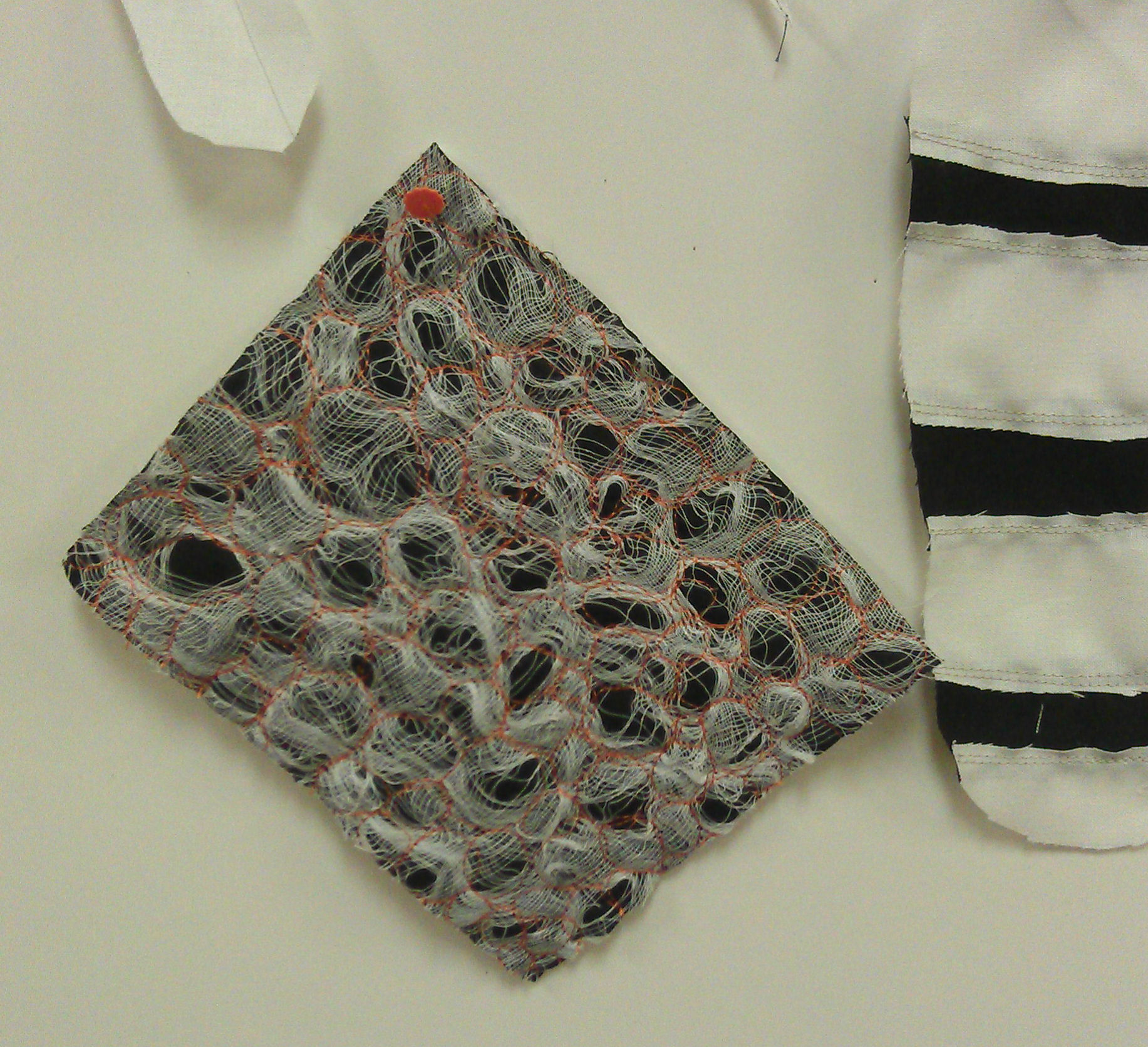
This was amazing stuff and you can such a lot with it to create texture! There are several techniques you can use — pull a small group of threads out every so often, pull threads apart creating holes and bumps, paint/dye beforehand (or afterwards), scrunch it, stretch it, etc.

Always cut the cheesecloth at least 2 inches bigger all round than the fabric it will be applied to. And when you’re done creating the texture and are ready to stitch it down on to its background fabric, cut off any excess cheesecloth.

When stitching cheesecloth down using your free motion/darning foot, use a CLOSED TOE foot! An open-toe foot WILL get caught in the threads. Use any stitch you want — pebbling makes great texture for reptiles, frogs, etc.

qa_day1_cheesecloth

Velda’s kit

Velda used these tools in her painting/marking kit:

  • Derwent Inktense watercolour pencils
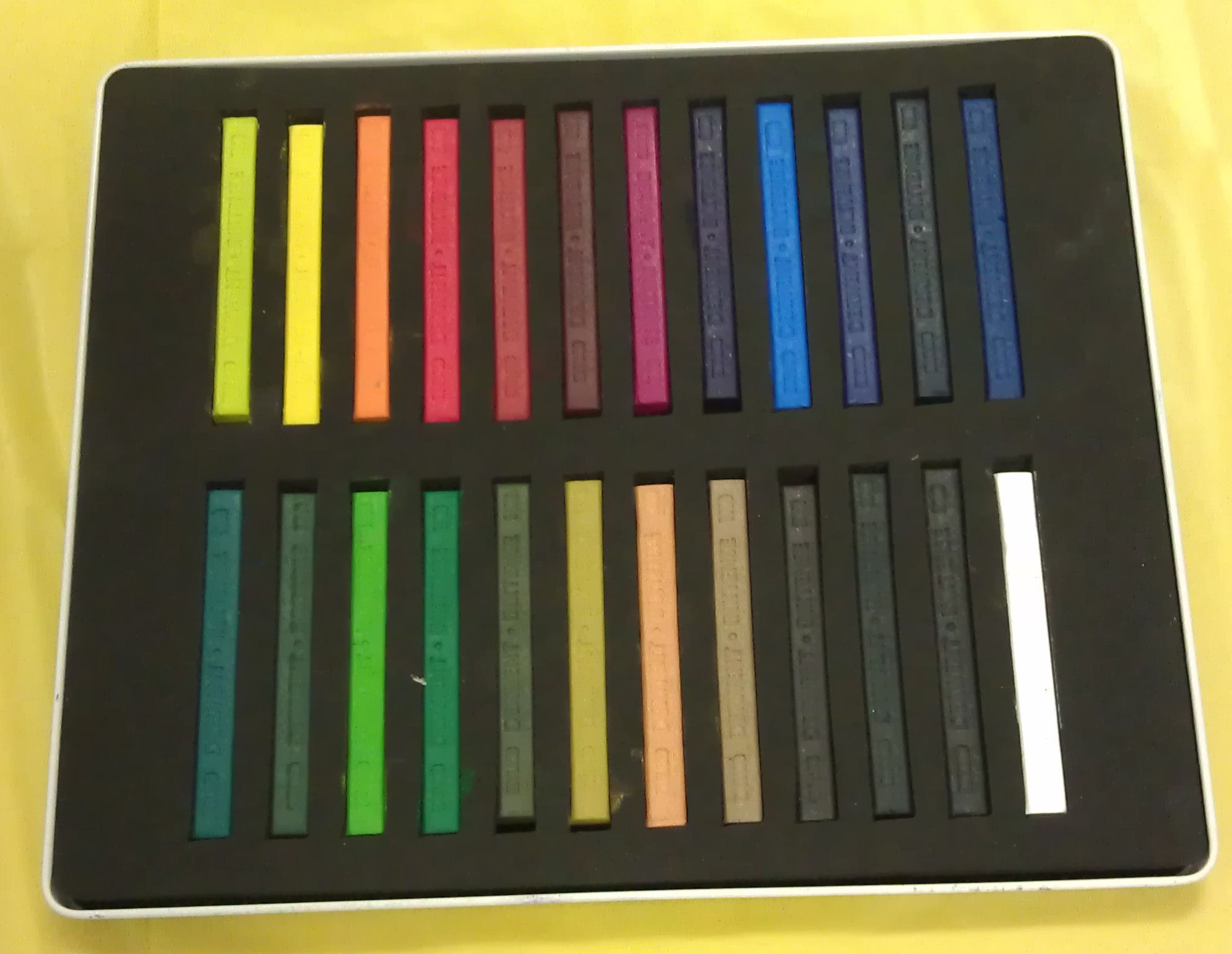
  • Derwent Inktense watercolour blocks (sticks)
  • Acrylic artists’ paints, such as W&N (Winsor and Newton), Matisse, Dick Blick
  • NeoArt water-soluble oil pastels
  • Jacquard water-based resist
  • Copic markers (with brush and broad nib ends; refillable inks; colorless blender) — these are PERMANENT markers and do not blend easily; only use on DRY fabric
  • 1 inch to 1.5 inch paint brushes suitable for acrylics (for broad brush painting of large areas); smaller brushes for finer work
  • Hair dryer for drying paint — helps stop bleeding. Note: Paint always appears darker when wet; it dries lighter
  • 14″ or 16″ quilting or embroidery hoop for holding fabric taut while painting it
  • Bleach — used to ‘wick’ a section of dark fabric that you want to make slightly lighter; you can dip the edge of the fabric into it, or use a Q-tip or similar to apply the bleach. You MUST wash the fabric with soap and water after you’re finished to get the bleach out
  • Spray water bottle

Most of the paints/markers should be readily available from most decent art supply shops, or try these online outlets:

Note: Some online stores cannot ship flammable materials (such as the colorless blender or the ink refills) outside their country of location.

General techniques for all water-soluble, non-permanent paints/markers

  1. Wet the fabric with water spray.
  2. Wipe off excess water with a damp cloth/towel — the fabric should be damp but not soaking wet.
  3. Use the side of a watercolour pencil/stick/crayon to apply colour, then blend in with the end of a damp towel or your finger. You can scrub the paint into the weave of the fabric with a towel, so it’s better than your finger in many cases.
  4. Add further colour. Blend. Repeat.
  5. Dry with a hair dryer (on medium setting) held less than an inch over the top of the damp fabric. Start drying from the inside and work outwards, otherwise the fabric will fly away with the force of the air from the hair dryer!

Steps for the piece I worked on

  1. Decide on image.
  2. Trace outline of image onto plastic suitable for an overhead projector.
  3. Put on overhead projector and blow up the size. If you don’t have an overhead projector, use a photocopier to increase the size by 200/400/whatever %.
  4. Trace the projected outline onto Pellon TruGrid (if you’re using a photocopy, use a window/sliding door as a light box).
  5. This is your master pattern/outline, so mark each section with A, B, C or 1, 2, 3 etc.
  6. Place another piece of TruGrid over the top of the master pattern and trace each individual section separately, marking it with the same letter or number as on the master pattern. Also mark the overlap/underlap areas (e.g. use a dashed line to indicate where a piece of pattern goes under another piece).
  7. Cut out each piece on this second piece of TruGrid — cut on the outer line; do not leave a seam allowance (the seam allowance will be on the fabric, not the pattern).
  8. Place each pattern piece on its relevant fabric, pin, then mark the outline of the pattern piece on the fabric. NOTE: If you’re going to add tucks to a piece, consider NOT marking the final fabric outline or cutting it until after you’ve stitched the tucks.
  9. Cut out each fabric piece about 1″ extra all round. NOTE: If you’re likely to use a hoop for painting, consider NOT cutting out the fabric just yet!
  10. Mark major stitching and tuck lines on the fabric, then stitch them (no batting at this stage). If you’ve added tuck lines, re-mark the outline of the piece after you’ve stitched and pressed the tucks.
  11. Paint the fabric with acrylics to add dimension to the piece, then dry.
  12. Add lots of shadow at the tuck lines using the pencils/markers. Add other shadows, colours etc. as appropriate. Re-wet the piece as necessary and add more paint. Then dry completely.
  13. Turn under the edges that will overlap on each piece (fold on the marked outline lines). Snip around curves as necessary. Baste.
  14. Pin all the completed pieces together to make a single piece — it’s easiest to do this on a design wall. Use your TruGrid master pattern as your guide.
  15. Pin or baste the pieces together (glue baste with a fine point applicator works fine!), then stitch them together.
  16. Finish adding paint/pencil/marker touches to add depth, connect the pieces as a whole, etc.
  17. Cut out a piece of stabiliser the same shape as the piece, but about a 1/4″ smaller all round.
  18. Place the finished piece onto the stabiliser and stitch down, stitching from the centre of the piece out.
  19. Add surface stitching detail, as required.
  20. If you want to add THIN batting to ‘puff’ the piece a little, do it after you’ve done most of the surface stitching. Like the stabiliser, cut the batting a tad smaller than the finished piece, then baste and stitch/quilt as appropriate.
  21. Pin and baste the completed piece to the background fabric. Add any other pieces you created for this art quilt, as required. Topstitch, blanket stitch, or hand applique down if you don’t intend to quilt it down. This is your quilt top.
  22. Make the quilt sandwich with batting and backing fabric.
  23. Quilt and bind as desired.

Velda tends to face bind or use commercially pre-made piping to bind her art quilts, so consider those instead of more traditional folded and mitred binding. (See these videos for applying piping as a decorative finish, but not as a faced piped binding as Velda does on her art quilts: http://www.youtube.com/watch?v=q-rThp7KGRw [part 1] and http://www.youtube.com/watch?v=zMlU2jAd-p4 [part 2]; try this piped cushion technique for a different method: http://www.positivelysplendid.com/2012/01/piping-tutorial-bee-happy-pillow.html)


Quilting Adventures Spring Seminar: Day 5: 15 March 2013

16 03 2013

My very long day started early when I woke up at 6:00 am having not gone to sleep until well after 1:30 am. Those who were left had our last meal at the T Bar M Resort (scrambled eggs, tortillas, grated cheese, hot sauce, plus all the cereals, fruits, juices, etc.).

Those in Velda’s class a critique of their work done by Velda. I was second to be critiqued as I had to leave for the long (4+ hours) drive back to Dallas. Then it was hugs and goodbyes all round and I left my quilting buddies — new and old — to find Kim and Deb and bid them farewell too. I sincerely hope I’ll be back.

First stop was to fuel up — the drive down from Dallas took a half tank, so I wasn’t going to risk it on the way back. Then it was on to Austin. I’d been warned several times that Austin traffic is horrendous, especially as SXSW and spring break are both on at the moment. The traffic was flowing smoothly heading north on Interstate 35 and I cleared downtown Austin without any problems, but those heading south were in a car park on the interstate. The radio traffic report said there had been an accident on the upper deck of the interstate as it passes by downtown Austin. The traffic heading south was banked up almost to Round Rock, and the frontage roads were equally as packed with people trying to avoid the interstate. And it wasn’t even noon.

I had a couple of stops on my drive to Dallas. First was Jerry’s Artarama store just north of Austin. Wow! What a place!!!! It was a HUGE art supplies store. I found the brands on pencils and markers I was looking for plus a couple of other bits and pieces, then wandered over to the Office Depot store across the car park. There’s just something about stationery stores…

Getting back on to the interstate was difficult as I had to cross three lanes of exit ramp/frontage road traffic, all banked up because of the traffic holdup a little further south ( which I wasn’t aware of at the time). But the car and I got out unscathed… it’s amazing what a courteous wave can do!

There was quite a bit of construction between Austin and Waco, though it didn’t impede the traffic flow too much. I pulled in to a Best Buy to look for a couple of things, which they didn’t have, then got back on the road again. The weather was just perfect for driving. About 80F outside, clear sunny skies, dry roads.

A couple of observations from the drive:

  • Seen on a billboard: Lonely billboard. Looking for a new relationship. [Clever!]
  • Seen on several billboards: Stessed? Questions? cowboyfaith.org
  • US drivers are invariably polite about indicating and getting over once they’ve passed. I encountered some exceptions, but overall I like driving in the US as you don’t get the road rage you see in Perth, in particular. They do like to tailgate at speed, though, so I guess it’s no wonder there are several signs saying there have already been 436 road deaths in Texas alone so far this year.

My final fuel stop was close to DFW airport. Then I was at the rental car centre there, and on the bus to my terminal… and very soon on the same bus back to the rental car centre! Why? Because I couldn’t find my phone in my bag!!!! And suspected I’d left it in the car. When I’d grabbed my bag from the front seat, I assumed the phone was in it as I remember taking it off the charger and putting the charger in the bag.

My phone had been plugged into the car’s power for drive from New Braunfels back to DFW. Close to DFW, I removed the portable Bluetooth device from the windshield, and the power cord from the cigarette lighter. I also put the phone (I thought) with those two things in my bag… But obviously I didn’t. I must’ve just left the phone on the passenger seat and it slipped under the rental car map. When I got to the rental car return place, I just grabbed my bag and water bottle from the passenger seat and left the map. And the phone. I was on the bus ride from the rental car centre to the terminal when I went to check my mail. No phone. I hunted through my bag about four times, and checked my carry-on too, while silently freaking out! Then I stayed on the bus and returned to the rental car centre. All that took about 30 mins. While waiting in line at the Budget counter I asked the guy behind me to call my phone #, in case it WAS in my carry-on or handbag. No sound. He then sent the phone a text message saying that it was mine and that I’d lost it and would the finder please return it to the Budget counter. Meantime, the lady behind the counter was now free and I said that I thought I’d left the phone in the car about 40 mins ago when returning it. I gave her the receipt from the rental (the car make, model and rego was on that) and the phone # so she could call it. She found it and returned it to me. She said it had slipped in the groove between the seat base and back…

I gave her a BIG hug and sent the good samaritan guy a text message thanking him for trying to find the phone for me too. (Cherrie — I think the phone loss was part of the ‘can’t find my phone’ episode from yesterday 😉 )

After all that running around, I finally got to Terminal D (international) at 5:30 pm. The Qantas check-in opened at 6:00 pm so I was all checked in and through security and into the elevator for the Qantas Lounge by 6:08 pm! I’d like to see you try THAT at LAX!!

I’ve now had a shower and a bite to eat (I didn’t have lunch today), and a wine, and am writing this as one of the last things I’ll do on this trip to the US. It’s been fun, but now I have to get back to work and my normal life 😉

One final thing… one of the ladies gave me an unpicker to see if I could take it through security and unpick my stitching on the plane. I had it in my handbag and it went through the X-ray scanner without question. That said, it was one with a very short shaft and point (maybe an inch long) and a long handle.

See also:


Quilting Adventures Spring Seminar: Day 4: 14 March 2013

15 03 2013

Our last full day today…<sad>

For some, this was their last day as they had to leave before the official finishing time on Friday.

Most of the day was spent consolidating our pieces, getting as much advice from Velda as we could, joking around, enjoying each other’s company, etc. Velda helped me add some more shadow and depth to my piece, using Copic Sketch Markers (great tools!), then I put a piece of very light batting on the back as a stabiliser (the on-site pop-up shop didn’t have any stabiliser, so I made do with the batting), and stitched around all the main pieces in invisible thread, then stitched the lesser petals also in invisible thread. Either the sewing machine, me, or the thread didn’t like each other, so I stopped sewing after doing the lesser petals and decided to wait until I got home and on my own (familiar) machine before continuing. I might even unpick all the stitching done so far and start again with a better, more solid stabiliser, as the batting caused quite a lot of puckering, which I don’t want just yet.

By 4 pm we were all cleaned up ready for the end of seminar ‘walkthrough’ where we wander into all the other classes and check out what everyone’s been doing. And have a good look at what the fellow students in our own class have been working on. I also had a guest with me — Karel had joined me from San Antonio, and had as much fun as me marvelling over the work that everyone has done this week.

After the walkthrough, it was time for drinks and an early dinner, then the final tutor presentation of the seminar series, this time by Velda. She got a rousing reception from her students 😉 And deservedly so too. If everyone has learnt as much as I have this week, then we will all go home buzzing with new ideas and inspirations. And a much greater respect and admiration for humble cheesecloth! Karel had to leave immediately after the presentation as she wanted to get home before dark if she could (it had taken her over an hour to drive the 40 miles from her home…)

Food today:

  • Breakfast: Scrambled eggs, bacon, link sausage, pancakes, syrup, cereals, fruit, fruit juices, toast, etc. (only cereal and half a bacon sandwich for me)
  • Lunch: Make-your-own chicken burger or hamburger, salad, all the mustards, pickles, onions etc. for the burgers, fries, some sort of pie with pecans on top (it was ‘Pi Day’ today in all countries that use the mm/dd/yyyy date system)
  • Dinner: Fettuccine with chicken and/or meatballs, various sauces, various grated cheeses, salad stuff, garlic bread, strawberry cheescake

I’ve commented on the photos, as appropriate; click on a photo to view it larger.

Rayna’s class

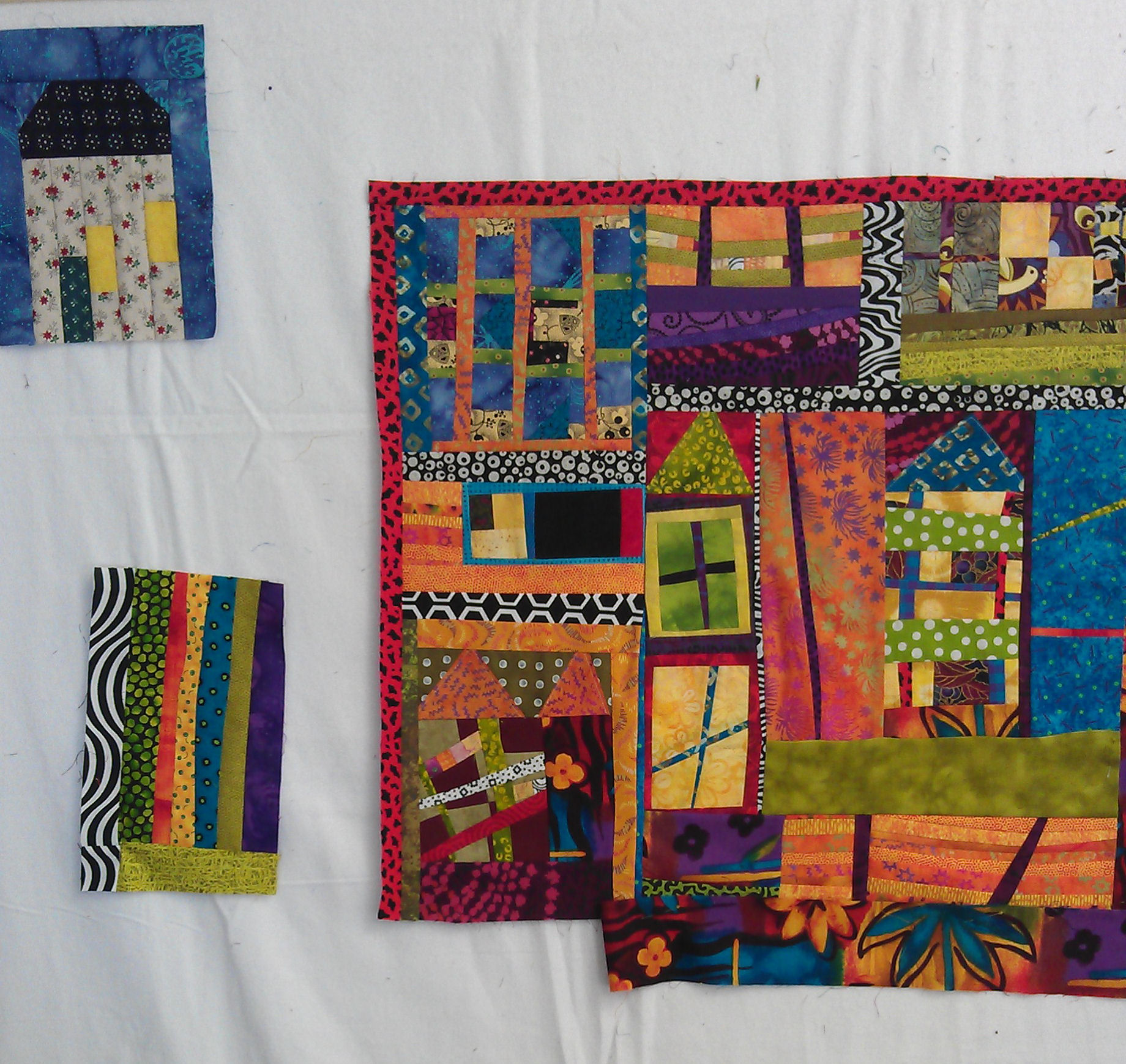
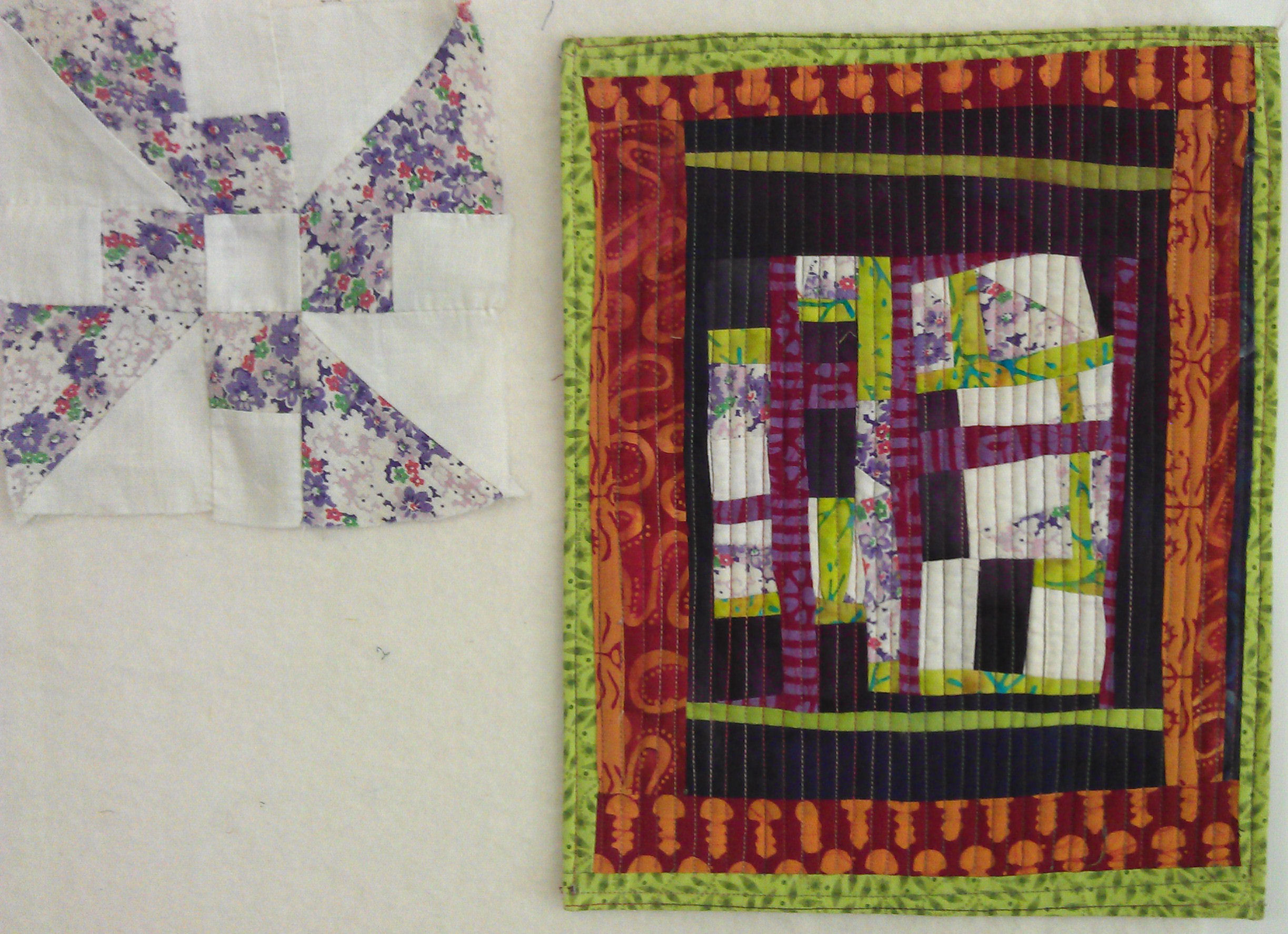
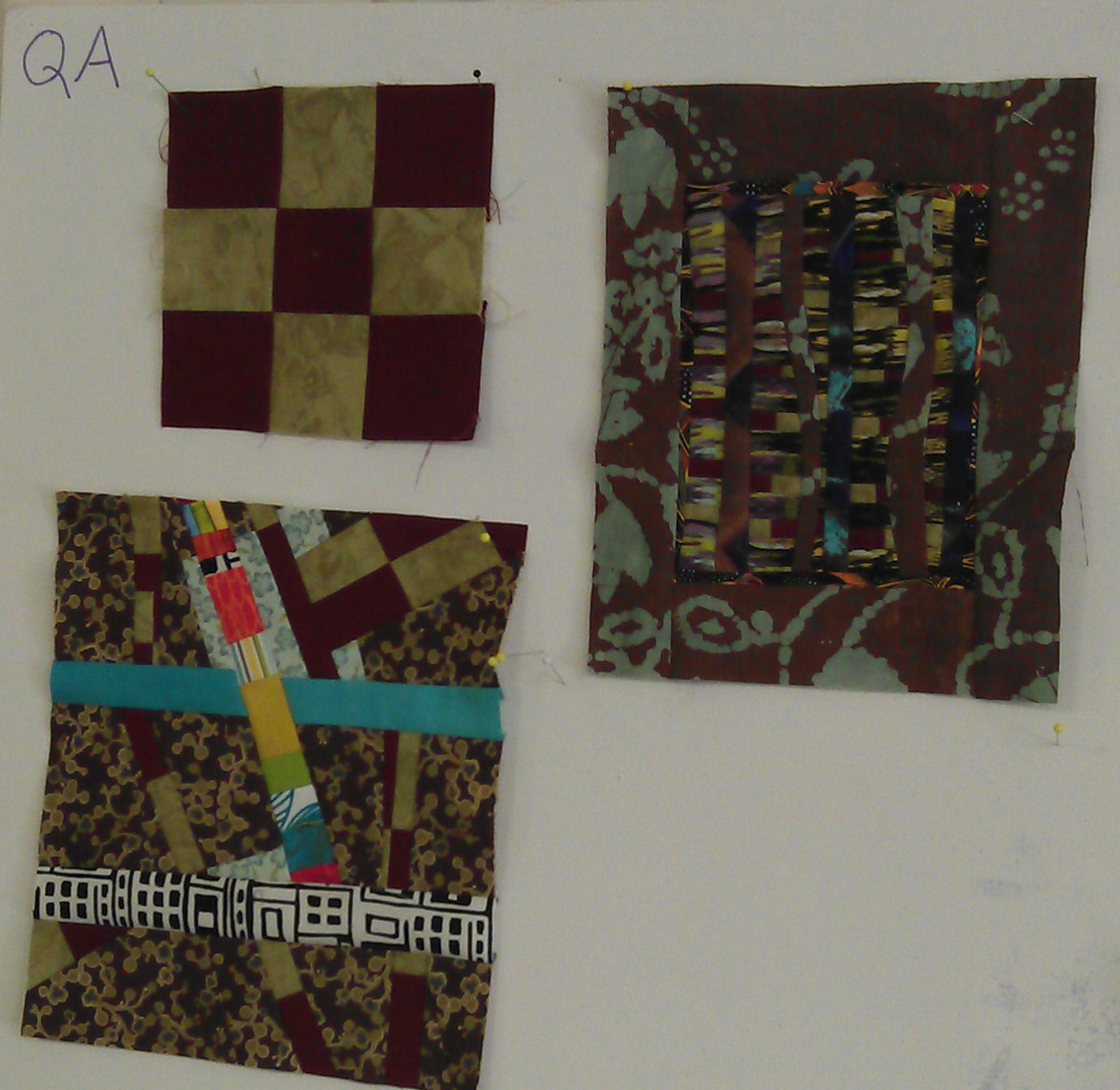
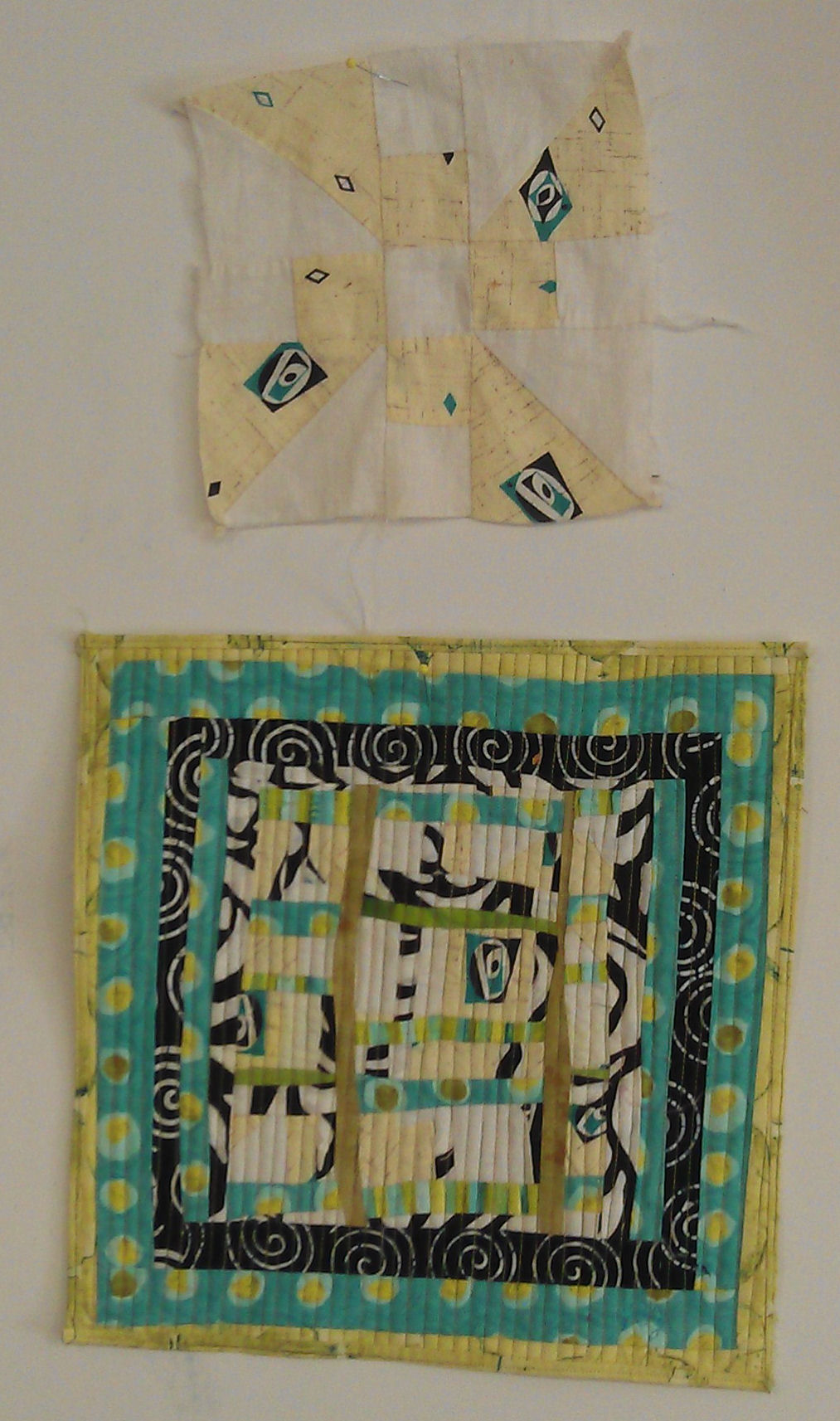
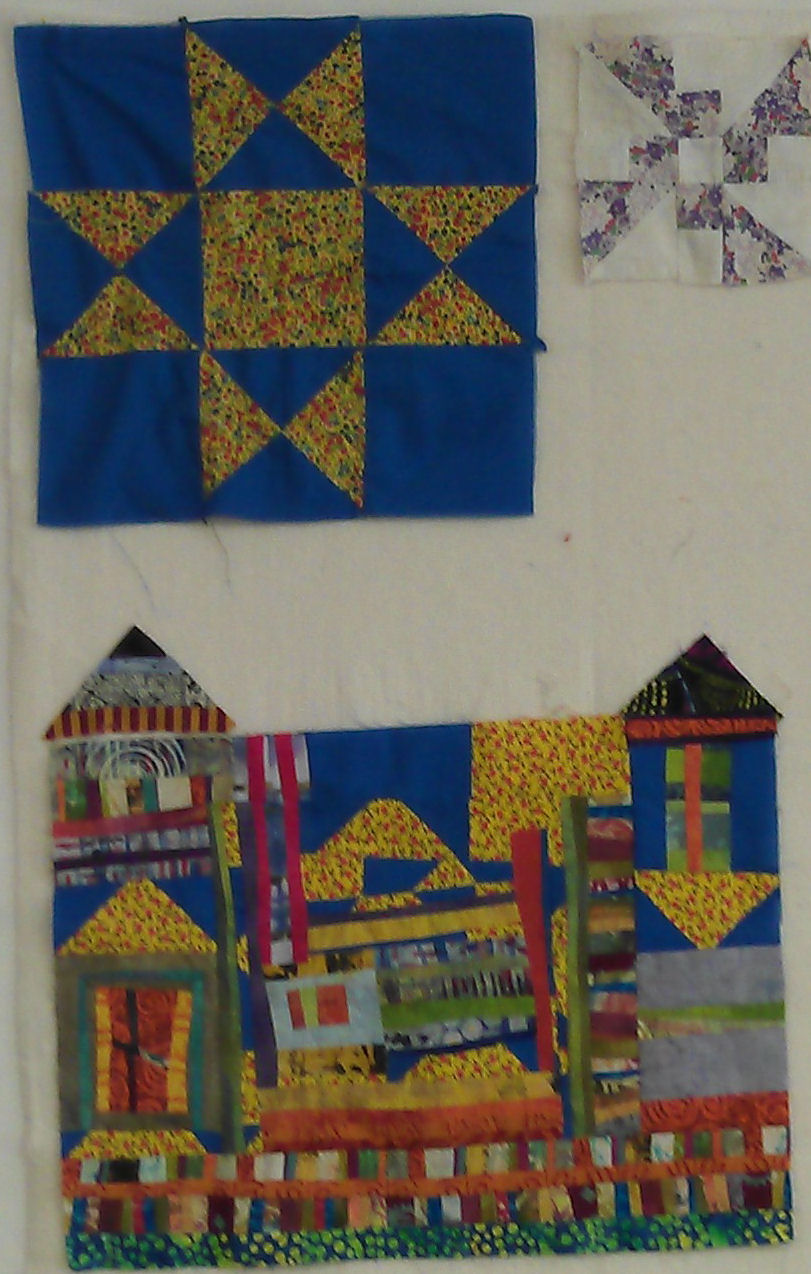
Rayna’s students did a lot of slicing and dicing. They were to bring in old, unloved, blocks and scraps of fabric and convert the blocks into something vibrant and new. Everyone succeeded at that task, in fascinating and inspirational ways. In each of these photos, the ‘ugly’ block(s) are displayed, as well as what came out of slicing and dicing and rearranging those blocks and adding extra fabrics to them. Who said some blocks were so ugly they were only fit for throwing out? In some cases, it’s hard to see where the remnants of the old blocks are, but look carefully and you’ll find them.

There first four photos are of the students’ work; the last one’s in this section are Rayna’s work.

qa_day4_29

qa_day4_32

qa_day4_31

qa_day4_30

qa_day4_35

qa_day4_34

qa_day4_33

qa_day4_38

Robbi’s class

All of Robbi’s work with this class with with fusible applique. It looks really difficult, but the students I spoke to said it was actually pretty easy to do.

qa_day4_41

qa_day4_40

qa_day4_36

Back of one of Robbi's sample quilts

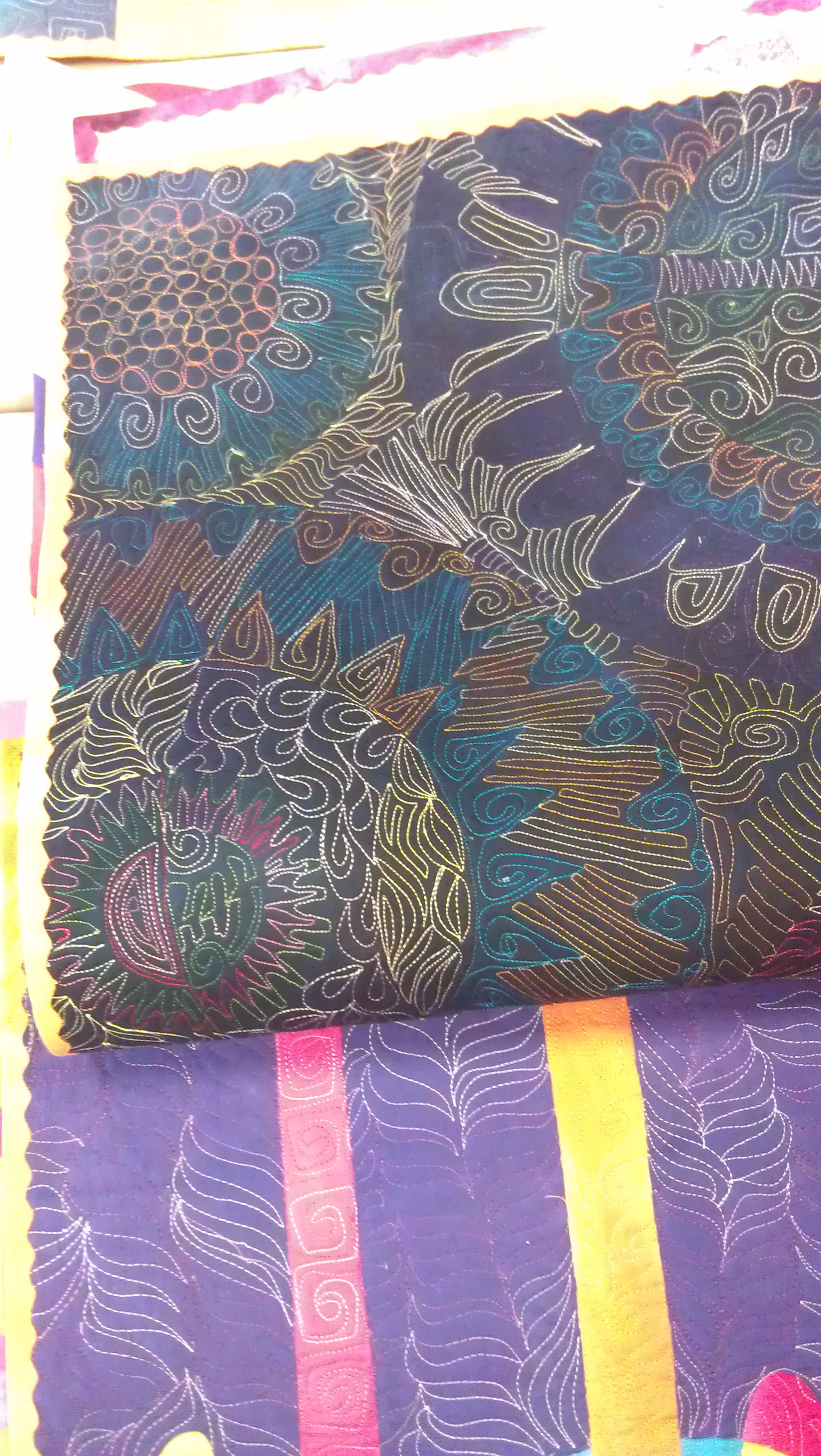
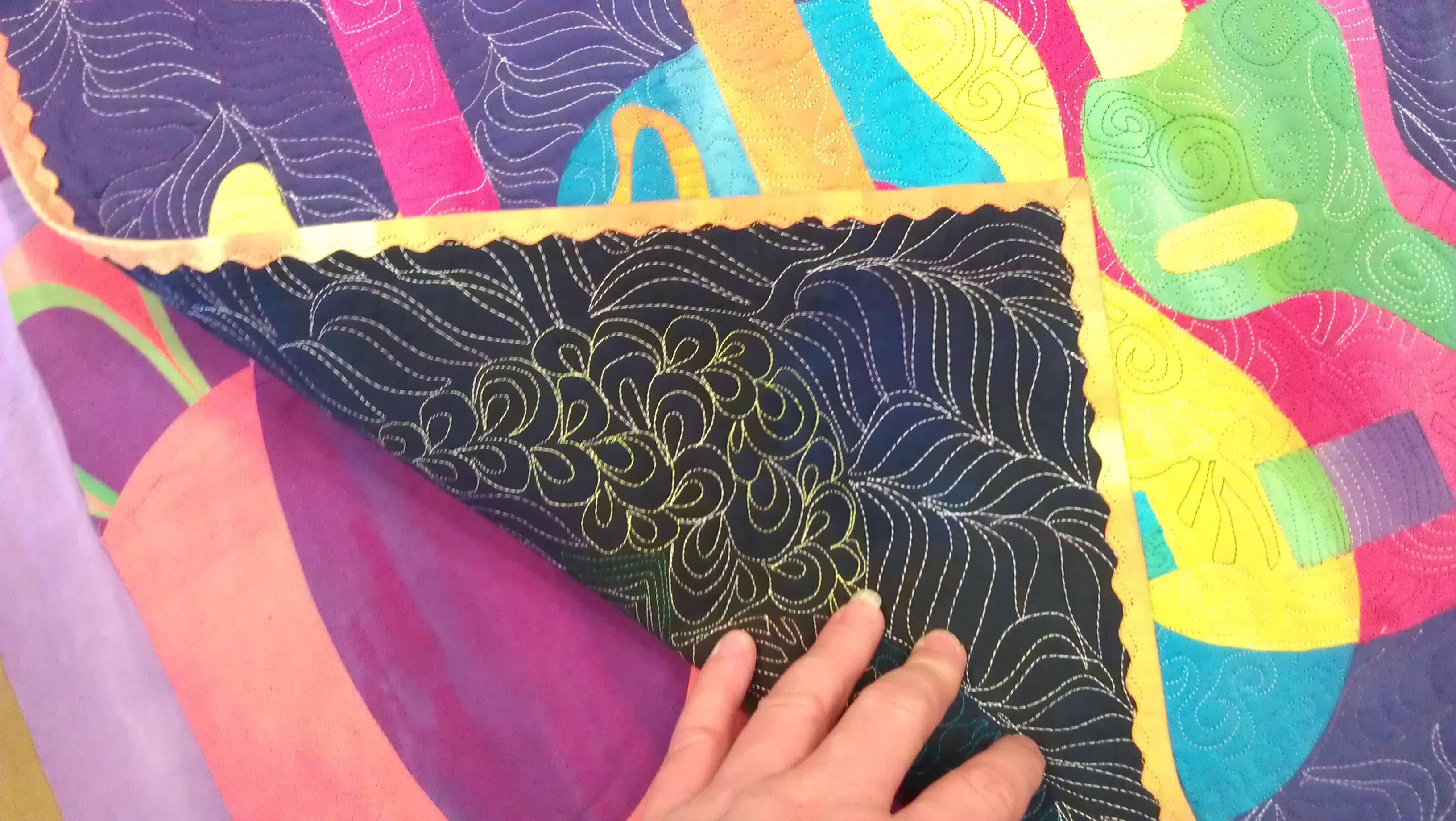
Back of one of Robbi’s sample quilts — she always matches her bobbin thread to the top thread

Another of Robbi's sample quilt backs

Another of Robbi’s sample quilt backs

qa_day4_43

Very cool and simple binding technique from Robbi

Very cool and simple binding technique from Robbi

qa_day4_39

qa_day4_37

Velda’s class

We were all busy little beavers today…

qa_day4_08

qa_day4_07

qa_day4_06

qa_day4_05

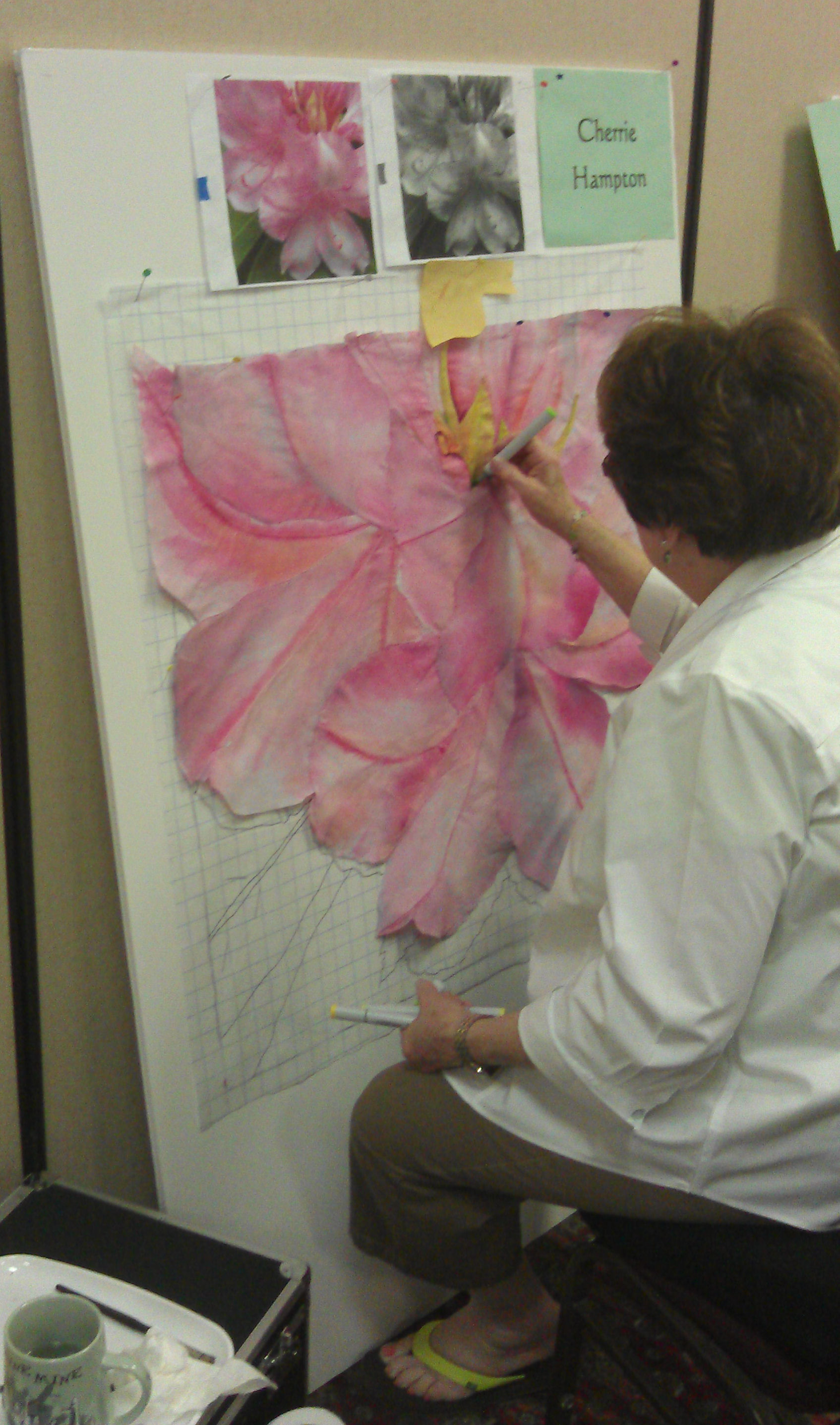
Cherrie discovering the power of Copic Sketch Markers

Cherrie discovering the power of Copic Sketch Markers

Sue's cabbage -- in progress

Velda signs and labels her quilts in an unusual way

Velda signs and labels her quilts in an unusual way — she hand stitches the details onto the backing fabric after the quilt has been quilted

Most of us also displayed the photo that was our inspiration, along with our practice pieces from Monday.

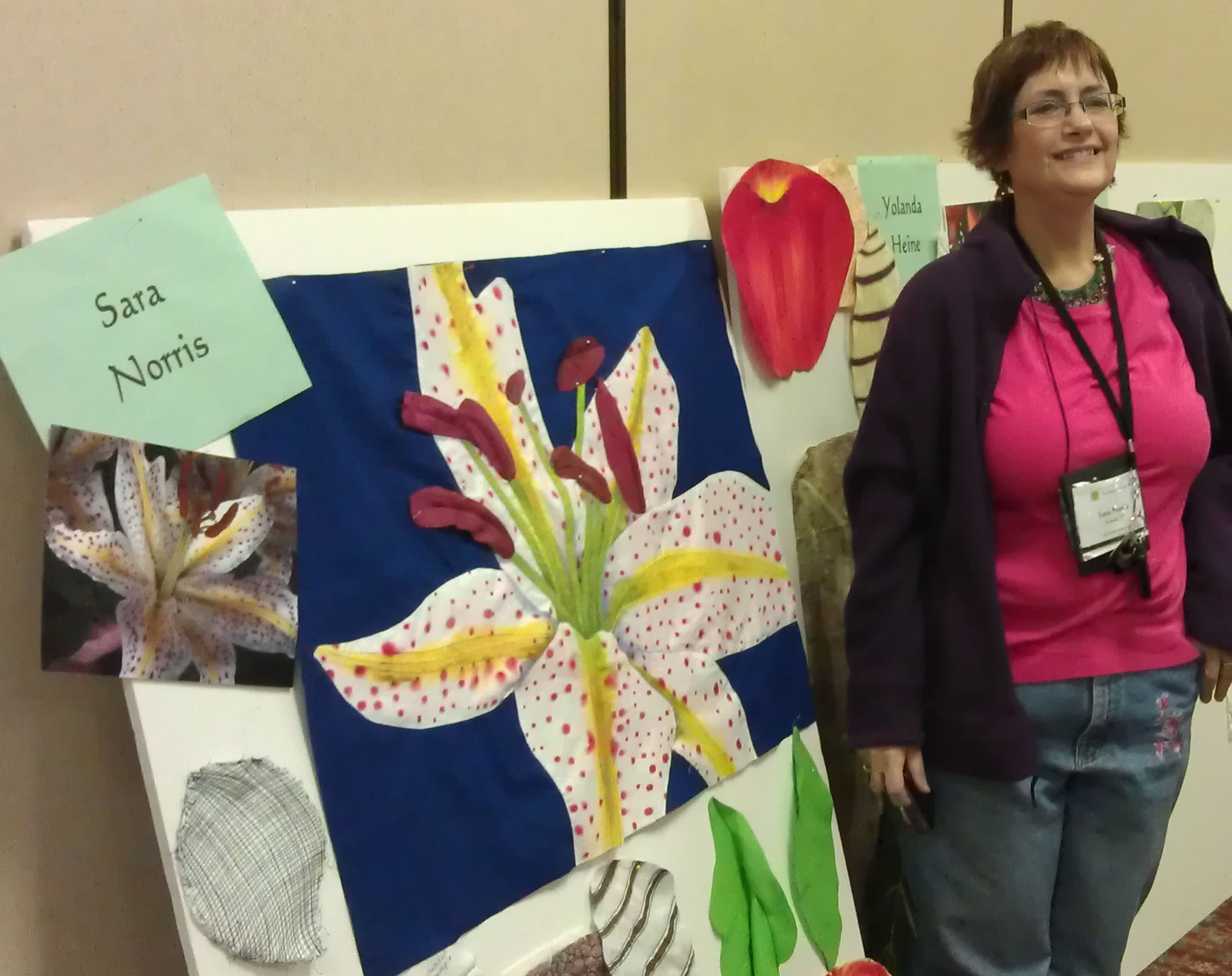
Sara's lily

Sara’s lily

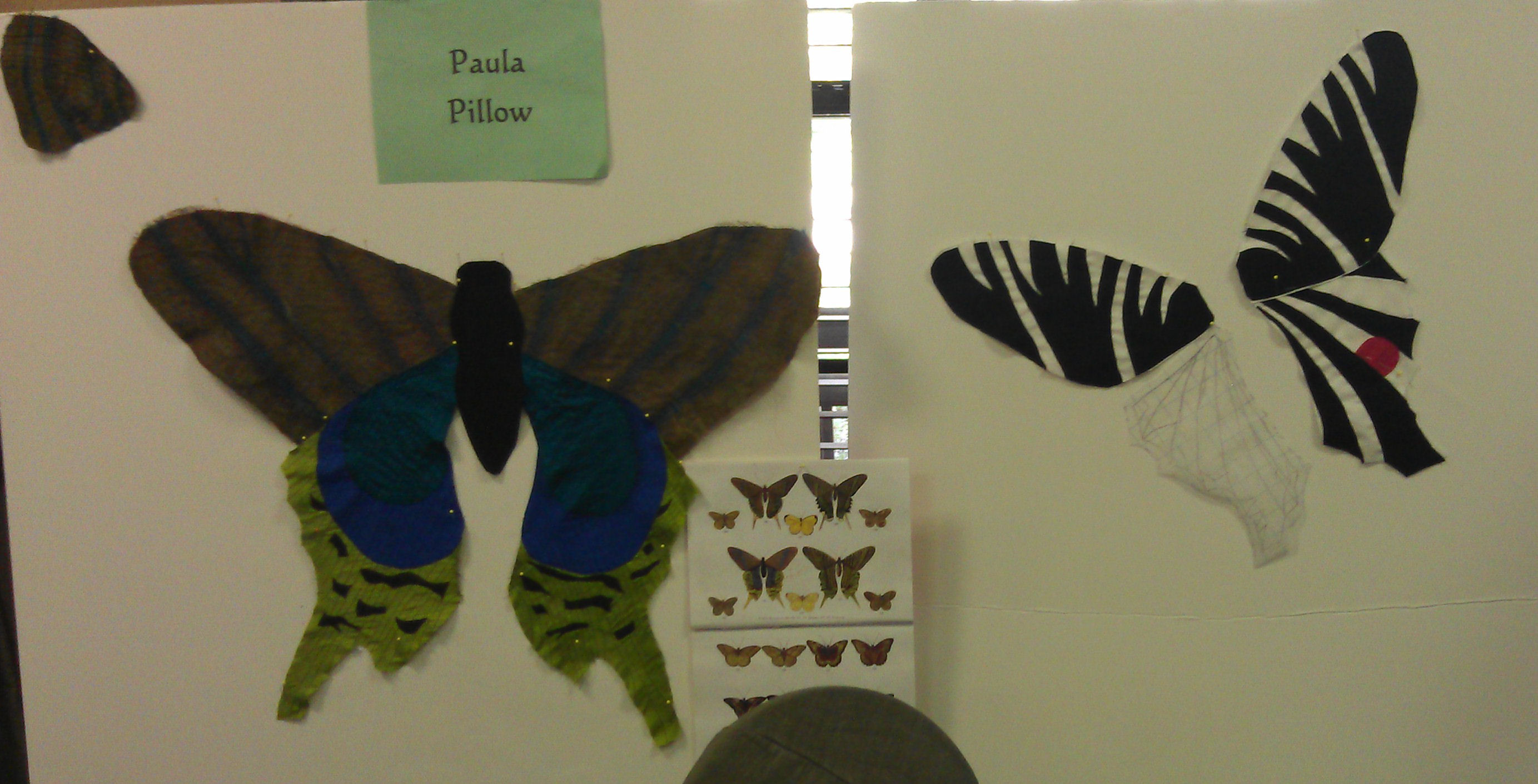
Paula's butterflies

Paula’s butterflies

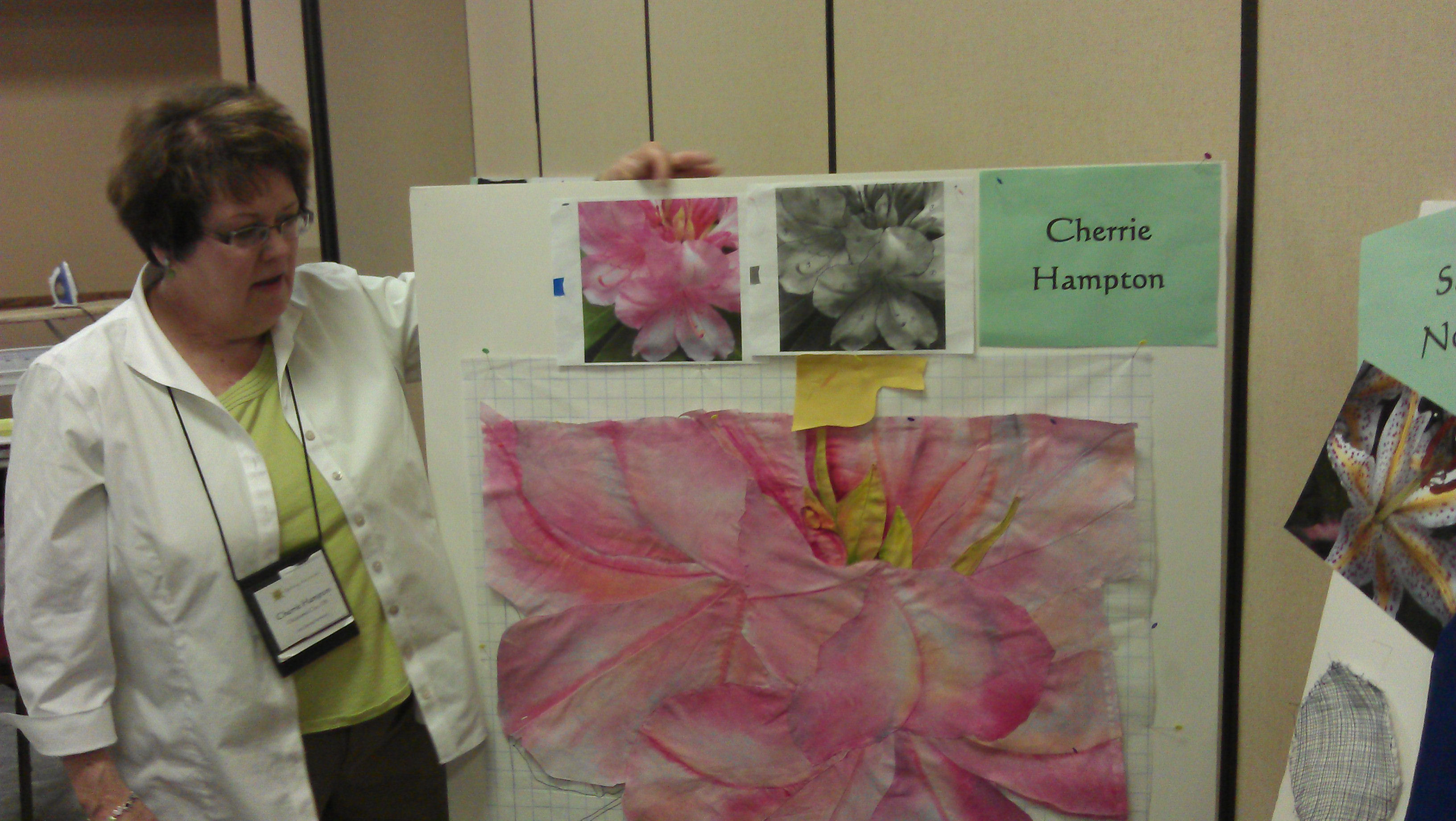
Cherrie's azaleas

Cherrie’s azaleas

Rosann's lily

Rosann’s lily

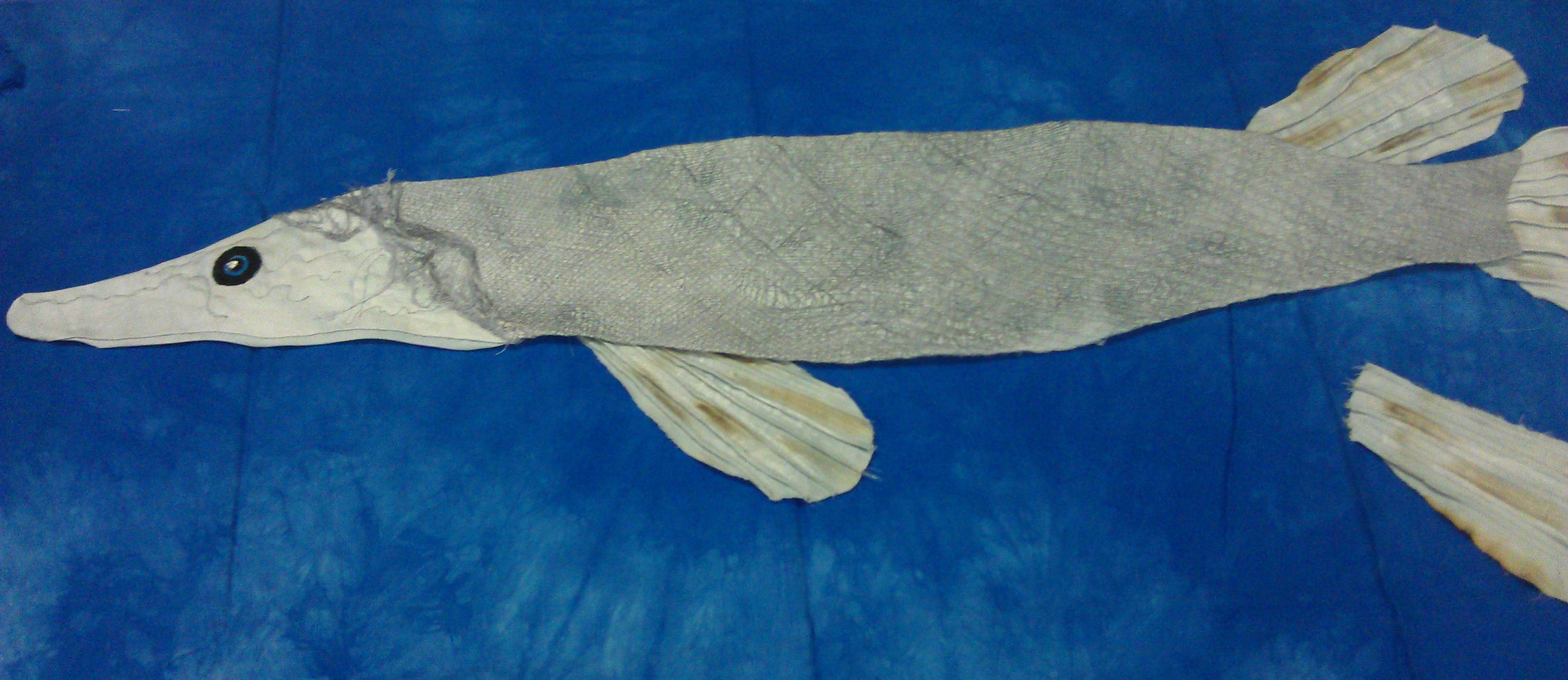
Harla's alligator gar

Harla’s alligator gar

Harla's alligator gar - fin

Harla’s alligator gar – fin; note the iridescence from the white iridescent paint she used

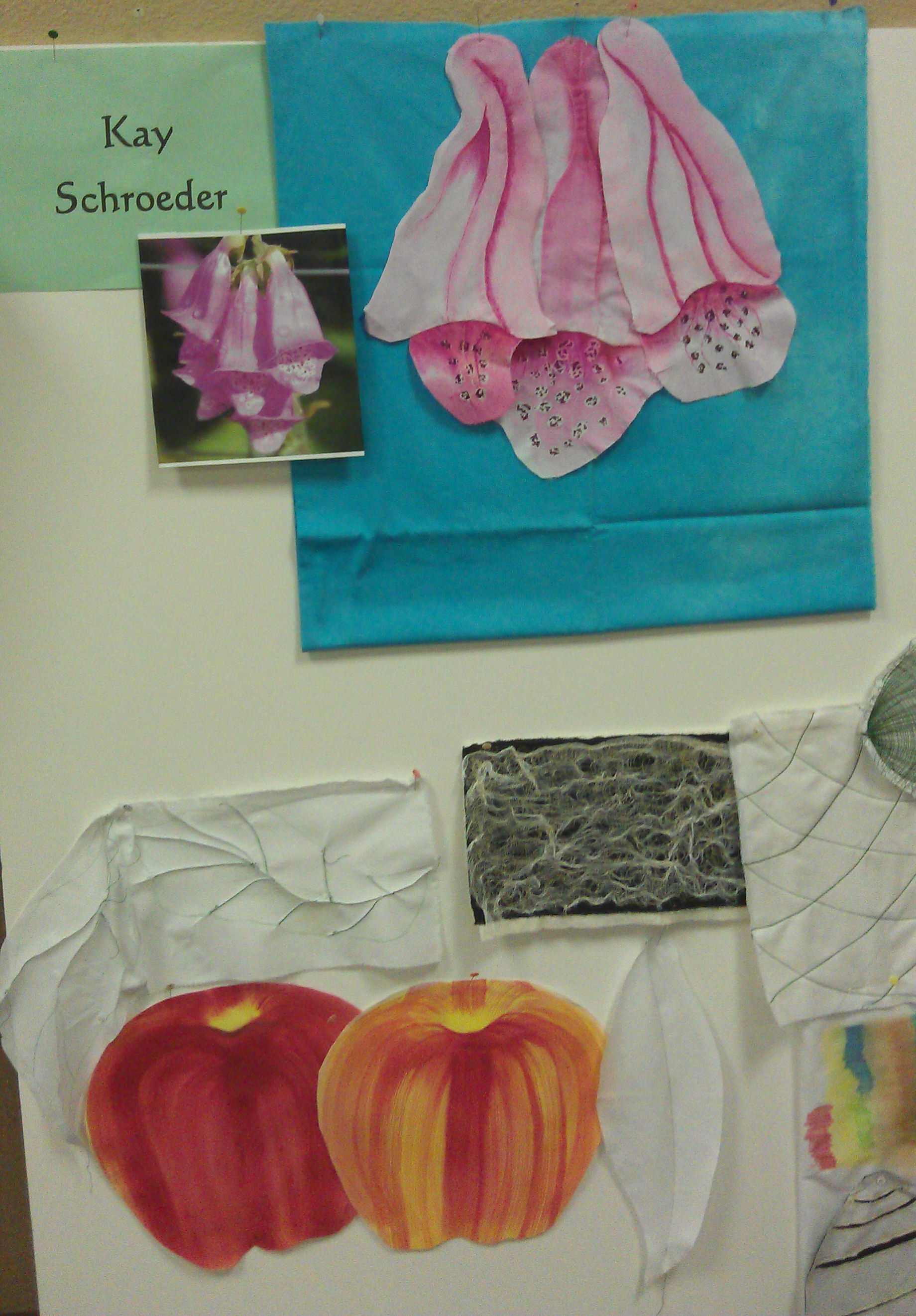
Kay's foxgloves

Kay’s foxgloves

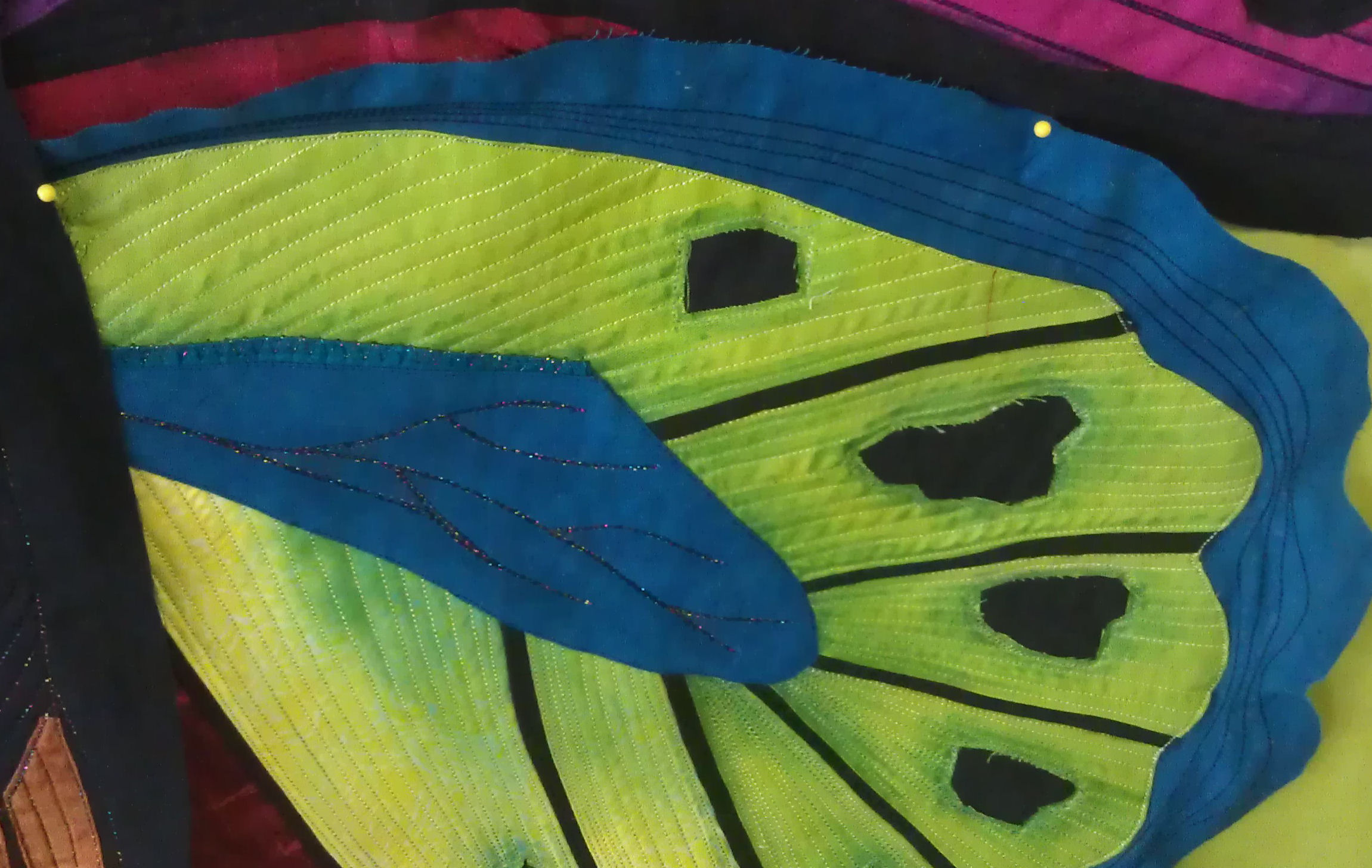
Suzanne's butterfly

Suzanne’s butterfly

Close-up of Suzanne's butterfly

Close-up of Suzanne’s butterfly

Yolanda's frangipani (plumeria)

Yolanda’s frangipani (plumeria)

Sue's vegetables

Sue’s vegetables — that cabbage looks good enough to eat!

Patricia's vegetables

Patricia’s vegetables

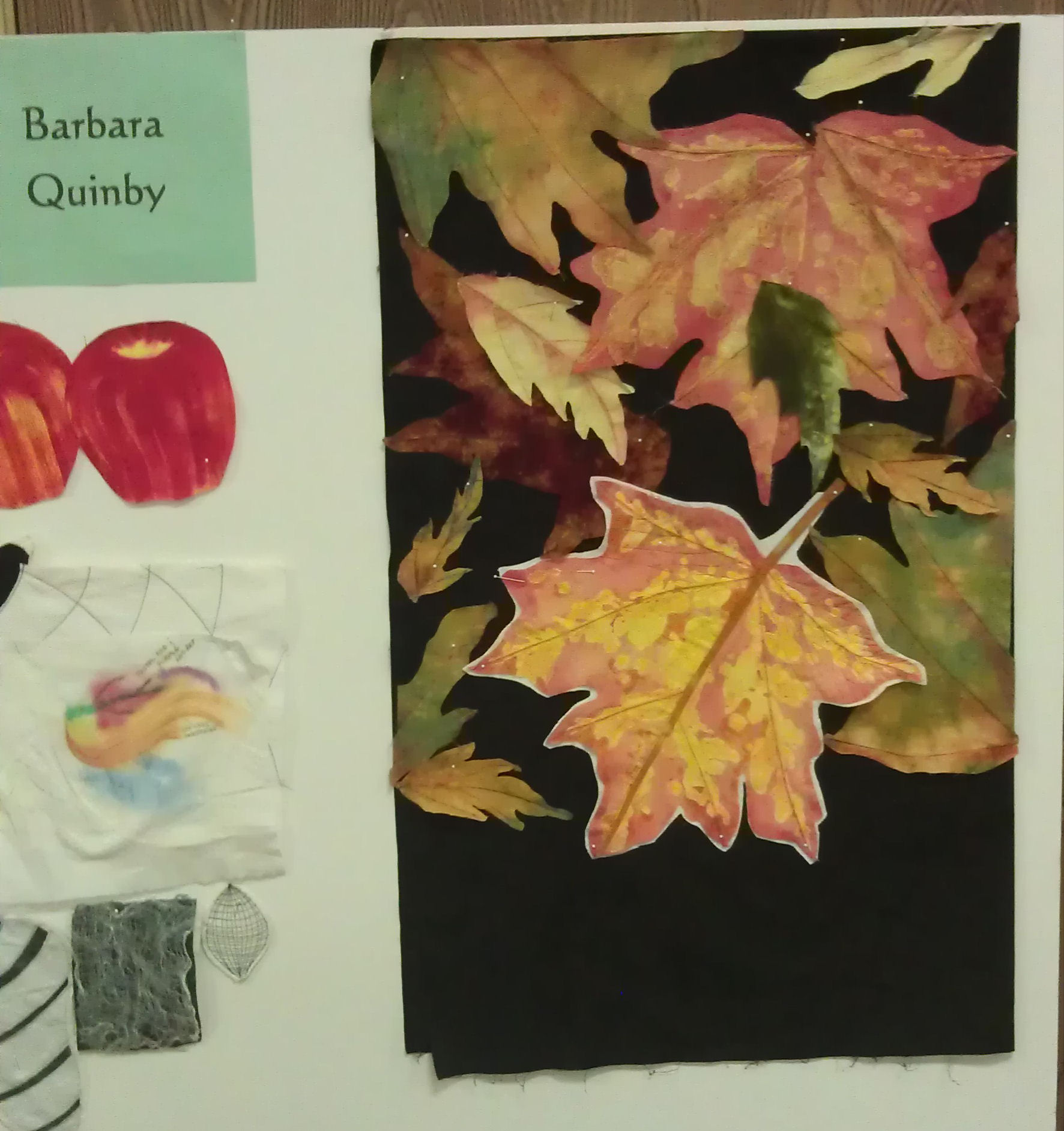
Barbara's autumn leaves

Barbara’s autumn leaves

Victoria's shells

Victoria’s shells

Susan's mossy log and leaves

My progress

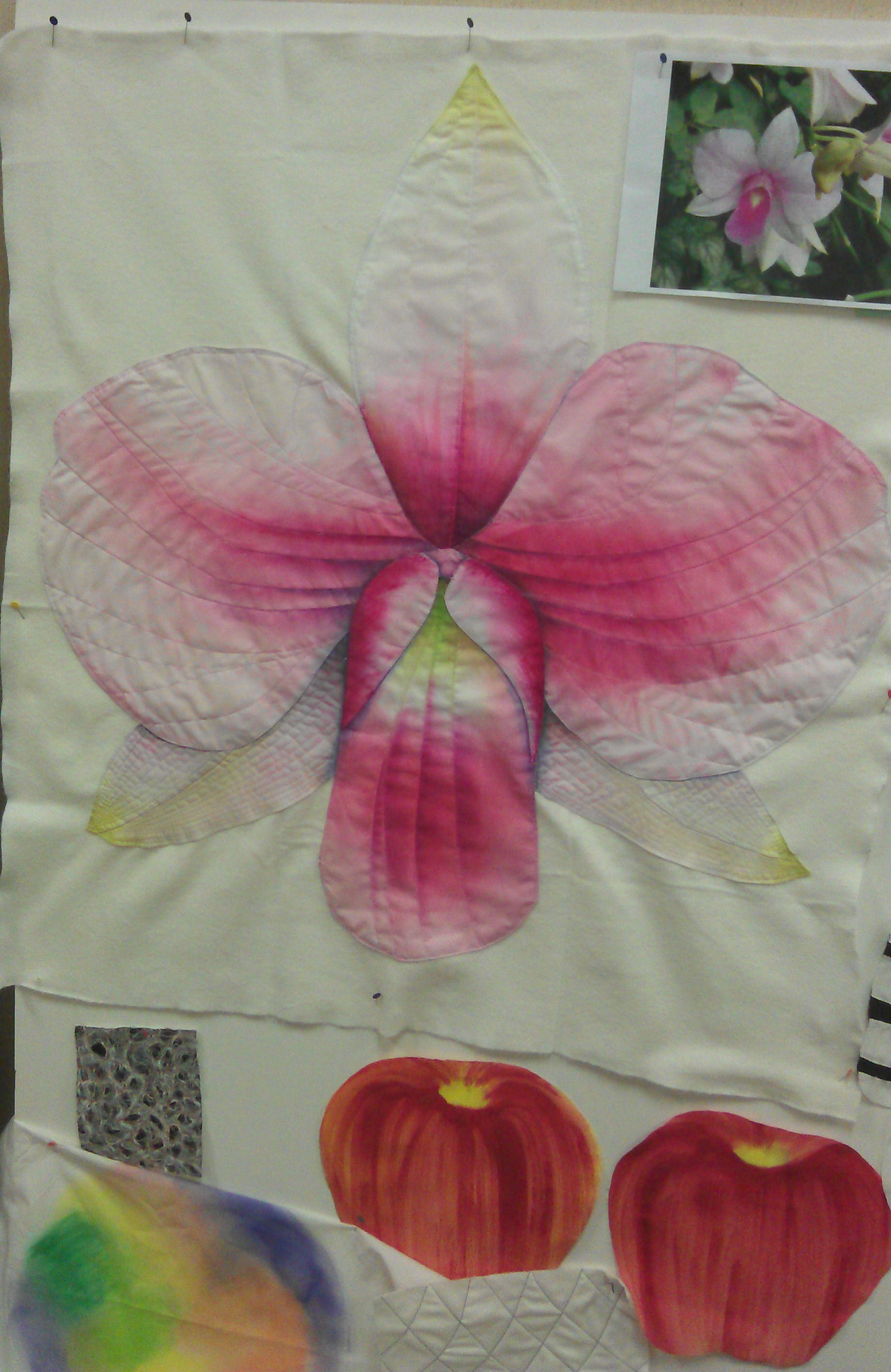
After Velda's help in adding more shadow and depth

After Velda’s help in adding more shadow and depth

After initial outline stitching/stitch in the ditch in invisible thread

After initial outline stitching/stitch in the ditch in invisible thread

After adding stitching on  lesser petals in invisible thread

After adding stitching on lesser petals in invisible thread

Today’s food

Breakfast

qa_day4_01

qa_day4_02

Lunch

qa_day4_09

Tomato ketchup with pecan pie???

Tomato ketchup with pecan pie??? No, Cherrie didn’t see the need for another plate, so she put the ketchup for her fries on the plate with the pie. She shifted the pie to another plate when she got back to the table, but not before I took this photo to ‘prove’ the Americans eat strange combinations of food 😉

See also:


Quilting Adventures Spring Seminar: Day 3: 13 March 2013

14 03 2013

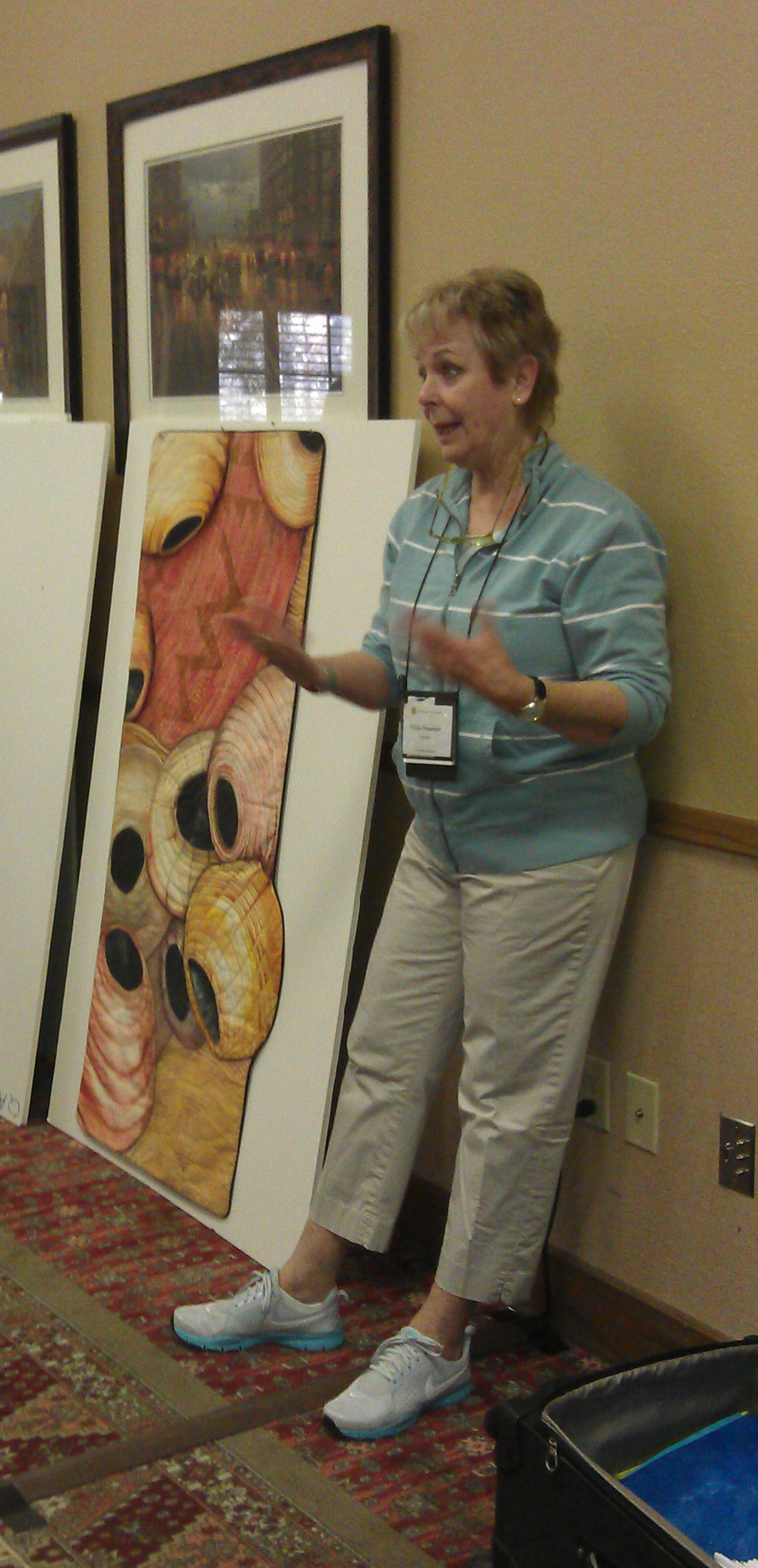
Day 3 was a consolidation of our work started yesterday. We didn’t learn any new techniques, but that was fine as we had plenty of opportunity to apply the techniques already learnt, and to ask Velda for help at any time. Velda is a great teacher and very giving of her time and knowledge. If you ever get the opportunity to take a class with her, do so.

It was another gorgeous day today, but we were inside for most of it, so couldn’t really appreciate it except on the walks to and from the dining area and the work area, and to the bar at the end of the day (the bartender makes a MEAN margarita — you only need one!).

I handed out the Tim Tams I had brought and the little koalas to all the students in the class I was in, to the three tutors (Velda, Rayna and Robbi Joy), and to Kim and Deb (the organisers). They seemed to be much appreciated 😉 Yolande, who was in my class last year, immediately swooped on her Tim Tams and got stuck into them as she remembered them from last year.

This evening, Kim announced the schedule for the rest of next year and 2014. The spring seminar week will be March 2 to March 7 and the two tutors I’d be most interested in are Sharon Schamber and Esterita Austin. The others are doing more traditional work, which doesn’t interest me as much. The one I’d REALLY like to go to is in June this year, when Susan Brubaker Knapp will be doing a multiple day workshop. But a big Lotto win would have to come before I could do two trips to the US in such a short time frame. The other feature of this evening’s meeting was the display of 30 SAQA 12×12″ quilts. I quite liked some of them.

The food today was as good as usual. Breakfast was the full scrambled eggs, bacon, sausage, hash potatoes, cereal, toast, fresh fruit, fruit juices etc. I had oatmeal and a bacon half sandwich. Lunch was pizza, salad, soup and all the accoutrements, with some sort of dessert (which I didn’t have, but it looked like a cannoli [sp?] filled with a cheesecake filling). And dinner was a pecan crumbed baked chicken breast, with wild rice, carrots, all the salad bits and pieces, and some sort of chocolate, pecan (?), baked pudding/cake dish that was ‘OMG delicious’.

I’ve commented on the photos, as appropriate; click on a photo to view it larger.

Student progress and other photos

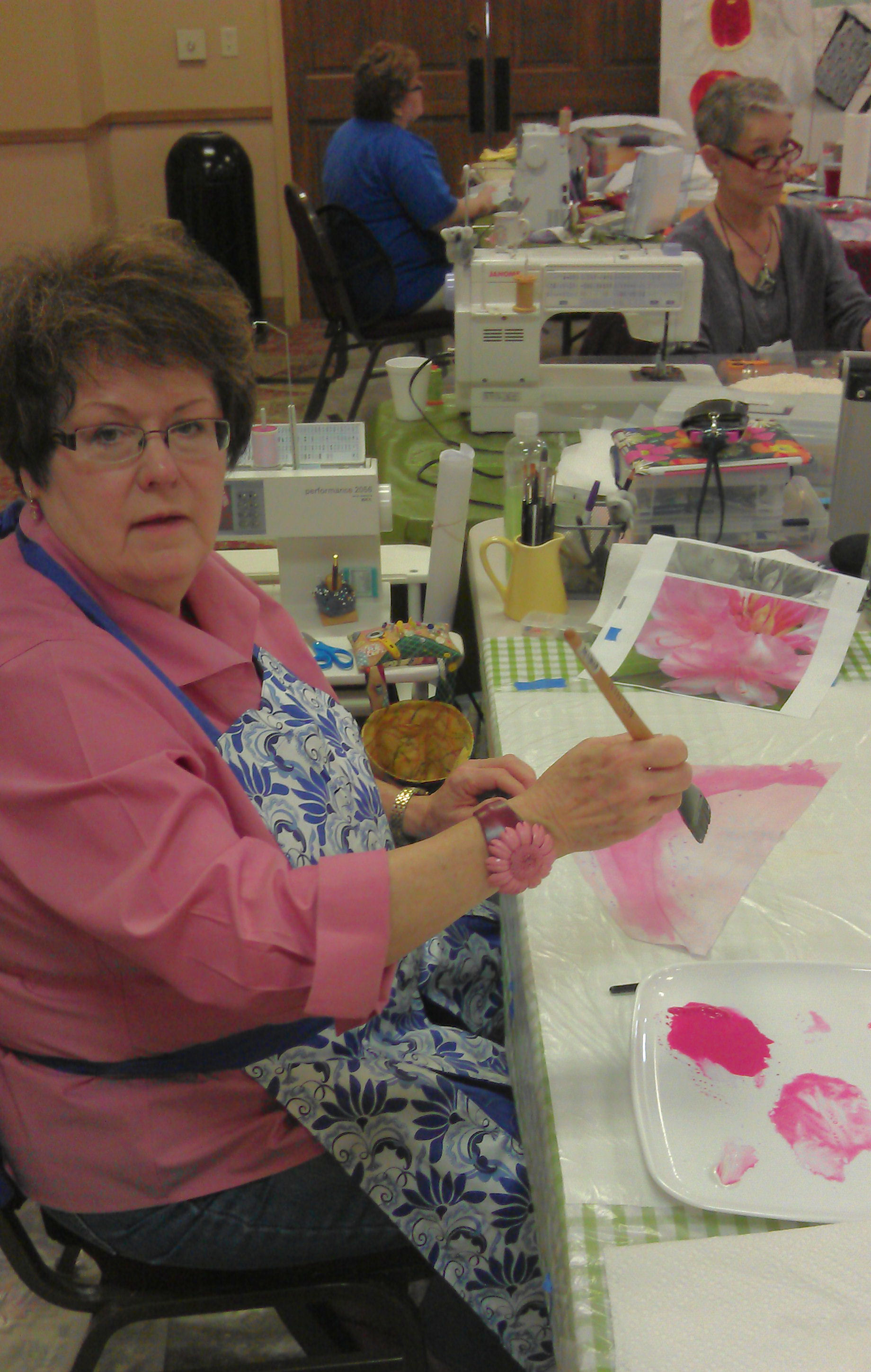
Cherrie working on her azaleas

Cherrie working on her azaleas (Becky in the background)

Sue's pepper (capsicum)

Sue T’s pepper (capsicum); the stalk has been tucked and stitched

Susan L and her log

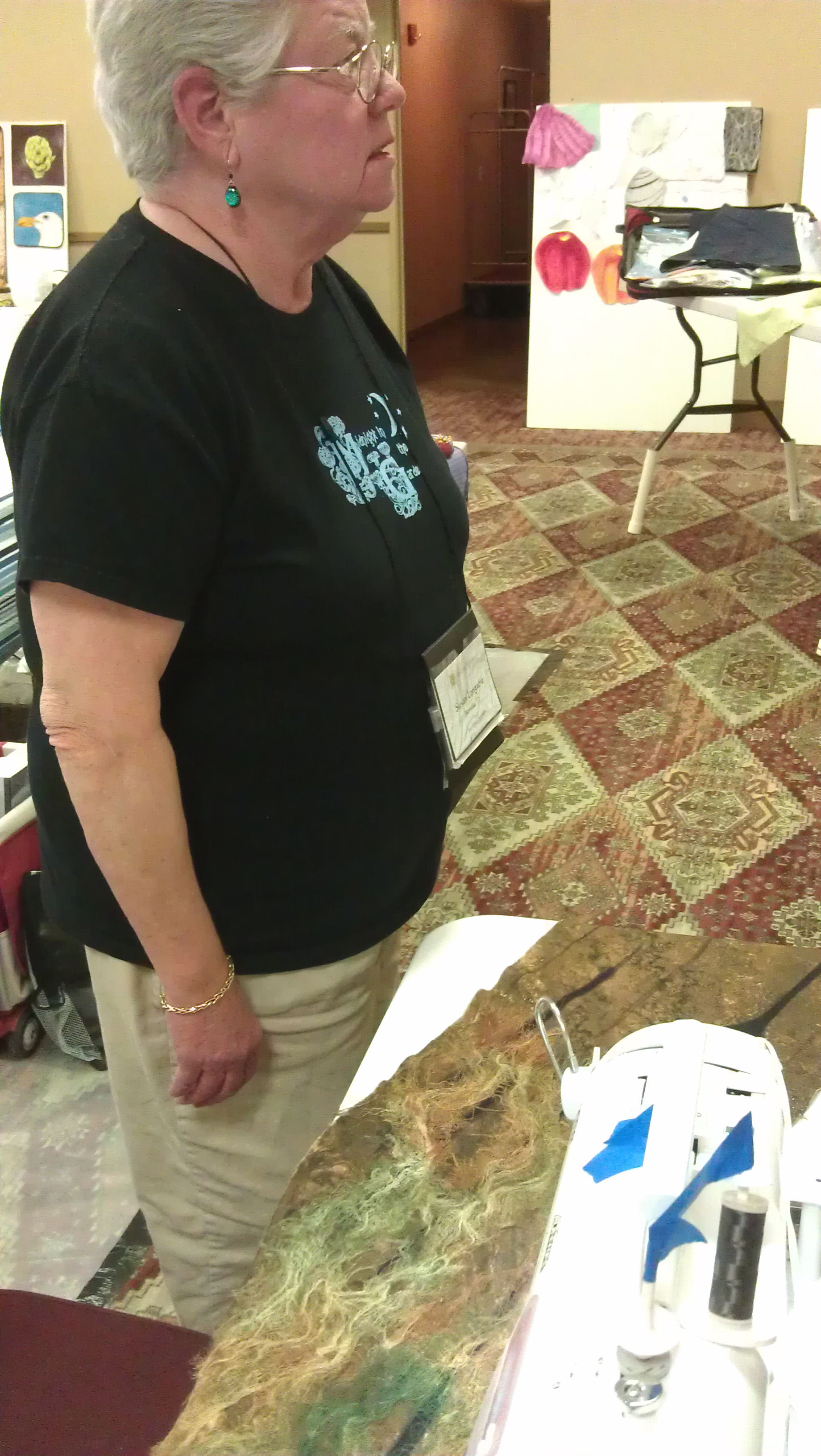
Susan L and her log; the bark is painted cheesecloth, creating an amazingly realistic effect of moss — in fact, it seems to blend with the carpet.

Susan L's log

Susan L’s log; the mossy bark is painted cheesecloth.

Sue's cabbage in the first stages of creation

Sue T’s cabbage in the first stages of creation

One of several shells

One of several shells — see the photo on the left

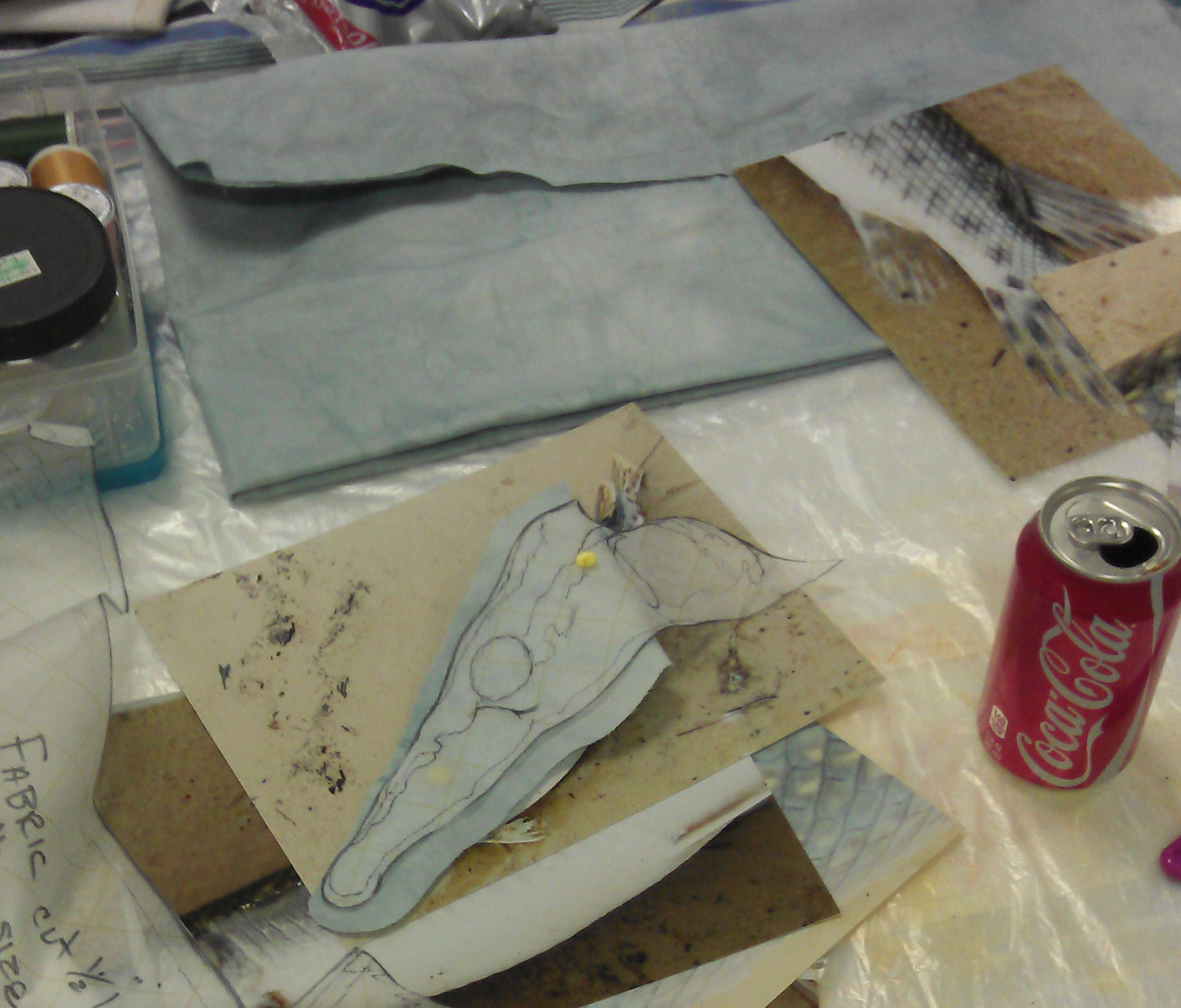
Garfish under construction

Garfish under construction

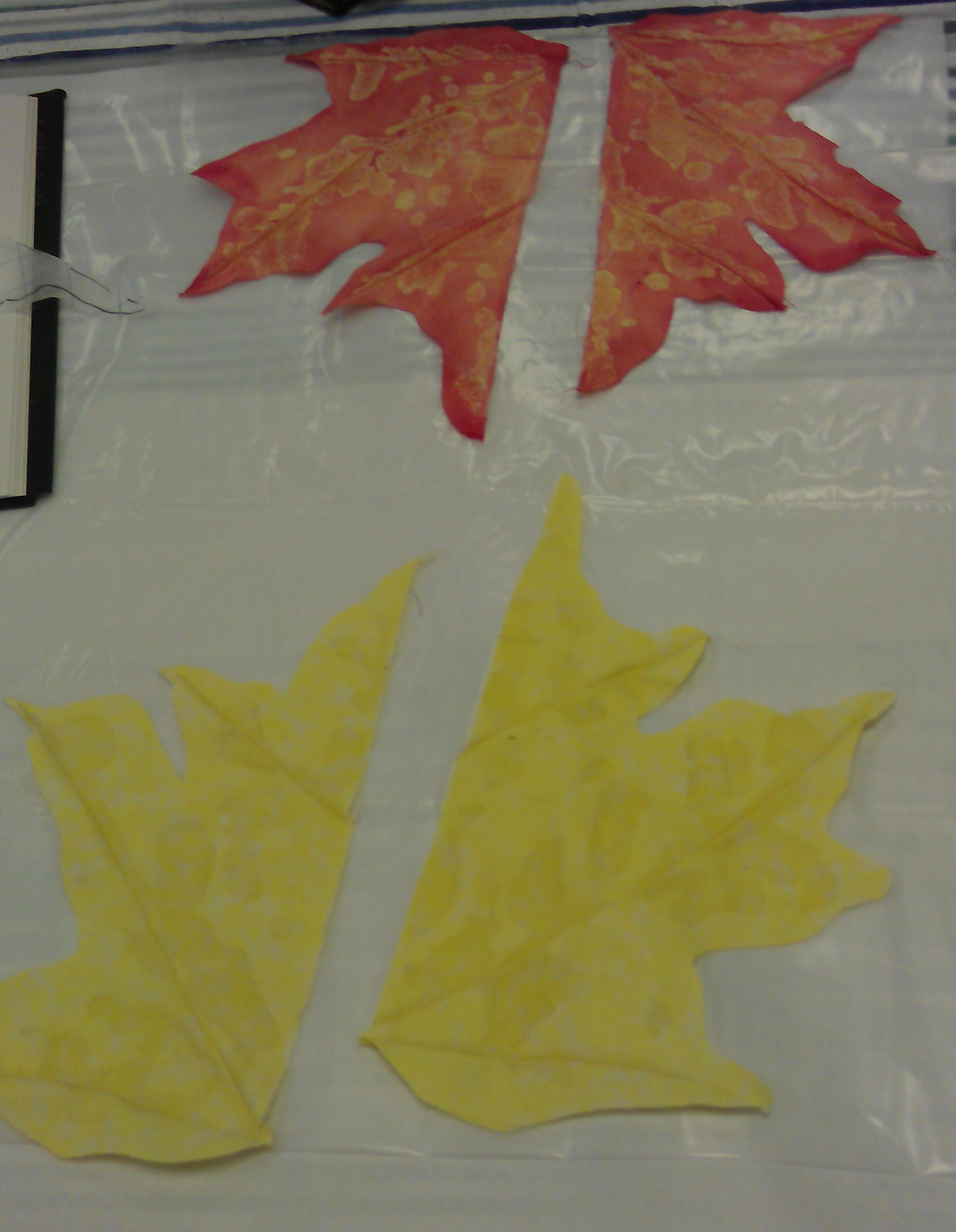
Autumn leaves

Autumn leaves

Yolande's frangipani

Yolande’s frangipani (plumeria) — Velda helping Yolande with the centre

Butterfly wings

Butterfly wings

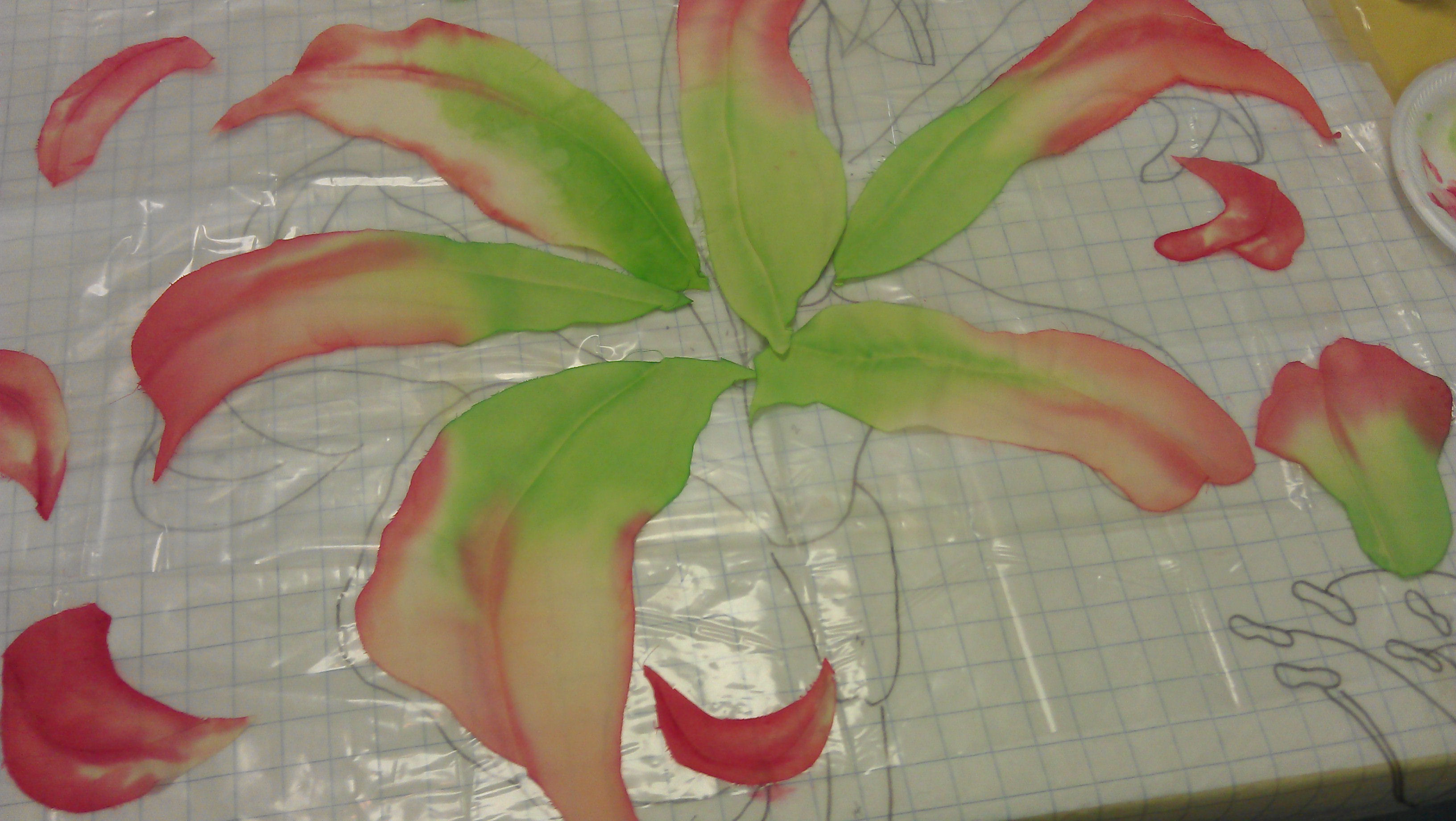
Lily

Lily

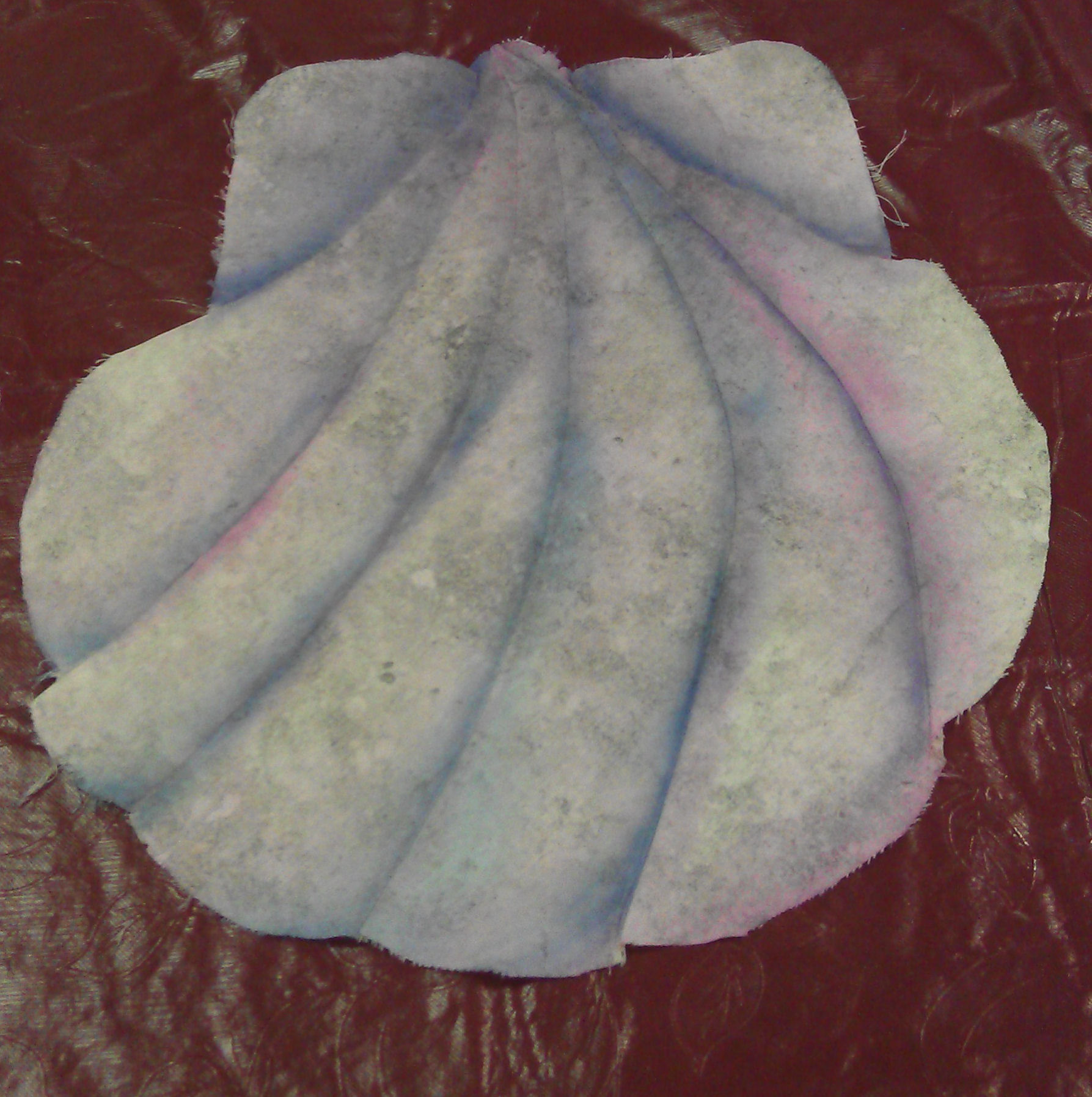
Scallop shell

Scallop shell (on Stonehenge fabric)

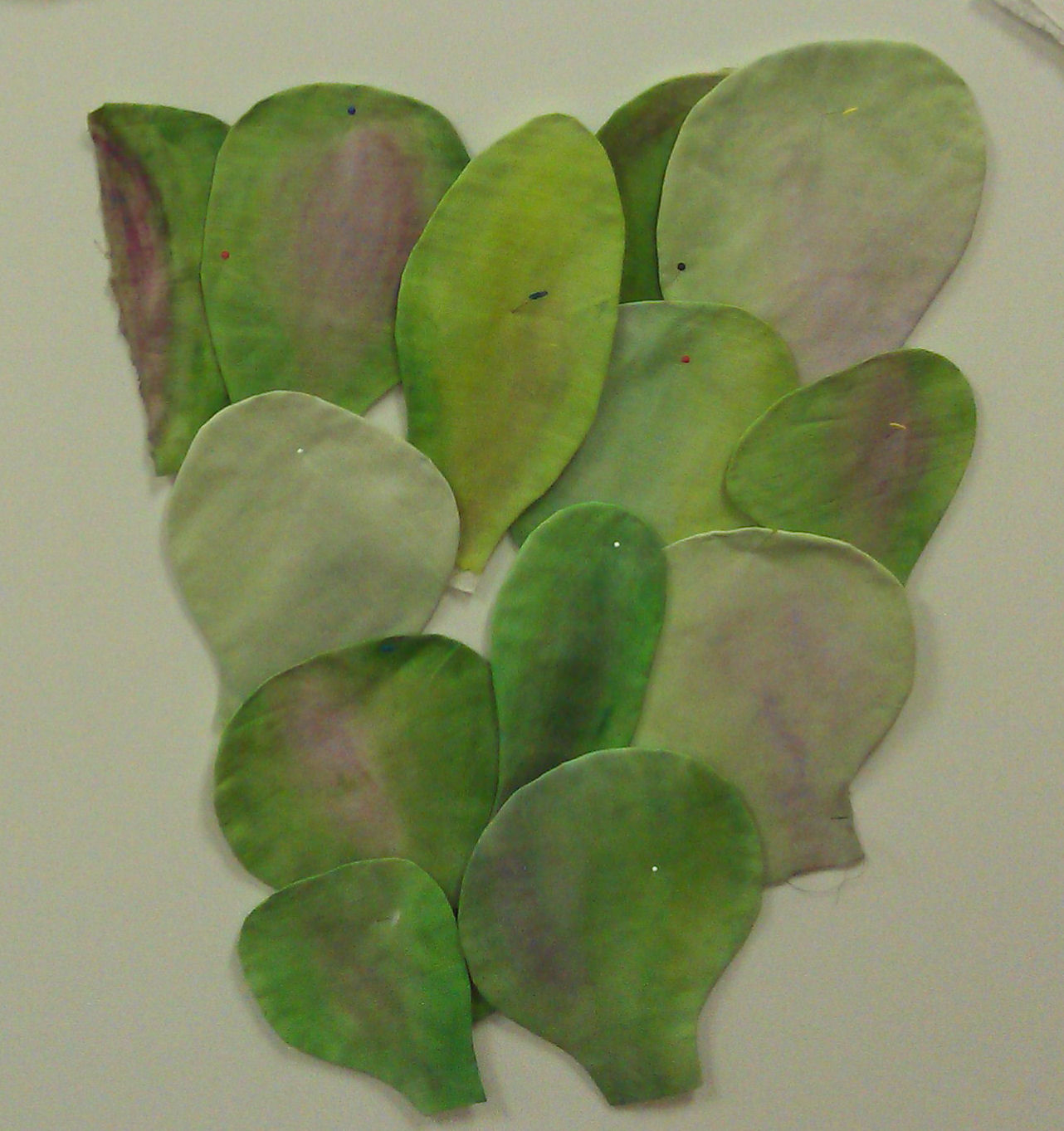
Becky's prickly pear cactus pads

Becky’s prickly pear cactus pads

Sara's lily

Sara’s lily (with measles!)

Velda and Cherrie 1

Velda and Cherrie — blackmail photo #1 (they know what this means!!)

Velda and Cherrie 2

Velda and Cherrie — blackmail photo #2 (they know what this means!!)

My progress

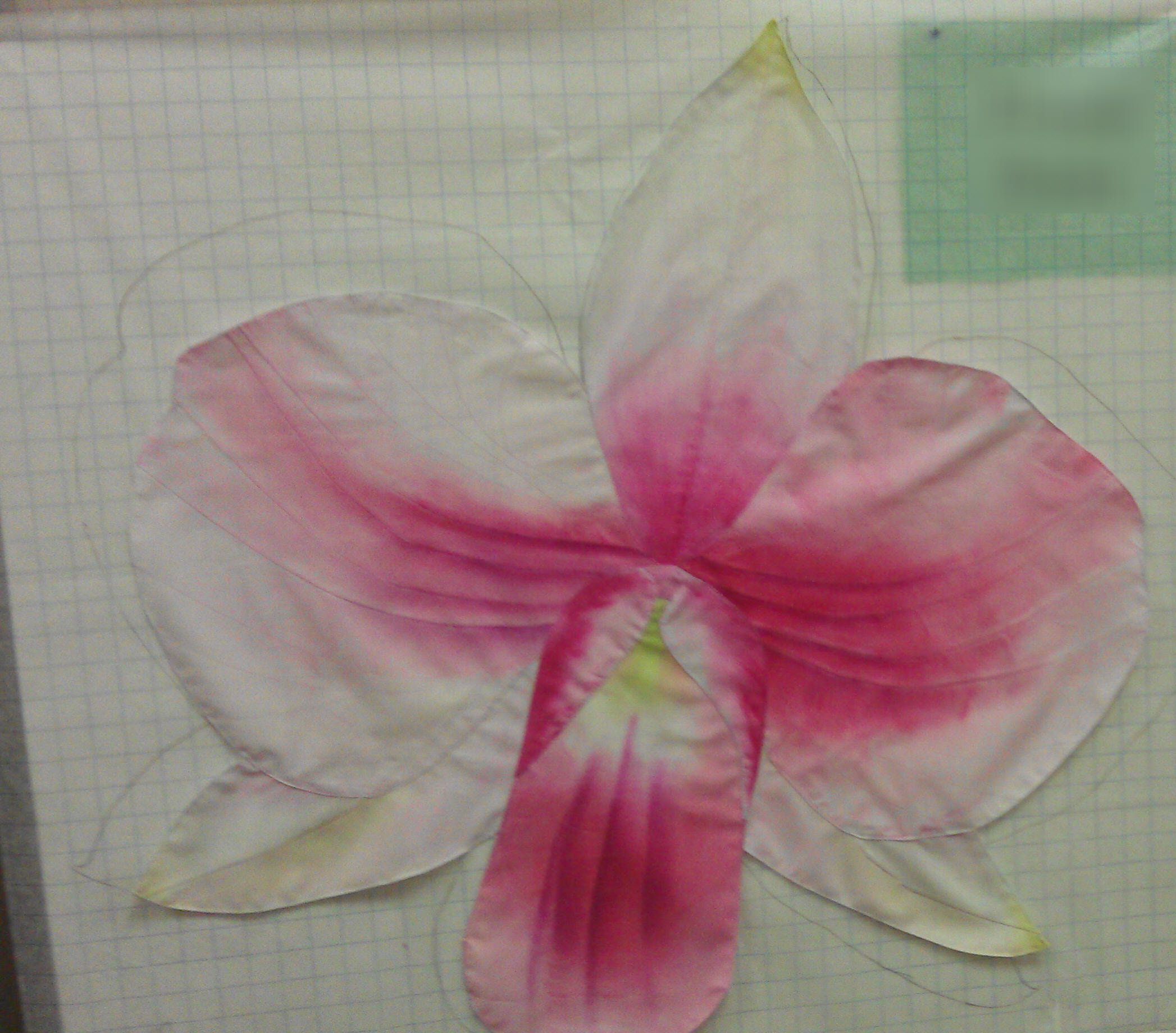
Painted pieces laid out ready for centre bottom piece

Painted pieces laid out ready for centre bottom piece

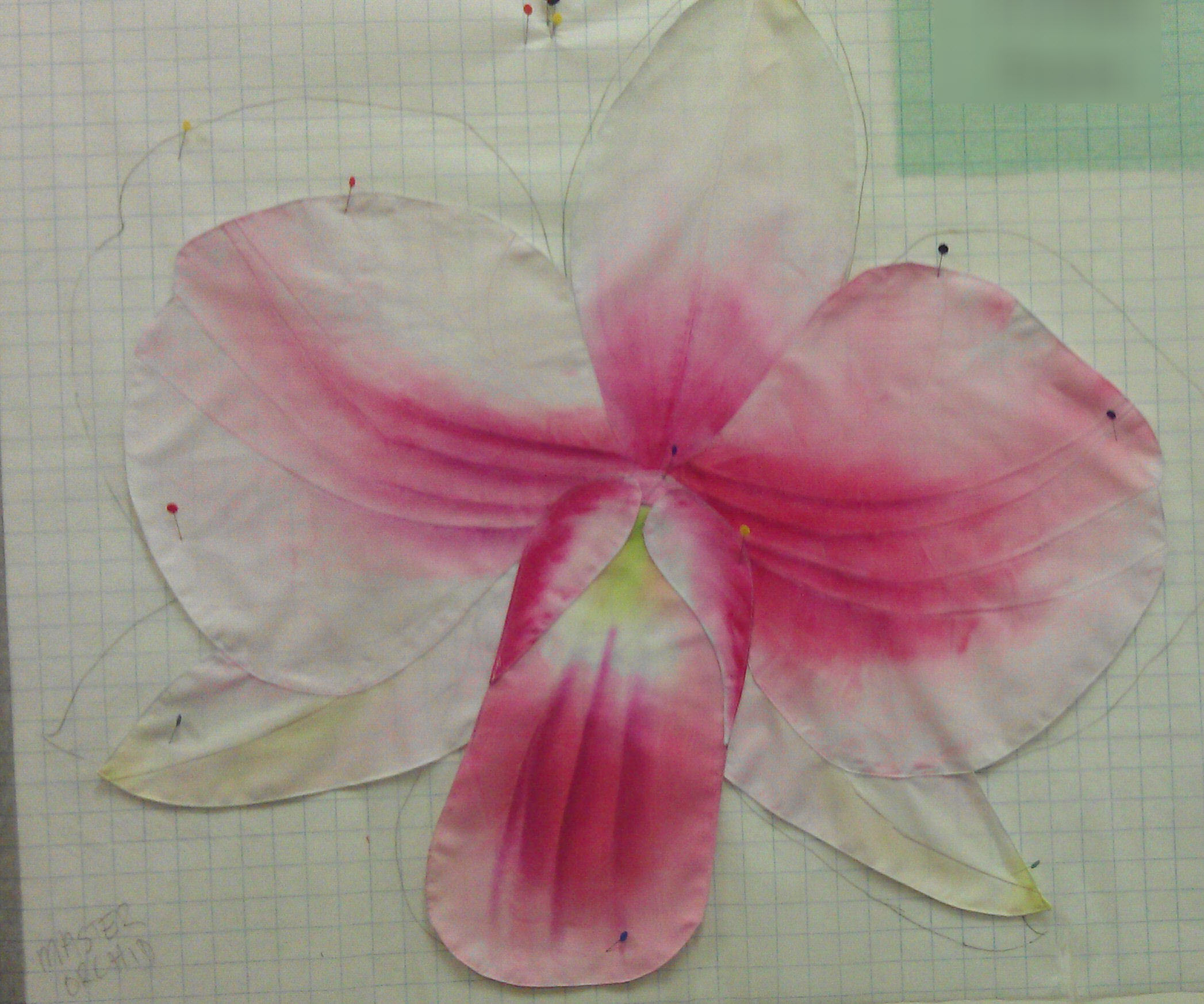
Painted bottom piece added

Painted bottom piece added

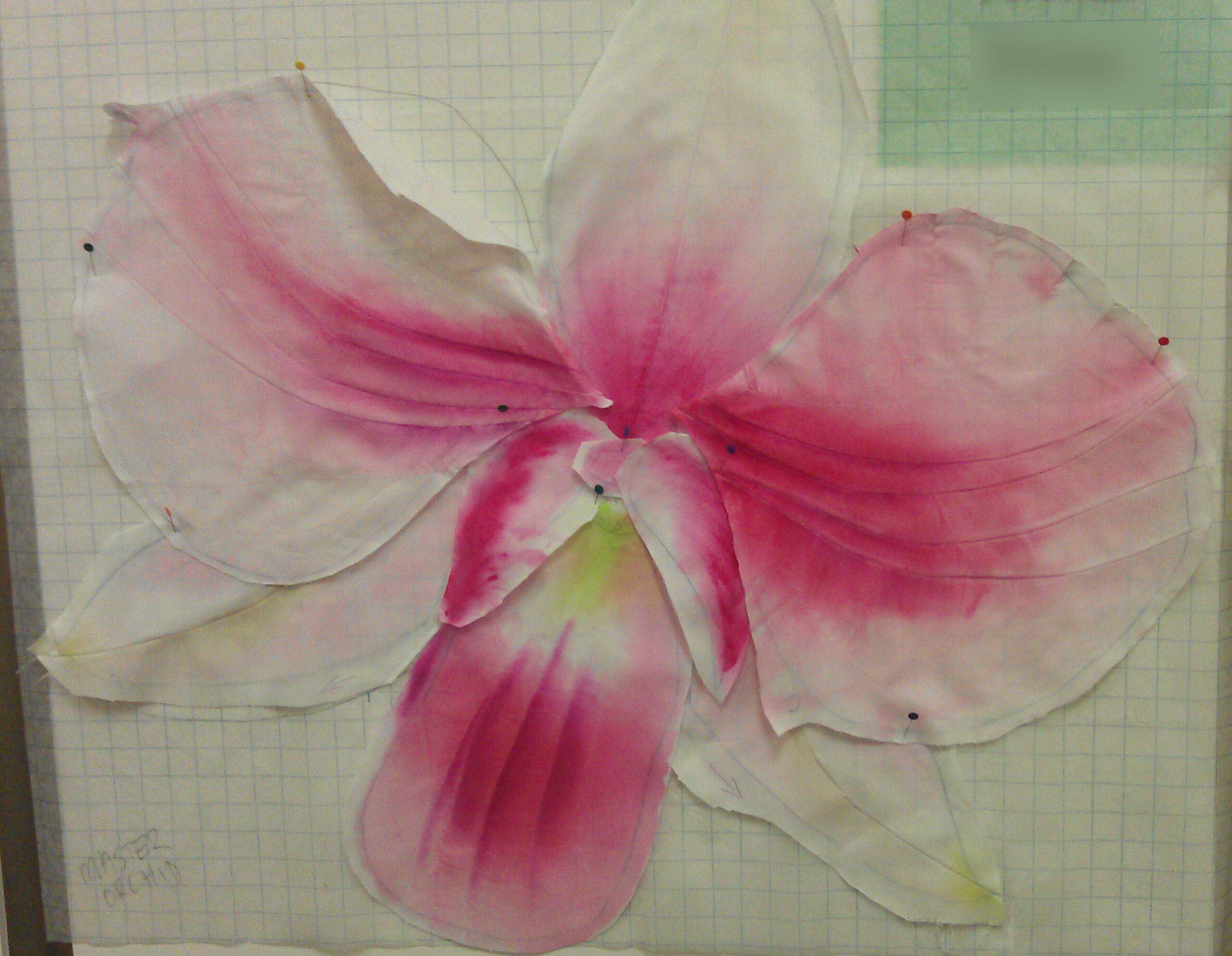
Pieces machine basted and laid out ready for stitching together

Pieces machine basted and laid out ready for stitching together

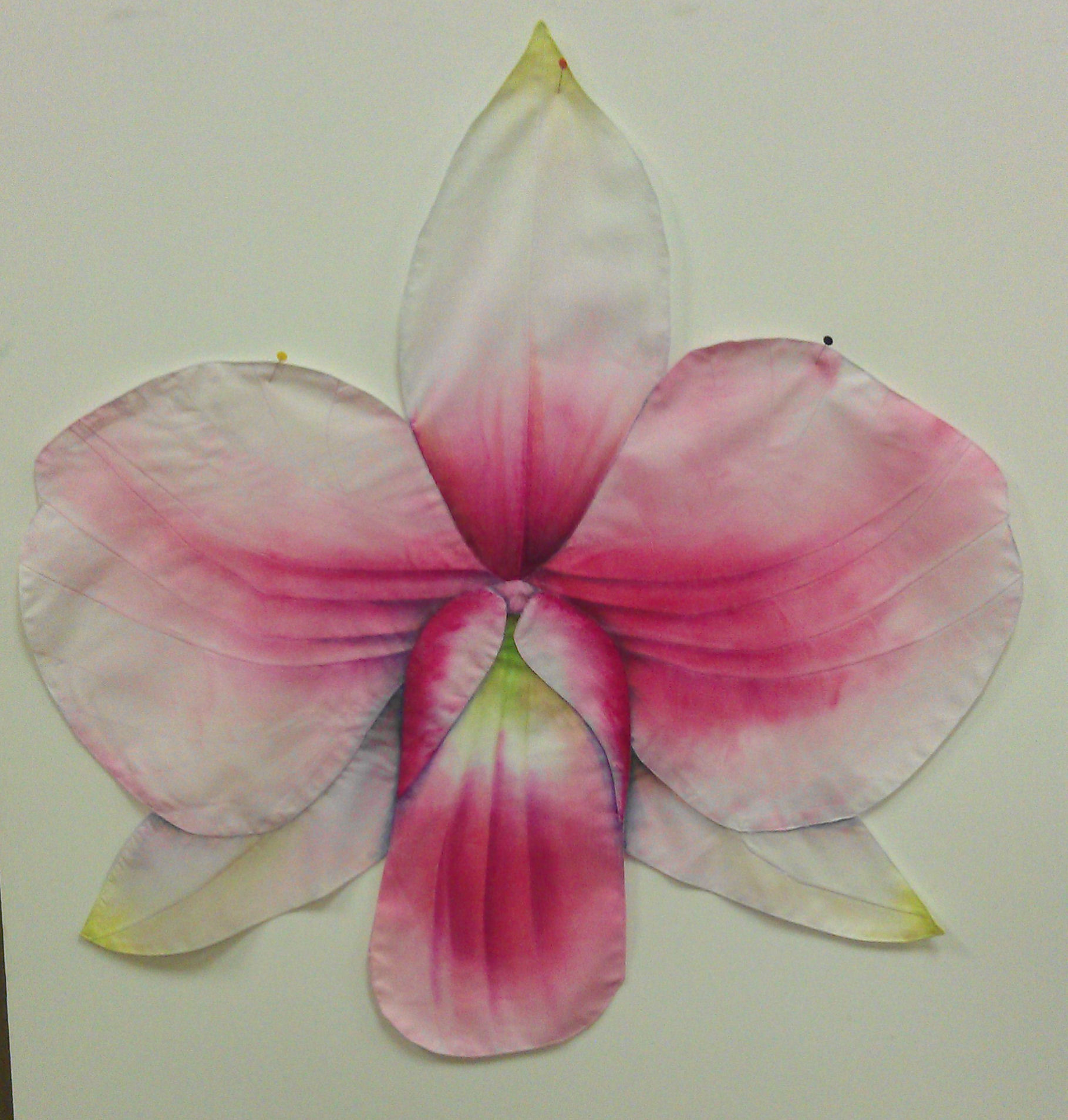
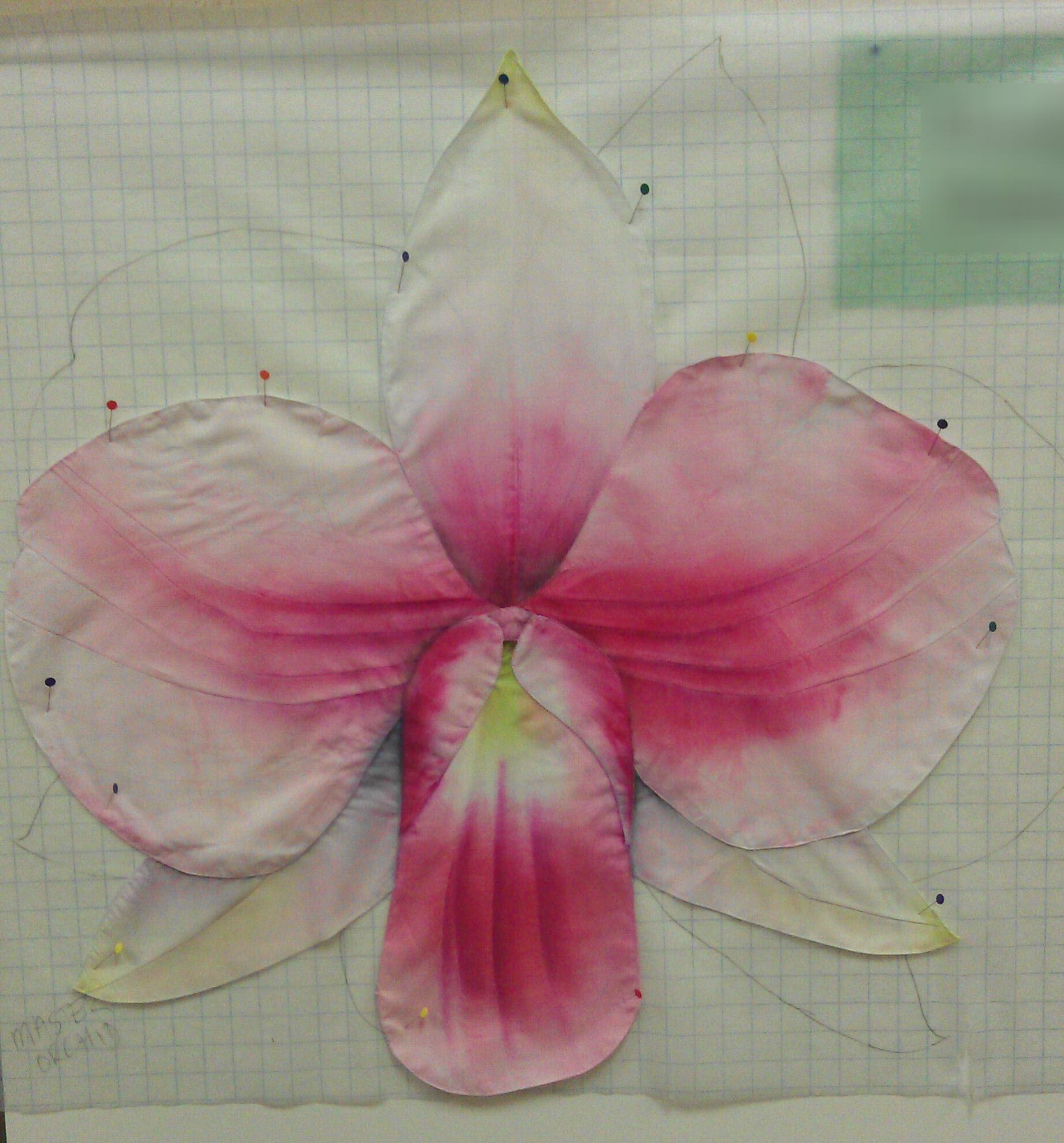
All the pieces stitched together to make one orchid piece

All the pieces stitched together to make one orchid piece

Shading added to the entire piece

Shading added to the entire piece

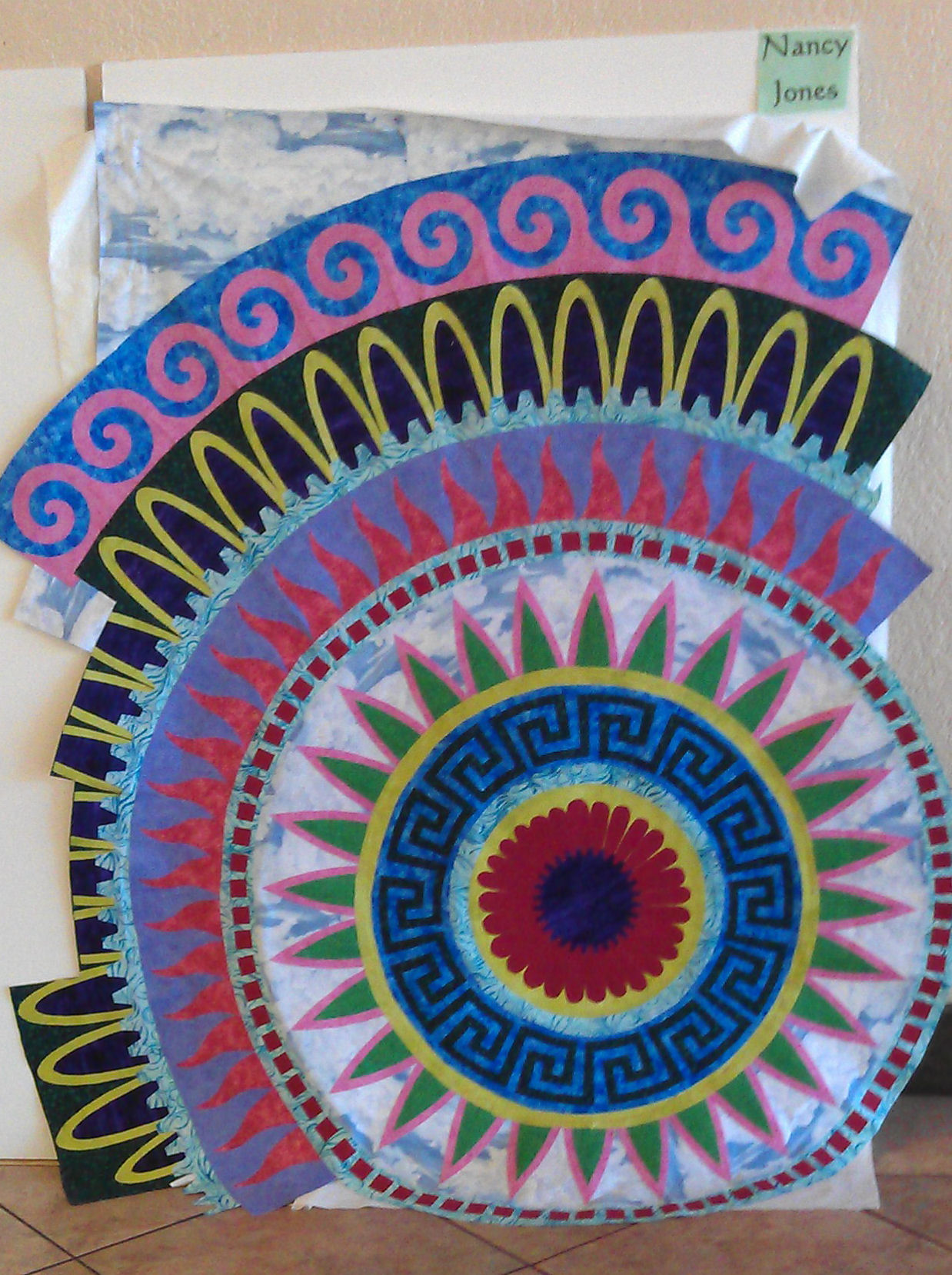
Some of the SAQA quilts

qa_day3_20

qa_day3_19

This one was amazing, in my opinion

This one was amazing, in my opinion

qa_day3_24

qa_day3_23

Three layers of reverse applique

It’s hard to see in the photo, but the little batik squares were two or three layers of reverse applique

qa_day3_21

See also:


Quilting Adventures Spring Seminar: Day 2: 12 March 2013

13 03 2013

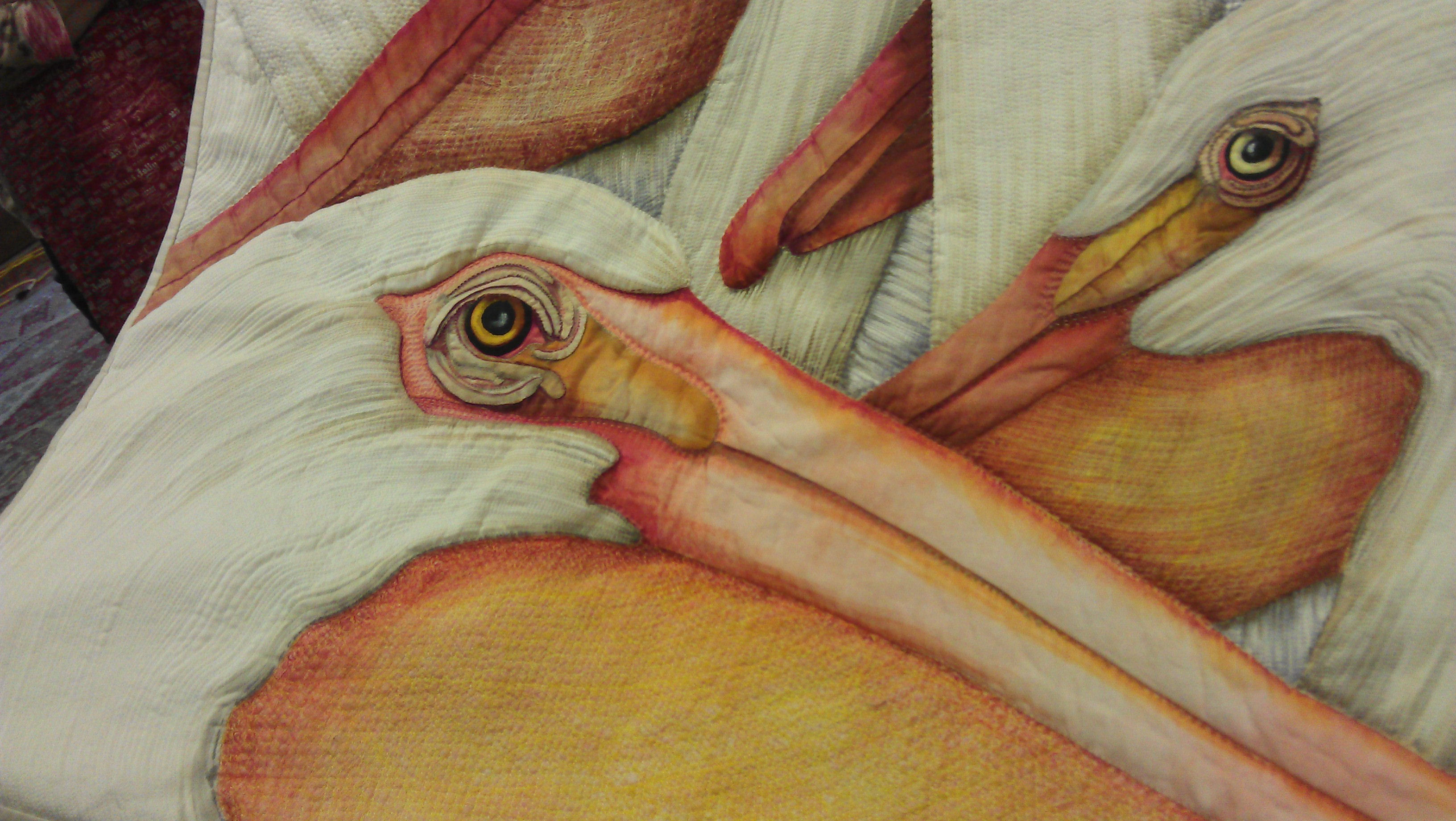
Today was busy, but nowhere near as full of new stuff as yesterday. We got to see another of Velda’s amazing art quilts (the pelican quilt below), chose the photo for our own art quilt (with Velda’s help), and got started on the pattern making, stitching, tucking, and painting process.

After dinner, we had some ‘show and tell’ followed by the presentations/trunk shows from two of the tutors: Rayna Gillman (New Jersey) and Robbi Joy Eklow (Chicago). Some of us then went back to the classroom to do some further work on our pieces — I still had some painting to do that I wanted to be dry by tomorrow morning, so I did that for an hour or so.

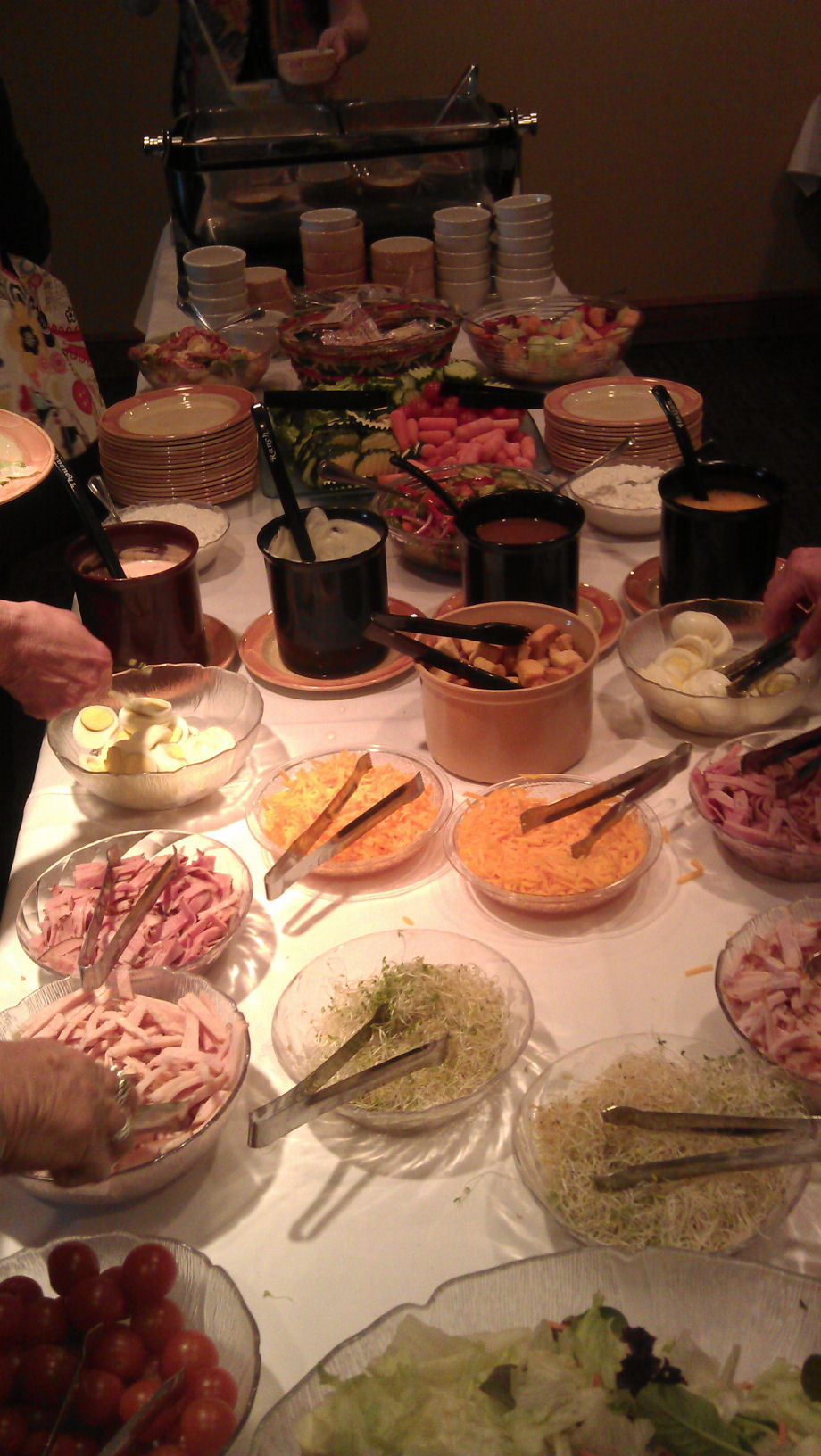
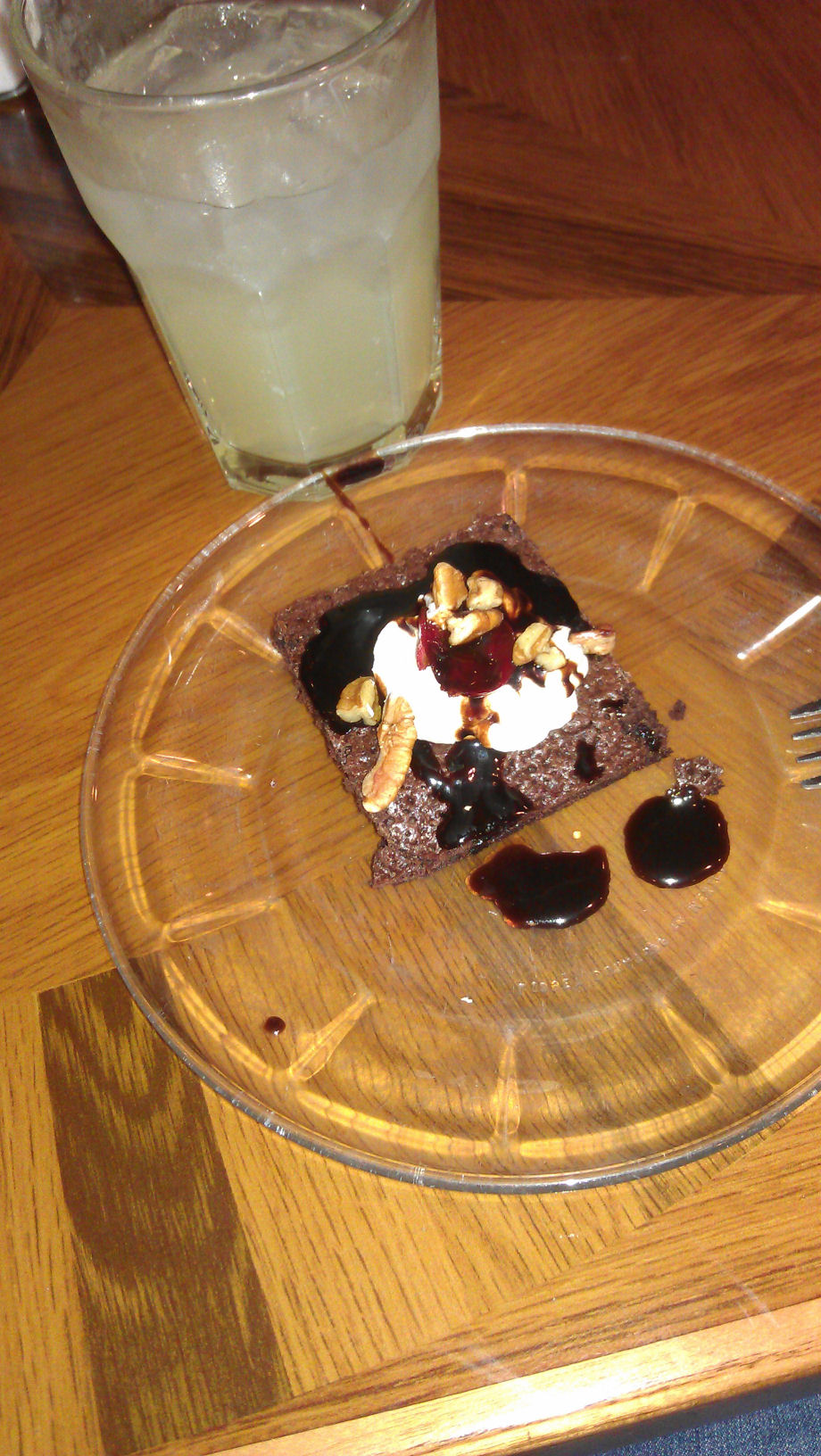
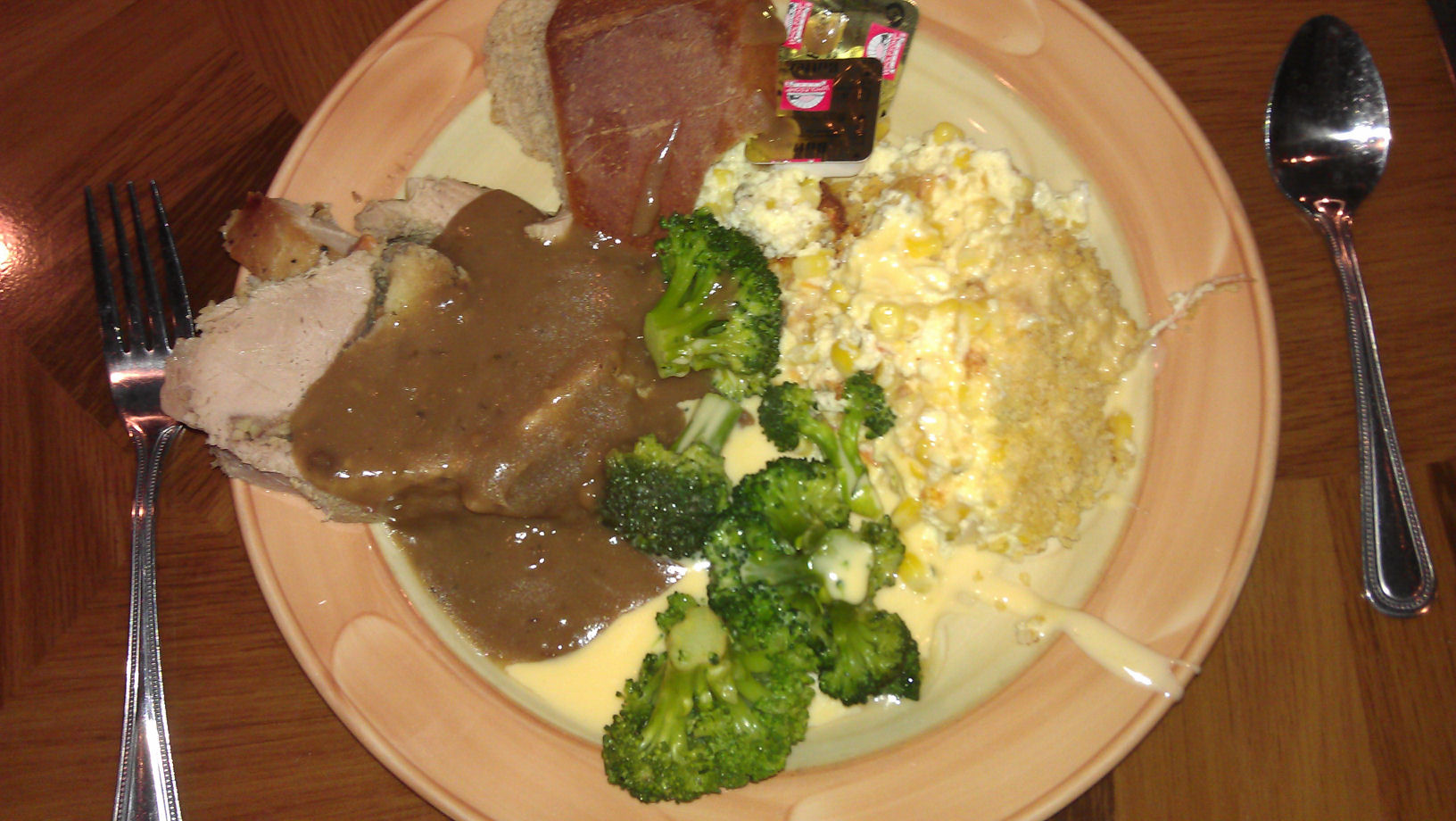
The meals today were a little healthier and lighter than yesterday, thank goodness! I just had some cereal and fresh fruit for breakfast and passed on the ham and egg croissants, muffins, toast, etc. For lunch we had soup and salad (all choose/make your own, so if you didn’t want dressing you didn’t have to have it), plus a chocolate brownie/cake for dessert (again, optional). For dinner, we had roast pork, broccoli, and an amazing corn ‘souffle’ dish, and cheesecake for dessert if you wanted it, and salad makings for those who have salad before the meal.

Oh, and it was just a PERFECT day — cold and crisp and clear first thing, then about 25C maximum, clear and sunny all day.

I’ve commented on the photos, as appropriate; click on a photo to view it larger.

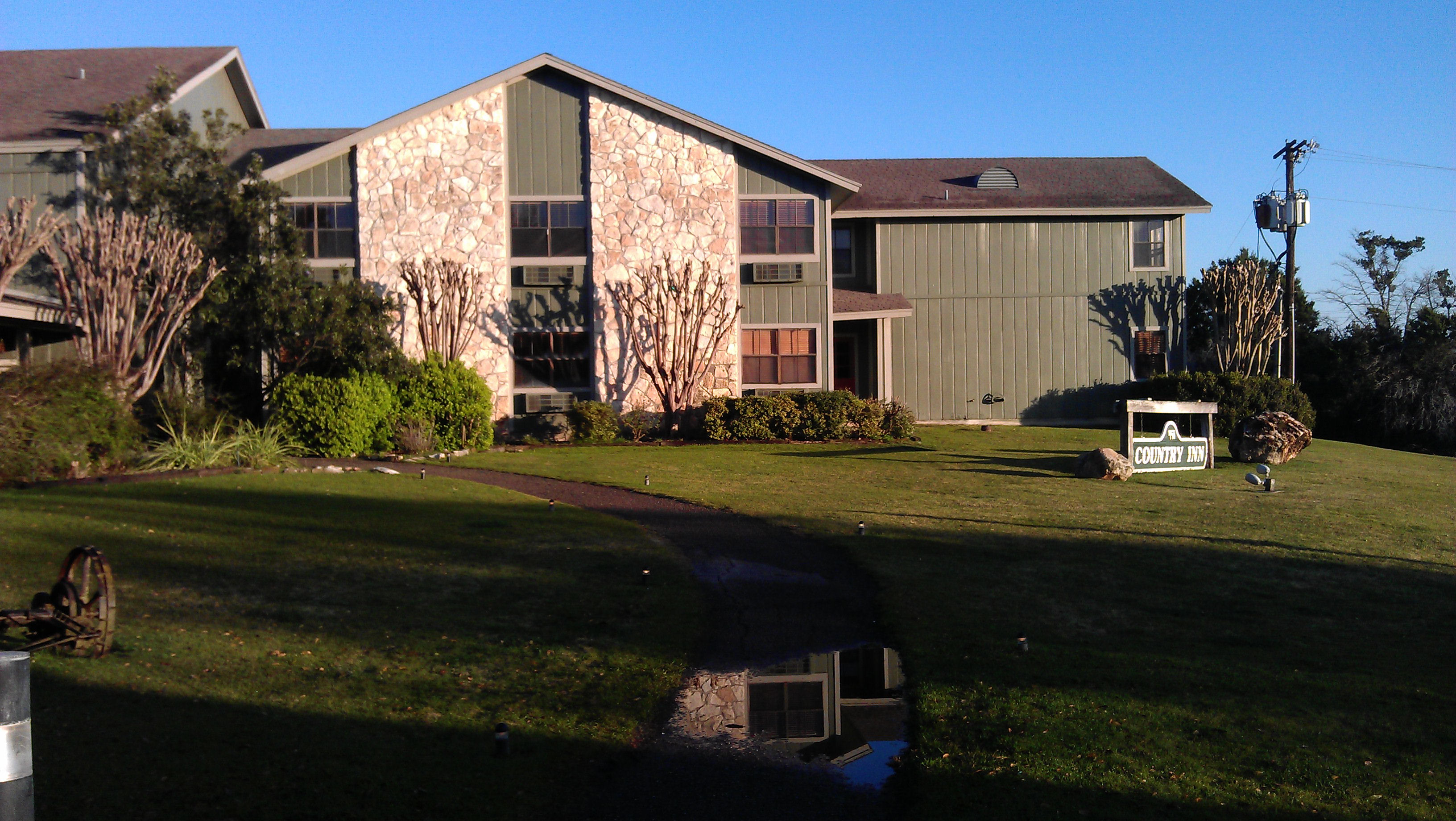
Accommodation wing, early morning

Accommodation wing, early morning

Classroom through the trees

Classroom through the trees

Front of our classroom

Front of our classroom

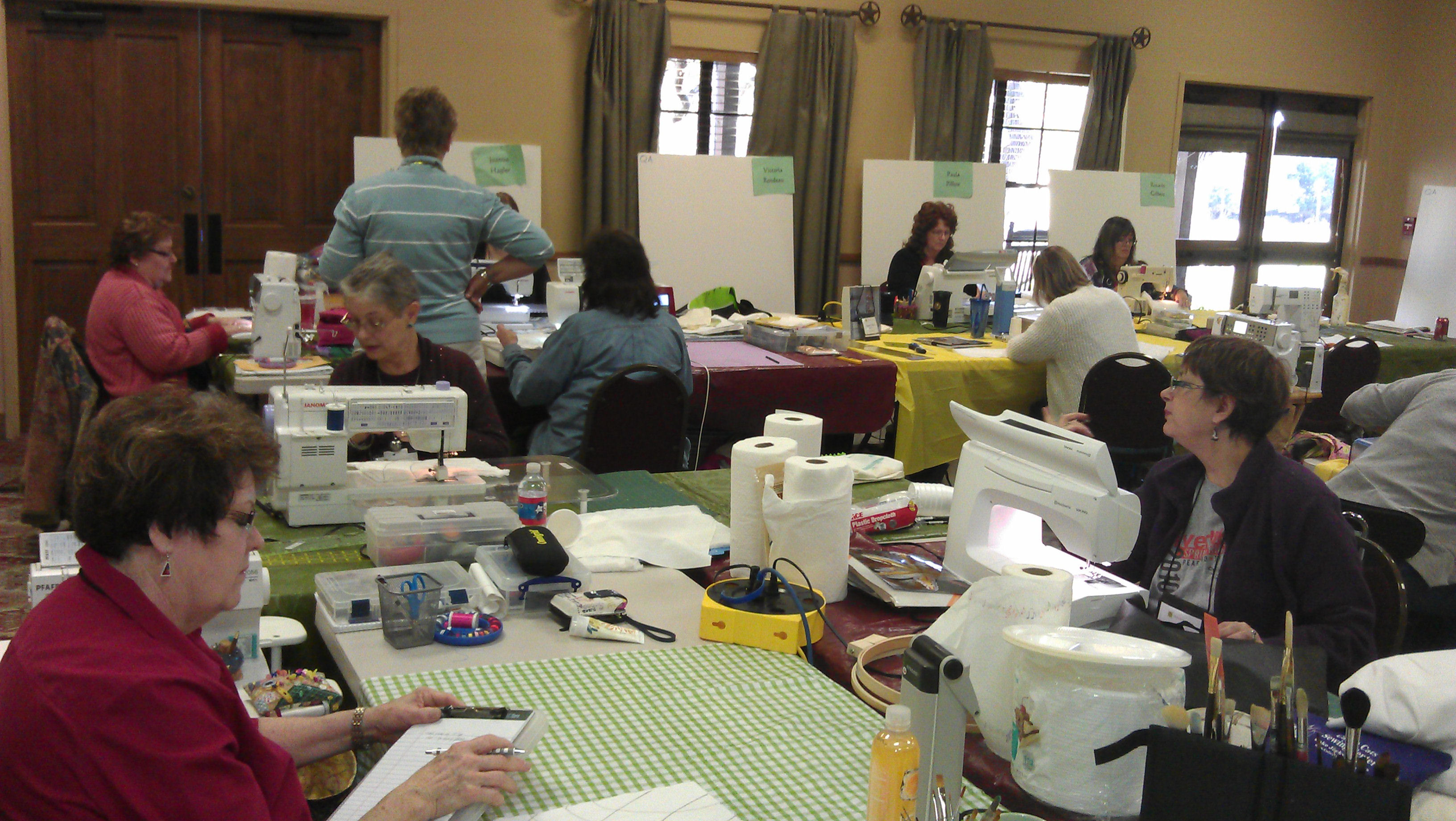
Our classroom

Our classroom

First flowers

First flowers

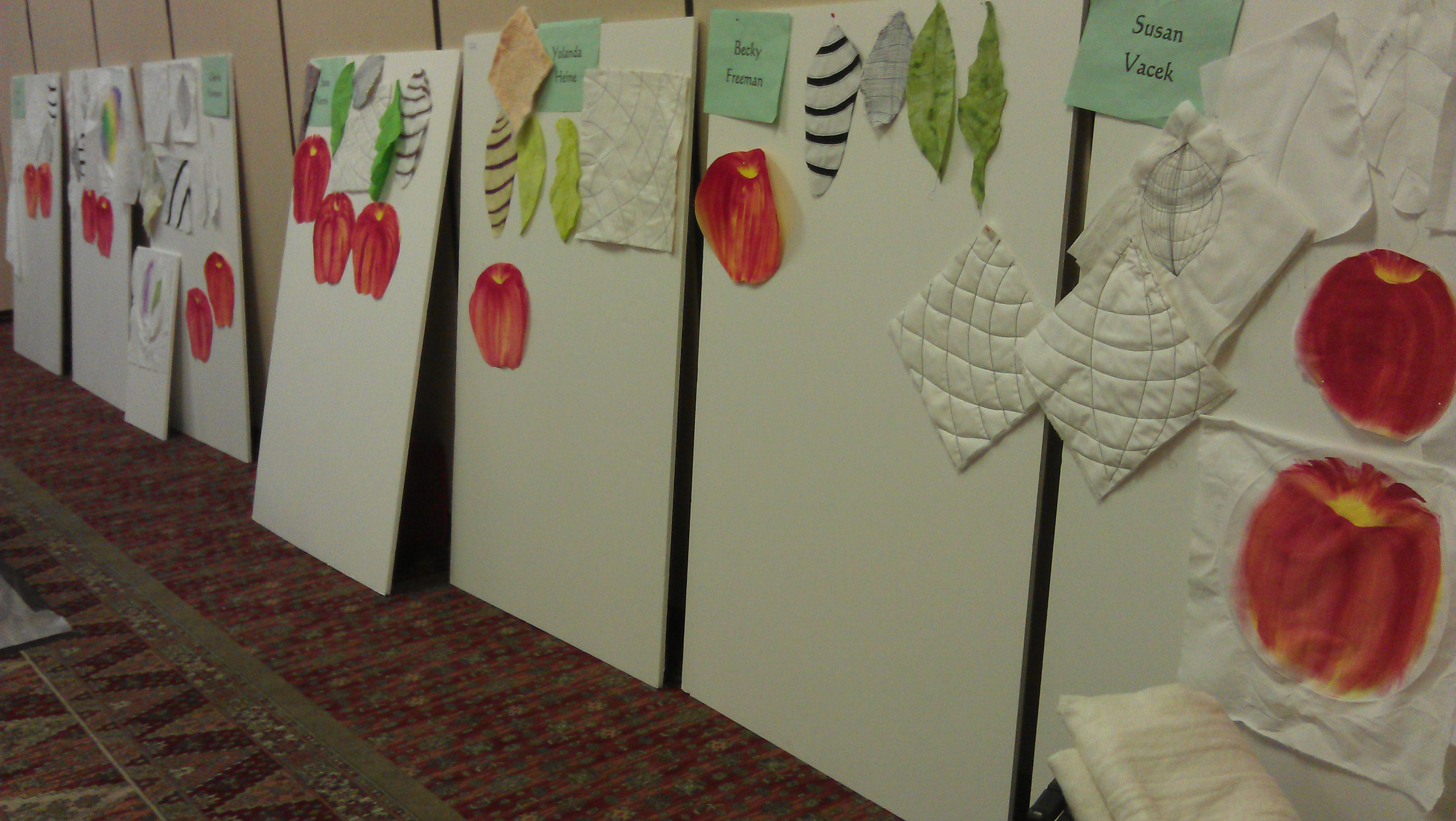
The wall of apples from yesterday

The wall of apples from yesterday

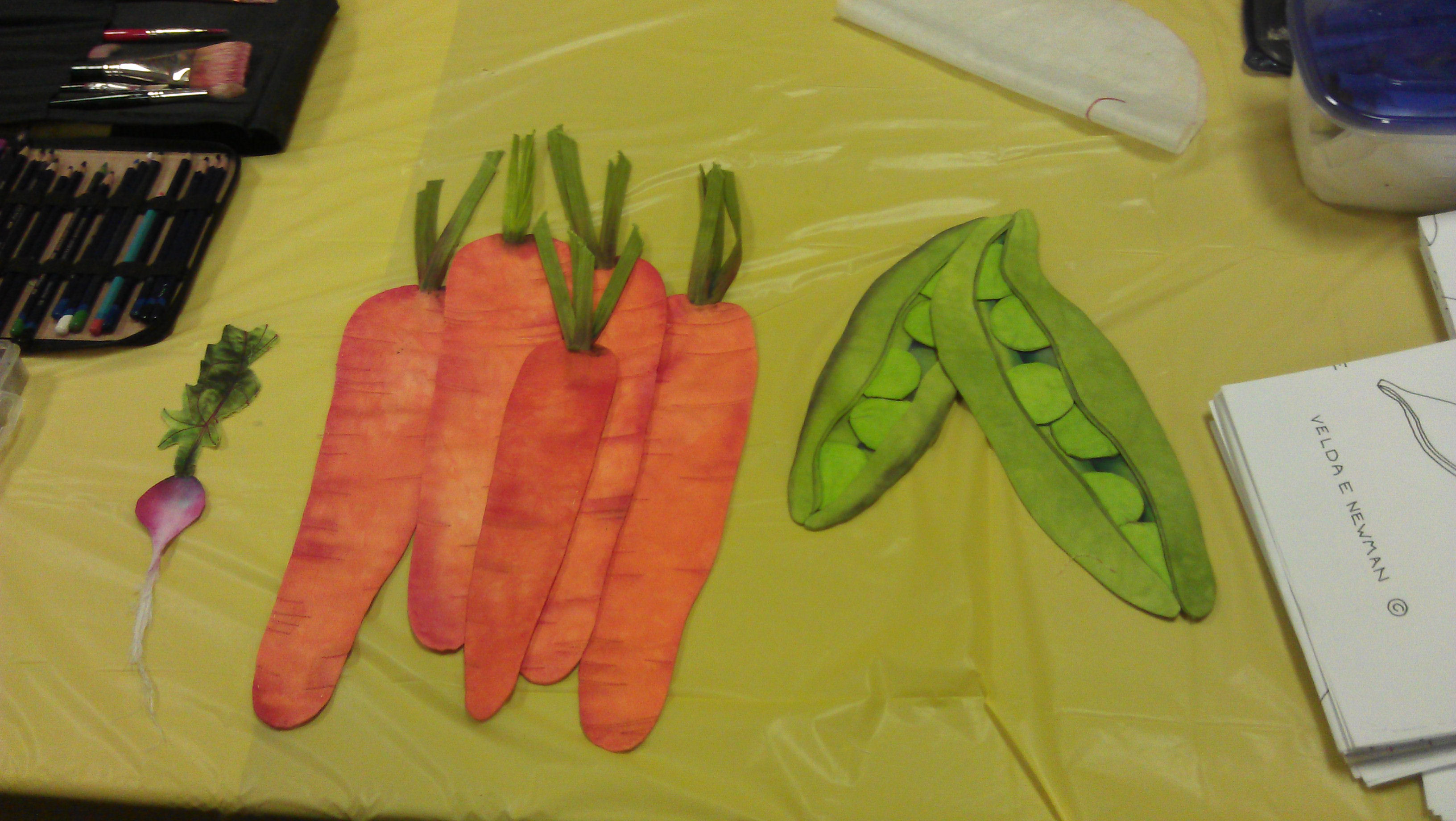
Velda's vegetables

Velda’s vegetables

qa_2013_day2_velda_pelican01

qa_2013_day2_velda_pelican02

qa_2013_day2_velda_pelican03

Lunch

Lunch

Dessert and lemonade at lunch

Dessert and lemonade at lunch

Dinner

Dinner

Photo I chose to do  (thanks for your permission, Wade!)

Photo I chose to do (thanks for your permission, Wade!)

Outline drawn on plastic, ready for overhead projector

Outline drawn on plastic, ready for overhead projector

Master pattern traced

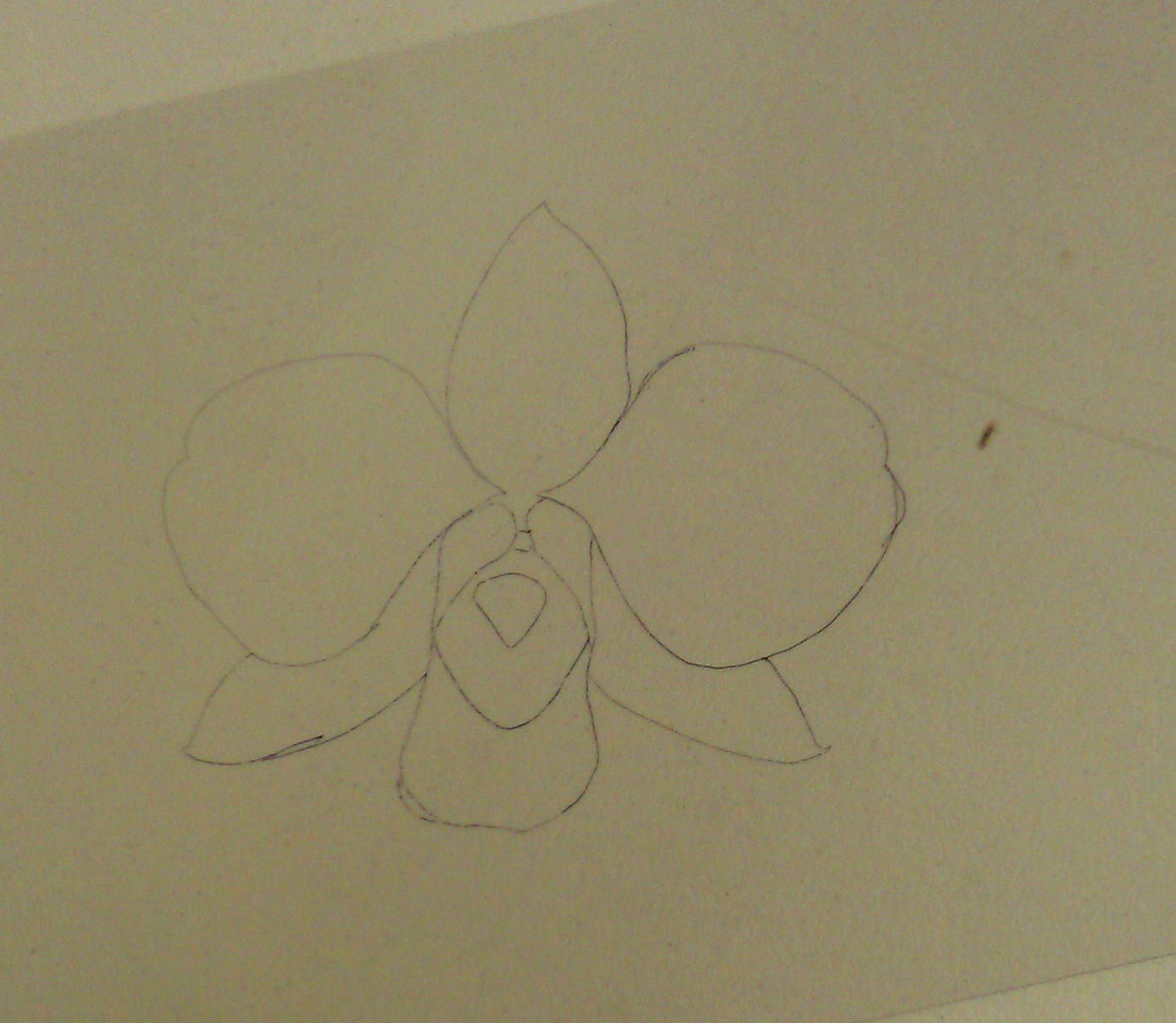
Master pattern enlarged and traced. From this pattern, I traced, cut out and labelled individual pattern pieces, then used them as templates for cutting out the fabric pieces and deciding where to put the tuck and stitching lines.

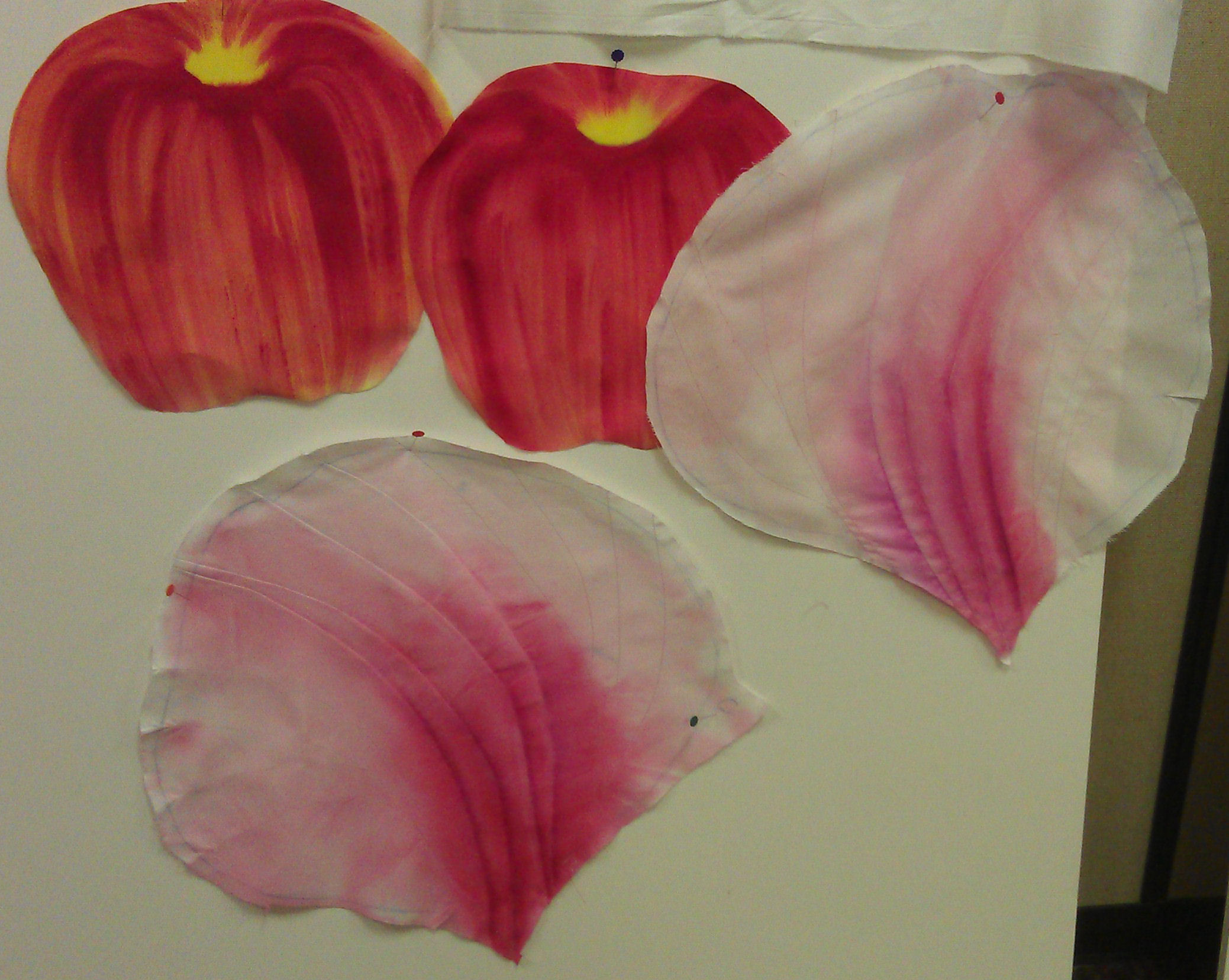
One petal tucked and stitched, ready for painting

One petal tucked and stitched, ready for painting

Two petals painted

Two petals painted

Technique for making crunched/folded petals

Technique for making crunched/folded/textured petals, such as peony or azalea petals. Wet the fabric, lay it down on some fusible/freezer paper, iron it dry with the folds etc. in it.

Rayna Gillman’s quilts

qa_2013_day2_rayna01

qa_2013_day2_rayna02

qa_2013_day2_rayna03

qa_2013_day2_rayna04

qa_2013_day2_rayna05

qa_2013_day2_rayna06

Robbi Joy Eklow’s quilts

qa_2013_day2_bobbi_joy01

qa_2013_day2_bobbi_joy02

qa_2013_day2_bobbi_joy03

qa_2013_day2_bobbi_joy04

qa_2013_day2_bobbi_joy05

qa_2013_day2_bobbi_joy06

See also:


Quilting Adventures Spring Seminar: Day 1: 11 March 2013

12 03 2013

My head is spinning! In a good way…

We learnt SOOO much today from our tutor, Velda Newman, that it’s hard to process it all. That said, we weren’t rushed… it was just a lot to take in. So, where to start?

I think I’ll start by showcasing some of Velda’s amazing art quilts, just so you can see the sort of work she does and that we aspire to do as a result of what we learn this week. Where I know something about each of her quilts, I’ll add it in the commentary. Click on a photo to view it larger.

Velda’s amazing art quilts

Velda explaining how she did her African baskets quilt

Velda explaining how she did her African baskets quilt

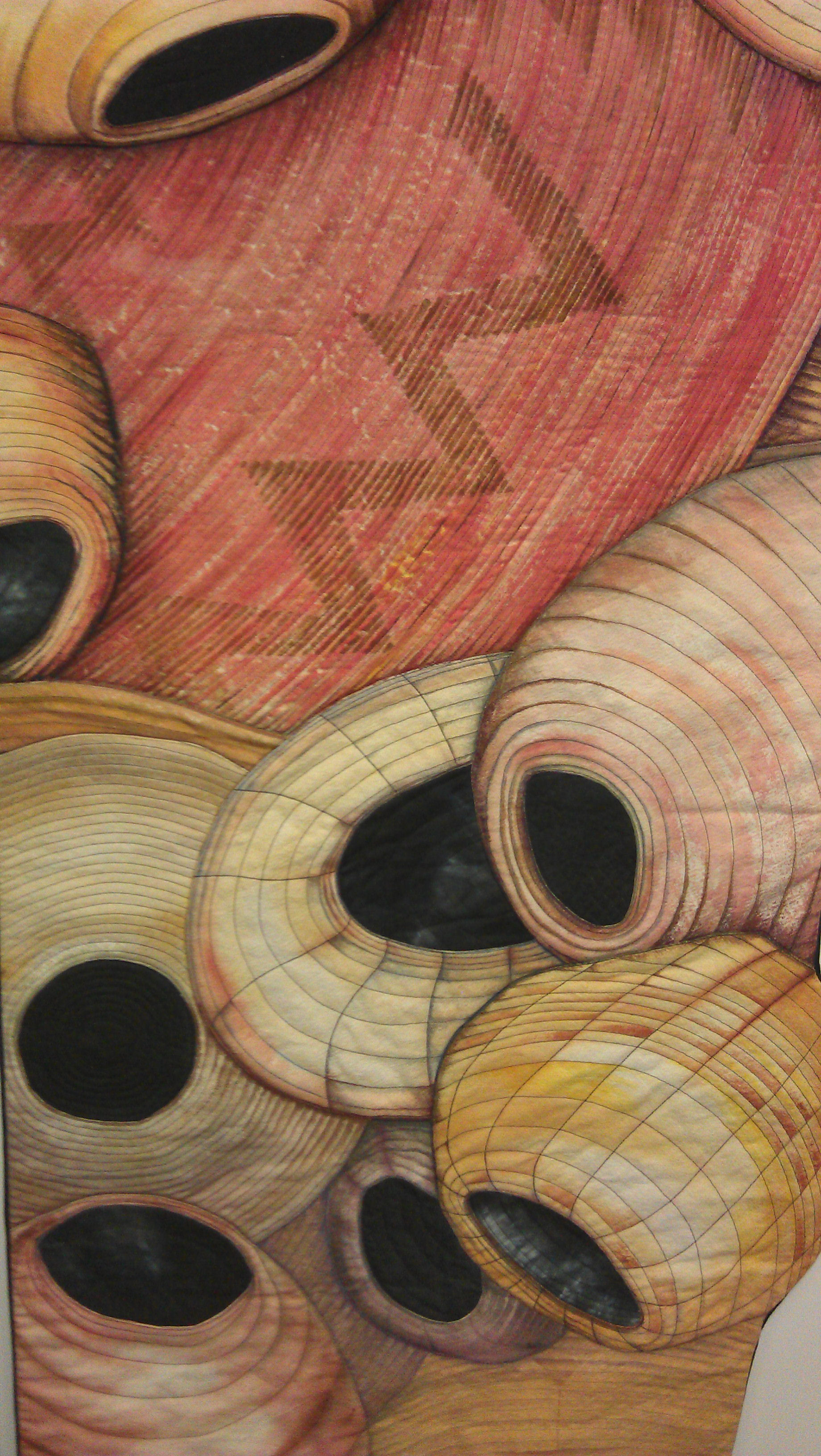
African baskets quilt

African baskets quilt. Each basket was created, stitched, painted etc. separately, then they were composed with each other. No background in this quilt — just the baskets spilling into each other.

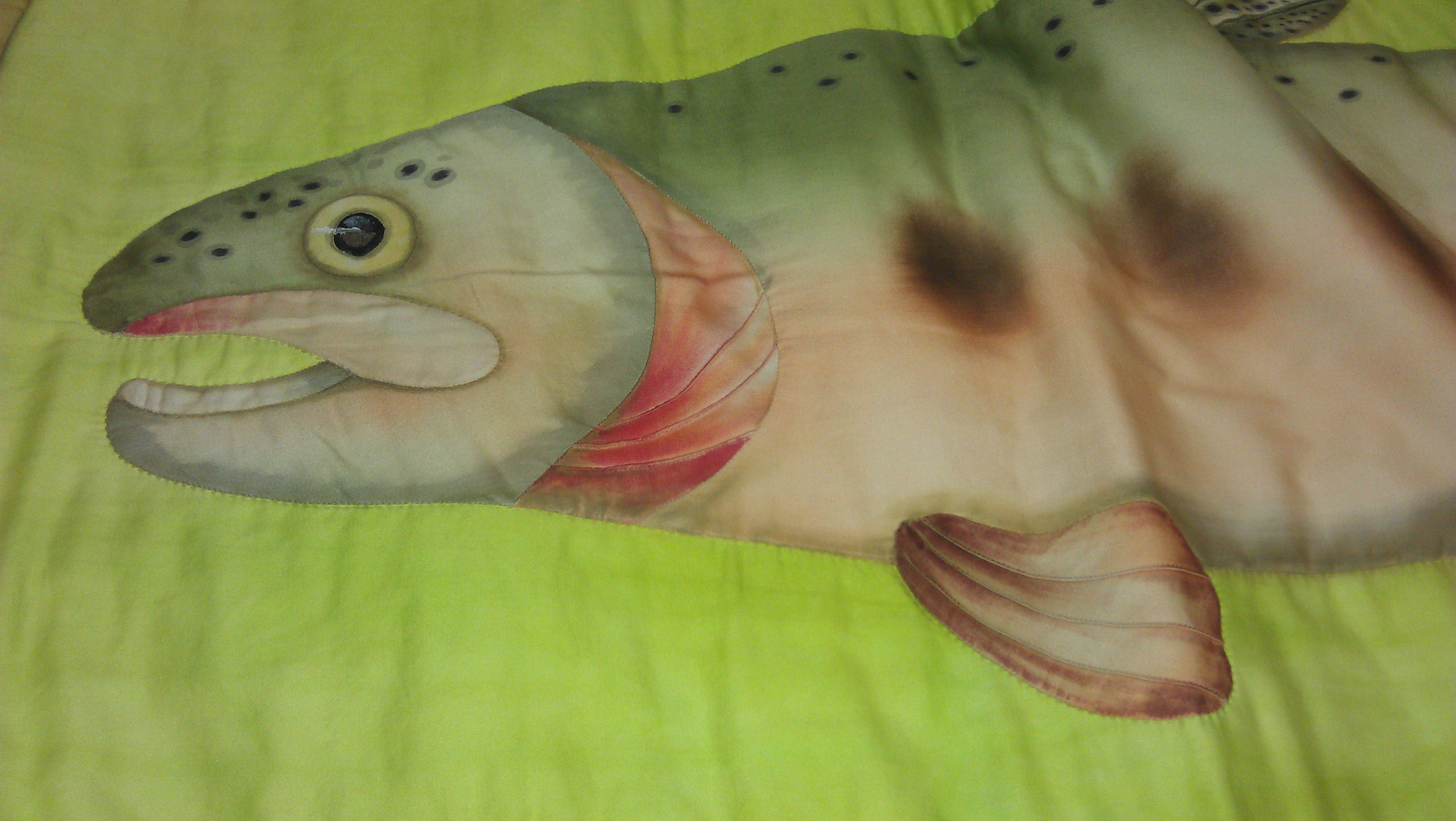
Trout quilt

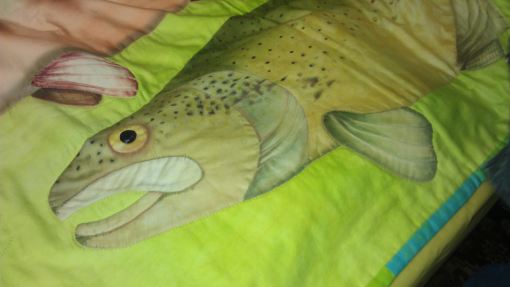
Trout quilt. This piece is about 6 ft long. The fins of the trout were folded and stitched (like pin tucking); the white spots of the top trout were created using a Jacquard (sp?) resist; the fish were painted after most of the stitching was done and before being appliqued on to the quilt; the trout species’ names are hand quilted onto the background fabric.
qa_2013_day1_velda_newman24

qa_2013_day1_velda_newman21

qa_2013_day1_velda_newman22

Blue heron quilt

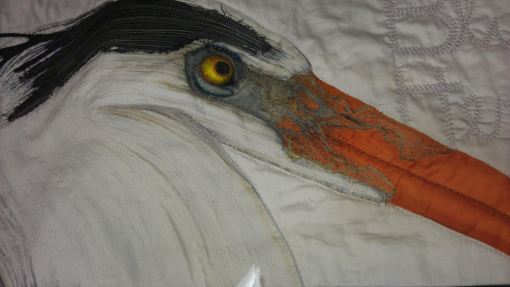
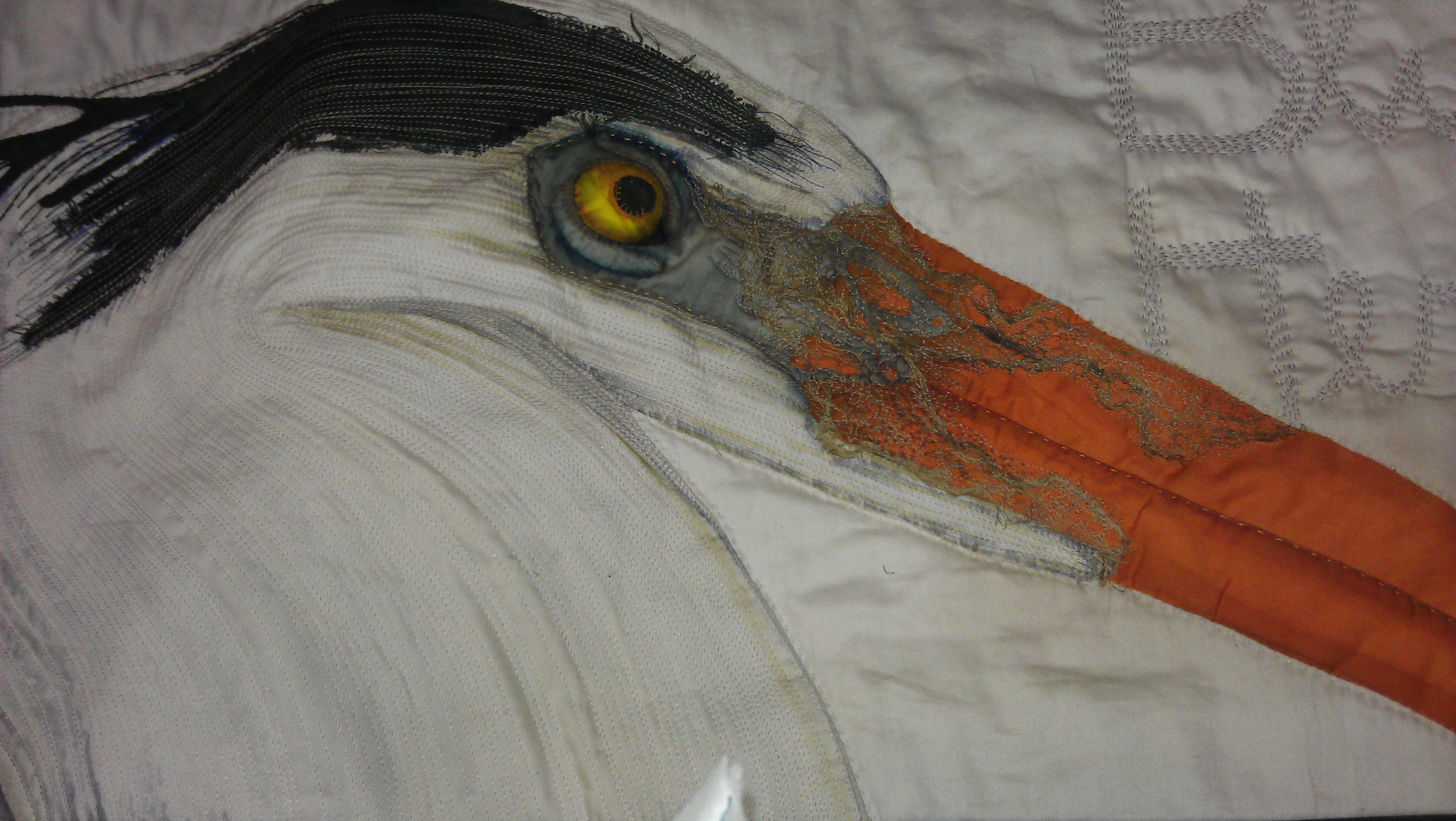
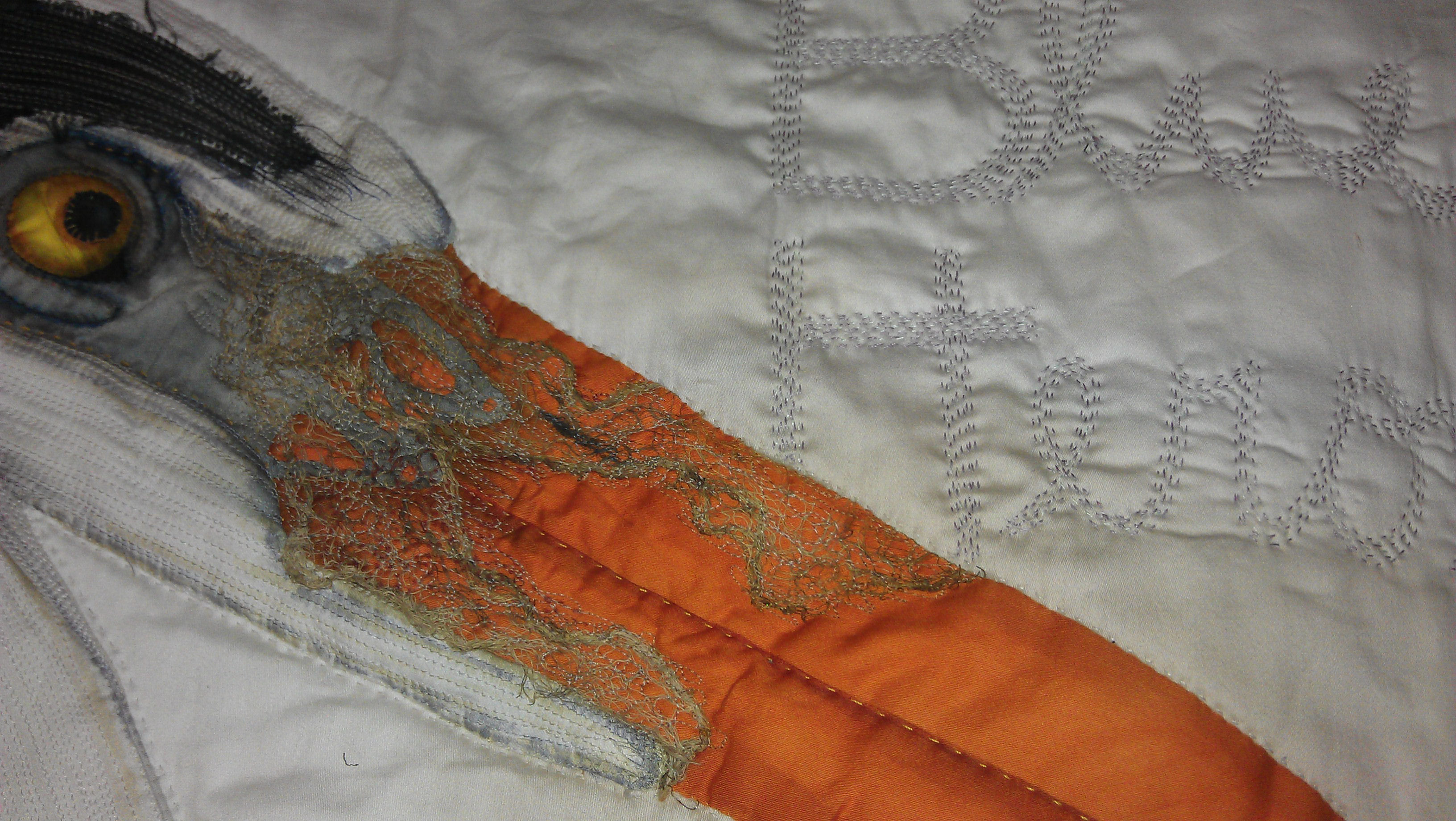
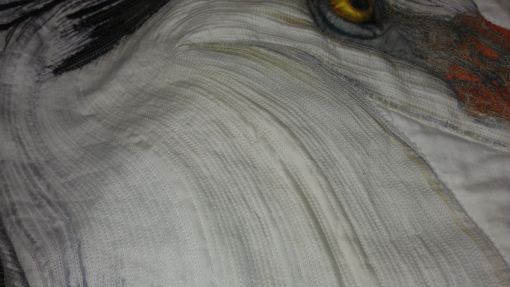
Blue heron quilt. This is only part of the quilt — it’s about 4 ft long. Lots of stitching on the bird, then the colours were painted on the white fabric of the bird. The effect at the top of the beak was created using cheesecloth. The species’ name was hand quilted.
 qa_2013_day1_velda_newman13

qa_2013_day1_velda_newman14

Prickly pear quilt

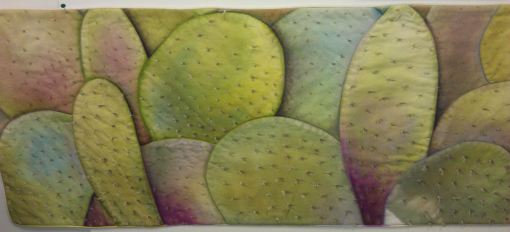
Prickly pear quilt. Each ‘pad’ was a separate piece in duck cloth (lightweight canvas), initially painted then appliqued to cover the entire section (no background fabric). Once each piece was added, further painting was done to add colour, shadow etc. The ‘prickles’ on this cactus were tied pieces of wax linen thread, and shadows painted on. The ties stick out from the canvas, adding a very three-dimensional effect.

qa_2013_day1_velda_newman07

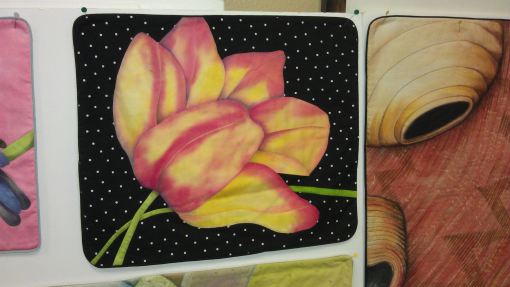
Tulip quilt

Tulip quilt. Each petal section was pleated and stitched (pin tucked) down the middle, then appliqued and painted, Dark shadows were added last.

Leaf quilt

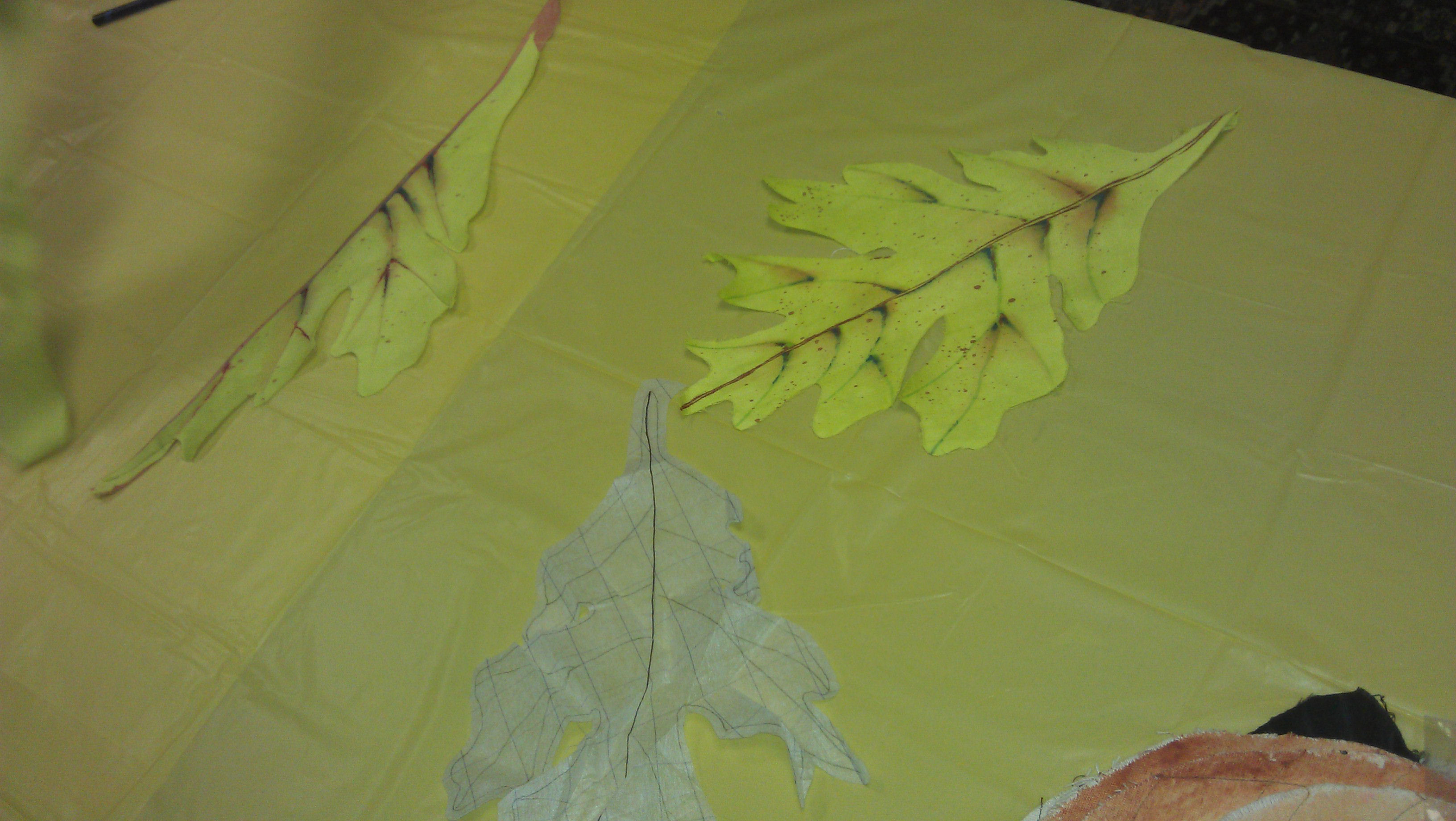
Leaf quilt. Dyed/painted cheesecloth was used to create the leaf. It was then stitched down and extra paint embellishments were added.

Blue bird quilt

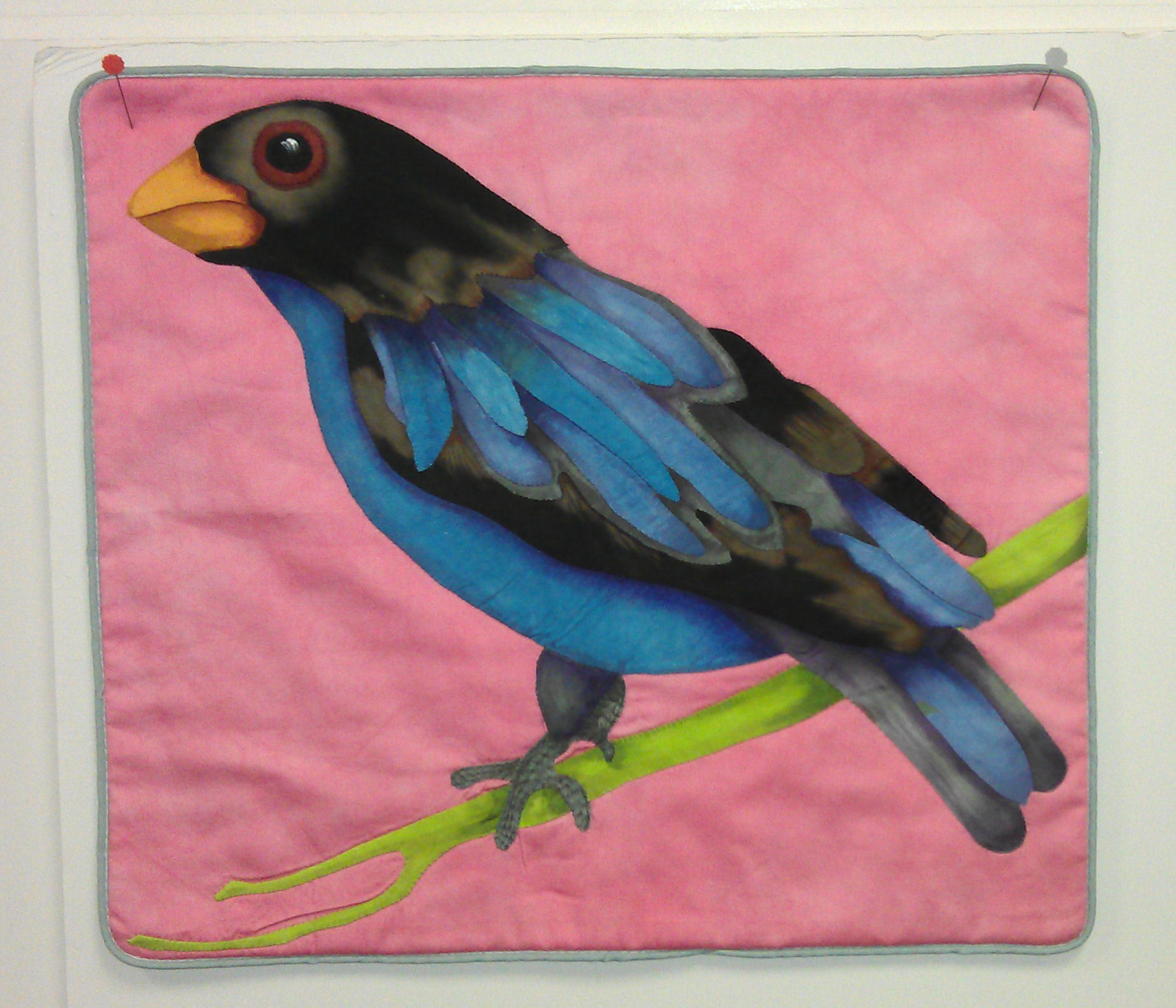
Blue bird quilt. The lighter colours on the black fabric were bleached, including the area around the eye. The eye was done in three applique pieces. All the wings were appliqued on separately.
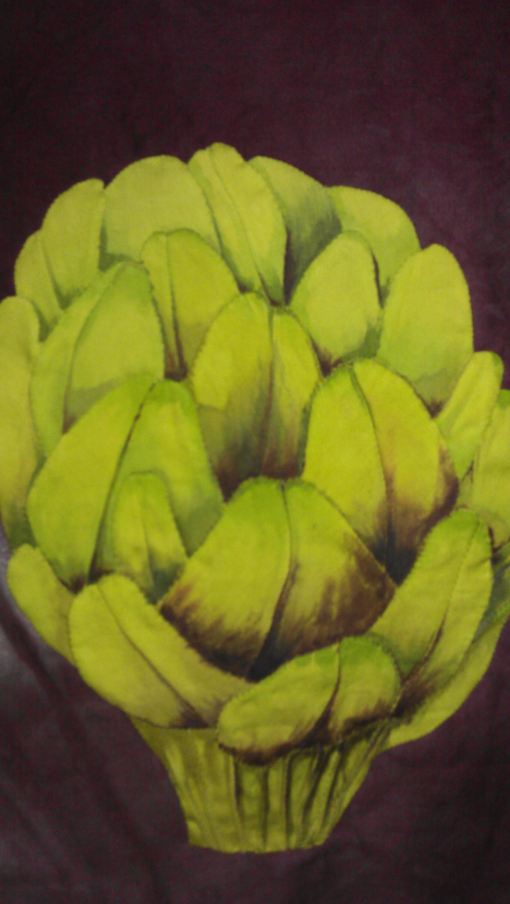
Artichoke quilt

Artichoke quilt. Each leaf piece was pintucked to create the central vein, then appliqued on to the background. The stem was also pintucked. Paint and marker colours were added later to create shadows and depth.

Seagull quilt

Seagull quilt. Lots of stitching on the white part of the bird. Paint added to enhance the eye and the beak. Hand quilted stitches on the blue background.

Techniques we learned today

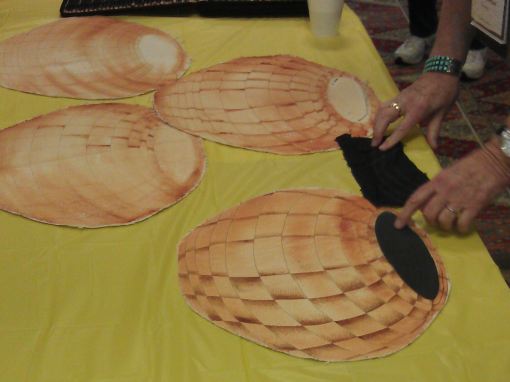
Velda started today by showing us how to create roundness with just stitching. Using her African Baskets quilt as an example, she showed us the stages she went through to create a single basket, from drawing the lines and concentric curves, to stitching them, to painting them. Then how she added the black opening as a separately stitched piece and cut away the excess to prevent bulk.

qa_2013_day1_velda_newman02

qa_2013_day1_velda_newman03

Then it was our turn. We used a 12×12″ white fabric square with some thin batting (NO backing) and had to draw some curving lines, then stitch them. That was easy enough! My effort is below.

qa_2013_day1_velda_newman19

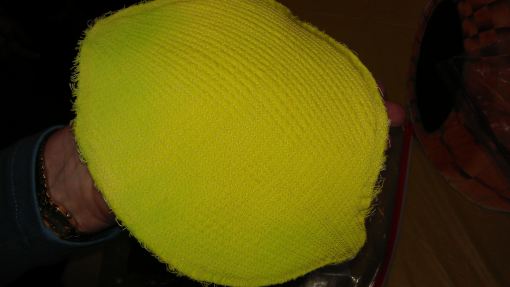
The next technique built on from this one and was to create texture on a lemon shape just through stitching. Normally, we’d do this on yellow fabric with yellow thread, but Velda wanted us to stitch on white with a dark thread so we could see what were were doing.

Here’s her piece, followed by mine.
qa_2013_day1_velda_newman17

I didn’t do mine correctly — we were meant to stitch off the edge of the lemon shape, whereas I stitched ‘within the lines’. I called this technique ‘divide and conquer’ as all we were doing was halving the lines as we went to end up about 1/8″ squares.  qa_2013_day1_velda_newman18
The next technique we learnt was using 1/16″ stitching (like pintucking) to give the appearance of a pieced leaf. The first leaf we did just had a single vein, then she showed us how to do leaves with several side veins and a centre vein — ironing the veins in the same direction is critical for getting the shadow right, as is stitching the centre vein AFTER the side veins and catching all the side veins in the central vein.

Leaves and lemons

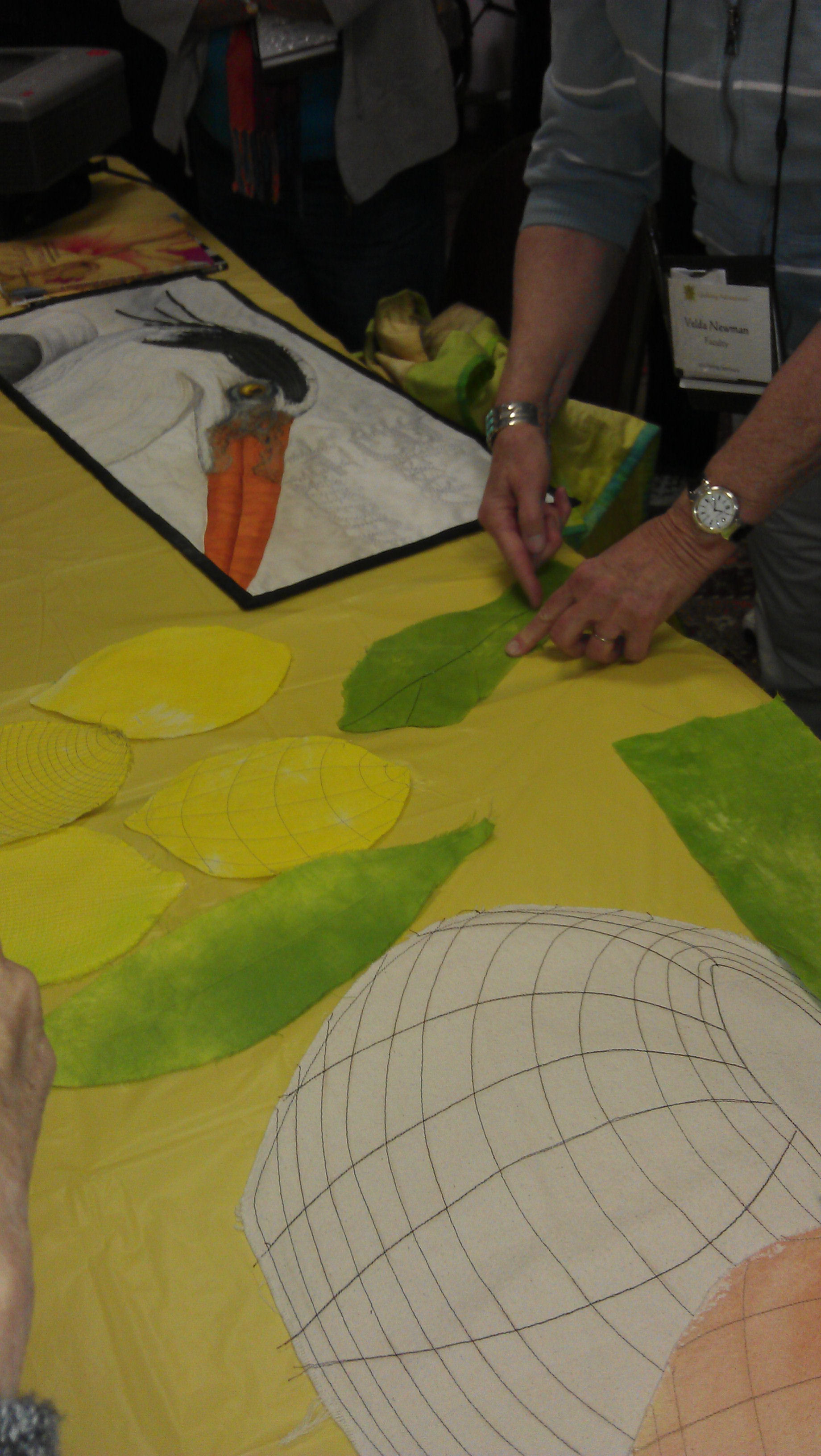
Leaves and lemons. The four stages of the lemon, and demonstrating the leaf veins created with stitching.
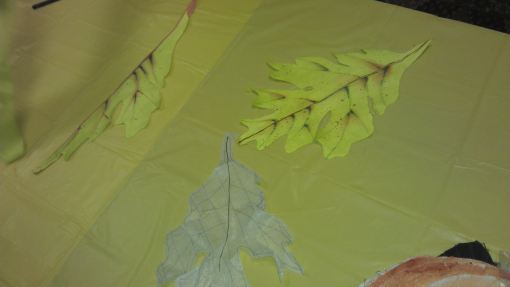
Leaves

Leaves. The leaf on the far left with the orange vein has a piece of orange fabric attached on the bias to create the vein!

We followed that with creating a shell shape using two pieces of fabric, one on top of the other (like reverse applique). The light fabric went on top and the dark underneath. We drew curved lines on the top, then double-stitched right on/near those lines, then marked the sections to cut away to reveal the dark fabric, then cut them away. The last stage was to cut away the dark  fabric on the  back so that it didn’t show through the light fabric on the front, or add bulk.

Here are my leaves (you can probably tell which side Velda cut for me!) and cutaway ‘shell’ (which looks more like a butterfly’s body than a shell to me!), plus the other projects from earlier in the day.
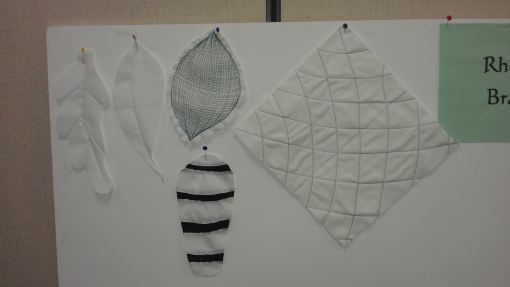
qa_2013_day1_velda_newman26

Our last stitching technique before we attempted painting was working with cheesecloth. Cheesecloth is like a fine gauze. Here’s what it looks like when it’s purchased:

qa_2013_day1_velda_newman33

Velda showed us how to pull it apart to ‘get rid of the grid’, how it added texture (see the cantaloupe/rock melon piece below), and one way of stitching — using pebbling — to enhance the texture even more. She said this texture worked really well for reptiles, as well as fruits — and bird beaks!
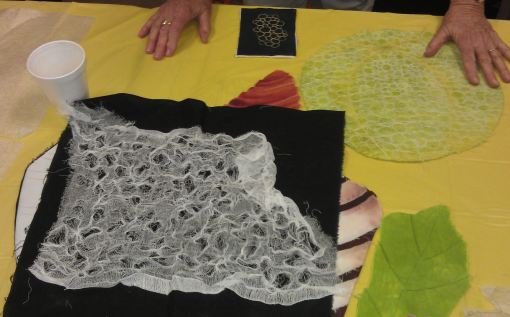
qa_2013_day1_velda_newman28

Again, she wanted us to put it on fabric in a contrasting colour, such as black, and stitch it using yet another a contrasting colour — I used orange.

qa_2013_day1_velda_newman32

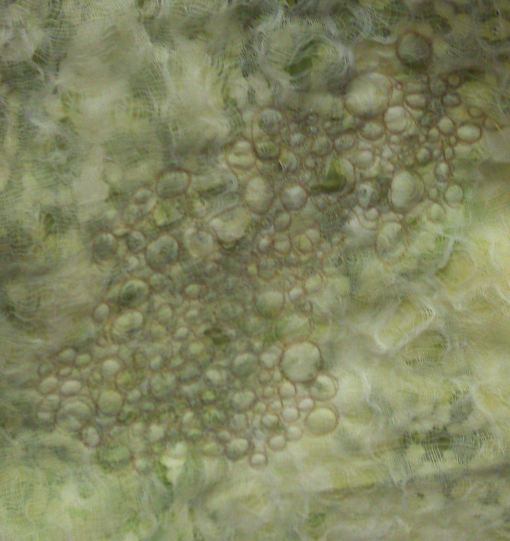
My friend Cherrie stitched hers onto a mottled green fabric — I reckoned it looked like water cascading over rocks in a stream; she thought of a frog:
qa_2013_day1_velda_newman34

Here we are, hard at work on some of our stitching pieces:

qa_2013_day1_velda_newman16

Before Velda got us painting, she showed us how she used some of the techniques she had shown us to create a variety of vegetables.

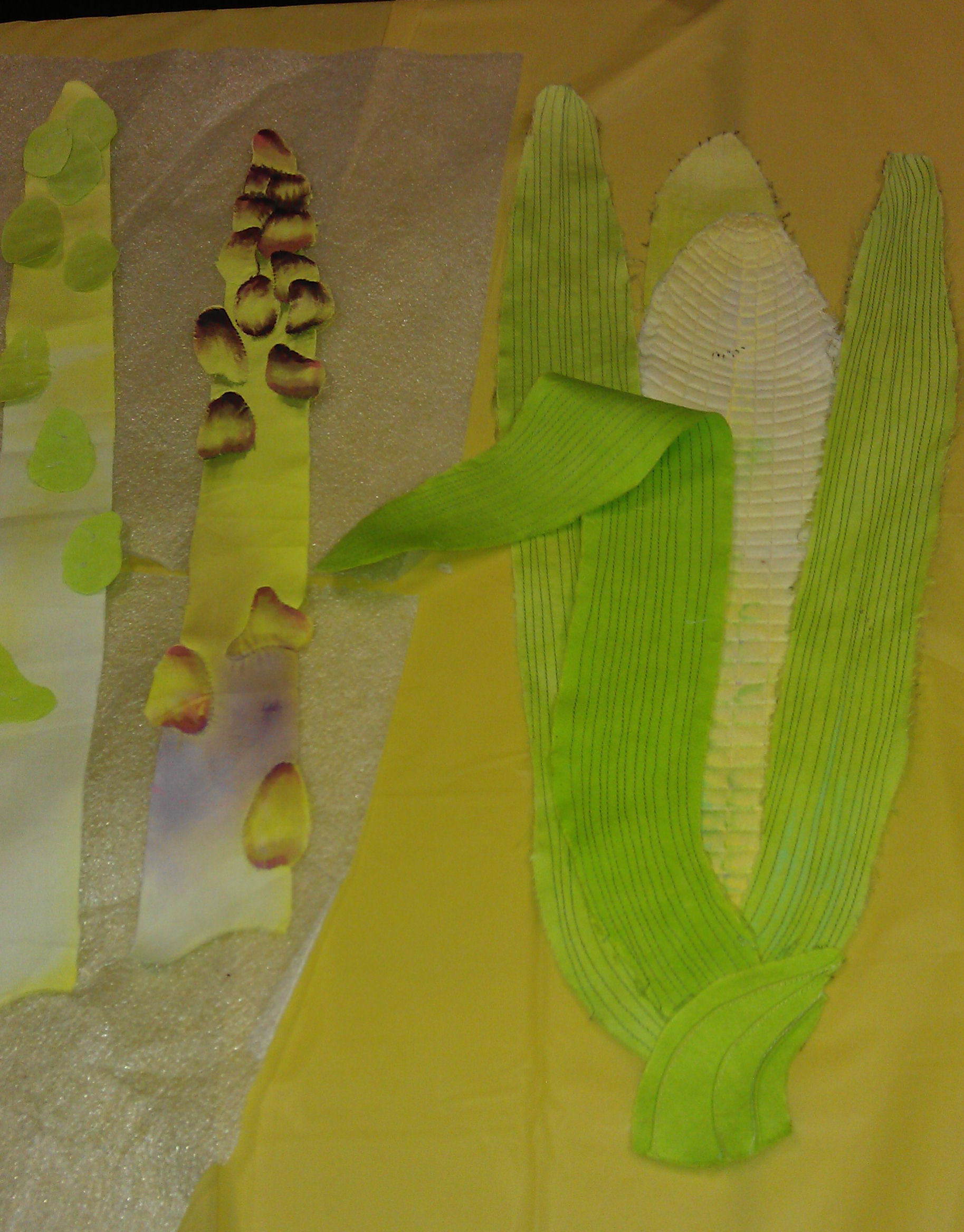
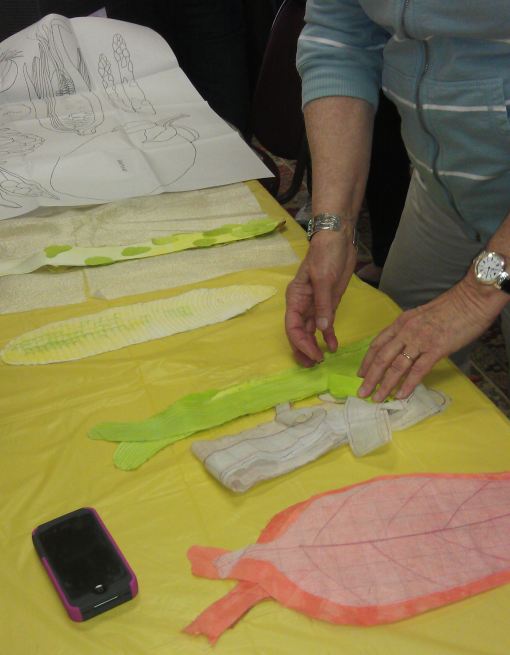
Asparagus

Asparagus. The asparagus spears started out as a green fabric that she bleached the bottoms of to get the lighter gradation. The individual leaf buds (is that what they are called?) were appliqued on, then painted with a purple marker.
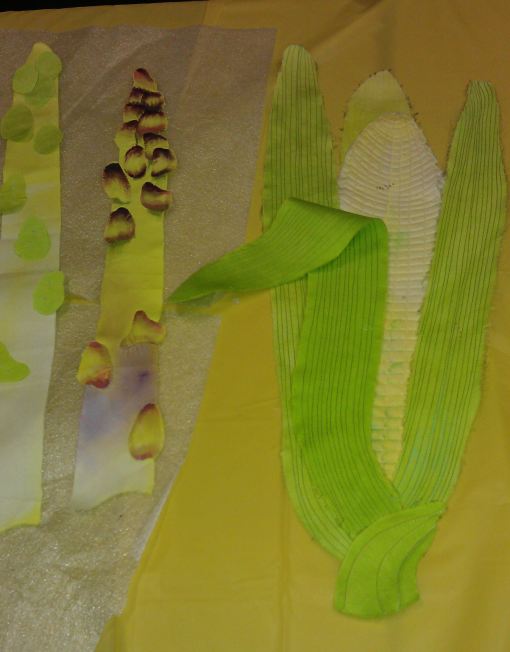
Corn

How the piece of the corn go together. Strips of green fabric with close parallel stitching for the leaves, concentric curves with scallops for the cob. Pintucked base for where the corn joins on to the main stem.
   qa_2013_day1_velda_newman30

The last few hours of Day 1 (yes, we’re still on Day 1!!) were spent learning about some of the paint mediums Velda uses, how she uses those paints to add depth and colour to her quilts, and how to paint an apple!

I haven’t got my notes with me at the moment (they’re in the classroom), but I’ll try to remember what each of the mediums are.
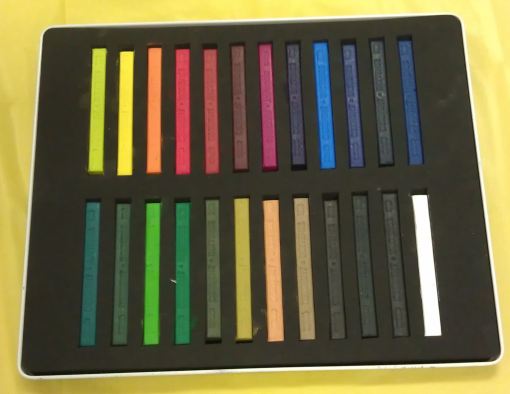
Derwent Inktense sticks

Derwent Inktense sticks. I reckon this image would make a great ‘modern quilt’!

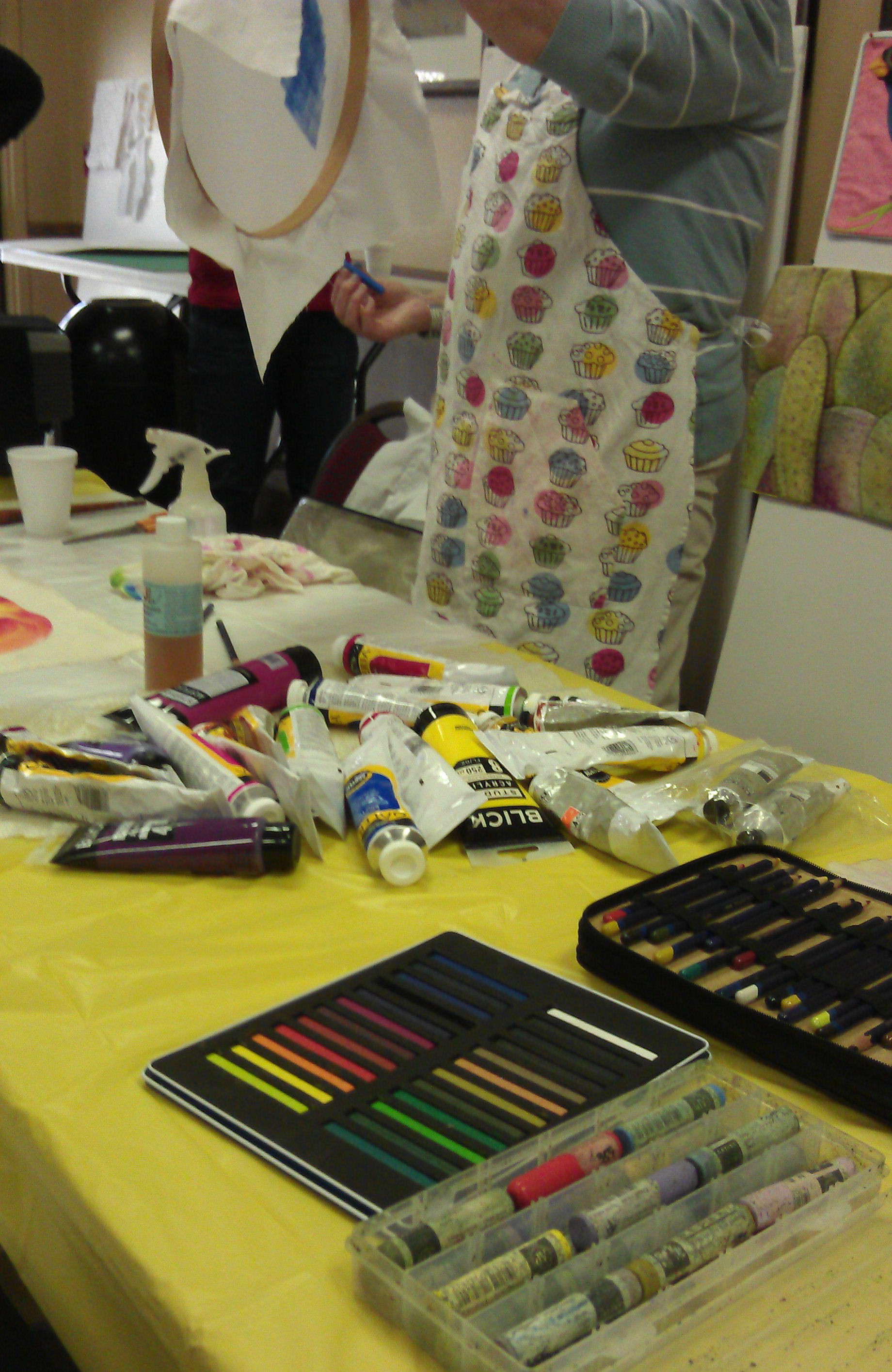
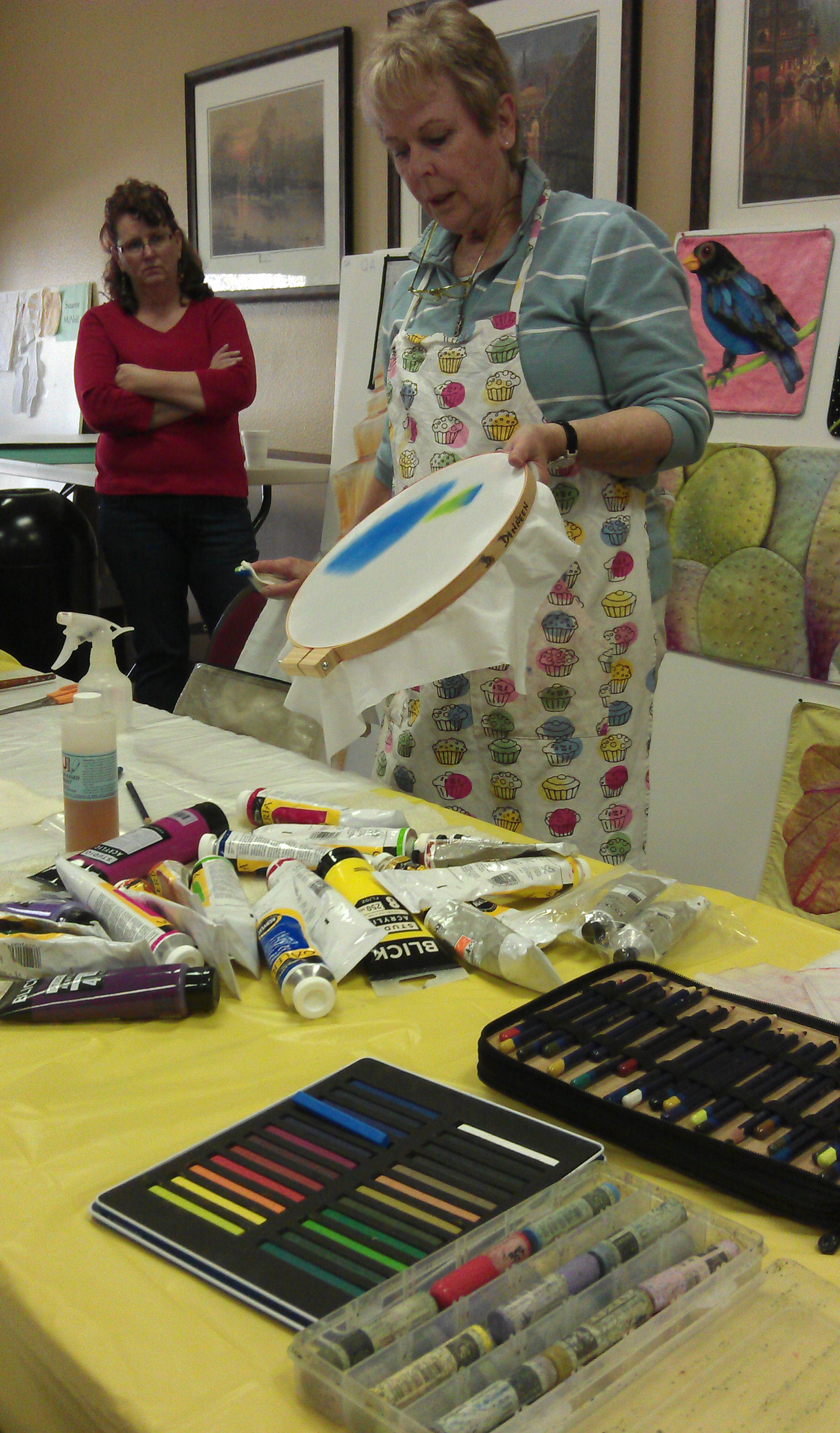
Various paint mediums

Various paint mediums.Windsor and Newton, Dick Blick, and Matisse artist acrylics in the tubes; Derwent Inktense sticks; NeoArt water-soluble oil pastels; Derwent Inktense watercolor pencils. Velda also showed Copic markers (permanent).

Blending the colour with a damp cloth

Blending the colour with a damp cloth

We got to play with her paint mediums (not the acrylics or the markers yet), blending various types of paints onto our damp fabric in our quilting hoops. I particularly liked the effect of the Derwent Inktense sticks and the NeoArt oil pastels. My effort:

qa_2013_day1_velda_newman38

She then showed us how to paint an apple. It looked super simple as there were only two colours — yellow and red. Velda demonstrated first (upside-down for her!).
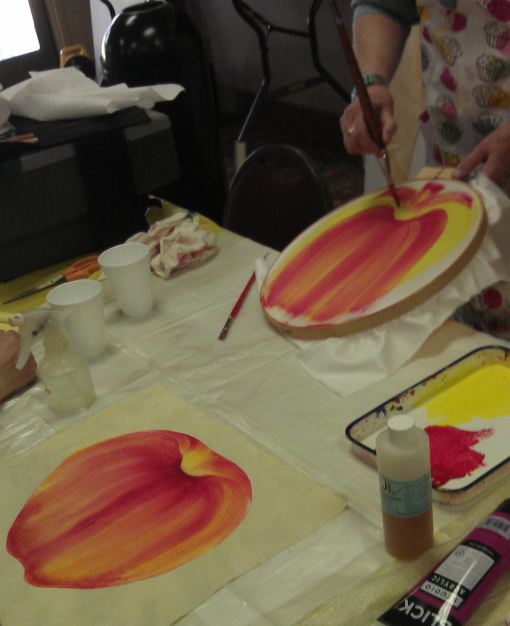
qa_2013_day1_velda_newman39

We went to our workstations and got started on outlining the apple, damping the fabric, then applying the yellow paint. Then Velda demonstrated each of the red strokes again, one at a time, while we made the same marks on our fabric with our red paint and big brushes. After we’d done one apple together, we had to create another one on our own. Here’s the progression on my first apple:

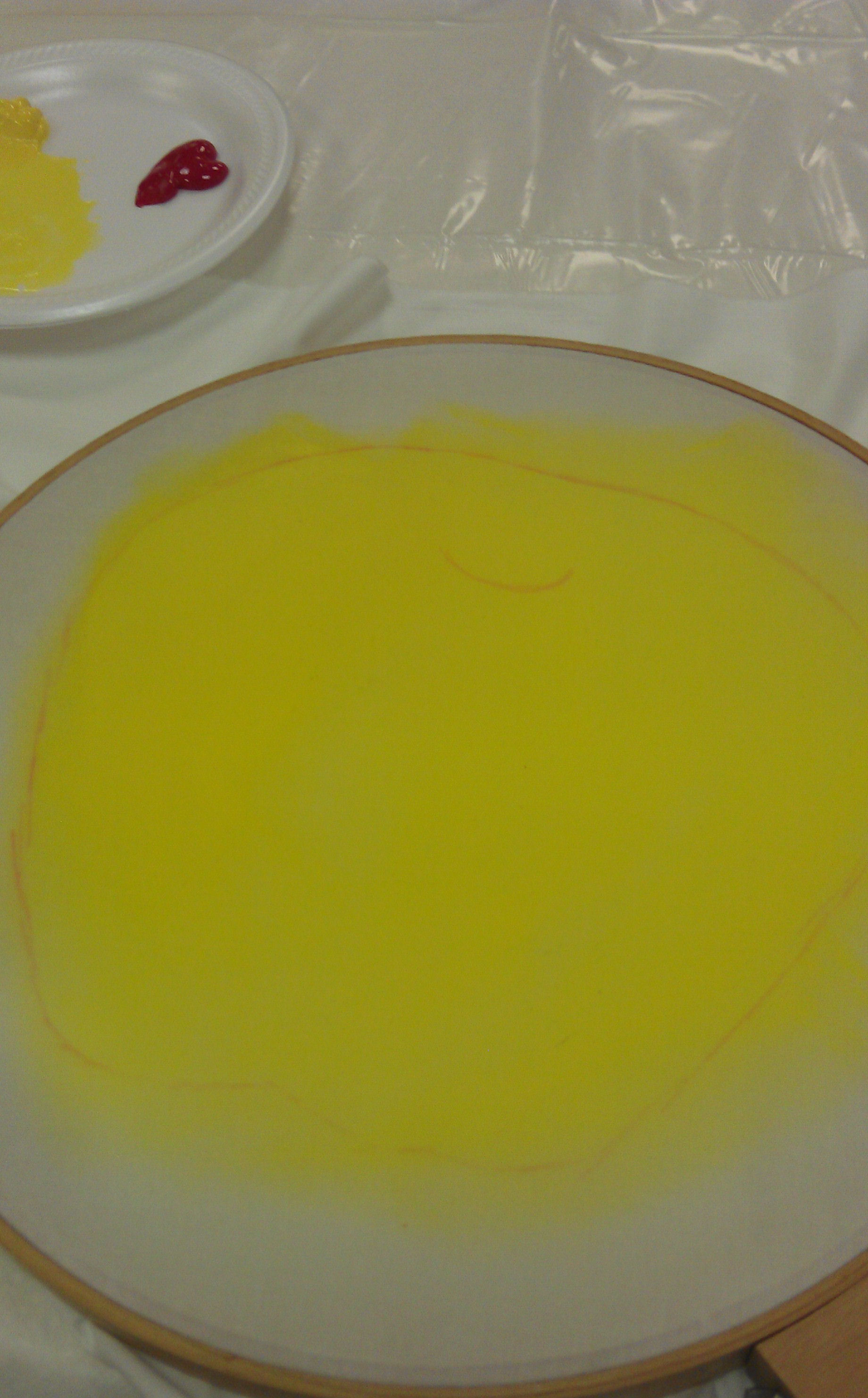
Outline and yellow background done

Outline and yellow background done

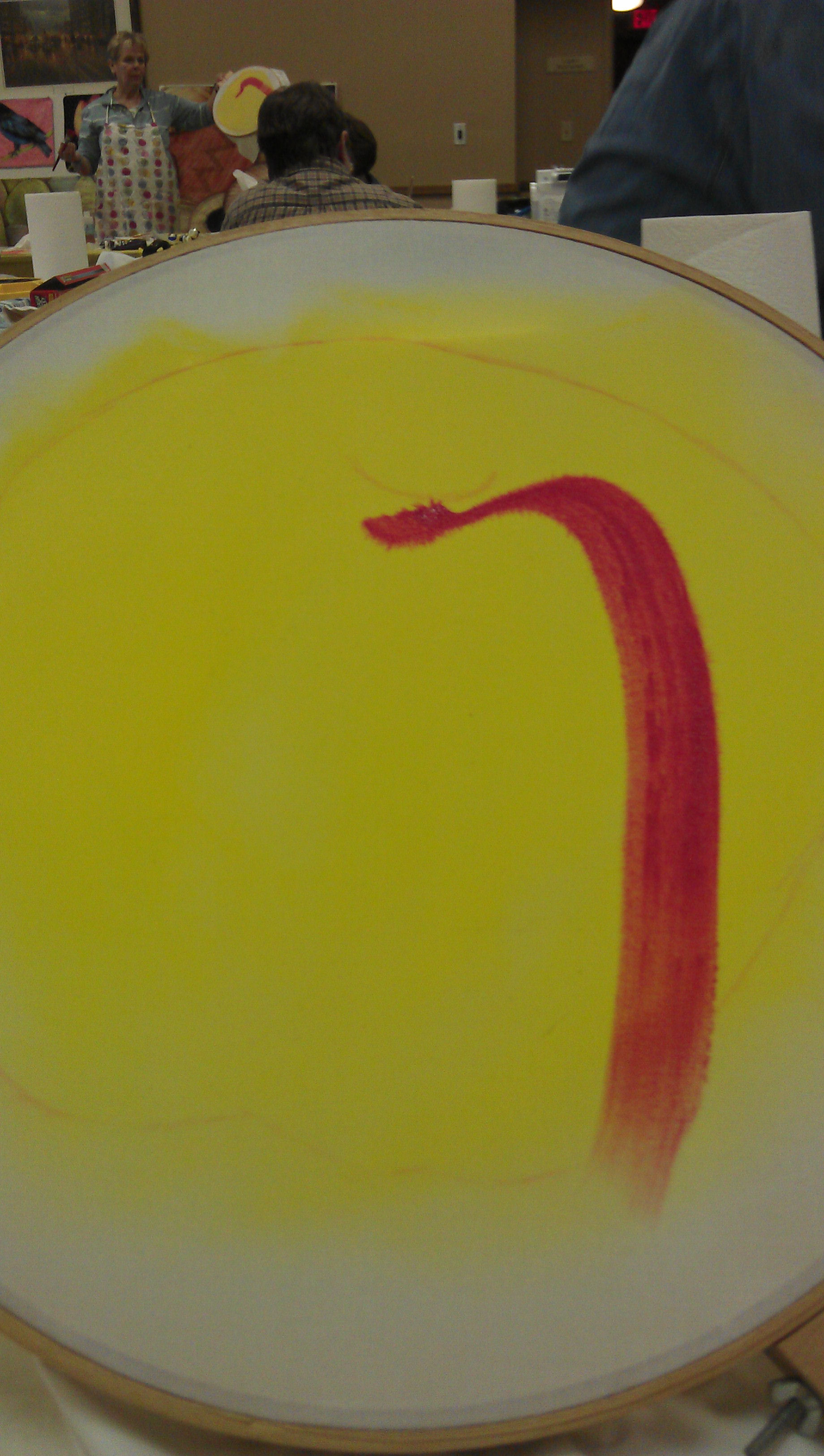
First red stroke

First red stroke – note after top curve it goes straight down, and you start just under the mark of the hole in case there’s any bleeding

Second red stroke

Second red stroke – note after top curve it goes straight down

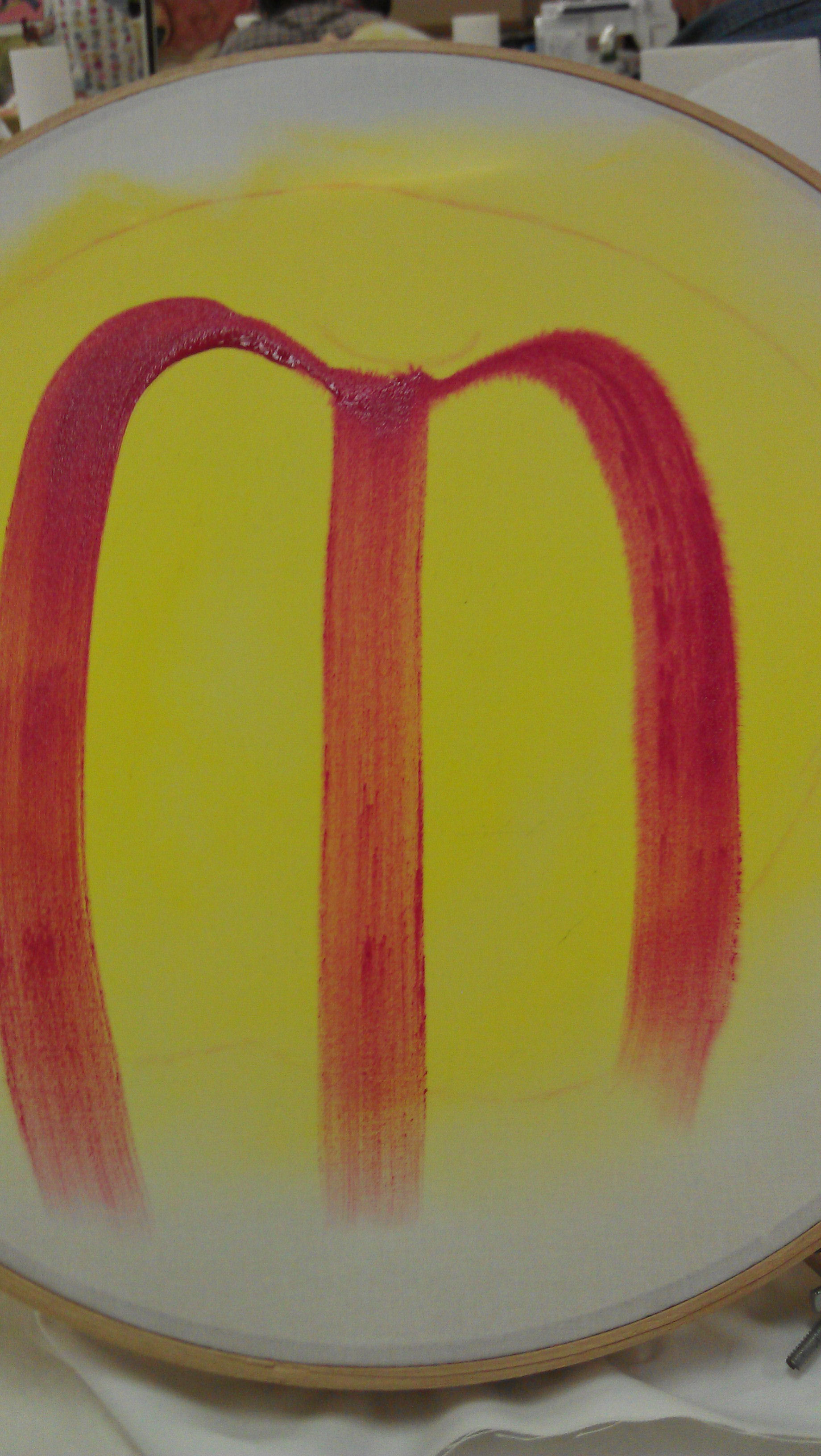
Third red stroke

Third red stroke – straight down (looks a bit like a reverse MacDonalds’ sign!)
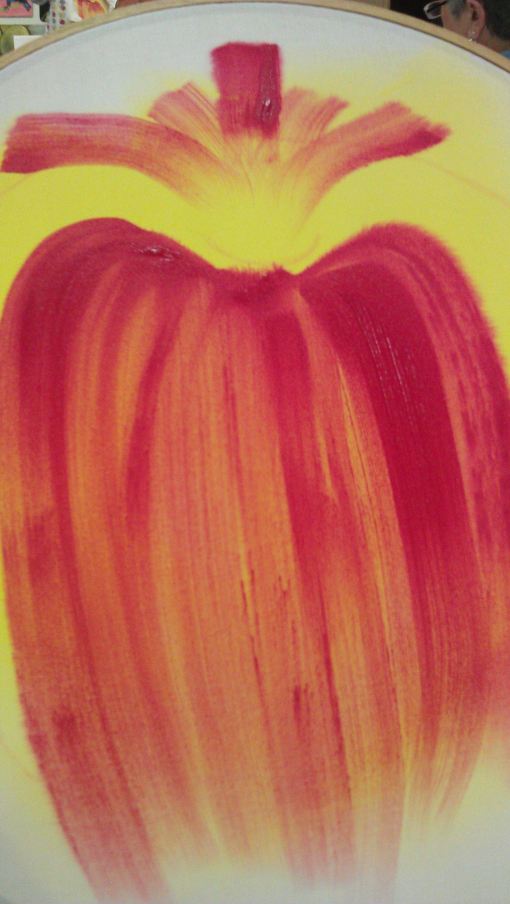
Filling in the back

Filling in the back — start outside the lines and pull and release the brush to give the wispy strokes; the front is filled in with straight downward strokes
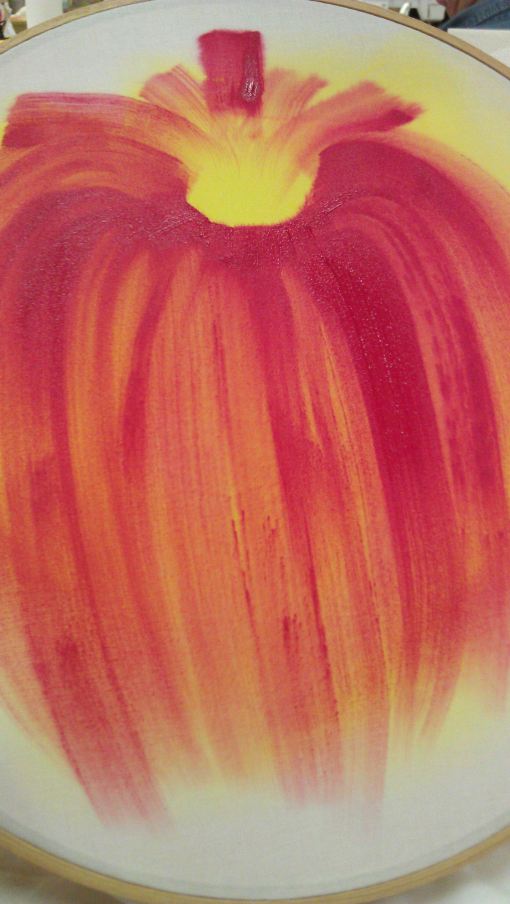
Filling in to the hole

Filling in to the hole — use a smaller brush to fill in the gap between the marked line and the hole after the fabric has dried a bit.
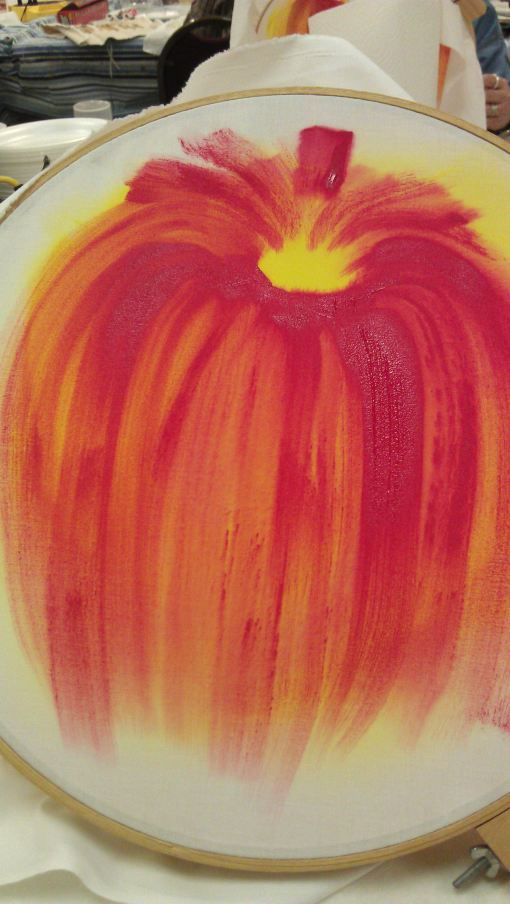
Adding the final strokes

Adding the final strokes. Once finished, use a hair dryer (or the sun… or just time) to dry the piece before cutting it out on the lines (for raw edge applique) or cutting it just outside the lines (for needle-turn applique).
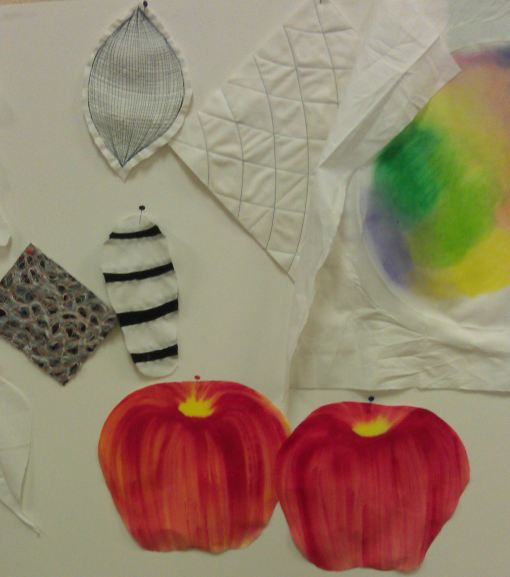
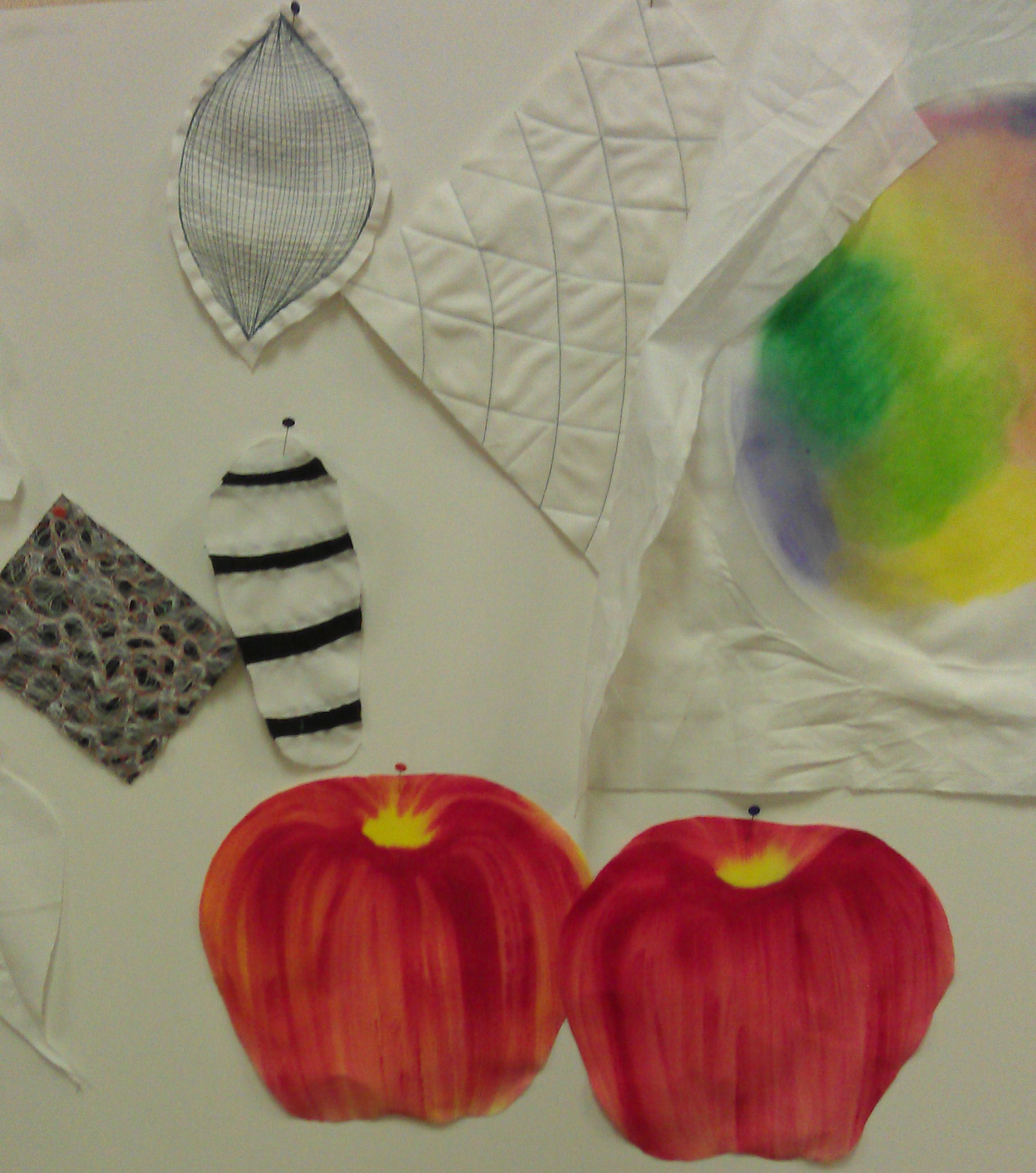
Finished apples

Finished apples. Here are all the pieces I finished today, including the two apples, which weren’t fully dry and will need a press once they are.

So endeth Day 1! We started at 9 am, broke for lunch for 45 minutes, and finished at 4:30 pm. We got a lot done and learnt a LOT. At 4:30 it was time to kick back and share a drink or two with new and old friends.
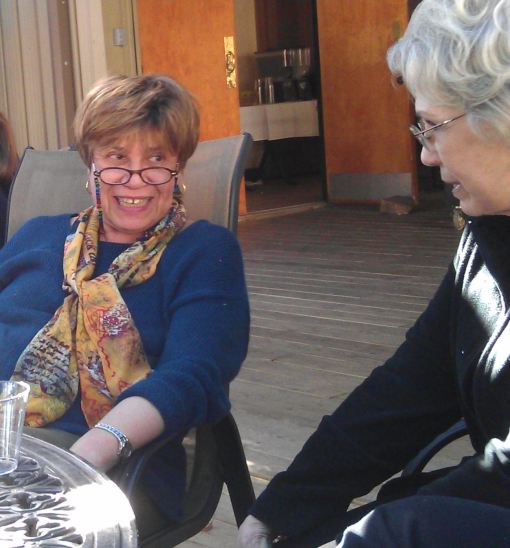
Drinks after a full day - Rayna Gillman and Deb

Drinks after a full day – Rayna Gillman (one of the other tutors) and Deb (organiser)

Kaye (student), Robbi Joy Eklow (one of the other tutors), Yolande (student), and Velda Newman

Kaye (student), Robbi Joy Eklow (another tutor), Yolande (student), and Velda Newman

The Quilt Haus

After dinner, many of us drove into town to go to The Quilt Haus, one of two local quilt stores and one of the sponsors of the week. They have a mini store at the retreat, but their store in town has a huge range of fabric (more than 5000 bolts!). They had some door prizes, and I won a 40 piece 5×5″ charm pack of Tonga Treats batik fabric! Thanks gals!

Food

I can’t finish without talking about the food here. It is great — in both quality and quantity. They sure know how to put on a spread… and a spread is what I’ll have if I ate everything they had on offer! We’re talking three FULL meals a day…

  • Last night’s dinner: Texas BBQ brisket, 1/4 BBQ chicken, green beans, hot sauce, salad makings and dressings, peach cobbler and cream, and other stuff I can’t recall.
  • Breakfast: cereal, yogurt, fresh fruit, toast, variety of fruit juices, pancakes, maple syrup, scrambled eggs, crispy bacon, link sausages, and some other stuff I can’t remember!
  • Lunch: Stir-fry beef, stir-fry chicken, peas, vege medley, salad makings and dressings, variety of freshly baked warm/hot cookies, plus more…
  • Dinner: Chicken cordon bleu, mountains of asparagus, quartered roast potatoes, hollandaise sauce (or similar), salad stuff, dinner roll, carrot cake, and more….

And now to bed. Day 2 starts with breakfast at 7:30 am tomorrow, with our class officially starting at 9, though I suspect many will be starting earlier to finish off their second or third apples.

See also:


Community Quilt 65

23 02 2013

This was another very busy scrappy quilt!

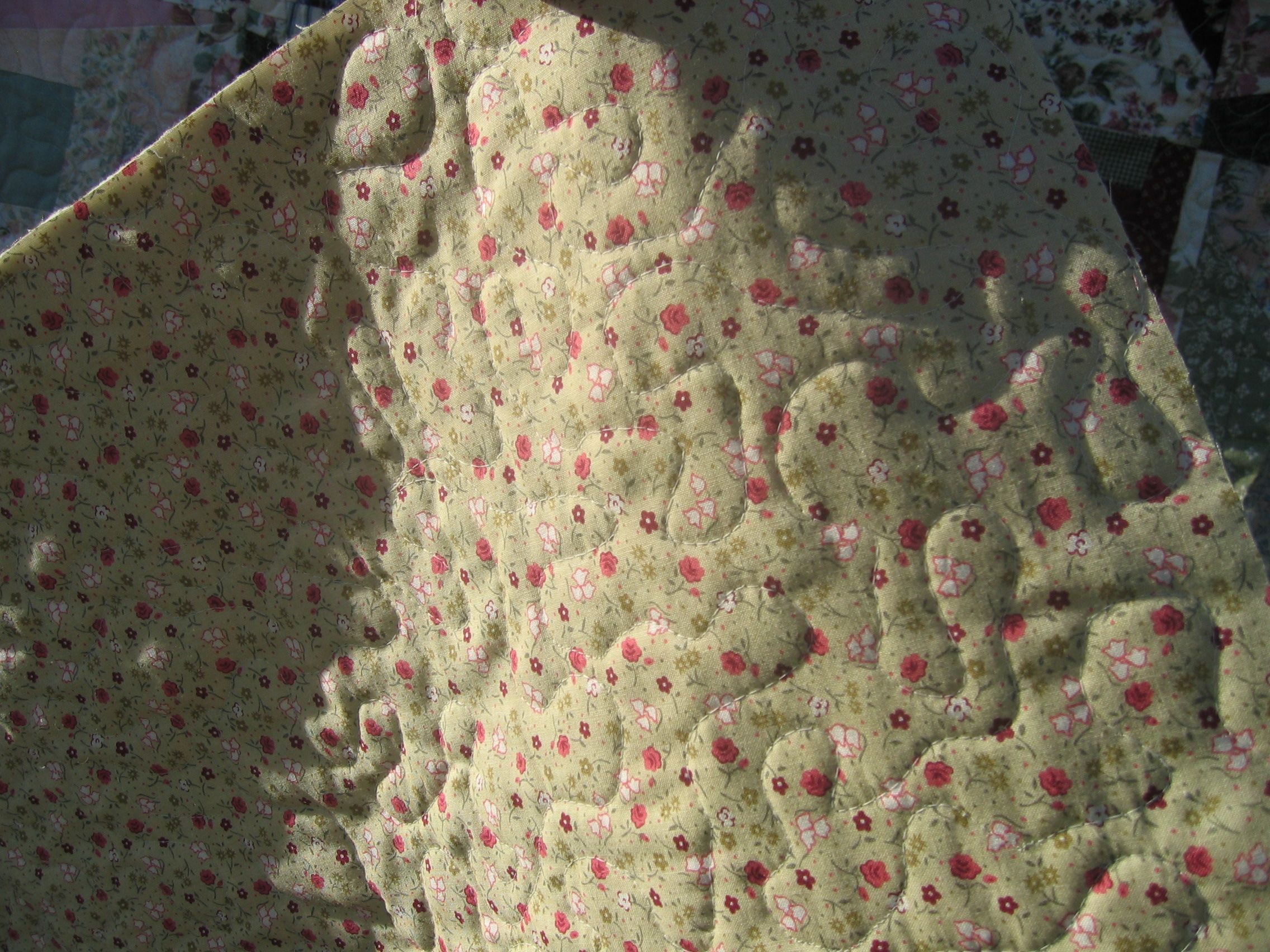
How to quilt it? Well, it was so busy that I didn’t want to quilt anything that was too overpowering, so to soften the angled straight edges of the top’s geometric design I just did an all-over large meandering stipple in a pastel variegated thread (pink, yellow, and blue).

(Click on a photo to view it larger)

quilt65_01

quilt65_02


Back:

quilt65_03

Threads used:

  • Top: Wonderfil Silco in a variegated pastel of yellow, pink and blue (40? wt, cotton; colour #SCM03)
  • Bobbin: Bobbinfil (cotton, white)


Community Quilt 64

23 02 2013

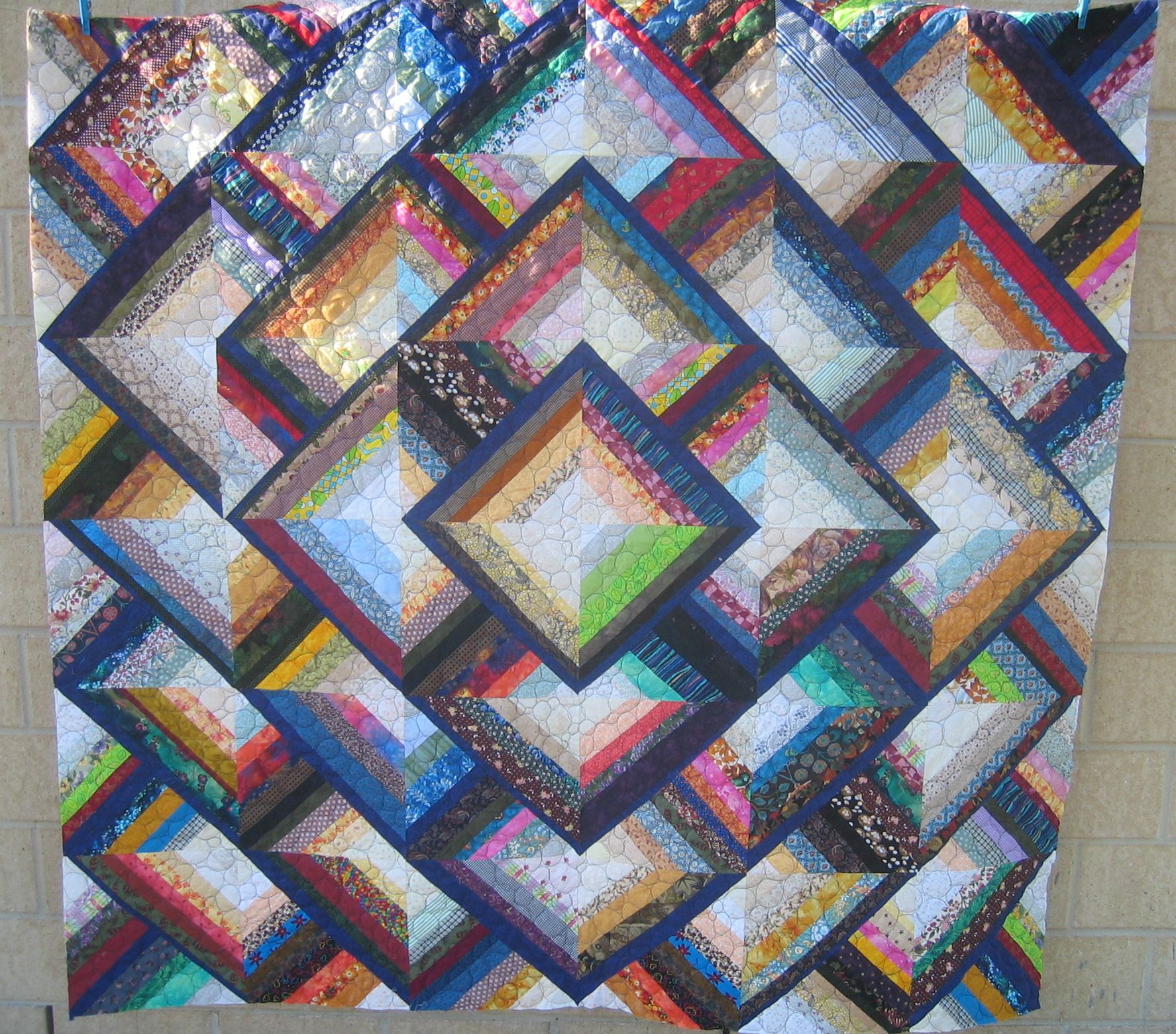
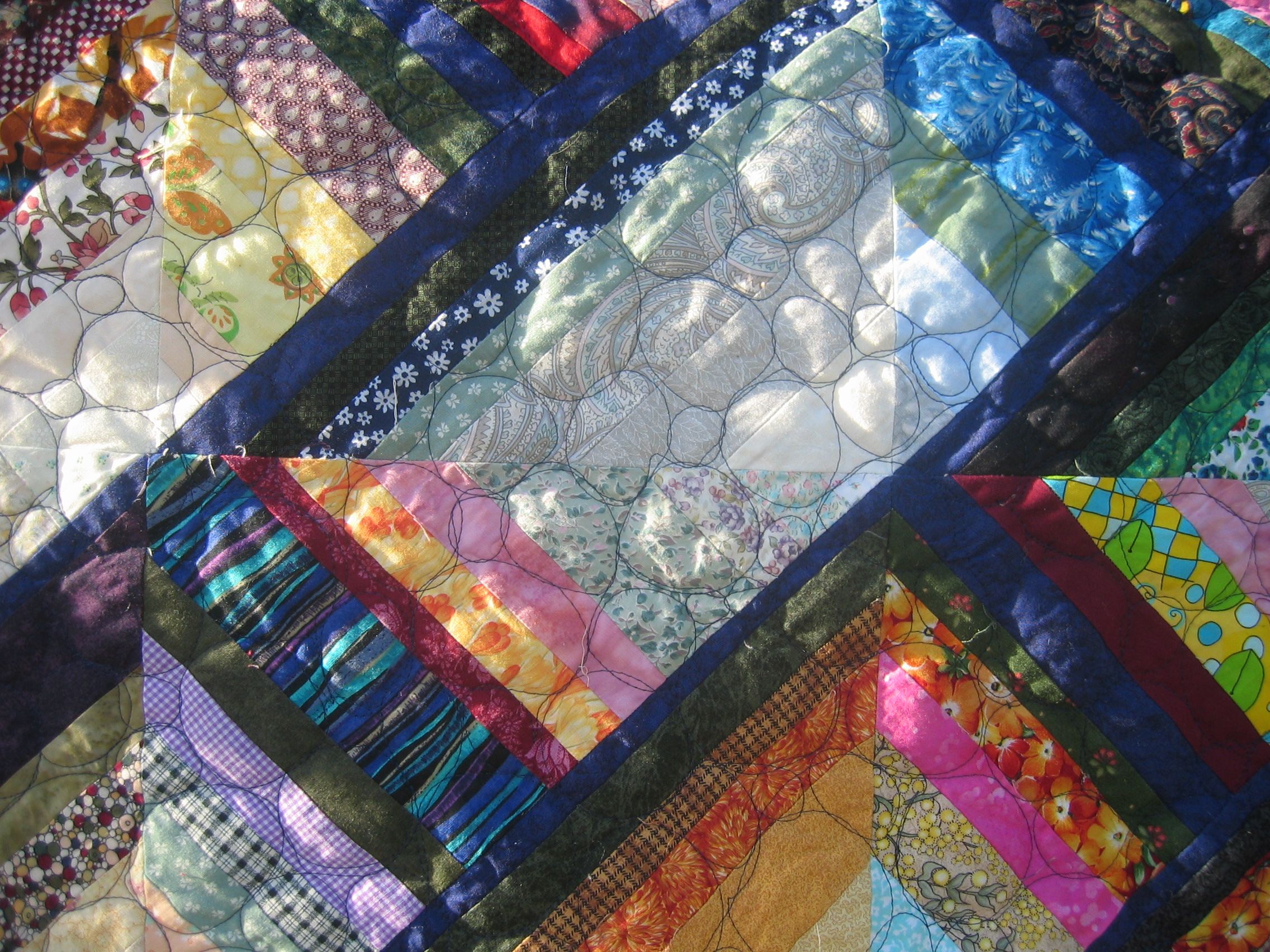
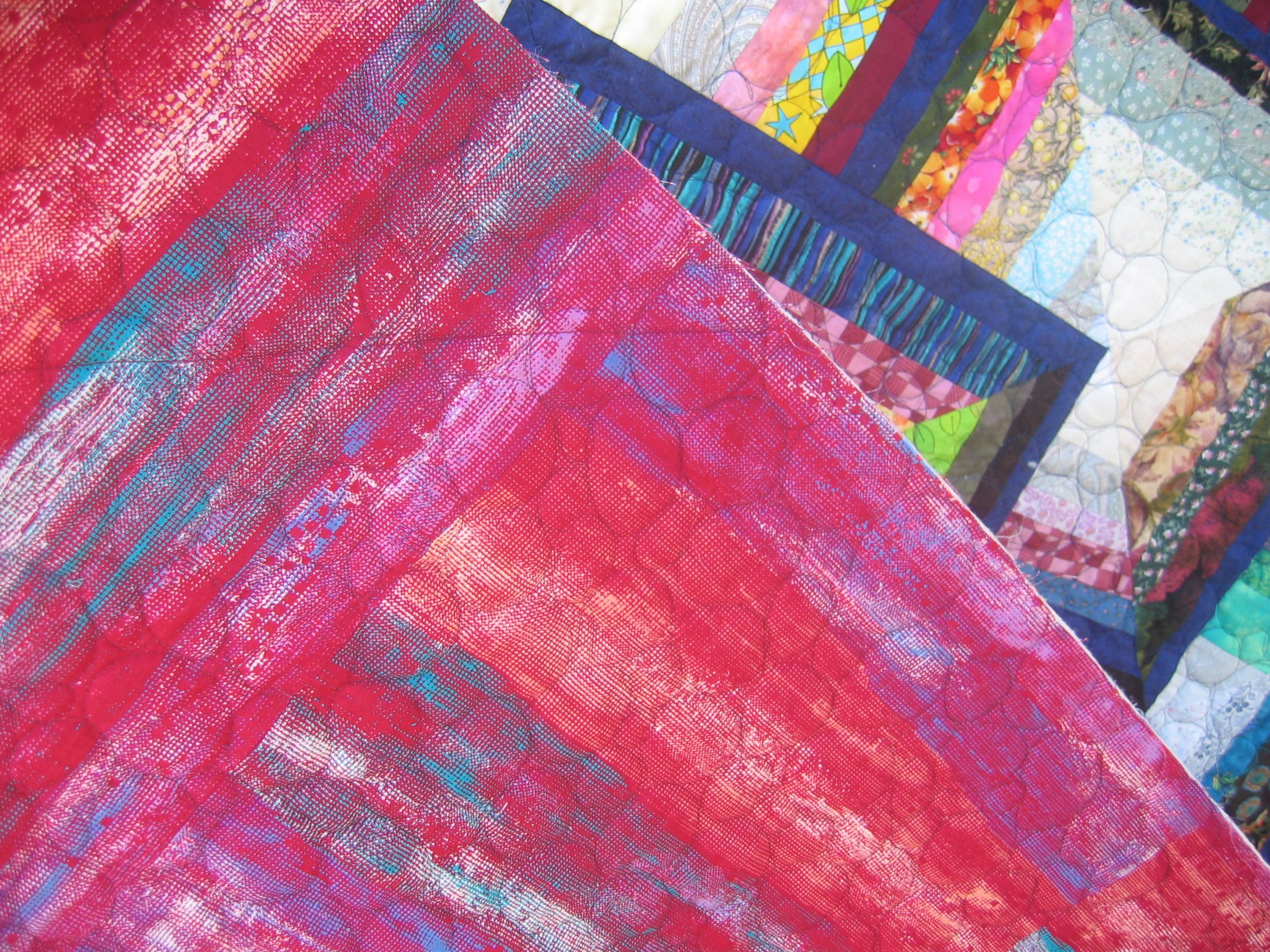
This was one busy quilt! It was all scraps, and in my opinion it looks far better from a distance than it did close up. That’s not to say it was ‘ugly’ — just a real mish-mash of fabrics, prints, and colours, typical of a scrappy quilt. But from a distance, the optical illusion created by the blocks outlined in dark blue is quite striking.

How to quilt it? Well, it was so busy that I didn’t want to quilt anything that was too overpowering; likewise, I didn’t want to just ‘stitch in the ditch’ though it was tempting to do so. Instead, I went for the opposite of the straight edges in this quilt and quilted big circles, bubbles, pebbles — whatever you want to call them. I wasn’t too precious about getting them exact — as you can see from the photos!; the whole idea was to soften the straight edges of the top’s very geometric design.

(Click on a photo to view it larger)

quilt64_01

quilt64_02

Back:

quilt64_03

Threads used:

  • Top:  Fil-Tec Glide ‘Rock Navy’ (40 wt, trilobal polyester; colour #30001)
  • Bobbin: Wonderfil Deco-Bob (80wt, colour DB 245)