Oceania Riviera: Belize City, Belize: Thursday 19 March 2015

26 03 2015

We arrived in Belize this morning and anchored quite some distance from shore. The tenders took about 15 minutes to go each way into the port at Belize City, but from the moment we stepped on board there was a different—and much friendlier—vibe than in Honduras. Don’t get me wrong, the Honduras people we met were lovely, but the Belizeans have a great sense of fun. They also speak English as their main language (Belize was called British Honduras from the 1700s to about the 1970s), with Spanish the secondary language.

Our ship-organised shore excursion was to the Lamanai Mayan ruins via a boat ride on the New River. This was a 7-hour round trip, starting with an hour-long bus ride to the place where we got onto the boat for the hour-long ride along the river to the ruins (the return journey was the same).

It was a hot and humid day and expected to rain. Fortunately, we got no rain. And even more fortunately (for me anyway!), the bus was air-conditioned and the boat ride was mostly fast, so the wind blew away any hint of humidity. The tour guides were great, especially Dino who gave us a potted history of Belize for the first 20 minutes of the bus ride. Adrian, the other guide, was our nature guide for the boat ride, but we didn’t see a lot of animals, so there wasn’t a lot for him to do.

Some general facts and figures about Belize (summarised from what I remember of Dino’s talk):

  • approx 180 miles long and about 80 miles wide, with a total population of about 340,000 (7 sets of traffic lights in the entire country, with 4 sets working, one of which we went through twice!)
  • melting pot of colonisation and resulting cultures—first the Mayans, then the Spanish, then the British. In more recent times, the Chinese have made a name for themselves as the owners of the supermarkets, food shops, restaurants, etc. and there is quite an Asian population here. Mennonites and Amish settled here some time back after being hounded out of Mexico, and now provide most of the dairy products in the country.
  • main industry is tourism, employing about 20% of the population directly and indirectly; agriculture is next. Little mining, though some petroleum extraction industries.

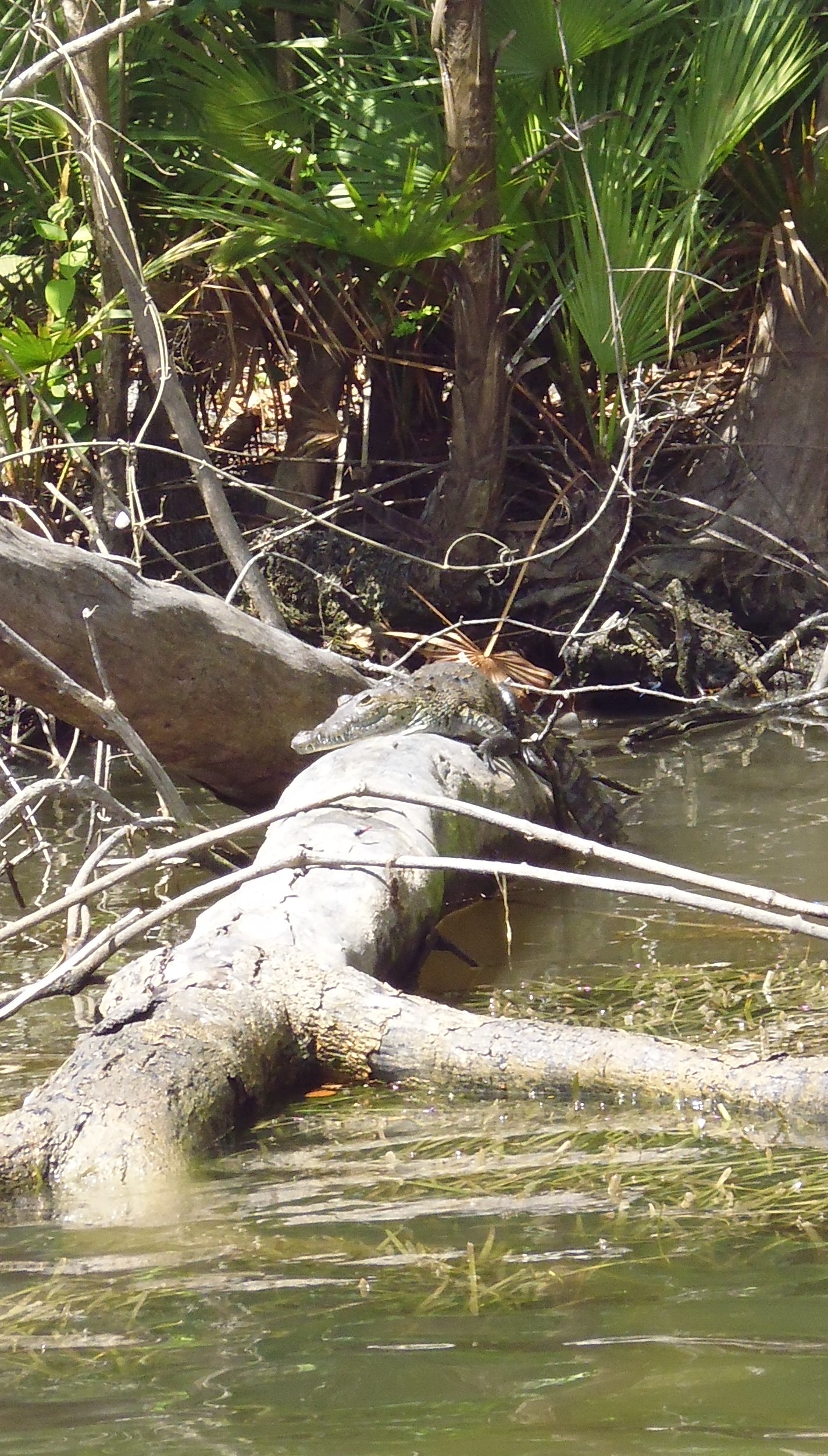
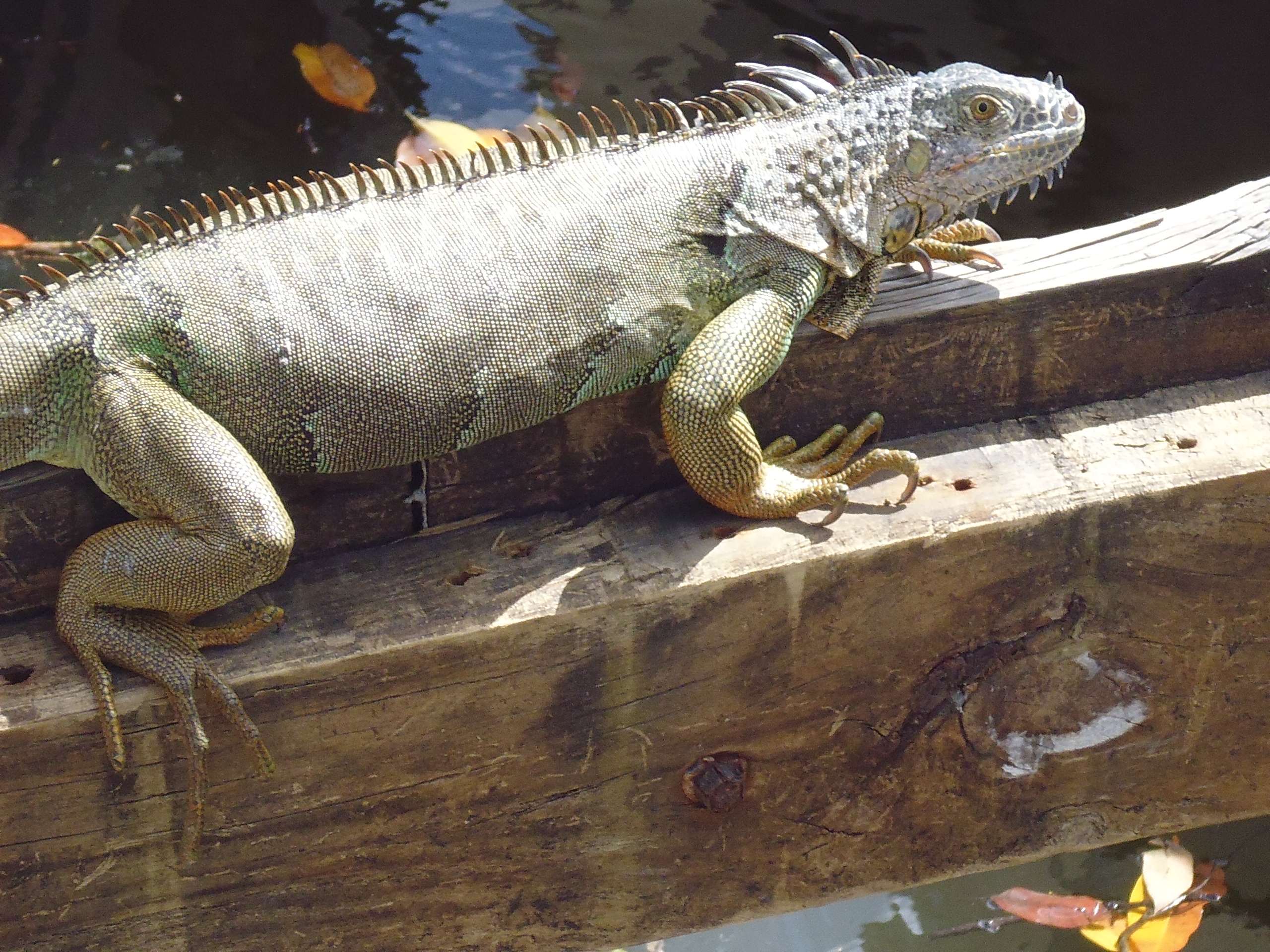
Some of the animals we saw on the boat ride included these birds: white egrets, cormorants, jacana, kingfishers, osprey, and lesser nighthawk; and these mammals and reptiles: howler monkeys (not howling, thank goodness!), one crocodile, and two iguanas at the place where we caught and disembarked the boat.

The river has many many tributaries and diversions and deviations, but our boat captain was absolutely terrific and was able to negotiate his way through with ease and without the use of any navigational device other than his brain. (To show the global nature of world markets, the boat captain was wearing Billabong board shorts, an Australian brand!) The river is surrounded by thick vegetation, and many plants have epiphytes (‘air plants’) attached to them. And along the way, there’s a settlement of Amish whose farms we saw and some of whom we saw fishing in the river on the return journey.

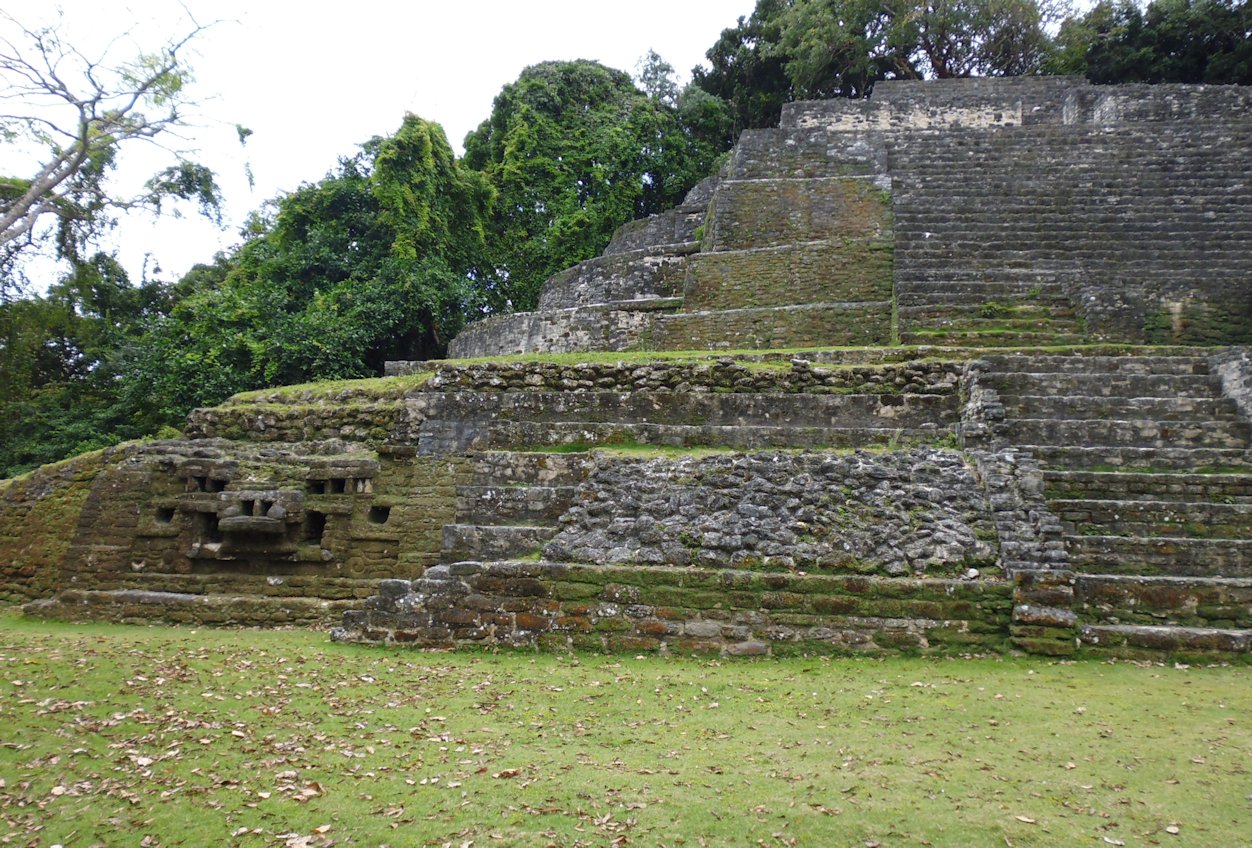
We got to the ruins about noonish, and it was SOOOO hot and humid…. I discovered sweat glands in places where I never knew there were sweat glands. By the time we got to the first ruin (a couple of minutes easy walk), I was soaked with perspiration and feeling very heat stressed. This was the Jungle Temple and those feeling energetic could climb it. Not me! I was happy to keep my feet on terra firma and let others climb the steep stone staircases to the top! (no hand rails!!).

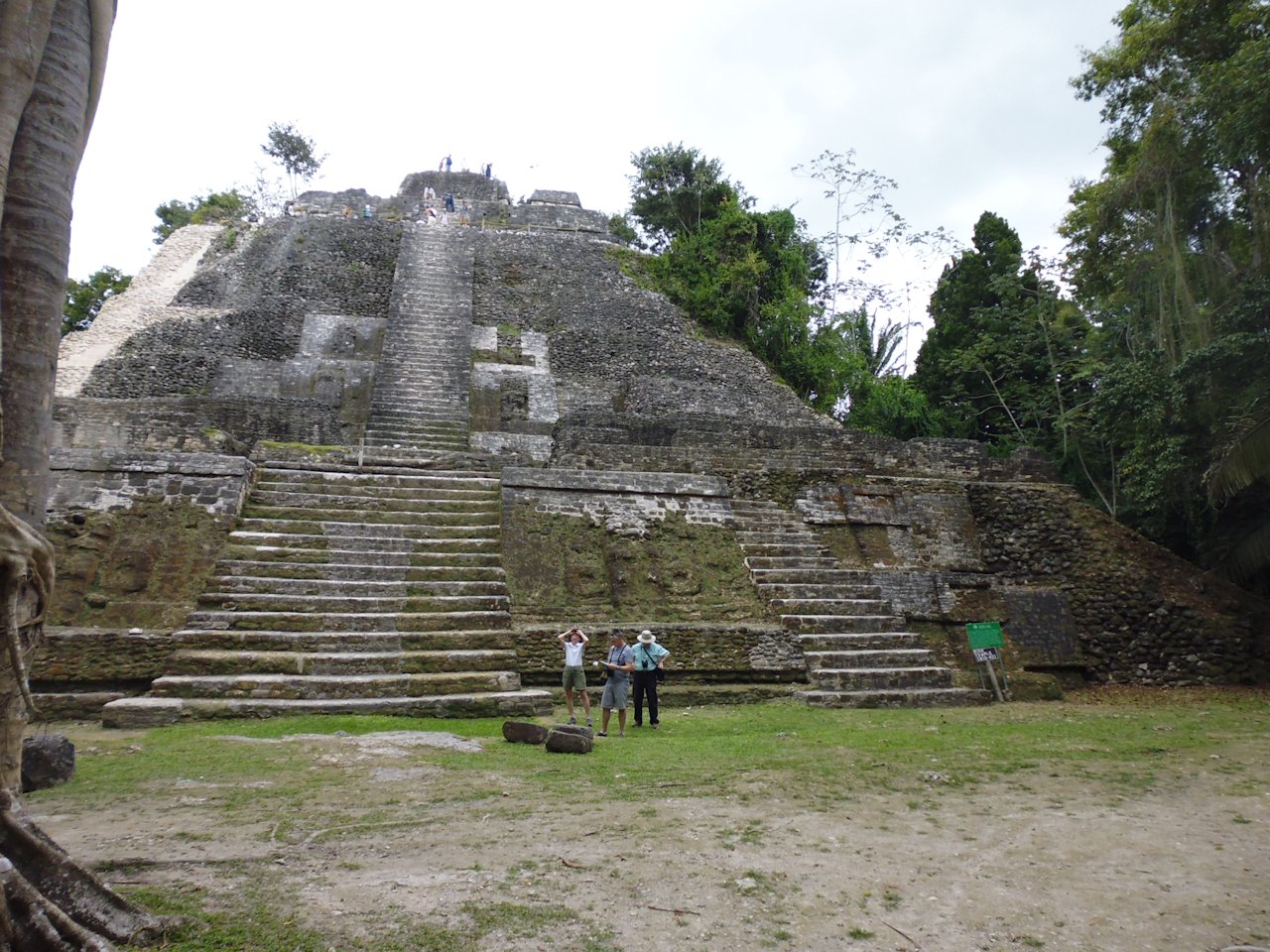
After another short walk through the incredibly lush vegetation on each side of the walking path (I would have appreciated it much more had I not been dying of heat and humidity!),we came to the Ball Court and the High Temple behind it. Again, those without a fear of heights and a game stomach and who weren’t dying in the humidity could climb it via a staircase at the side. The rest of the group remained behind on the benches!

The final stop was the Mask Temple, which you couldn’t climb. And then it was a 15-minute walk on the neat, clean and tidy walking paths back to the boat for the ride back to the drop-off place for a late (2pm) lunch (chicken with rice and beans cooked in coconut milk—really lovely).

Many people slept on the bus ride back into town—not me; I was more interested in what was going on in the slice of life I saw outside the bus windows.

After a quick stop at the duty free area at the port, it was back on the tender for the return trip to the ship.

Dinner tonight was at the Terrace Café . We were so tired we went to bed pretty much straight after (well, after I had processed my photos for the day and written this blog post that will be published after we return).
P1040039

P1030951

P1030953

Snake plant

Snake plant

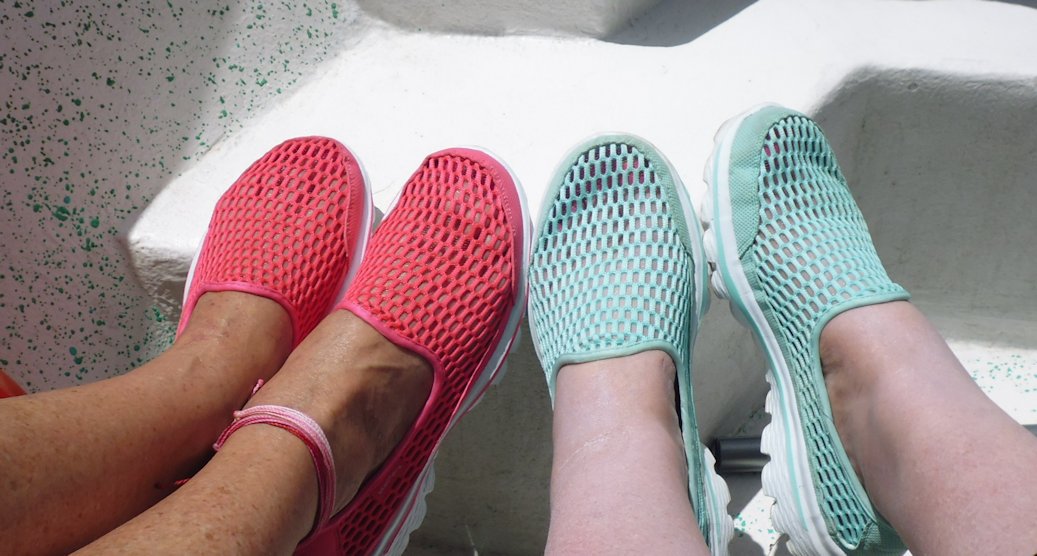
Skechers Go Walk shoes (mesh). BEST. WALKING. SHOES. EVER.
Skechers Go Walk shoes (mesh). BEST. WALKING. SHOES. EVER.

Jaguar Temple
Jaguar Temple

High Temple

High Temple

Mask Temple
Mask Temple


Oceania Riviera: Trujillo, Honduras: Wednesday 18 March 2015

26 03 2015

Overnight we cruised from Cozumel to Trujillo, Honduras, arriving there around 10am. The wind was up a bit, so there was some gentle rocking and rolling overnight, but nothing to be concerned about—sufficient to gently rock you to sleep.

We anchored offshore at Trujillo. This place has only been hosting cruise ships for the past six months (since October 2014), so there’s no pier for ships to dock at, and not a lot of tourist infrastructure beyond the port. We were tendered to shore on our lifeboats, and then, as we were on a ship-based shore excursion, we were directed to our tour bus for our trip to Campo del Mar Nature Park, which has only been open a few months too. The bus ride was over some very basic roads.

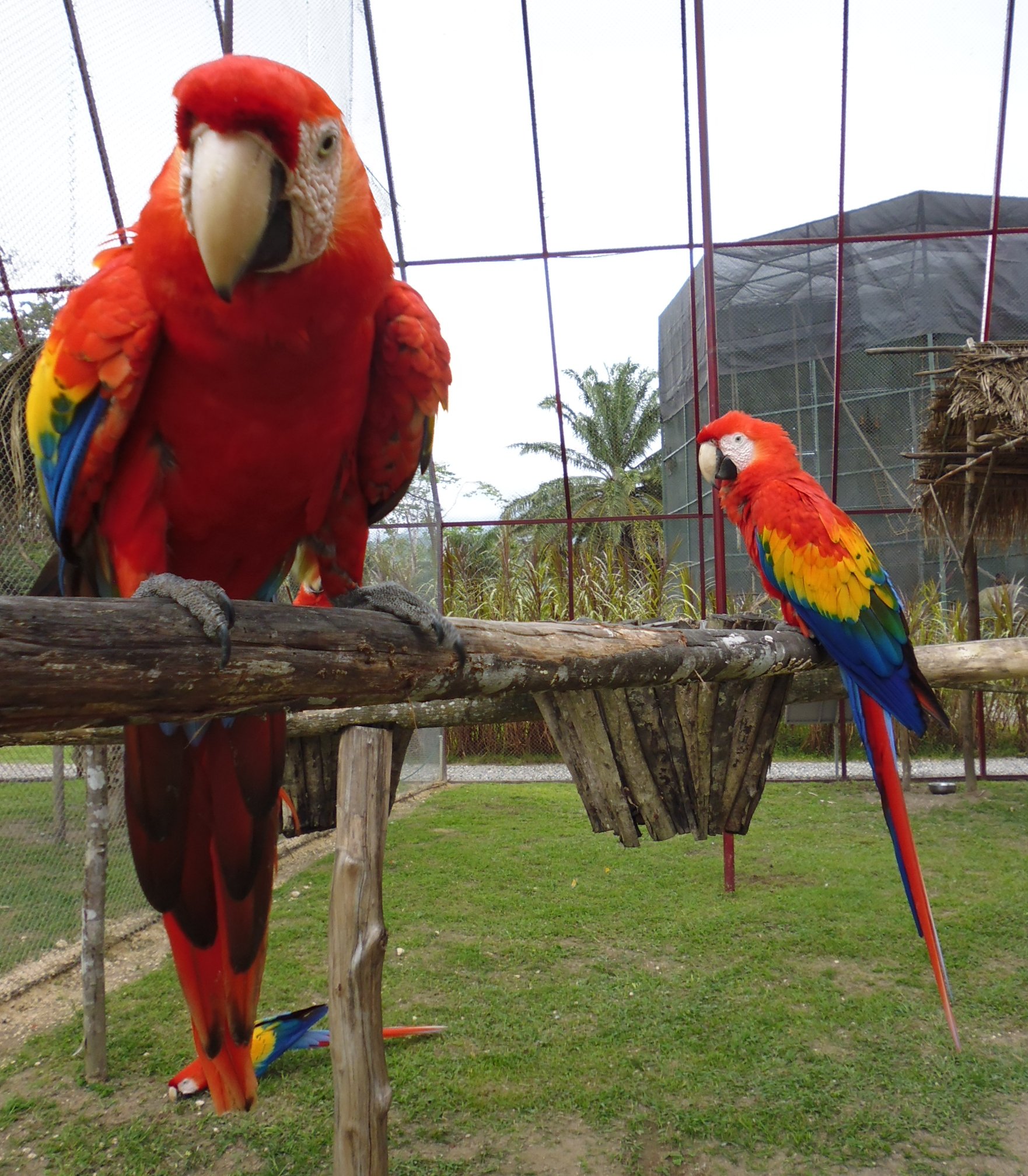
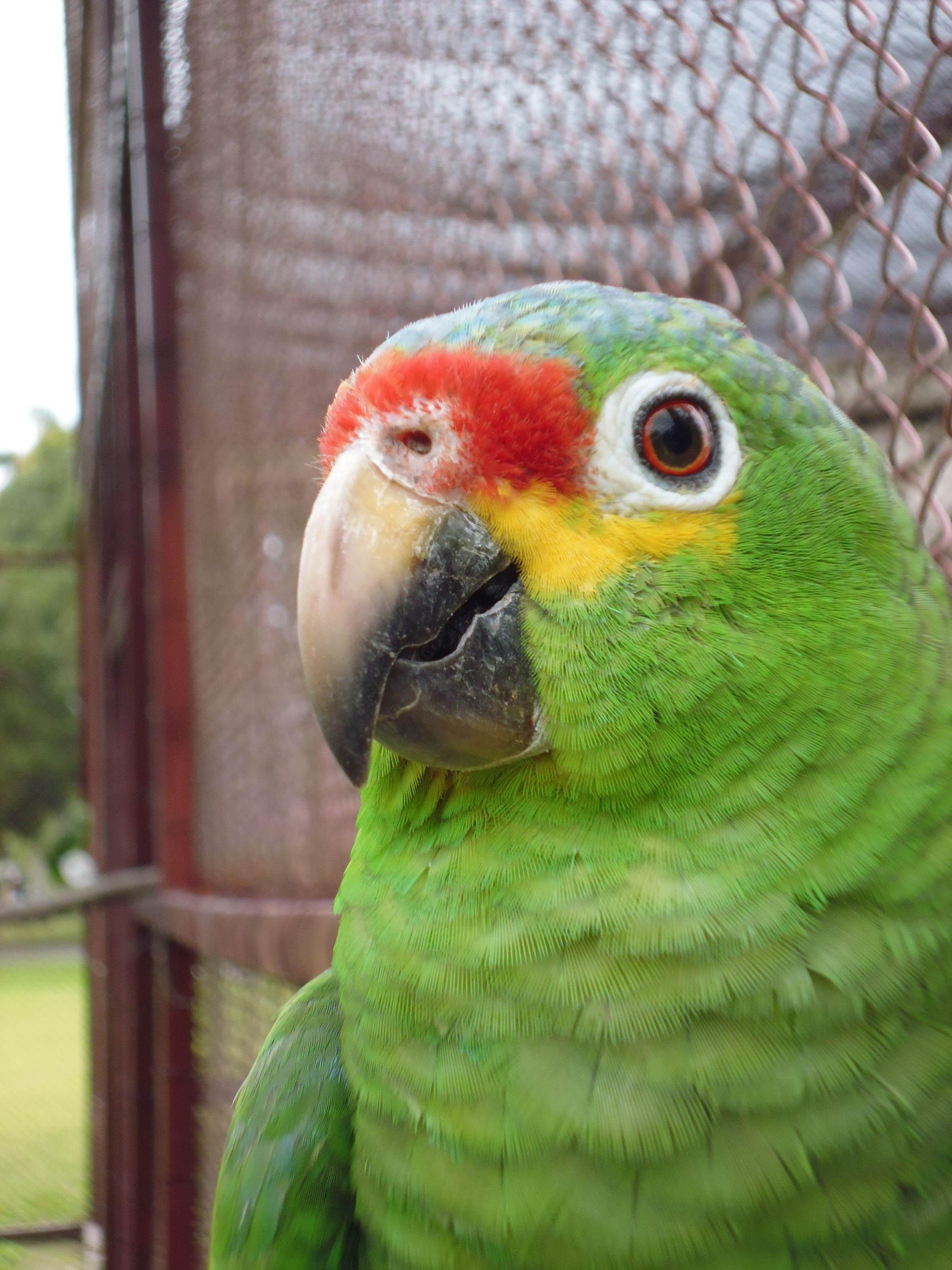
At the nature park (which is very well manicured), we went on a 2+ hour guided walking tour of the main tropical food plants (jackfruit, cashews, mangos, papaya, bananas and plantains, pineapple, and many more) and the ‘sort of’ botanic gardens. After that, we saw the cages where they keep some rescued animals and birds. Our guide was at pains to emphasise that these cages were NOT a zoo, but were only a place to keep rescued animals until they could be released into the wild (if that was possible—some animals were rescued from private situations and would never survive in the wild). They had some different varieties of monkeys (white-faced capuchins, howlers, and spider monkeys), some other mammals (coati, 2-toed sloths [unable to be seen]), and some tropical parrots, including the scarlet macaws that are native to Honduras and are the country’s bird. The macaws, especially, were just beautiful. Almost none of the plants were currently in season, and some of the newer and smaller plants were looking a bit straggly. Our guide was very informative and spoke very good English. The headsets he gave us to use to listen to him speak were brilliant as we could wander off a bit and still hear every word he said to the group. They sure saved him shouting, and/or gathering together 50 or so people to listen at once.
After we were dropped back at the pier, many people went back to the ship, but we stayed and grabbed a taxi to take us to the central market square. Well, that was an exercise in communication. Fortunately, Sue speaks a little Spanish, and the driver spoke a little English, so we were able to communicate to a degree. We saw plenty of the back streets, and went past the market three times before he stopped and we got out to check out the wares of the local artisans. I never felt in any danger, but I was concerned that we seemed to be going around in circles because of the communication issues.
The back streets of the town showed how ill-prepared the town is for cruise ship tourism. Roads are in a bad state of disrepair (big holes in the middle of some roads; chassis-twisting lumps and bumps in many others; detours; etc.), and there are few paved roads in this town of some 50,000 people. Electricity supplies look very basic, and there are few hotels and restaurants. Taxis are plentiful near the port, but the state of the vehicles leaves a lot to be desired. English—the language of much tourism—is not spoken by many people. In many ways this is a third-world country trying hard to make a go of it with cruise ship passenger dollars.

No doubt the nature of this town will change dramatically over the next 12 months or so with the influx of tourism. This sort of change is a double-edged sword—those in the tourism industry will prosper, while those outside it will battle to make minimum wage (currently about US$60 a week, with the average wage about US$100 per week, according to our guide). Hotels and restaurants will pop up, bringing with them western values and goods and services. Homes along narrow roads may well be resumed to make way for wider, 2-lane paved roads, with subsequent displacement of those who live in those homes. The infrastructure will try to keep up with the demands made on it (roads, water supply, waste disposal, electricity, telecommunications, etc.), and likely have problems doing so. People who have livestock (we saw pigs, goats, sheep, horses, and cattle) roaming in their yards may well be asked to keep the livestock away from the front of the house if it is on a tourist route.

And after all this money is spent on infrastructure, if the cruise ships decide not to come here any more, it will all be for nothing. Trujillo is not on the main tourist map. According to our guide, it’s three hours to the nearest airport that services other parts of the Caribbean and eight hours to the nearest airport that takes people to international destinations. (I assume those times are based on how long it takes to drive, and, based on our experience of the local roads, a short journey by western standards [e.g. 30 minutes] may well take three hours in this part of Honduras.)

I was cognisant that just being tourists here, gawking into people’s homes and yards from the air-conditioned comfort of a tour bus and waving at the children waving to us, we are contributing to the problem—and possibly the solution too. Every tourist dollar spent in the local community hopefully goes back into that community and ultimately does good for the people who live there. But I’m not so naïve to think that that is the case, or will always be the case even if it is now.

Back to the cruise…

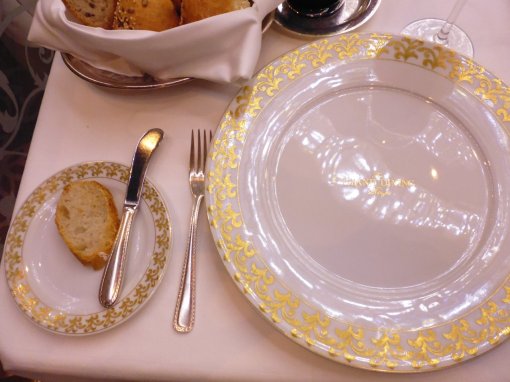
Once back on board ship, we relaxed for a bit, had our afternoon canapes on the balcony of our stateroom while watching the Trujillo town start to light up for the evening, then had dinner for the first time in the Grand Dining Room. And very grand it is too! Full-on service and superb food (the sweet barbecued pork chop I had was the second best pork chop I’ve ever had in my life!). The surroundings were opulent and sumptuous, as was the food. Just brilliant.

We had no room for dessert!

We reset the clocks again tonight (this is the third clock reset we’ve had in as many days, with another one to come at least—some places are on daylight saving time and some aren’t, and there’s at least one time zone change between the places we’re visiting.

P1030817

P1030821

P1030844

P1030856

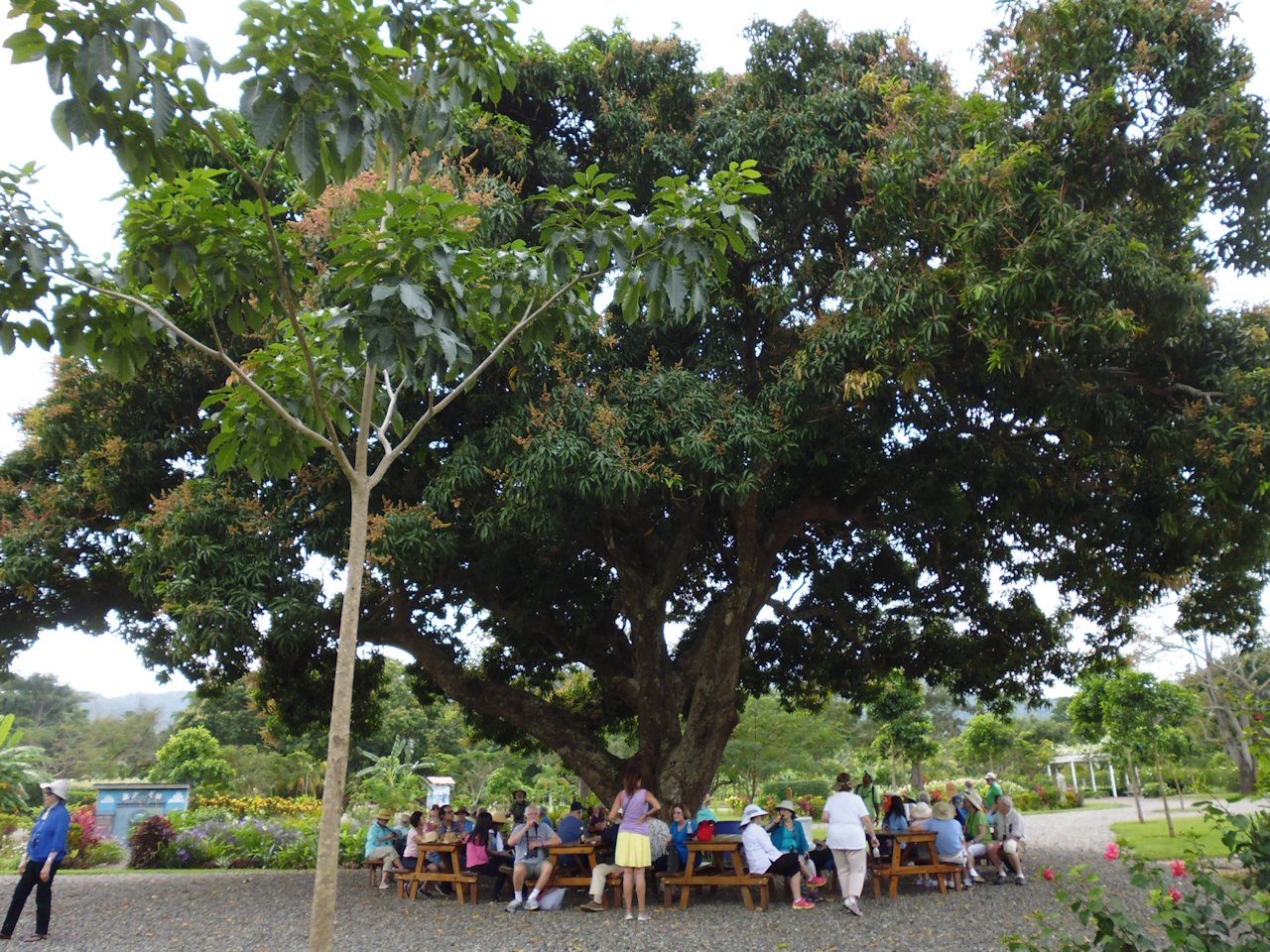
This is a ‘candy’ mango tree — it’s MASSIVE!

P1030861

P1030867

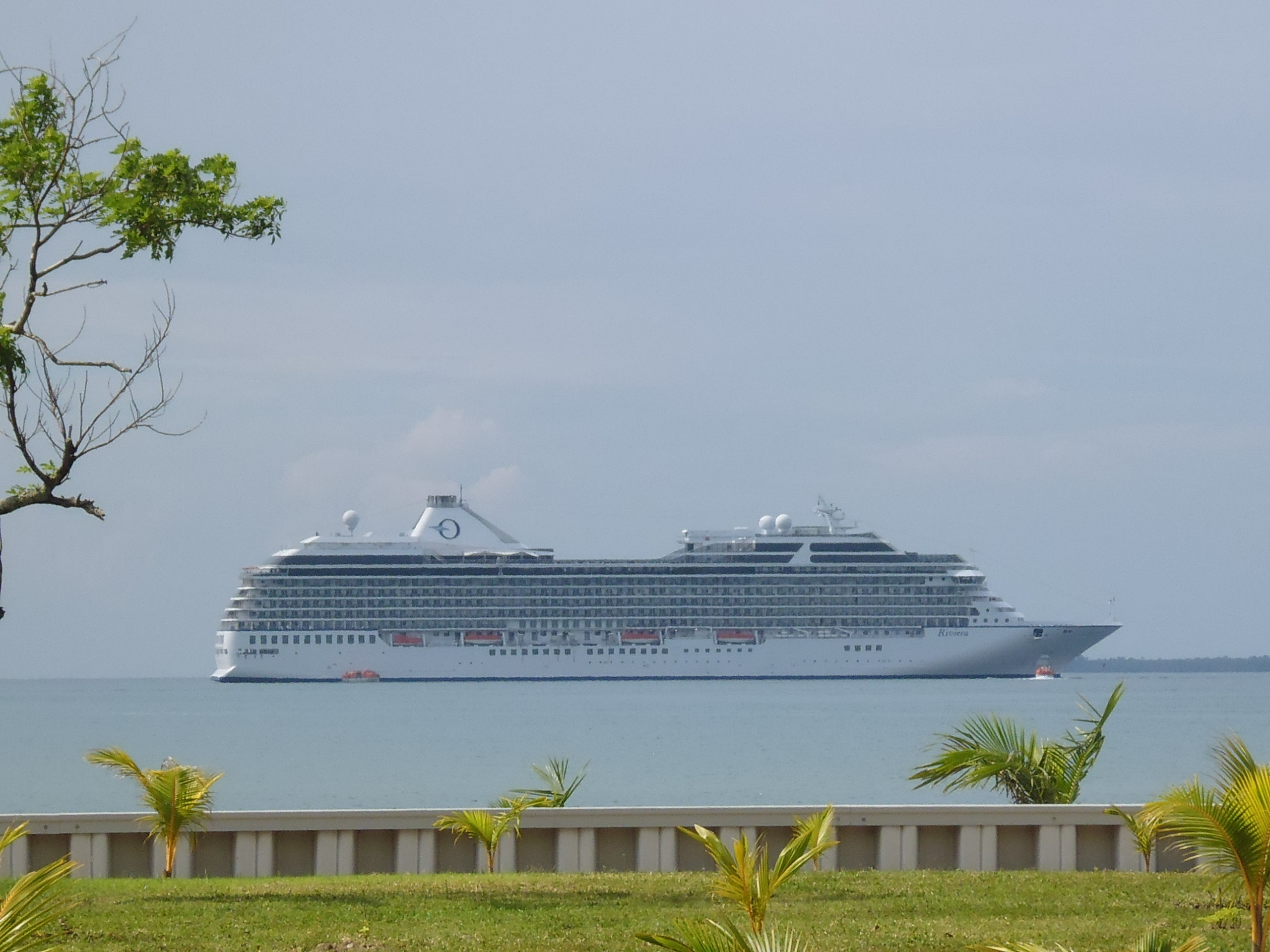
The Oceania Riviera, a 1250-person (max.) cruise ship

The Oceania Riviera, a 1250-person (max.) cruise ship

P1030898

P1030900


Oceania Riviera: Cozumel, Mexico: Tuesday 17 March 2015

26 03 2015

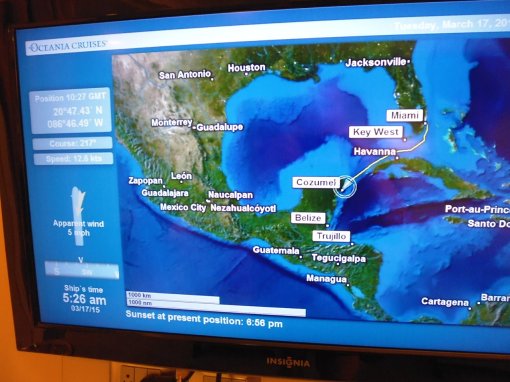
Before dawn, we spotted several other cruise ships nearby, all heading for Cozumel. Eventually, there were six in port for the day.

P1030731

After seeing the dawn break over the ocean, breakfast was served in our room by Jemeesh at 6:30am. We were due to arrive in Cozumel at 8:00am, anchor for the day, departing at 5:00pm.

P1030724

P1030745

We were right on time, and those departing the ship met in the Riviera Lounge to get our tickets for the tenders. It all went very smoothly, and we grabbed a cab once we were onshore to take us to Nachi Cocom, a private beach resort some 20 km south of Cozumel.

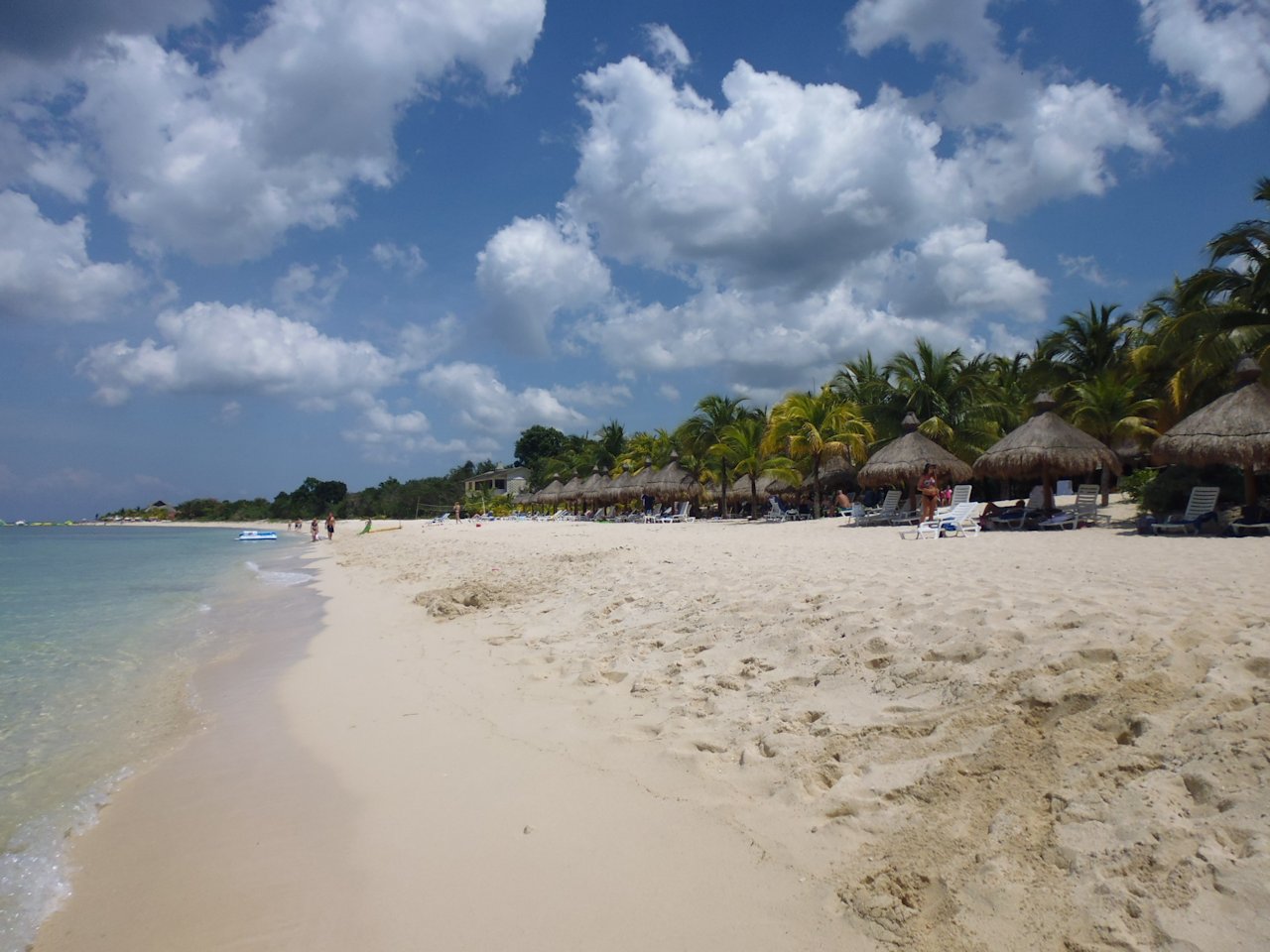
Supposedly Nachi Cocom only takes 100 guests, but just after 9am, I did a quick head count of just those on the beach under the palapas (thatched shade structures) and in the water and there were already more than 60 people (they open at 9am and it’s not a hotel, so no-one can stay there overnight). More came over the next hour or so, so I think they lied about the ‘maximum 100 guests’. The US$55 rate is an all-inclusive rate, except it’s not. It includes all drinks (including alcoholic drinks) and food, use of the pool, beach palapas, and lounges, but not the water activities or the mats you can put on a sun lounge to protect your butt (US$7 per mat per day). We had no intention of drinking much or any alcohol, so that part was a bit wasted on us – not so on other guests, many of whom were well and truly getting into the booze in the hot sun at 9am…

When our lunch came (we ordered off a menu), it was a MASSIVE amount of food. And it all came at once, so we got everything we ordered served on one tray. The food was good, and the salsa was exceptional. However, the cheese enchiladas Sue ordered were actually chicken, so she couldn’t eat them.

P1030757

Our waiter, Carlos, was serving too many people so we got missed for drinks (fruit juice and bottled water) several times, and our food remnants weren’t picked up as they were for others. If you were into drinking alcohol and eating LOTS of food, this place would be good value. While the location was perfect, I felt the lack of service and the possible exceedance of the 100-person limit detracted from the day.

The palapa we were under offered plenty of shade for this pale body.

As far as the beach goes, it was very clean, as was the crystal clear water—a picture-postcard perfect Caribbean beach.

IMAG2325

P1030749

P1030764

P1030769

P1030779

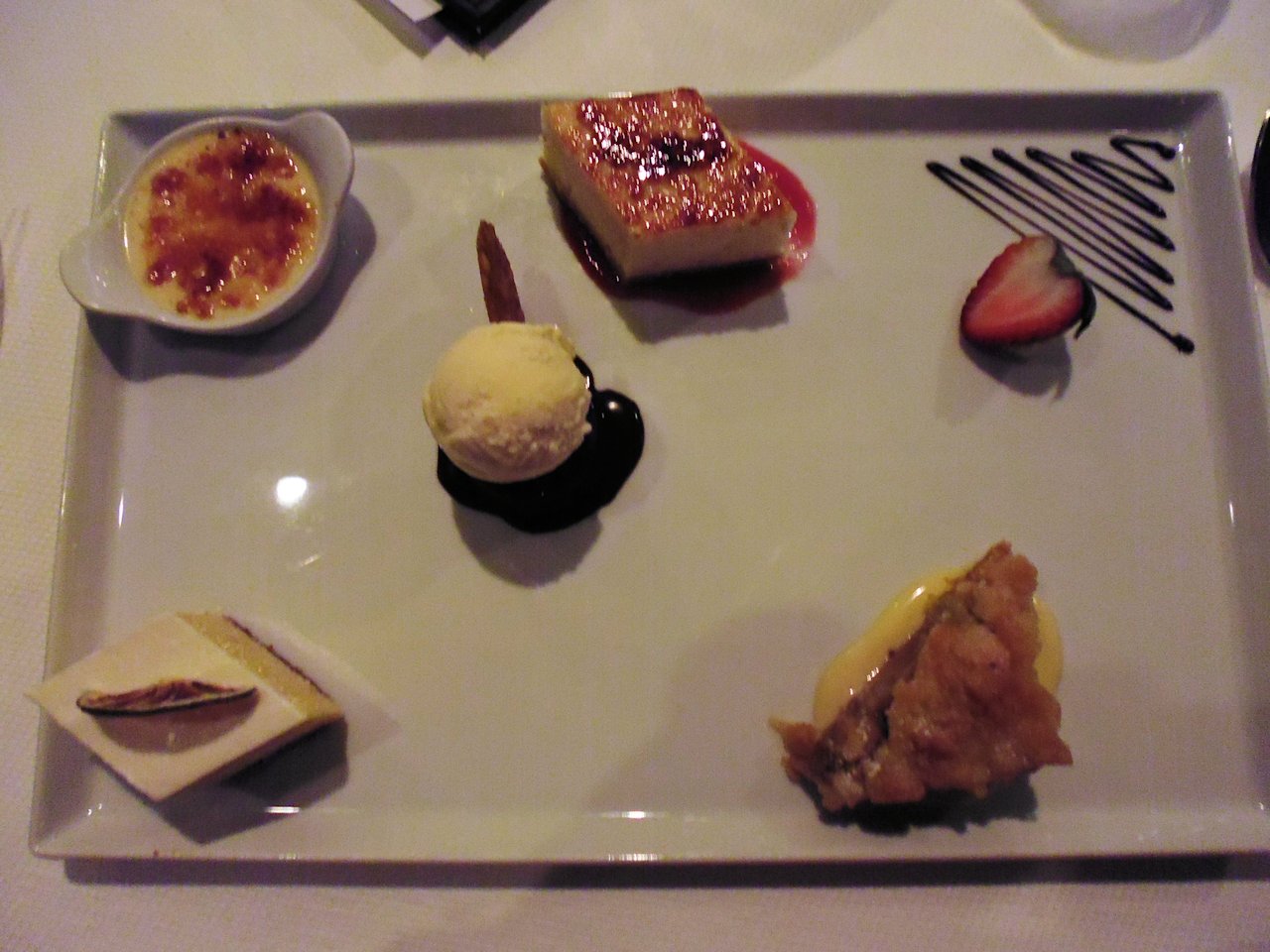
On our return to the ship, we were served our afternoon canapes as we were leaving port (5pm), and then had dinner with two other ladies in Toscana, the specialty Italian restaurant. The food was excellent and the service was amazing. Similarly to the Polo Grill, Toscana offered a quintet selection of their desserts, which was a great way to have a taste of various delicious dessert offerings.

P1030813_Toscana

The ship was less smooth this evening – a small amount of rocking and rolling, but you get used to it. It’s very gentle for rocking you to sleep at night 😉


Oceania Riviera: Miami to somewhere near Cuba: Sunday and Monday 15 and 16 March 2015

25 03 2015

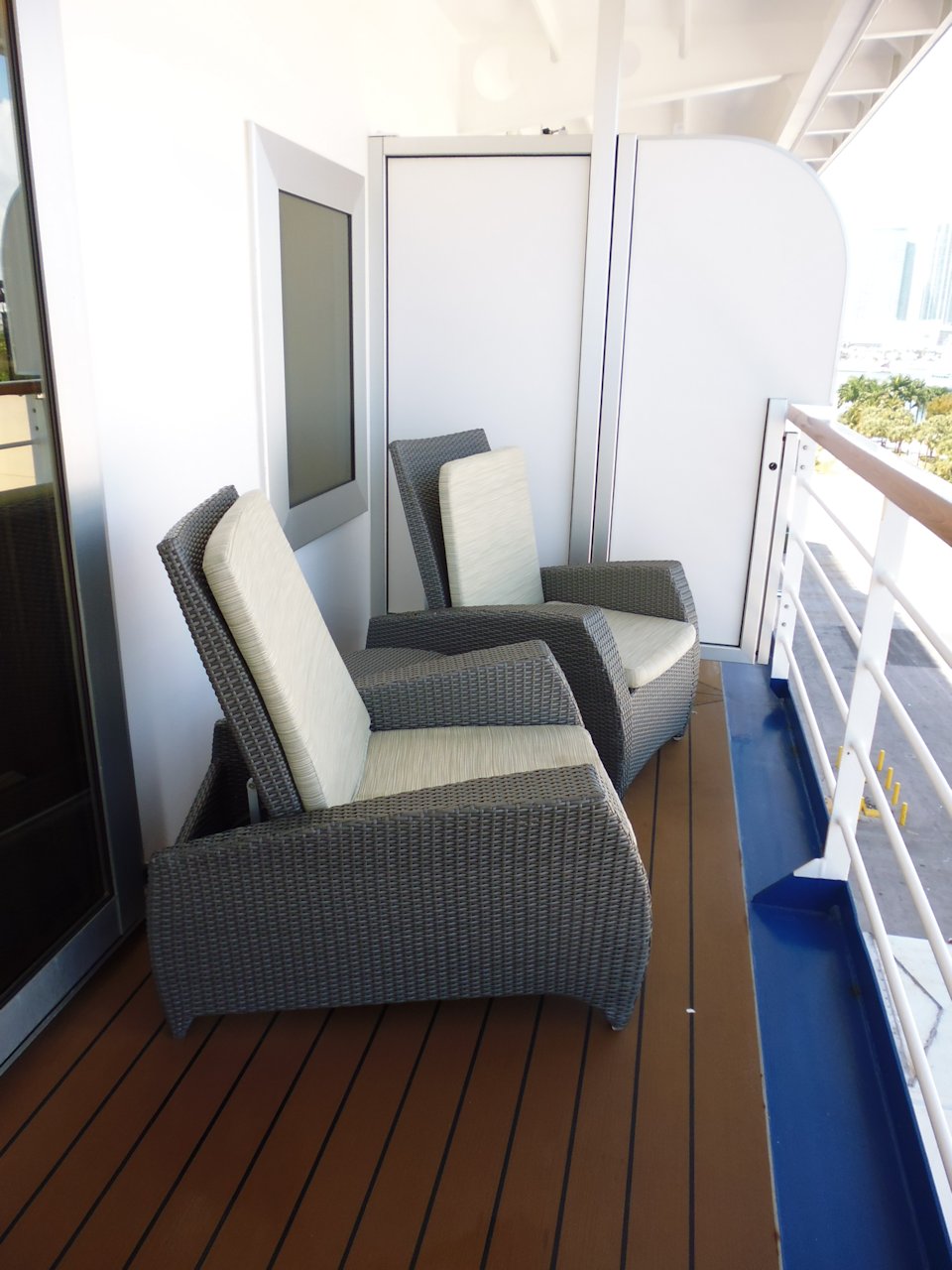
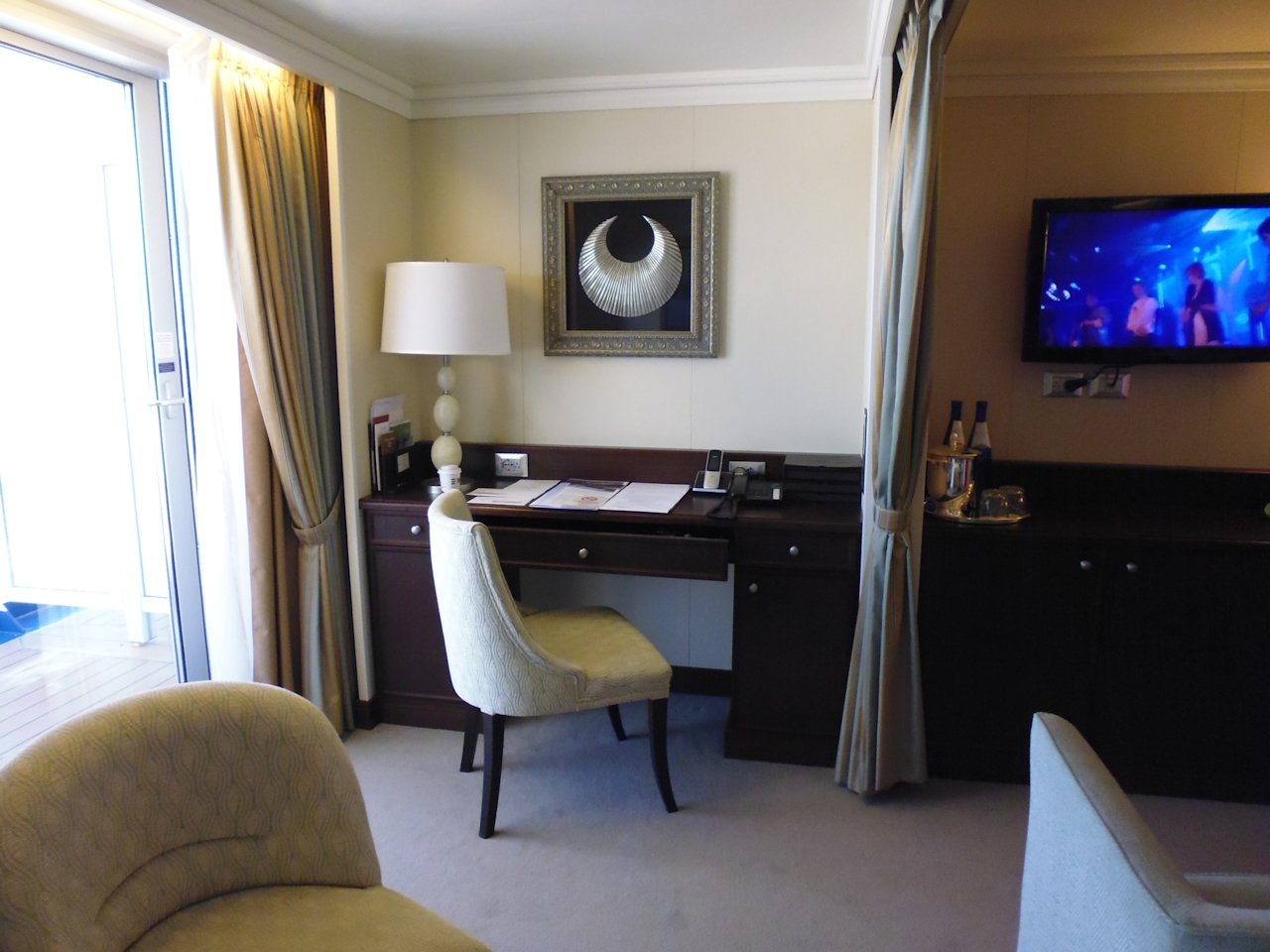
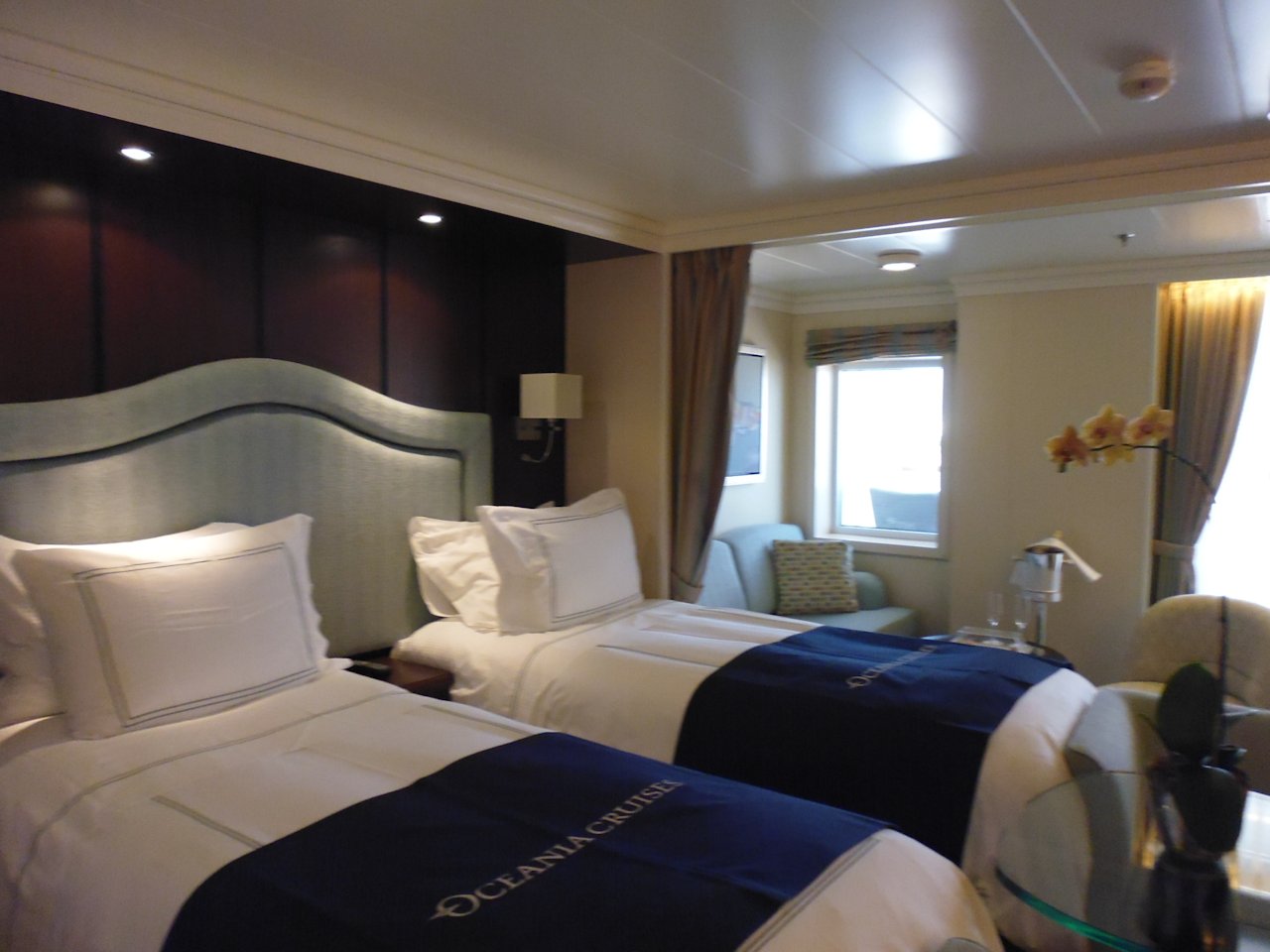
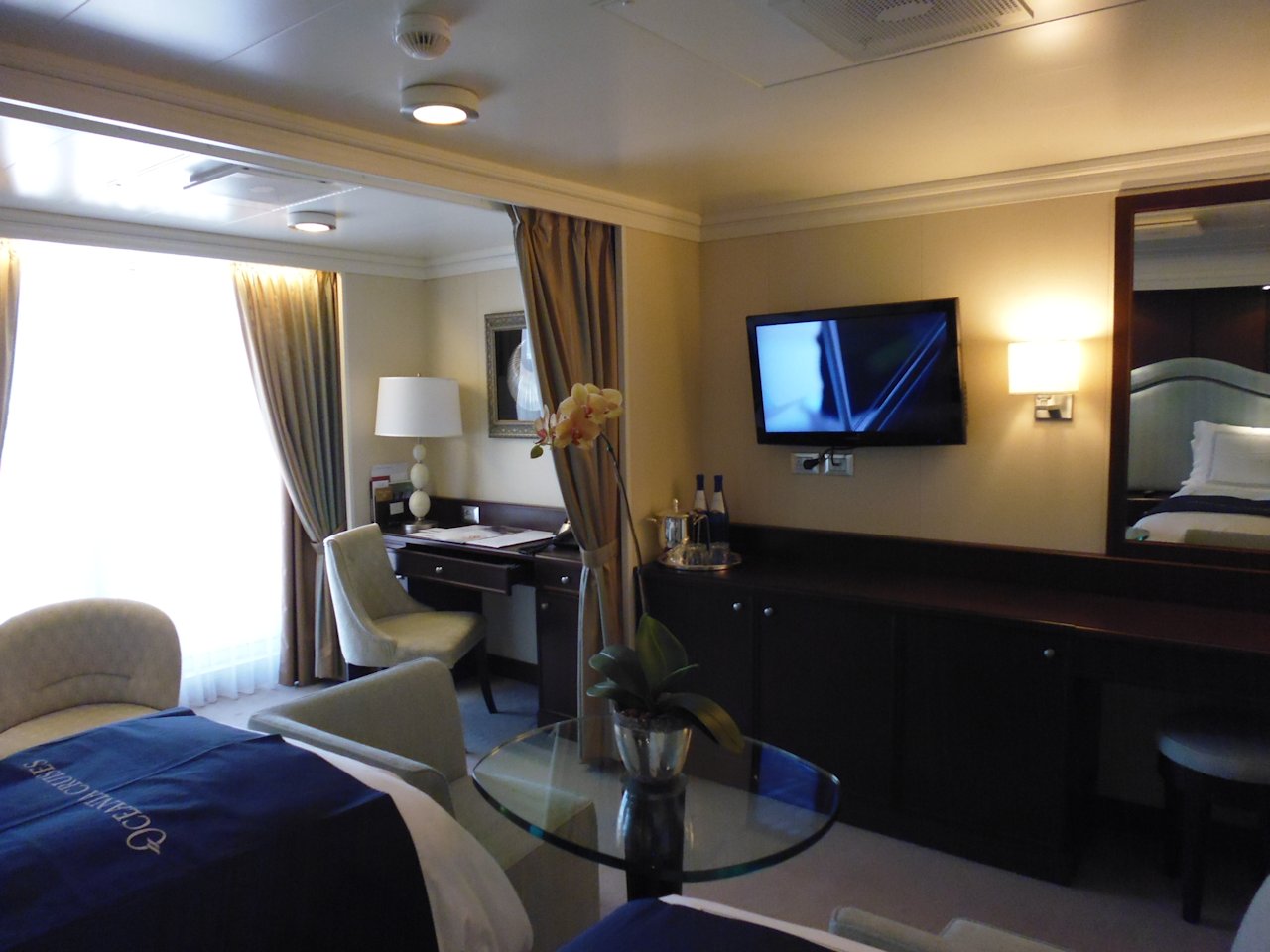
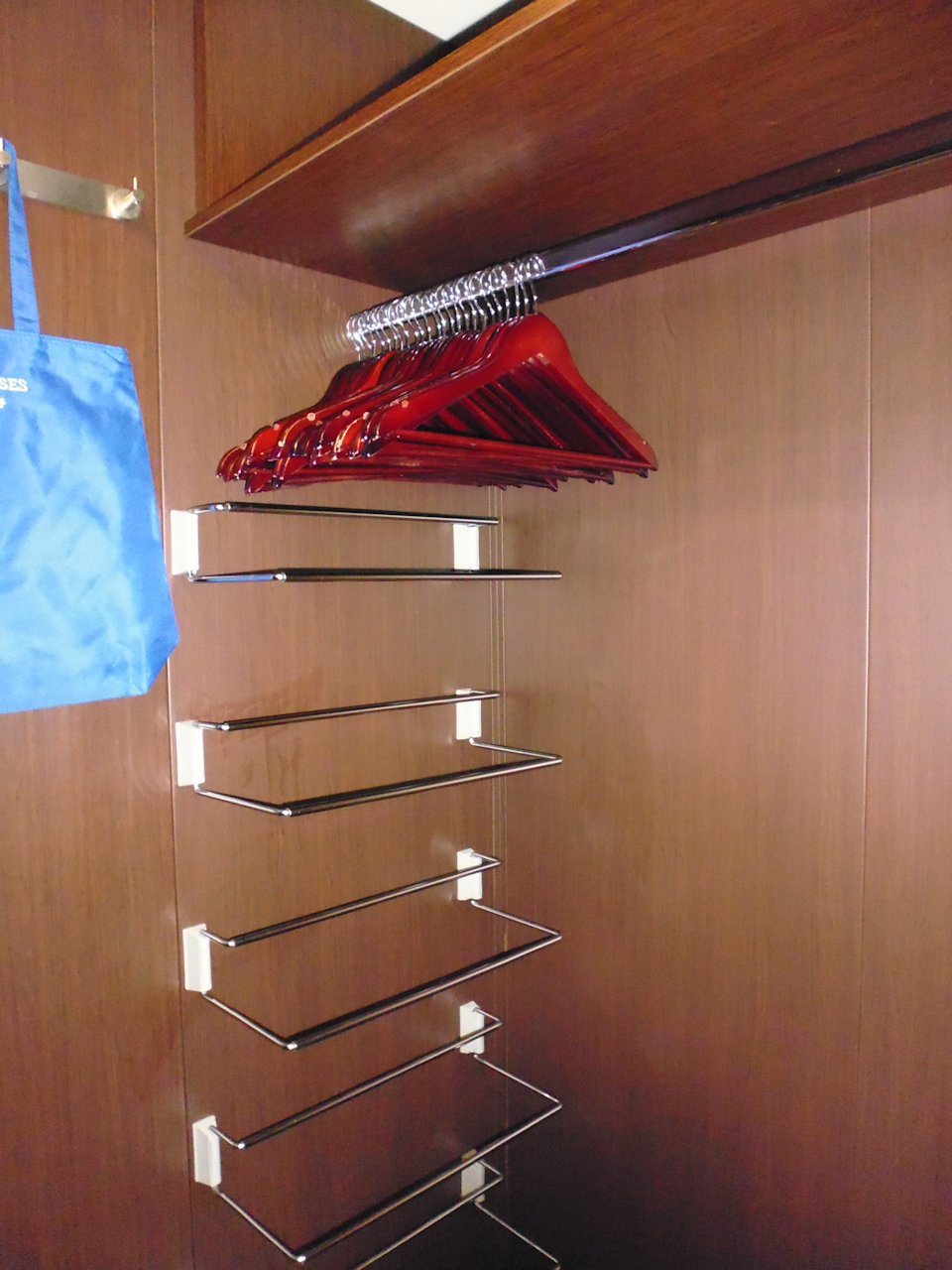
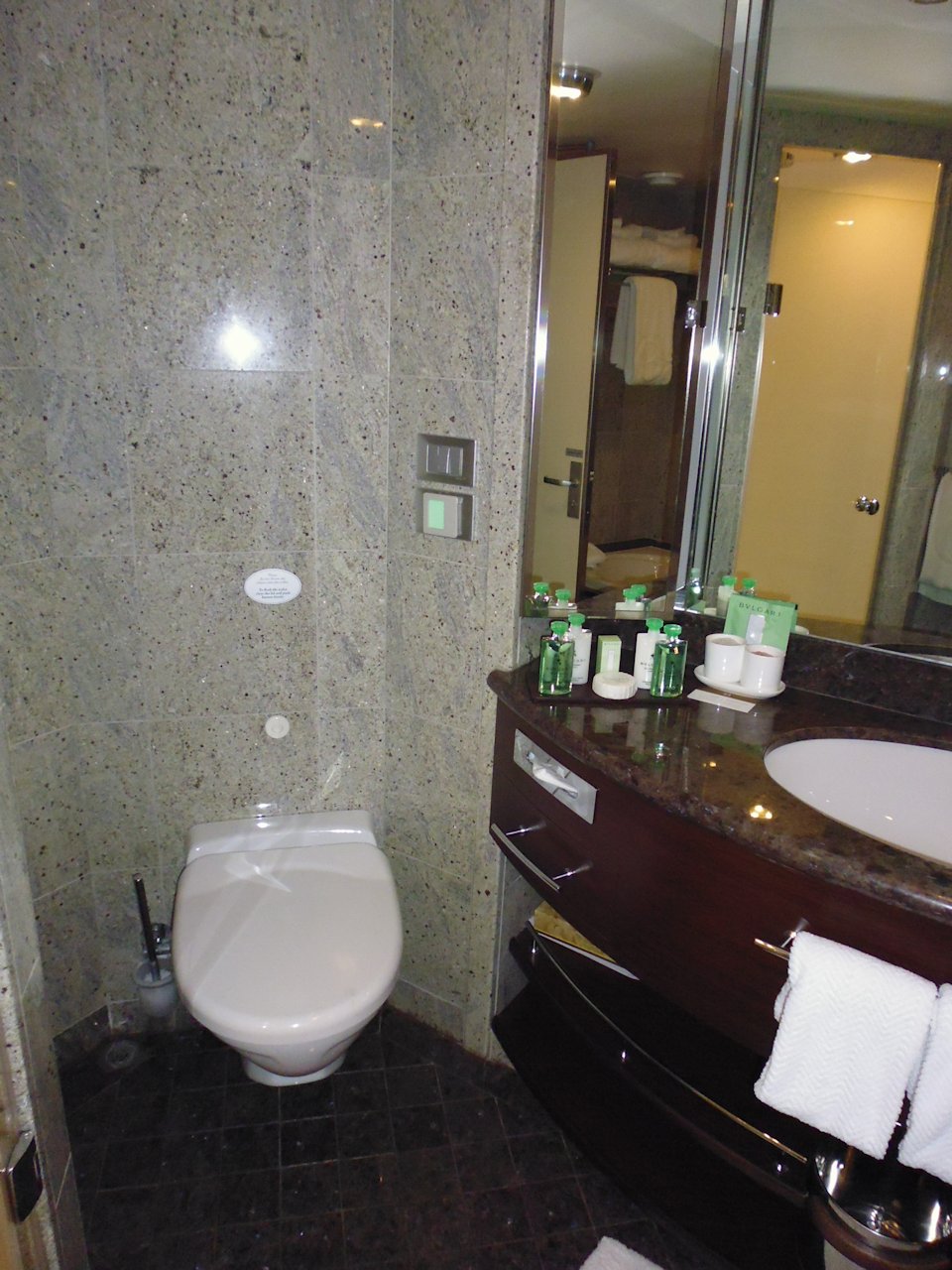
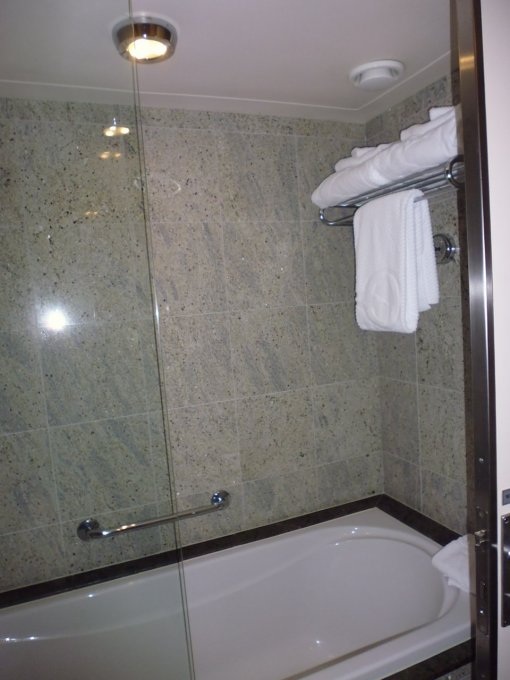
After we’d had some lunch at the Terrace Café (the buffet restaurant), we were allowed into our staterooms some two hours after boarding. And what a stateroom it was!!! A full 424 square feet of space, including a large balcony, and massive walk-in-wardrobe, a living area, and HEAPS of storage space, which only revealed itself as we opened more doors and drawers.


P1030637

P1030638

P1030641

P1030642

P1030630

P1030631

P1030633 P1030634

P1030635

P1030636

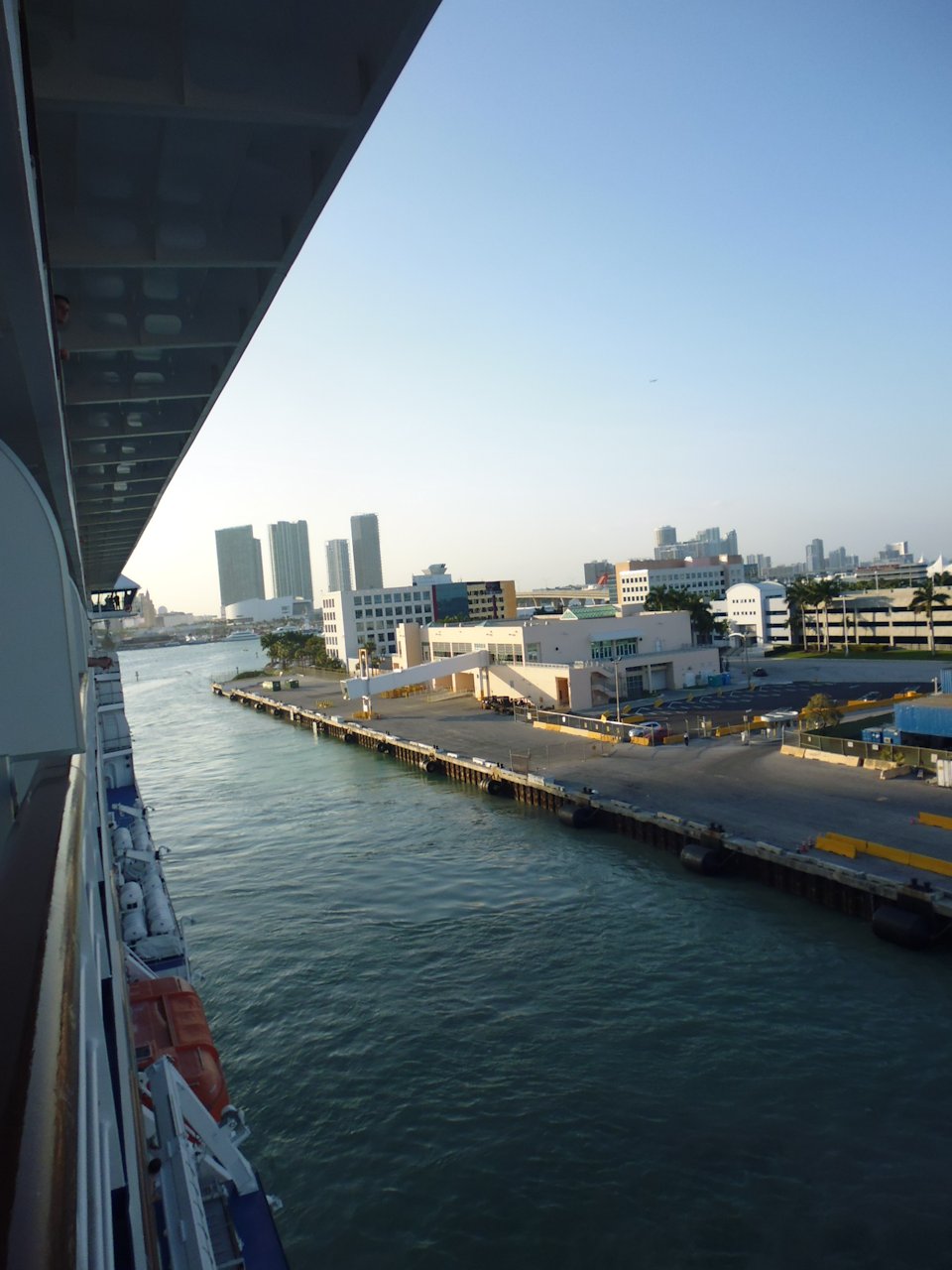
We departed Miami about 30 minutes later than the scheduled time, I expect because of a lack of tug boats. There was a big container ship coming into port and two tugs were pushing it into its berth. When they’d nearly finished, one of the tugs beetled over to our ship and helped us move out. And we were off by 6:30pm.

P1030661

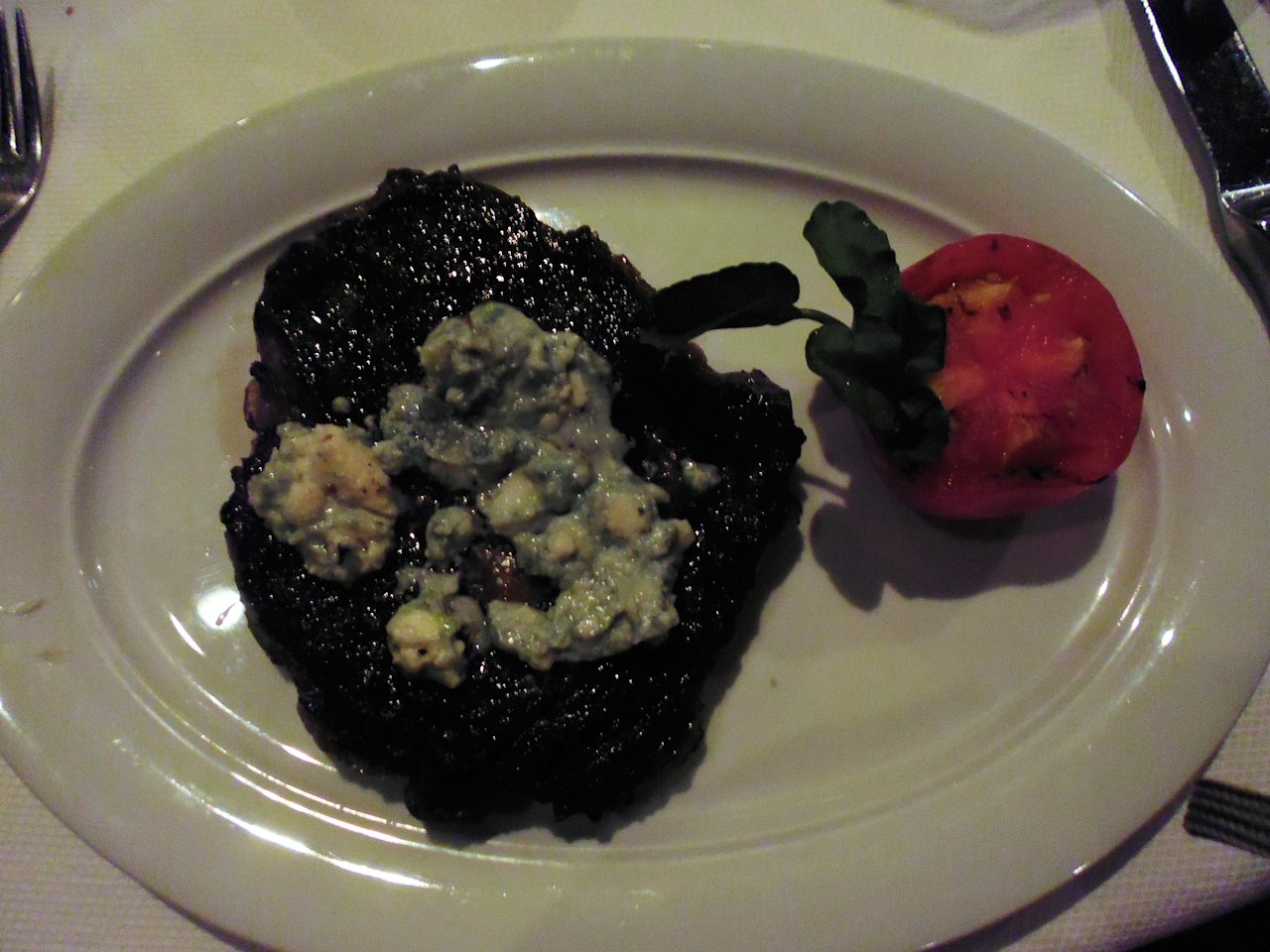
We had dinner reservations for the first night at the Polo Grill (steakhouse). We had opted for shared seating, so we had others at our table. Of the seven meant to be there, only two had turned up on time, so we had our meal with them (Alan and Betsy from Worcester, Mass.). The service and food was impeccable, as I’d been told when this ship was recommended to us.

P1030670_polo_grill

P1030671_polo_grill

After a very comfy night’s sleep (little noise and vibration from the ship and no swell to speak of), we awoke to a free day at sea. Much of it was spent exploring the ship, checking out things, relaxing on the balcony, relaxing on the spa deck, etc. Somewhere in there was a culinary demonstration by two of the head chefs, who introduced all the other head chefs on board. Of the 800 staff on board, 200 are involved in food preparation – 160 chefs (of various levels, descriptions, and specialties), and 40 helpers.

P1030688_head_chefs

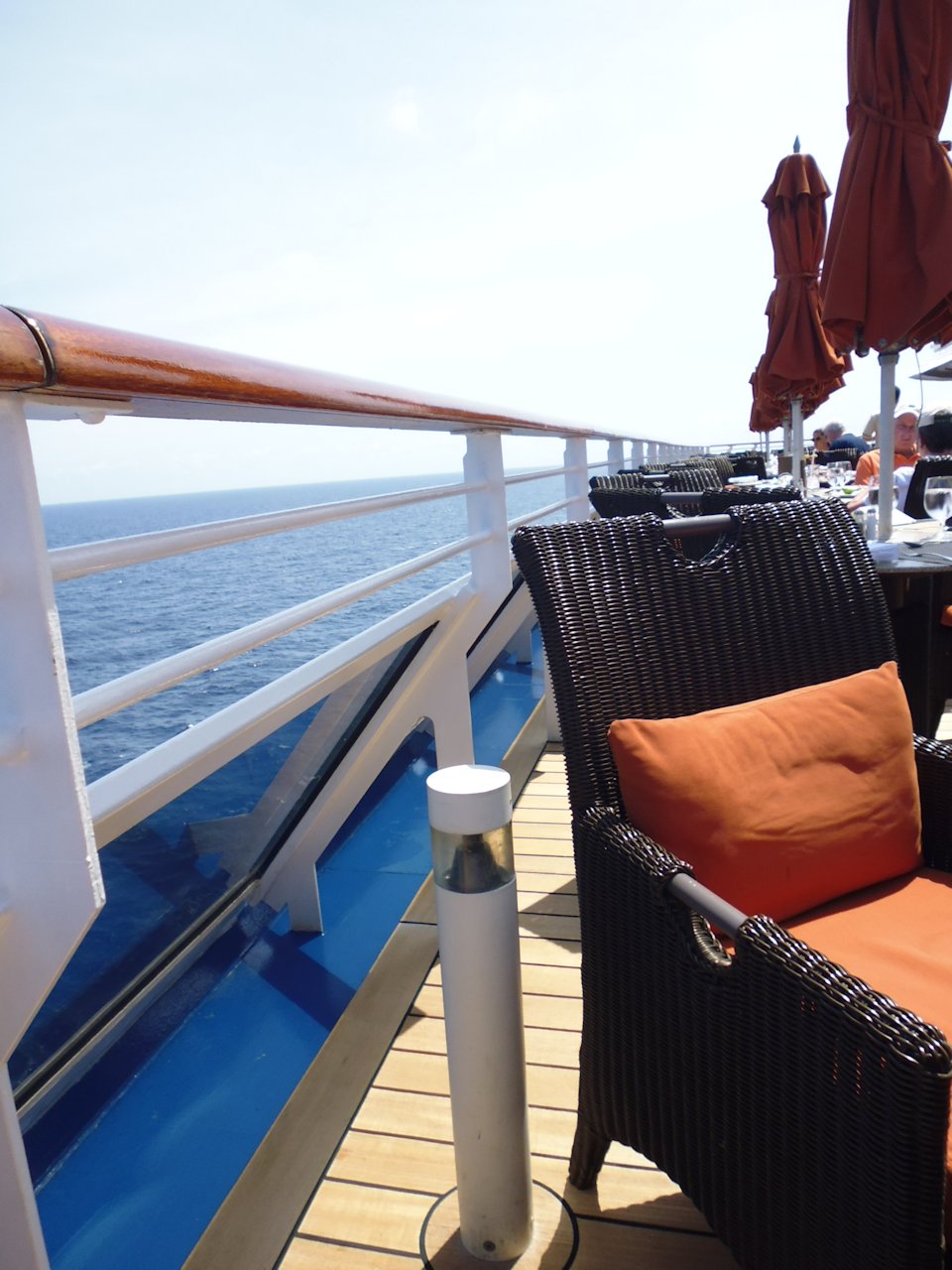
We had lunch at the Terrace Café and sat out on the deck at the stern of the ship to enjoy it.

P1030693

Late in the afternoon, canapes were served in our room by our butler, Jemeesh.

P1030694_afternoon_canapes

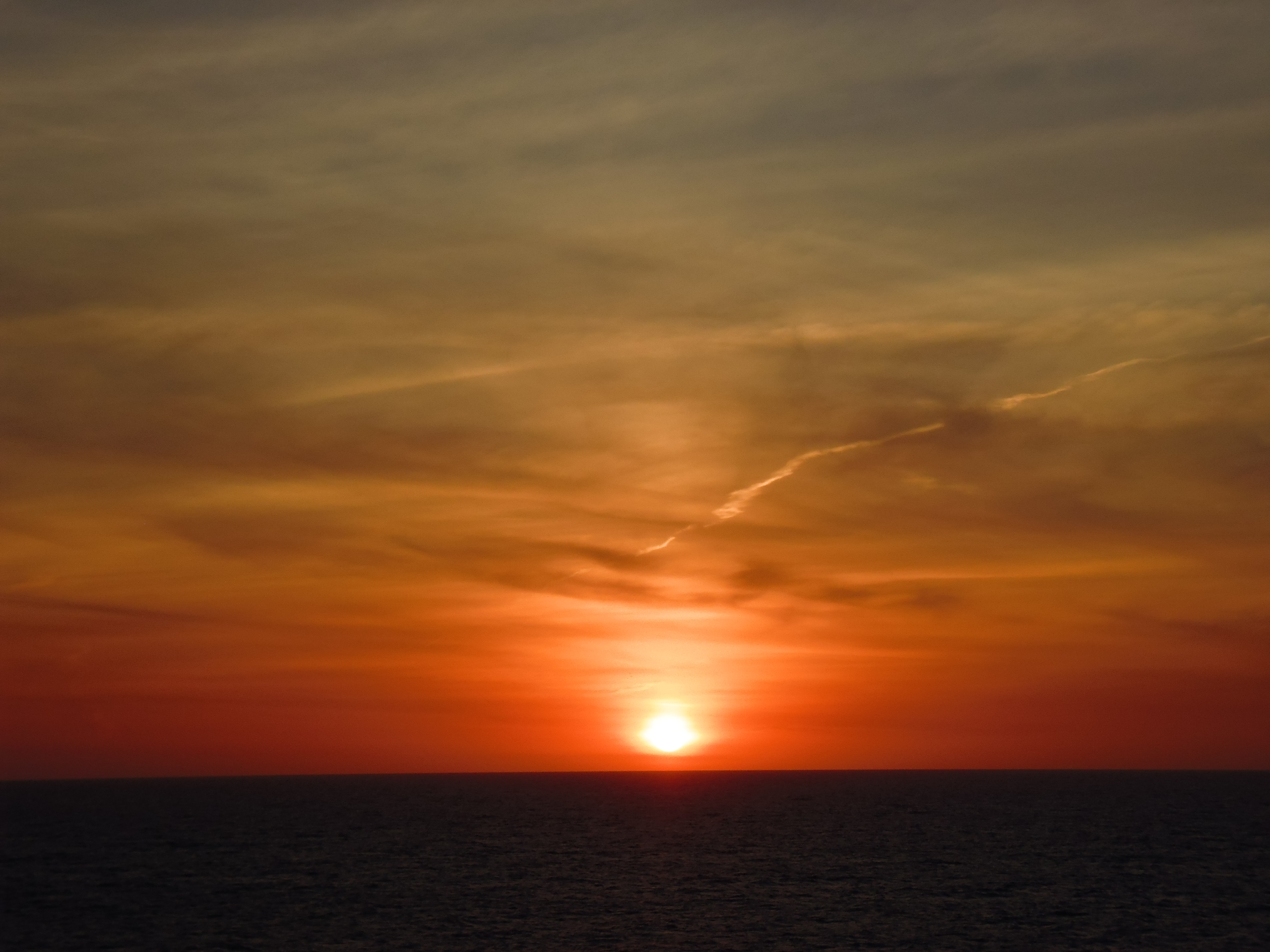
I did some sketching on the balcony in the balmy late afternoon (we passed several freighters), and watched the sun go down over the ocean.

P1030706

Dinner that night was also in the Terrace Café, and it was MUCH quieter than the lunch. Again, the food and service was impeccable.


San Antonio to Miami to the cruise ship

25 03 2015

I flew from San Antonio to DFW, waited awhile in the American Airlines Admirals’ Club in Terminal D (the international terminal), noting how poor these clubs are to what Qantas offers even in their Domestic lounges. The next flight was from DFW to Miami, arriving at 9:30pm. Baggage took an age to come out (and I found out later that TSA had left me yet another ‘love note’ – my third on this trip. Wasn’t that nice of them? They left me one in each bag on the flight from DFW to San Antonio too.) Sue had organised a driver and town car to meet me at baggage claim, so once I had my bags getting to the hotel was a breeze.

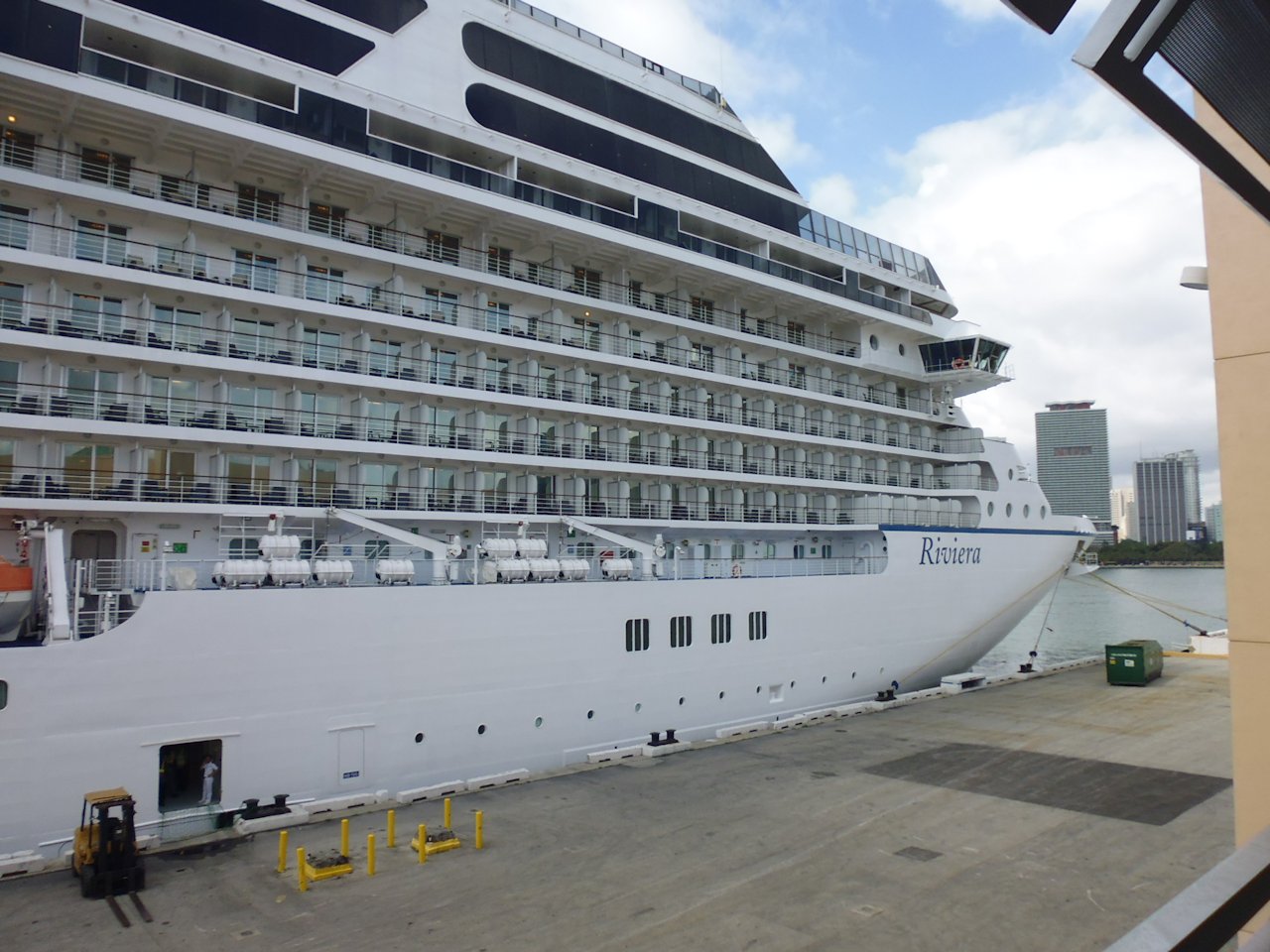
Next morning, we had the buffet breakfast in the café at the hotel, and then were taken by another town car and driver to the Port of Miami to join our cruise ship, the Oceania Riviera.

There were already lots of people at check in and it’s a fairly long process to hand over passports, pick up stateroom key cards, etc. The mix of ages in the check in lines ranged from elderly (some on walkers and in wheelchairs) to young (the youngest we’ve seen on board is about 3 years old, with only a few children [this ship doesn’t have ANY activities for children], ranging in age from about 7 to about 15). I would think the average age of the guests was over 60, but not much higher as there were quite a number who appeared to be in their 40s to 50s.

Once we’d finished checking in, we went on board. We couldn’t get into our stateroom for an hour or so, so we wandered the ship, trying to orient ourselves and check out where the various restaurants and other facilities were.

P1030612


Qantas First Class – the second (and third) time!

25 03 2015

I was notified about 24 to 48 hours before my flight to Sydney that I’d received my points upgrade request to First Class on the long haul from Sydney to Dallas Fort Worth. Woohoo! I’ve travelled First Class between Australia and the US just once before (last March ), but that notification only came at the gate as I was boarding. This time I knew in advance, so was able to take advantage of the Qantas First Class Lounge–and all it had to offer–at Sydney International Airport.

What an experience that was!

As a First Class passenger, I could check in at any time on the day of departure. The flight left at 3:30pm, but I’d stayed overnight at the hotel at Rydges at the Sydney International Airport terminal (just 50 m from hotel reception to the departures check-in area), so I decided to check in early and take advantage of the First Class Lounge.

The day before, I’d booked a spa appointment (back massage) in the Lounge, so I knew that was going to happen. The rest of the day was mine to enjoy! And enjoy I did.

Check in for First is a whole new level of experience. In addition to extra luggage and very personalised service, you have a private area to fill in any immigration forms etc. as well as express passage through to immigration and security screening. Once airside you have access to the Qantas First Class Lounge.

That’s another level of experience altogether! There are the free spa treatments, restaurant-style meals served by wait staff at proper dining tables and chairs (none of this balancing food and drink on a tiny low table as you have to often do in the Business/Qantas Club lounges), fabulous food, sublimely quiet atmosphere, attentive service, and super comfy chairs. I’m sure there are other things too (like business meeting rooms) but I can only report on the things I tried/experienced.

My back massage was wonderful, the food was fabulous, and the entire experience was memorable.

P1030319

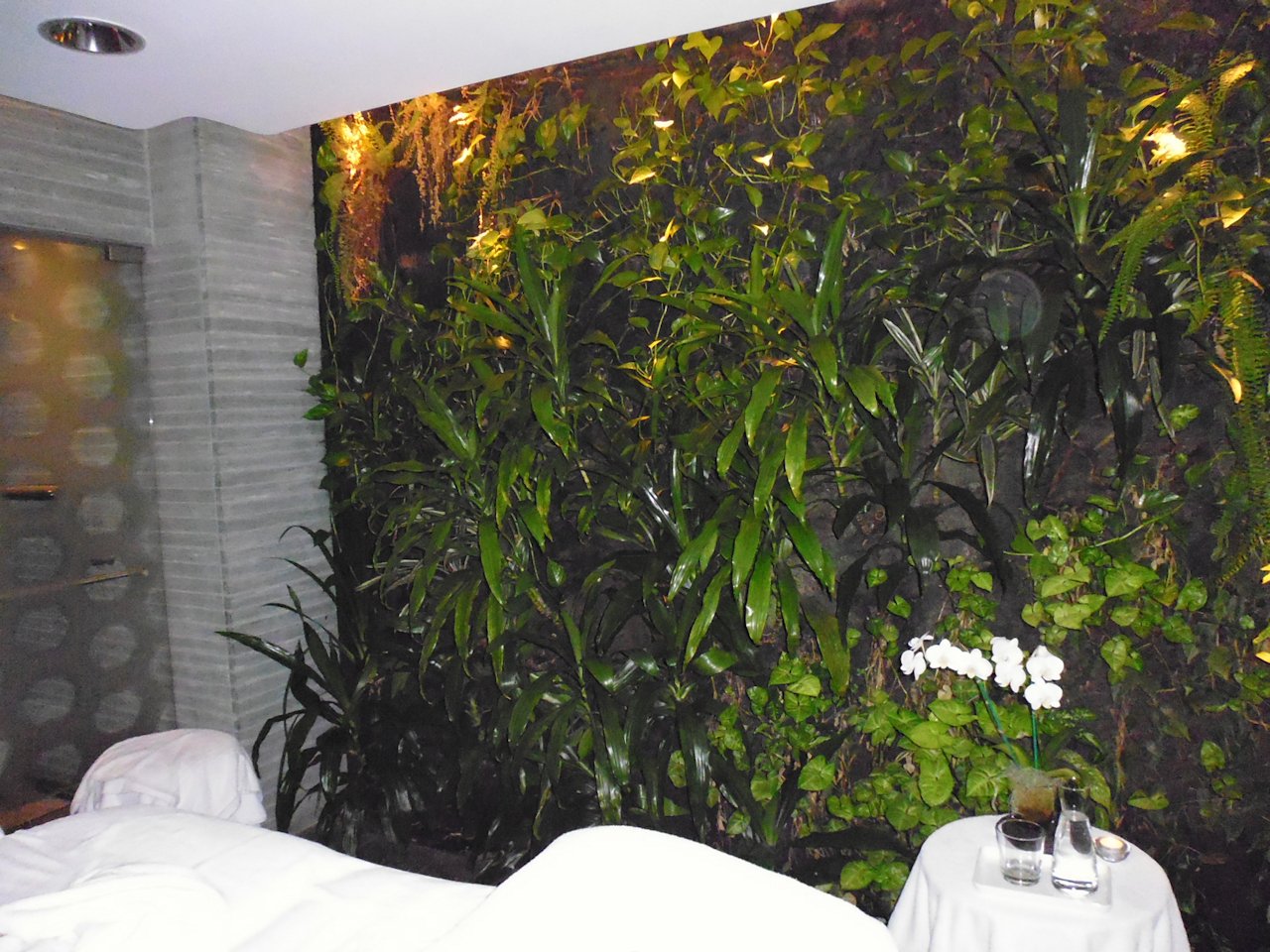
Spa treatment room

P1030317

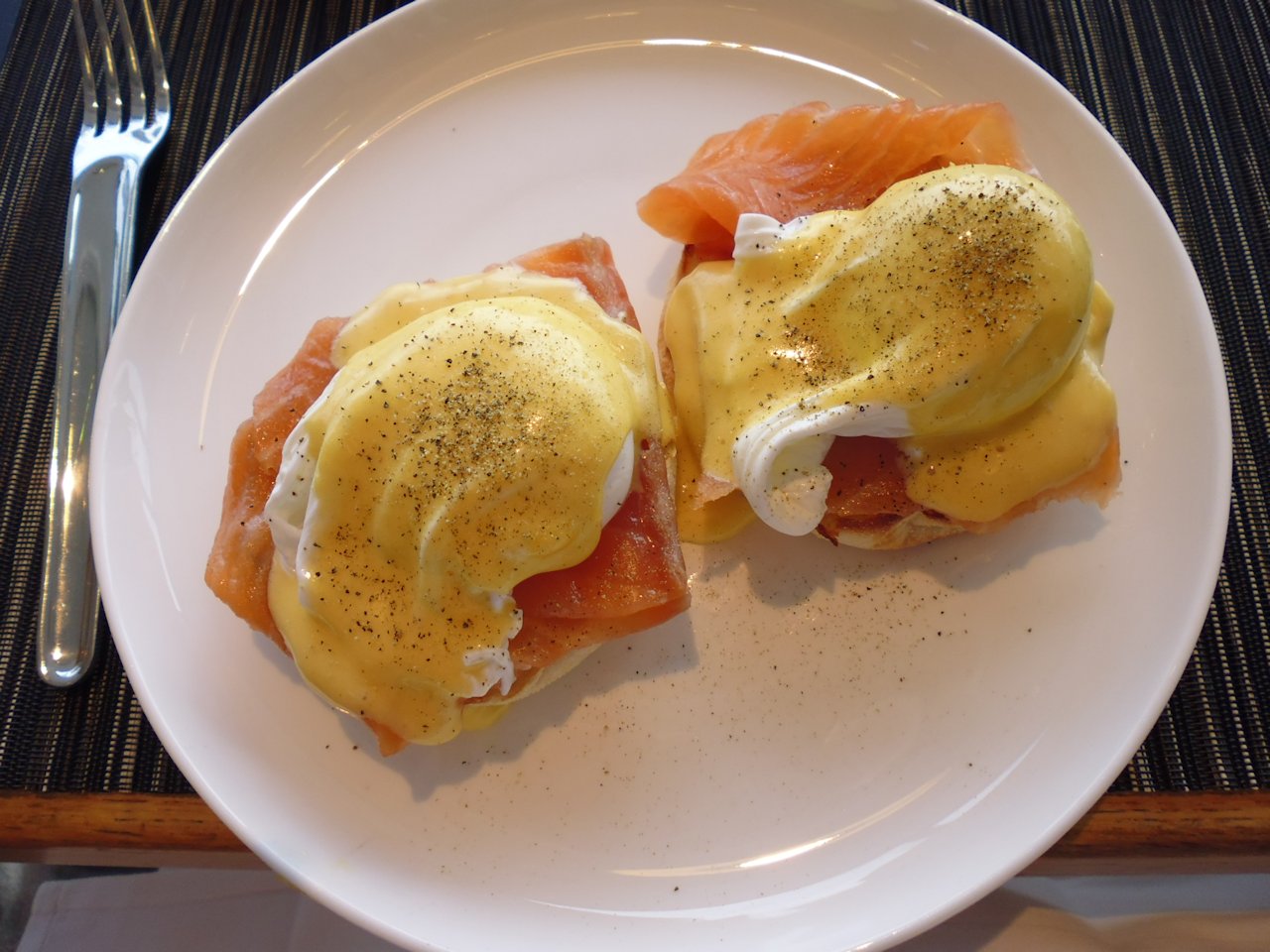
Eggs Benedict with smoked salmon

DSC_0003_Qantas_First_Class_Lounge_Sydney_steak_and_chips_20150306

Steak with chips

DSC_0004_Qantas_First_Class_Lounge_Sydney_mini_pavlova_20150306

Mini pavlova in a glass, with pashmak!

DSC_0001_Qantas_First_Class_Lounge_Sydney_Salt_Pepper_Squid_20150306

Spicy salt and pepper squid

DSC_0002_Qantas_First_Class_Lounge_Sydney_heirloom_tomatoes_buffalo_mozzarella_20150306

Heirloom tomatoes with buffalo mozzarella

P1030333

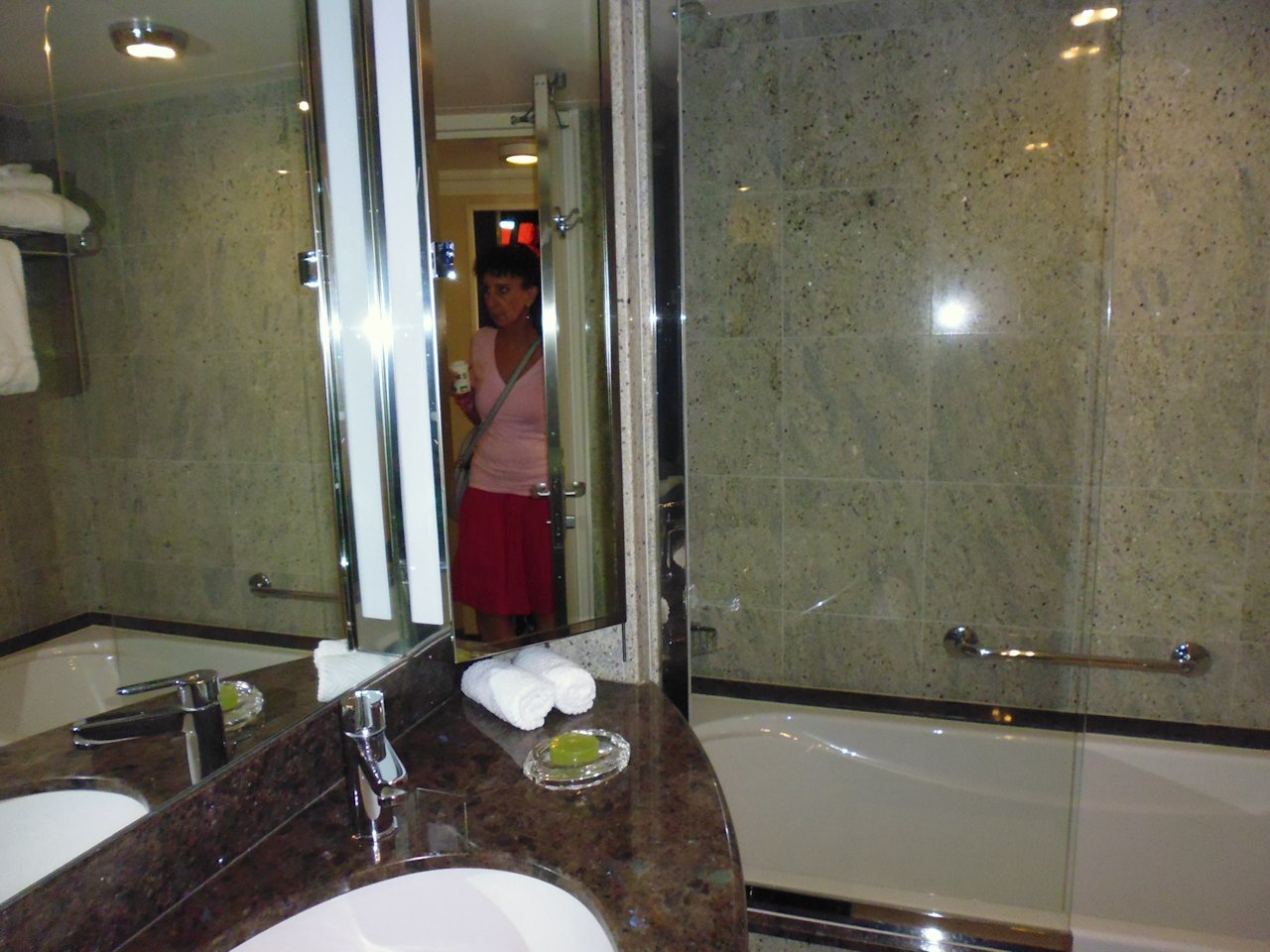
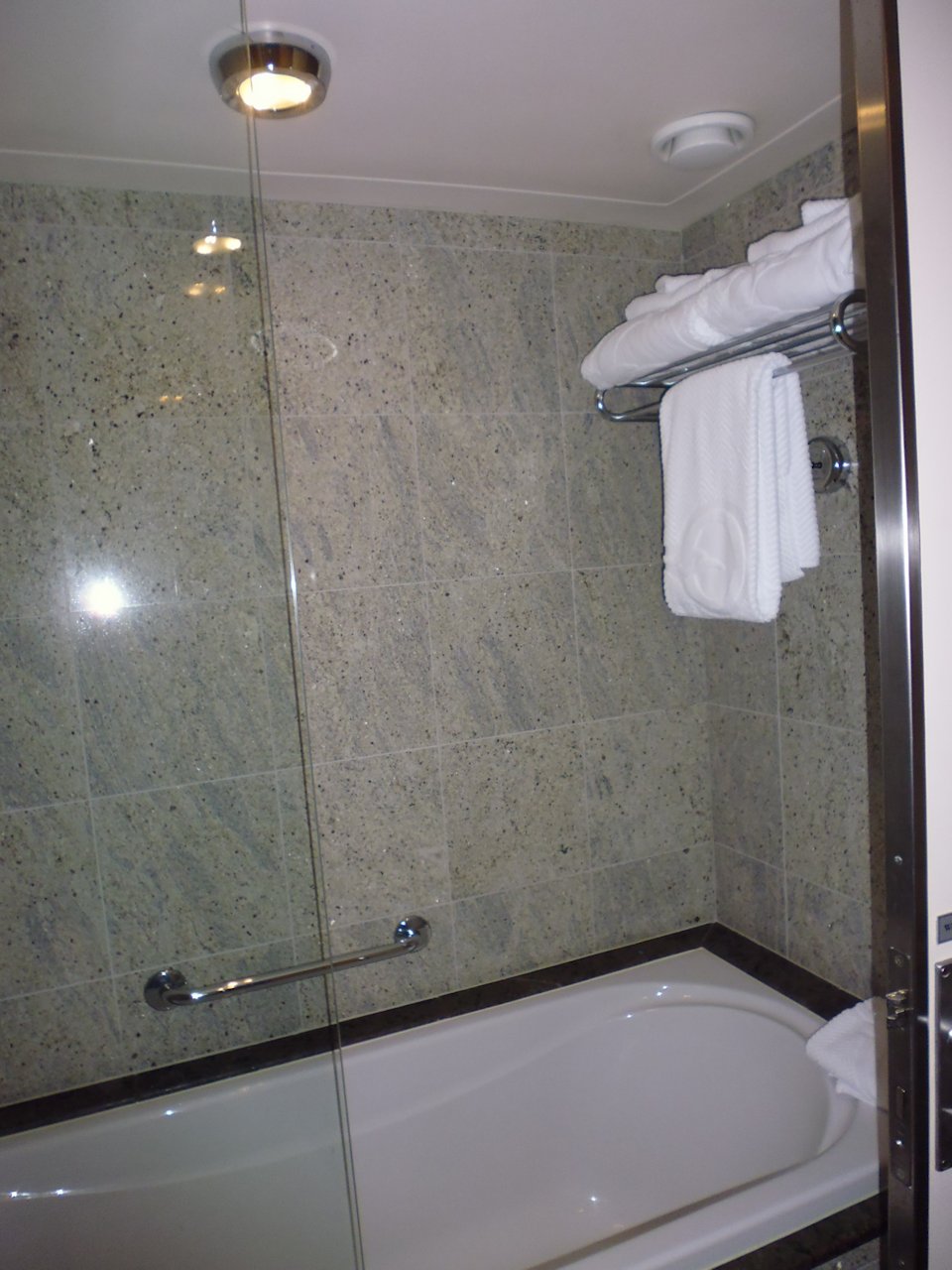
Marble bathroom/shower in First Class lounge

Eventually it was time to board the flight to Dallas Fort Worth (that SYD to DFW flight is the longest commercial flight in the world, I believe, at an average of about 16 hours, though head or tail winds can add or subtract about 90 minutes either side of that estimated time).

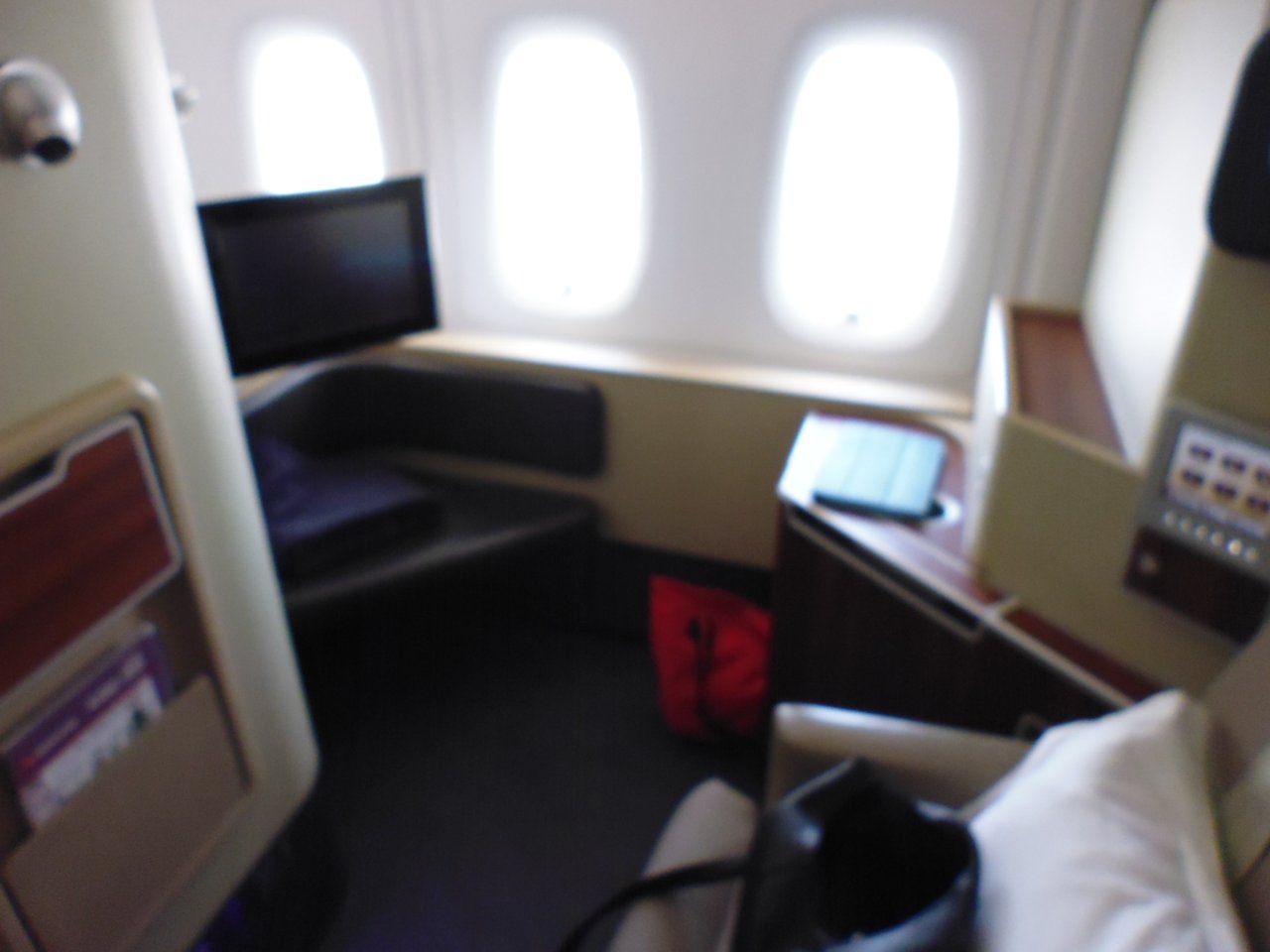
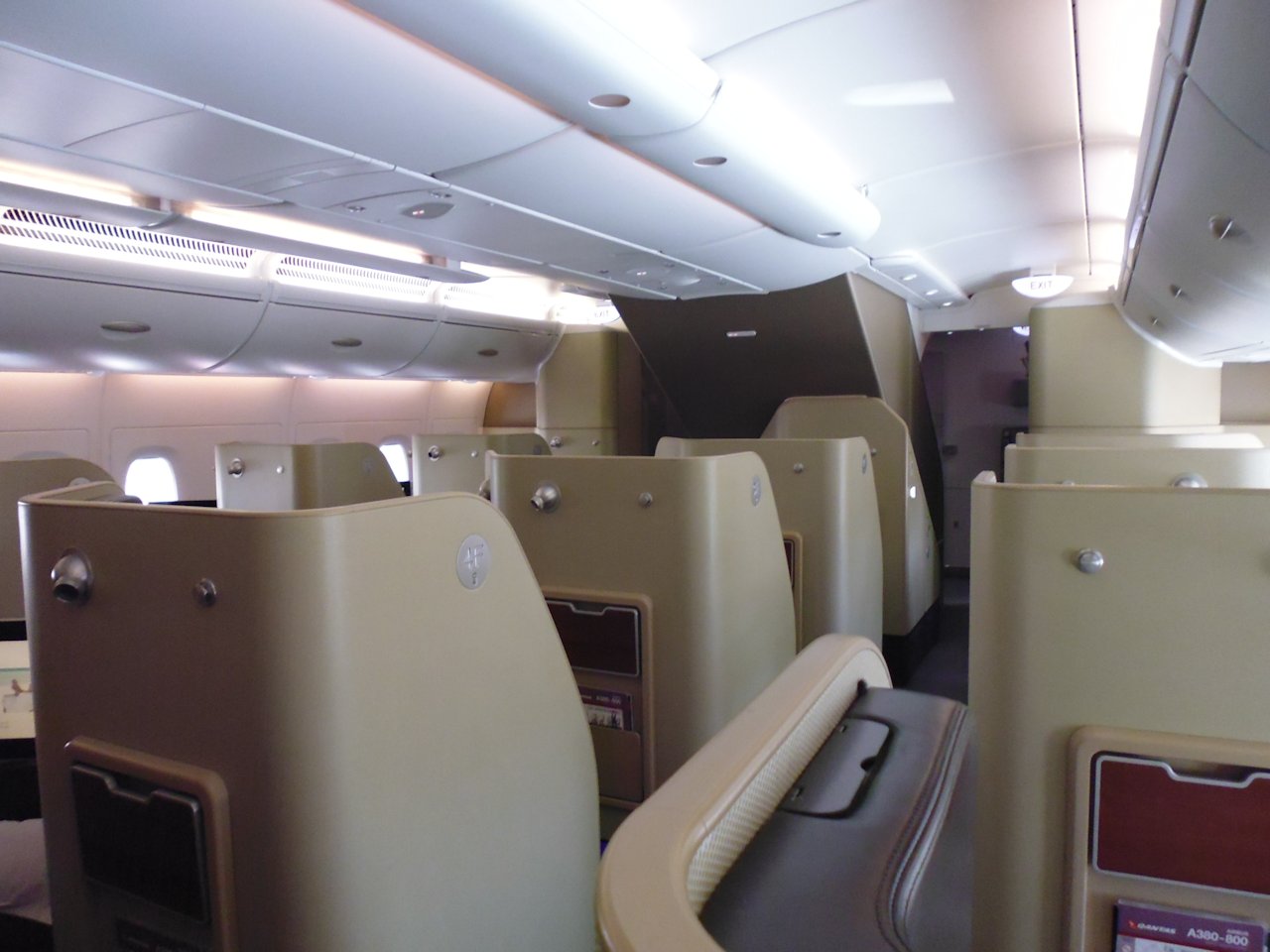
As I had experienced First Class once before I knew pretty much what to expect—an area of only 14 individual and roomy ‘suites’, with fabulous food, lambswool mattresses, crisp cotton bed linen, plenty of space to store your stuff, etc.

P1030335

P1030336

P1030334

Only 14 ‘suites’ in the First Class cabin

Despite all these accoutrements, I upheld my usual pattern of not sleeping on the flight. My best effort is very light cat napping. And so it was for this flight. There was NO turbulence at all (a first), which was a bonus, and we landed in Dallas after 14.5 hours flying time.

First Class gets no more or less privileges than anyone else on arrival into the US. However, we are first off the plane and thus to Customs and Border Protection. DFW has the automated kiosks for Visa Waiver countries and they were a breeze to operate. It took me 30 seconds to cross the border into the US!! First and Business Class bags come out on a different baggage carousel, and after collecting my bags, and getting through Customs (also super quick) I was in my hotel at the airport in less than 15 minutes after getting off the plane. That was a record for me!

Update: I got a First Class upgrade on the DFW to SYD flight home too! How lucky is that????


A380 compared to a 747

25 03 2015

The ladies at Quilting Adventures who saw the pictures I’d taken at Sydney Airport of an A380 were amazed at its size. Here’s one of those photos (note the size of the truck in the foreground).

P1030327

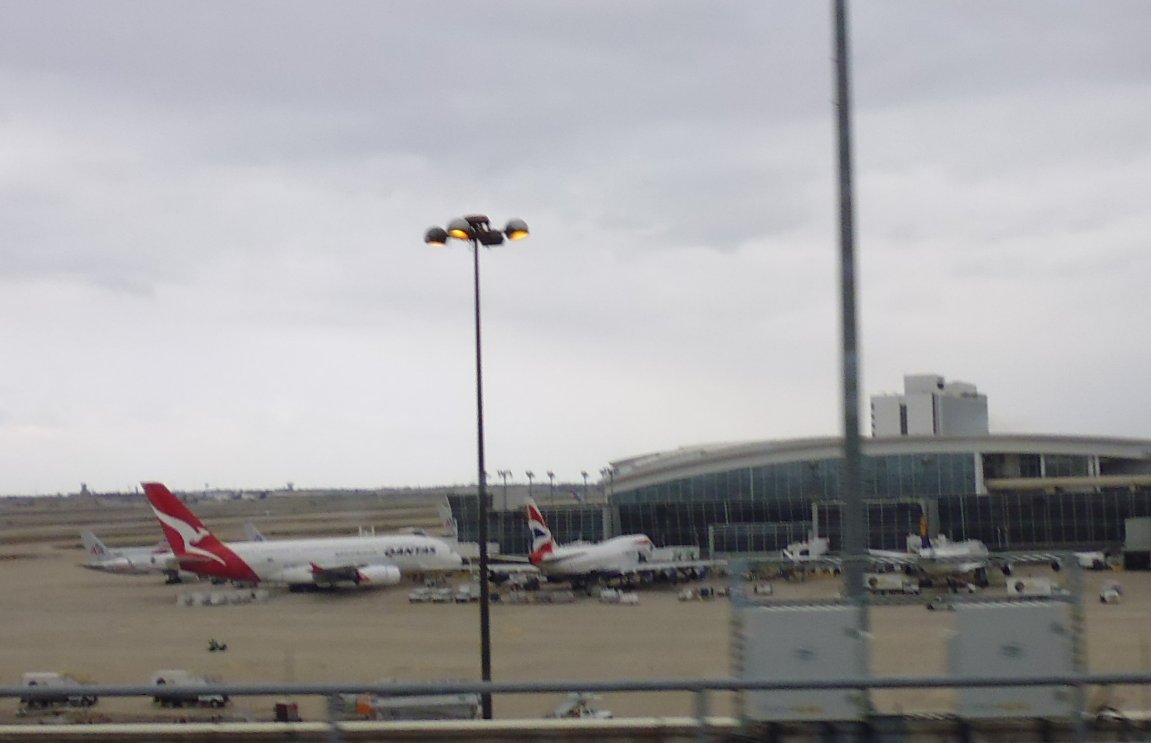
The second photo I took from the SkyLink at DFW Airport, showing an A380 (Qantas) parked next to a Jumbo (747; British Airways livery) to give you some idea of the size of these aircraft.

P1030607


Quilting Adventures 2015: Day 5

25 03 2015

Last day at Quilting adventures (QA today). We did a bit more stuff on marking fabrics, this time with oil- and water-based crayons. And then it was time to say goodbye for another year to old friends and new.

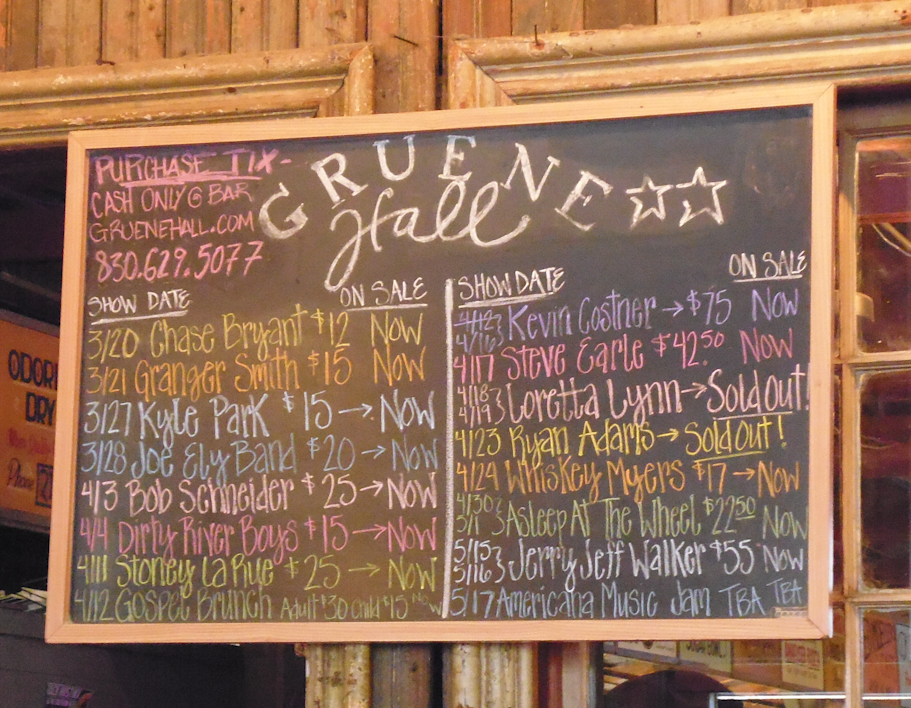
I stayed overnight in New Braunfels (Gruene, actually [pronounced ‘Green’]) with Kim and her Mom–the QA organisers. Kim showed me some of the Hill Country around New Braunfels, which I had never seen before despite this being my third trip to the town. What a pretty place! I can see why tourists keep coming back. We also walked some of the old area of Gruene, including the Gruene Hall, where many a famous act has played. Check out the line-up for April:

P1030596


Quilting Adventures 2015: Days 3 and 4

13 03 2015

We’ve spent the past two days learning to use Tsukineko All-purpose Inks, Fantastix applicators, and Fabrico markers (also Tsukineko), as  well as artists’ coloured pencils and oil crayons to enhance fabric. Lura Schwarz Smith taught this part of the class. So much of the past two days was learning the techniques via demonstration and some hands-on practice; however, there’s not a lot of ‘product’ to show for how much we’ve learned, so there aren’t many pictures. I finally did some stitching late this afternoon prior to the walkthrough of everyone’s classes, doing some thread painting of the hair and shirt of the boy’s face I had traced and coloured with inks, markers, and pencils yesterday and last night after ‘show and tell’.

After a rocky start with drawing a face yesterday (guided by Lura), I felt much more comfortable working from a line drawing, tracing it onto fabric, and then shading it with the various media. It was quite amazing (and scary!) how some horrible emotions bubbled to the surface during the freehand drawing phase — faces were one of things I was awful at when I did Art at school (I was fine with still life, pattern and design, and poster work, but could never get faces right… all those yucky feelings came back…).

I also had two more photos printed onto fabric, taking advantage of the printer that Kerby and Lura had bought with them.

I won’t have a chance to start stitching work on any of the photos I’ve had printed until I get home — we’ve had so much learning of techniques in this workshop that there hasn’t been much time to ‘do’ and work on our own pieces. But that’s OK. Learning new stuff is why I chose this workshop. That said, I guess I’m a bit disappointed that I haven’t made any progress on the photos I had printed. However, that was MY expectation based on previous experience at other workshops; Lura and Kerby have definitely fulfilled all the expectations listed for the workshop.

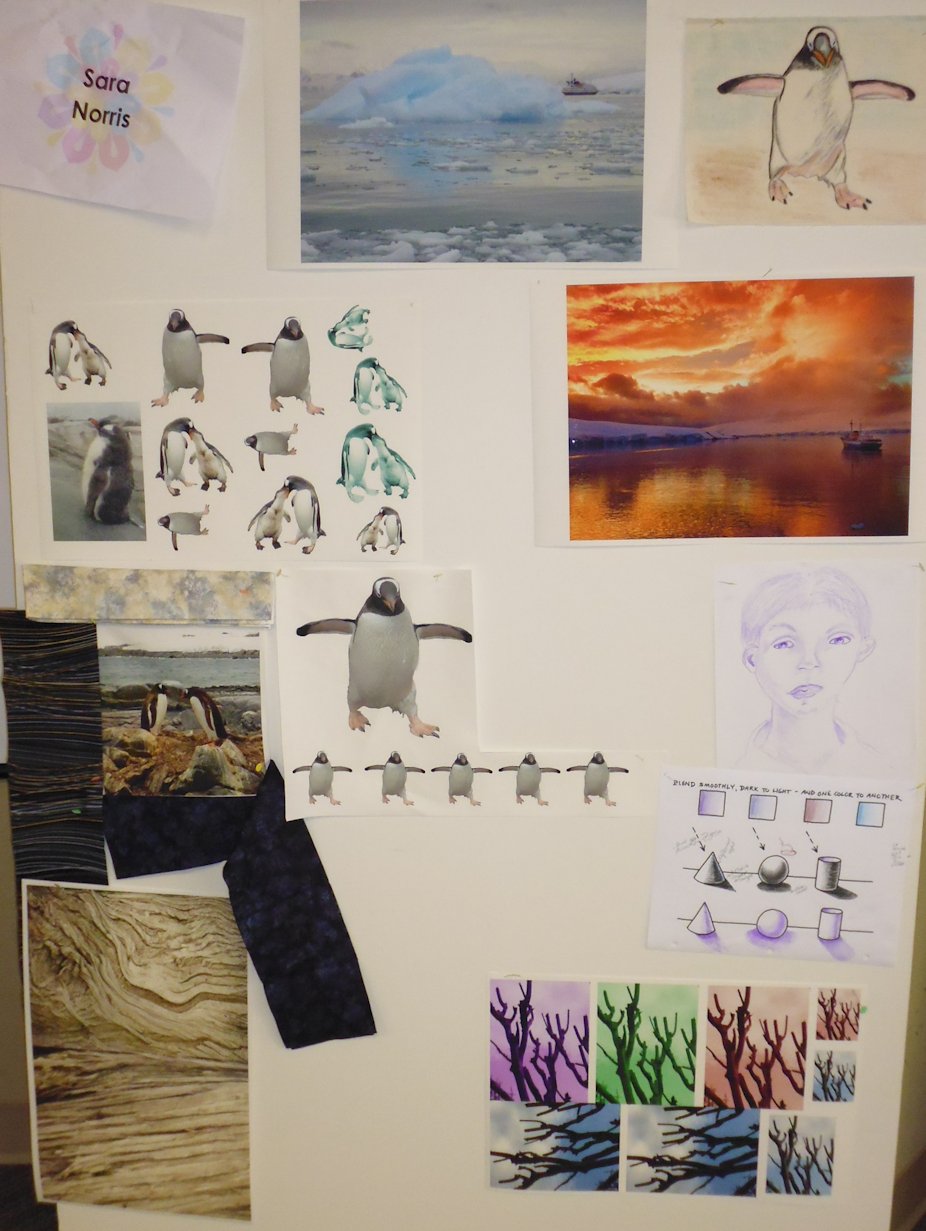
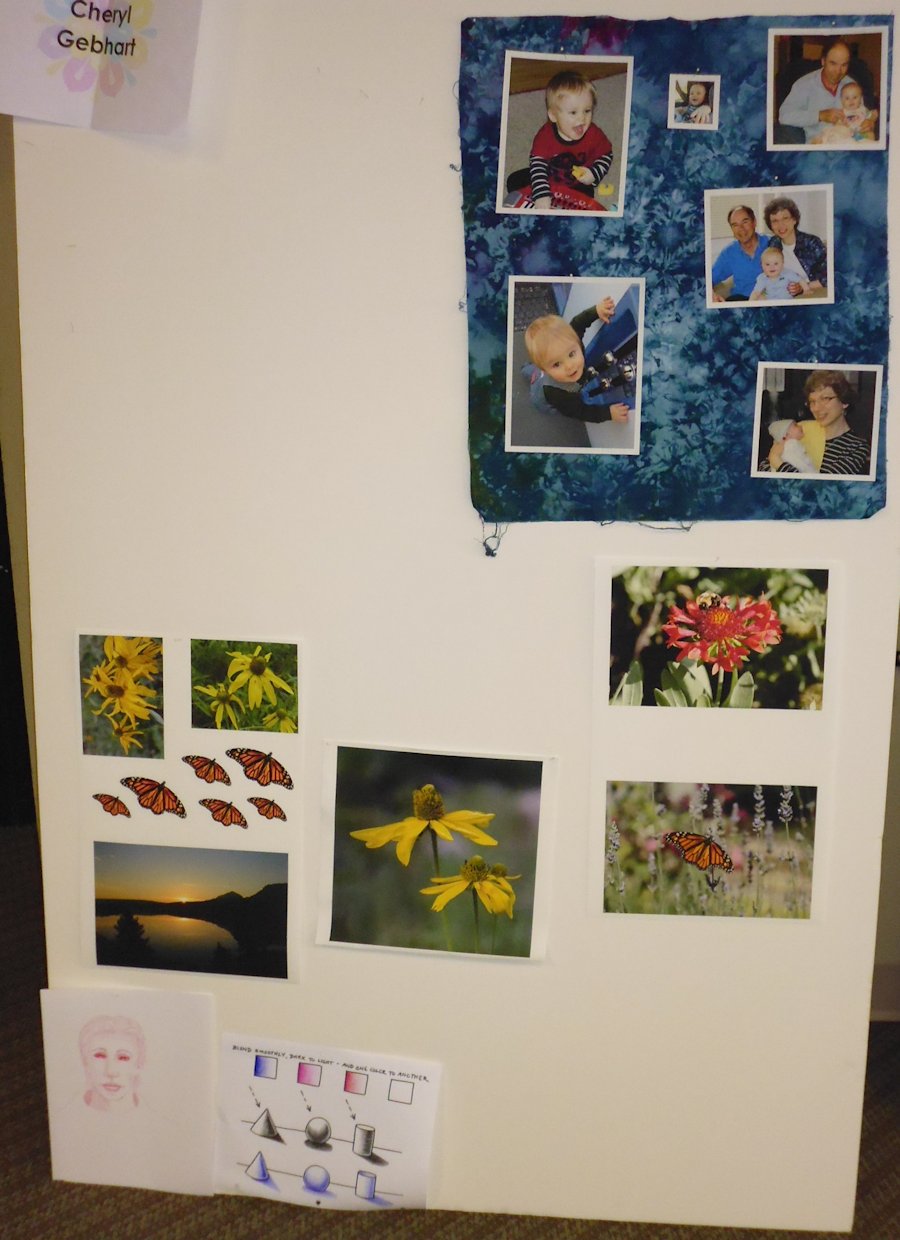
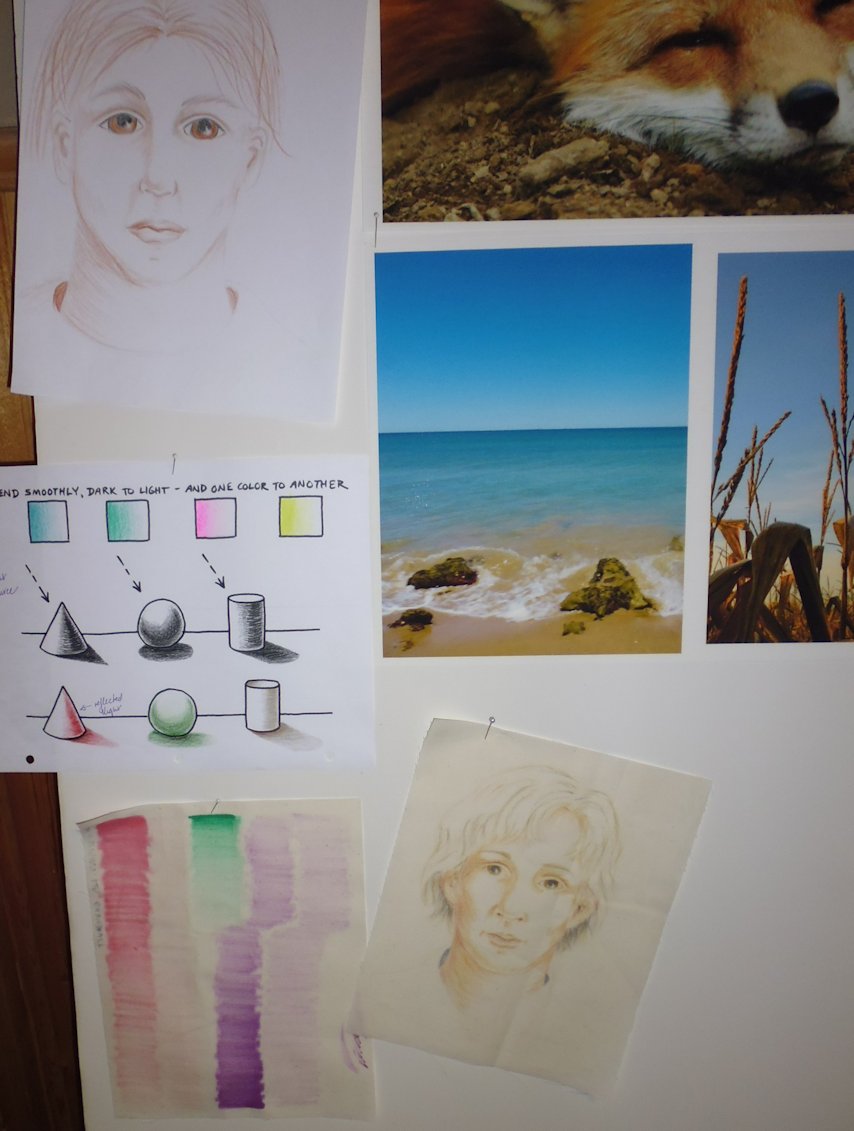
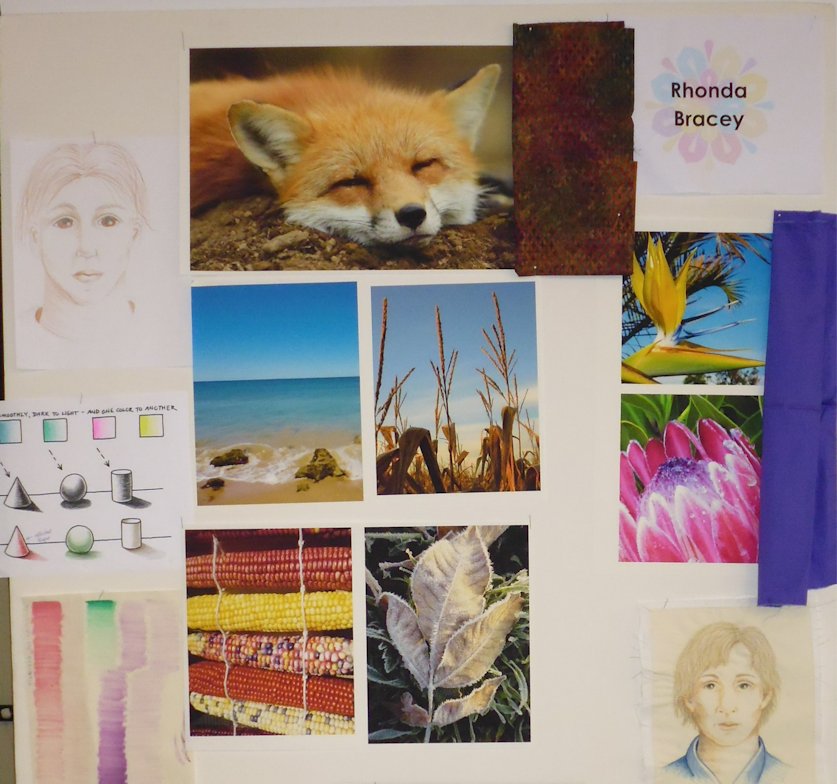
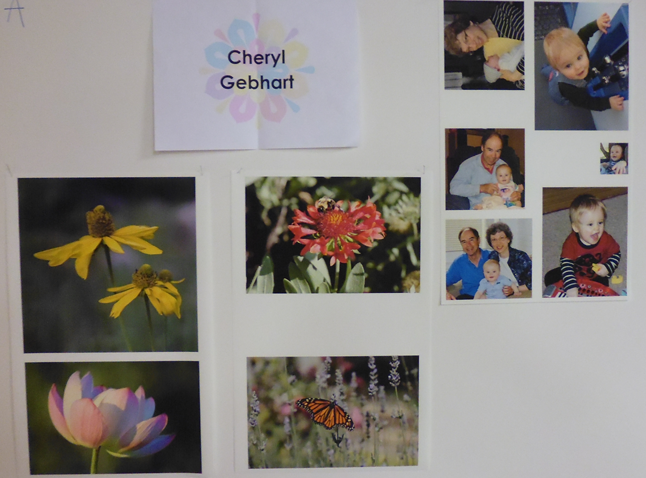
Here are the photos from the end of today for each of the students in my class (all five of us!).


P1030580

P1030581

P1030582


P1030584

P1030579

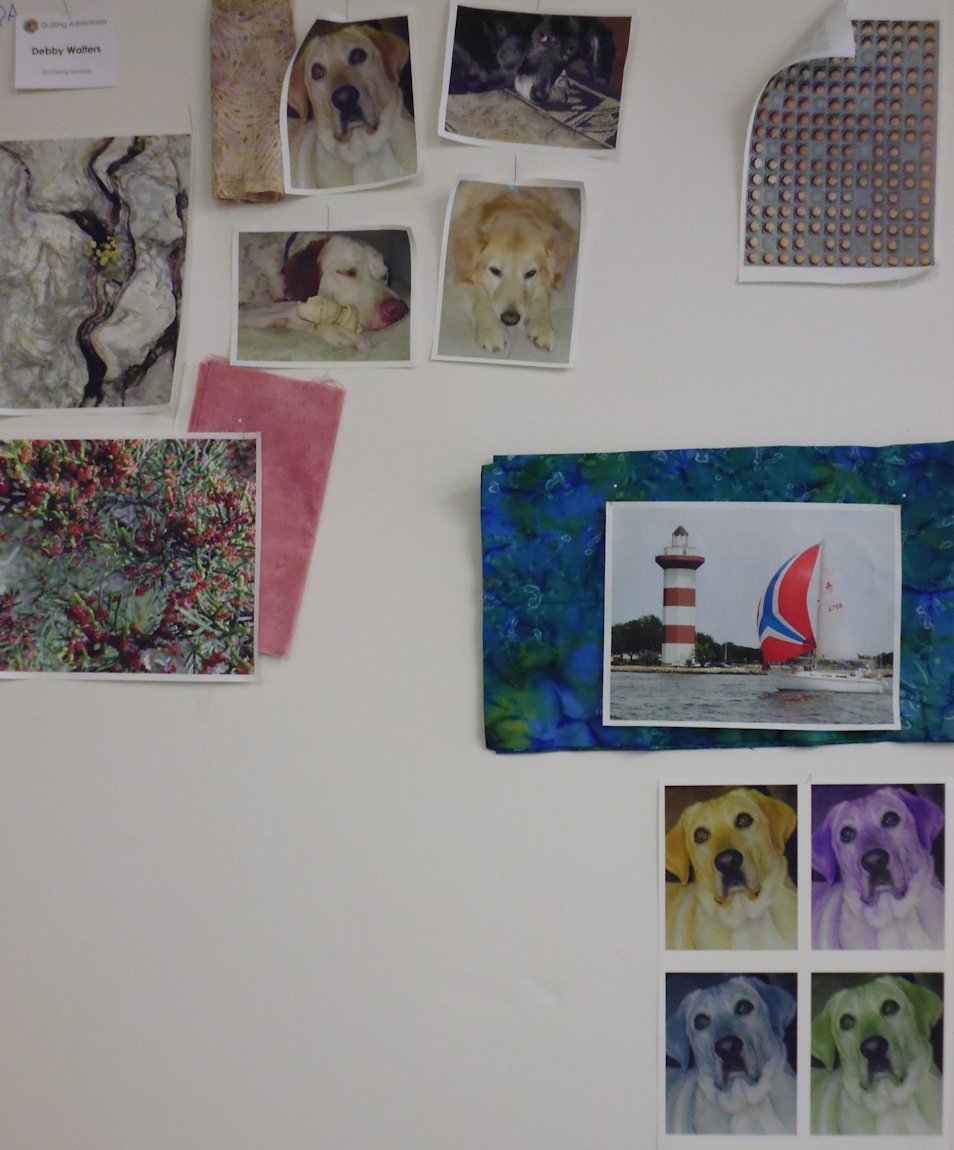
This was my design wall late Wednesday afternoon. The boy in the lower right has been partly shaded with inks. The boy on the top left was my freehand drawing of a face — the one that gave me such angst.

P1030583

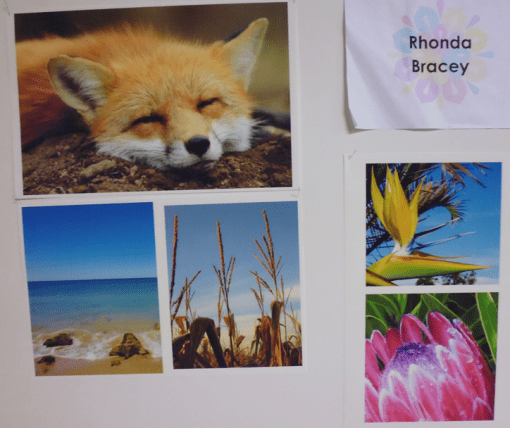
My design wall late Thursday afternoon. Two more photos printed on to fabric (corn from Santa Fe and a frosted leaf from Michigan), and a fabric chosen to perhaps border the fox. More ink and coloured pencil work etc. on the boy in the lower right, including thread painting of his hair and shirt.


Quilting Adventures 2015: Day 2

11 03 2015

We spent much of today on ‘walkabout’, taking photos around the resort, and then processing them in Photoshop Elements, and getting some printed on fabric. We learnt lots, but so far we haven’t got much ‘product’ to show for it, though that may change tomorrow when we start to work with our printed photos.

The photos below are of the design walls of those whose photos have been printed so far. Next step is enhancing the photos with paints, markers, and/or thread — the really fun part for me!

P1030577

P1030575

P1030576

P1030574