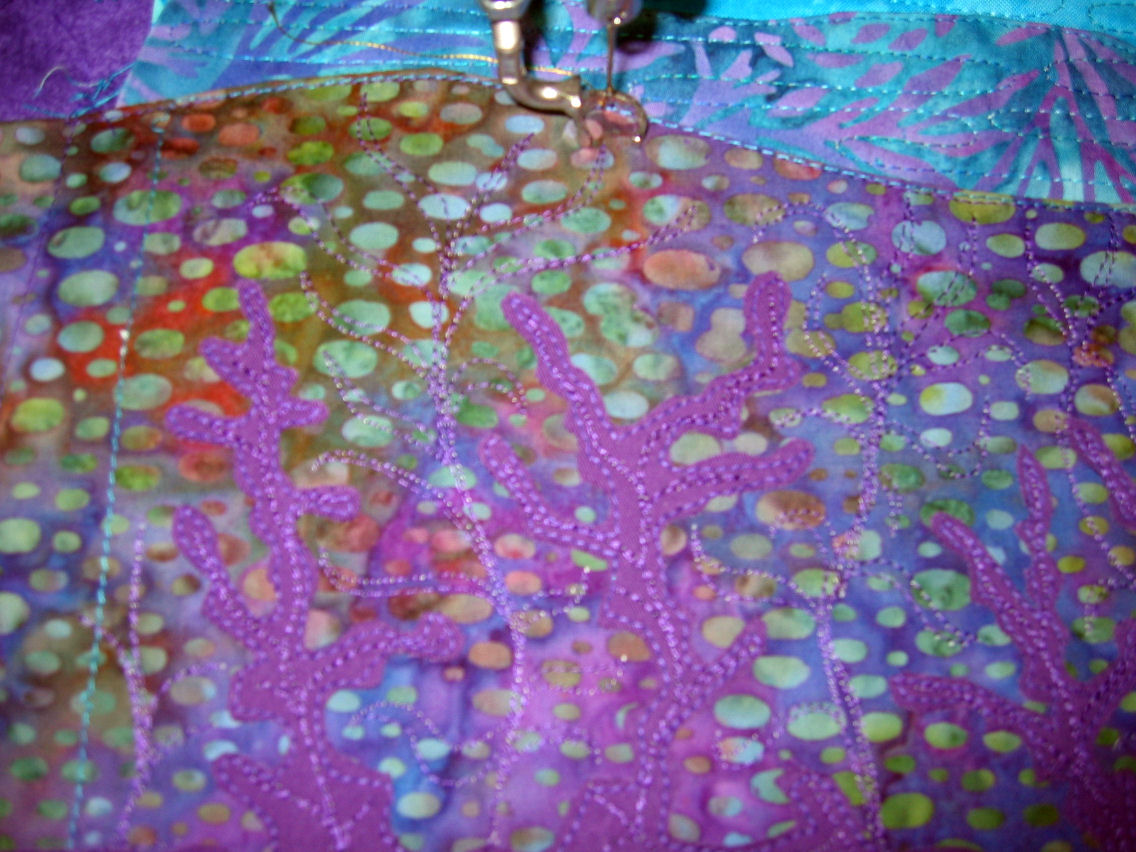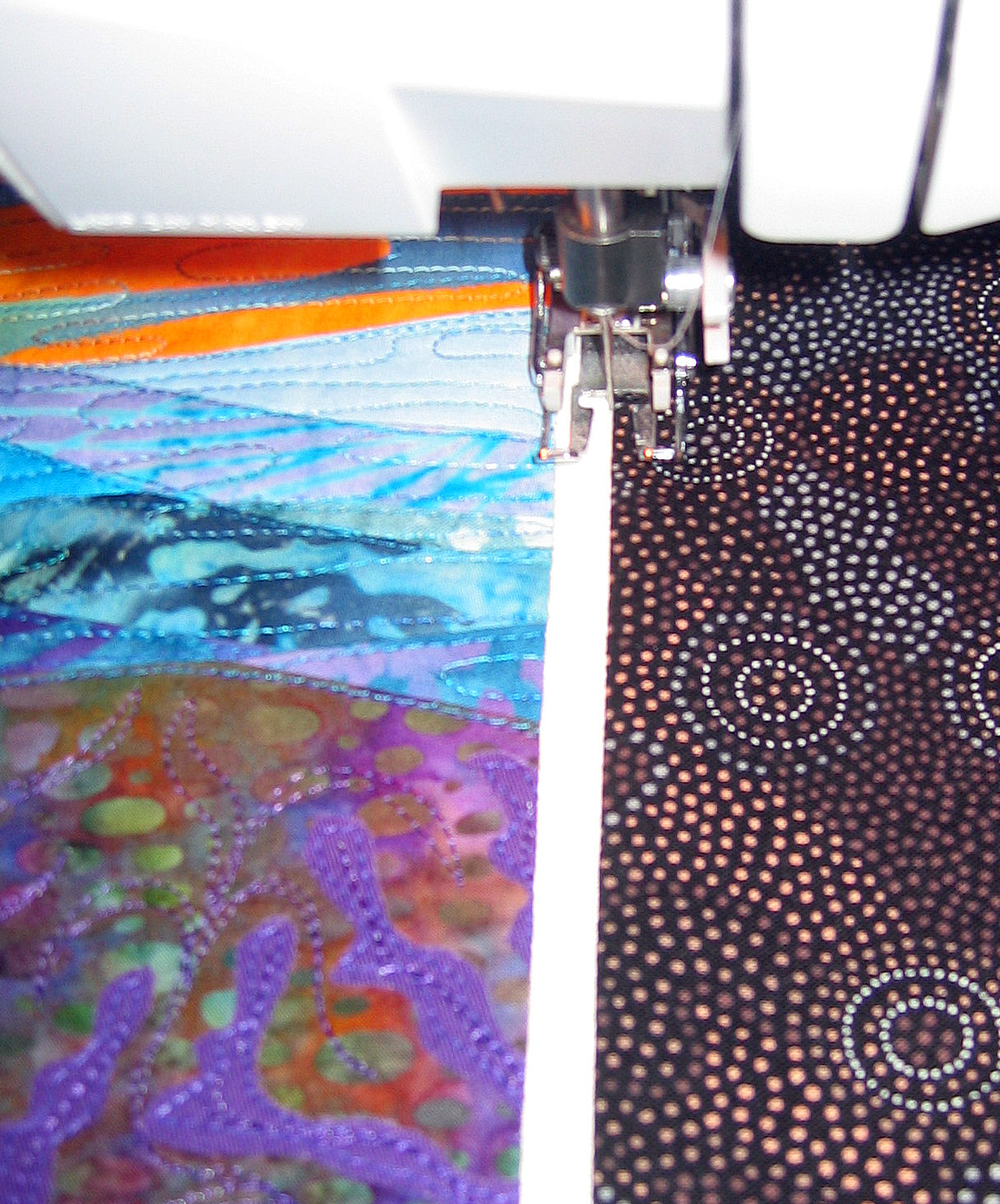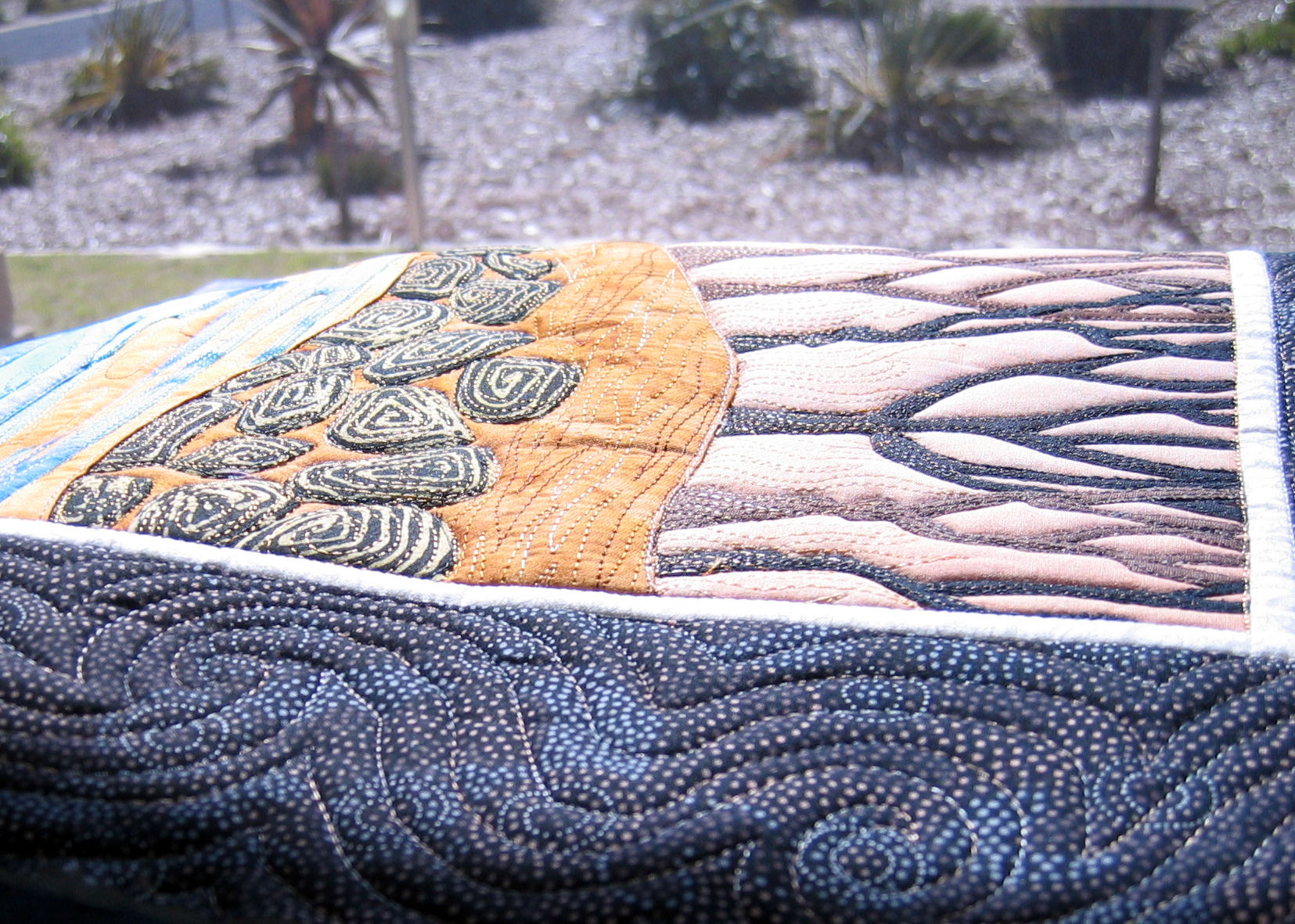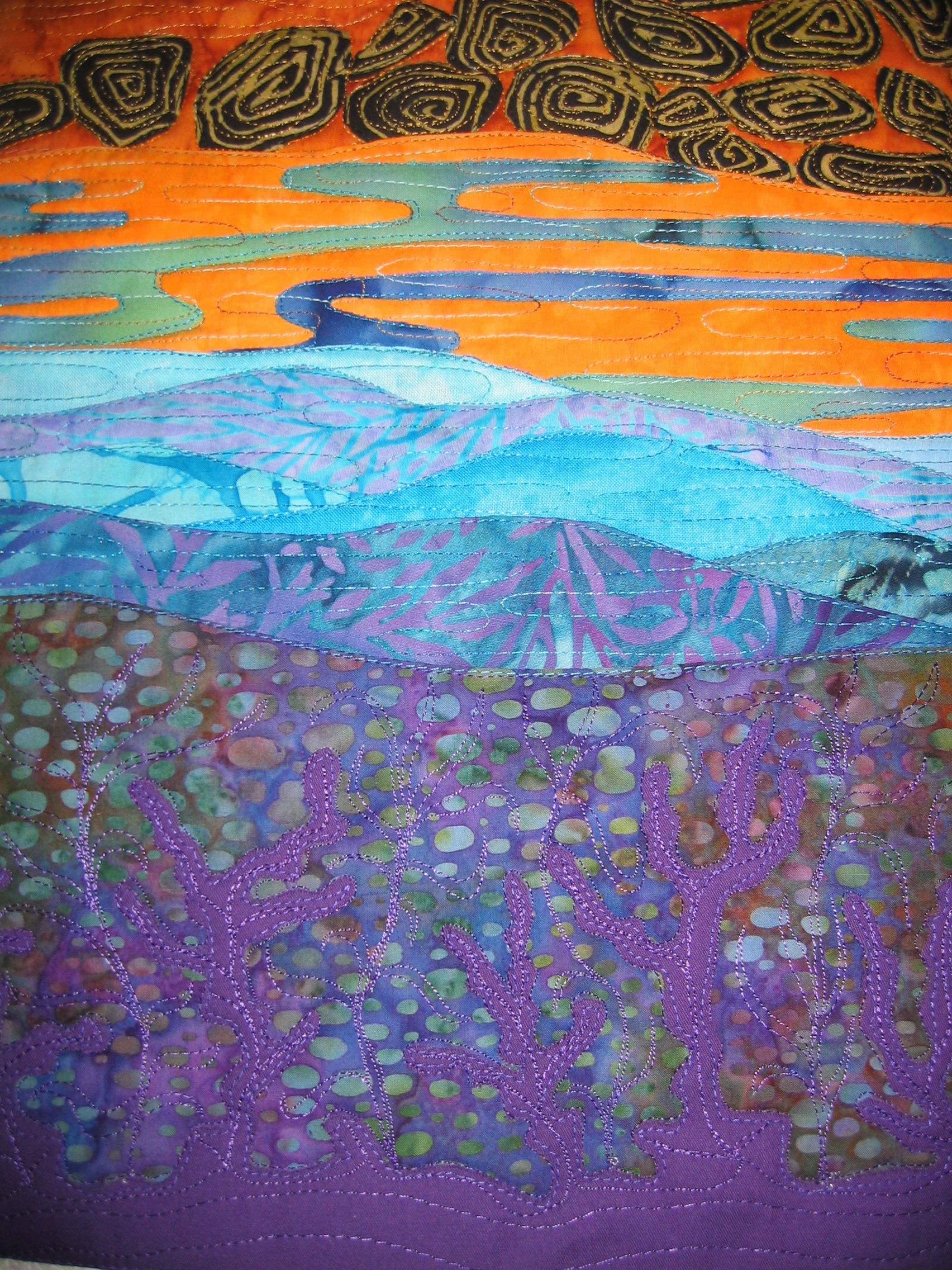
Challenge Quilt 2012: The challenge

20 10 2011

It was my turn to set the challenge for 2012, which I revealed at our quilting retreat in early October.

I chose the poem ‘Core of my heart (My Country)’ by Dorothea Mackellar, from which comes the song ‘I love a sunburnt country’. There’s plenty of inspiration in that poem!

The rules and restrictions of the challenge are few:

  • Take any word(s), phrase(s), line(s), verse(s)—or even the entire poem—as your inspiration
  • Make something in fabric from that inspirational idea (it doesn’t have to be a quilt)
  • Minimum size: 6 x 6 inches; no maximum size
  • Have it completed by our retreat in September/October 2012 — and keep it secret from the others!

PDF of the poem and the rules

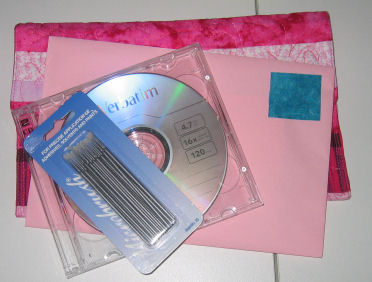
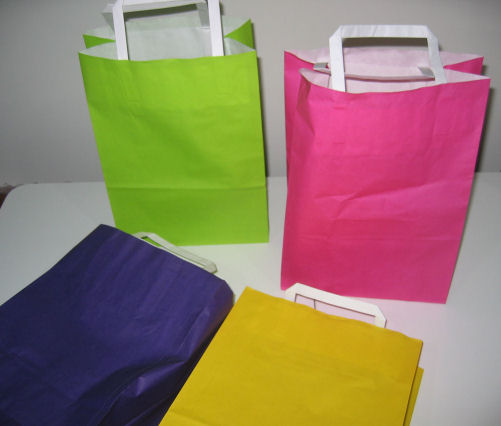
In honour of Royal Show week in Perth, I presented the challenge in show bags!

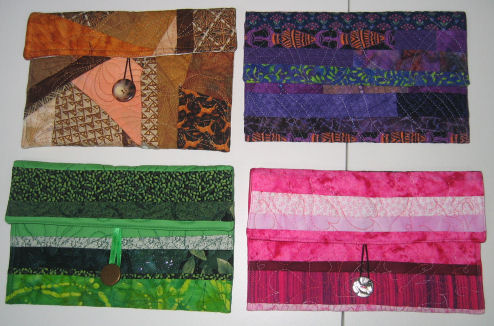
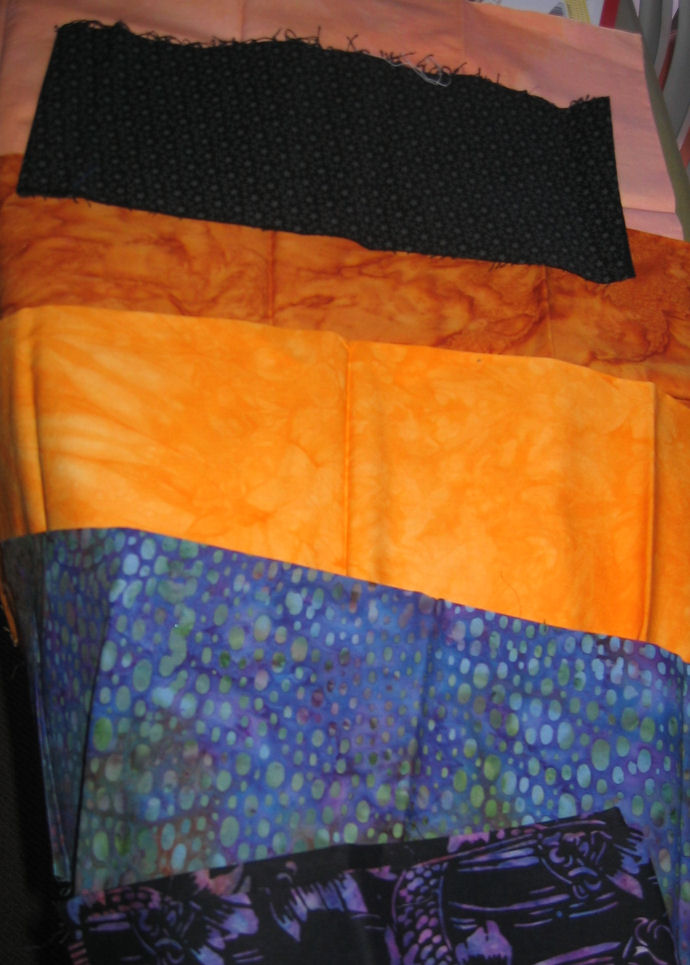
Inside each coloured bag was a fabric clutch I’d made from some of my fabric scraps. Each clutch was a different colour to suit the colours that I thought matched the recipient.

Inside each clutch was a sealed, matching envelope, with a fabric ‘stamp’.

And inside the envelope was the challenge.

Also inside each clutch were two gifts — a pack of microfibre applicator brushes, and two ‘how to’ quilting DVDs.

The clutches:


Challenge 2011: Other monochromatic quilts

15 10 2011

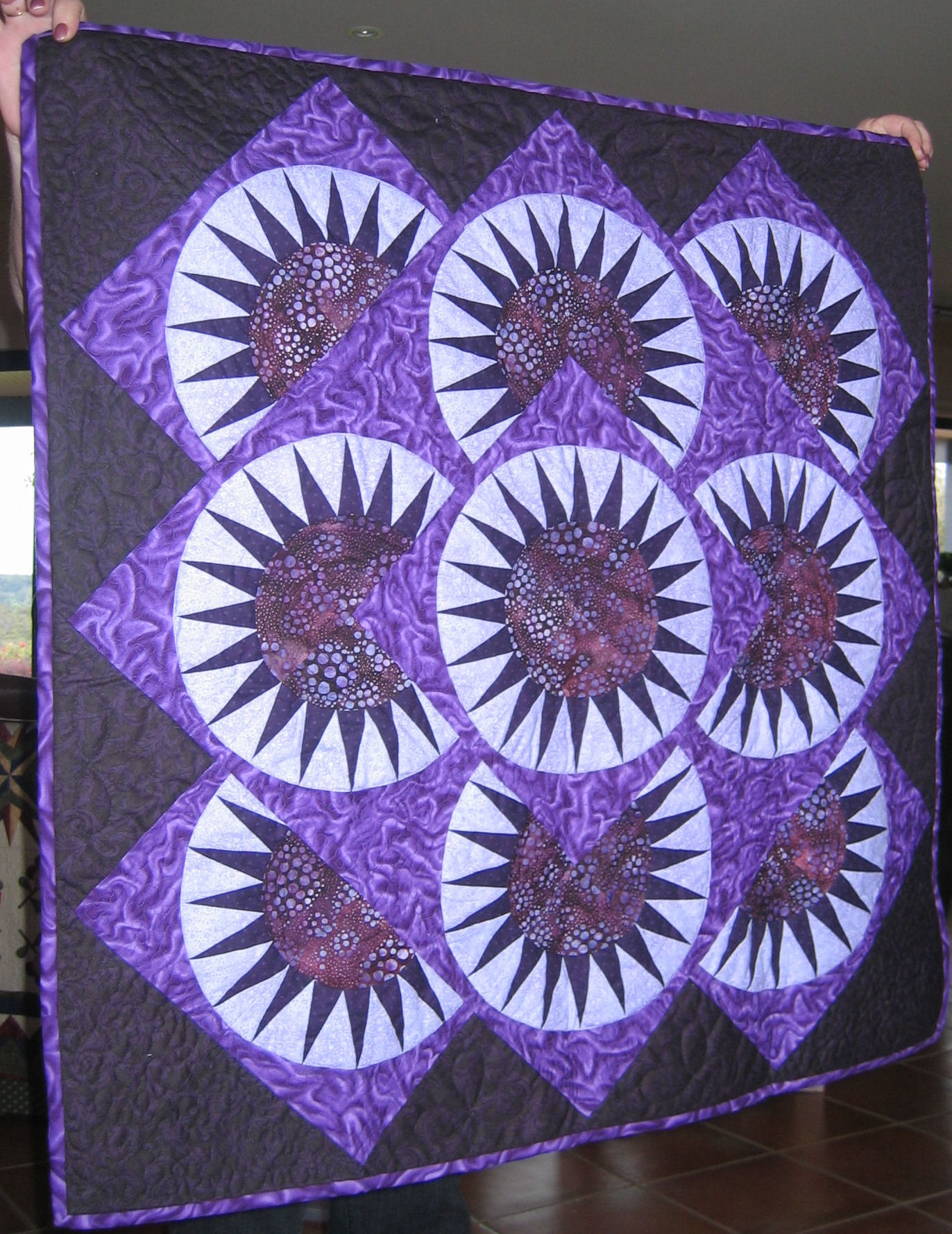
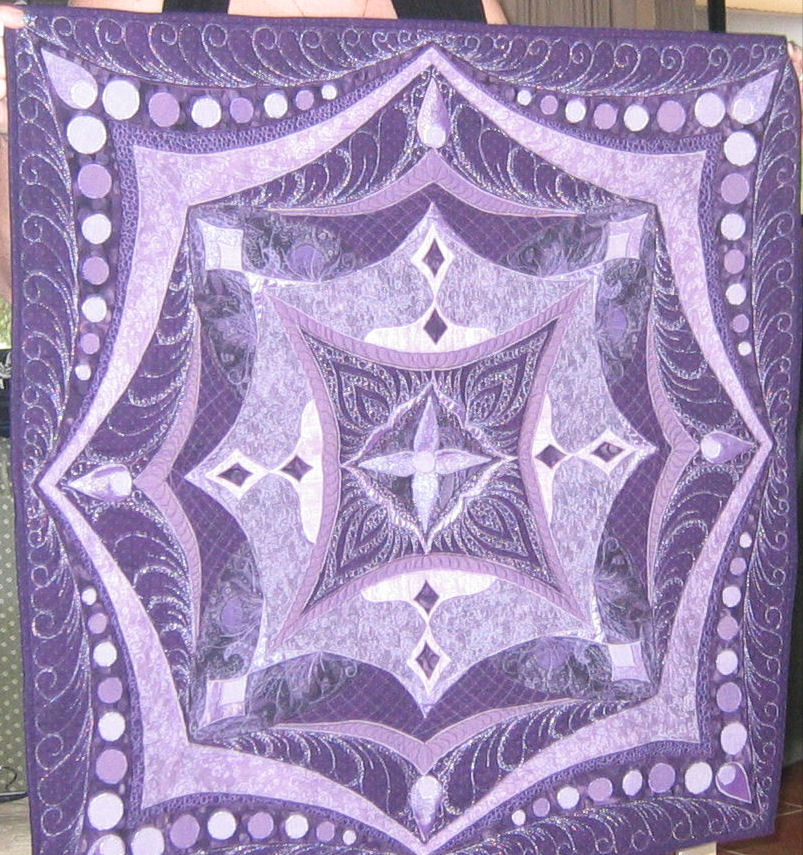
One of the delights of our annual retreat is seeing how the other gals met the challenge set the previous year. Their friendship and general awesomeness is pretty great too ;-), but this post will just focus on the quilts made by the five of us to meet the monochromatic challenge set by Flora.

Considering how many colours there are, it was a complete surprise that we’d all created pieces using the same sector of the colour wheel — there were two blue quilts, two purple quilts, and one pink one (mine).

The entire piece (except for the batting) had to be created using one colour only — top fabric, backing fabric, all threads. And there was to be no other colour in the selected colour — so no creams, greys, blacks, whites, silver, gold, or any other colour that contaminated our chosen colour. However, we could use as many shades of our chosen colour as we wanted, as long as it was ONLY that colour.

Here are the quilts we made to meet the monochromatic challenge; click on a small image to see the larger size.


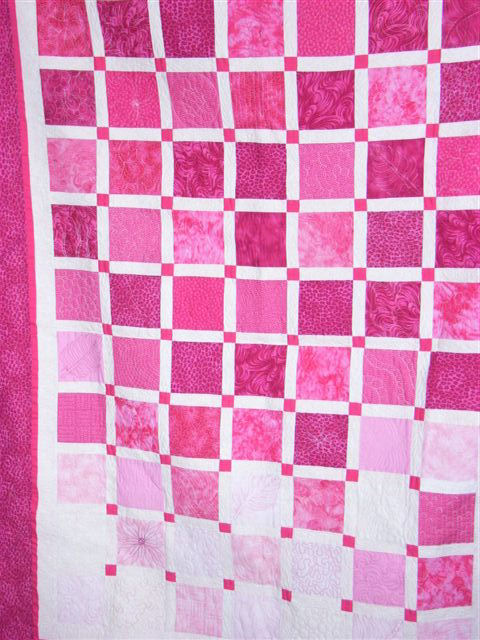
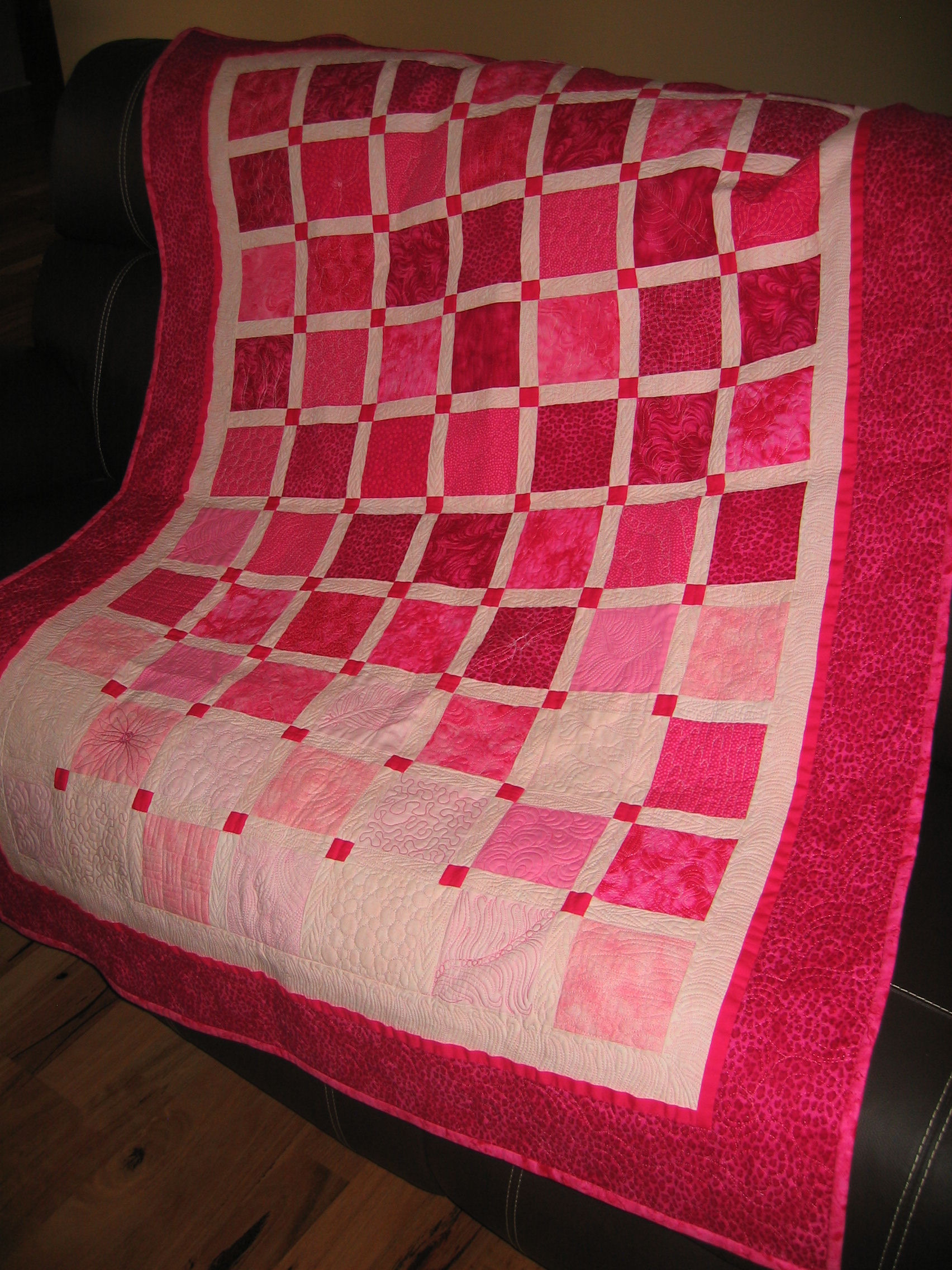
Challenge Quilt 2011: The finished quilt

15 10 2011

I got back to my challenge quilt in April after trying out a Handi Quilter Sweet Sixteen machine at the Eleanor Burns Quilting Academy in California, and after my most generous friend Bobbie lent me hers for two weeks. I actually did all the quilting on it using Bobbie’s machine, then bought my very own Sweet Sixteen at the end of April as a result of stitching this quilt (and others).

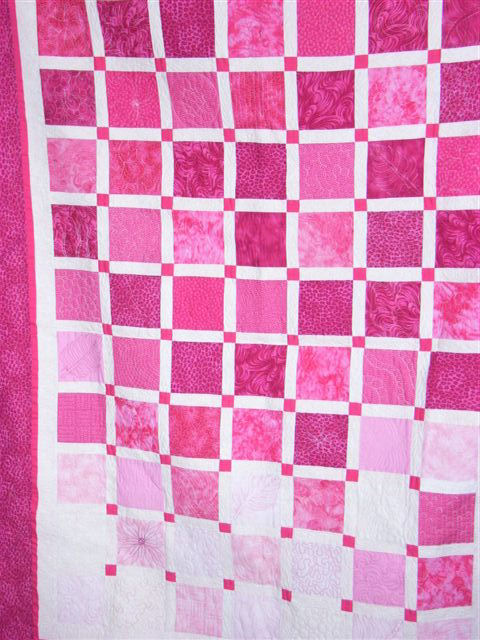
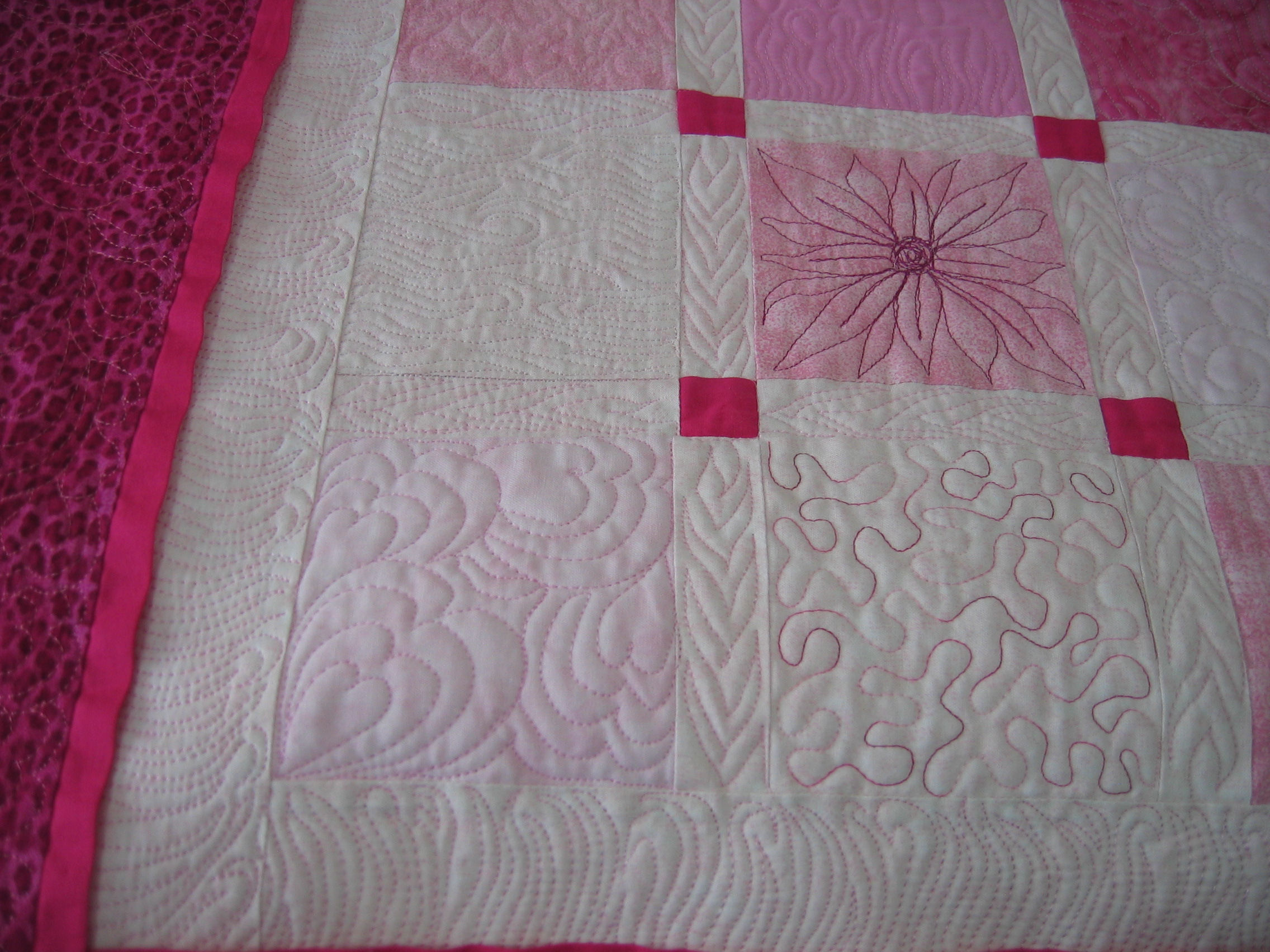
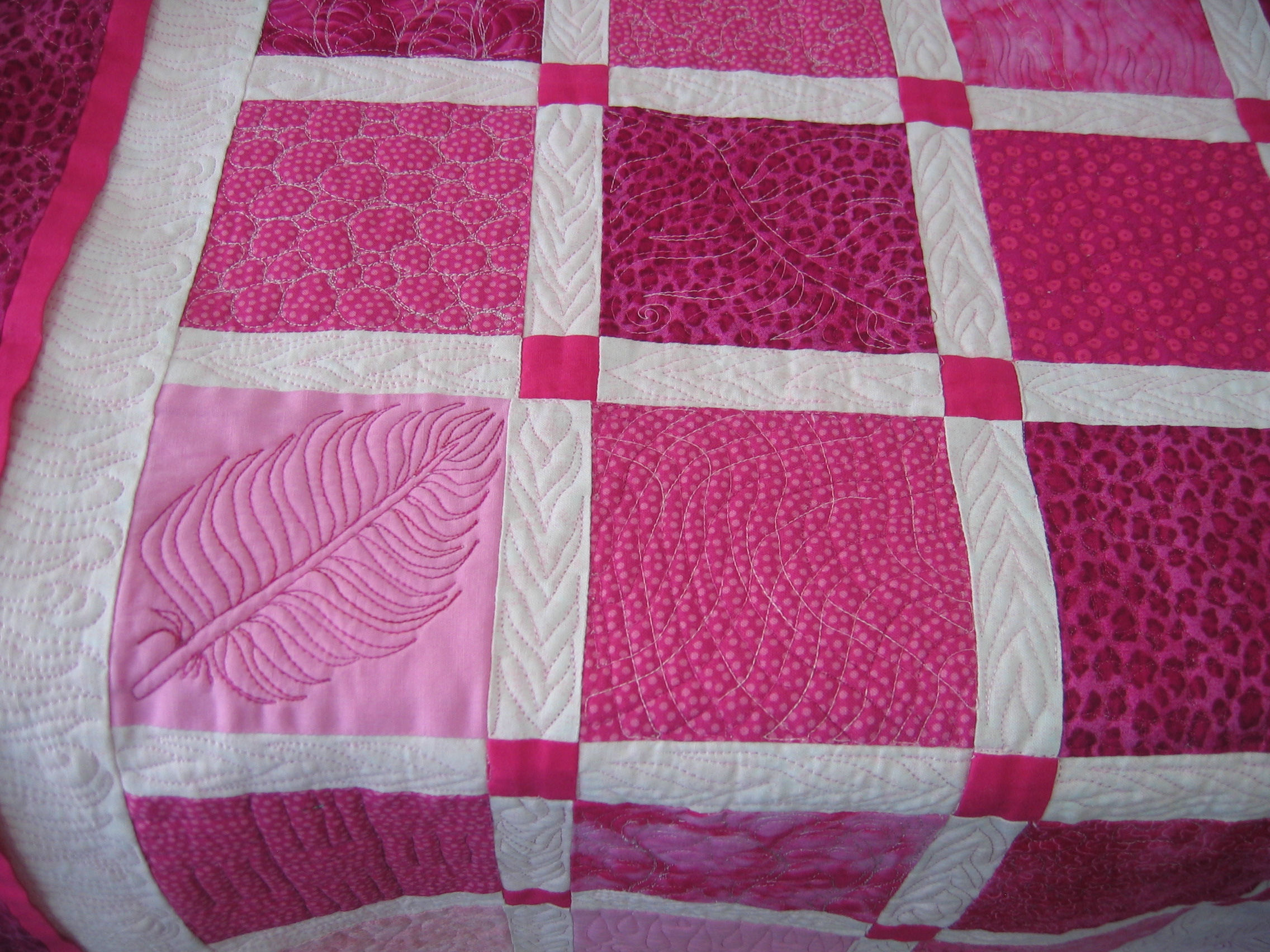
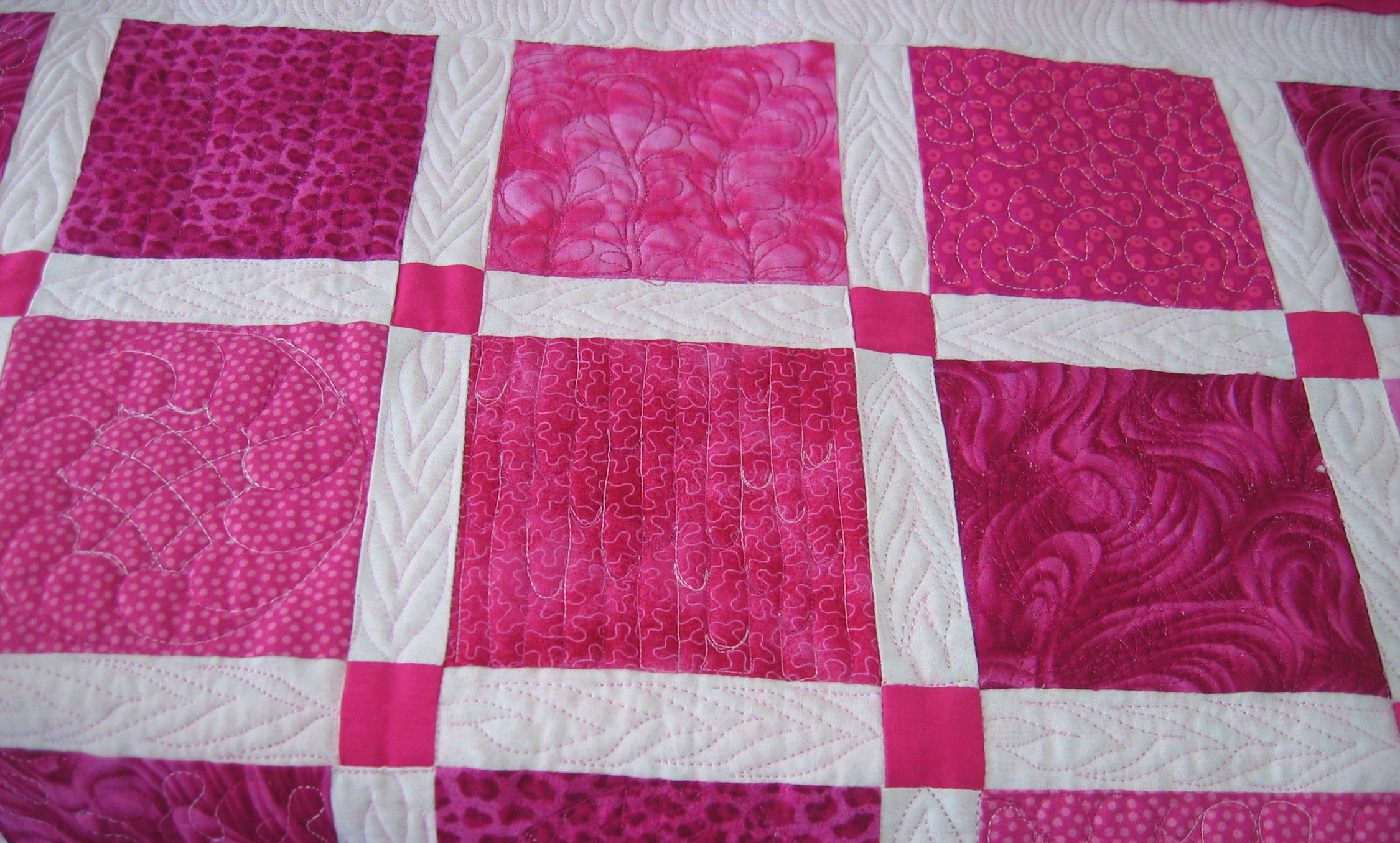
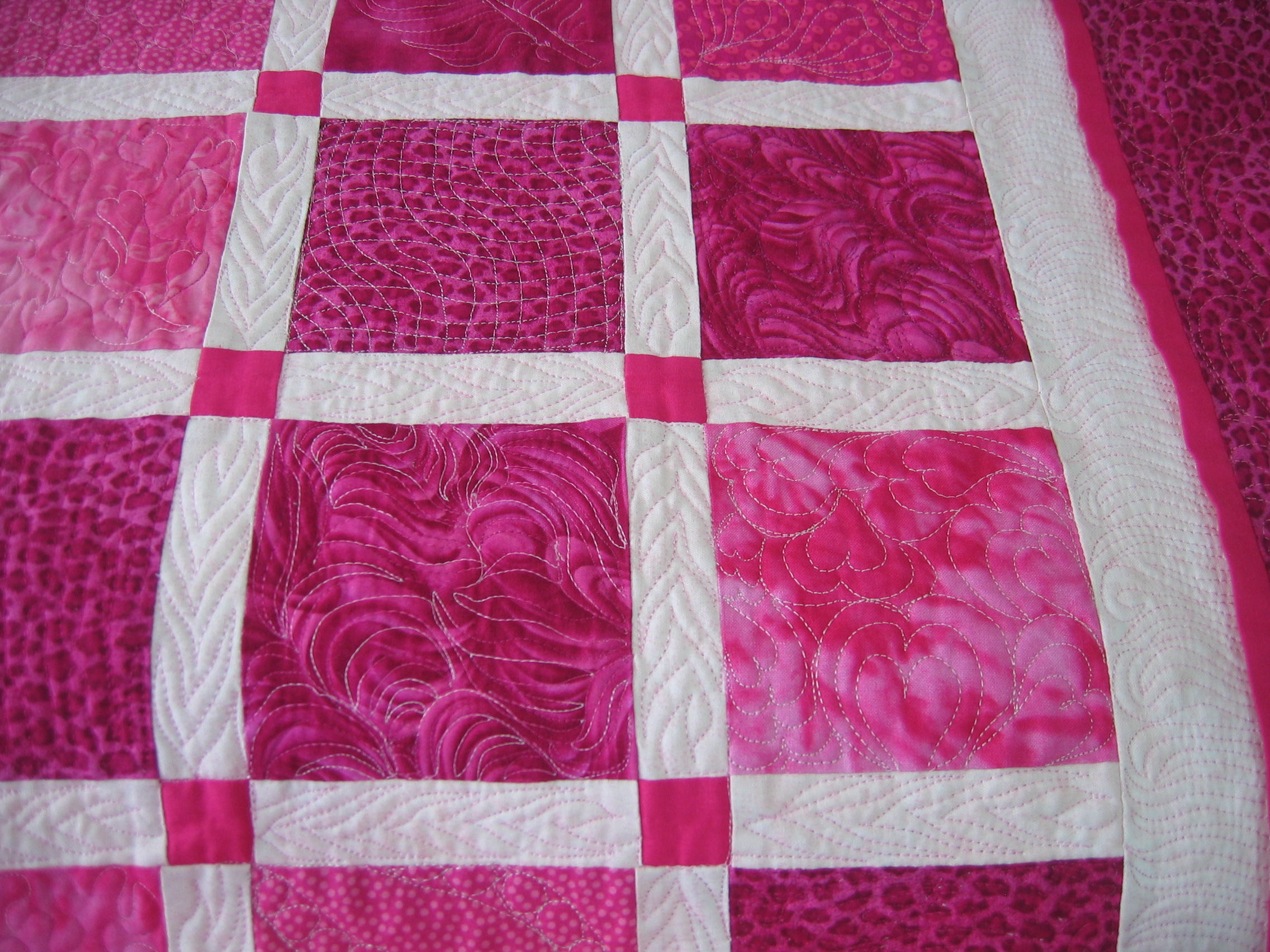
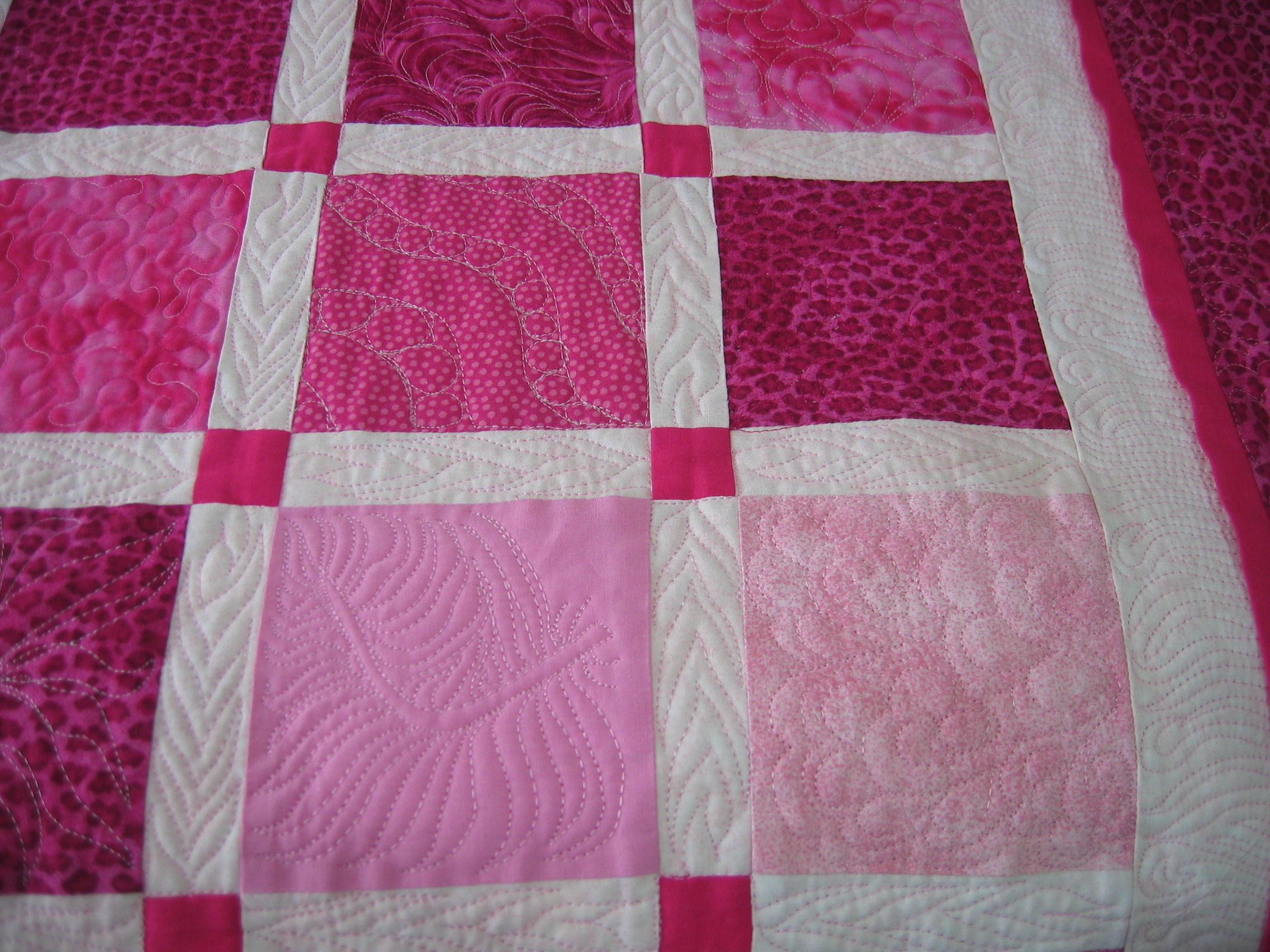
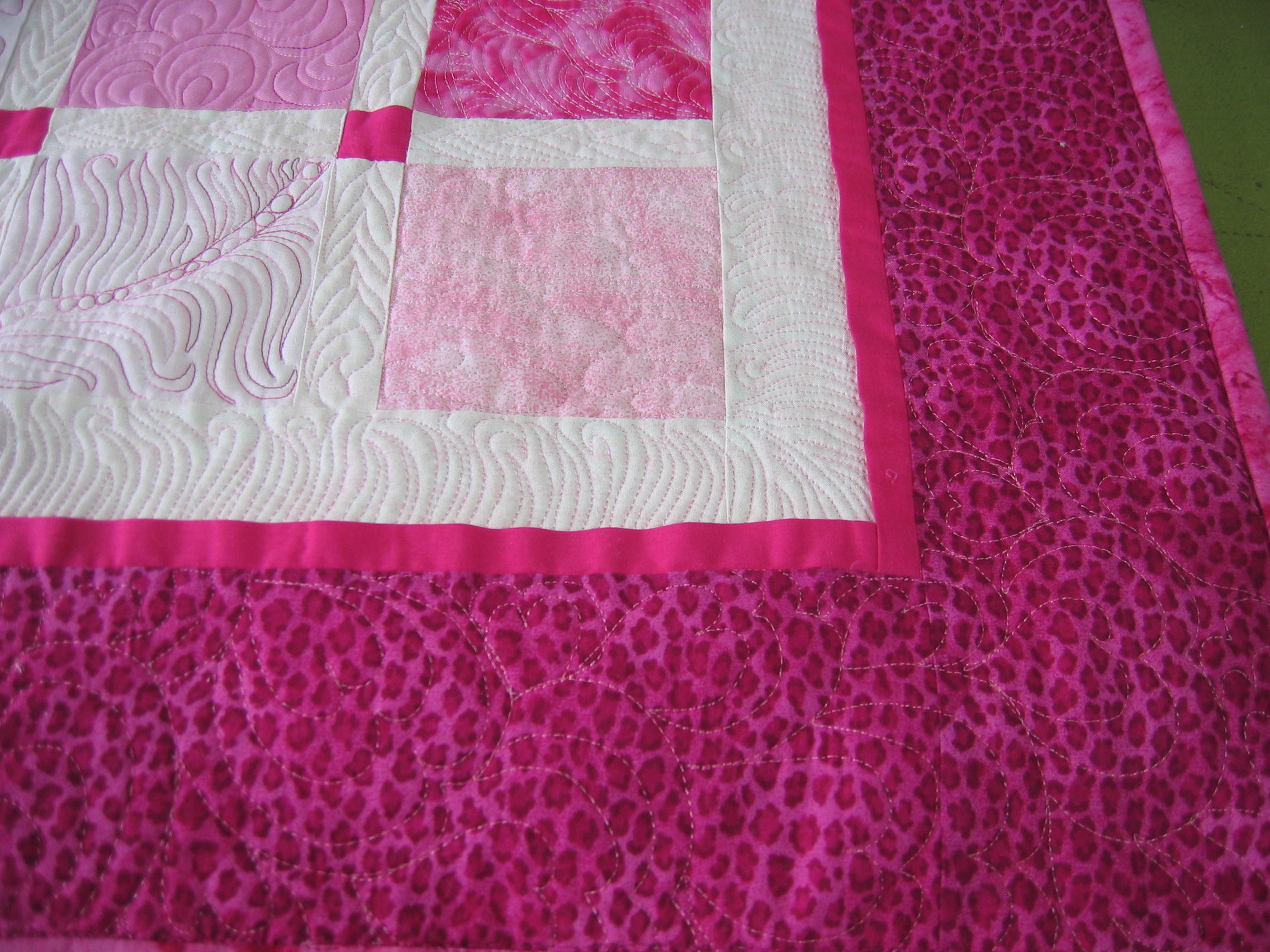
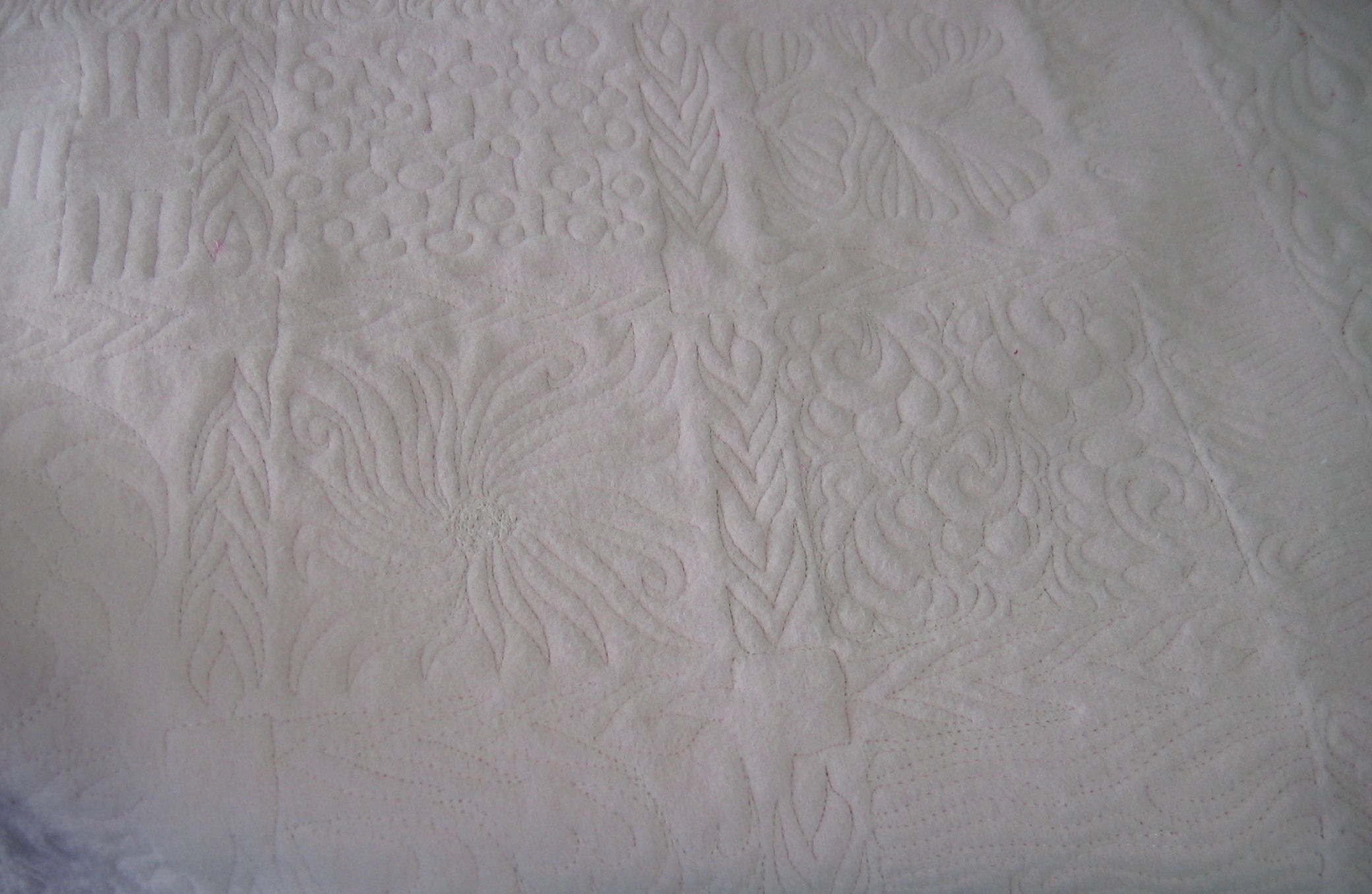
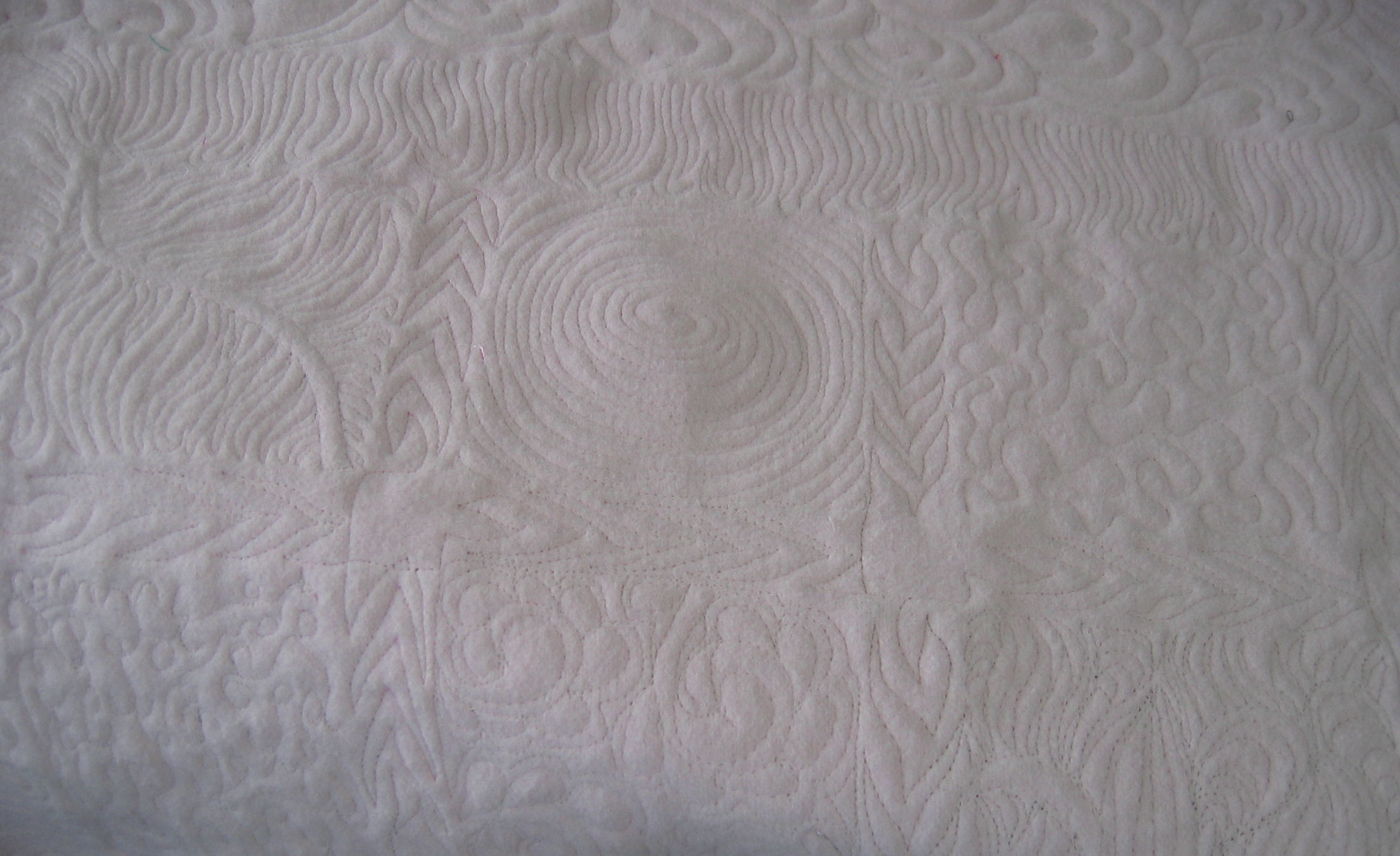
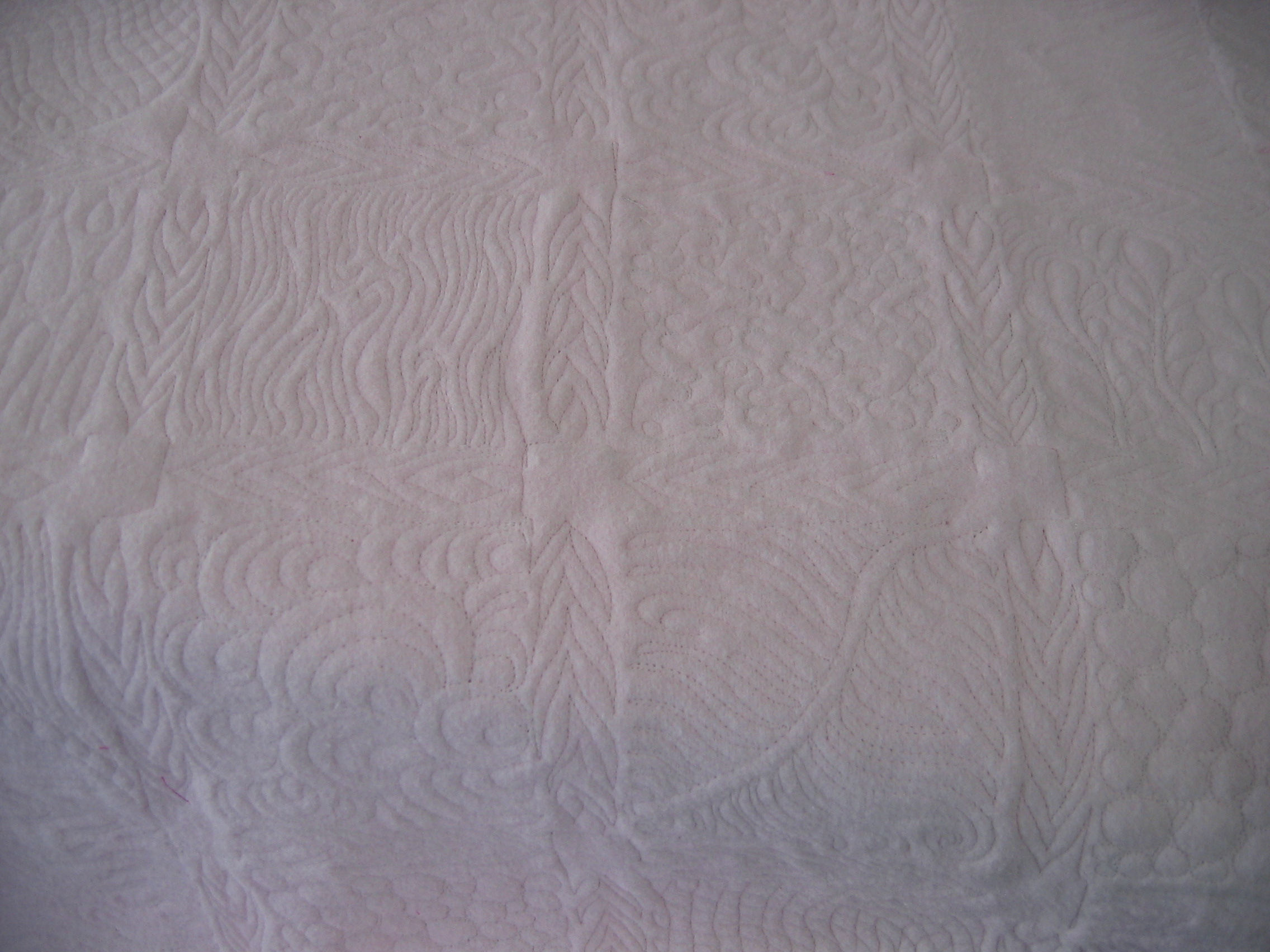
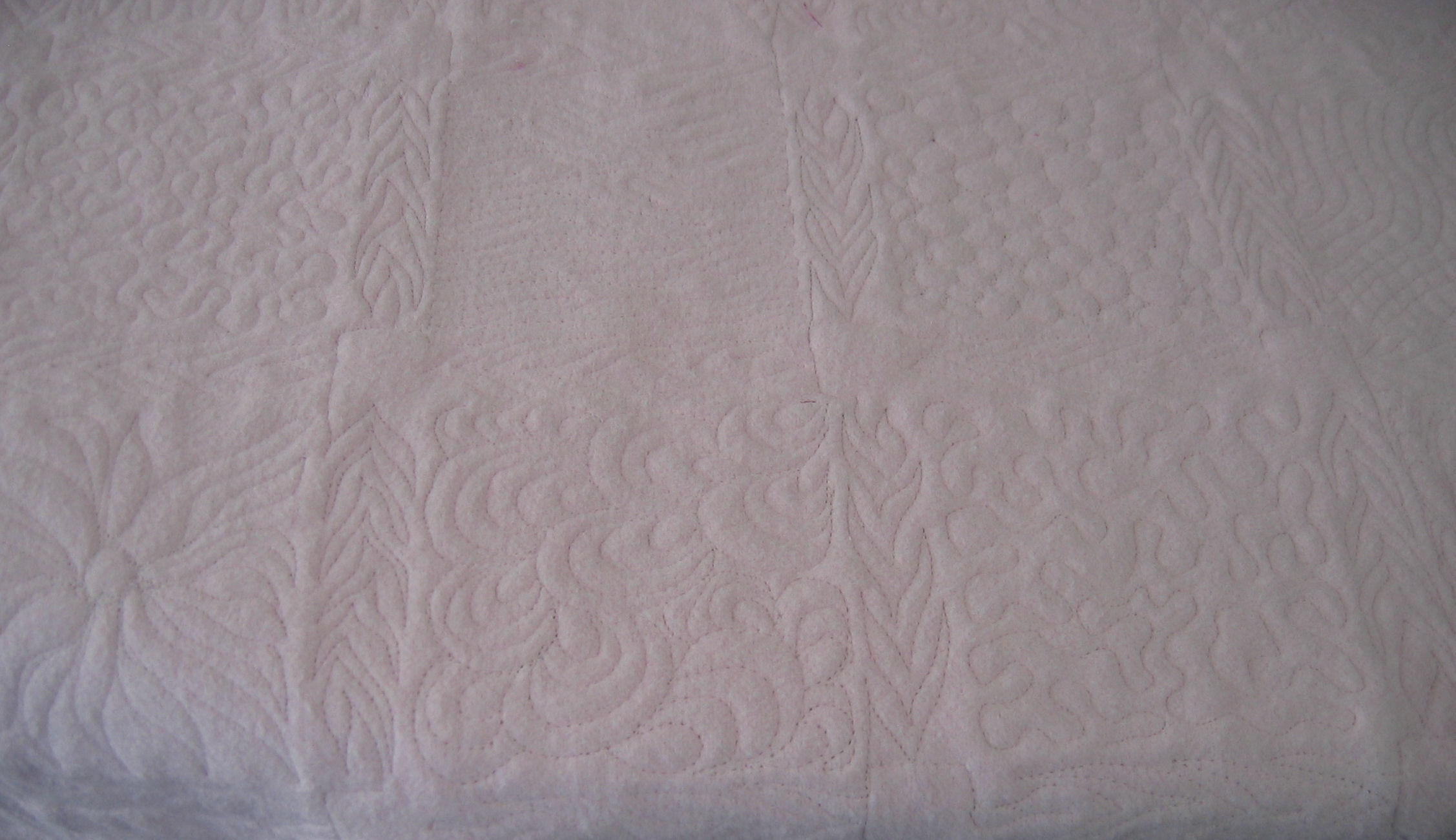
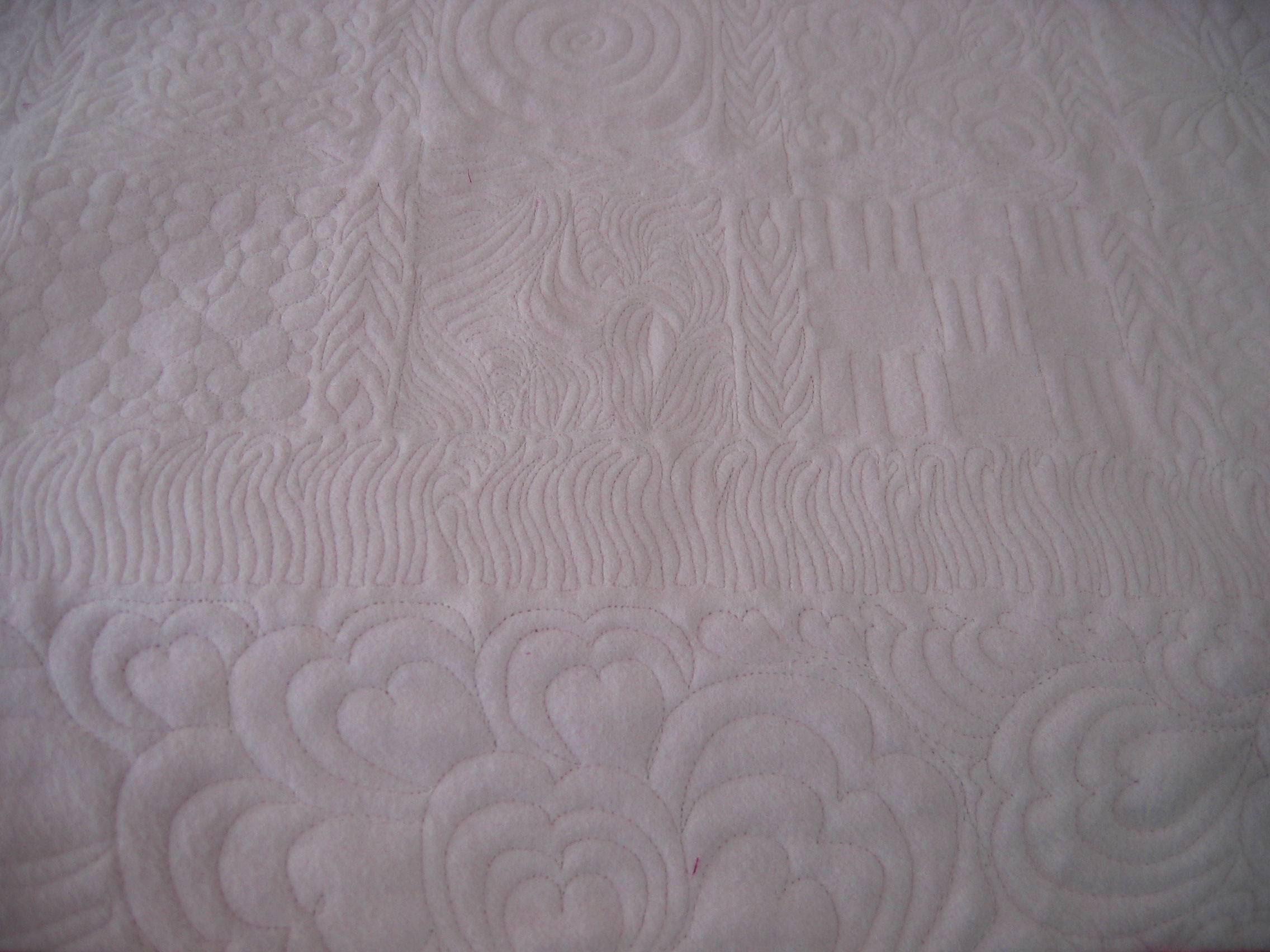
Because the challenge was monochromatic, all the threads in this quilt are also in pink tones. Most were rayon threads, which added an extra sheen. All stitching in all blocks is done free motion — no rulers, no patterns, no drawn designs, just stitching where my hands and brain took me. Drawing zentangles on the plane to and from the US and at the conference really helped! As did the confidence I gained from working through all the Leah Day designs (see also My personal Leah Day project).

There are a lot of photos here as I wanted to preserve for posterity all the different stitching I did in the blocks, the sashing, and the borders — remember, I’ll be giving this quilt away (no, not to you, Sue!!). Click on a small photo to show it larger, then click on the larger version to show it full size.

Oh, and the reason why it’s taken months for me to post these articles and pictures is that our challenge piece is meant to be a secret from the others until we have our annual retreat in late September/October. We had our retreat last weekend, so I can now post my photos!

See also:


Challenge Quilt 2011: Piecing the top

15 10 2011

After deciding on the design, the colour, and the fabrics, then doing all the cutting, it was time to start putting the main part of the quilt top together.

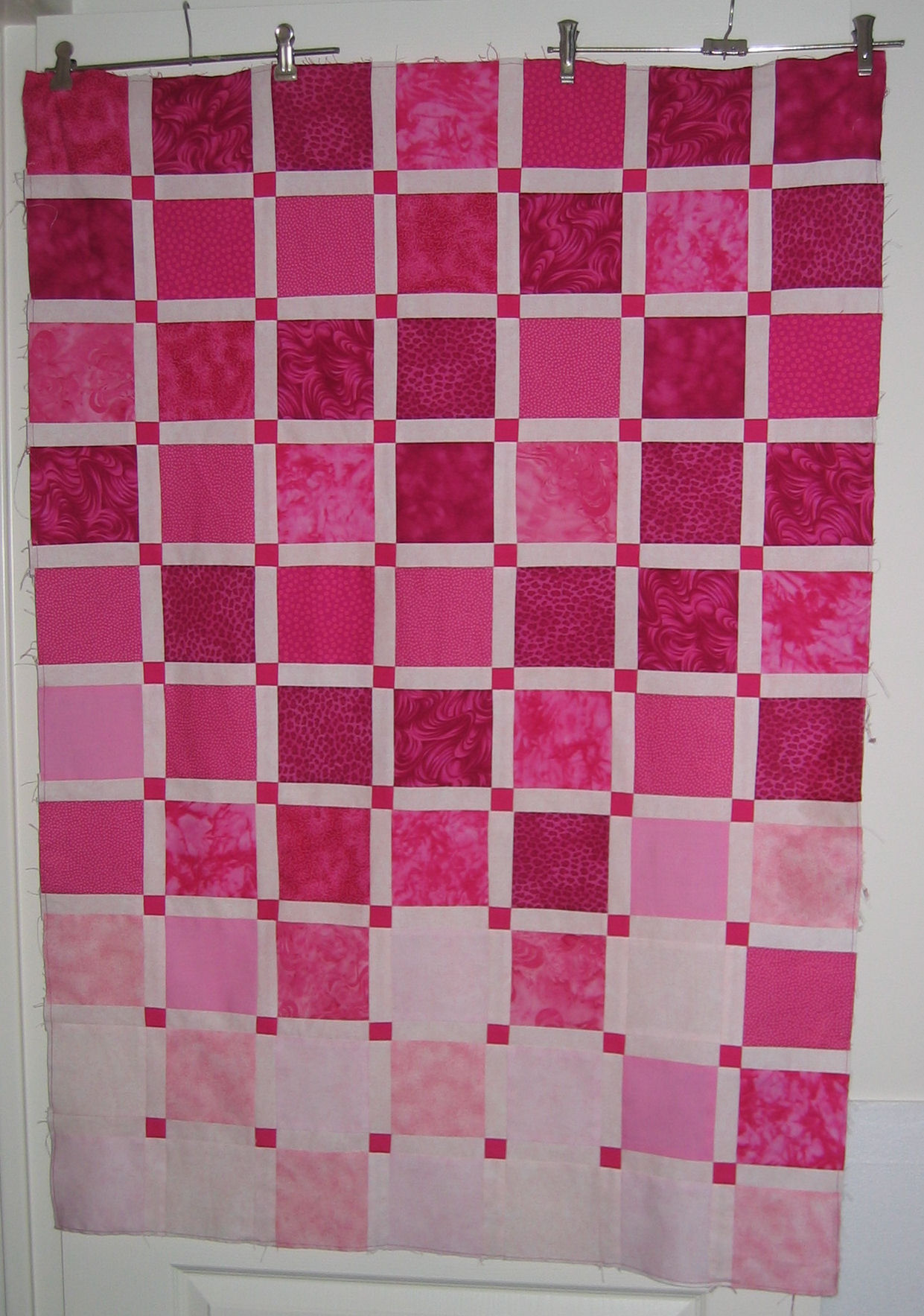
I stitched a sashing strip to one side of all the squares in a each row (70 squares in total). I chain pieced these so that I kept the squares in each row together, and in the order in my ‘design wall’ photos.

Then I stitched a sashing strip with a ‘key’ square to the adjacent side of 6 of the 7 squares in each row (the last square didn’t get one as I didn’t want the key squares in the border area). I only stitched these sashing/key strips to 9 of the 10 rows — the last row didn’t get them either as I didn’t want the key squares in the border area.

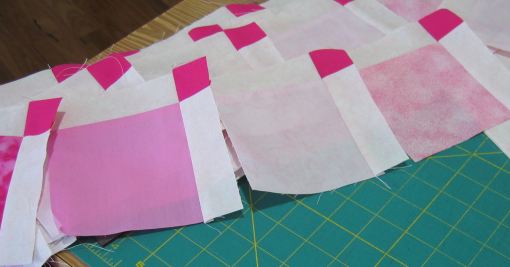
Here’s what one row looked like chained together:

Next, I stitched all squares in a row together, and pressed them alternately — I pressed the seams of the even rows towards the sashing pieces, and pressed the seams of the odd rows away from the sashing pieces (into the square).

Here are all the rows pressed and laid out ready to piece together (notice the use of numbered pins to indicate the rows):

Finally, I stitched the rows together. To avoid warping and skewing, I stitched rows 1 and 2 together in one direction, then row 3 to row 4 in the same direction, then 5 to 6, 7 to 8, and 9 to 10 all in the same direction. After pressing the seams, it was time to join rows 9/10 to rows 7 /8 — this time stitching in the OPPOSITE direction. Likewise, I stitched rows 1/2 to rows 3/4 in the opposite directions, then rows 5/6 to both large pieces.

This ‘stitch in the opposite direction’ was a technique Michelle Pearson (at Handcrafter’s House in Midland, Western Australia) showed me at a quilting workshop a few years ago — it stops large joined pieces from skewing… and it works! One way to know which direction you’ve stitched is to leave a decent amount of thread either at the beginning or end of a stitched row (but NOT at both ends!). I leave the thread at the beginning of my stitching. That way, after I pin the next rows together, I can tell which end to start stitching from (the opposite end is the one without the long threads).

A final press and the main top was all done — the only thing to do was stay stitch about 1/8 inch in from the edges just to hold everything in place as it may be some weeks before I get back to this quilt.

No need for a design wall this time — I just hung it over the door with some skirt hangers!

See also:


Challenge Quilt 2011: Preparation

15 10 2011

I wrote this post in November 2010, knowing it wouldn’t be published until late September/early October 2011, AFTER we’ve had our quilting retreat at Bobbie’s house. The reason: Our challenge piece is to remain secret from the other ladies — which is part of the fun of the challenge!

Flora set the 2011 challenge — and what a challenge it was! We are to make a monochromatic piece. That means ONE colour from the colour wheel only, with no blacks, whites, greys, creams etc. in the fabric. So, if you choose purple as your colour, then every fabric you use must ONLY have purples in it — no silver or gold flecks, no little black dots to make the purple darker, no reds in with the purple etc. Sounds easy. Yeah, until you have to actually choose your fabrics! Then you realise how many have other colours in them, often as part of a minute print.

So the first part of the challenge is choosing your colour, then your design, then your fabrics.

Early on I settled on pink as my colour, and I found a design that I liked that I adapted to suit the large lap quilt (more like a body quilt!) I wanted to make. I have a person in mind for this quilt, but that’s not to be revealed yet (and Sue — it’s NOT you! 😉 )

I had many pinks in my stash, but I bought a few more just so I could get the colour range right.

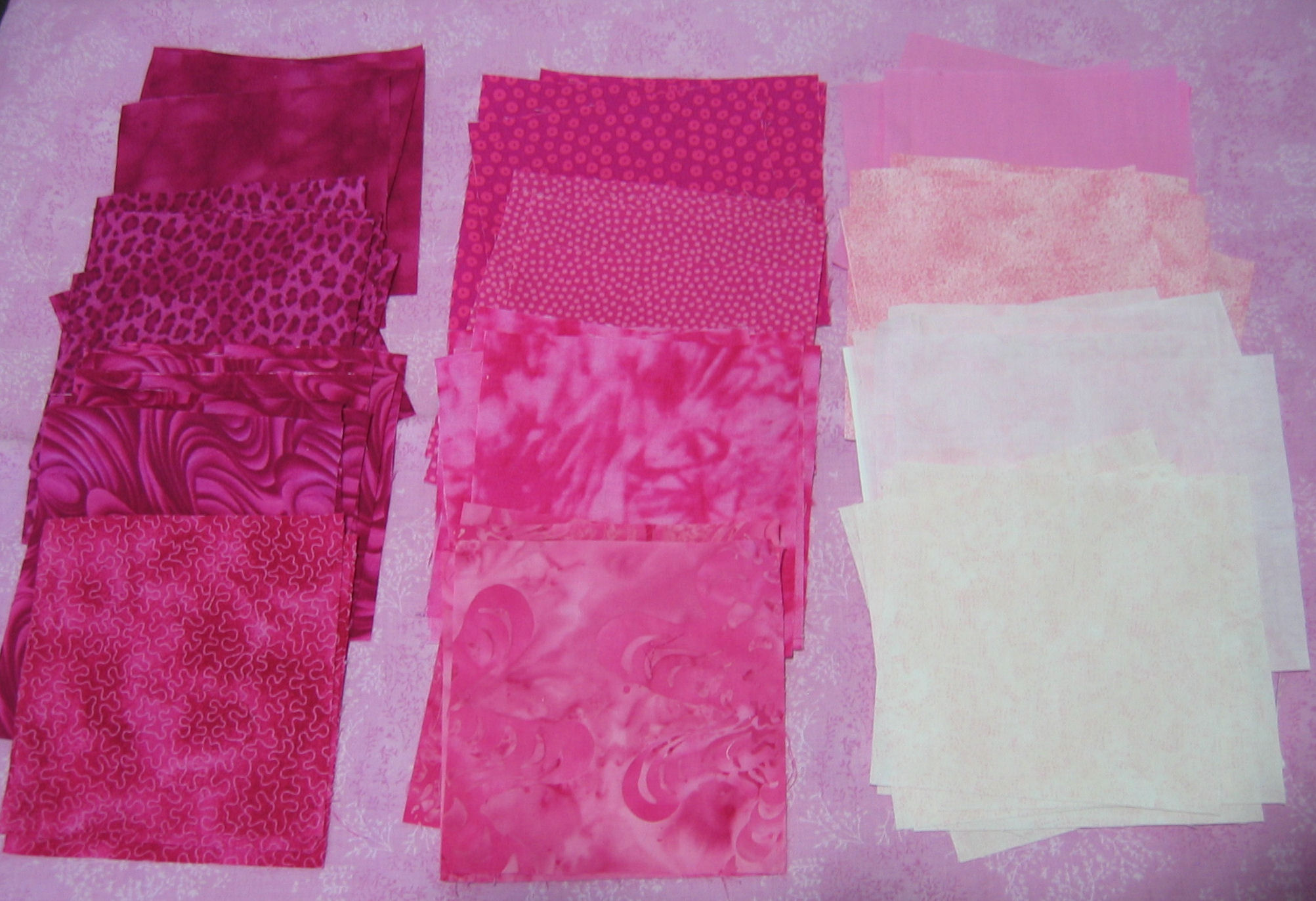
Here are my fabrics — I’ve used 12 different shades of pink from very deep pink to the lightest of pinks.

Here’s the design I had in mind:

And here’s what 70 four-and-a-half inch squares look like loosely pinned to the ‘design wall’:

Now comes the fun part… cutting all the sashing strips and ‘key’ squares, then sewing all the bits together.

A day or so later…

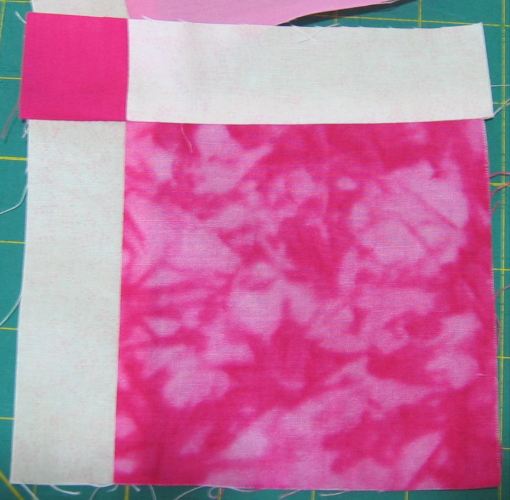
Here are the sashing strips (1.5 in x 4.5 inch) and sashing strips (1.5 x 4.5 in) stitched with the ‘key’ squares (1.5 x 1.5 in).

No, I didn’t cut out those individual ‘keys’ one by one — I’m not a masochist! 😉 I cut a long, 4.5 in wide, pale pink strip and a long 1.5 in wide dark pink strip, then sewed them together along the long edges. I then pressed the seams to the dark, then cross-cut many 1.5 in wide strips from the joined strip.

Next comes piecing the main top…

See also:


How I made ‘The Elements’ art quilt

15 08 2011
'The Elements' art quilt

‘The Elements’ art quilt

With this art quilt, I documented and photographed many of the steps I took to make it, and the time taken.

Total time: 15.5 hours, plus 2 hours to write this blog post

Total free motion quilting stitches: 34,069 (NOT including stitches done on sewing machine)

Step 1: Transfer the pattern to tearaway and freezer paper

  1. Tape the pattern piece to the glass door.
  2. Tape a large piece of tearaway over the pattern piece.
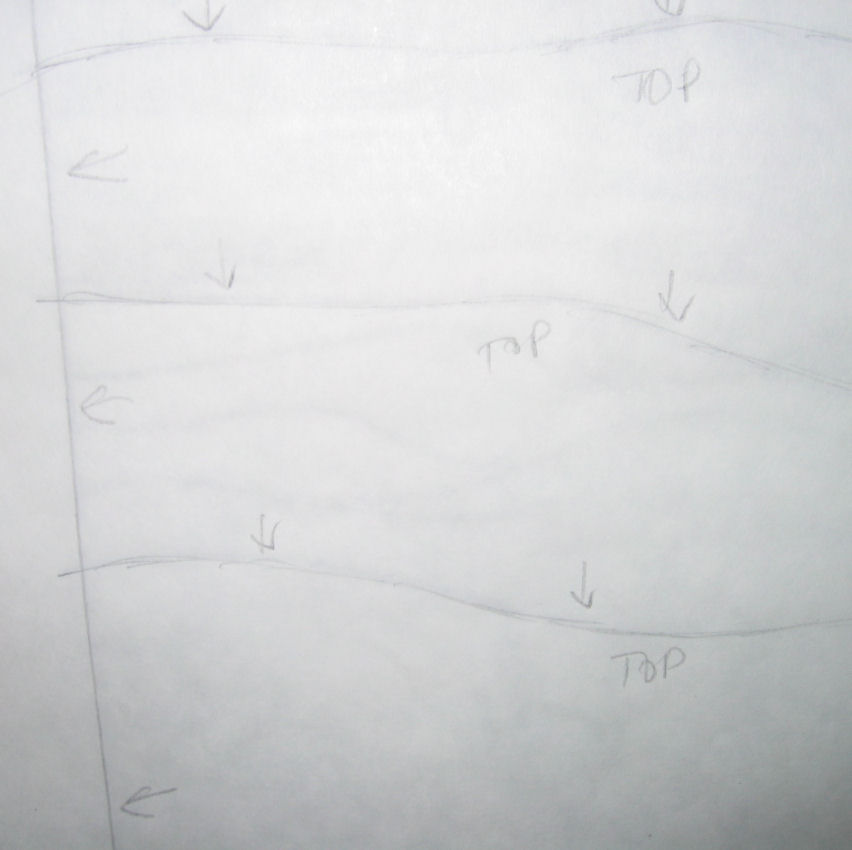
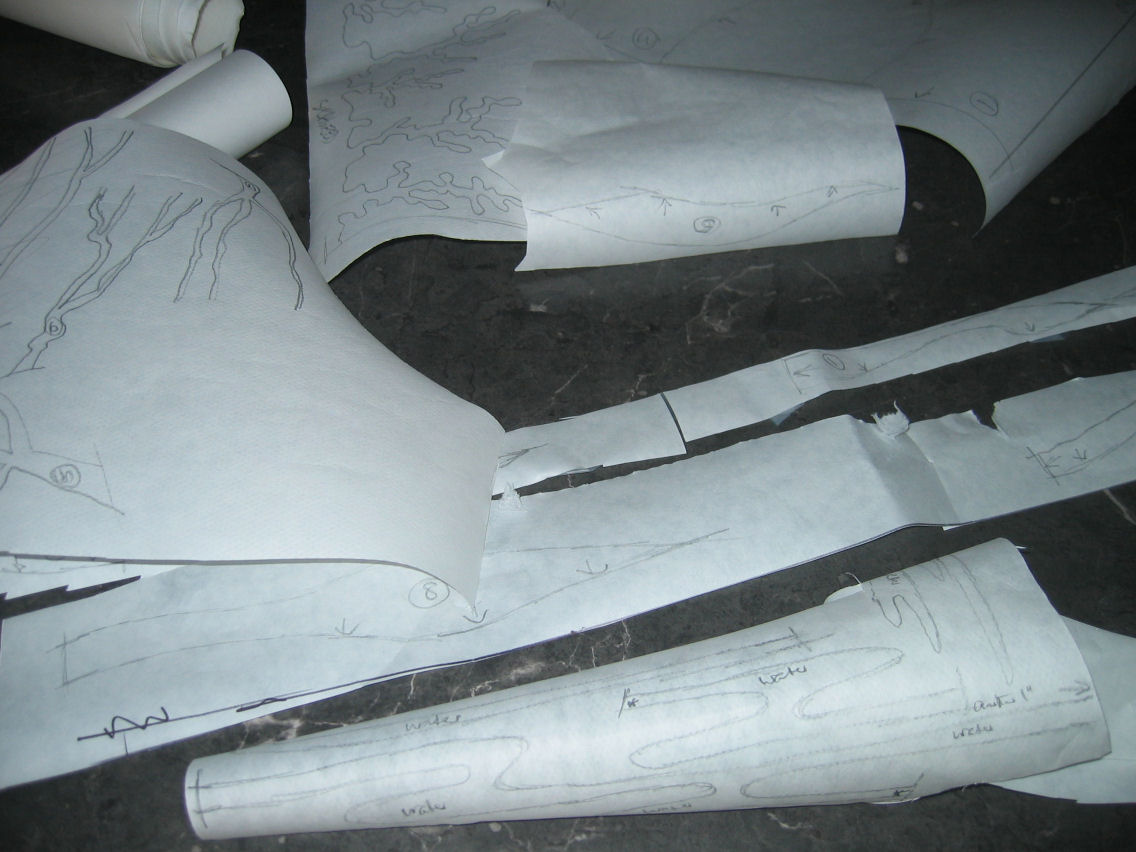
  3. Mark the main background sections and borders on to the tearaway and number each piece. Make sure you use an indicator to show which parts of each piece go under other pieces — I use arrows to indicate the bits that will be covered by other pieces, and ‘Top’ to indicate the top of the piece; some people use dashed lines for areas that will be covered by other fabric — use what works best for you.
  4. Tape freezer paper (shiny side down) over the combined pattern piece and tearaway and mark and number the main background sections on the freezer paper. Again, use indicators for the edges that will go under another piece of fabric.
  5. Tape another large piece of tearaway over all the other pieces and mark and number the main background sections on to it.
  6. Remove all taped pieces of tearaway and freezer paper, leaving just the pattern piece taped to the glass door.
  7. Tape a smaller piece of freezer paper over the water section (the bit with the ‘waves’) and trace separate pieces for each wave, numbering them as you go. Don’t overlap any of the pieces, even if they are overlapped in the pattern. Again, use indicators for the edges that will go under another piece of fabric.
  8. Remove the pattern piece from the glass door and flip it over. (I forgot to do this! So my tree, water reflection, and rock pieces ended up being the reverse t0 the original pattern — this wasn’t a problem as it wasn’t critical, but it did mean my piece looks a little different to the original design and I had to improvise a little to get the pieces to fit in the available spaces).
  9. Tape fusible web over the pattern piece and trace out the smaller elements (the trees, the seaweed, the rocks). Mark each tree and rock with a number. Don’t overlap any of the pieces, even if they are overlapped in the pattern.
  10. Remove the fusible web and the pattern from the door, and put the pattern away.

You should now have:

  • two large tearaway sheets, both marked with an outline of the background shapes and borders
  • a large sheet of freezer paper, also marked with an outline of the background shapes and borders
  • a smaller piece of freezer paper, marked with the shapes of the waves
  • one or more pieces of fusible web, marked with the trees, rocks, water reflection pieces, and seaweed. These are your applique pieces.

Time taken for these steps: 0.5 hours.

Step 2: Cut out the pattern pieces

  1. Tearaway: Take ONE piece of the tearaway marked with the background shapes and cut out each shape; you can cut on the lines. Leave the other piece whole.
  2. Large freezer paper: Cut out the background shapes from the large piece of freezer paper; cut on the lines.
  3. Small freezer paper: Cut out the wave shapes from the smaller piece of freezer paper; cut on the lines.
  4. Fusible web: With the shapes on the fusible web, cut them larger than the elements marked by at least half an inch (~3 cm).  Where possible, leave those to be cut from the same fabric together — it’s much much easier to fuse large pieces with one or more shapes to the fabric and then cut them out, than to cut them out then fuse them.

Time taken for these steps: 0.75 hours.

Step 3: Choose the fabrics and prepare them

Now comes the fun part — choosing which fabrics you’ll use for all the pieces!

  1. Audition fabrics for each background section and the applique pieces — they need to complement each other in colour, and be a combination of light, medium, and dark fabrics. While you’re auditioning the main fabric pieces, consider the fabrics you’ll use for the small and large borders, and for the backing and binding.You don’t have to choose these right away, but it helps.
  2. Press all the fabrics you’ve chosen.
  3. Take one of the background fabric pieces of fabric and iron the matching freezer paper piece shiny side down to the FRONT side of the fabric.
  4. Cut around the fabric piece, leaving about half an inch of extra fabric all the way around. DO NOT cut to the lines of the freezer paper.
  5. Repeat steps 3 and 4 for all the other background pieces of fabric and for the fabric you’ve chosen for the waves.
  6. Take the fabric(s) you’ll use for the trees and turn it over. Press the fusible web for the tree pieces to the WRONG side of the fabric. Set it aside to cool.
  7. Repeat step 6 for the fabric(s) for the rocks and the seaweed, making sure you press the fusible web to the WRONG side of the fabric. Set it aside to cool.

Time taken for this step: 1 hour

Step 4: Create the background pieces and applique them

  1. Take each background piece (except the very top one) and each of the wave pieces. Turn under and press the top edge of each piece so that it’s aligned with the top edge of the cut freezer paper. You may need to clip into the curved bits if they won’t turn smoothly. Leave the freezer paper in place.
  2. Place each background piece on its matching piece of tearaway (the cut tearaway pieces, NOT the big piece of tearaway), lining up the top edge of the fabric with the top edge of the tearaway.
  3. Lift the top edge of the freezer paper a little and stitch down the turned edge on to the tearaway, stitching about 1/8″ in from the turned edge. Stitch the sides too, about 1/4″ out from the freezer paper, to stabilise the fabric. Remove the freezer paper and discard it.
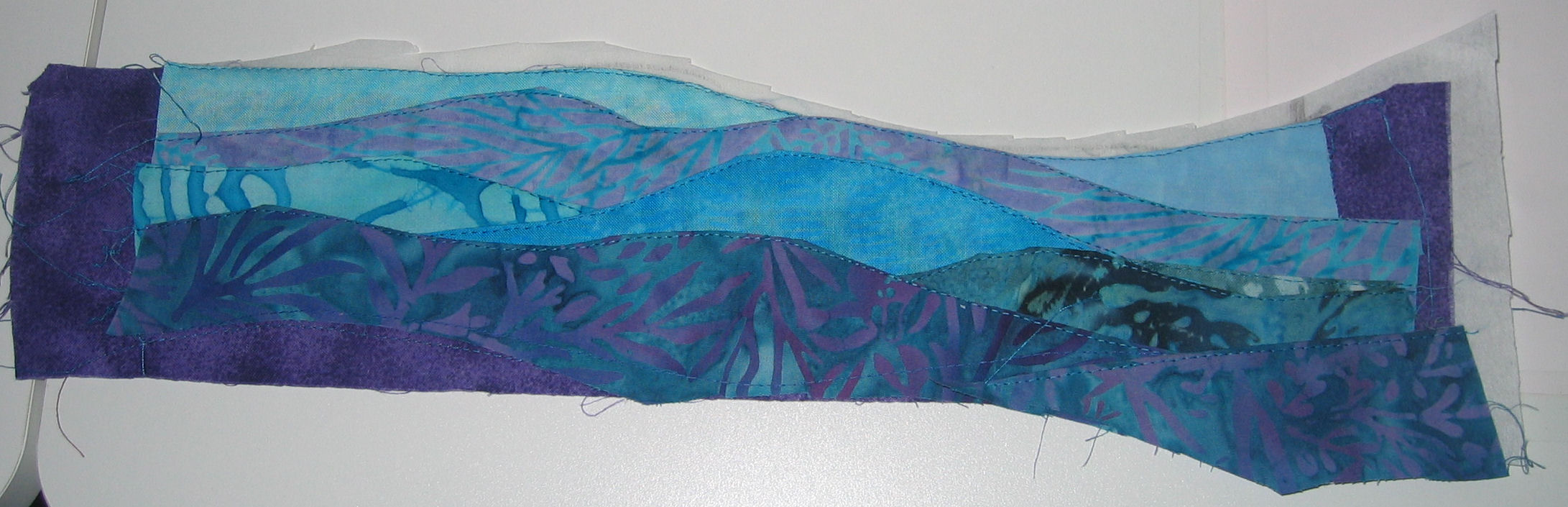
  4. Repeat steps 2 and 3 for all background pieces and the wave piece. With the wave piece, start from the top piece, then overlap the second piece and stitch it down, then the third and so on until you’ve stitched all wave pieces onto the single piece of background tearaway for the waves.
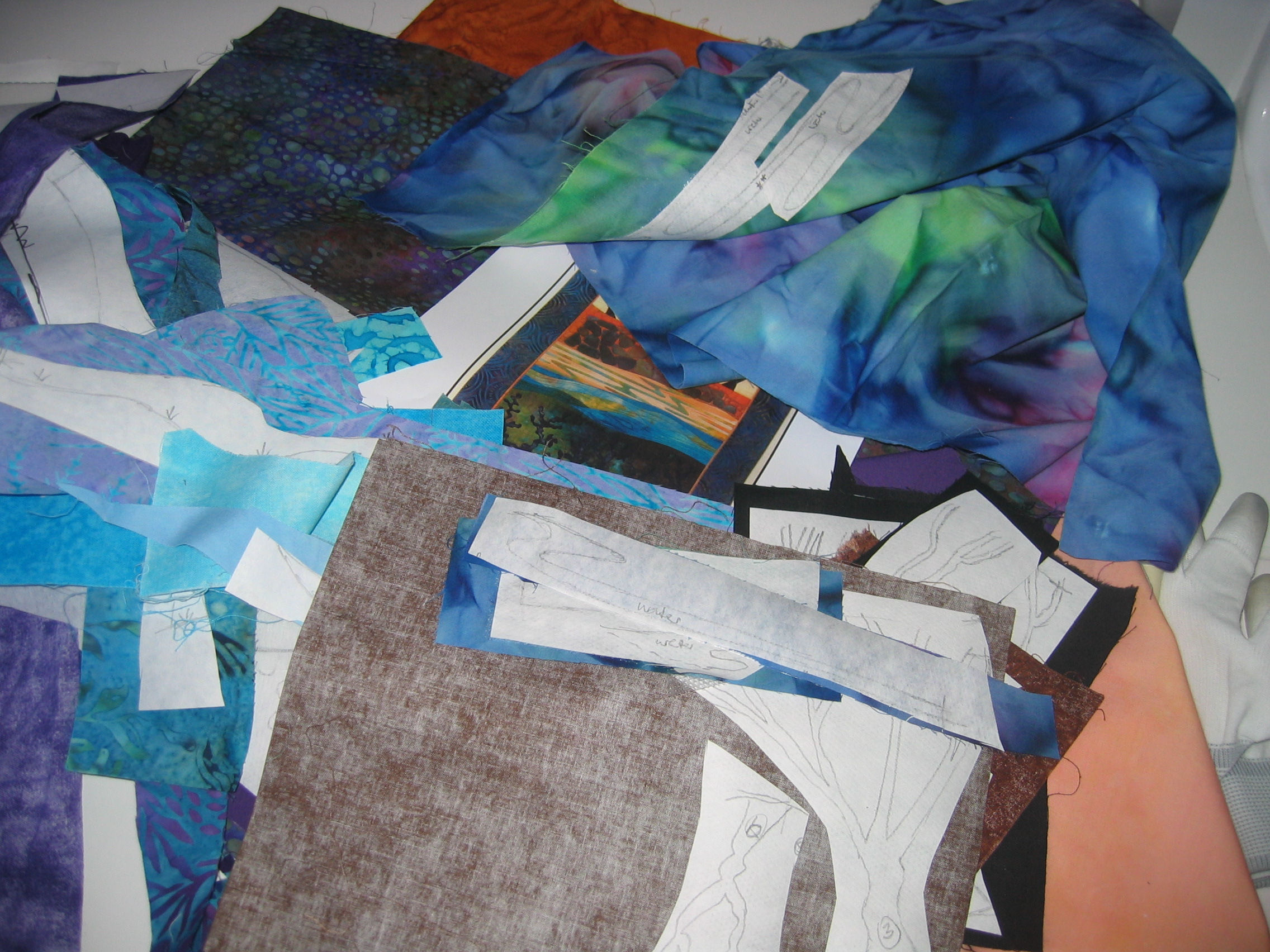
  5. Cut out all the applique pieces on the various bits of fusible web. Cut on the marked lines; you’ll need sharp scissors to get into the little nooks and crannies. You’ll end up with several flimsy trees and water reflection pieces, a large piece of seaweed attached to the sea floor, and several rock pieces.
  6. Lay out one of the background pieces that is to have applique pieces fused to it. Place the applique pieces on the background piece in a way that pleases the eye, remove the backing paper, then fuse them into place with a hot iron. Put the fabric aside to cool.
  7. Repeat step 3 for the other background pieces that are to have fused applique pieces.
  8. When the fabrics have cooled, stitch down the applique pieces using a stitch of your choice. I used a plain running stitch just inside the edge of the fabric (about 1/8″ or less from the edge of the fused applique pieces), in the same colour as the applique piece.
  9. Remove the tearaway from the back of each piece, as far as you can. Don’t underestimate the time for this step — it’s a great job to do in front of TV!
  10. Press each background piece.

Time taken for this step: 6 hours

Step 5: Put it all together and add surface stitching

  1. Take the whole piece of marked tearaway, and pin the top and side edges of the background pieces on it, matching up the top edges of each background piece with the marked edges on the tearaway as far as possible. Work from the top down. Remember, you won’t be able to see the top edges further down as they will be covered by the excess fabric, so take your best guess for placement.
  2. Stitch the top edges in place; stitch the sides for stability too, if you want. You should now have a single piece.
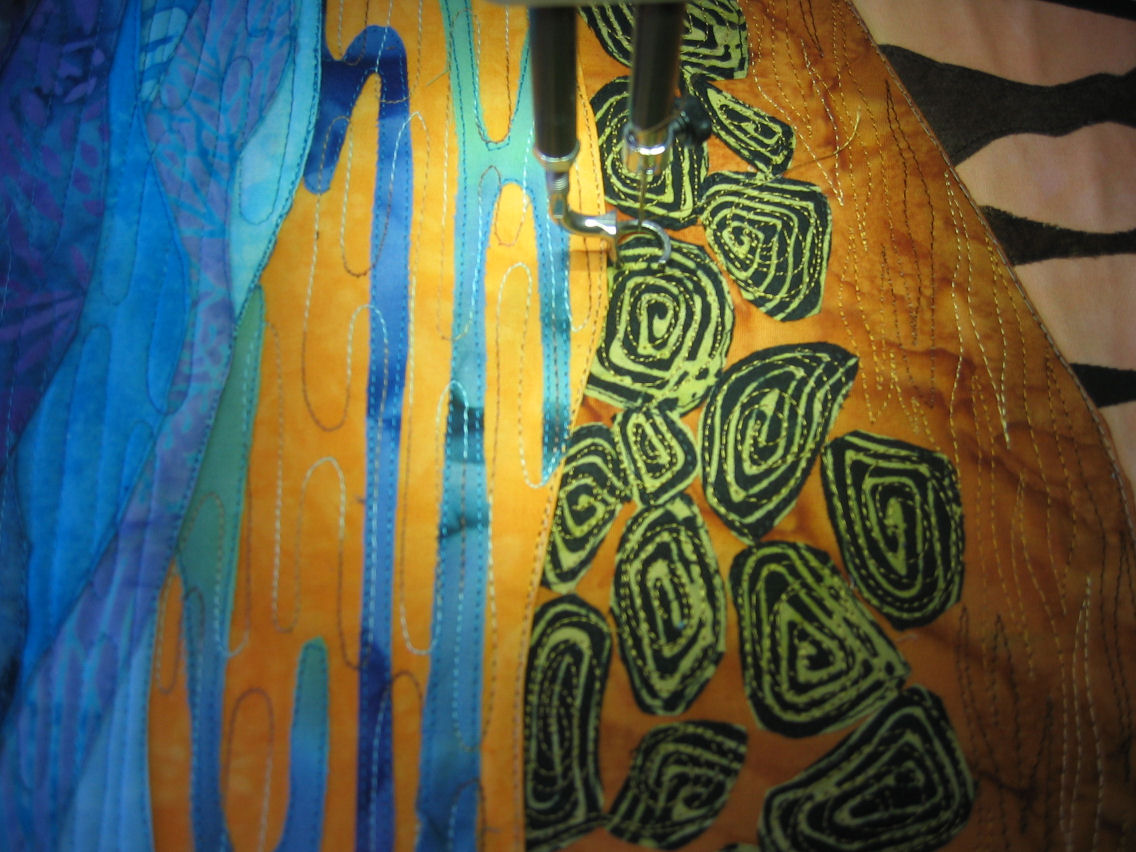
  3. Add surface stitching to the piece, as required. I used my HandiQuilter Sweet Sixteen machine and free motion stitched some 15,813 stitches to the piece during this step! I added flames to the base of the trees and earth, bark to the trees, striations to the earth above the rocks, spirals to the rocks, water effects to the water reflections and waves, more seaweed to the sea floor, etc.

  4. Press the whole piece, then square off and cut to size.


Time taken for this step: 1.5 hours

Step 6: Add borders

  1. Rotary cut the narrow and wide border fabrics.
  2. Pin the narrow framing border, then stitch (sides then top). Press away from the piece. Make sure the whole piece is still square.
  3. Pin the wide borders, then stitch (sides then top). Press away from the piece.

Time taken for this step: 0.5 hours

Step 7: Add batting and backing and quilt

  1. Lay out the backing fabric on a flat surface, right side DOWN. It should be a good one or more inches wider than the top. I tape down the backing fabric to make sure it stays taut.
  2. If you’re using normal batting, place it over the top of the backing and tape it down too. In this art quilt, I used fusible batting (Pellon) and fused a piece larger than the quilt top to the back of the piece. I then lay that down over the backing fabric, with the top of the quilt facing up.
  3. Baste the quilt sandwich together — I use quilt basting pins. Consider also basting the sandwich together using the basting stitch on your machine, or by hand.
  4. Quilt the quilt. I started with my sewing machine, stitching in the ditch around the narrow border and along the top edges of each background piece. I then took the quilt to my Sweet Sixteen and free motion quilted the piece. I didn’t do too many to the main piece (I just outlined the applique pieces), but I quilted the wide border extensively. All up, I added a further 18,256 stitches to the quilt, for a total of 34,069 stitches done just on the Sweet Sixteen.

Total time taken for this step: 4 hours

Step 8: Add binding

I didn’t want the binding to detract from the quilt or to draw the eye, so I used the same gorgeous Aboriginal fabric as for the wide border. Then I added my label and gave it a final press and it was done!

Time taken for this step: 1.25 hours

Write up this blog post: 2 hours!

The finished art quilt: https://sandgroper14.wordpress.com/2011/08/14/the-elements-art-quilt/


‘The elements’ art quilt

14 08 2011

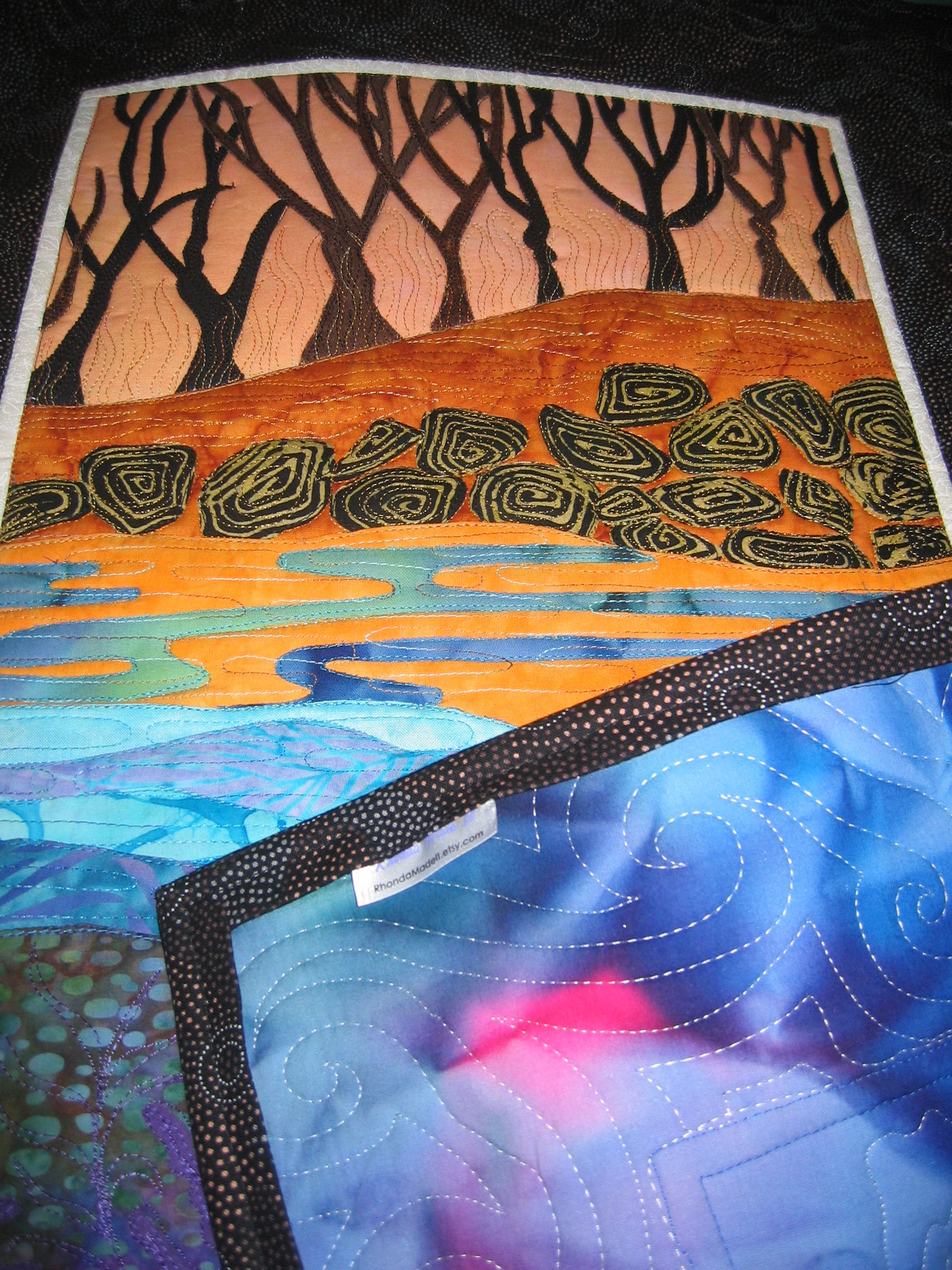
I’ve called this art quilt ‘The elements’ as there are panels incorporating air, fire, earth, and water.

The original Gloria Loughman pattern is called ‘Coastal Strata’, but I wanted the name of this art quilt to reflect the burnt trees and the orange sky after a bushfire, as well as the layers of earth and rocks, the water surface and under the water. So ‘The elements’ it is!

This is the finished art quilt; if you’re interested in how I created it, see this blog post: https://sandgroper14.wordpress.com/2011/08/15/how-i-made-the-elements-art-quilt/. It’s 19.5 x 27 inches [50 x 69 cm].)

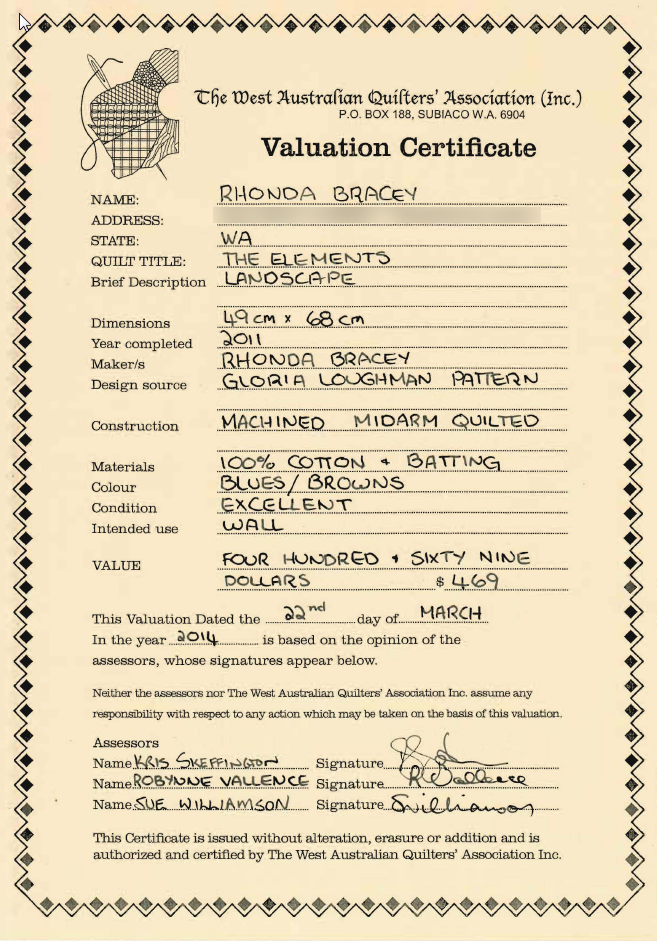
Update May 2014: I’ve had this quilt valued, and the certificate of valuation is below. However, valuations only take into account the materials and techniques used and the quality of both — they take no account of the time to learn the techniques nor the time taken to make the piece, which can be hundreds of hours.

Update July 2020: This quilt now lives in Seattle—a friend chose it as their housewarming gift from me.

'The Elements' art quilt

‘The Elements’ art quilt

Quilting detail

Quilting detail

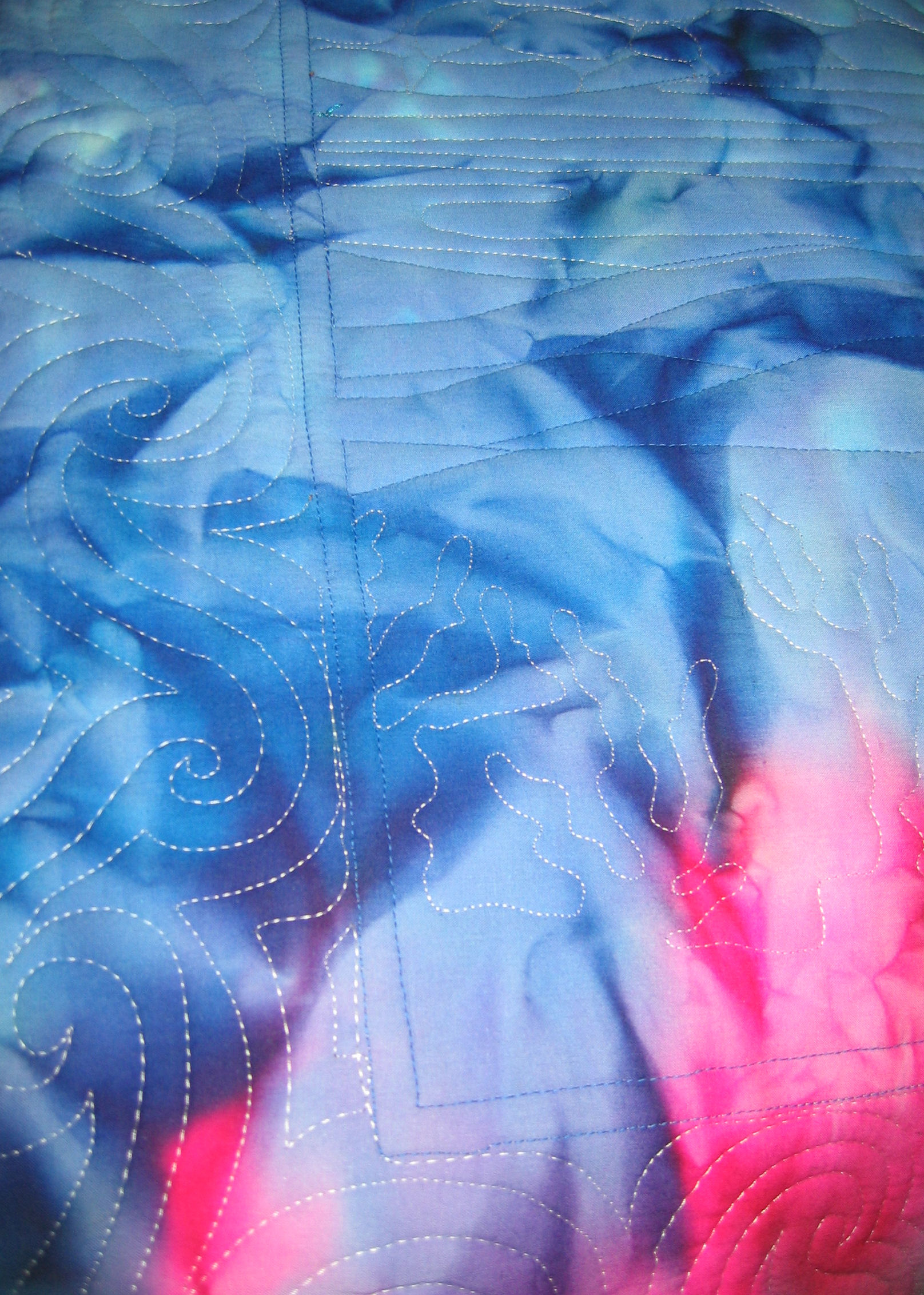
Showing some of the back

Showing some of the back

Part of the back

Part of the back

_Valuation 2014_The_Elements


My personal Leah Day project

1 08 2011

Leah Day, in the US, has been creating 365 free motion quilting (FMQ) designs and sharing them freely with the world via her Free Motion Quilting website. Some time back I decided that I needed to improve my FMQ techniques, so I set myself the challenge of making samples of ALL her FMQ designs. I also sent her a donation as her videos have really helped me improve my FMQ and given me confidence to try techniques I’d never considered before.

I set up my laptop computer next to my sewing machine (now next to my quilting machine), then watch one of her videos, and stitch the design immediately after. I label each sample with the name she used so that I can view the video again if I need to, and then I file the finished samples into one of several large lever arch files. I haven’t finished yet, but already I have more than 250 samples in my ‘Leah Day library’ (she’s up to design #303 at the moment). It’s a handy reference for when I need to decide on a filler or feature design for a quilting space — basic stippling just doesn’t cut it with me any more!

Here are some samples from my Leah Day library:

See also:


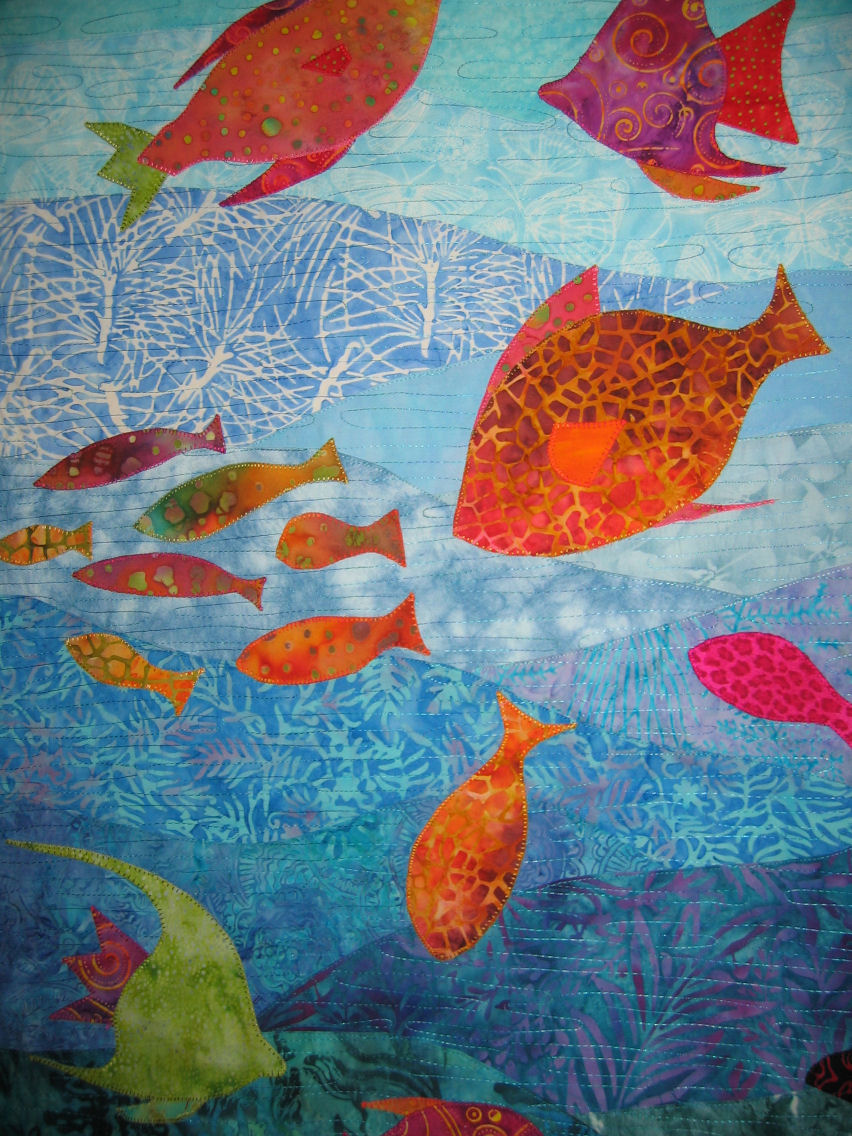
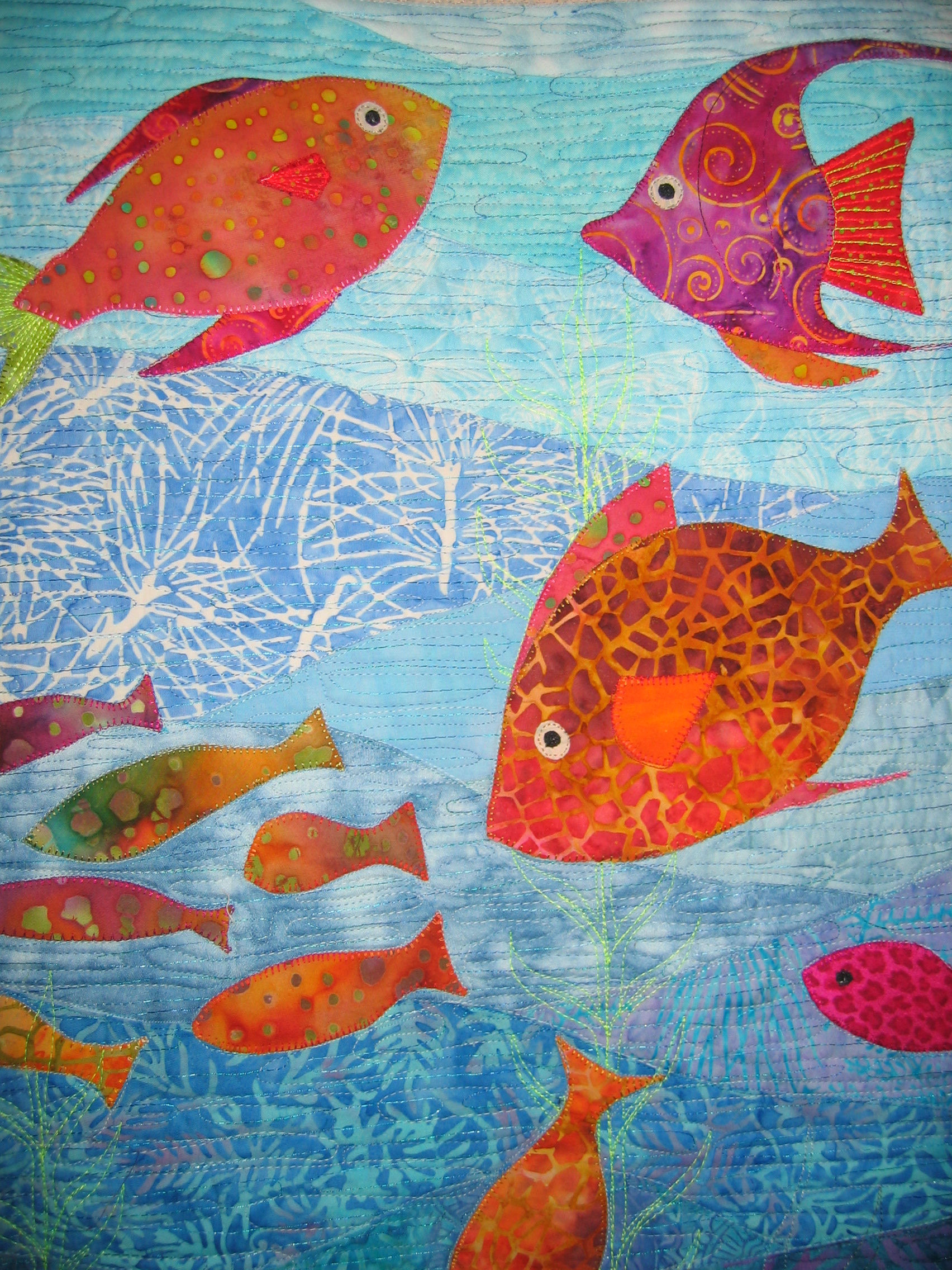
Marine life art quilt

17 07 2011
The finished quilt

The finished quilt

Susan, a work colleague, commissioned me to make a quilt for her friend, who is pregnant with her first child. The original thought was for me to make a cot quilt a little bigger than usual that could carry through to the child’s toddler years. However, my friend Bobbie, who used to be an infant health nurse and lactation counsellor before she retired, insisted that quilts for babies are NOT good. It seems babies get too hot under them and, as they can’t kick off the quilt like children and adults can, that can affect the baby’s core temperature. She strongly cautioned me against making a cot quilt, and instead suggested I turn the piece I’d already started into a wall hanging for the baby’s room.

Susan had told me that her friend was going with a maritime theme, with aquas and greens predominant. So I decided to make a fishy art quilt.

This blog post details the steps I took to make this quilt. To see a photo at full size (especially if you’re interested in the stitching), click it, then click it again in the window that opens to show it full size.

Step 1: Design the background

I decided to use various fabrics in a wavy pattern to emulate the layers of colour in the water, with some sea floor at the bottom of the quilt.

The first step was to create the master design: I taped some sheets of white paper together and drew the wavy lines with a Sharpie, adding sequential numbers to each shape.

Next, I taped some ‘tearaway’ on top of the white paper master design and traced the outlines and added the same numbers. The tearaway is what you pin the fabric too and what stabilises the fabric as you do the surface stitching. Hint: Use pencil or ballpoint pen on the tearaway, NOT a Sharpie — Sharpie ink will show through any light fabrics. I learned this the hard way and had to remove the tearaway and replace it with unmarked tearaway — fortunately, I caught it early in the process, so it wasn’t too disastrous.

Finally, I taped freezer paper on top of the tearaway/master design sheet (shiny side down) and traced the shapes again and added the same numbers again. I also added little arrows to indicate the edges that would be covered by another piece of fabric.

Master design traced onto tearaway and freezer paper

Master design traced onto tearaway and freezer paper

Step 2: Cut out the freezer paper pieces

The next step was to separate the design sheet layers — the master design on the white paper got folded up and put away in case I need to make something similar again some day; I put the tearaway to one side as it’s what I’ll use to pin the fabrics to and to stitch over; and I cut the freezer paper into all 19 background shapes.

Freezer paper shapes

Freezer paper shapes

Step 3: Audition the fabrics

The next step was to audition the fabrics. I’d already pulled out a heap of potential blue/green fabrics from my stash, but until I put them next to each other (‘auditioning’), I didn’t know what would and wouldn’t work. Some fabrics that looked fine in the sewing room ended up being way too dark when laid out, which is why auditioning is so important. Remember, this quilt is for a child’s/nursery room, so I wanted to use bright, clear fabrics.

Audition potential fabrics

Audition potential fabrics

Step 4: Iron the freezer paper to the fabrics

I’d never used freezer paper before, so I followed the instructions in Gloria Loughman’s Luminous Landscapes book.

I ironed the freezer paper pieces (shiny side down) to the FRONT of each piece of fabric. Then I cut around each piece, leaving about 1/2 inch (1 cm) of fabric showing.

Iron freezer paper to fabric then cut out fabric pieces

Iron freezer paper to fabrics then cut out fabric pieces

Step 5: Turn under the top fabric edge and pin the fabric pieces to the tearaway

Remember I marked with arrows all the edges that would be hidden by other pieces of fabric? Here’s why… Find the edge with NO arrows, and turn it under so that the turned edge is lined up with the freezer paper edge. Press. Leave the other edges ‘free’ and hanging out from the freezer paper pattern.

Starting from the top, place each numbered pattern piece on top of the tearaway, making sure that the pattern piece and the outline on the tearaway match. There will be some overlap where the ‘free’ edge of the fabric covers part of the next piece below it. That’s OK. Pin the top (turned under) edge to the tearaway only.

(Why did I start from the top? I wanted each piece to overlap from the bottom up, giving some illusion of depth. That meant I had to lay the pieces out from the top down. Make sense? 😉 )

Pinned freezer paper pieces

Pinned freezer paper pieces

Step 6: Sew the fabric pieces to the tearaway

Next, I sewed the turned fabric edges to the tearaway. Again, I started from the top and worked down the numbers to the bottom.

DON’T take off the freezer paper until you’re finished — I initially tore off the freezer paper of the first two pieces (see photo above), but in doing so I realised that I was warping the fabric out of shape. So instead, I just lifted the edge of the freezer paper where I was to sew and sewed the stitching line about 1/8 inch (or less) from the turned under edge of the fabric.

After sewing all the pieces down, I removed the freezer paper and discarded it (I believe freezer paper can be used a couple of times, but as it’s unlikely I’ll ever make this quilt again, I didn’t see any need to keep it).

Finally, I pressed the completed background piece.

Background fabrics stitched to tearaway

Background fabrics stitched to tearaway

Step 7: Stitch the water and sand

I free motion stitched the water effects and the sand effects using my my HQ Sweet Sixteen quilting machine. This helped hold the background in place on the tearaway.

Step 8: Applique the marine creatures to the background

I chose some bright fabrics from my scrap stash for the fish and other marine creatures, then hand drew some fish shapes on to fusible web.

I  cut out the shapes from the fusible web, leaving about 1/4 inch spare all round, then fused these shapes to the BACK of the fabrics I’d chosen for the fish and the crab.

Next, I cut out the fused fish/crab/starfish shapes from the fabrics, using the outlines as my cutting guide. Then I placed the marine creatures on the background in a way that pleased me, before removing the fusible web from each shape and pressing it to the background fabric.

Once the shapes were fused down, I used the blanket stitch on my sewing machine to stitch down the raw edges of each appliqued piece, matching the threads to the colours of each creature. Some fish had different tails and fins — tails and top/bottom fins were fused down first, then the fish body, then the body fins last.

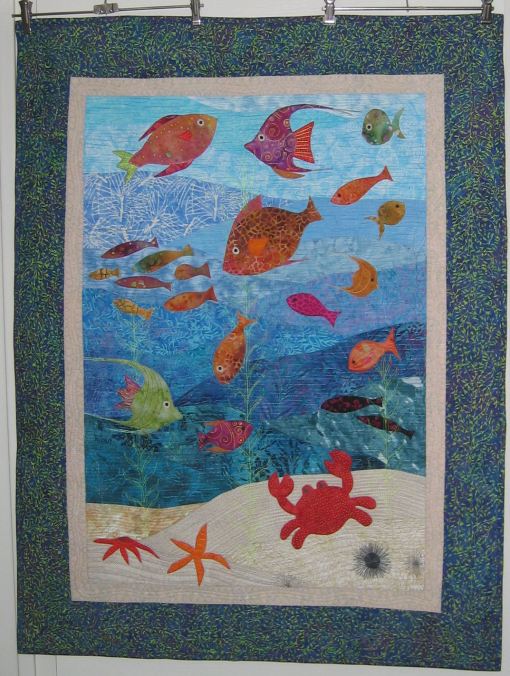
Appliqued fish
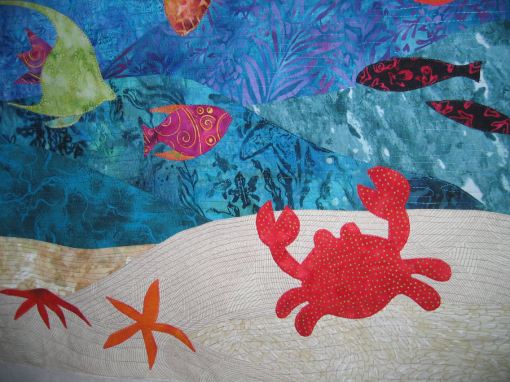
Appliqued fish

More appliqued marine creatures

More appliqued marine creatures

Step 9: Surface stitching

Next, I decorated the fish and other marine creatures with a lot more free motion stitching in various colours and added some seaweed plants in a variegated dark green thread. I added eyes to the fish and the crab with both fabric and thread. And added a couple of spiky sea urchins with thread to balance the life on the sea floor.

As this quilt is for a child, I didn’t want to use embellishments such as beads and buttons as these are dangerous to young children if swallowed.

Step 10: Remove the tearaway

Such a simple step — such a LONG time!

I wanted to remove the tearaway from the back of the fabric so that it became soft again (with tearaway behind it, fabric is fairly stiff, as the tearaway is a stabiliser that is very much like interfacing). Easier said than done. I’d done a LOT of stitching, so tearing away the tearaway wasn’t easy as there were no big patches to be torn. So over three nights, I sat in front of TV with my piece, some tweezers, and a garbage bin and slowly took out very last skerrick of tearaway from the back of the fabric.

Step 11: Add the borders

Time to audition fabrics again, this time for the borders. I wanted a thinnish framing border, and a larger outer border. I decided on a beige/sand toned batik for the inner border and a blue/purple batik with lime green leafy/seaweed shapes for the outer border.

I thoroughly pressed the quilt top before squaring it up, then I added the borders, pressing them flat as I went.

Step 12: Make the quilt sandwich

I found a large piece of batik fabric in my stash that had lots of blues and greens and decided that would be good for the backing. And I used bamboo batting in between the top and the backing fabric. I pin basted the entire quilt then started on my favourite part of the process — the quilting!

Step 13: Quilt the quilt

Now that I have my own HandiQuilter Sweet Sixteen (woohoo!), this part of the process has become my favourite. I just get into a zone and off I go. It’s very meditative!

I wanted to make the fish stand out, so I made sure that I quilted around them, not over them. This forces the fabric around the fish to flatten, thus creating a certain puffiness in the fish. I added more water stitching, sand stitching, and some bright green seaweed plants/fronds to the main quilt top.

In the framing border, I stitched some wavy lines and filled the area outside them with bubbles or pebbles.

In the large border, I stitched more lime green seaweed fronds starting from each corner and moving to the centre of each side, then filled the areas between the fronds with a dark filler stitch.

Stitching detail

Stitching detail
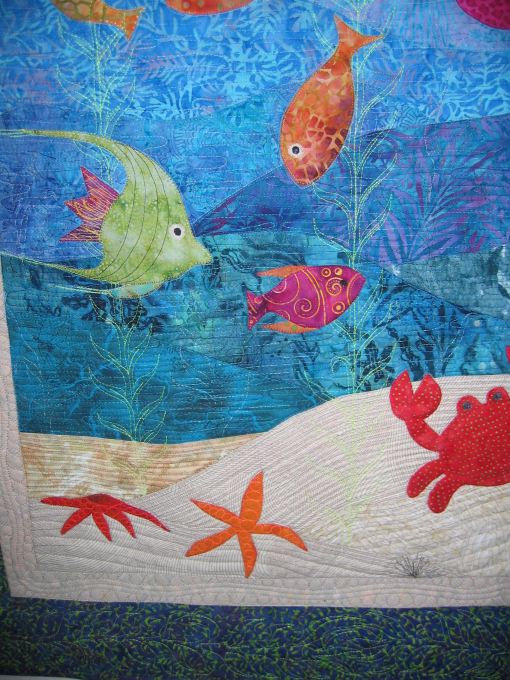
Stitching detail
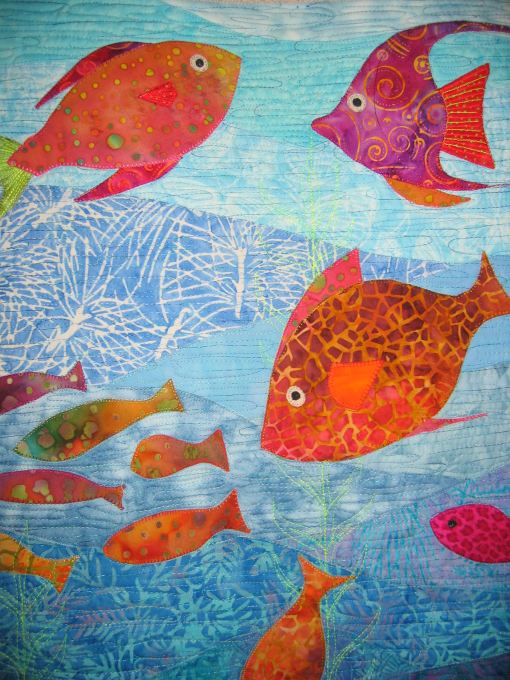
Stitching detail

Stitching detail

Stitching detail

Stitching detail

Stitching detail

My Sweet Sixteen machine records the number of stitches. I forgot to reset it to zero when I did the surface stitching, so I don’t know how many stitches I did in that step. But I remembered to reset it when I started the quilting step… I did 110,769 stitches JUST in the quilting stage. I suspect the surface stitching stage was about 60 to 80,000 stitches, so all told, this quilt has between 150,000 and 200,000 stitches in it! Not bad for a piece that’s only 26 x 30 inches! (66 x 76 cm)

And here’s what some of those 110,000 stitches look like from the back:

Stitching on the back
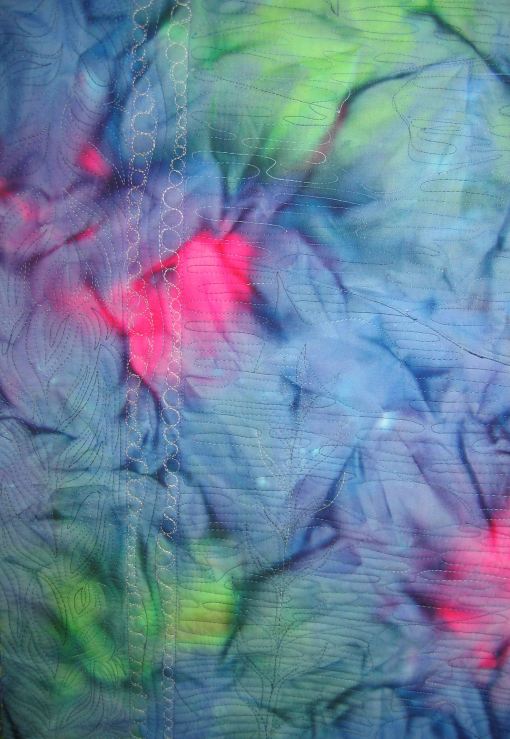
Stitching on the back

Stitching on the back

Stitching on the back

As far as possible, I used a variegated blue thread in the bobbin, but for the bubbles in the framing border, I had to use a beige bobbin thread as the dark blue bobbin thread showed through too much on the front of the quilt. That’s why the bubbles on the back are in a different colour.

Step 14: Add the binding and the finishing touches

The final step of any quilt is to press it thoroughly, square it up and trim it, then add the binding and a label.

I decided to use the same fabric for the binding that I used in the large border. That way there was no further visual distraction that moved the eye away from the marine life in the main section of the quilt.

After some 40 hours of work, this quilt is finished! The commission price I will get for this quilt in no way reflects the number of hours of work or the creative process of designing and making a quilt from scratch (no pattern!) — but it’s for a good friend and it was fun to do! 😉

The finished quilt
The finished quilt


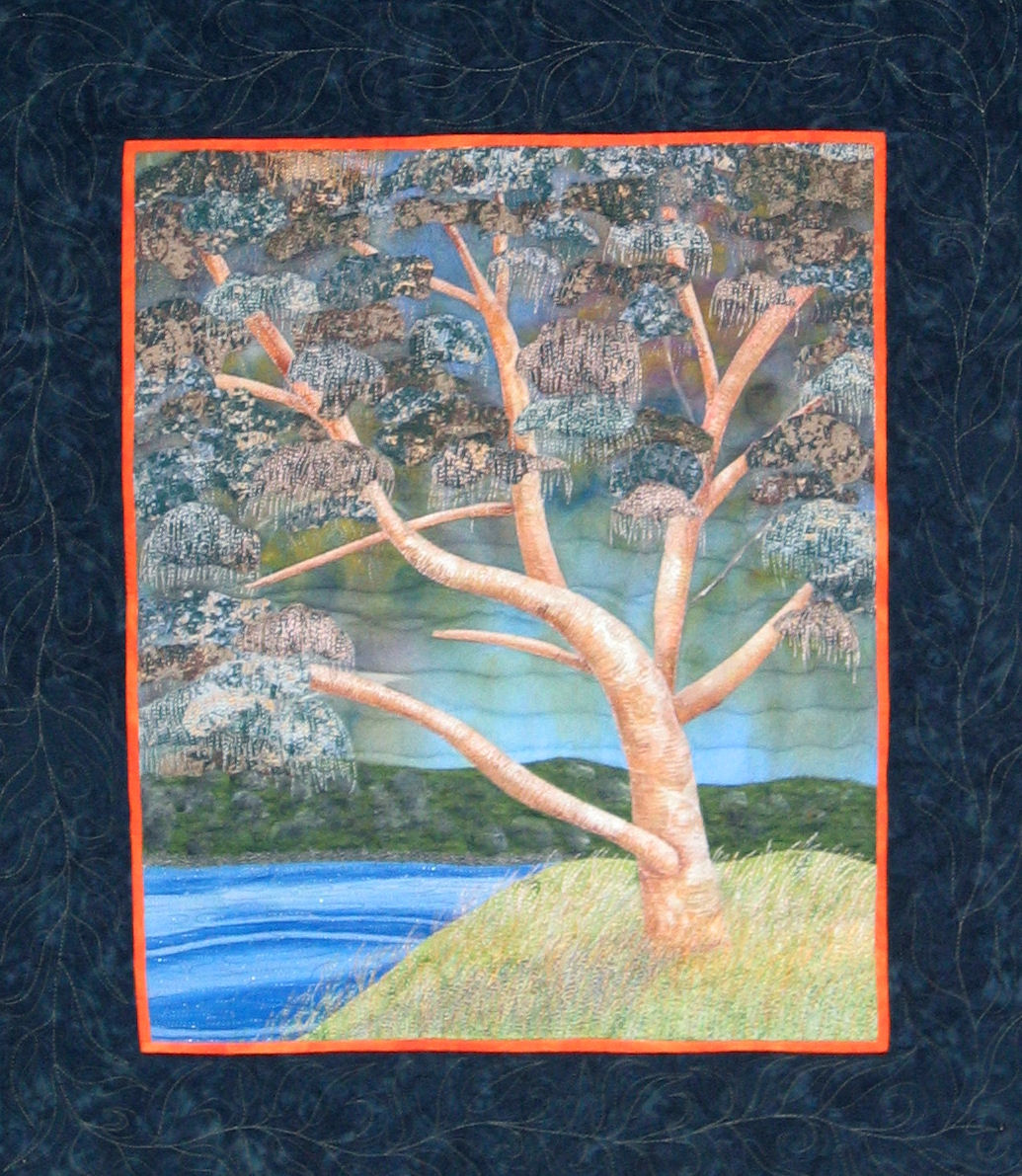
Estuarine eucalypt art quilt finished

16 07 2011

At the Gloria Loughman retreat I attended in June, I went against the flow and decided to create a single tree for my art quilt. This blog post shows the original photo that was my inspiration and my progress up to the end of the retreat weekend.

Since then, I’ve finished it.

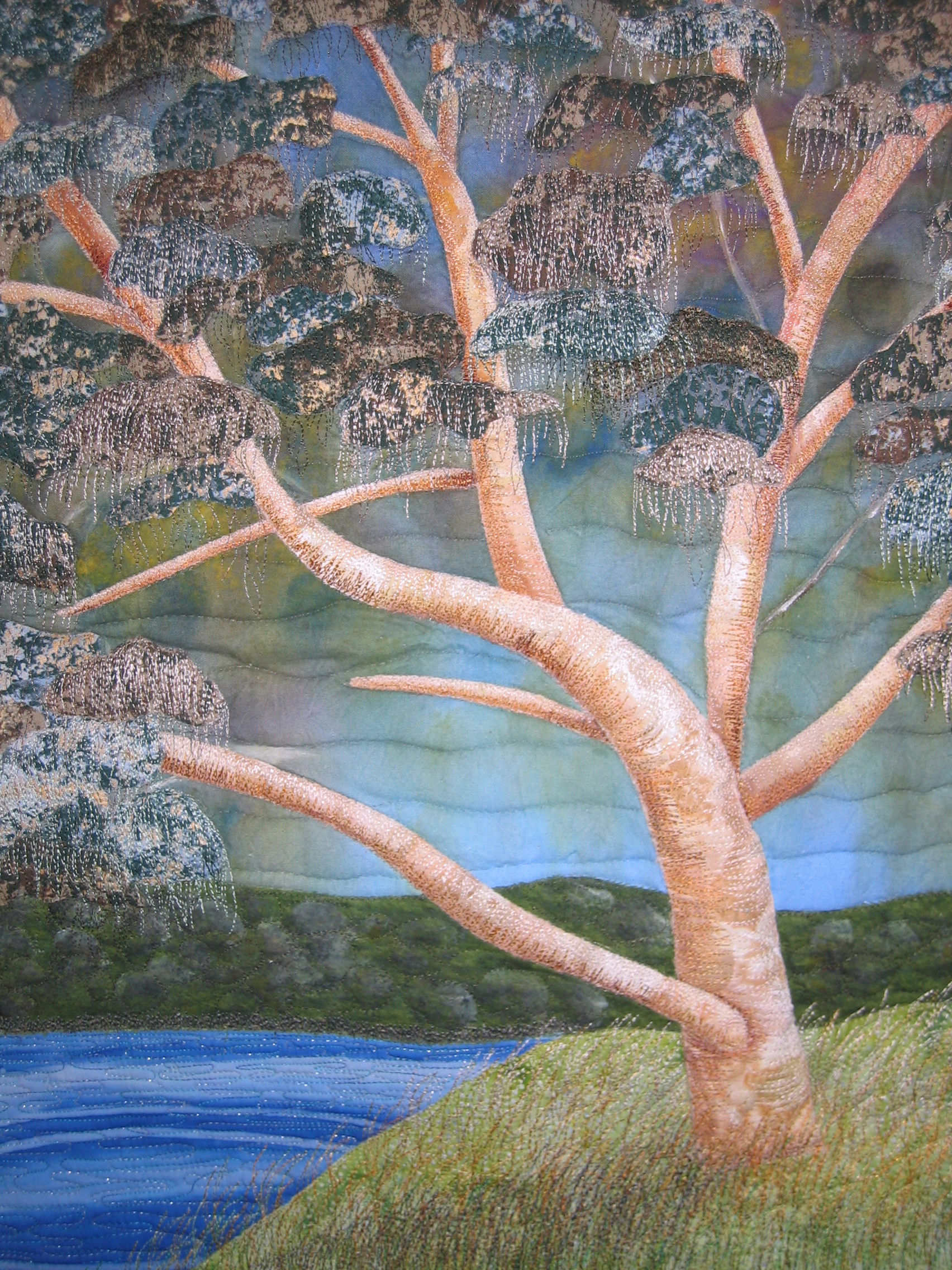
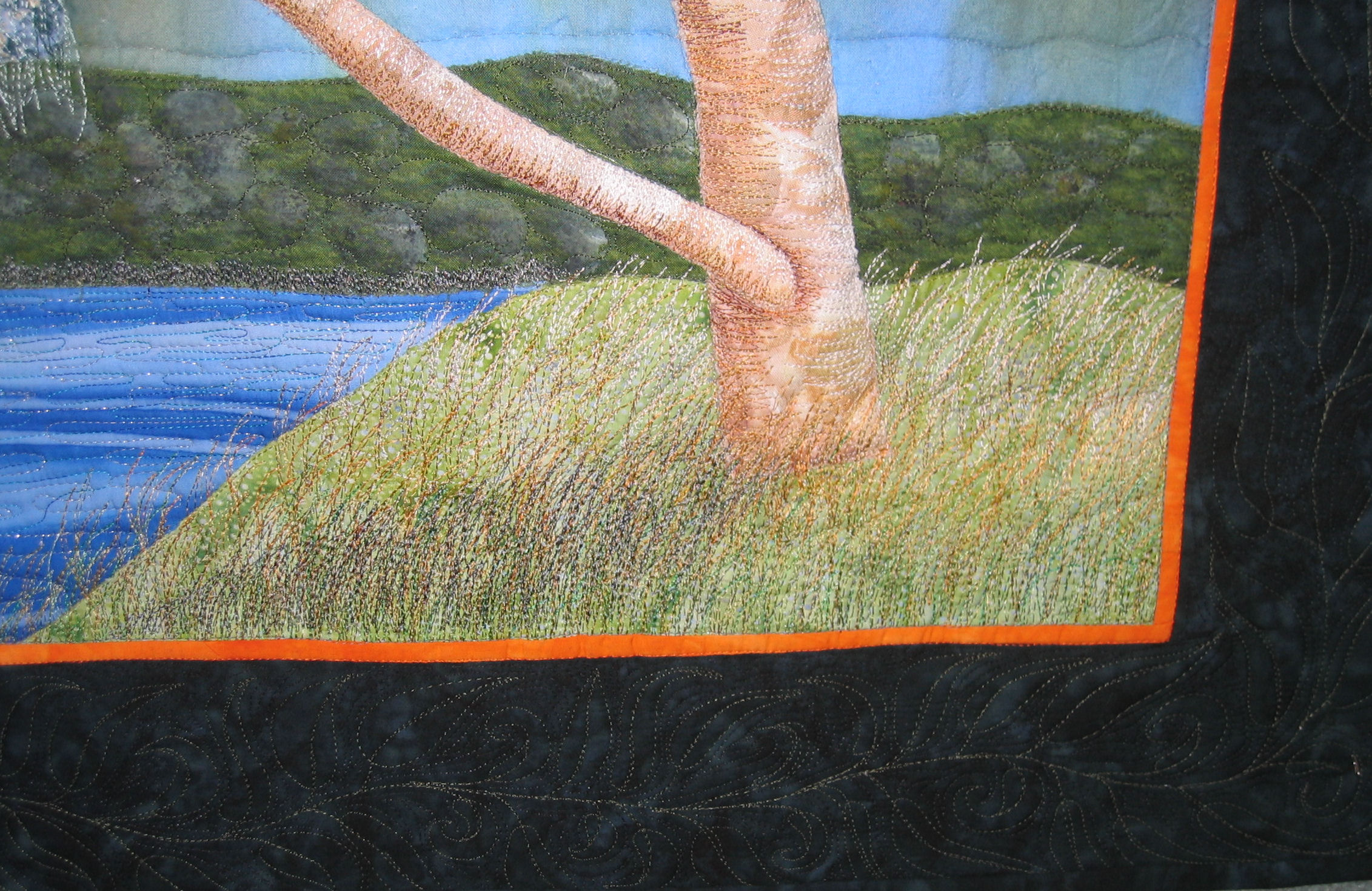
I added a lot more stitching, then a thin border (orange) and a wider dark border, followed by batting to puff out the main tree trunks, then the main batting and backing. Then I quilted it. Even more stitches… I estimate that there are over 100,000 free motion and quilting stitches in this quilt, but I didn’t keep track of the number (my quilting machine can be reset to zero but I forgot to do so!)

I quilted the border with some freehand eucalyptus leaves then used a dark thread to fill in the spaces between the leaves.

Once it was quilted, I added a hanging sleeve (ready for display on a wall), binding, and a label. I’ll put it up for sale on Etsy soon. It’s now available for sale on Etsy: http://www.etsy.com/listing/77935502/estuarine-eucalypt-art-quilt.

Deciding on a price is an interesting exercise. I have to factor in part of the cost of the retreat (where I learned the fabric painting and other techniques), the cost of the fabric and threads (I guess I used 20+ different coloured threads in this piece), the cost of the electricity used to run my machines (and perhaps even a little towards the cost of the machines), and then there’s the time… I estimate that this art quilt took a total of 40 or more hours to make — if I charged by the hourly rate I earn at my day job, it would cost much more than I’ll charge for it.

In deciding a price, I checked out the Quilts category on Etsy, and then sorted the 36,000+ quilts found by price from the most expensive. I am amazed at the prices some people are charging for some of their work. In many cases, I can see the value as I know how much work goes into a piece. But for some of the $5000+ pieces, I have to wonder, especially when it is obvious that the quilt that’s for sale doesn’t even hang straight. Update May 2014: I’ve had this quilt valued, and the certificate of valuation is below. However the valuation only takes account the materials and techniques used and the quality of both — it takes no account of the time to learn the techniques nor the time taken to make the piece, which can be hundreds of hours.

Here are pictures of the finished quilt — click on a small picture to see it even larger, then click on it again to see it full size:

_Valuation 2014_Estuarine_Eucalypt