Community Quilt 4

18 07 2012

Community quilt #4 was a biggie! Huge, in fact. I had to extend both extension tables for my Sweet Sixteen, and still the quilt fell off the edges of table and dragged a little.

This one was a big challenge. There was lots of ‘white space’ and some very pretty stars. Like Community Quilt #3, I had to let this one sit a while before deciding how to quilt it to do it justice. Even so, I still hadn’t decided on all the elements before I started — I made several decisions as I went along.

I first decided to quilt the small squares between the stars. I just did a double flower type of design in a neutral thread that matched the calico used for the ‘white space’.

Double flowers in the small squares between the stars

While I was quilting them, I was thinking about how to quilt the large odd shapes of white spaces between the stars. I’d already started with a flower theme for the small squares, so I decided to extend that a bit into some freeform stars in the bigger areas. As there was quite a lumpy bit in the centre where these pieces joined, I made a flower centre by creating a circle, then radiating the petals out from it to the corners where the coloured stars met the white space. After completing the petals, I cross-hatched the centre of the flower, before moving on to the next one. I did half-flowers in the spaces near the border.
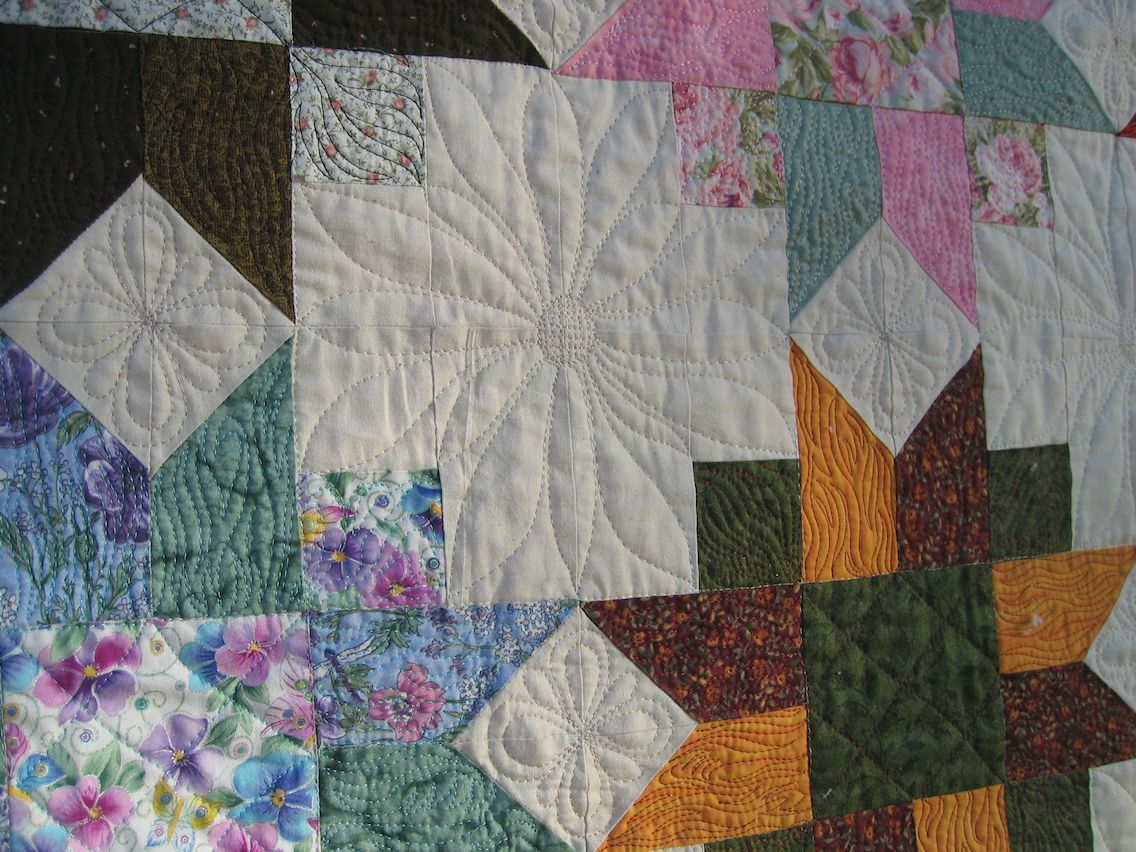
Large flowers radiating out into the large areas of white space

The next decision was how to quilt the stars. 8-pointed stars with 4 setting squares are an awkward shape to quilt, so I decided to keep it simple and did a flame design in all the star points and setting squares, in a variety of threads that matched each star. The next decision was what to do with the centre square for each star. Too much quilting might be overkill, so again, I went for something simple and just did a large freeform cross-hatching from corner to corner and between the joins of the star points.
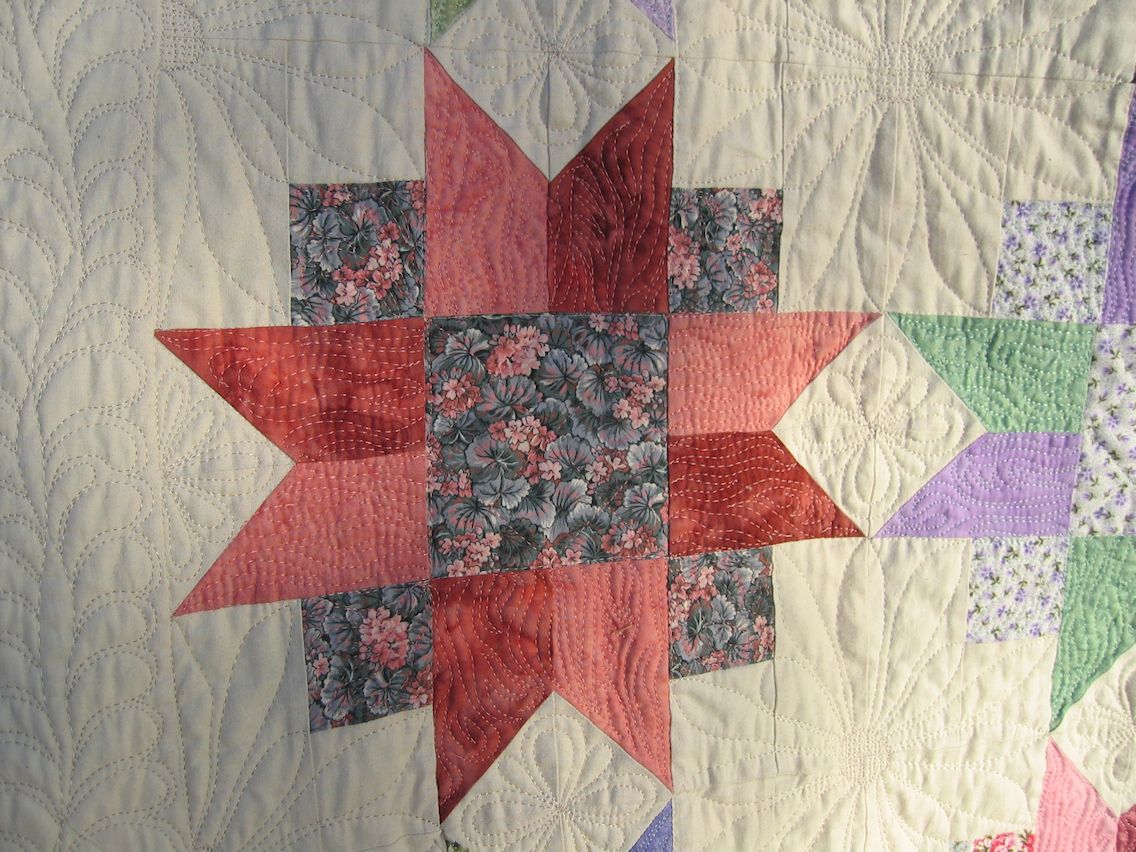
Flames in the star points and setting squares, large cross-hatching in the large centre squares of each star

The final decision was what to do in the border. Again, I didn’t want the quilting to overpower the pretty stars, so I went back to the neutral thread and decided to do some freeform feathers. First I stitched a wavy spine, then stitched another over it going in the opposite waves to create an irregular spine. Then I stitched my feathers using the Diane Gaudynski method of stitching each shape separately, then echoing the shapes about an eighth of an inch away to create the illusion that the feathers are joined.

Stitching the feathers in the border

Only the binding remained, and it was done!

Completed quilt

BTW, there are more than 200,000 quilting stitches in this quilt!

See also:


Community Quilt 3

18 07 2012

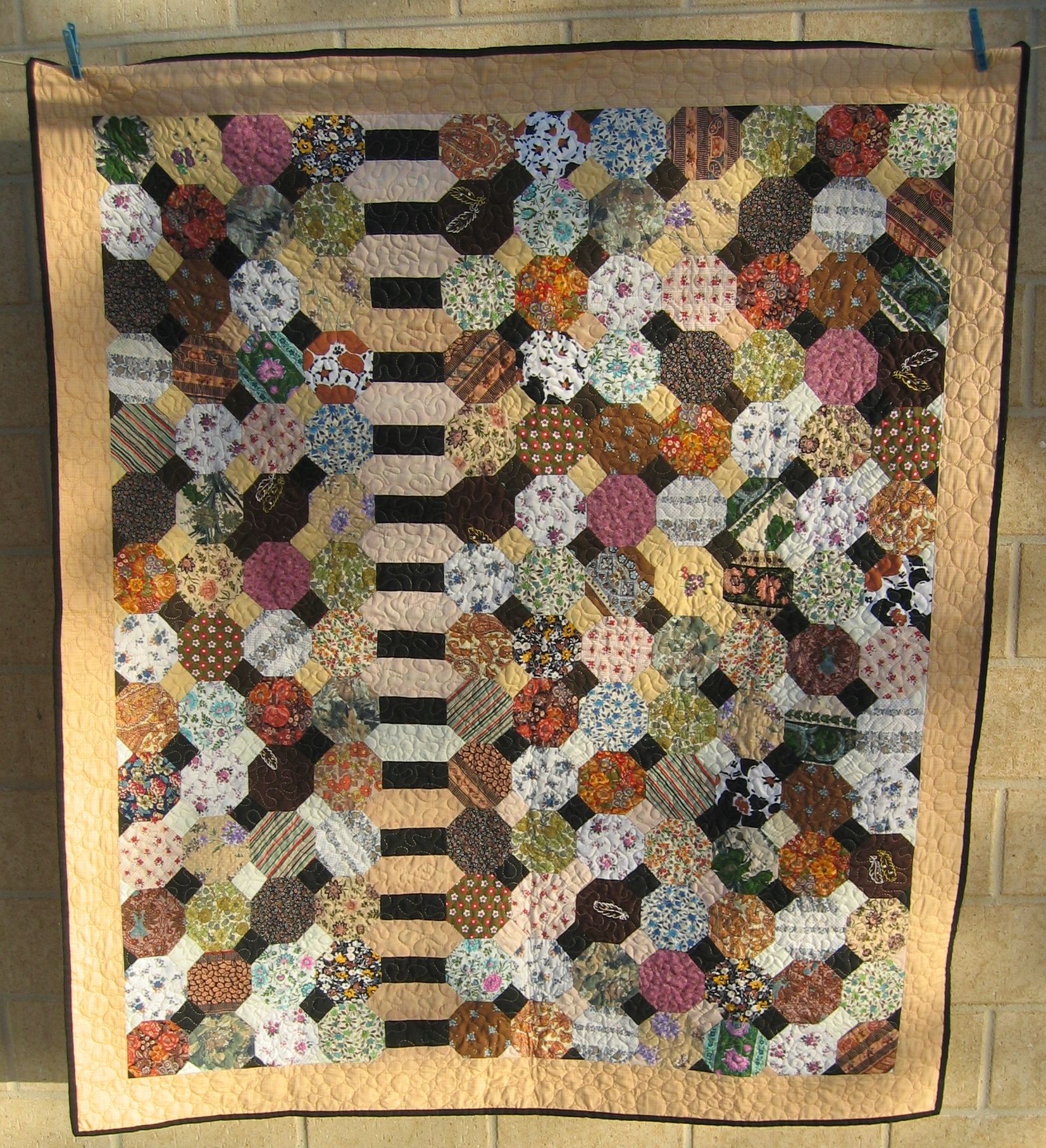
When I pulled the quilt top for the third Community Quilt I quilted, I got a surprise. The entire top was hand stitched! Wow! That’s a LOT of work. All those hexagons…

And the person who’d made the quilt top had used some old fabrics too. I’m guessing at the age of these fabrics, but I suspect 1950s to 1970s for the most part.

So, how do you do justice to a quilt top that’s been so lovingly stitched, possibly for hundreds or thousands of hours?

I let it sit for a few days and let my brain try to figure out how to approach it. I knew that doing something that mirrored the hexagons might well end in disaster, and pulling out stitches on a hand stitched top wouldn’t be a good idea. I also knew that the top was a little out of square (hexagons have lots of bias edges!), and so whatever quilting I did needed to cover the entire quilt in such a way that it got rid of the little lumps and bumps and puckers that were likely to occur as a result of it being out of square, especially when I got to the plain border where any lumps and bumps would be really obvious.

And the thread had to blend into the quilt so that the hexagons shone through and weren’t overpowered by the quilting. What to do???

I decided to do a large meandering stipple in a neutral thread that matched the border fabric, with big circles/bubbles in the border. Was this a good choice? I don’t know, but I was pleased with how it turned out. I don’t think the meandering stipple overpowers the hexagons, and the large bubbles in the border were sufficient to flatten the lumps and bumps, also without drawing the eye from the quilt top. At least, I hope that’s what I achieved.

Here are some pictures of this quilt (click on a picture to see it in a larger size).

Front of quilt

Back, binding, border and top

Back of the quilt


Community Quilts 1 and 2

26 06 2012

After a lot of haranguing (in a good way!) over the years from a quilting friend of mine, I’ve finally joined WAQA (West Australian Quilters Association) and have volunteered to quilt some community quilt tops made by other members. These quilts will all go to various charities and organisations, such as the Royal Flying Doctor Service, children’s hospitals, emergency relief, etc. My role is to sandwich the (supplied) finished top with batting and backing fabric (also supplied by WAQA), do the quilting, then attach the (supplied) binding and label.

I’ve now completed quilting my first two community quilts – one last weekend and one this weekend. Both were quite large quilts (large lap or single bed quilts), and each took about a day to quilt and bind.

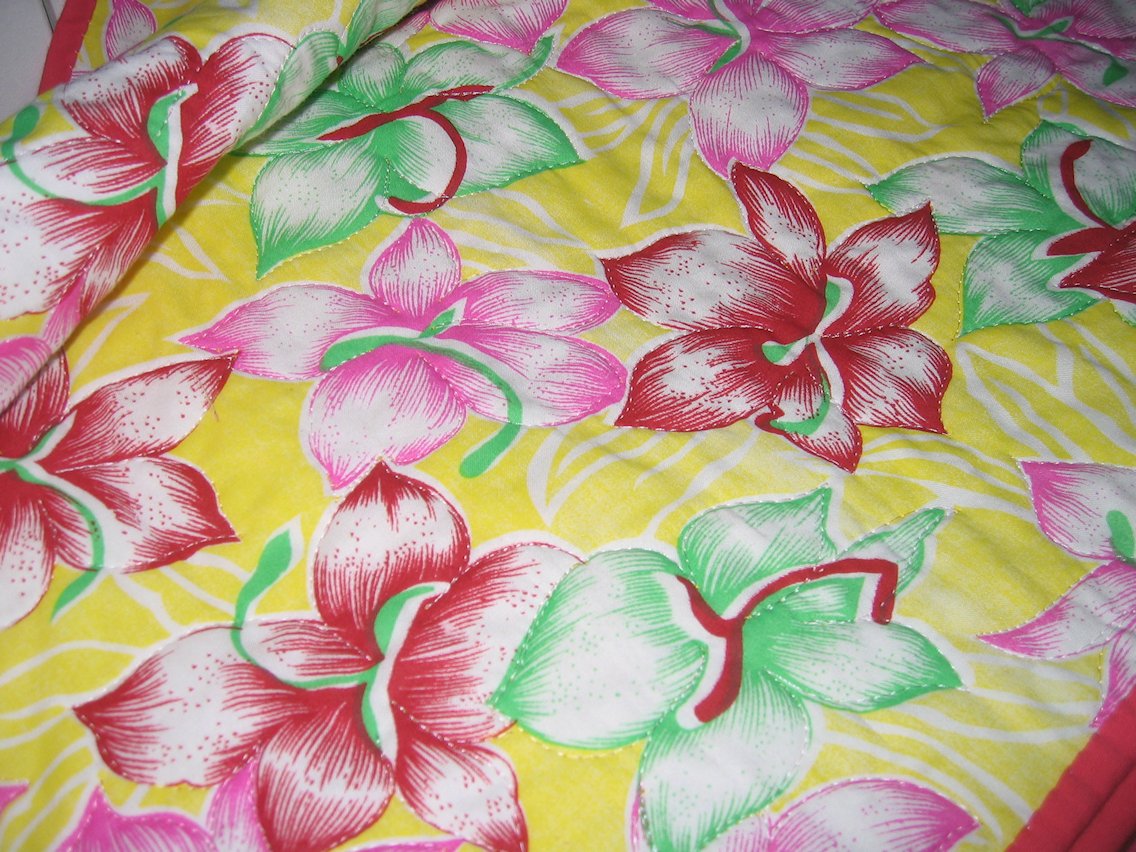
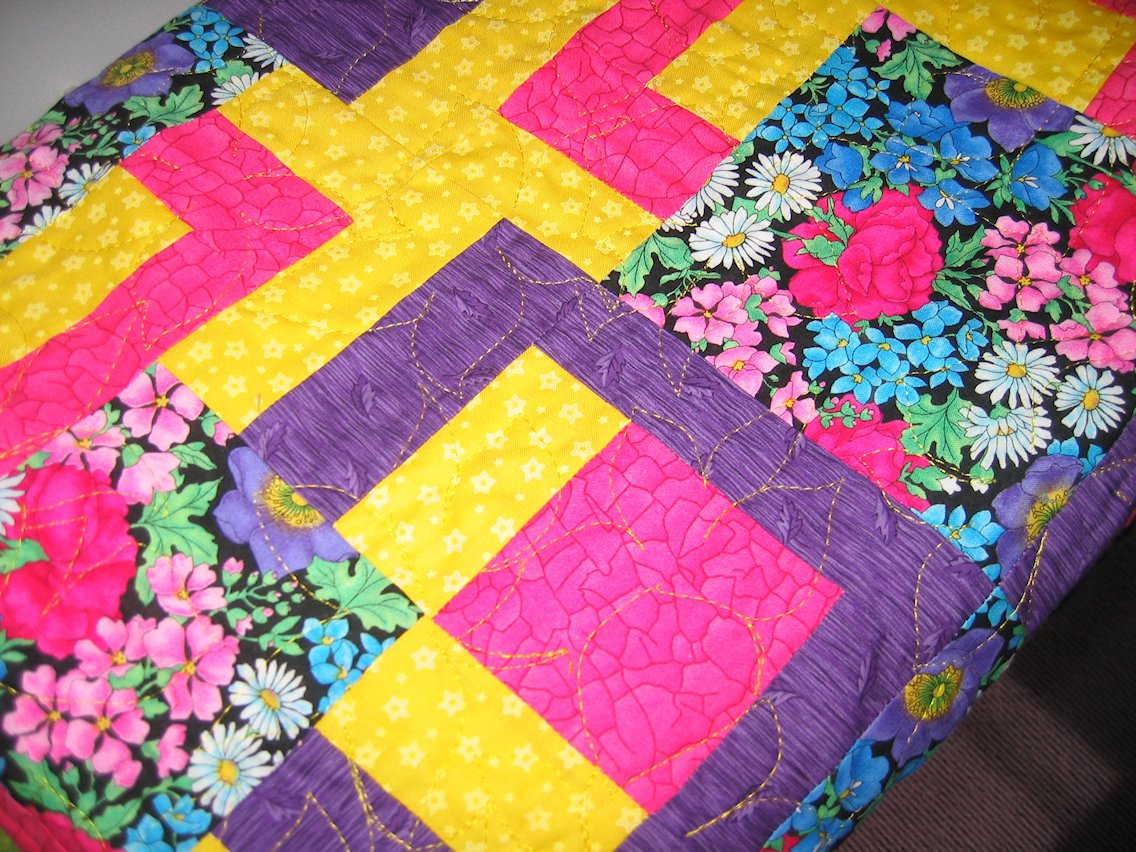
With the first quilt I did something different – I quilted from the back, using the yellow feature thread in the bobbin (rayon) and the bobbin thread (Deco-Bob) in the top. I’ve done that before with my sewing machine, but not with Bee, my Handi Quilter Sweet Sixteen. I had a hard time trying to decide how to quilt this quilt, until I hit upon the idea of following the flower motifs on the backing fabric. I quite like how it turned out! And quilting ‘upside down’ wasn’t a problem.

Quilt 1 - backing

Quilt 1 – back

Quilt 1 - front

Quilt 1 – front

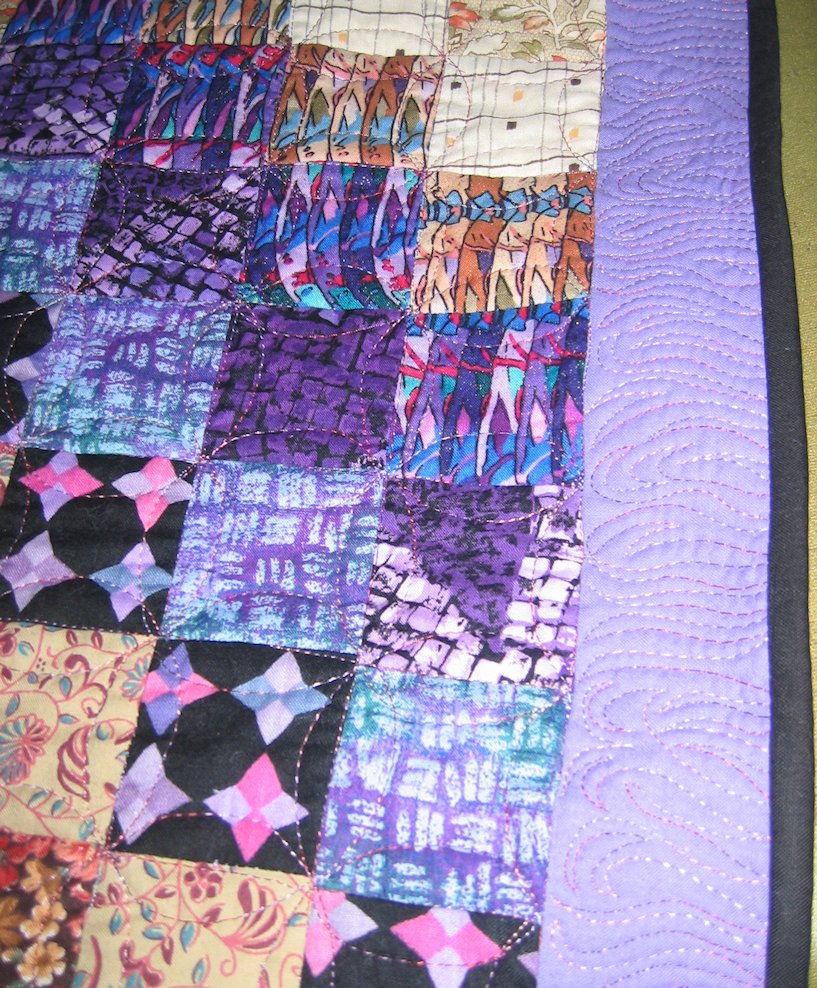
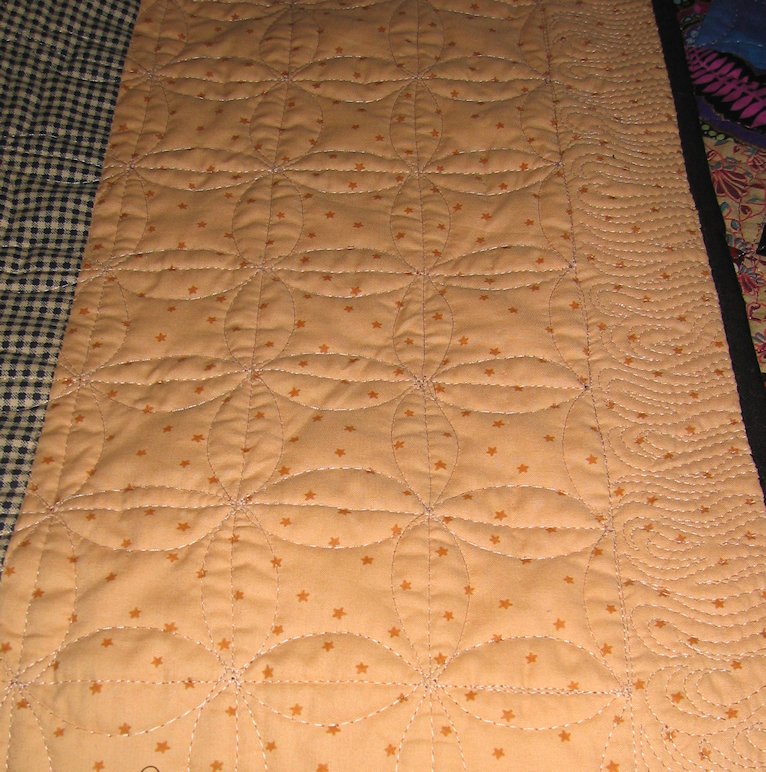
With the second quilt, I also had some difficulty deciding how to quilt it, then I decided on a ‘cathedral windows’ look around each square and flames in the borders. I didn’t use any rulers or markings – it was all free motion, including the stitch in the ditch, on Bee. I was pleased that I got reasonably even (but definitely not perfect!) arcs without using a ruler. I used the same thread for the main top and the border — a variegated Superior Rainbows thread (colour 845) in pinks, oranges, and purples, and a taupe Deco-Bob thread in the bobbin.

Quilt 2 - front, showing border

Quilt 2 – front, showing border

Quilt 2 - back, showing border

Quilt 2 – back, showing border

My initial set of quilt tops was six — so four more to go in this batch! I must say that it’s great practice for both the stitching side of it, and for deciding what quilt motifs to use.